Are you familiar with the concept of twin films, fellow puzzlers?
The basic idea involves the commercial release of two films with extremely similar plots or concepts being released in proximity to each other.
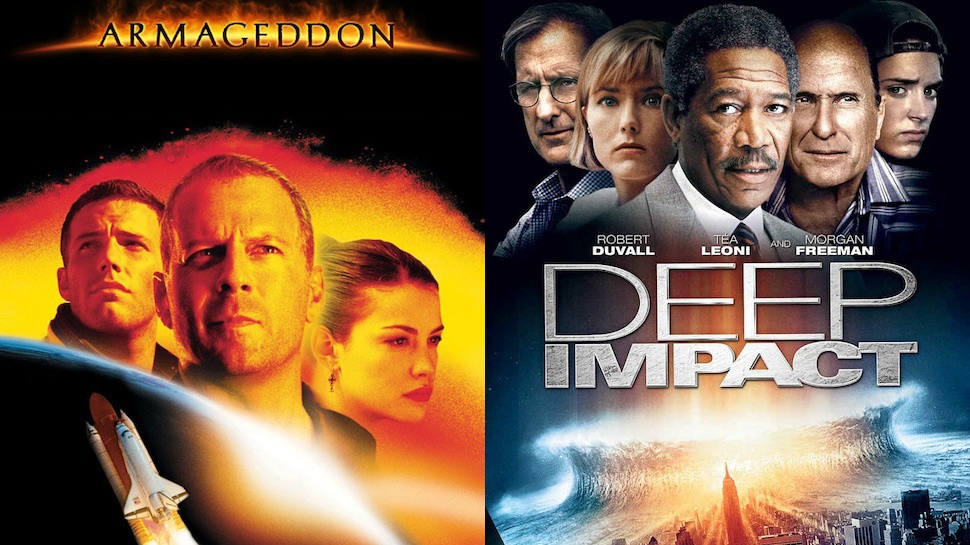
For example, if I described a 1998 global disaster film centered around an impending impact event that threatens to end most or all life on Earth, what film would you name?
You could answer Deep Impact or Armageddon and be correct either way. These are quintessential twin films.
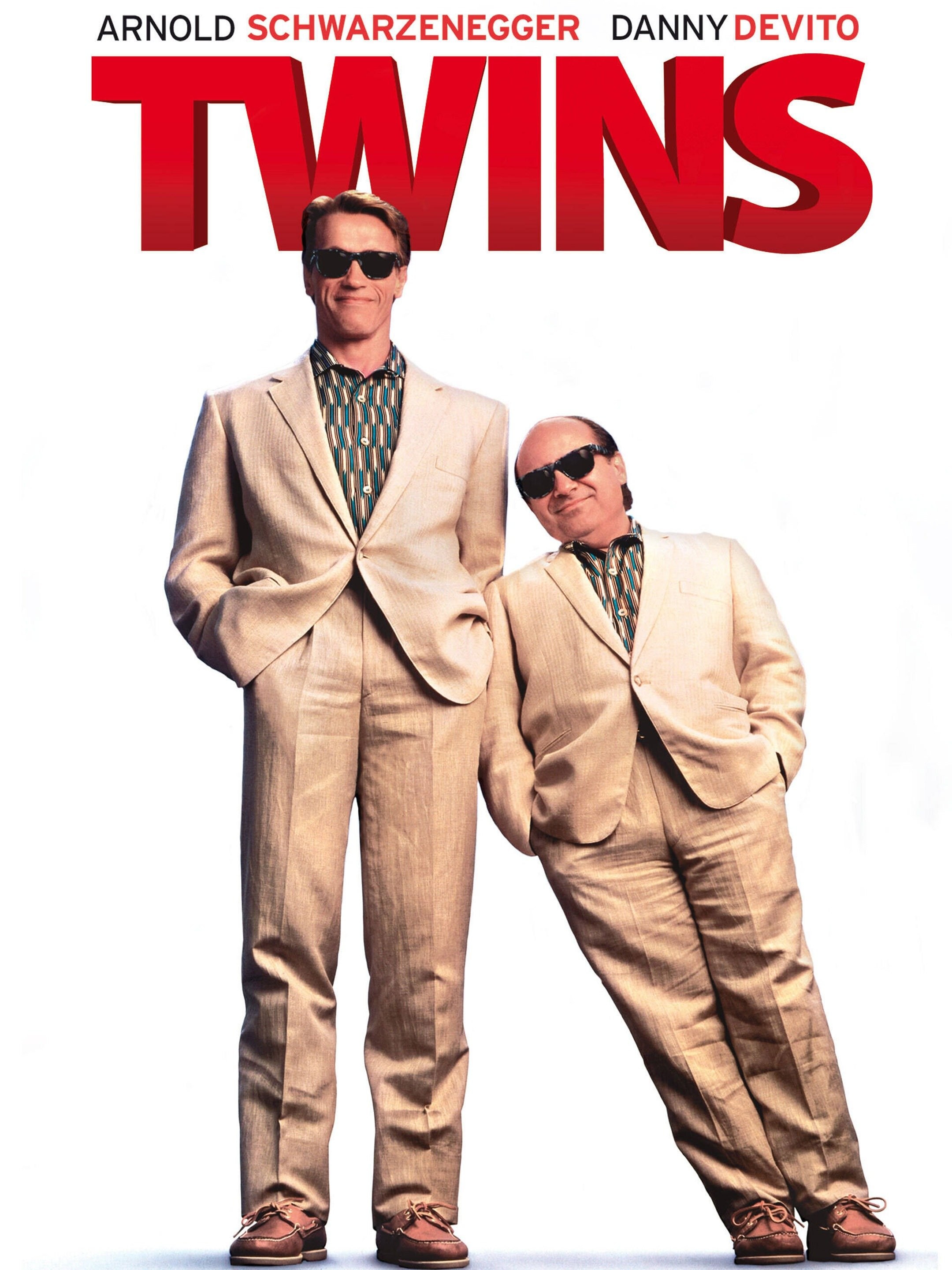
Wait, no, not this kind of Twins film…
So if I give you the year of release and a description, can you name the twin films that fit the clue?
Let’s find out, shall we?
Twin Films Film Festival Test!
1997: disaster films centered around volcanic eruptions
2012: loose adaptations of the fairy tale Snow White
2024: fourth installments of action-comedy franchises centered around African-American cops
2004: romantic comedy films about the rebellious daughter of the President of the United States
1999: supernatural horror films with a man and his relatives, experiencing a series of frightening visions and having the ability to interact with ghosts.
2017: films prominently feature the planning of the evacuation of Dunkirk.
1998: computer-animated films about insects, starring a non-conformist ant who falls in love with an ant princess, leaves the mound, eventually returns, and is hailed as a hero
2018/2019: computer-animated films about abominable snowmen making first contact with humans, both set in the Himalayas.
2006: films about 19th-century magicians
2022/2023: adolescent girls who transform into larger creatures under certain conditions.
1994/1995: films with drag queens going on a road trip across their country (in one case Australia, in the other, the United States) in a journey of self-discovery. Both have eight-word titles.
2023: films based on Dracula released by Universal Pictures
1999: caper films focused on the relationship between an attractive female insurance investigator and a male thief who steals an expensive painting by a famous artist. (Coincidentally, the male lead in both films is also played by an actor who has portrayed James Bond.)
2010: films featuring a stereotypical villain as the protagonist
1996: alien invasion films where the earth is rapidly and suddenly overwhelmed, only to be defeated by a ragtag group with borrowed technology
2005/2006: computer-animated films involving similar animal characters from New York’s Central Park Zoo being introduced to the wild.
How many did you get? Let us know in the comments section below, we’d love to hear from you!
Whether you’re a veteran of many roleplaying campaigns, someone who has dabbled in a few dice-rolling sessions, or a total newcomer to the RPG hobby, one of the best days of the year is fast approaching.
The concept behind Free RPG Day is simple. All over the world (but mostly in the United States), local game shops, hobby shops, and other outlets team up with RPG publishers to distribute new, fresh, and most importantly, free material for all sorts of different roleplaying games, systems, and settings.
Sometimes they’re quickstart versions of the games to introduce new players. Sometimes they’re exclusive adventures or modules to play either in-store or at home. Othertimes, they’re entirely new games, free of charge.
Not only can you receive a wealth of new ideas and playing options in one fell swoop, but it serves as a terrific way to meet fellow roleplayers and build a community of game enthusiasts.
You can click this helpful link to find local spots near you that are participating in Free RPG Day, and I would highly recommend searching online for local game shops, game cafes, and even community centers like your local public library to see who is participating.
These shops will often be running demonstrations of games, tutorials on how to play, hosting raffles and contests, and offering terrific sale prices to encourage you to find the game that fits you best.
Every year, dozens of companies get involved, not only to encourage the growth of the game world, but to promote their own products. And what better way is there to get people hooked than with free exclusive materials begging to be tried out?
Keep your eyes peeled for this year’s edition of the Level 1 Anthology, offered by 9th Level Games. It’s a collection of new games by up-and-coming and established RPG creators, all centered around a particular theme. Last year’s edition was all about programming. This year’s is about the end of the Wild West.
This project is close to my heart because I had a game featured in last year’s Level 1 collection, and I also have a game featured in this year’s collection!
Summer is nearly upon us, and with the arrival of summer, one cannot help but think of road trips with friends and ways to pass the time in the car.
While singalongs, I Spy, and the License Plate Game are all well and good, perhaps you would like a little more challenge with your road trip games.
Well, you’ve come to the right place. Here’s a few suggestions for road trip games that require no preparation, save for a little imagination!
The Movie Game
I learned this game while stuck on a long train ride, and it certainly made the delays go faster.
Someone starts with a film, and the next player names an actor in that film. The next person names ANOTHER film that actor has appeared in, and the next person names ANOTHER actor from that film. And you keep going until someone can’t continue the game.
(If you present an actor or film in the chain that the next player can’t continue, you can only eliminate them by offering another answer, showing that the chain can continue. If you give them a chain link you can’t continue either, you’re out!)
It’s surprisingly difficult, because the more you play, the more devious you try to get. You want to lure other players down garden paths, but you have to make sure you don’t go so obscure that you can’t find your way out as well.
Playlist
Friend of the blog Jen Cunningham created a music-themed version of The Movie Game: Playlist.
In this version, you start with a song and an artist, and the next player either names another song by that artist OR another song using one of the key words in the song.
So, for instance, if you say “Sgt. Pepper’s Lonely Hearts Club Band” by the Beatles and you need to match the song, you could do “Owner of the Lonely Heart” by Yes or “Only the Lonely” by Roy Orbison. Then someone needs to name another Yes song or another Roy Orbison song, and then the chain continues.
I find this game slightly more challenging than The Movie Game because of both the musical knowledge (which isn’t as strong as my movie knowledge) and the associative nature of the song title aspect. But many hours have been wiled away with this game!
My Friend Is An Expert… / Conspiracy Theory
In this game, the first player picks two random subjects, and then prompts the next player with them, and it’s the next player’s job to explain in entertaining fashion something fascinating about them that only an expert would know.
For instance, the first player would go “My friend is an expert in ancient archaeology and polka music” and the next player has to riff on those subjects for a bit. Other players can ask questions to continue the silliness.
The game continues with different topics and additional nonsense.
There’s a similar game to this called Conspiracy Theory where someone has to rant about the grand conspiracy behind two seemingly unrelated topics provided by the other players.
Both of these are great fun with a group of improvisers or snake oil salesman during a long road trip.
Alien Ambassador
(I haven’t played this one yet, but a friend recommended it, so I’m happily including it.)
In this game, one player is selected to be the alien ambassador, an alien visiting Earth for the very first time. The other players must answer the alien’s questions and explaining simple concepts to them. (It’s sorta like that comic strip with the aliens.)
As the alien ambassador asks more questions about this, the players will invariably scramble to explain the very weird things we accept as normal, everyday life, and laughter will ensue.
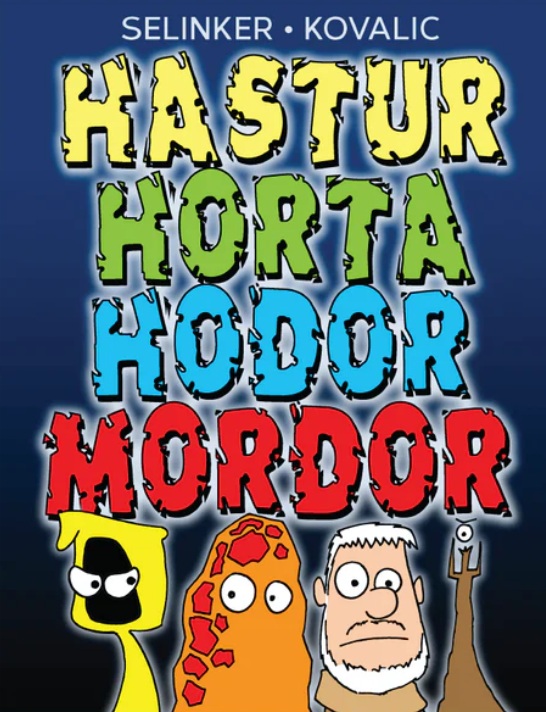
Hastur Horta Hodor Mordor
Inspired by a Dork Tower comic, Hastur Horta Hodor Mordor is a road trip game that actually became a real card game. But let’s focus on the road trip version.
This is a memory game where one player says a word — preferably one related to fandom, geek culture, etc. — in order to begin a nerdy tongue twister. The next player says that word AND another word. The next player says the two previous words AND another word, and the chain continues.
If you can’t complete the chain or you hesitate too long, you get a Hodor point, and a new chain begins.
If you get 3 Hodor points, you can only say “Hodor” for the rest of the car ride. (That’s a reference for the Game of Thrones fans in the audience, if there are any of you left after those dismal final seasons.)
Do you have any favorite no prep road trip games, fellow puzzlers? Let us know in the comments section below! We’d love to hear from you.
One of the best parts of being a puzzle and board game guy is the amazing community of fellow players, puzzlers, and game designers that surrounds you. Yes, puzzles and games are a business, obviously, but every week I see examples of creators and companies giving back, doing charitable acts, and participating in fundraisers for good causes.
Today, I’d like to highlight a few and hopefully bring more attention to these worthwhile endeavors.
Accessible Games: Global Accessibility Awareness Day
Accessible Games understands that every person is different, and that there are many people who don’t feel represented in modern roleplaying games. To that end, they created Survival of the Able, an RPG with disabled protagonists set in medieval Europe during a zombie plague. It shows the challenges people face every day, but also shows that those people are capable of accomplishing extraordinary things. (They even published a special edition of the game that is designed to be more accessible for dyslexic players.)
Between Survival of the Able, their zine Accessible Gaming Quarterly, and their guide to more inclusive tabletop creation — Accessible Guide to RPG Layout — they’re doing a lot of advance the cause of gaming for everybody.
Kids in the Attic is a roleplaying game company that likes to highlight the weird and whimsical in their fantasy, space, and horror games, but this week, they’re turning their attention to bringing light and kindness to a horrible situation.
They’re currently organizing the Hershey Family Recovery Bundle to support the family of Rick Hershey, a prolific artist in the tabletop roleplaying game community. All of his children were involved in a devastating car accident caused by another driver. Thankfully, they all survived, but the road ahead will be long, and everyone knows the burden that medical bills can impose.
Tycoon Games has been an industry leader in charitable work and outreach for years, donating to Toys for Tots, the Boys and Girls Club, and many other worthy organizations.
Their latest endeavor is The Box of Giving, a collection of games intended to help underserved communities, schools, libraries, gaming conventions, and local non-profits experience the joy and camaraderie that comes with playing games. For the cost of shipping alone, each organization receives $500 worth of games!
Are there any charitable efforts in the board game or roleplaying world that you’d like to shout-out? Let us know in the comments below! We’d love to hear from you.
At the start of the pandemic in 2020, game companies around the world rallied around their customers, offering discounts, producing print-and-play versions of their games, and creating new online variants of their games to allow for Zoom play or remote play.
It was a remarkable effort at a very trying time, one that many board game enthusiasts like myself remember warmly.
So, five years later, as this baffling tariff war threatens the industry as a whole, we’re seeing the board game industry again roll with the punches and work with the audience to survive.
Some are having “tariff sales” at deep discounts to help clear inventory, gauge audience interest in certain games, or create a cash bumper to help them weather the uncertain tariff storms.
Others are making PDFs more available to customers, helping mitigate both prices for the audience and reduce production costs for the company.
Today, I want to highlight a few companies that have gone beyond that, offering free products for customers to enjoy.
Yes, they would obviously rather that you visit their shops and pay for PDFs or physical copies, but the fact that they have free board game libraries AT ALL is worthy of attention and admiration.
Every year, dozens of roleplaying game companies create Free RPG Day handouts for game stores to offer fans. Sometimes they’re quickstart versions of the games to introduce new players. Sometimes they’re exclusive adventures or modules to play either in-store or at home. Othertimes, they’re entirely new games, free of charge.
For five years now, 9th Level Games has created their own Free RPG Day offering, the Level 1 Anthology. It’s a collection of new games by up-and-coming and established RPG creators, all centered around a theme. Last year’s edition was all about programming. This year’s is about the end of the wild west.
You can visit your friendly local game shop on June 21st this year to pick your physical copy of the game.
9th Level Games is one of my favorite RPG companies — making classics like Kobolds Ate My Baby!, Mazes, Return to Dark Tower, and The Very Good Dogs of Chernobyl — and I’m proud to have a game featured in last year’s Level 1 collection as well as a game in this year’s upcoming collection. Please check out both the freebies and the full lineup of games on their website.
A company called Cheapass Games launched with a very simple idea: they only give you what you need to play the game. No reselling you tokens and dice and chips and fake money that you can already borrow from other games. Just what you need to play their games. It was affordable and brilliant.
They’ve created some of my all-time favorite board games, including:
–The Big Idea (can you put two cards together to make a silly product and market it to your investors/other players?) –Kill Doctor Lucky (can you eliminate the luckiest man alive?) –Unexploded Cow (can you combine unexploded World War II ordnance and mad cows to turn a profit?) –U.S. Patent Number 1 (can your time machine beat other time machines to the day the patent office opened and claim the very first patent?)
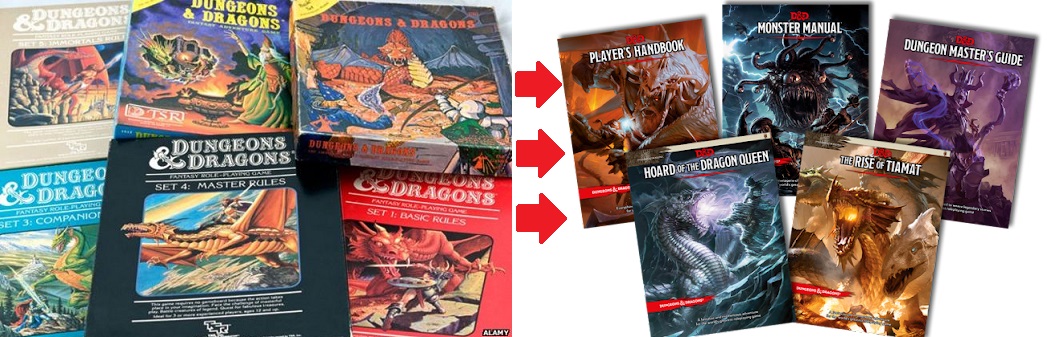
I know that the prices of D&D books can seem daunting these days, but what you might not know is that there are publicly available rulesets for you to enjoy right now! You can use their own quickstart rules, as well as the advice on DnDBeyond.com to delve into building your own game world free of charge!
If Dungeons & Dragons is still a little intimidating, no worries! Have you ever tried a one-page RPG?
Rowan, Rook, and Decard offers a brilliant library of RPG games at all price levels, and many of their one-page RPGs designed by Grant Howitt are Pay What You Want. It’s a delightfully affordable way to try out the hobby without breaking the bank! (There’s also a free RPG section!)
Want to play bears planning the perfect crime? Try Honey Heist.
You’d be amazed at what’s out there for gamers on a budget if you just know where to look. Please support any and all of these companies where you can. They’re helping keep the hobby alive, affordable, and exciting.
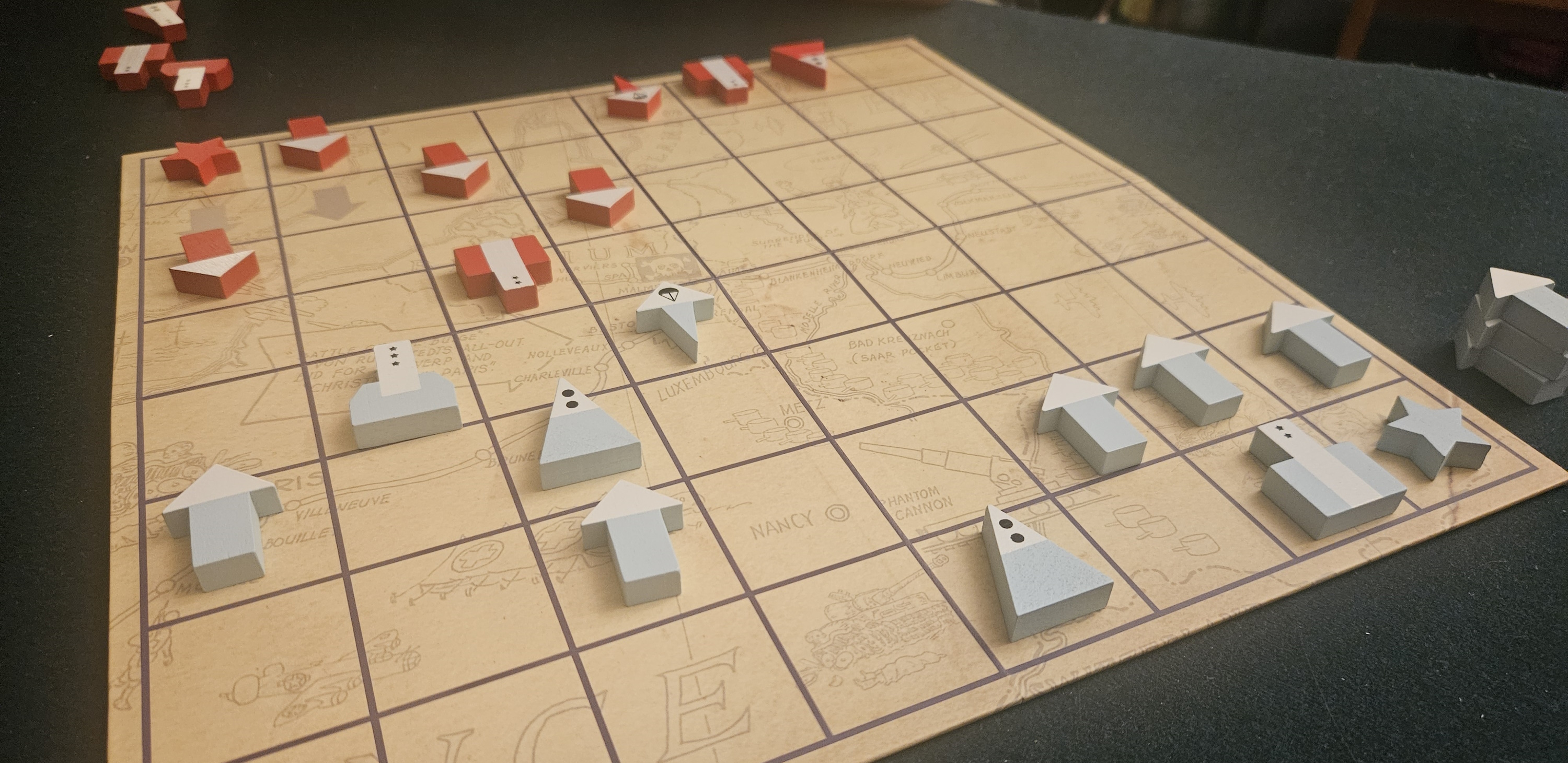
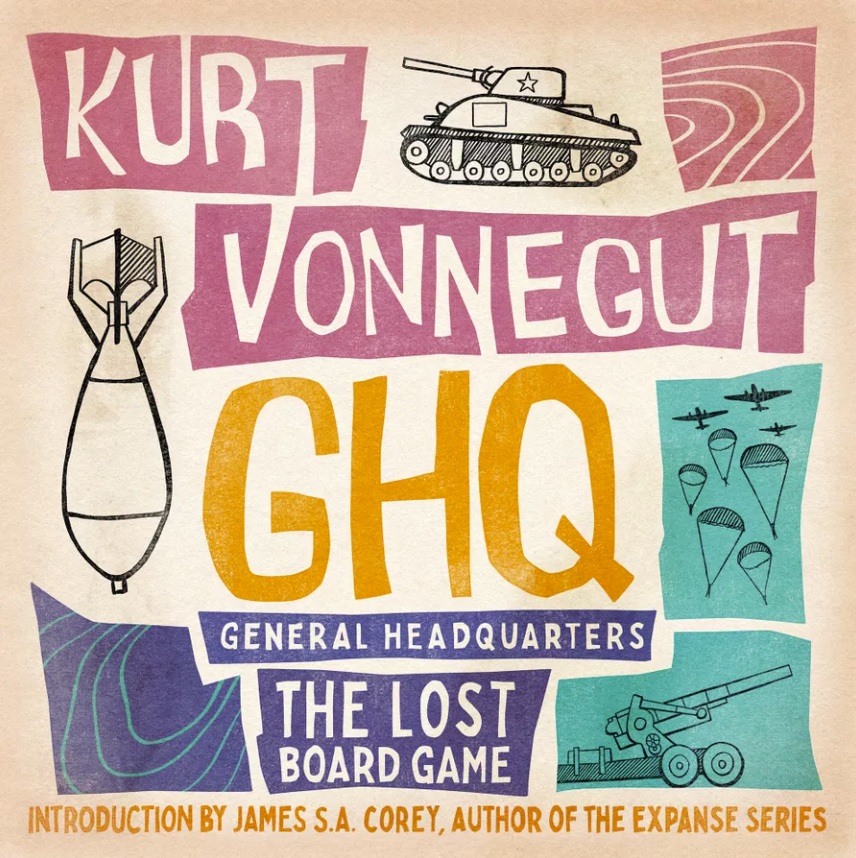
Yes, nearly seventy years ago, after the less than stellar commercial performance of his novel Player Piano, Vonnegut attempted to create a third game to utilize the 8×8 checkerboard as effectively as chess and checkers did.
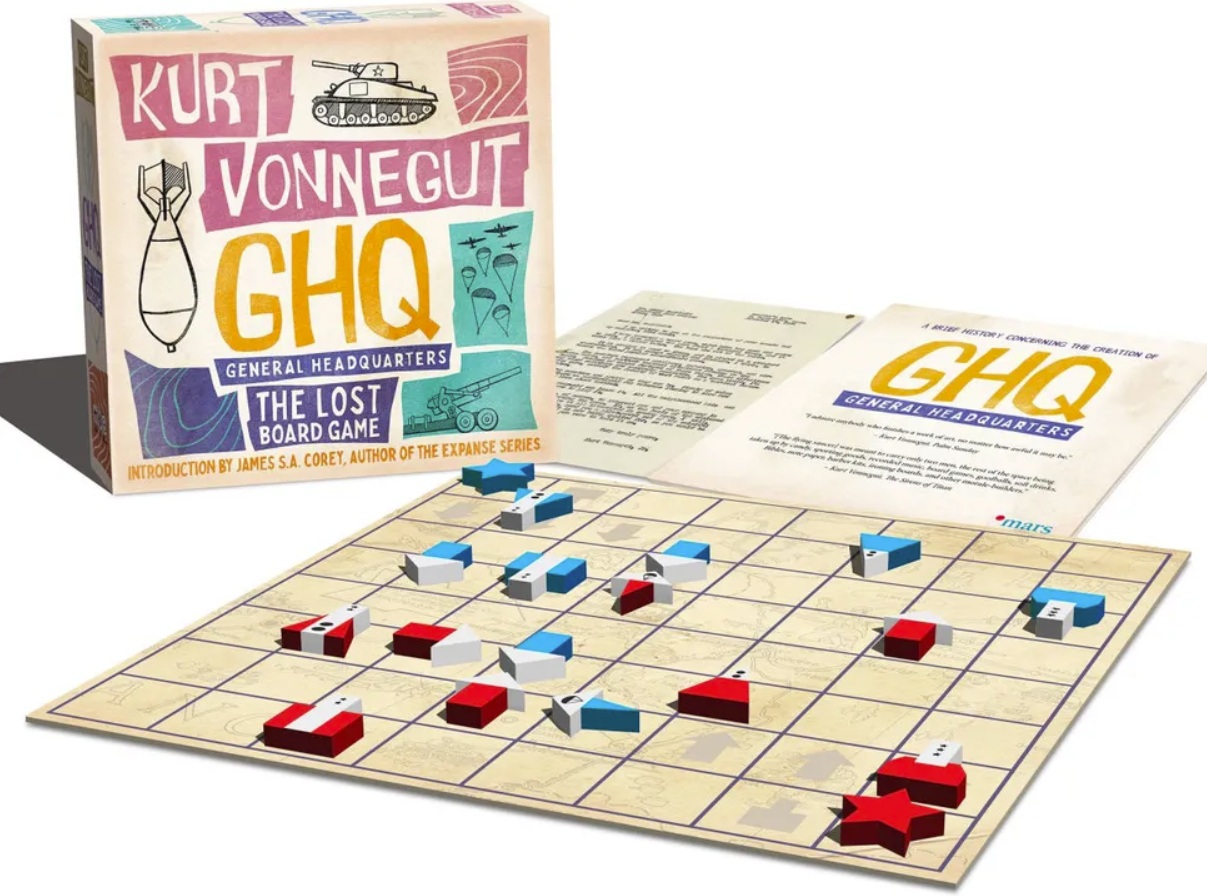
It was called GHQ, short for General Headquarters, and it was a tactical strategy game involving balancing your ground infantry and artillery forces with your airborne forces to capture your enemy’s headquarters.
In 1956, it was downright innovative, mixing wargame mechanics and multiple actions in a single turn. (This is commonplace today, but was quite revolutionary in games for the 1950s.) In today’s board game market, the initial run sold out, and now the game is carried by Barnes & Noble, and I have no doubt it’s performing well.
This would come as a shock to Vonnegut, as the game was rejected by publisher Henry Saalfield of the Saalfield Game Company. Vonnegut put the game away, and as far as his family knows, he never went back to it at all.
That historical context makes the game (and its companion booklet) a wonderful glimpse into Vonnegut as a creative mind.
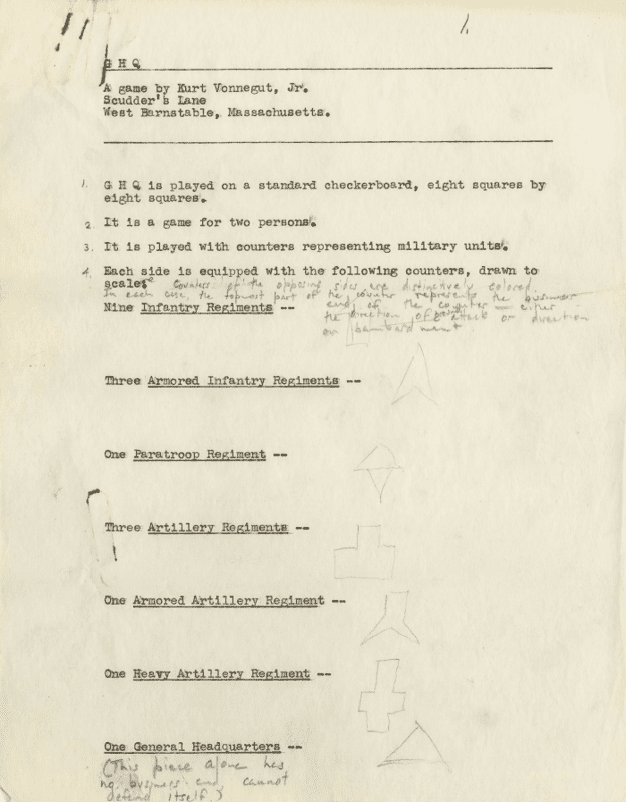
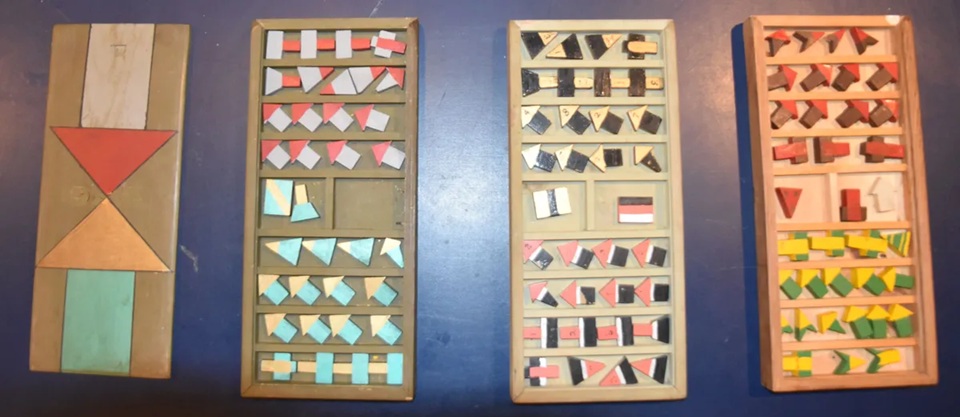
We get his original notes — including rules for the game — as well as photos of the original game pieces from his prototype.
GHQ exists as a fascinating conundrum. How do you reconcile encountering a combat-focused game designed by someone famous for his antiwar sentiments?
It’s also so very Vonnegut. Years before Billy Pilgrim manifested as his coping mechanism for the horrors he witnessed in the Ardennes and during the firebombing of Dresden, here he was designing a game that drew on his experience as a spotter for the 106th Infantry Division. It’s a game rooted in a particular military doctrine, one where most casualties were not inflicted by tanks or planes, but by distant cannons. While the game’s airborne units are flashy and threatening, it’s the roving fields of fire that shape this battlefield.
That, too, strikes me as the proper way to consider GHQ. Vonnegut’s antiwar stance crystallized as U.S. involvement deepened in Vietnam, and it’s natural to wonder if the older Vonnegut set aside GHQ not only out of disappointment with Saalfield’s lack of interest but also because its maneuvers and bombardments cut too close to the bone.
It’s impossible to separate the man from the art in this case. I can’t help but view this game as not only part of Vonnegut’s journey toward his rejection of warfare and wartime thinking, but also as a way for him to turn his knowledge and experience from wartime into something productive (and profitable) for his family.
It’s pragmatic, transformative, and a little bit sad in a way that feels so keenly Vonnegut.
I haven’t had a chance to play it yet, but I do have a Barnes & Noble gift card burning a hole in my pocket, so perhaps you’ll see a more thorough writeup on GHQ in the future.
In the meantime, what do you think of this curious discovery, fellow puzzlers? Does GHQ intrigue either the reader or the tactical gamer in you? Let us know in the comments section below. We’d love to hear from you!