In the pantheon of game show hosts, there are names, there are stars, and there are icons.
Wink Martindale deserves to be called an icon.
He was the host of twenty-one different game shows across a career spanning more than 60 years, including Debt, Tic-Tac-Dough/The New Tac-Tic-Dough, Gambit, High Rollers, and my personal favorite, Trivial Pursuit. (I remember watching and playing along on days I was home sick from school.)
But it may come as a surprise that he contributed far more than memorable game show moments to pop culture.
As a disc jockey in the 1950s, he gave Elvis Presley a lot of airtime, and Elvis rewarded Wink’s enthusiasm and loyalty with his first interview, which was recorded during an episode of Top Ten Dance Party. (Col. Parker was apparently fuming over it!)
His spoken-word song “Deck of Cards” sold over one million copies in 1959, and he made the top ten of the Billboard Hot 100 Chart.
He continued to work in radio all throughout his life, spanning local disc jockey work all the way to appearances on Sirius Radio in the 2010s. His television appearances were equally varied, running the gamut from Your Hit Parade to The Howard Stern Show, including commercials for Orbitz and KFC.
Wink was awarded a star on the Hollywood Walk of Fame in 2006.
He also has a YouTube channel where he chronicles the history of game shows. You should absolutely check it out. (This episode debuted a mere two hours before he passed.)
On a personal note, I found Wink to be an immensely gracious and giving individual.
Back in 2013, I was only a year into writing what was then known as PuzzleNation Blog, and still finding my feet. I had sent out dozens upon dozens of interview requests to puzzly people, celebrities, authors, and more. One of those many requests went to Wink Martindale Productions.
I received a reply the very next day. He was happy to do so.
He politely corrected me about the number of game shows he had hosted, pointing out it was “one more than the great Bill Cullen.” (Sorry, Hollywood Reporter and MSN, who claimed it was 20, not 21.)
His answers were short and to the point, but honest and charming. He shared that his favorite memory from his career was the day his agent told him he’d be hosting his first game show, What’s This Song, for NBC. “Like your first car or your first house, there is nothing that can compete with THE FIRST anything!”
He didn’t know me or anything about the blog, and yet he took time from his still-busy schedule to give us a boost. It was a kind gesture I’ve never forgotten.
It gives me comfort to know he was surrounded by family and loved ones at the end.
Farewell, Wink. Thank you for your humor and heart and all those memories.
I know, that’s not the most joyful subject to choose for a puzzle and games blog.
But you might be surprised to learn there’s a game out there inspired by Tax Day.
It’s called The Taxman Game, but it’s also known by the names Tax Factor, Number Shark, The Factor Game, Factor Blast, Factor Blaster, or Dr. Factor. Phew! What a list.
It was created by mathematician Diane Resek in the late 1960s or early 1970s. It’s designed to help students practice their division and factorial skills.
Your goal is to choose a number, but the tax you pay is any remaining factors on the board. So, with the example board above, if you chose 18, you’d get 18 points. But the taxman would take 1, 2, 3, 6, and 9 (since 1×18, 2×9, and 3×6 all make 18).
With those numbers gone, you can only choose from numbers with factors remaining on the board. You pick, and again, the computer taxes you by claiming any factors remaining.
This continues until there are no legal moves left. When that happens, the taxman collects ALL of the remaining numbers on the board.
(There’s a two player version as well, where players alternate turns as the taxpayer and the taxman.)
Here was my attempt:
I chose 19 first, because it was the highest value prime number. The taxman only gets 1 as a tax.
I chose 10 next, since the taxman could only collect 2 and 5 from the board, which were lower numbers compared to my other options.
Next I chose 20, because with 10, 2, and 5 off the board, the taxman would only collect 4 points.
That put me at 49 to the taxman’s 12. Pretty good so far.
I chose 9 next, because 3 was the only option for the taxman.
Then I chose 18, because 1, 2, 9, and 3 were all off the table, so the taxman only got 6.
I chose 16 next, giving the taxman 8, then closed my choices with 14, giving the taxman 7.
My final score was 106 to the taxman’s 36.
Until that final rule kicked in.
All the unclaimed numbers went to the taxman. That’s 11, 12, 13, 15, and 17. 68 points!
So the final tally was 106 to 104. I BARELY edged out the taxman.
And that was my best effort!
As challenging as the game was, I really enjoyed it. It taxed my observational and math skills to keep ALL the factors in mind when selecting numbers, and trying to be strategic about the order in which I chose numbers.
And yeah, I’d still rather play this than do my taxes. What about you, fellow puzzler?
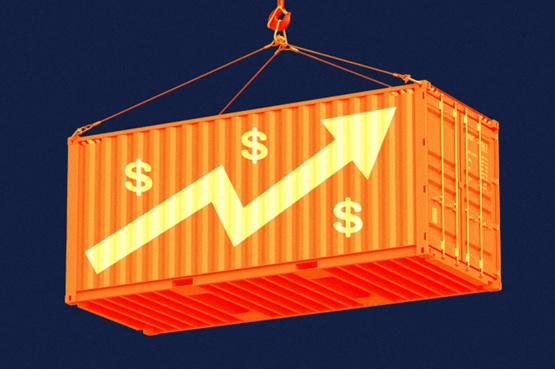
The insane stupid rodeo of tariff threats, retractions, delays, and new threats continues, and the board game industry is reeling.
Some companies are pausing Kickstarter pledge managers and rollouts until they consult with lawyers and printers. Others are cancelling projects outright.
And these companies are being incredibly honest and forthright with their audiences. I’ve seen at least a half-dozen posts from across the industry, and there are probably many others I’ve missed.
Feel free to click the link to check it out, but I’m going to post much of the text here as well, because it’s straightforward and informative. It avoids hyperbole and confronts the unpleasantness awaiting board game companies going forward. Plus it gives us real numbers to crunch.
(Meredith’s comments are in quotation marks, my comments in italics.)
“On April 5th, a 54% tariff goes into effect on a wide range of goods imported from China. For those of us who create boardgames, this is not just a policy change. It’s a seismic shift.
At Steve Jackson Games, we are actively assessing what this means for our products, our pricing, and our future plans. We do know that we can’t absorb this kind of cost increase without raising prices. We’ve done our best over the past few years to shield players and retailers from the full brunt of rising freight costs and other increases, but this new tax changes the equation entirely.”
Covering the board games industry has been a rollercoaster since COVID 19 reports in China emerged and factories began shutting down. Board game companies adapted quickly, but many suffered, and more than a few closed their doors.
I was hoping that would be the worst of it for the industry, but sadly, that’s obviously no longer the case.I can only imagine what the last five years have been like for board game creators.
“Here are the numbers: A product we might have manufactured in China for $3.00 last year could now cost $4.62 before we even ship it across the ocean. Add freight, warehousing, fulfillment, and distribution margins, and that once-$25 game quickly becomes a $40 product. That’s not a luxury upcharge; it’s survival math.”
Getting real numbers has been a revelation, and I’ve been sharing this post all over in the hopes of people realizing the genuine effect these tariffs will have on businesses.
“Some people ask, “Why not manufacture in the U.S.?” I wish we could. But the infrastructure to support full-scale boardgame production – specialty dice making, die-cutting, custom plastic and wood components – doesn’t meaningfully exist here yet. I’ve gotten quotes. I’ve talked to factories. Even when the willingness is there, the equipment, labor, and timelines simply aren’t.
We aren’t the only company facing this challenge. The entire board game industry is having very difficult conversations right now. For some, this might mean simplifying products or delaying launches. For others, it might mean walking away from titles that are no longer economically viable. And, for what I fear will be too many, it means closing down entirely.
Tariffs, when part of a long-term strategy to bolster domestic manufacturing, can be an effective tool. But that only works when there’s a plan to build up the industries needed to take over production. There is no national plan in place to support manufacturing for the types of products we make. This isn’t about steel and semiconductors. This is about paper goods, chipboard, wood tokens, plastic trays, and color-matched ink. These new tariffs are imposing huge costs without providing alternatives, and it’s going to cost American consumers more at every level of the supply chain.”
This is the real lesson here for anyone supporting these tariffs. You can’t just say you’re bringing manufacturing back to America. You have to DO it. You have to have the facilities, the manpower, the training, the materials, and the wherewithal. These tariffs aren’t just putting the cart before the horse, it’s pushing the cart down the hill and blaming gravity when it crashes.
“We want to be transparent with our community. This is real: Prices are going up. We’re still determining how much and where.
If you’re frustrated, you’re not alone. We are too. And if you want to help, write to your elected officials. Ask them how these new policies help American creators and small businesses. Because right now, it feels like they don’t.
We’ll keep making games. But we’ll be honest when the road gets harder, because we know you care about where your games come from – and about the people who make them.”
Hey folks, it’s your friendly neighborhood puzzle guy back again. (Just wanted to make it clear that everything you read going forward is me, not Meredith.)
It’s a rocky road ahead for board game companies.
Thankfully, we are already seeing industry leaders making moves to handle Trump’s tariffs.
The list of organizations agreeing to work on this is impressive… and inspiring. Sure, it’s a business decision. My cynical little heart sees that.
But imagine if they succeeded and made toys tariff-free across the globe. What a gift to parents and children around the world that would be! What a boon that could be to game designers.
(I reached out to the U.S. Toy Association to confirm if board games and RPGs fall under the toy umbrella, but have not heard back yet.)
So, what can you do in the meantime?
Well, if you have the means to do so, reach out to your officials. Support local game companies. Speak up, loudly and often.
When you think of the board game industry, you probably think of the big companies, the big brands… but there’s only a few of them.
The VAST majority are small businesses led by passionate designers, creative minds, and hardworking people of all ethnicities, ages, backgrounds, and gender identities. They are a chorus of voices that make gaming better, that tell us stories about ourselves through gameplay, that bring history alive and challenge our minds, our reflexes, our collaboration, and our cunning.
THAT is the board game industry I want to see succeed.
Meme culture is constantly evolving. As new memes emerge, others are updated. They mutate, they cross over with other meme styles. It’s virtually a language at this point, a hyper-dynamic vernacular where the rules change as fast as the imagery.
And yet, old memes can resurface for new audiences and make an unexpected impact, like the one I stumbled across this week.
Two years ago, an archaeology report hit internet news feeds. Archaeologists in Kazakhstan uncovered the burial mound of a young girl, somewhere between the ages of 12 and 15. The grave dated back to the Bronze Age, about 5000 years or so.
But that wasn’t what caught the Internet’s attention.
It was the sheep bones that captured everyone’s imagination.
You see, she was buried with 180 ankle bones, also known as astragalus bones, from dozens and dozens of sheep.
Researchers were unsure of the significance of these bones, attributing them to cult practices, totems for meditation, or symbols of good luck to wish the deceased well in their transition to a new world.
Internet readers came to a different conclusion. They believed this young girl was a world-class gamer and these were her trophies, the spoils of victory.
Knuckle bones, ankle bones, and other small, easily-rolled bones have been associated with gaming for centuries. For many cultures, they were the first readily-available dice. This is true in Kazakhstan as well.
In fact, there is a Kazakh game called Assyk, and it’s similar to marbles. Players take an ankle bone and try to knock other ankle bones from the game space. It requires considerable skill, since you’re tossing the assyk from a distance.
Rules vary depending on your sources, but according to some articles about this traditional Kazakh game, winners would keep the ankle bones they knock out of the circle, just like in marbles, pogs, and other games of this nature.
So, if our Bronze Age assyk master followed this rule — and based on the number of bones in her grave, it’s a distinct possibility — that means she didn’t just dabble in this game… she dominated at it, collecting dozens of victories.
Appropriately, the Internet celebrated her as a pro gamer, a tournament-level champion with the hand-eye coordination to dominate modern games as easily as she did games of assyk around her village.
And honestly, how can you not love something like that? Everybody needs a hero, gamers included. A 5000-year-old Bronze Age astragalus-hoarding game sniper is not a bad place to start.
Social deduction games are terrific party activities. A social deduction game involves players being assigned secret roles or allegiances, and the goal of the game is to unravel these secret roles before the opposing side can eliminate you from the game.
Usually it means the good guys trying to root out the bad guys before the bad guys take power, kill the good guys, or outwit the good guys into acting against their own best interests.
There are a lot of social deduction games out there for you to enjoy. Ultimate Werewolf, Are You a Robot?, Salem 1692, The Resistance, and Secret Hitler are all affordable ones with tons of replay value. (Of course, for affordability, you can’t beat Mafia. You can play a round of Mafia with just a deck of cards, proving that social deduction games are more about the players than the game pieces.)
But, when it comes to social deduction games, one game stands head and shoulders above the rest in terms of complexity, variation, challenge, and immersion.
There are usually only a few different roles to play in social deduction games. In Are You a Robot?, there are humans and robots. In Ultimate Werewolf, villagers and werewolves. In Secret Hitler, there’s Liberals, Fascists, and Hitler. In Mafia, there are mafia members, townspeople, a doctor/guardian angel, and a detective.
The limited number of character archetypes allows you to introduce to new players to the game quickly, which is definitely a bonus for games that require a large number of people.
But these limited roles can also hurt replay value if your players are looking for more to sink their teeth into.
That’s where Blood on the Clocktower comes in.
Yes, there are only two teams (good and evil), but EVERY player gets their own role, including powers and requirements that change over the course of the three “nights” that the game takes place. Every role is unique, and victory or defeat can hinge on the special abilities of a single player.
Blood on the Clocktower is the Tri-Dimensional Chess to every other social deduction game’s Chess. There is so much going on, so much to keep track of, so many possibilities that you can’t help but fall fully into the immersion of the game. It’s your only chance to survive.
And the game is so involved that it lends itself well to be “performed.” Watching a great game of Blood on the Clocktower being played is sometimes just as fun as playing.
I have seen some amazingly entertaining actual play videos of Blood on the Clocktower. YouTube channels like Smosh and No Rolls Barred have played, and now, Good Time Society is hoping to fund a Kickstarter for a series of actual plays of the game:
Some of the best actual play personalities in the board game and roleplaying game are teaming up for this, and it looks like they’re going to make something special here.
So click this link if you’d like to contribute. If not, hopefully you’ll watch some of these actual play videos and check out the game for yourself.
Game companies continue to push the envelope in terms of storytelling, presentation, and immersion, and Blood on the Clocktower has become the new benchmark. Who knows what’s coming next!
Do you have a favorite social deduction game? Let me know in the comments below! (For me personally, I love the simplicity and replay value of Mafia!)
Rochester, New York is the home of The Strong National Museum of Play, and they have a very important mission: to chronicle the history and importance of play.
Child development, social interaction, imagination… all of these key features in a healthy individual are facilitated by play, and the staff at The Strong help us not only understand that process, but celebrates it by hosting both the National Toy Hall of Fame and the World Video Game Hall of Fame under its brightly-colored umbrella.
As you might have guessed, puzzles and games play a significant role in The Strong’s work, and they’re represented in both Halls of Fame. Clue, Chess, Scrabble, the Rubik’s Cube, and Dungeons & Dragons are all inductees in the National Toy Hall of Fame, while Myst, Tetris, The Oregon Trail, and Where in the World is Carmen Sandiego? are among the puzzlier inductees on the video game side of things.
This year’s finalists for the 2025 class run the gamut from 8-bit classes, modern phenomenon, and games that took play to surprising new places, and they represent different genres, play styles, and aspects of gaming across decades.
The 2025 finalists are: Age of Empires, Angry Birds, Call of Duty 4: Modern Warfare, Defender, Frogger, Golden Eye, Golden Tee, Harvest Moon, Mattel Football, Quake, NBA 2K and Tamagotchi.
What a field! Everywhere from arcades (Frogger) to pocket games (Tamagotchi) are on display here, as well as social gaming both in person (Golden Eye) and online (Quake).
The nominees were chosen from thousands of nominations online. The field was then narrowed by staff members at The Strong based on “longevity, geographical reach, and influence on game design and pop culture.” Only a small handful of these finalists will be selected by an international committee of experts as this year’s inductees.
Everyone has an award show that they geek out over, and you’re probably not surprised to discover that these Halls of Fame are two of my favorite awards given out each year. I love seeing deserving games and puzzles get the spotlight they deserve for helping change how we play and interact with each other.