No Prep Road Trip Games!

Summer is nearly upon us, and with the arrival of summer, one cannot help but think of road trips with friends and ways to pass the time in the car.

While singalongs, I Spy, and the License Plate Game are all well and good, perhaps you would like a little more challenge with your road trip games.

Well, you’ve come to the right place. Here’s a few suggestions for road trip games that require no preparation, save for a little imagination!


The Movie Game

I learned this game while stuck on a long train ride, and it certainly made the delays go faster.

Someone starts with a film, and the next player names an actor in that film. The next person names ANOTHER film that actor has appeared in, and the next person names ANOTHER actor from that film. And you keep going until someone can’t continue the game.

(If you present an actor or film in the chain that the next player can’t continue, you can only eliminate them by offering another answer, showing that the chain can continue. If you give them a chain link you can’t continue either, you’re out!)

It’s surprisingly difficult, because the more you play, the more devious you try to get. You want to lure other players down garden paths, but you have to make sure you don’t go so obscure that you can’t find your way out as well.


Playlist

Friend of the blog Jen Cunningham created a music-themed version of The Movie Game: Playlist.

In this version, you start with a song and an artist, and the next player either names another song by that artist OR another song using one of the key words in the song.

So, for instance, if you say “Sgt. Pepper’s Lonely Hearts Club Band” by the Beatles and you need to match the song, you could do “Owner of the Lonely Heart” by Yes or “Only the Lonely” by Roy Orbison. Then someone needs to name another Yes song or another Roy Orbison song, and then the chain continues.

I find this game slightly more challenging than The Movie Game because of both the musical knowledge (which isn’t as strong as my movie knowledge) and the associative nature of the song title aspect. But many hours have been wiled away with this game!


My Friend Is An Expert… / Conspiracy Theory

In this game, the first player picks two random subjects, and then prompts the next player with them, and it’s the next player’s job to explain in entertaining fashion something fascinating about them that only an expert would know.

For instance, the first player would go “My friend is an expert in ancient archaeology and polka music” and the next player has to riff on those subjects for a bit. Other players can ask questions to continue the silliness.

The game continues with different topics and additional nonsense.

There’s a similar game to this called Conspiracy Theory where someone has to rant about the grand conspiracy behind two seemingly unrelated topics provided by the other players.

Both of these are great fun with a group of improvisers or snake oil salesman during a long road trip.


Alien Ambassador

(I haven’t played this one yet, but a friend recommended it, so I’m happily including it.)

In this game, one player is selected to be the alien ambassador, an alien visiting Earth for the very first time. The other players must answer the alien’s questions and explaining simple concepts to them. (It’s sorta like that comic strip with the aliens.)

As the alien ambassador asks more questions about this, the players will invariably scramble to explain the very weird things we accept as normal, everyday life, and laughter will ensue.
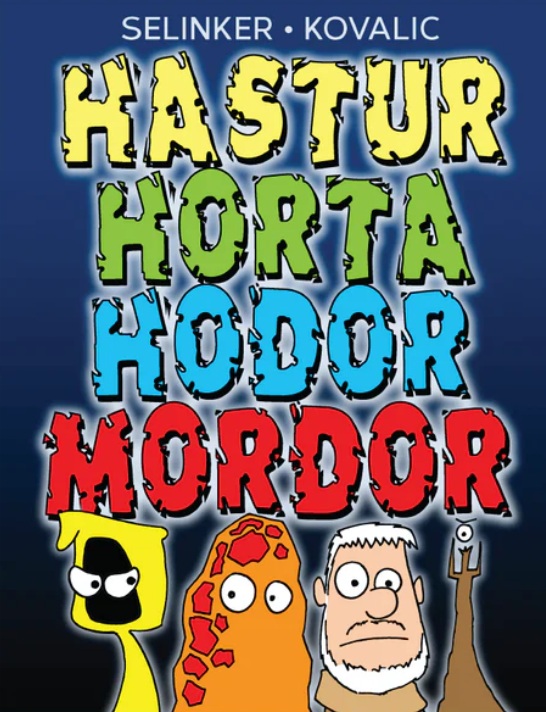

Hastur Horta Hodor Mordor

Inspired by a Dork Tower comic, Hastur Horta Hodor Mordor is a road trip game that actually became a real card game. But let’s focus on the road trip version.

This is a memory game where one player says a word — preferably one related to fandom, geek culture, etc. — in order to begin a nerdy tongue twister. The next player says that word AND another word. The next player says the two previous words AND another word, and the chain continues.

If you can’t complete the chain or you hesitate too long, you get a Hodor point, and a new chain begins.

If you get 3 Hodor points, you can only say “Hodor” for the rest of the car ride. (That’s a reference for the Game of Thrones fans in the audience, if there are any of you left after those dismal final seasons.)


Do you have any favorite no prep road trip games, fellow puzzlers? Let us know in the comments section below! We’d love to hear from you.

The RPG and Board Game Community Reaches Out!

One of the best parts of being a puzzle and board game guy is the amazing community of fellow players, puzzlers, and game designers that surrounds you. Yes, puzzles and games are a business, obviously, but every week I see examples of creators and companies giving back, doing charitable acts, and participating in fundraisers for good causes.

Today, I’d like to highlight a few and hopefully bring more attention to these worthwhile endeavors.


Accessible Games: Global Accessibility Awareness Day

Accessible Games understands that every person is different, and that there are many people who don’t feel represented in modern roleplaying games. To that end, they created Survival of the Able, an RPG with disabled protagonists set in medieval Europe during a zombie plague. It shows the challenges people face every day, but also shows that those people are capable of accomplishing extraordinary things. (They even published a special edition of the game that is designed to be more accessible for dyslexic players.)

Between Survival of the Able, their zine Accessible Gaming Quarterly, and their guide to more inclusive tabletop creation — Accessible Guide to RPG Layout — they’re doing a lot of advance the cause of gaming for everybody.

In honor of Global Accessibility Awareness Day (which is Thursday May 15th), they’re offering a 30% discount on their entire accessibility-focused library. You can get your discounted copies between May 15th and May 22nd at this link. Please consider participating.


Kids in the Attic: Hershey Family Recovery Bundle

Kids in the Attic is a roleplaying game company that likes to highlight the weird and whimsical in their fantasy, space, and horror games, but this week, they’re turning their attention to bringing light and kindness to a horrible situation.

They’re currently organizing the Hershey Family Recovery Bundle to support the family of Rick Hershey, a prolific artist in the tabletop roleplaying game community. All of his children were involved in a devastating car accident caused by another driver. Thankfully, they all survived, but the road ahead will be long, and everyone knows the burden that medical bills can impose.

You can click this link to see everything included in the Hershey Family Recovery Bundle and to learn more about Rick. Please consider donating to help Rick’s family get back on their feet.


Tycoon Games: The Box of Giving

Tycoon Games has been an industry leader in charitable work and outreach for years, donating to Toys for Tots, the Boys and Girls Club, and many other worthy organizations.

Their latest endeavor is The Box of Giving, a collection of games intended to help underserved communities, schools, libraries, gaming conventions, and local non-profits experience the joy and camaraderie that comes with playing games. For the cost of shipping alone, each organization receives $500 worth of games!

Please click this link to apply for the Box of Giving program and share the link for any groups that you think would benefit from this wonderful endeavor.


Are there any charitable efforts in the board game or roleplaying world that you’d like to shout-out? Let us know in the comments below! We’d love to hear from you.

Happy gaming, everyone!

Free Board Games and RPGs?

At the start of the pandemic in 2020, game companies around the world rallied around their customers, offering discounts, producing print-and-play versions of their games, and creating new online variants of their games to allow for Zoom play or remote play.

It was a remarkable effort at a very trying time, one that many board game enthusiasts like myself remember warmly.

So, five years later, as this baffling tariff war threatens the industry as a whole, we’re seeing the board game industry again roll with the punches and work with the audience to survive.

Some are having “tariff sales” at deep discounts to help clear inventory, gauge audience interest in certain games, or create a cash bumper to help them weather the uncertain tariff storms.

Others are making PDFs more available to customers, helping mitigate both prices for the audience and reduce production costs for the company.

Today, I want to highlight a few companies that have gone beyond that, offering free products for customers to enjoy.

Yes, they would obviously rather that you visit their shops and pay for PDFs or physical copies, but the fact that they have free board game libraries AT ALL is worthy of attention and admiration.

So here we go!


9th Level Games

Every year, dozens of roleplaying game companies create Free RPG Day handouts for game stores to offer fans. Sometimes they’re quickstart versions of the games to introduce new players. Sometimes they’re exclusive adventures or modules to play either in-store or at home. Othertimes, they’re entirely new games, free of charge.

For five years now, 9th Level Games has created their own Free RPG Day offering, the Level 1 Anthology. It’s a collection of new games by up-and-coming and established RPG creators, all centered around a theme. Last year’s edition was all about programming. This year’s is about the end of the wild west.

You can visit your friendly local game shop on June 21st this year to pick your physical copy of the game.

But if you want to check out ANY of the previous years’ Level 1 Anthologies, they continue to offer the PDFs free of charge!

9th Level Games is one of my favorite RPG companies — making classics like Kobolds Ate My Baby!, Mazes, Return to Dark Tower, and The Very Good Dogs of Chernobyl — and I’m proud to have a game featured in last year’s Level 1 collection as well as a game in this year’s upcoming collection. Please check out both the freebies and the full lineup of games on their website.


Crab Fragment Labs

A company called Cheapass Games launched with a very simple idea: they only give you what you need to play the game. No reselling you tokens and dice and chips and fake money that you can already borrow from other games. Just what you need to play their games. It was affordable and brilliant.

They’ve created some of my all-time favorite board games, including:

The Big Idea (can you put two cards together to make a silly product and market it to your investors/other players?)
Kill Doctor Lucky (can you eliminate the luckiest man alive?)
Unexploded Cow (can you combine unexploded World War II ordnance and mad cows to turn a profit?)
U.S. Patent Number 1 (can your time machine beat other time machines to the day the patent office opened and claim the very first patent?)

And while many games from the Cheapass Games era are still available, their creative legacy lives on through Crab Fragment Labs, a game company that not only develops their own clever and challenge games, but also hosts a free print-and-play library of many board games for you to enjoy.

They have a shop as well, where you can support their gaming mission. Please check them out!


Dungeons & Dragons

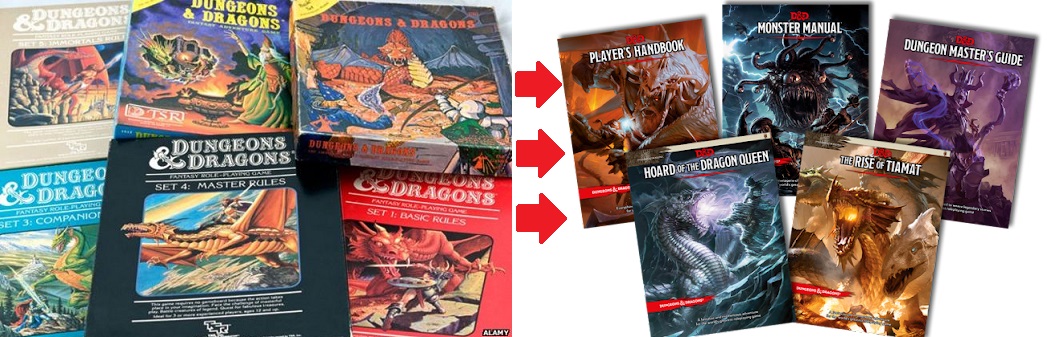
I know that the prices of D&D books can seem daunting these days, but what you might not know is that there are publicly available rulesets for you to enjoy right now! You can use their own quickstart rules, as well as the advice on DnDBeyond.com to delve into building your own game world free of charge!


Rowan, Rook, and Decard

If Dungeons & Dragons is still a little intimidating, no worries! Have you ever tried a one-page RPG?

Rowan, Rook, and Decard offers a brilliant library of RPG games at all price levels, and many of their one-page RPGs designed by Grant Howitt are Pay What You Want. It’s a delightfully affordable way to try out the hobby without breaking the bank! (There’s also a free RPG section!)

Want to play bears planning the perfect crime? Try Honey Heist.

Want to play a group of seagulls causing mayhem? Try Everyone Is Seagulls.

Want to see Sean Bean finally survive film? Try Seans Bean Star In: A Very Northern Christmas.

Want to combine Regency romance with giant robots? Try Pride and Extreme Prejudice.

Comedy, horror, action, long-form, short-form? They’ve got it all. Check out their entire library here!


If you’re looking to play online, you have options like Free Board Games.org, Tabletopia, and Calculators.org, as well as this list from RPG Geek.

For those with 3D printers at home, How-To Geek has collected ten board games you can print at home right now. The list includes Connect 4, Battleship, Chess, and Settlers of Catan.

You’d be amazed at what’s out there for gamers on a budget if you just know where to look. Please support any and all of these companies where you can. They’re helping keep the hobby alive, affordable, and exciting.

Happy tabletopping, everyone!

The Board Game Legacy of Kurt Vonnegut

Mystery novelist Agatha Christie was an avid surfing enthusiast. Abraham Lincoln is in the National Wrestling Hall of Fame and only suffered a single defeat in 12 years. We wouldn’t have Wi-Fi or Bluetooth without the scientific prowess of actress Hedy Lamarr.

It’s fascinating to learn unexpected facts about iconic figures from history that don’t necessarily jive with their most famous accolades.

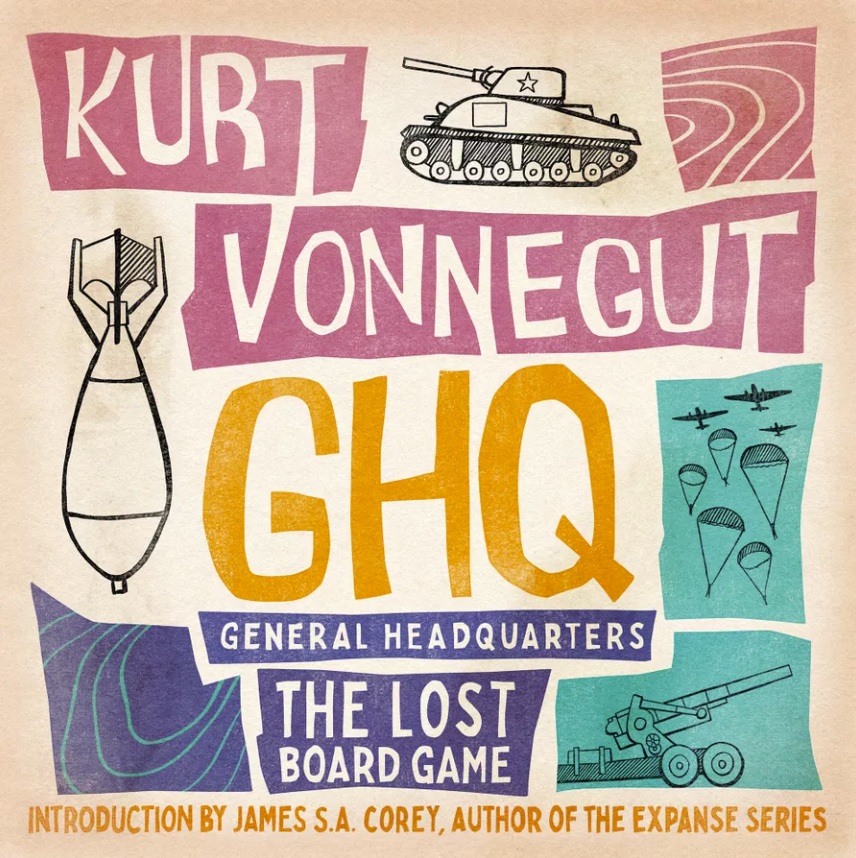
For instance, did you know that celebrated writer Kurt Vonnegut made a board game?

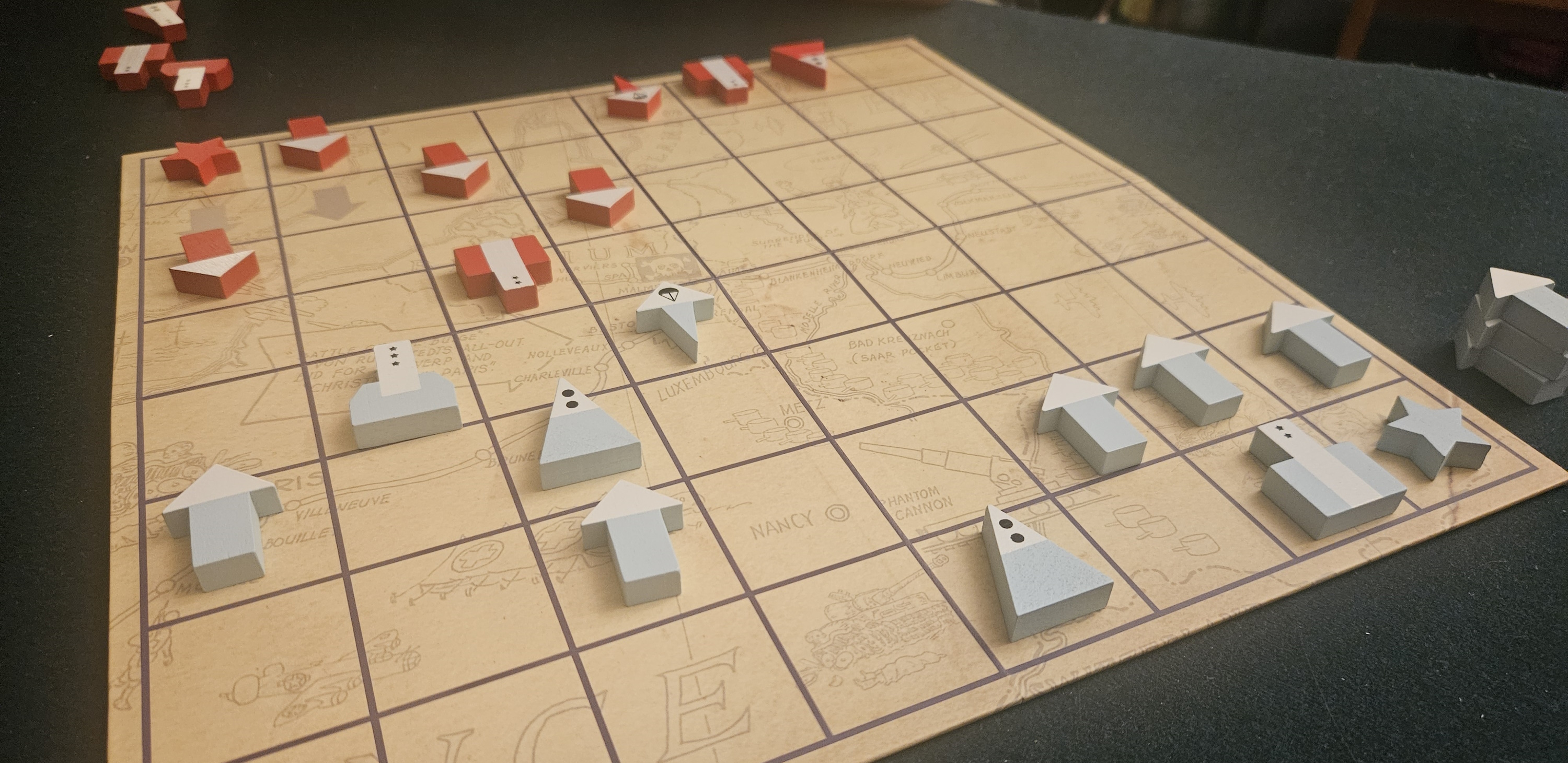
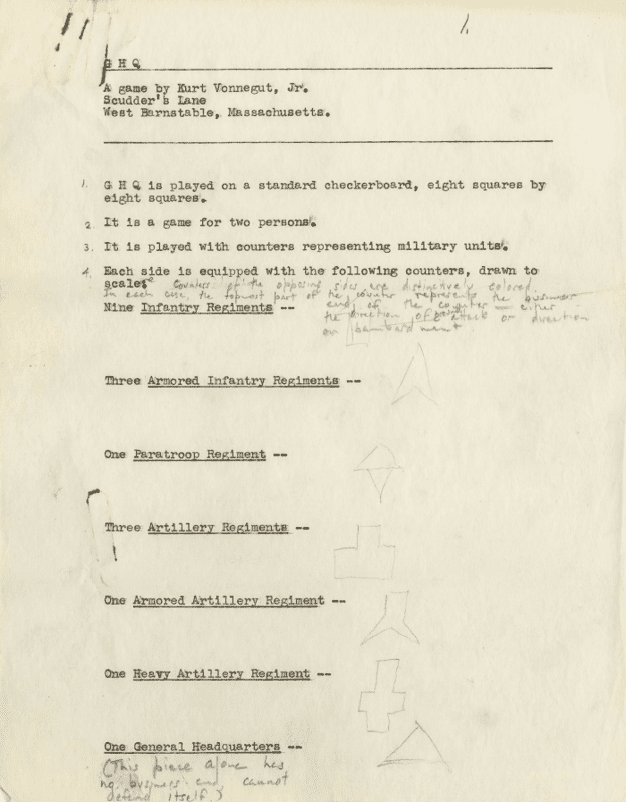
Yes, nearly seventy years ago, after the less than stellar commercial performance of his novel Player Piano, Vonnegut attempted to create a third game to utilize the 8×8 checkerboard as effectively as chess and checkers did.

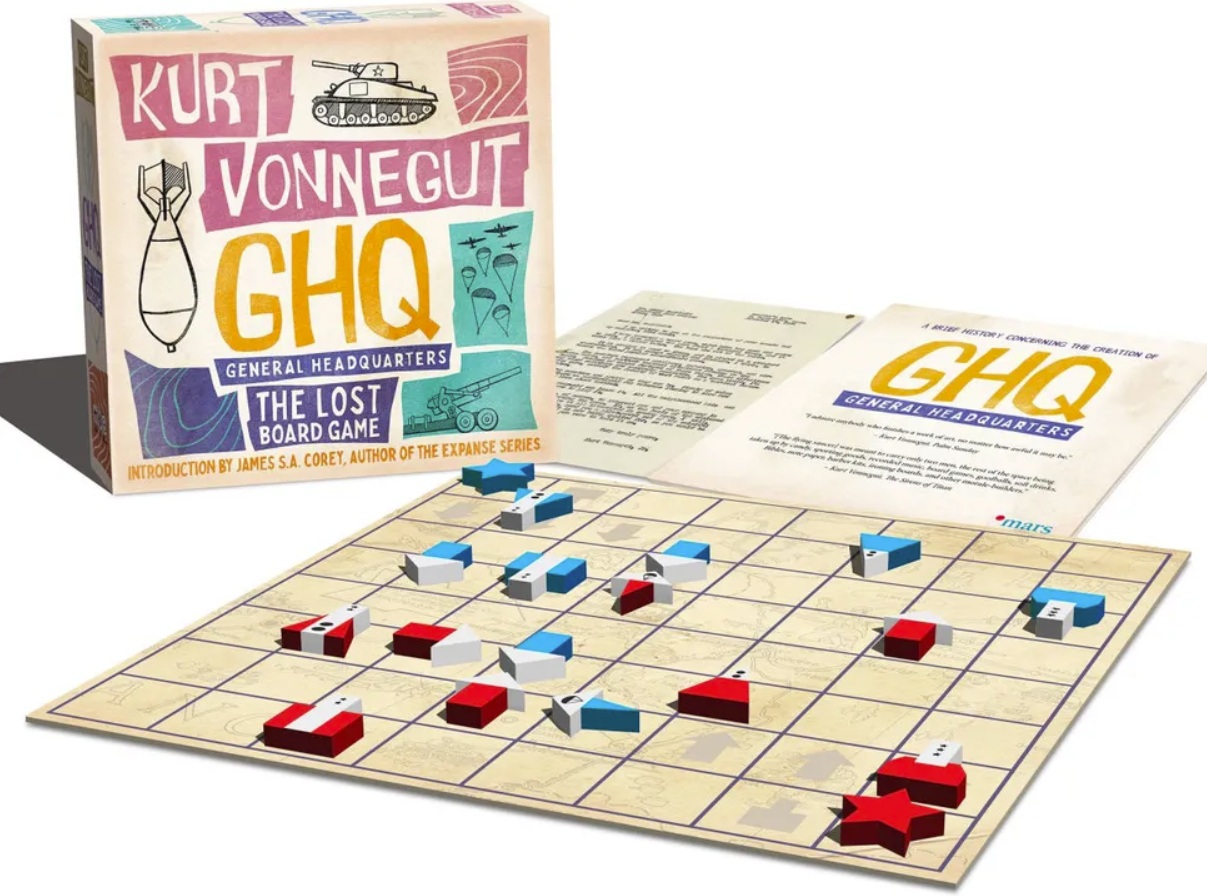
It was called GHQ, short for General Headquarters, and it was a tactical strategy game involving balancing your ground infantry and artillery forces with your airborne forces to capture your enemy’s headquarters.

In 1956, it was downright innovative, mixing wargame mechanics and multiple actions in a single turn. (This is commonplace today, but was quite revolutionary in games for the 1950s.) In today’s board game market, the initial run sold out, and now the game is carried by Barnes & Noble, and I have no doubt it’s performing well.

This would come as a shock to Vonnegut, as the game was rejected by publisher Henry Saalfield of the Saalfield Game Company. Vonnegut put the game away, and as far as his family knows, he never went back to it at all.

That historical context makes the game (and its companion booklet) a wonderful glimpse into Vonnegut as a creative mind.

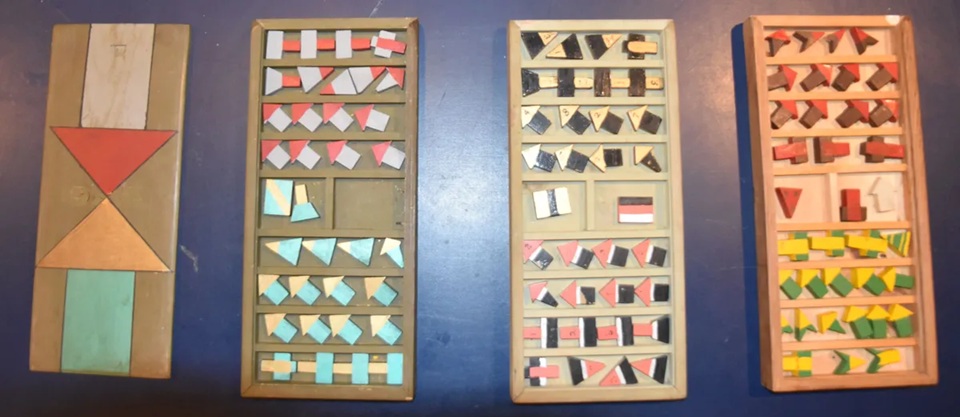
We get his original notes — including rules for the game — as well as photos of the original game pieces from his prototype.

GHQ exists as a fascinating conundrum. How do you reconcile encountering a combat-focused game designed by someone famous for his antiwar sentiments?

A review of the game on Spacebiff had something interesting to say about this:

It’s also so very Vonnegut. Years before Billy Pilgrim manifested as his coping mechanism for the horrors he witnessed in the Ardennes and during the firebombing of Dresden, here he was designing a game that drew on his experience as a spotter for the 106th Infantry Division. It’s a game rooted in a particular military doctrine, one where most casualties were not inflicted by tanks or planes, but by distant cannons. While the game’s airborne units are flashy and threatening, it’s the roving fields of fire that shape this battlefield.

That, too, strikes me as the proper way to consider GHQ. Vonnegut’s antiwar stance crystallized as U.S. involvement deepened in Vietnam, and it’s natural to wonder if the older Vonnegut set aside GHQ not only out of disappointment with Saalfield’s lack of interest but also because its maneuvers and bombardments cut too close to the bone.

It’s impossible to separate the man from the art in this case. I can’t help but view this game as not only part of Vonnegut’s journey toward his rejection of warfare and wartime thinking, but also as a way for him to turn his knowledge and experience from wartime into something productive (and profitable) for his family.

It’s pragmatic, transformative, and a little bit sad in a way that feels so keenly Vonnegut.

I haven’t had a chance to play it yet, but I do have a Barnes & Noble gift card burning a hole in my pocket, so perhaps you’ll see a more thorough writeup on GHQ in the future.


In the meantime, what do you think of this curious discovery, fellow puzzlers? Does GHQ intrigue either the reader or the tactical gamer in you? Let us know in the comments section below. We’d love to hear from you!

Farewell, Wink.

Image courtesy of NBC News.

In the pantheon of game show hosts, there are names, there are stars, and there are icons.

Wink Martindale deserves to be called an icon.

He was the host of twenty-one different game shows across a career spanning more than 60 years, including Debt, Tic-Tac-Dough/The New Tac-Tic-Dough, Gambit, High Rollers, and my personal favorite, Trivial Pursuit. (I remember watching and playing along on days I was home sick from school.)

But it may come as a surprise that he contributed far more than memorable game show moments to pop culture.

As a disc jockey in the 1950s, he gave Elvis Presley a lot of airtime, and Elvis rewarded Wink’s enthusiasm and loyalty with his first interview, which was recorded during an episode of Top Ten Dance Party. (Col. Parker was apparently fuming over it!)

His spoken-word song “Deck of Cards” sold over one million copies in 1959, and he made the top ten of the Billboard Hot 100 Chart.

He continued to work in radio all throughout his life, spanning local disc jockey work all the way to appearances on Sirius Radio in the 2010s. His television appearances were equally varied, running the gamut from Your Hit Parade to The Howard Stern Show, including commercials for Orbitz and KFC.

Wink was awarded a star on the Hollywood Walk of Fame in 2006.

He also has a YouTube channel where he chronicles the history of game shows. You should absolutely check it out. (This episode debuted a mere two hours before he passed.)

On a personal note, I found Wink to be an immensely gracious and giving individual.

Back in 2013, I was only a year into writing what was then known as PuzzleNation Blog, and still finding my feet. I had sent out dozens upon dozens of interview requests to puzzly people, celebrities, authors, and more. One of those many requests went to Wink Martindale Productions.

I received a reply the very next day. He was happy to do so.

He politely corrected me about the number of game shows he had hosted, pointing out it was “one more than the great Bill Cullen.” (Sorry, Hollywood Reporter and MSN, who claimed it was 20, not 21.)

His answers were short and to the point, but honest and charming. He shared that his favorite memory from his career was the day his agent told him he’d be hosting his first game show, What’s This Song, for NBC. “Like your first car or your first house, there is nothing that can compete with THE FIRST anything!”

He didn’t know me or anything about the blog, and yet he took time from his still-busy schedule to give us a boost. It was a kind gesture I’ve never forgotten.

It gives me comfort to know he was surrounded by family and loved ones at the end.

Farewell, Wink. Thank you for your humor and heart and all those memories.


The Strong National Museum of Play did a wonderful writeup on Wink’s life. It’s absolutely worth a read.

A Game For Tax Day?

It’s Tax Day today.

I know, that’s not the most joyful subject to choose for a puzzle and games blog.

But you might be surprised to learn there’s a game out there inspired by Tax Day.

It’s called The Taxman Game, but it’s also known by the names Tax Factor, Number Shark, The Factor Game, Factor Blast, Factor Blaster, or Dr. Factor. Phew! What a list.

It was created by mathematician Diane Resek in the late 1960s or early 1970s. It’s designed to help students practice their division and factorial skills.

In the single-player version of the game, you’re dealing with the taxman (played by the computer), while you play the tax payer.

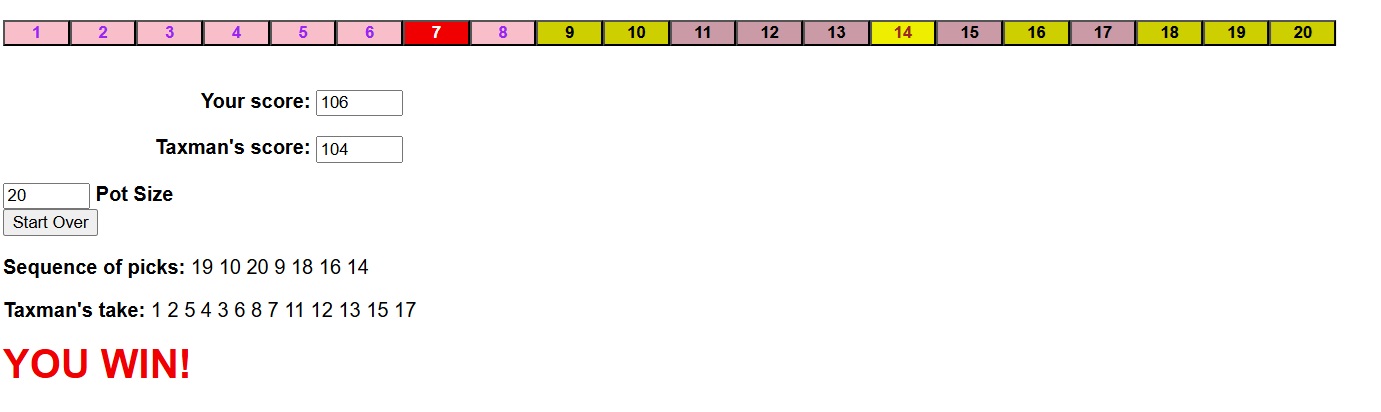
Your goal is to choose a number, but the tax you pay is any remaining factors on the board. So, with the example board above, if you chose 18, you’d get 18 points. But the taxman would take 1, 2, 3, 6, and 9 (since 1×18, 2×9, and 3×6 all make 18).

With those numbers gone, you can only choose from numbers with factors remaining on the board. You pick, and again, the computer taxes you by claiming any factors remaining.

This continues until there are no legal moves left. When that happens, the taxman collects ALL of the remaining numbers on the board.

(There’s a two player version as well, where players alternate turns as the taxpayer and the taxman.)

Here was my attempt:

I chose 19 first, because it was the highest value prime number. The taxman only gets 1 as a tax.

I chose 10 next, since the taxman could only collect 2 and 5 from the board, which were lower numbers compared to my other options.

Next I chose 20, because with 10, 2, and 5 off the board, the taxman would only collect 4 points.

That put me at 49 to the taxman’s 12. Pretty good so far.

I chose 9 next, because 3 was the only option for the taxman.

Then I chose 18, because 1, 2, 9, and 3 were all off the table, so the taxman only got 6.

I chose 16 next, giving the taxman 8, then closed my choices with 14, giving the taxman 7.

My final score was 106 to the taxman’s 36.

Until that final rule kicked in.

All the unclaimed numbers went to the taxman. That’s 11, 12, 13, 15, and 17. 68 points!

So the final tally was 106 to 104. I BARELY edged out the taxman.

And that was my best effort!


As challenging as the game was, I really enjoyed it. It taxed my observational and math skills to keep ALL the factors in mind when selecting numbers, and trying to be strategic about the order in which I chose numbers.

And yeah, I’d still rather play this than do my taxes. What about you, fellow puzzler?