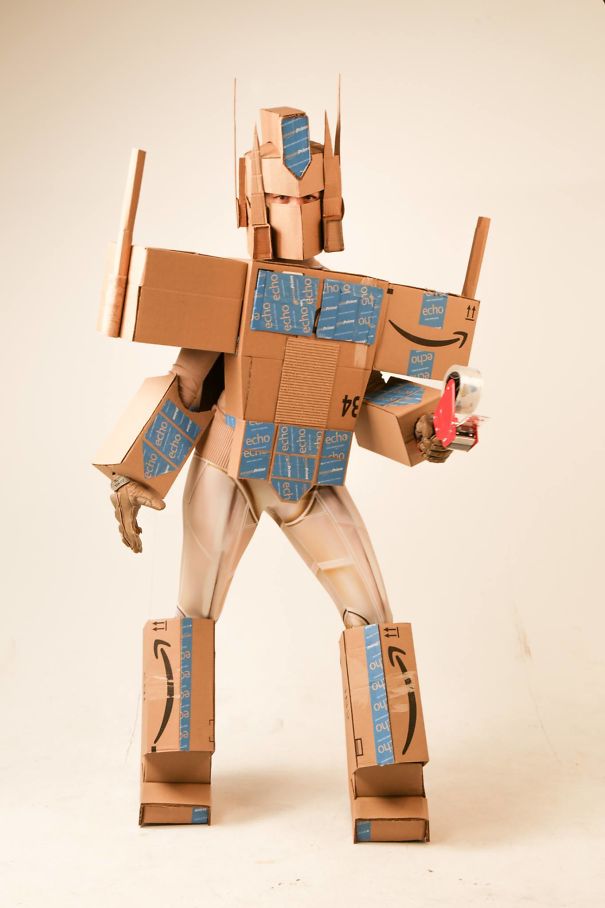
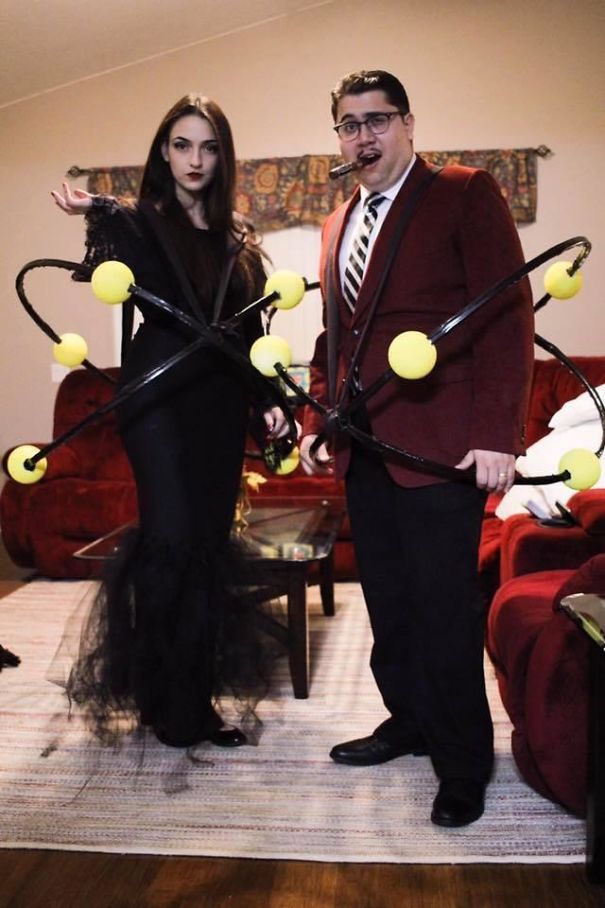
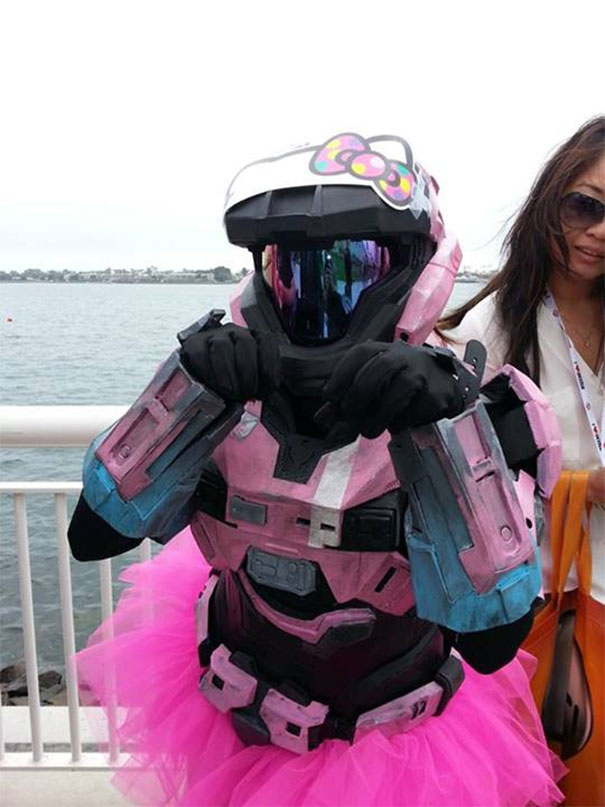
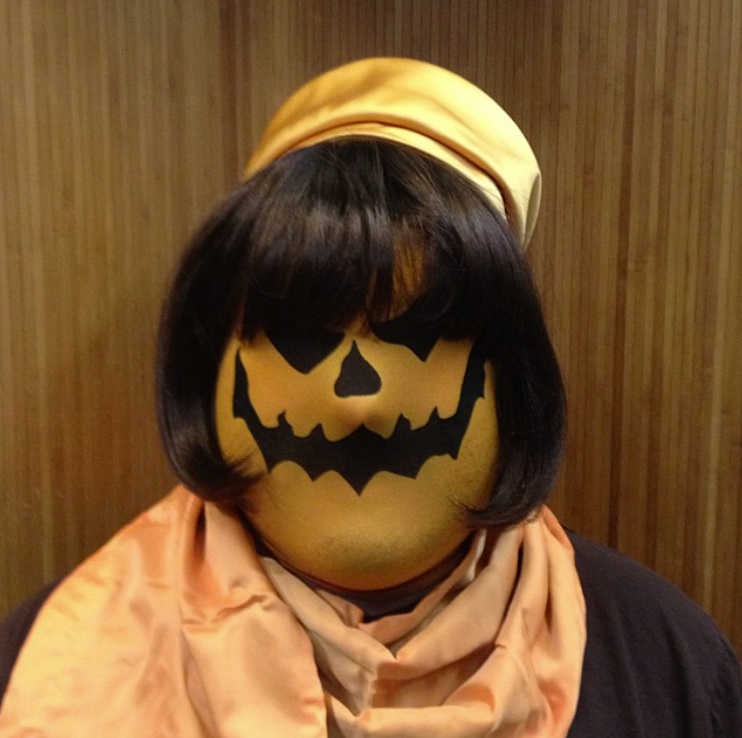
One of the best things about Halloween is guessing what people’s costumes are. Clever costumes can be great fun, and I’m a huge fan of costumes that only cost a few bucks to put together, because they really let your creativity shine through.
Punny costumes lend themselves to the low-budget costume genre brilliantly. So it’s only appropriate that we celebrate Halloween in the puzzliest way possible — by looking at some punny costumes!
It’s simple. I post a picture, and you guess what the costume is.
For example:
She’s the family breadwinner!
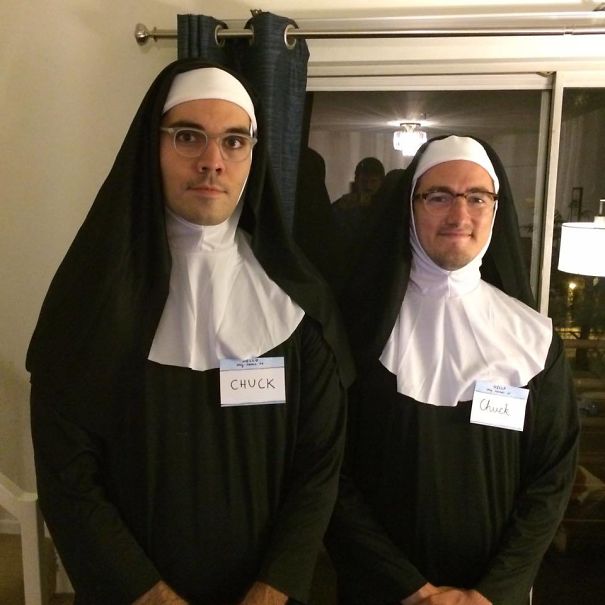
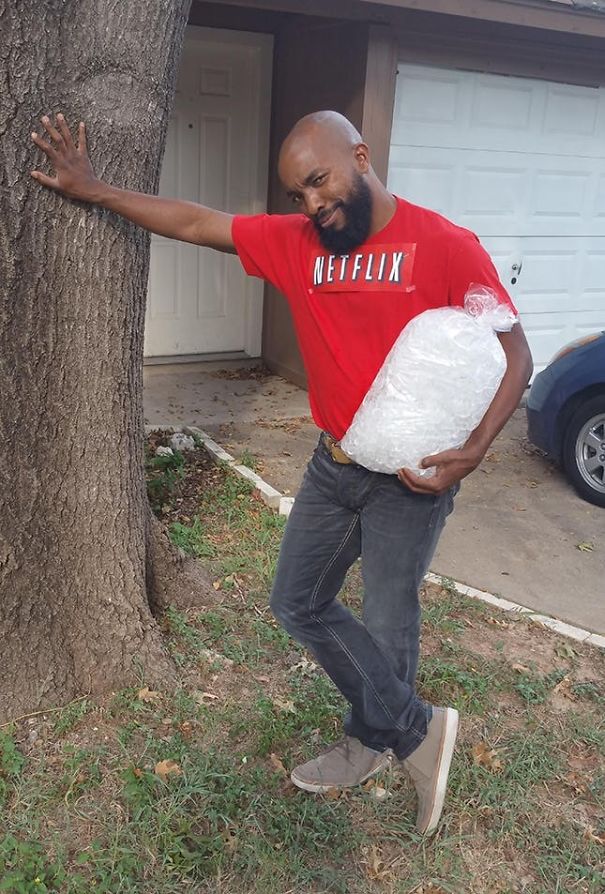
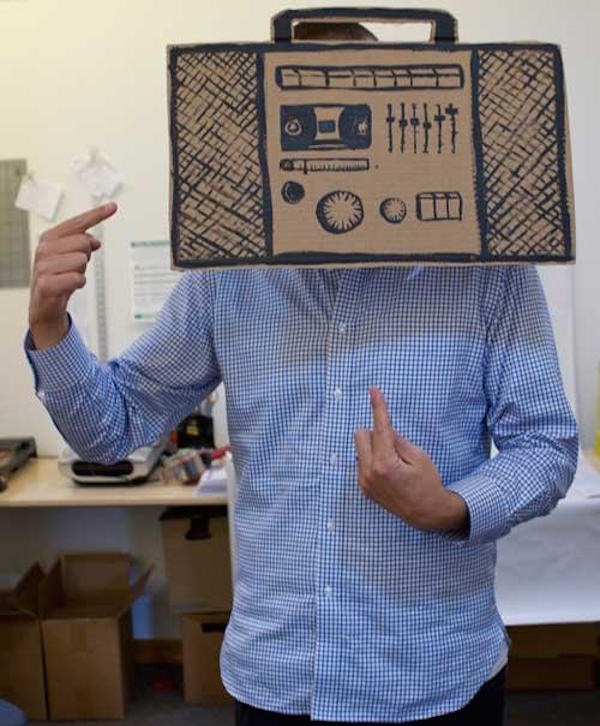
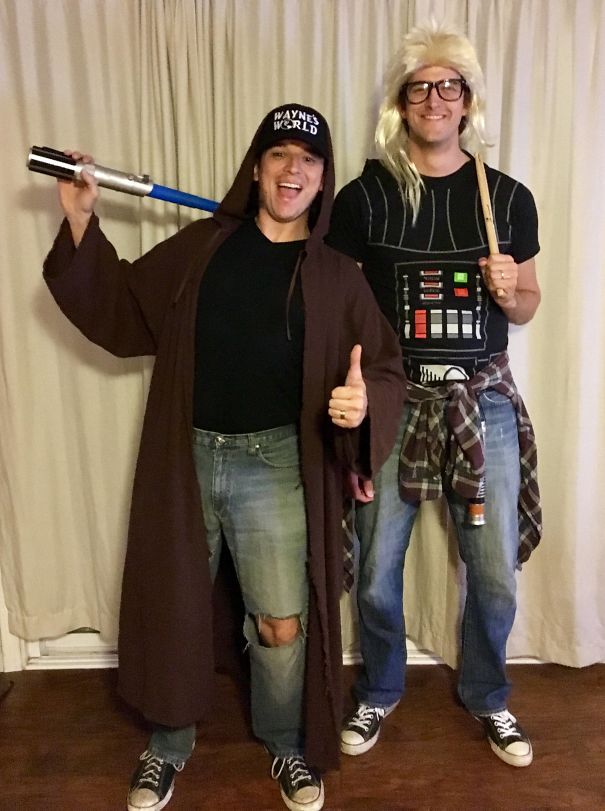
I’ve compiled ten costumes for you to figure out. Some are mashups, some are straightforward puns. Let’s see how many you can get!
PuzzCulture’s Punderful Halloween Costume Game!
#1
#2
#3
#4
#5
#6
#7
#8
#9
#10
How many did you get? Have you seen any great punny costumes we missed? Let us know in the comments section below. We’d love to hear from you. And Happy Halloween!
Setting the mood for a proper spooky game night is essential. And you’d be surprised how much atmosphere you can get out of a few simple choices.
Obviously, lighting is the first choice. Candlelight, or dimming the lights in the room is easy, but does a lot to establish mood. Careful lamp placement could throw interesting or menacing shadows across the wall, and you’d be surprised what a few layers of colored Saran wrap can do for throwing reds and greens across surfaces for splashes of color to help set the tone.
Scent can also be a help. Autumn candles with smells like fallen leaves, or the hint of smoke from a fire in the fireplace. Anything people associate with the fall or with a spooky scene!
Music and sounds come next. Hide a speaker or two, offering spooky music, or even better, sounds of a rainy night with occasional booms of thunder or crashes of lightning. There are whole soundscapes out there you can use with creaking doors, footsteps, animals howling in the distance, and even played low, it adds so much to a properly seasonal gaming experience.
If you’re feeling particularly devious, you could prerecord lines and play them through the hidden speaker or through your phone. The simple act of having players hear a voice and not seeing someone speak can be delightfully immersive and spooky. (I know someone with a foot pedal they use for roleplaying game nights, so they can trigger sounds and voice clips without betraying any movement at all!)
You could also dress up! You don’t need to do full costumes, but some dark clothes, some makeup to add a goth touch to the proceedings. Every little bit helps set the tone.
And you can do the same thing if you’re gaming online! Send everyone the link to the same music or sounds to play in the background of the game.
Actually, playing online is great, because you can do a jumpscare without actually startling or sneaking up on someone in person. (Always make sure you know who is okay with being surprised and who isn’t. Game night should be fun for everyone!)
Secretly adding someone to a zoom call or a video chat creates a fun spooky moment. (Especially if you have the screen arranged so they can sneak into the lineup without immediately being spotted.)
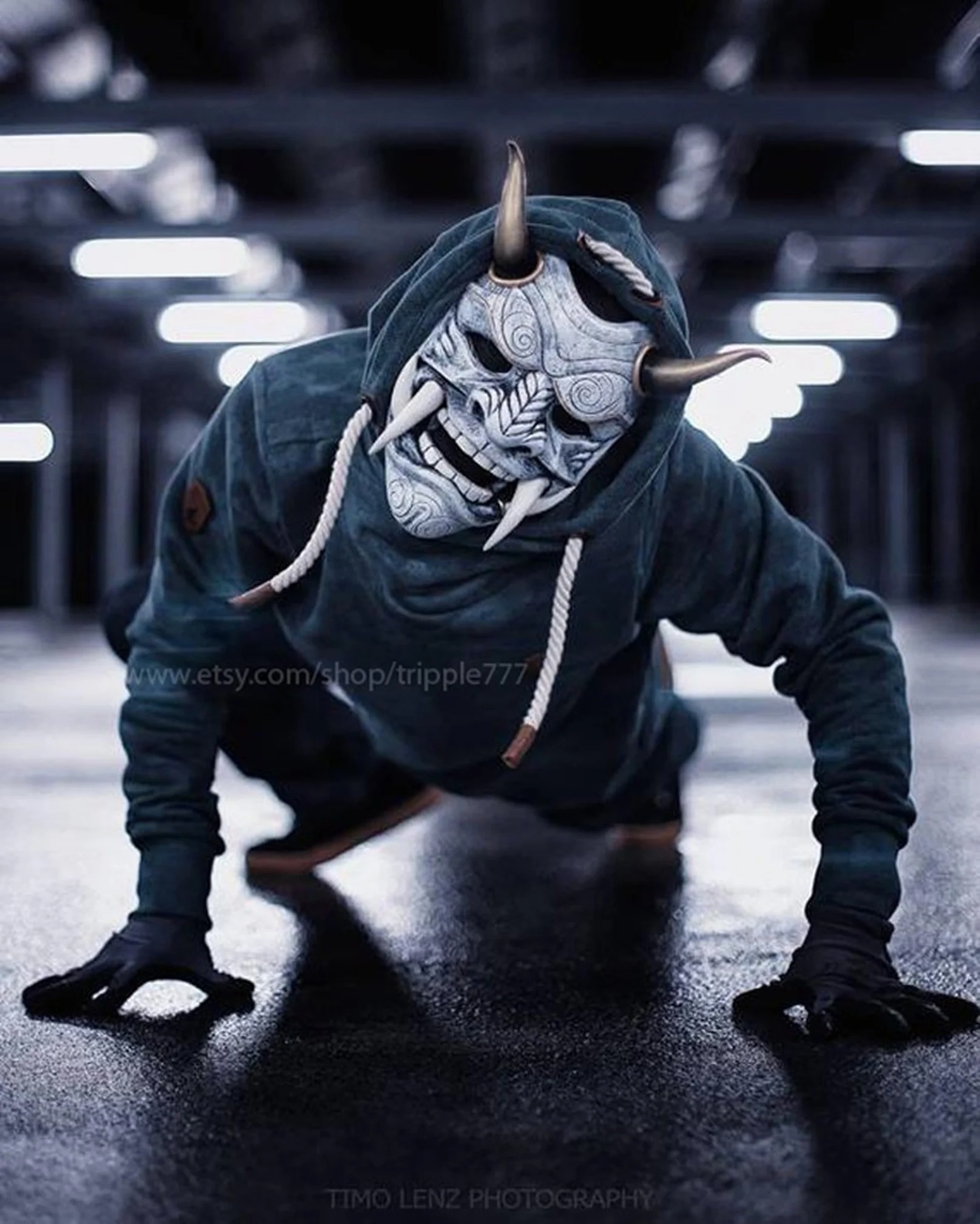
Here, simple body language does so much to enhance a masked figure…
This worked like a charm during a roleplaying session I ran online years ago. The players had been warned about a masked figure for the previous few sessions, and they were expecting to cross paths with him soon.
But what they didn’t know was that I’d recruited a friend to make the exact mask I’d described, and I secretly added them to the chat. It took a second for them to notice a sixth person in a small window at the bottom of the screen, and when he delivered the short speech I’d written (as if he’d hacked into their feed to jumpscare them), it was fantastically effective!
With a little simple preparation, you’d be amazed at the engrossing Halloween gaming experience you can share with friends.
Do you have any suggestions for enhancing a spooky game session, fellow players? Let us know in the comments section below! We’d love to hear from you.
But it occurred to me that you don’t necessarily need to pick up a new board game to get your ghostly gaming and unearthly playtime in. You just need to add a little Halloween spice to those classic games on your shelf.
So here are some house rules for board games we all know and love that will add an eerie or monstrous touch!
Clue: Restless Spirits
In this version of the game, the spirit of Mr. Boddy is still around, and has a role to play in the game.
He appears in a square in the center of the house, rolling a die and moving towards the closest player. If the spirit of Mr. Boddy enters a room with a player (or lands on the same space), they try to possess the player.
You can make an opposed dice roll to see if the spirit succeeds, or you can have the player sacrifice a weapon card to defend themselves. If they don’t have a weapon, or they lose the opposed die roll, they’re possessed, and now they serve the spirit as another figure on the board for three turns, pursuing the closest player while the spirit of Mr. Boddy does the same.
(Some people use similar rules, except Mr. Boddy is a zombie, and he turns the players he bites!)
Either way, it’s a terrific spooky element that pushes the game forward.
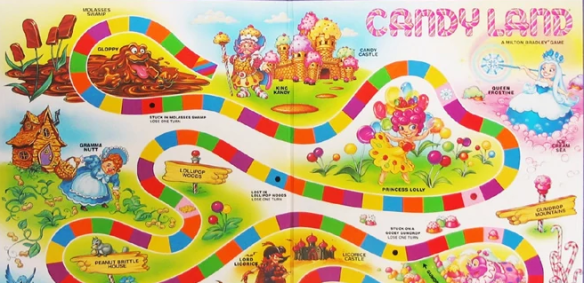
Candyland: The Hungry One
Candyland isn’t much of a game to begin with, since once the deck is shuffled, the game is already decided. (It’s like the card game War that way.)
But what if you needed to succeed as a group? What if the Hungry One was lurking, gobbling up the path behind you, and potentially your slowest companion?
In this version, you’re trying to get your whole group to the end, and you can’t get too far apart from each other without consequences.
Separate the deck into four stacks, facing upward with the colors showing. On your turn, pick one of the four available cards and make your move. (Once you take that card, it reveals a new choice underneath for the next player.)
You’re trying to move ahead, but if you get more than 12 spaces ahead of the player furthest back, you lose your next two turns!
Oh, and after all the players have gone, the Hungry One takes their turn, gobbling up the first three spaces — and any players on those spaces! (Or four, or five spaces, depending on how dangerous you want the Hungry One to be!)
Can you get your group safely to the end, or will someone fall into the waiting maw of the Hungry One?
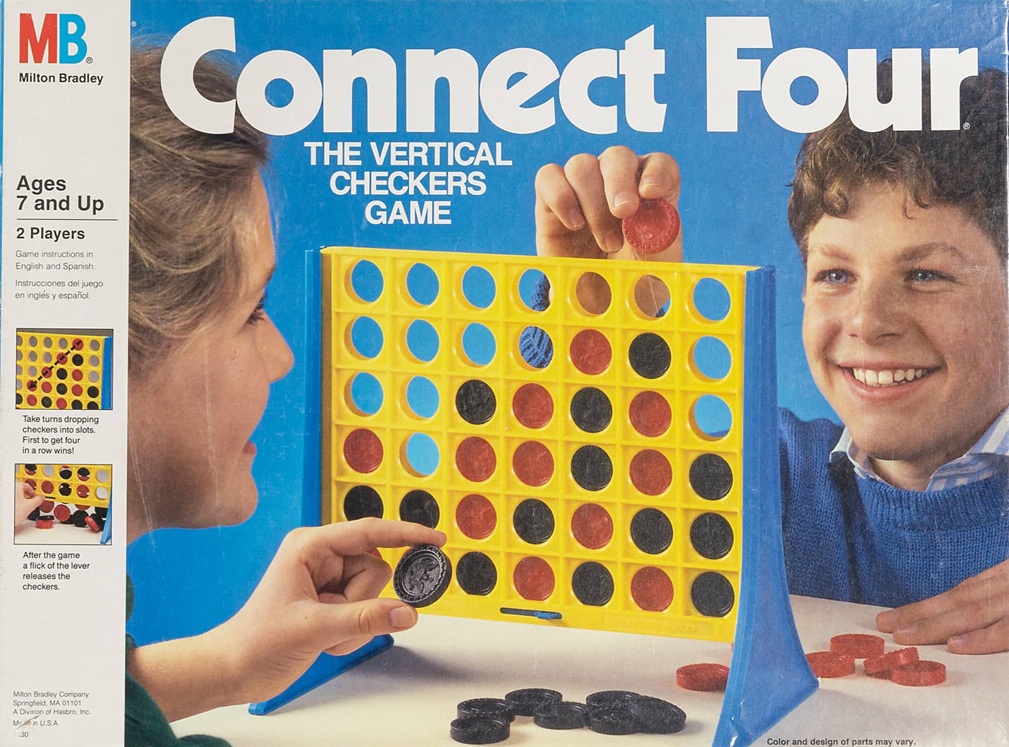
Connect Four: Secret Summoning
Each player worships a different dark lord and secretly creates a pattern of 5 discs in a row in whatever colors or pattern they wish, hoping to recreate that pattern on the board.
Instead of trying to stop your opponent from getting the four-in-a-row, you need to be the first to complete your 5-disc pattern and summon your dark lord.
While playing the game, be sure to warn your opponent of how great and vengeful and terrible and ridiculous YOUR dark lord and why it’s better than their dark lord. A little sinister smack talk never hurt anybody.
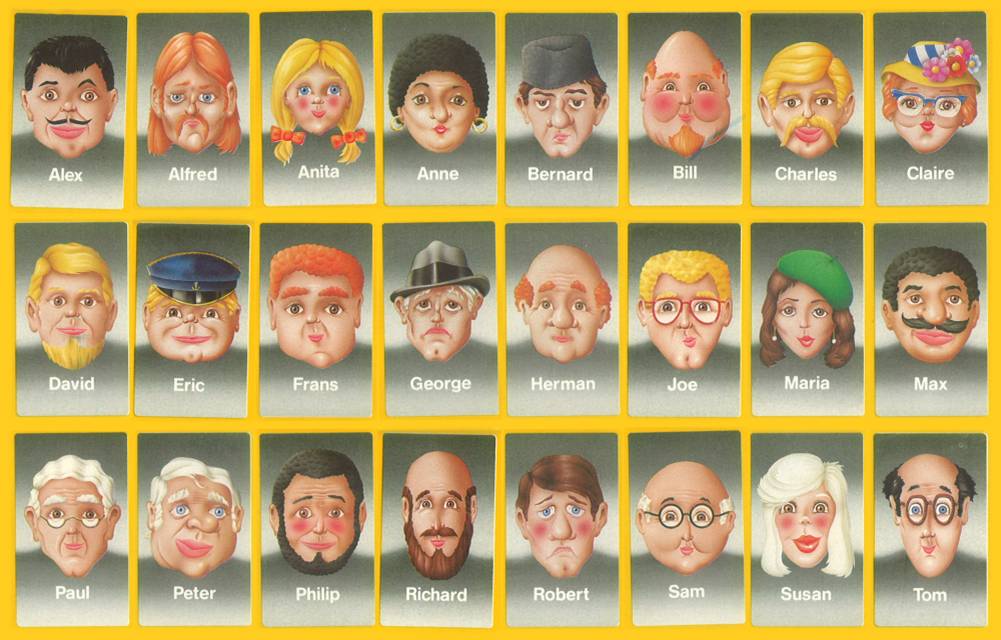
Guess Who: Profiler
This one is pretty simple. Normally, you get a card for your opponent to narrow down with questions, and you do the same for your opponent’s card.
But in this version, you take your card and choose whatever quality about the character made them a victim of a mythical serial killer. So on your opponent’s turn, you tell them one person to flip down on their board, representing another victim of the killer.
Then they try to guess what all the victims have in common. Each round, another victim, another chance to figure out what they have in common.
The winner is the person to guess why the killer targets their victims first. (And for a bonus point, they can try to guess which card you pulled that inspired the crime spree.)
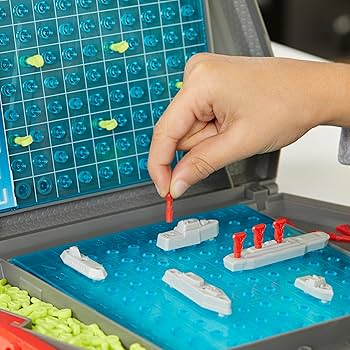
Battleship: The Monster Below
This tactical game is all about making the most of your guesses to track down and destroy your opponent’s fleet, but what if there was something else lurking under the water?
In this supernatural edition of the game, there’s a greater consequence to your misses. Three misses in a row triggers an awakening from the deep, and your opponent gets to pick a 3×3 square (on your board) that includes that last miss.
If part of one of your ships is in that 3×3 square, the monster from the deep emerges and takes a bite from your ship, marking it as hit.
(If more than one ship or more than one spot on a ship is inside that 3×3 square, you only need to mark a single hit, and you DON’T tell your opponent the exact spot. You only say MONSTER! to indicate one of your ships has been bitten.)
Not only does it add a monstrous element to the game (and a consequence for misses), but it also adds a new layer of strategy to the game!
Is it Godzilla? Ebirah? Cthulhu? The Beast from 10,000 Fathoms? You decide the monster!
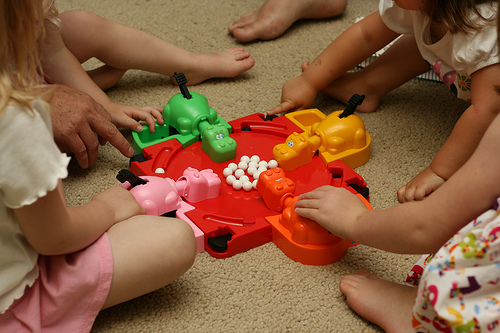
Hungry, Hungry Hippos: Poison Pellets
Here’s a bonus one cooked up by my marvelously devious friend, Lisa Mantchev.
It’s Hungry Hungry Hippos with a dark twist: a single, differently-colored marble in the mix with all the regular marbles.
It’s a poison marble, and you’ve gotta eat up all the regular ones and not get the poisoned one. If you do, you’re done for, and you’re out. Then the remaining players try again, and you keep going until there’s only one survivor.
So be hungry hungry, but not TOO hungry hungry, or it’s curtains for you!
Do you have any Halloween versions of classic board games you enjoy, fellow players? Or do you have a spooky house rule suggestion? Let us know in the comments below. We’d love to hear from you.
Godzilla has been a cultural icon for seventy years.
Across dozens of films, in a film market with hundreds of behemoths, leviathans, and titans to watch, Godzilla is still the King of the Monsters. Godzilla has battled humanity, aliens, robotic duplicates, and other kaiju, bringing joy and wonder to millions of moviegoers. Godzilla has evolved from personifying the specter of nuclear annihilation to representing the spirit of a proud nation against threats like pollution, environmental catastrophe, and war.
The cultural influence of Godzilla cannot be overstated. So you shouldn’t be surprised to see that it extends into the world of puzzles and games as well.
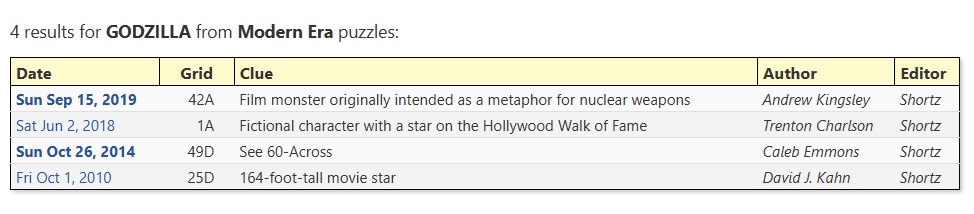
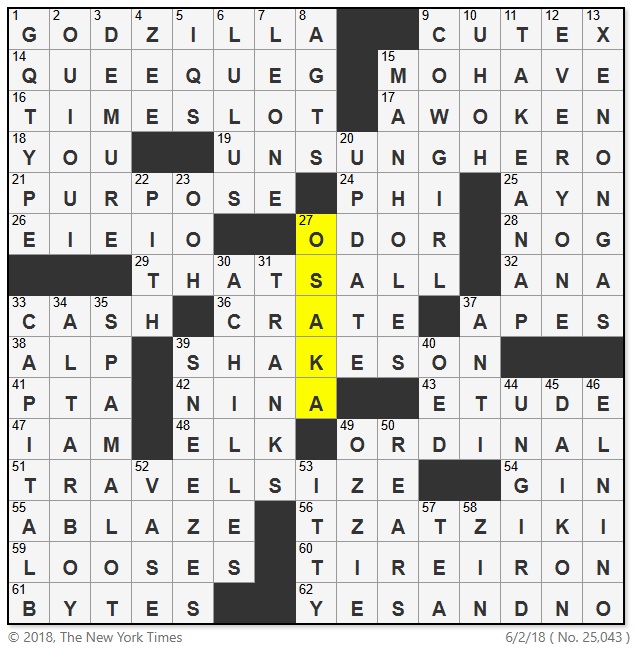
Now, sure, Godzilla isn’t popping up in crosswords on the reg. Xwordinfo tells us that Osaka has been clued a half-dozen times in relation to Godzilla (and Tokyo nearly as many times).
Godzilla has appeared in New York Times crossword grids four times (including one where they cross paths with King Kong). In comparison, fellow Kaiju Mothra has appeared in New York Times crosswords five times.
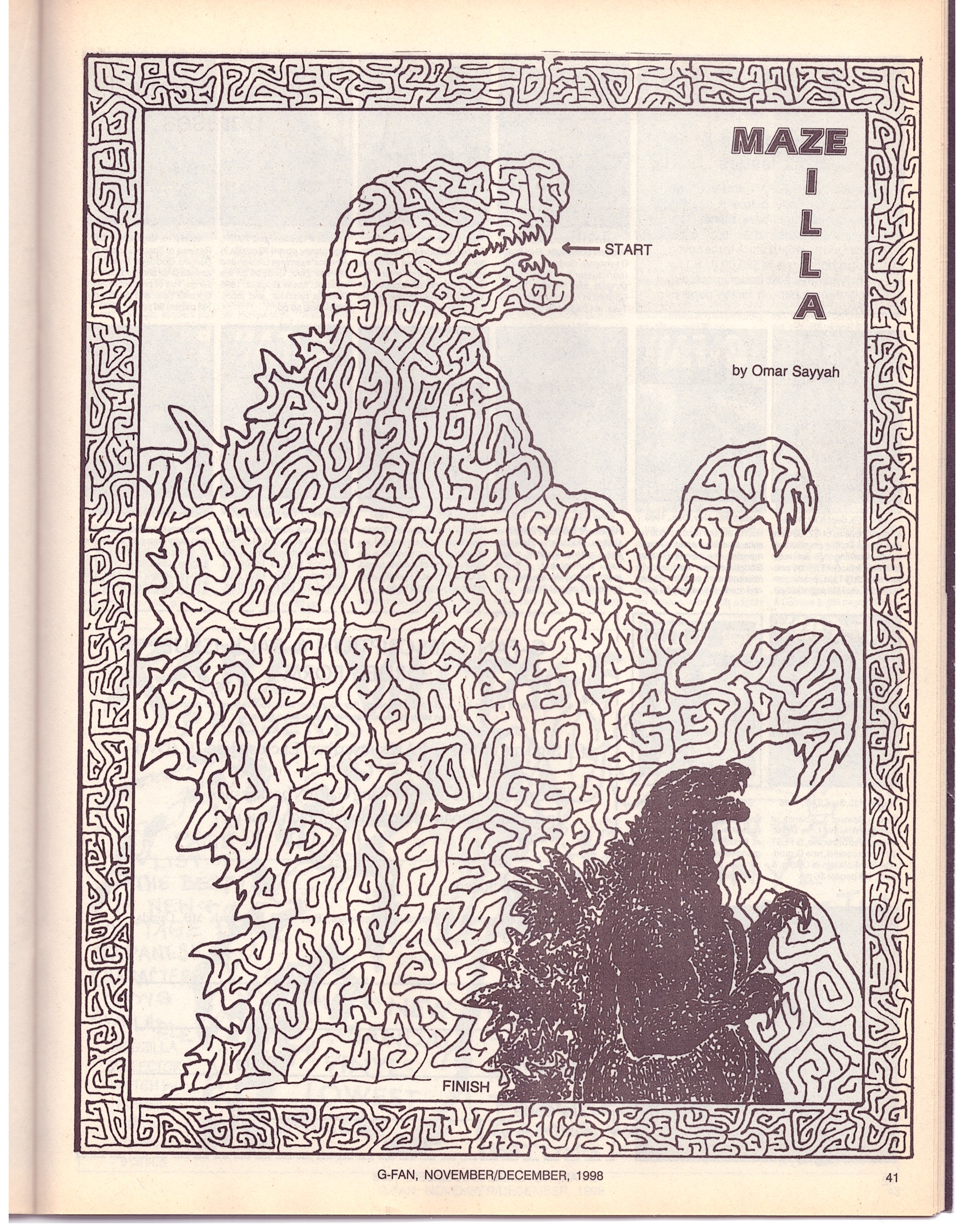
But The New York Times isn’t the only publication worth discussing here. No, to truly appreciate the puzzly legacy of Godzilla, we have to discuss G-Fan magazine.
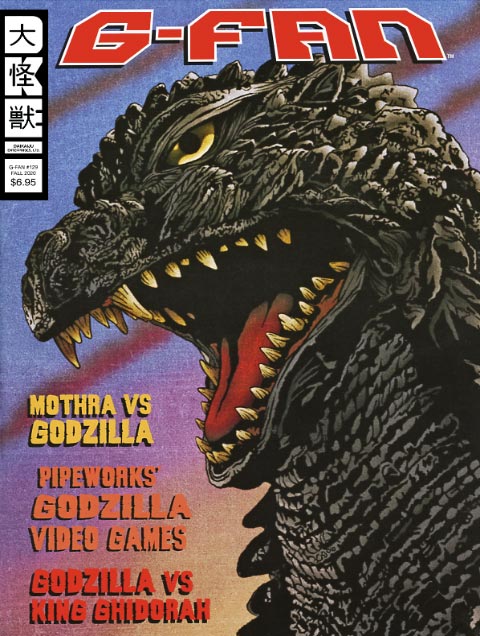
The art for this cover (and a half-dozen others) was done by my marvelous friend Matt Harris!
G-Fan is the premiere magazine for all things kaiju, especially Godzilla, and it was flipping through an old copy of the magazine that inspired this post. (It’s amazing what you unearth when you’re packing up your whole life to move.)
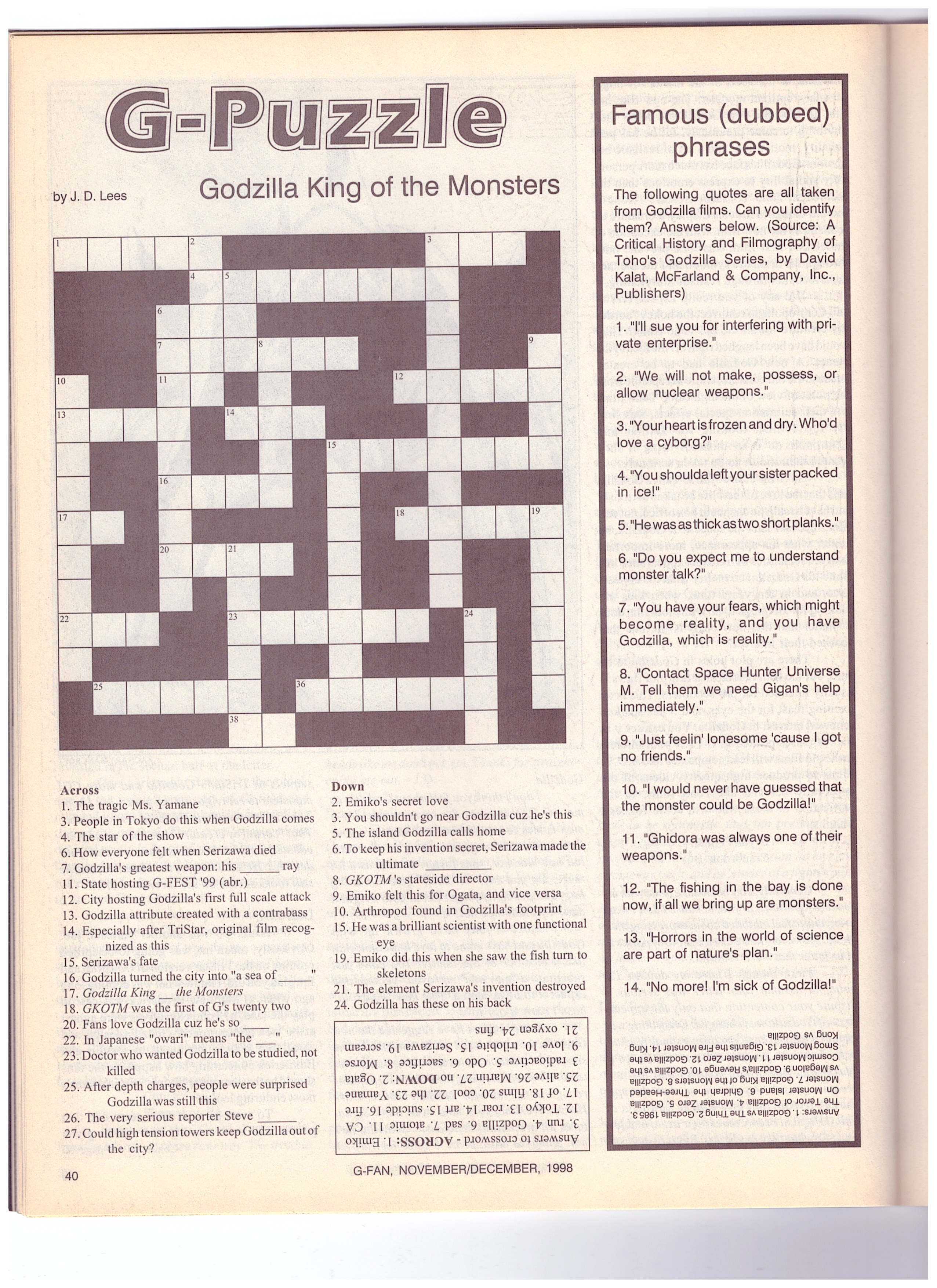
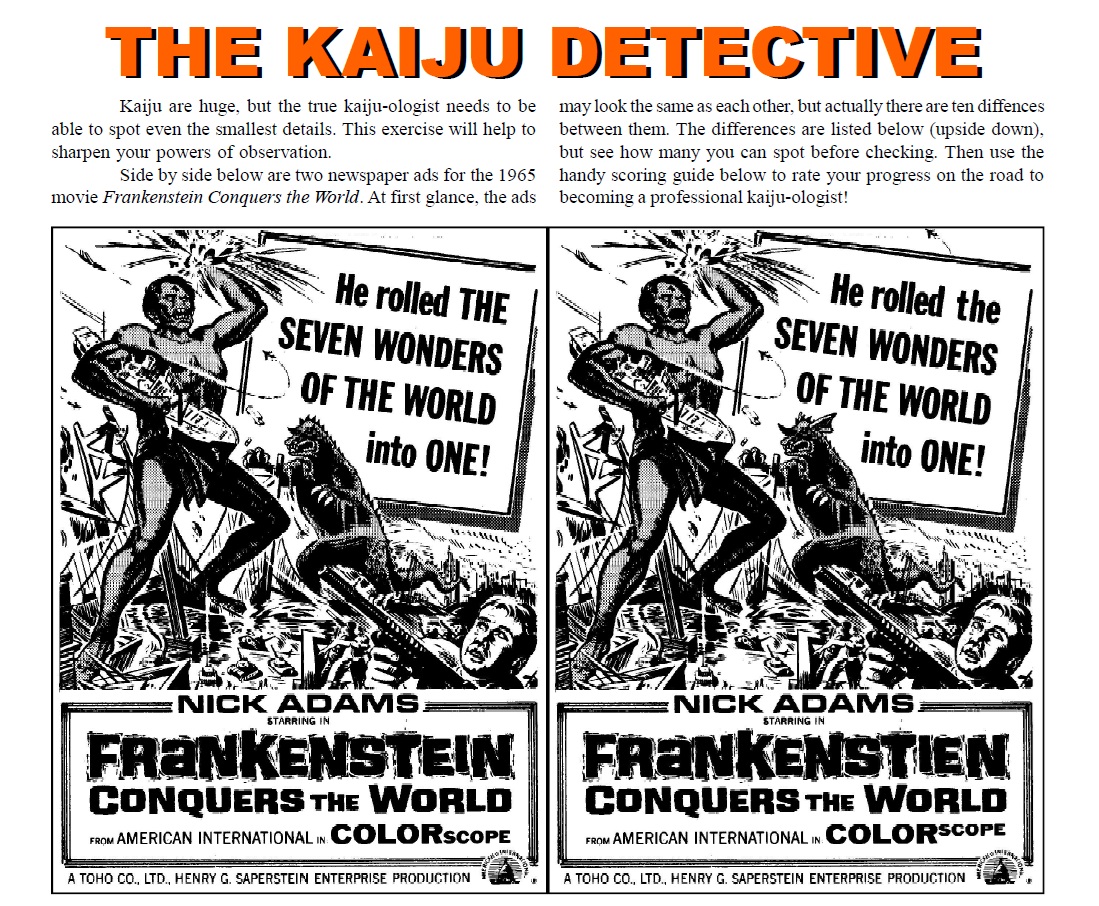
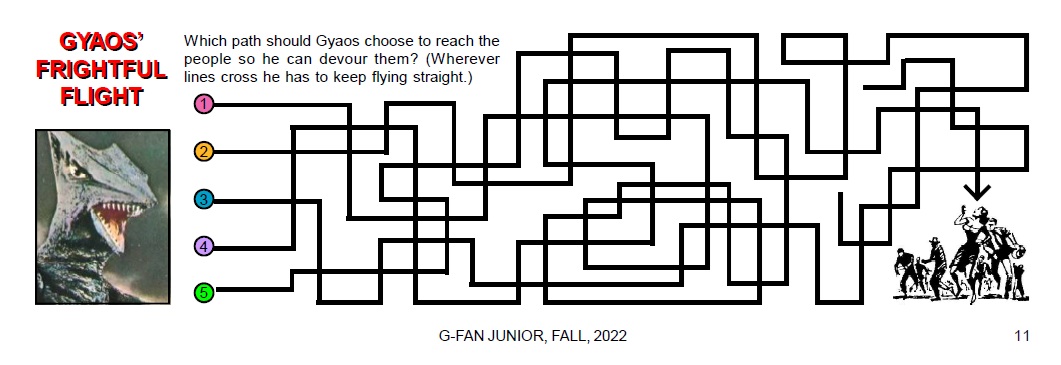
Among interviews, movie reviews, and wonderfully nerdy deep dives into various monster-centric topics, I stumbled across not only a Godzilla-shaped maze (pictured at the start of this post), but a crisscross all about my favorite skyscraper-sized monster.
So, naturally once I started, I kept digging, delving into the G-Fan archives and reaching out to JD Lees, the man behind not only G-Fan, but the annual G-CON / G-FEST convention!
He was kind enough to take some time out to discuss the puzzles periodically appearing in the pages of G-Fan.
What inspired you to start putting puzzles into G-Fan?
When I was a teacher, I would often include puzzles in the worksheets I created for students. I figured it was a way to increase engagement that was a bit fun and different for the kids. I found I enjoyed making them, so when I was creating G-FAN Junior, puzzles seemed a natural thing to include to break up the articles, add variety, and fill space!
Do you have a favorite puzzle (either in terms of topic or overall execution) from over the years?
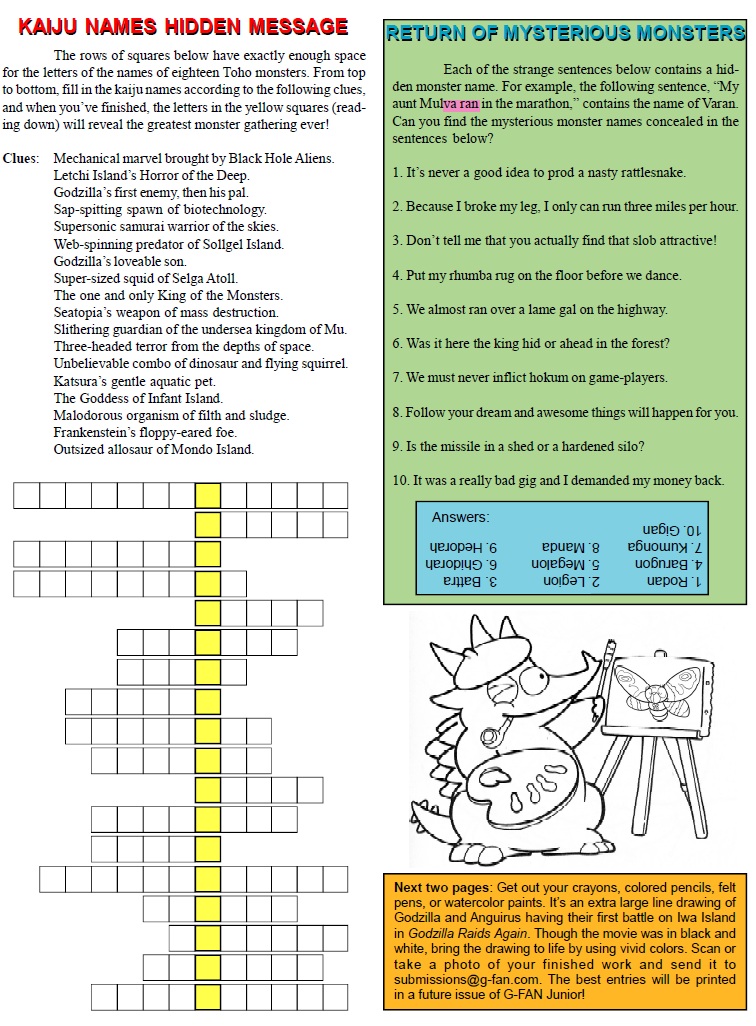
I have a lot of fun creating the puzzles where a monster’s name is hidden in an unrelated sentence. I first saw this done with the names of the U.S. states and their capitals. I think it was in a puzzle book I used in my Grade 10 math class.
There’s a Godzilla Monopoly game. Is your affection for Godzilla potent enough to make you endure a game of Monopoly through to the end?
Ha ha! I look back and marvel at those long-ago times when my friends and I used to enjoy playing Monopoly. Maybe I’m just getting old. (Actually, no maybe about it!) However, I did buy the Godzilla version of Monopoly for the Gaming Room at G-FEST, and it was used. The second year someone stole all the kaiju tokens, so I replaced them with generic monster figures. Overall, G-fans are very honest, but thousands attend the convention, so I guess there will be a few bad apples.
Although he’s currently taking a break from G-Fan, JD did say he expects to construct more puzzles in the future (though they might not be so kaiju-focused.)
Speaking of the Godzilla edition of Monopoly, that brings me to the other half of today’s post: the legacy of Godzilla in board games.
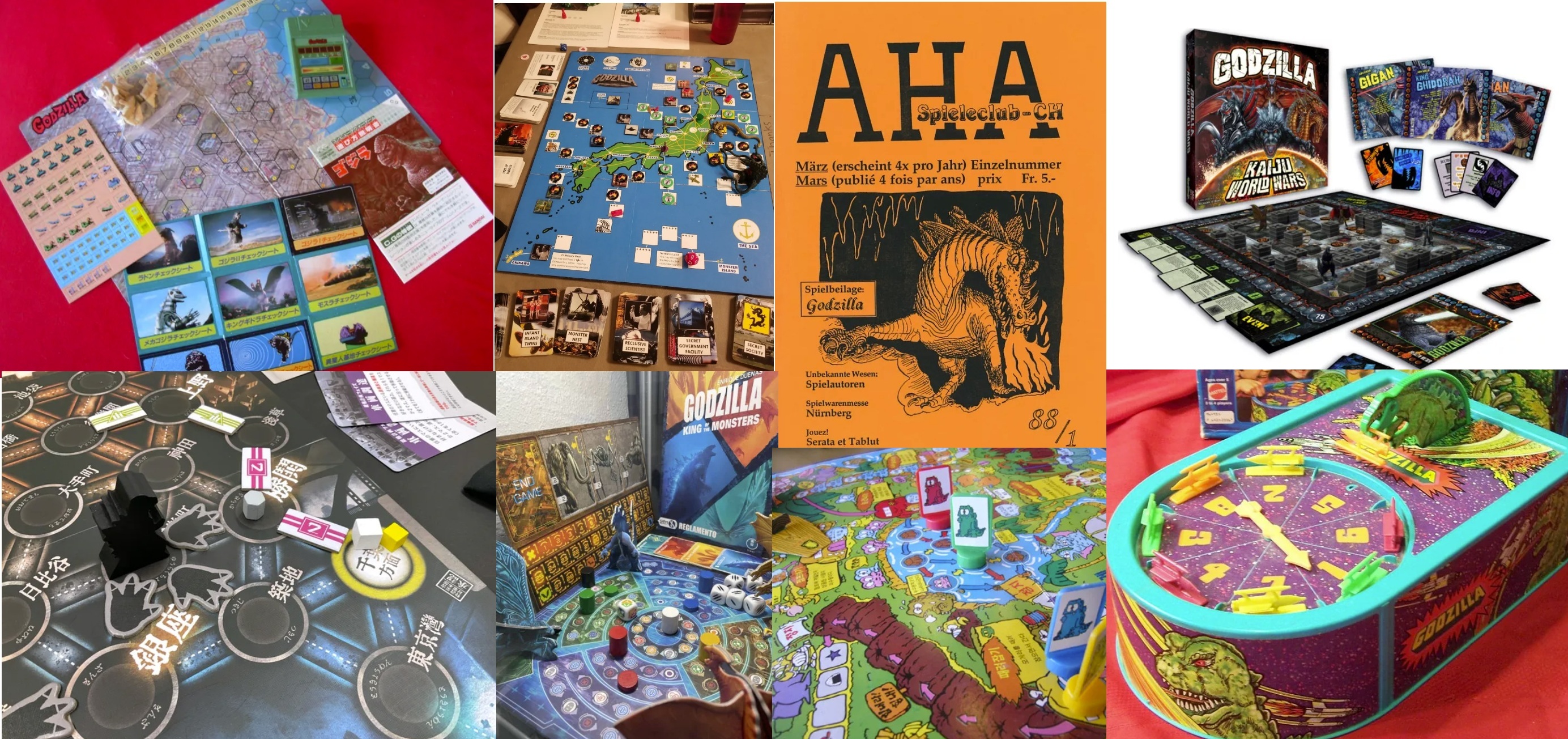
The many ways Godzilla has been translated to board games. Clockwise from upper left: Godzilla Electronic Wargame (1984), Godzilla: Monsters Attack! (2008), Godzilla pen and paper game (1988), Godzilla: Kaiju World Wars (2011), Godzilla Game (1978), Super Godzilla Tempest (1990), Godzilla: King of the Monsters (2020), Godzilla: Kaiju on the Earth LEGENDS (2022).
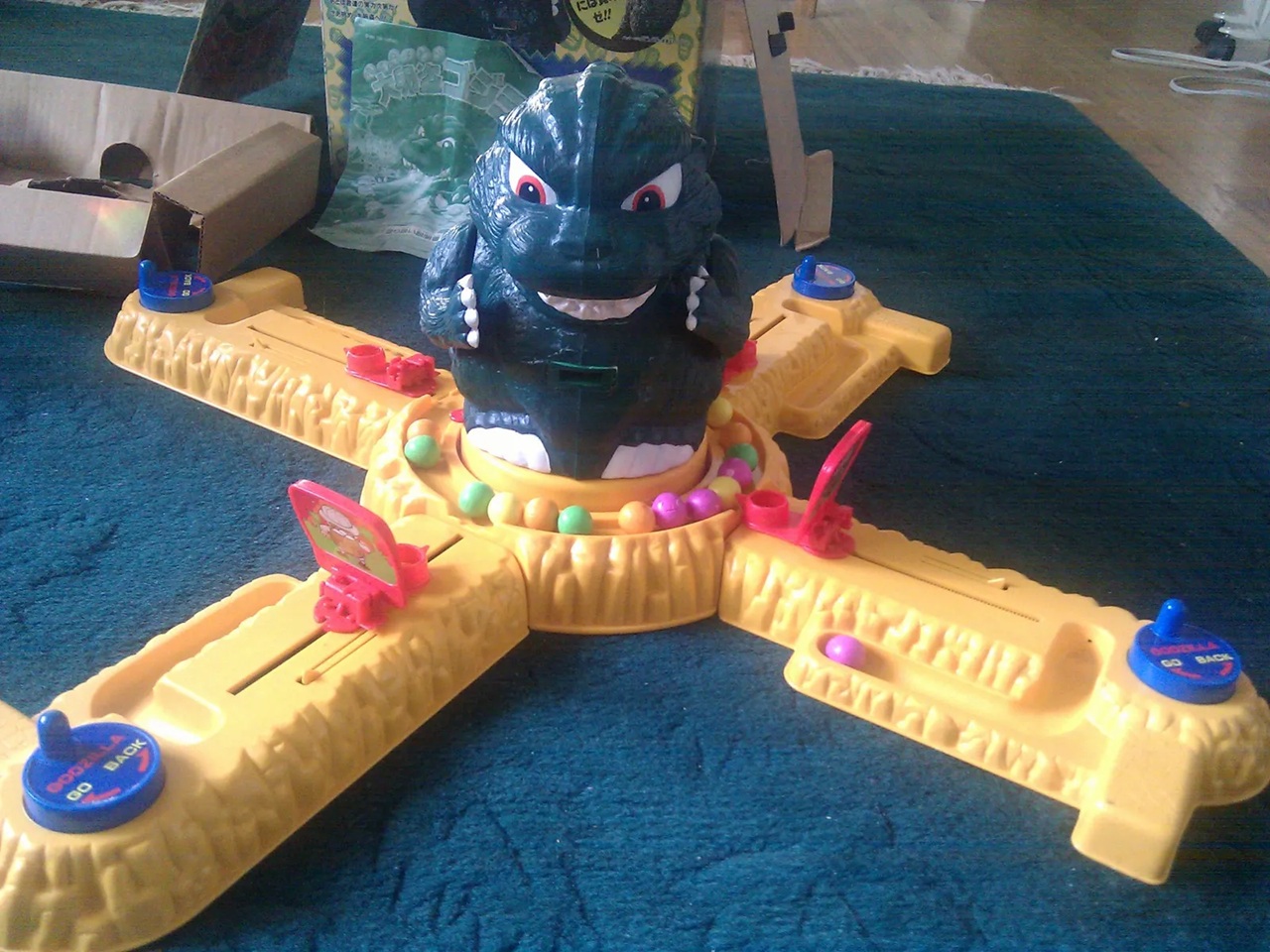
There are literally DOZENS of board games inspired by Godzilla and the many kaiju that followed in those monstrous footsteps.
Alongside the aforementioned official Monopoly version, there’s an official Godzilla Jenga, a Godzilla version of The Incredible Hulk Smash (one of several dismal tie-ins promoting the atrocious Fox 1998 Godzilla film), as well as expansions for Cthulhu: Death May Die and an upcoming reimagining of the game Battle Masters called Battle Monsters.
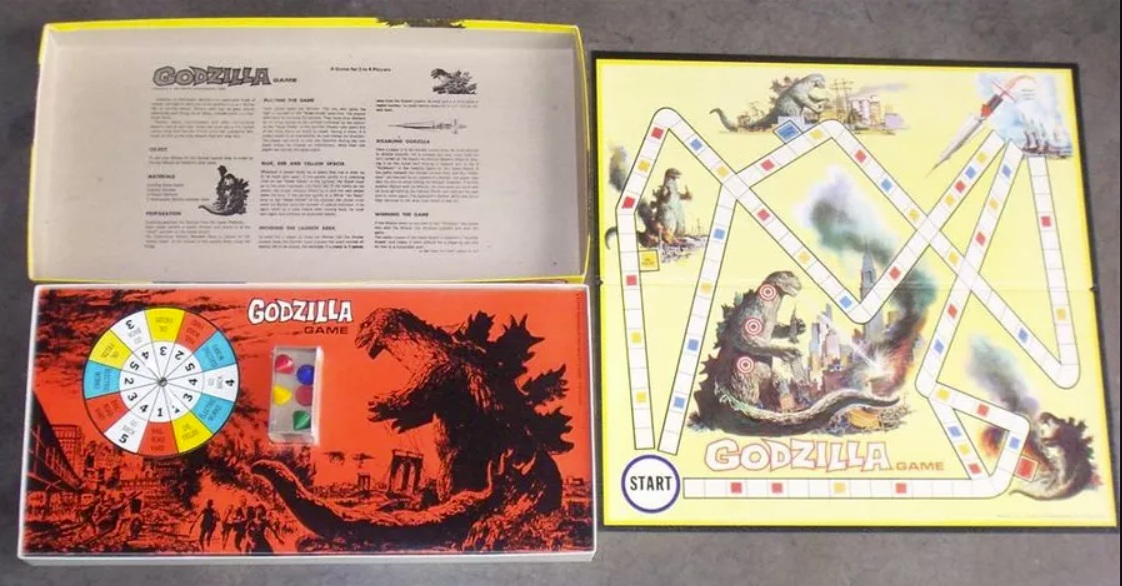
Godzilla-inspired board games date all the way back to 1963, when the imaginatively titled Godzilla Game was released. It was actually the first Godzilla toy produced in the US and only the second Godzilla toy ever made.
In 1978, another Godzilla Game was released, followed by a Mothra vs. Godzilla game in 1982. There have been strategy games (like a pen-and-paper game in Swiss gaming zine AHA in 1988), dice games like Godzilla VS Kong from 2022, and loads of, quite frankly, fairly disappointing board games.
This trend has only reversed in the last fifteen years or so with releases like my all-time favorite Godzilla game, Godzilla: Tokyo Clash from 2020.
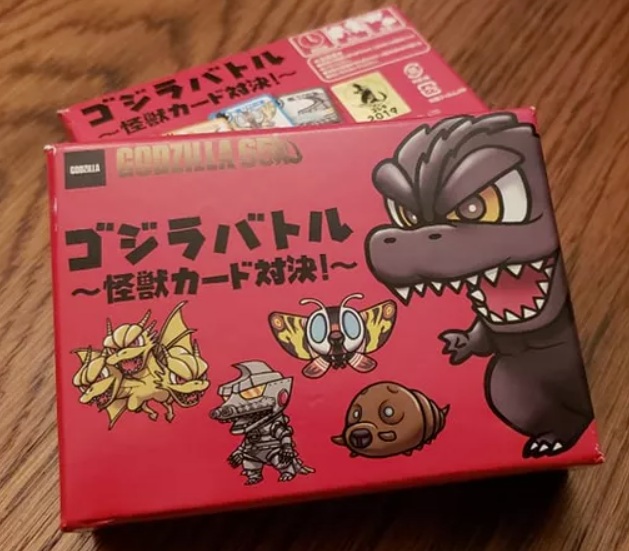
There’s also a curious pattern of Godzilla card games with names that go unnecessarily hard, but I respect the manic energy they bring to game shelves. These names include Godzilla: Stomp! (2011), the delightfully named Godzilla Boom (2012), and Godzilla Total War (2019).
Confusingly, there seem to be both a board game AND a card game called Godzilla Rampage, and they both have supplements adding other monster/monster-fighting icons like Ultraman, Gamera, and Daimajin to the mix.
From cutesy to vicious, from the pages of fanzines to coffee tables across the world, Godzilla has moved far past the silver screen and become part of the cultural language. People who have never seen a Godzilla film — yes, they exist, and we pity them — still know the name.
Bridezillas the world over owe their monstrous reputations to our beloved atomic-breathed kaiju. We know dozens of other monsters because of Godzilla. Rodan, Mothra, King Ghidorah… heck, even King Kong rides those enormous coattails from time to time.
And it’s fun to remember that even the world of puzzles and games is not immune to the mighty roar or the deep, deep shadow of the King of the Monsters.
Thank you to JD Lees, Matt Harris, and several chums from the Board Game Geek forums for helping me with this post. Be sure to check out the G-Fan website for all things Godzilla, and enjoy this not-at-all-exhaustive list of G-Fan issues with some of JD’s puzzles:
Issue #110, Fall 2015
Issue #109, Summer 2015
Issue #108, Jan/Feb 2015
Issue #97, Fall 2011
Issue #49, Jan/Feb 2001
Issue #42, Nov/Dec 1999
Issue #39, May/June 1999
Issue #37, Jan/Feb 1999
Issue #36, Nov/Dec 1998
Issue #33, May/June 1998
Issue #32, March/April 1998
Do you have a favorite Godzilla film, Godzilla game, or Godzilla pop culture moment, fellow puzzlers? Let us know in the comments section below. We’d love to hear from you!
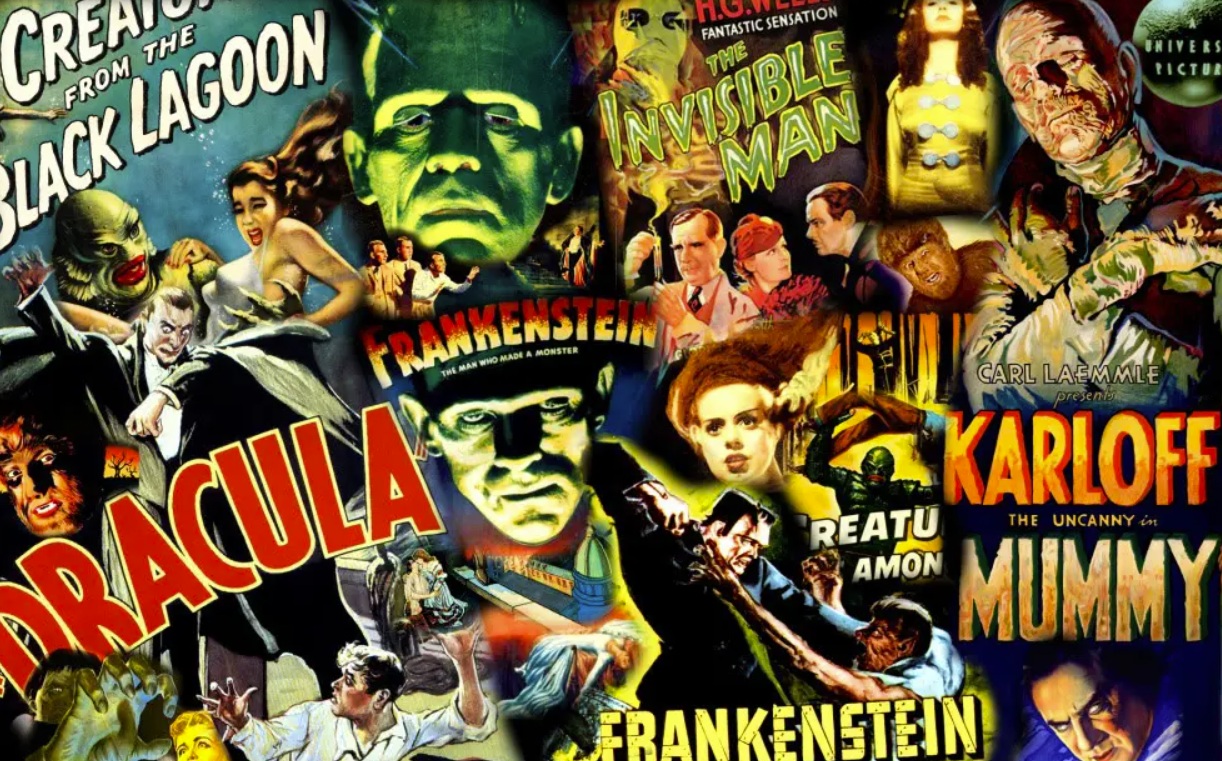
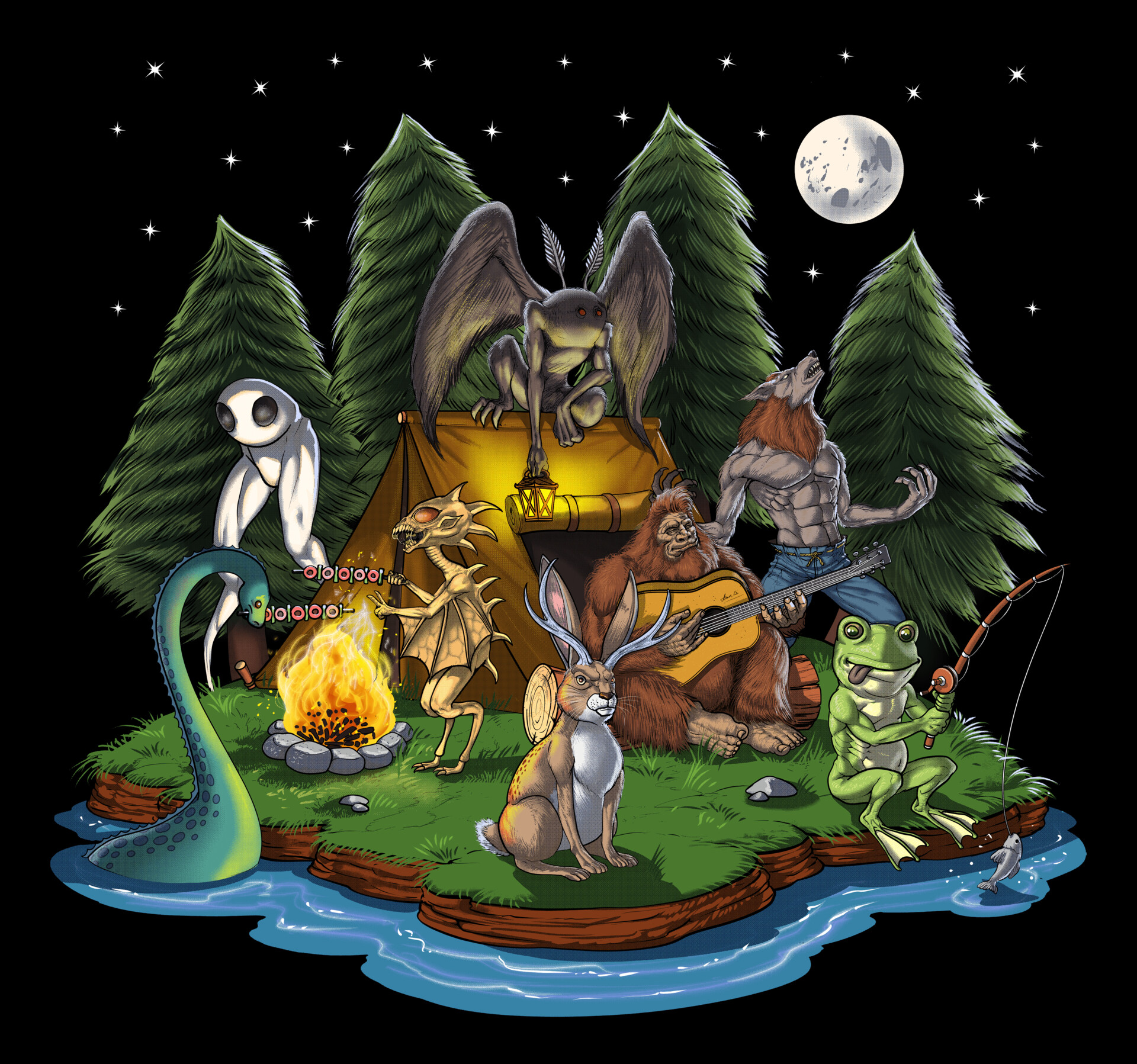
In honor of Halloween and all the delightful monsters that make for great movies, impressive costumes, and memorable moments, I’ve put together a game for you called Monster Mash-Up!
Some of these are film, TV, and video game monsters, some are mythical creatures, some are cryptids. Can you mash up two of these famous monsters by overlapping letters to create a proper monster mash?
This month, I’m trying to do one Halloween-themed post every week.
Last week was the 31 Games of October countdown, offering a different scary, eerie, or horror-fueled board game or tabletop roleplaying game to try out.
And for this week’s festive endeavor, I’m resurrecting a spooky musical trivia challenge from almost a decade ago!
This video is the brainchild of musician, artist, and comedian Ali Spagnola. Ali created a masterful mashup of 20 tunes loaded with Halloween spirit! Can you name all 20 songs?
I confess, I’m a little disappointed that Warren Zevon’s “Werewolves of London” didn’t make the cut, but otherwise, this is awesome.
And while we’re enjoying Halloween tunes, here’s another delightful musical offering. This one comes from D&D player, DM, singer, and content creator Ginny Di:
Did any of your Halloween favorites appear among the unnamed 20 songs in Ali’s mashup? Let us know in the comments below! We’d love to hear from you.