Puzzles in Pop Culture: TV Escape Rooms!

sidequest2

[Image courtesy of Yelp.]

It’s always interesting when TV shows incorporate puzzles into their stories. Not only do we get to see what Hollywood (and by extrapolation, the general public) thinks about a given puzzly experience, but we learn more about the characters when they face a particular puzzle or challenge.

This is especially true for sitcoms and comedies, since they usually have less time to focus on the puzzling and therefore put the spotlight on character relationships.

And it occurred to me that there are a number of different shows over the last few years that have featured the characters in escape room-style puzzle settings.

Why don’t we take a look at how accurately these puzzly experiences were portrayed, how difficult the room appeared to be, and what the characters’ solving skills were like?

Please enjoy as we explore fictional escape rooms from TV in our latest edition of Puzzles in Pop Culture!

big bang theory pic

[Image courtesy of IMDb.]

For our first offering, we turn to the CBS juggernaut The Big Bang Theory. Over the years, TBBT has featured puzzly activities like giant Jenga, a holiday-fueled session of Dungeons & Dragons, and a scavenger hunt with puzzly clues.

So I wasn’t surprised that their take on escape rooms was the same: fairly accurate, but simplified and streamlined for a mainstream audience.

The room in TBBT is pretty spacious, moreso than pretty much any escape room I’ve seen. But the level of detail is easily something achievable for high-end rooms. Also, I’ve heard about escape rooms with actors playing zombies before, so this is legit.

(In fact, one I heard about in Washington D.C. had a zombie on a chain; the chain got longer the more time solvers took to crack puzzles, cutting the room in half at one point!)

We don’t get to see much of their solving, as they allude to puzzles conquered instead of showing us, so it’s hard to gauge difficulty. But given that most of the characters featured in the scene hold doctorates, we can safely assume the puzzles were middle-of-the-road or slightly harder.

However, the episode ignores the fact that you’re trying to escape the room in a certain amount of time. The characters seemed disappointed by their impressive performance, but they probably posted one of the top times in that room’s history. Nothing to sneeze at.

  • Accuracy rating: 4/5
  • Room difficulty: 3/5
  • Character solving skills: 5/5

[Image courtesy of FOX.com.]

Another show that hasn’t shied away from puzzly content is the former FOX and current NBC hit Brooklyn Nine-Nine. This comedy/drama set at a New York City police precinct has featured a seesaw brain teaser, a crossword-fueled arson mystery, and several multilayered heist storylines set around Halloween.

Puzzle enthusiast Captain Holt invites his fellow officers out to an escape room, and is dismayed when the disinterested Gina and the bumbling Hitchcock and Scully end up being his only fellow players. The group is immediately hampered by Hitchcock wasting two of their three hints, and Holt accidentally wasting the third.

The hint system is usually not as rigid in escape rooms. Three hints is common, though many places allow you to ask for more; sometimes there’s a time penalty, sometimes not. Also, the room in B99 is a three-hour challenge, which was a surprise. The standard time is an hour, though I’ve seen rooms push it to ninety minutes.

The group has also clearly not tried the classic escape room method of “touch everything,” because an hour and a half into the game, having found only one of the four keys needed to escape the room, Holt has not yet investigated the bright red phone sitting out in the open.

This is another escape room where difficulty is tough to judge. Unfortunately, we’re not given enough details on the first key (which involves some sort of chess puzzle) and the fourth key to really gauge the room. But despite the rocky start, the lovable team of misfits manages to escape.

  • Accuracy rating: 3/5
  • Room difficulty: 2/5
  • Character solving skills: Holt gets a 3.5/5, everyone else gets a 2/5.

always-sunny

[Image courtesy of Variety.]

Next, let’s turn our eyes to It’s Always Sunny in Philadelphia.

The characters in this darkly comedic show all consider themselves devious masterminds, but for the most part, they tend to get in each others’ way and foil their own schemes through silly self-sabotage. Although a few impressive schemes do come to fruition over the years, it’s hard to consider this group a crackerjack team of puzzle solvers.

This escape room breaks the mold quite a bit, since the company brings the escape room trappings to the apartment of two of the characters. This is much more elaborate than any escape room set you can buy for the home, and I don’t know of any companies that deliver an escape room to the house.

You might think this home field advantage would be a boon, but instead, all chance of cooperation immediately goes out the window. One pair takes the key to a lock, the other pair takes the lock, and they spend the entire time negotiating instead of solving.

iasip

[Image courtesy of IMDb. Because of the language involved, I couldn’t
use an actual video clip and keep the blog post family friendly.]

Once they actually agree to collaborate and open the lock, they discover a list of tasks for them to complete, and they have virtually no time left to do so. (Our only hint to the room’s difficulty comes from the fact that Dee has completed the room beforehand, so it can’t have been too difficult.)

They claim victory when Sweet Dee falls out a window after getting trapped in her brother Dennis’s bedroom. In order to check on Dee’s status, the game runner opens the door and the remaining players consider it a win.

  • Accuracy rating: 1/5
  • Room difficulty: 2/5
  • Character solving skills: 0/5

crazyex_s01a-1170x658

[Image courtesy of Frame Rated.]

The final entry in our comedic quartet of escape room episodes comes from the musical CW show Crazy Ex-Girlfriend. This romantic drama, comedy, and coming-of-age story often features characters breaking out into elaborate song and dance routines, and many of the songs have become modern classics.

The show didn’t tackle puzzly content often, and indeed, the escape room in question is a b-plot in this particular episode, as main character Rebecca offers her escape room experience to friend Paula and her two disinterested sons.

The escape room is medieval-themed and huge, with lots of great set pieces and detail. The mix of exploring, touching things, solving puzzles, cooperating, and placing objects in particular places are all very traditional escape room moments.

ceg escape

[Image courtesy of Laura E. Hall.]

Though I was a little disappointed that the elements of the final puzzle are sitting out in plain sight the whole time. You could easily ACCIDENTALLY solve the last puzzle first and be out in minutes.

But Paula’s sons prove to be able puzzlers, attentive and clever, revealing things about themselves that Paula didn’t know. (In fact, the entire escape room subplot is all about Paula learning about who her sons have become, which is Puzzly Storytelling in Sitcoms 101.)

They all escape, having found new common ground, and it’s easily the most delightful ending of the four escape room scenarios we’ve looked at today.

  • Accuracy rating: 4/5
  • Room difficulty: 3/5 (the final puzzle is a long anagram, which is pretty tough, but the rest of the room is easy)
  • Character solving skills: 4/5

What did you think of this look at escape rooms from TV, fellow puzzlers? Should we look at more fictional escape rooms and see how they hold up?

I’ve heard Bob’s Burgers has one, as well as Schitt’s Creek. Let us know in the comments section below! We’d love to hear from you.

dailypopwsicon

Hey, have you checked out our special summer deals yet? You can find them on the Home Screen for Daily POP Crosswords and Daily POP Word Search! Check them out!

Thanks for visiting PuzzleNation Blog today! Be sure to sign up for our newsletter to stay up-to-date on everything PuzzleNation!

Tie Yourself in Knots With Rope Puzzles!

rope puzzle rings

What comes to mind when you think of a mechanical brain teaser? Do you think of a puzzle box or linked metal shapes? Do you think of wooden pieces that need to be fitted together to form a particular shape, or the twists and turns of a Rubik’s Cube or sword puzzle?

I would wager that rope isn’t the first puzzle piece that you think of. Which is surprising, because rope is part of plenty of different brain teasers. And they date back further than you’d think.

the seal on king tut's tomb

Check out this tricky tangled knot. This mix of rope and clay guarded the tomb of King Tut for centuries. Experts in rope and knot-tying have identified many of the knots involved, and claim that there’s no way to remove the rope and open the doors without breaking the clay seal depicting Anubis, the jackal-headed god entrusted with the protection of the dead.

Although it’s rare to find rope puzzles like this guarding tombs these days, they still guard other treasures. Like this wine bottle for instance.

GP333A_Wine_Wooden_Puzzle_1x1px-01_1024x1024

This brain teaser serves as a fun (or annoying) way to add a little flavor to a traditional housewarming or holiday gift.

It’s just one example of a wide array of mechanical brain teasers known as disentanglement puzzles.

rope puzzles

These puzzles rely on careful manipulation to make seemingly impossible actions — like passing a rope with a wooden ball attached through a hole too small for the ball — quite simple with clever maneuvering.

And whereas other tangle puzzles that are all metal or all wood are great and offering different challenges, the addition of a rope or two can add a TON of variability and new options to a puzzle. Pieces slide along it, and the rope can be twisted, rolled, or threaded between pieces. This one element triples the possibilities.

screen-0

As you might expect, rope puzzling has also made the leap to mobile apps.

Games like Tangle Master stick to the disentanglement theme, demanding you untie a number of ropes in a certain number of moves. Later complications include locked ropes you can’t move until other ropes are eliminated, and even bombs that countdown to force certain moves.

Cut the Rope offered a different challenge, requiring solvers to deliver a candy to the waiting mouth of a hungry pet by cutting the rope. Along the way, you’d try to collect stars. The game was a mix of strategy and timing, and I can remember more than a few friends obsessed with this app a long while back.

Where could rope puzzles go from here? Anywhere, really, as long as puzzly minds are out there to try out new ideas.

There are videos online of creative geocaches/letterboxes involving string or rope. I’ve seen them employed in escape room puzzles — once to decode a message, another time to trace a connect-the-dots pattern on a board of nails, and elsewhere to connect two distant objects and hold them in place — and I’m sure that’s not the last I’ve seen of ropes there.

Do any of your favorite puzzles or puzzle apps involve ropes, fellow PuzzleNationers? Let us know in the comments section below! We’d love to hear from you.


dailypopwsicon

Hey, have you checked out our special summer deals yet? You can find them on the Home Screen for Daily POP Crosswords and Daily POP Word Search! Check them out!

Thanks for visiting PuzzleNation Blog today! Be sure to sign up for our newsletter to stay up-to-date on everything PuzzleNation!

Solving Crosswords and Stopping Bad Guys With Superman!

51DA14425CL._SX276_BO1,204,203,200_

[Image courtesy of Amazon.]

When you think of comic books and puzzles, one character instantly springs to mind: The Riddler. He’s easily the most iconic puzzly figure in comics, and his many twisty challenges for Batman have ranged from simple word games to death-defying escape rooms.

But did you know that Superman also has some puzzling in his expansive superheroic past?

In fact, Lois Lane’s life once depended on Superman’s ability to complete crossword puzzles!

Beckcollyerjoan

[Image courtesy of Superman Fandom Wiki.]

Yes, back in 1948, from April 15th until May 3rd, The Adventures of Superman radio show (aka the Superman Radio Program) featured Superman facing off against a gang of kidnappers and thieves, as well as a devious mastermind, in “The Crossword Puzzle Mystery.”

At that point, the crossword hadn’t even become a daily feature in The New York Times yet. (The first Sunday edition crossword debuted in February of 1942. The daily version wouldn’t appear until 1950.)

So how did crosswords cross paths with The Man of Steel?

Well, it all starts with Lois Lane on an airplane, solving a crossword in order to find out where she’s going. Lois had received a tip from Horatio F. Horn, a local correspondent for The Daily Planet, and now she finds herself on a hunt across (and down) America for her next destination.

thumb-1920-388894

[Image courtesy of DC Comics, via Alpha Coders.]

The puzzle leads her to Moundville, a mining town where Horatio has gone missing. She meets a sinister gold-toothed man, and then goes missing herself. Cub reporter Jimmy Olsen soon arrives in Moundville, trying to locate both Lois and Horatio, but having no luck.

Eventually, Clark Kent gets involved, solving the same crossword puzzle as Lois and heading to Moundville himself. He arrives just in time to save Jimmy Olsen from being dragged off a cliff by a spooked horse. (You know how it is with spooked horses in old mining towns.)

After a hotel fire (an attempt on Jimmy and Clark’s lives), Clark finds three more crossword puzzles, but they’re partially destroyed. So he returns to Metropolis to track down solvable copies of each crossword, hoping they’ll reveal the whereabouts of Lois and Horatio.

Yes, one of the episodic cliffhangers was Clark solving crosswords while Lois and Horatio were held in a secret cave at gunpoint. It’s gloriously silly.

impostor8

[Image courtesy of DC Comics, via David Morefield.]

Solving the crosswords leads Superman to believe that someone in Moundville is planning to steal a shipment of gold, so he returns to the town and teams up with Jimmy and a local sheriff to get more information. He deduces that a particular shipment going out that night is the target, and manages to rescue Lois and Horatio from the gang of ruffians planning the theft.

It turns out that the mastermind of the thefts is the owner of a Metropolis newspaper syndicate — who supplies puzzles to all the papers, including The Daily Planet — and would alert a vast network of gangs in the West to various gold shipments going out by putting the name of the town in the puzzle.

That’s how Horatio ended up investigating in the first place: he’s a crossword fan himself and noticed the pattern.

The serial concludes with Superman capturing the rest of the thieves in Moundville while the Metropolis police arrest the nameless puzzle mastermind. Good job, everyone! Another crime spree thwarted, thanks to solving puzzles!


space

[Image courtesy of DC Comics, via View Comic.]

The plot of this radio serial is quite similar to the plot of the first Crossword Mysteries film — both featuring thieves informed about targets through the local crossword — and honestly, it tickled me to imagine all these gun-toting ne’er-do-wells scattered throughout the western states, solving crossword puzzles every day and waiting to see where they’d need to go robbing.

This plan also implies that the crossword constructor NEVER mentioned towns or cities at other times, because that would send his goons on wild goose chases. Imagine all the abbreviated Canadian provinces they’d be searching, not to mention the European rivers.

Perhaps this fiasco resulted in The Daily Planet hiring their own crossword editor, because later on in the comics, we see someone in the newspaper offices with a crossword pattern on his wall:

D_w1vLVXYAQayAL

[Image courtesy of Adam Talking Superman, who offered this caption: Huge fan of the newest Daily Planet character, crossword puzzle guy listening to Perry White’s vocabulary!]

Still, it’s fascinating to know that a major radio program — one with over two THOUSAND episodes — devoted literal weeks of airtime to a crossword-themed mystery.

It also makes you wonder what else is lurking in the daily crossword grids. What other devious crimes are afoot right under our noses?

I guess we better keep solving, folks! Our puzzly vigilance could be a crime-riddled town’s only hope!


dailypopwsicon

Hey, have you checked out our special summer deals yet? You can find them on the Home Screen for Daily POP Crosswords and Daily POP Word Search! Check them out!

Thanks for visiting PuzzleNation Blog today! Be sure to sign up for our newsletter to stay up-to-date on everything PuzzleNation!
Solution to the Smith-Jones-Robinson Problem!

[Image courtesy of SharpBrains.com.]

A week ago, we shared a brain teaser sent in by a PuzzleNationer named Brian, who challenged us to solve the following challenge.

Today, we’re going to share not only the solution, but how we got there! Please enjoy this brief solve and tutorial, inspired by one of your fellow PuzzleNationers!


The Smith-Jones-Robinson Problem

Every fact is important. The puzzle is as follows:

On a train, three men named Smith, Jones, and Robinson are the fireman, brakeman, and engineer, but not necessarily in that order. Also on the train are three businessmen who have the same names as the train crew. They will be referred to as Mr. Smith, Mr. Jones, and Mr. Robinson.

  • Mr. Robinson lives in Detroit.
  • The brakeman lives exactly halfway between Chicago and Detroit.
  • Mr. Jones earns exactly $20,000 per year, paid in thousand-dollar bills.
  • The brakeman’s nearest neighbor, one of the passengers, earns exactly three times as much as the brakeman, and is also paid in thousand-dollar bills.
  • Smith beats the fireman at billiards.
  • The passenger whose name is the same as the brakeman’s lives in Chicago.

From the information listed above, can you figure out the name of the engineer?


ticket to ride

We’re given one exact number, so let’s start there.

The brakeman’s nearest neighbor, one of the passengers, earns exactly three times as much as the brakeman. Mr. Jones earns exactly $20,000 per year, which cannot be divided evenly by three (in thousand dollar bills), so Mr. Jones is NOT the brakeman’s nearest neighbor.

The brakeman lives exactly halfway between Chicago and Detroit, and Mr. Robinson lives in Detroit, so Mr. Robinson cannot be the passenger who lives nearest to the brakeman. And as we just determined, Mr. Jones is also not the brakeman’s nearest neighbor. That leaves Mr. Smith as the brakeman’s nearest neighbor.

This tells us about the passengers, but how does it help us with the train crew?

Well, the passenger whose name is the same as the brakeman’s lives in Chicago. And neither Mr. Robinson nor Mr. Smith (who is nearest to the brakeman) can live in Chicago. That tells us Mr. Jones lives in Chicago.

This means that the brakeman’s name is Jones.

We can finally turn our attention to the train crew now.

Now that we know the brakeman’s name is Jones, that leaves only Smith and Robinson as possibilities. And we know that Smith beats the fireman at billiards. Smith can’t be the fireman or the brakeman, so Smith must be the engineer.

Did you identify the engineer and outwit the Smith-Jones-Robinson Problem? Let us know in the comments section below. We’d love to hear from you!


dailypopwsicon

Hey, have you checked out our special summer deals yet? You can find them on the Home Screen for Daily POP Crosswords and Daily POP Word Search! Check them out!

Thanks for visiting PuzzleNation Blog today! Be sure to sign up for our newsletter to stay up-to-date on everything PuzzleNation!
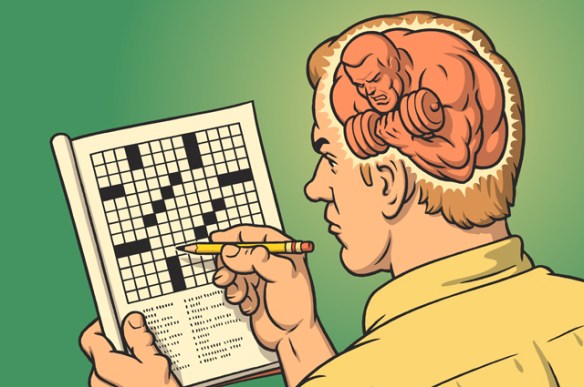
What Is Good Trivia?

Trivia is an integral part of many forms of puzzling. Crosswords involve a fair amount of trivia, as do many clued puzzles. Themed puzzles — particularly those that don’t give you a word list — also require some solid trivia knowledge. Brain teasers, riddles, escape rooms… all can involve trivia on some level.

But what do we mean when we say trivia? As it turns out, not everyone agrees.

Merriam-Webster defines trivia as “unimportant matters, trivial facts or details,” then acknowledges the secondary meaning “a quizzing game involving obscure facts,” a definition which didn’t come around until the 1960s.

That first definition certainly fits the bill in many trivia books and games. They’ll claim any random fact as trivia, obscure or otherwise.

But I don’t think obscurity defines trivia. After all, plenty of great evenings of bar trivia don’t require obscure topics or the minutiae of various subjects; they simply require a wide swathe of general knowledge and a decent grasp of recent news and pop culture.

[Image courtesy of The New 60 comic.]

The first time I gave serious thought to the question “what is trivia?” occurred years ago when I started working on a movies and television-themed subscription crossword book for the folks at Penny Press. In addition to creating puzzles centered around a central theme for the issue — soap operas, Star Wars, animal movies, etc. — I also created lists of trivia questions to be included in the book.

I would compile a list of 25 or 30 trivia questions — brief enough to read along the bottom of the page, but hopefully interesting enough to be worth the solver’s attention — and sent them off for consideration.

That’s when Editorial Manager Warren Rivers introduced me to his definition of trivia:

What a lot of people call “trivia” strike me as things one should or could have learned in school. Those are things I don’t consider trivia. Trivia to me are the things that I wouldn’t expect a person to know, or better yet includes a “twist” or an element of surprise.

And I think that’s a key element in good trivia: that interesting twist or surprise. It’s not just informational recall. There’s something more there, whether it’s in the answer or the clever construction of the question.

But there are plenty of knowledgeable trivia enthusiasts out there, and I wanted their input as well.

One of the first people I asked was Stella Zawistowski, a crossword constructor, powerlifter, and trivia supplier for Geeks Who Drink, who clearly has one of the coolest resumes in the world.

I think what you are asking me is, “what is GOOD trivia”?

Good trivia accomplishes one of two things: teaches people something they don’t know and will find interesting, or nudges them to realize they know more than they think. This means that what constitutes good trivia is highly audience dependent. The astronomy question that is too easy to be interesting to a group of JPL employees could be fascinating to a general audience. Conversely, a general-audience question about Handel’s “Messiah” could be very boring to a group of classical music experts.

IMO one of the best trivia questions I’ve ever written is “The hand-cut and -sewn lace of this instantly famous wedding gown includes four types of plants: roses, shamrocks, daffodils, and what?”

The reason I think it’s good is that it fits into the “nudge people to realize they know more than they think” category. On its surface, this is a fashion question. How on earth is one supposed to know a detail as tiny as what flowers were embroidered on the lace of somebody’s wedding gown?

But if you think a little more carefully, you’ll see that the bride is marrying a British royal, and if you know that the three plants mentioned in the question — rose, shamrock, and daffodil — represent England, (Northern) Ireland, and Wales, respectively, you then realize: Oh, she’s representing the four UK countries, and the one that’s missing is Scotland. So the answer is the thistle, the national flower of Scotland.

I very carefully chose which one of those I left out, too! If you give shamrock, daffodil, and thistle, rose is incredibly easy, easier than I wanted the question to be. Take out shamrock, and I think it’s a bit harder to realize that the three remaining flowers are national symbols. Take out daffodil, and the solver unfairly has to choose between daffodil and leek, the latter of which is also a botanical national symbol of Wales. I don’t know that anybody ever wanted leeks on her wedding gown, but I didn’t want anyone to get the question wrong simply because they went with the wrong national symbol.

[Image courtesy of AmazingSuperPowers.]

Stella gets into a very important aspect of quality trivia that you don’t immediately consider: the phrasing and construction of the question.

Sure, the answer is the payoff, but the question is how you get there. The question is often the source of the a-ha! moment we so desire.

According to the crew at Geeks Who Drink, “the usual job of the conscientious quiz-writer is to start with a kernel of something you don’t know, and stir in just the right mix of hints and parallels to lead you to the correct answer (yes, no matter what it feels like, we DO want you to get most of them right).”

And that can take time. Thorsten A. Integrity, commissioner of the invite-only Learned League trivia website, can spend up to 30 minutes on each of the six trivia questions featured in a given day of trivia during one of the four seasonal competitions.

He usually starts with an interesting tidbit from a reference book and builds the question out from there. He fact-checks everything and has his questions professionally copyedited.

That effort creates a conversation in the brain. You ask yourself about different aspects. You rule things out, as Stella shows in her example. A good trivia question gives you enough to get you started and JUST enough to eliminate some false paths. (Although there’s nothing wrong with a tricky trivia question that leads you down the incorrect path a little bit.)

On trivia nights, or in trivia games, that conversation can quickly become fun and engrossing. As Ken Jennings once said of trivia, “It can lubricate social interaction. I like to see it as a way to build bridges.”

Are you a trivia fan, fellow puzzlers? Let us know your favorite trivia questions and bits of trivia below. We’d love to hear from you! (We could even compile them into a future blog post!)


dailypopwsicon

Have you checked out our special summer deals yet? You can find them on the Home Screen for Daily POP Crosswords and Daily POP Word Search! Check them out!

Thanks for visiting PuzzleNation Blog today! Be sure to sign up for our newsletter to stay up-to-date on everything PuzzleNation!
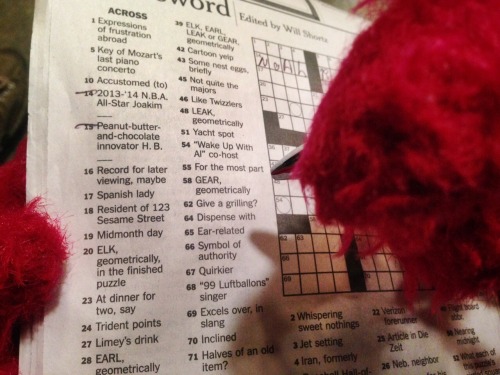
Another Brain Teaser Submitted For Your Puzzly Pleasure!

[Image courtesy of SharpBrains.com.]

A few weeks ago, we shared two brain teasers submitted by one of our fellow PuzzleNationers! Well, that must have inspired some of the readership, because we received another brain teaser to solve and share this week!

This brain teaser, submitted by puzzle fan Brian, is called The Smith-Jones-Robinson Problem, and Brian says it has been slightly altered from the original for clarity’s sake.

So, without further ado, let’s get to the puzzle! (We’ll share the solution next week!)


The Smith-Jones-Robinson Problem

Every fact is important. The puzzle is as follows:

On a train, three men named Smith, Jones, and Robinson are the fireman, brakeman, and engineer, but not necessarily in that order. Also on the train are three businessmen who have the same names as the train crew. They will be referred to as Mr. Smith, Mr. Jones, and Mr. Robinson.

  • Mr. Robinson lives in Detroit.
  • The brakeman lives exactly halfway between Chicago and Detroit.
  • Mr. Jones earns exactly $20,000 per year, paid in thousand-dollar bills.
  • The brakeman’s nearest neighbor, one of the passengers, earns exactly three times as much as the brakeman, and is also paid in thousand-dollar bills.
  • Smith beats the fireman at billiards.
  • The passenger whose name is the same as the brakeman’s lives in Chicago.

From the information listed above, can you figure out the name of the engineer?

Will you be accepting this puzzly challenge from a fellow PuzzleNationer? Let us know in the comments section below. We’d love to hear from you!


dailypopwsicon

Have you checked out our special summer deals yet? You can find them on the Home Screen for Daily POP Crosswords and Daily POP Word Search! Check them out!

Thanks for visiting PuzzleNation Blog today! Be sure to sign up for our newsletter to stay up-to-date on everything PuzzleNation!