When you get right down to it, the puzzle world isn’t all that big. There are a few names that everyone knows, and plenty of names that people should, but generally don’t. And sadly, too many of those names aren’t celebrated until after they’re gone.
Maki Kaji is one of those names you should know.
He passed away recently, and different articles and obituaries called him everything from “puzzle enthusiast” to “Sudoku creator,” but the title he most deserves is the one he put on his business cards: Godfather of Sudoku.
Honestly, he’s one of the three most important people in the history of Sudoku.
Howard Garns is credited with creating Number Place for Dell Pencil Puzzles and Word Games in May 1979 (though a French variant of the puzzle appeared in the newspaper La France in the 1890s). Wayne Gould stumbled upon Sudoku puzzles in a magazine, then designed a generation program and sold it to the Times in London, kickstarting the craze in the UK that spread elsewhere.
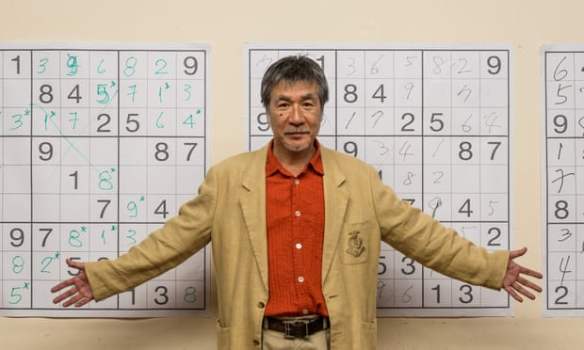
[Maki Kaji at Brazil’s first national Sudoku competition in São Paulo in 2012.]
But it was Maki Kaji who championed the puzzle all over, using it in his puzzle magazine Nikoli starting in the early 80s, then taking advantage of the UK boom and selling it in dozens of countries. (Gould didn’t have the resources, so many newspapers and publishers came to Maki Kaji for them.)
The name Sudoku came from him. (In American puzzle magazines, it was Number Place or To the Nines.) Originally the puzzle was called Suuji wa dokushin ni kagiru, or “numbers should be single,” before taking the suggestion to shorten it to Sudoku.
Of course, despite his close association with Sudoku, Maki championed puzzles in all forms. He founded Nikoli (also known as Puzzle Communication Nikoli) with two school friends in 1980, four years before adding Sudoku to its roster of puzzles. It was Japan’s first puzzle magazine!
One of the goals of Nikoli was to feature what they called “culture independent” puzzles, meaning puzzles that didn’t rely on a specific language or alphabet. (Talk about accessibility!)
“When we create our puzzles, we want people to enjoy them and not feel stressed by them,” he said.
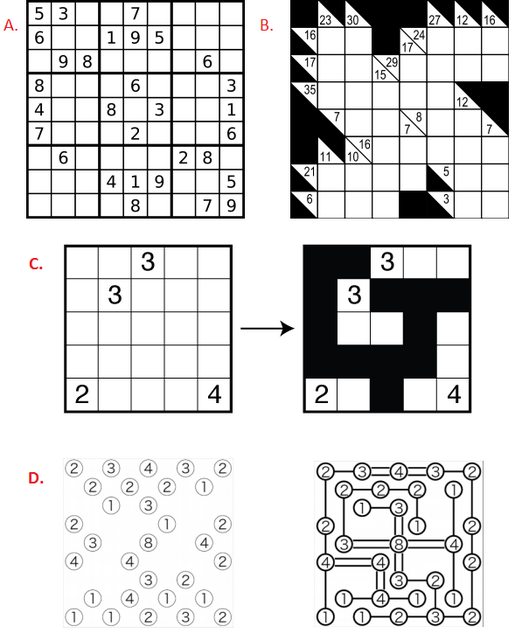
Because of this culture-independent style, Nikoli was famed for its many logic puzzles, because they relied less on words and more on numbers, symbols, and elegant grid positioning. Popular puzzles included familiar ones like Sudoku and Kakuro, as well as less familiar puzzles like Nurikabe and Hashiwokakero.
“I don’t want to just be the godfather of Sudoku,” Maki said. “I’d like to spread the fun of puzzles until I’m known as the person who established the puzzle genre in Japan.”
One of his key tools was a section in Nikoli that invited readers to submit their own ideas for puzzles. It quickly became the most popular part of the magazine. Readers submitted new puzzles, which other readers then refined and expanded on. Nikoli is credited with introducing hundreds of new logic and number puzzles to the world through this puzzle-loving fan-fueled pipeline.
Of course, even the Godfather of Sudoku ventured into crosswords from time to time. In fact, in 2017, it was reported that he published the world’s largest ever crossword, with 59,365 across clues and 59,381 down clues on a printed grid 30m long, kept in a scroll.
Go big or go home, I guess.
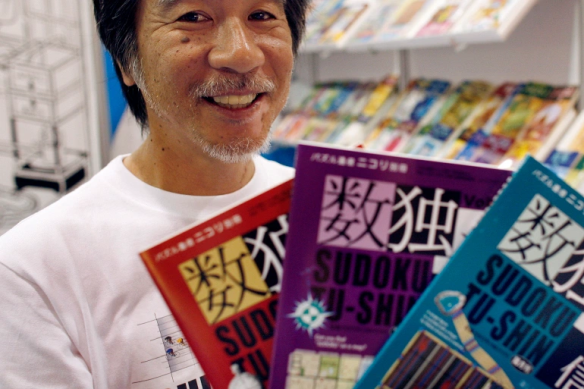
[Constructor Peter Gordon (and his Sudoku license plate) with Maki.
Maki stepped down as president of Nikoli just last month, and the company released this statement in response to his passing:
Kaji-san came up with the name Sudoku and was loved by puzzle fans from all over the world. We are grateful from the bottom of our hearts for the patronage you have shown throughout his life.
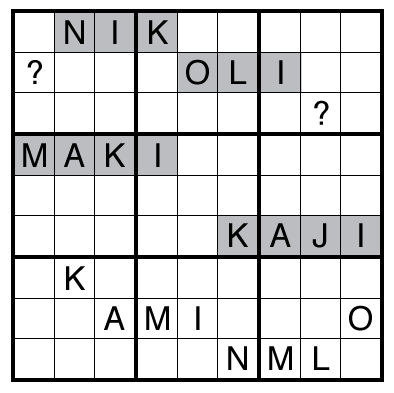
But, naturally, it takes a puzzler to truly honor a puzzler, and I think Thomas Snyder (aka Dr. Sudoku, no slouch himself when it comes to the famed number puzzle) offered the perfect tribute on his Art of Puzzles website:
A wordoku puzzle dedicated to Maki Kaji.
The puzzle world is a far richer and more varied place thanks to the creativity, hard work, and passion of Maki Kaji. You probably didn’t know his name before. But hopefully, you’ll remember it now.
Farewell, Maki. Thank you for bringing so many new eyes to the world of puzzles.
Lollapuzzoola is tomorrow, Saturday, August 21st, and you have until midnight Eastern tonight to sign up for this marvelous virtual crossword tournament!
You may be familiar with the board game Schmovie or hashtag games on Twitter.
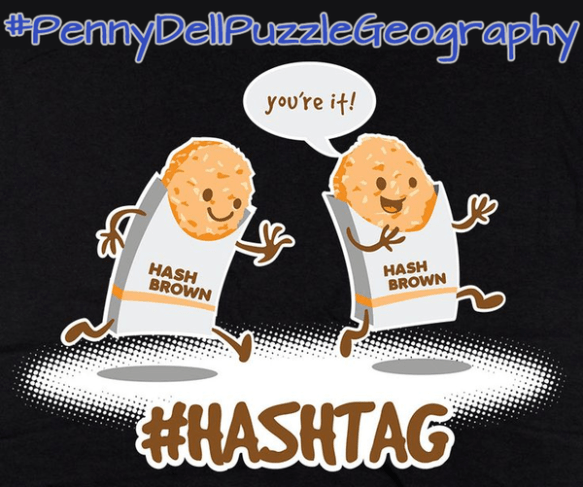
For years now, we’ve been collaborating on puzzle-themed hashtag games with our pals at Penny Dell Puzzles, and this month’s hook was #PennyDellPuzzleGeography. Today’s entries all mash up Penny Dell puzzles, magazines, and products with geographical terms, famous places, map features, and more!
Examples include Stepping Stonehenge, Sri Linkwords, and Istanbul’s-Eye Spiral.
So, without further ado, check out what the puzzlers at PuzzleNation and Penny Dell Puzzles came up with!
DiagramAtlas
E-Quote-or
Longitudinal Division
Escala-Terrain
Insert-a-World
Globe-servation Post
Arctic Circle Sums
Across and Down Under / Across and Down East
Compass Rose Garden
South of the Borderline
Finland the Fours / Finish the Forest
Grand Turin / Rio Grande Tour
Bricks and Mauritania
Hohokus-Pocus
“The Land of the Midnight Sunrays”
SiliConnections Valley
Annapolisgrams
The Bermuda Triangle Seek
Foggy Top to Bottom
OkefenoKeyword Swamp / O-Keyword-Fenokee Swamp
Orkeywords Islands
Florida Keywords
Plateau-psy Turvy Fill-In
LogiC-artography
Calming Color-ado River
Sudo-Kuwait
Themeyscira
Archi-Dell-ago
Penn-solve-ania
Niagara Quotefalls
Giant’s Crossway
Match-Up Picchu
Tropic of Kanter
Naturally, one of our intrepid contributors went above and beyond, penning this delightful description of a particularly puzzly place:
I don’t know much about Geography, but I do know to take Three from Nile when visiting the Foursome Corners, which of course is where Utah the Odds, Colorado by Numbers, Pair Off-izona, and some oddball called New Mexico come together. Not sure how New Mexico even belongs in the Foursome Corners but there it is, Crypto-Geographically speaking, sorta makes it a Mystery State if you know what I mean. I learned about is when Dora the Exploraword pulled an atlas out of her backpack.
Did you come up with any Penny Dell Puzzle Geography entries of your own? Let us know! We’d love to see them.
There’s an ongoing quest for the perfect all-in-one game/puzzle kit.
Over the years, we’ve seen games and puzzles come and go that attempt to build an all-in-one play set that allows for new variations and still remains portable. The Dark Imp has their 6-in-1 Christmas cracker set, for instance. Knot Dice offers numerous games and puzzles to accompany their beautiful dice. Looney Labs has their Looney Pyramids, complete with an ever-growing online archive of new games developed by fans.
Those games are all terrific, but so far, the simplest remains a deck of cards. You can play an endless number of games with it, and it fits in your pocket.
But people keep trying, and some of those projects are worth checking out.
So when I stumbled across Gemji on Kickstarter, I was definitely intrigued.
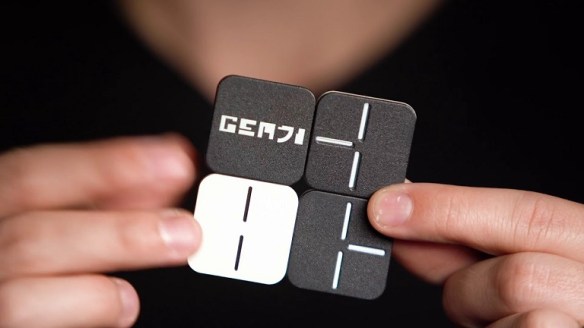
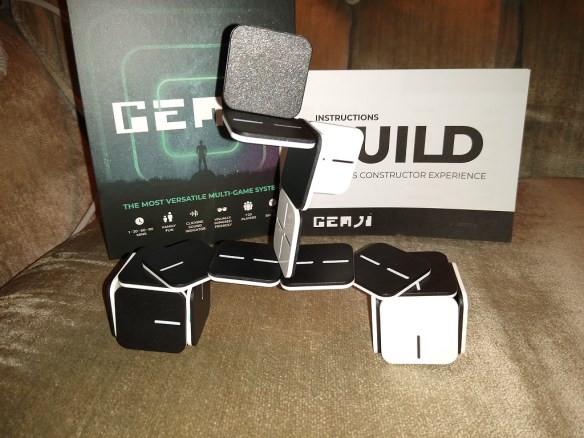
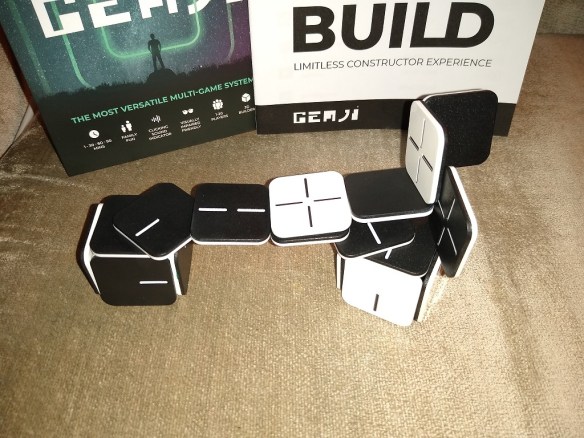
It’s a magnetic tile set that promised all sorts of building and play options, and it really seemed to allow for much more than any magnetic set I’d seen before.
I finally received my Gemji set in the mail a while back, and I’ve been playing with it on and off for the last few weeks, testing out all sorts of ways to play with it.
And today, I’m going to share my thoughts with you and let you make up your own minds.
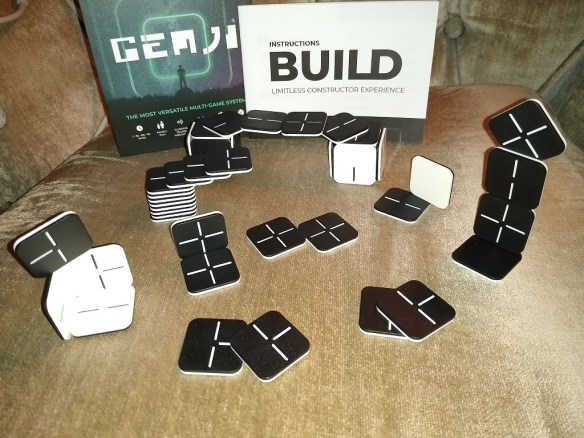
The base Gemji collection includes 70 magnetic tiles (black on one side, white on the other), a folding base to build on, and two manuals.
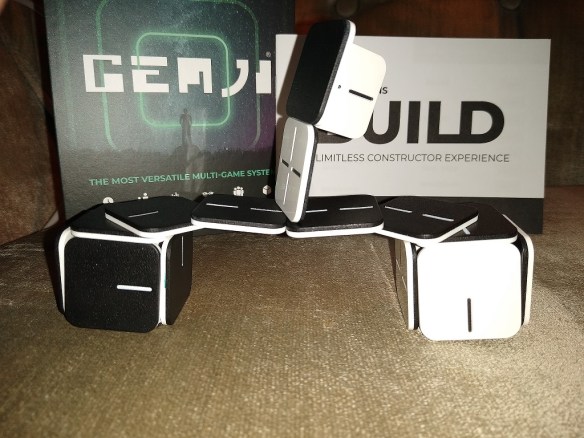
It’s a building toy, a plaything, a puzzle set, and a game kit all in one. You can play magnetic versions of chess, Stratego, Battleship, Othello/Go, and many others. You can play tangram-style shape-making games (in 2-D and 3-D). You can make dice and play dice games. Dexterity games, stacking games, building games, strategy games… there are all sorts of options.
In addition to the numerous games and activities suggested in the two accompanying booklets — Play and Build, respectively — it’s infinitely adaptable, so you can’t help but start making your own games and puzzles out of it.
For instance, one of our first ideas was to build a small platform and play a Catch the Moon-style balance game with it.
We built a die to roll that would determine if you had to add one tile or two to the sculpture in the center of the platform.
And when the sculpture inevitably collapsed, it simply clicked and clacked together on the platform, rather than crashing to the floor in a cacophony like Jenga would.
That’s a big plus.
Play can be as elegant or as silly as you like. For one game, we made “dice” again, and laid out a field of tiles randomly across the table. Then we tossed our dice one at a time and saw how many tiles we could pick up Katamari Damacy-style. Naturally, the game became more complex — adding obstacles to avoid, adding or losing points depending on tiles picked up, lost, or recovered — and we’d quickly lost half an hour of lunchtime.
All in all, I think Gemji has built a solid foundation for puzzle gaming. It will be a treat to see how other players develop new games and innovative ways to use the tiles in puzzly ways.
[Gemji is not yet commercially available, but they’re hoping to be on sale in time for the holiday season. Check out their website for further details.]
What is it about a secret message from decades or even centuries ago that intrigues us so?
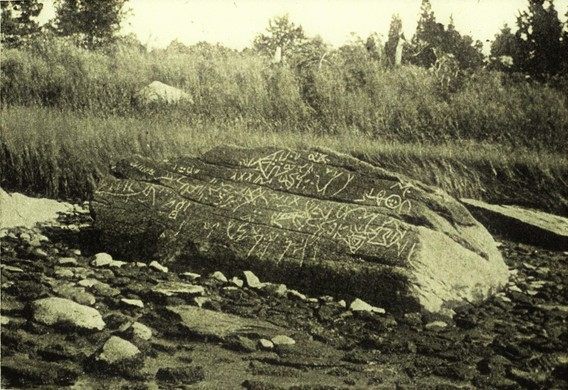
Last year around this time, we chronicled the stories behind three stones in the United States inscribed with unidentified runes or letters that have defied attempts to solve them.
Today, we add to that list of strange stones bearing the secret words of the past as we discuss the Astronaut of Casar.
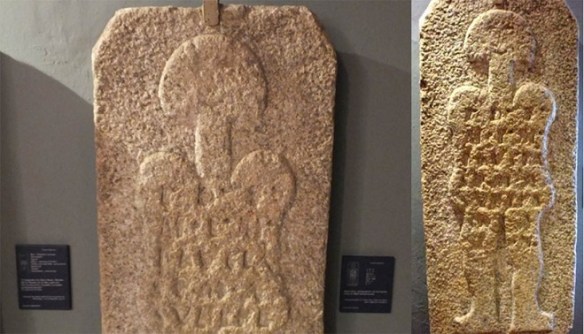
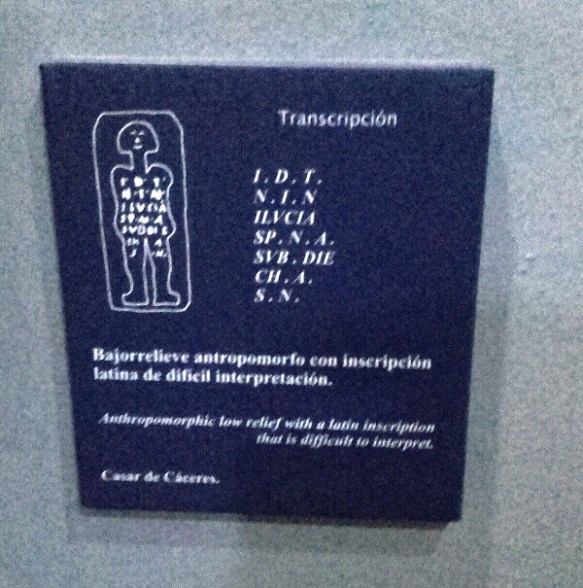
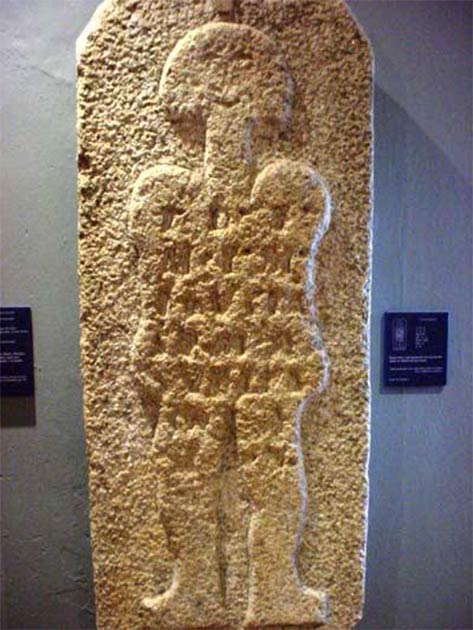
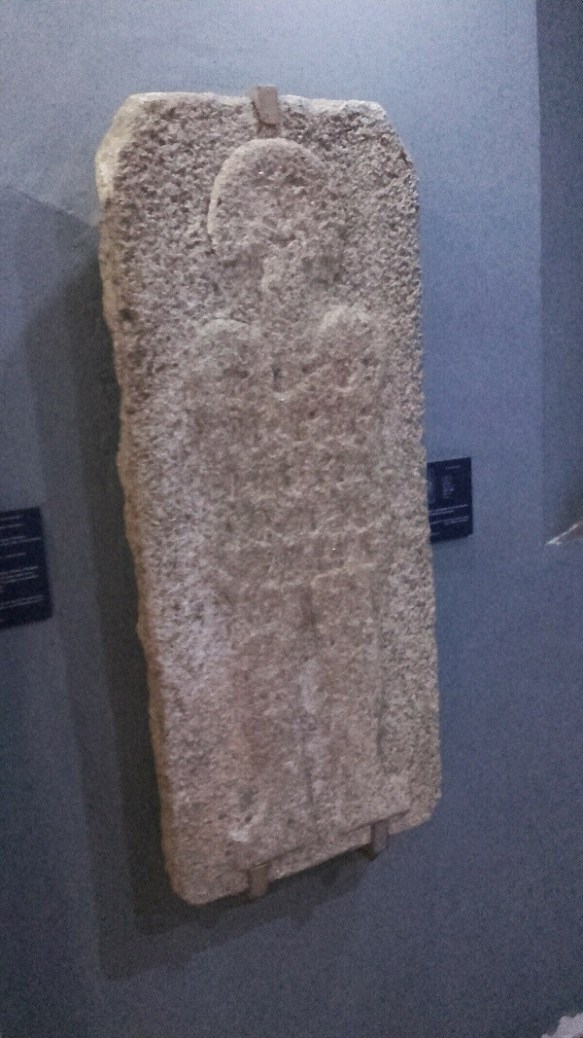
The Astronaut of Casar, also known as the Alien of Casar or simply the Casar stele, is a stone slab that supposedly dates back to Roman times, if not earlier. It was originally embedded in the wall of a cemetery in a village in Spain known as Casar.
[One theoretical interpretation.]
The inscription carved into the body of the illustrated figure consists of Latin characters, but the language appears to be something Indo-European. Possible languages include Lusitanian, Tartessian, and an early form of Basque.
The identity of the figure depicted on the stele is the subject of great debate. Some observers believe is a Celtiberian warrior from the 1st or 2nd century B.C. (The Celtiberians were Celts that lived on the Iberian peninsula in the last centuries B.C.)
But, of course, the name indicates another theory regarding the identity of the figure on the stele. Some observers believe it’s meant to be an astronaut or an alien, a visitor from another planet. (The large head represents either a space helmet or the disproportionate head of an alien being, you see.)
Yes, I knew if we kept discussing mysterious stones, we would eventually have to talk about aliens at some point!
Those who ascribe to the alien astronaut theory believe the stele is a message of gratitude from the alien, a thank you for the hospitality of a Casar family who welcomed it for a season while it stayed or was stuck on Earth.
To be fair, I think that’s a reach. There are plenty of examples of figures drawn or carved with oversized heads in art and archaeological history, so we don’t immediately need to look to the stars for answers.
But if you want to look for answers, instead of the cemetery wall in Casar, the Astronaut of Casar can be found in the Archaeological Museum of Cáceres, Spain.
What do you think the stone says, fellow puzzlers? Is it just a strange funeral marker, or something more otherworldly? Let us know in the comments section below! We’d love to hear from you.
The summer is always a marvelous time for puzzly events. We just had the Boswords tournament, and next weekend, there’s another online crossword tournament awaiting solvers!
Lollapuzzoola returns on Saturday, August 21st, and this year, we’re proud to announce that PuzzleNation is one of the tournament’s sponsors!
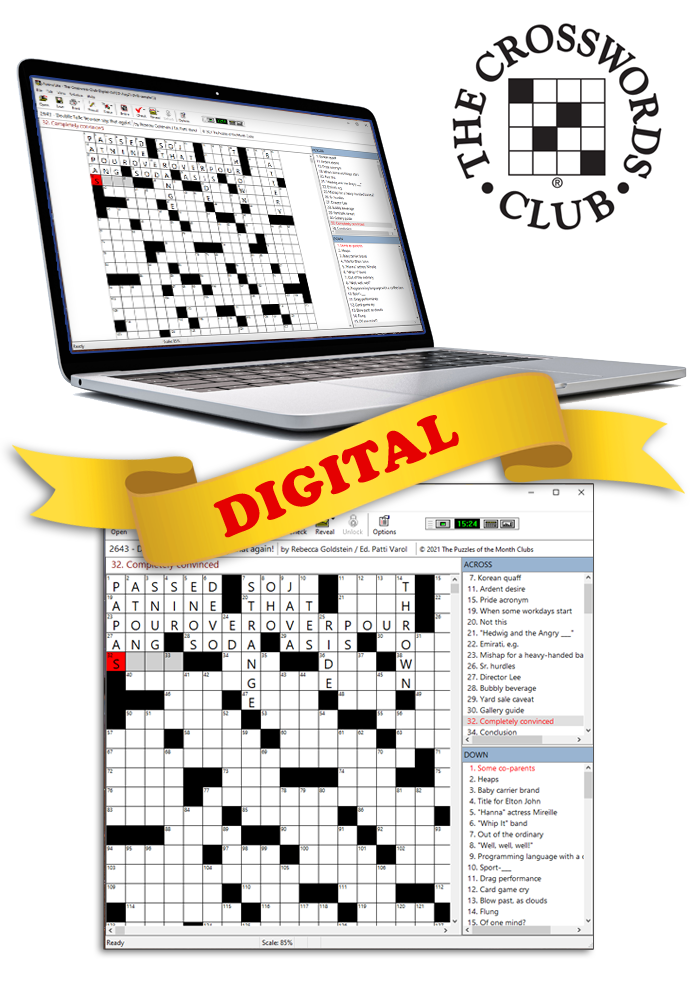
That’s right, we are providing free subscriptions to The Crosswords Club Digital to all twelve of the tournament finalists (12 in all).
Be sure to click the link for more details, or to sign up for this year’s event.
It’s a digital subscription service that provides you with six Sunday-sized crosswords each month, created by some of the sharpest crossword constructors in the business today, and edited by puzzle luminaries Patti Varol and Brad Wilber.
You can solve them on your desktop, on your tablet, or printed out, and each month is guaranteed to provide you with puzzles as fun as they are challenging. Plus each month, you receive a bonus word puzzle!
Click this link to check out a sample of the terrific puzzles you’ll get through The Crosswords Club Digital.
I have been a huge fan of the The Crosswords Club for years, and their Digital service is another fantastic way to get top-notch puzzles with the click of a button.
You can check out the full details for The Crosswords Club Digital here, and don’t forget to give Lollapuzzoola a chance as well.
Will you be virtually attending Lollapuzzoola, fellow puzzlers? Or checking out The Crosswords Club Digital? Let us know in the comments section below! We’d love to hear from you.
Strangely enough, we seem to find more puzzly content in sitcoms than any other TV genre. Brooklyn Nine-Nine, M*A*S*H, Parks and Recreation, and more have featured scavenger hunts, escape rooms, and other puzzly activities.
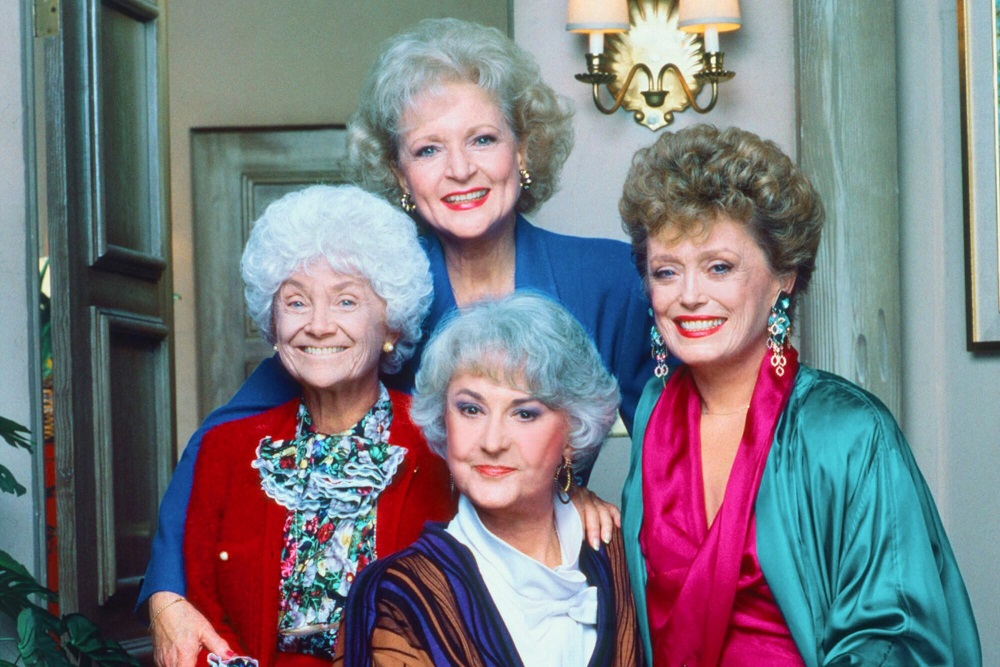
And that’s true of today’s subject as well. Join us as we visit with The Golden Girls and try to unravel a murder mystery weekend gone awry! Please enjoy as we explore the second episode of the seventh season, “The Case of the Libertine Belle.”
During breakfast, Blanche gets a call from the Maltese Falcon Club, confirming plans for this year’s annual outing for the museum staff: a murder mystery weekend at the Queen of the Keys Hotel.
Dorothy is immediately excited for the event, and Rose reveals that she was considered the Sherlock Holmes of St. Olaf.
(Unfortunately, thanks to increased commercial time over the years, syndicated episodes have lines cut from the show to fit into a standard half-hour time slot with commercials, so some of the dynamite jokes aren’t part of regular reruns.)
Dorothy: Blanche, are you kidding? I have read every word Dashiell Hammett and Raymond Chandler ever wrote. Sam Spade and Phillip Marlowe have become a part of me… “She had more curves than the Monaco grand prix and was twice as dangerous… Her jewelry was mute testimony that Charlie Chaplin wasn’t the only tramp who hit it big in this town.” Sophia: You do this on first dates don’t you Dorothy?
Blanche is nervous about the event, hoping that it will lead the museum’s director of acquisitions, Kendall Nesbitt, to choose her as his assistant. That promotion would include a trip to Europe to look for rare paintings and antiques.
In typically cutting fashion, Sophia compares Blanche herself to an antique. Blanche then asks Sophia, Rose, and Dorothy to accompany her to ensure the museum attendees get the hotel’s group rate.
Cut to the hotel, where everyone is dressed for dinner.
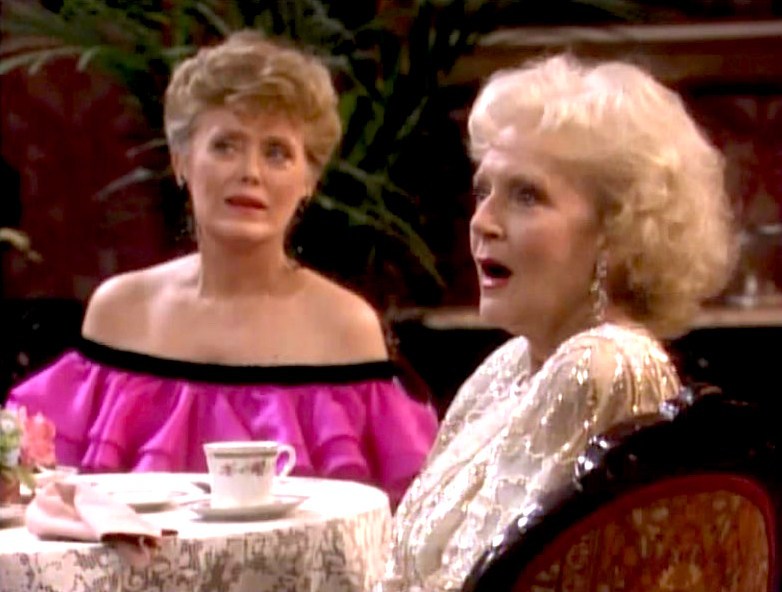
Dorothy advises Blanche and Rose to keep their eyes open, trying to identify which guests are real and which are actors pretending to be guests. Rose immediately suspects Dorothy, then another guest, then gets distracted because Blanche took her missing earrings, wearing them for the event.
Kendall shows up and Blanche flirts with him, only to be appalled when he sits down to chat with her rival for the assistant job, Posey McGlynn.
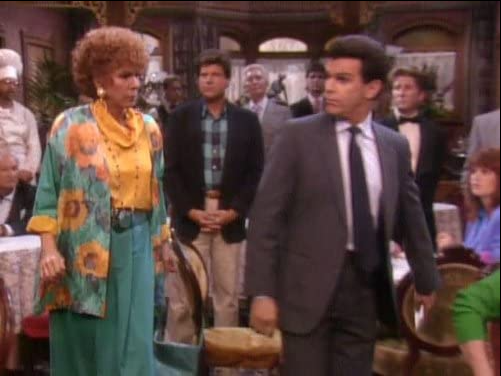
Their discussion is interrupted when the maitre d’ calls attention to a birthday at another table. Everyone turns to celebrate Giles Forsythe, specifically mentioning Giles’ adult daughter, adult son, and young new bride Candy.
The lights go out as the cake is wheeled in. We hear a gunshot, then a scream!
The lights come back up, and Candy’s throat has been cut. Giles is slumped face down over the table, having been shot.
The maitre d’ matter-of-factly declares “oh dear, they’ve been murdered,” then calmly steps aside. It’s great.
COMMERCIAL BREAK!
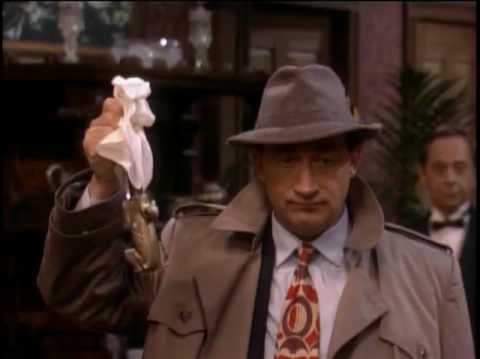
We return to the hotel, where private detective Spade Marlowe (UGH) shows up, supposedly having been hired by the late Mr. Forsythe to check up on his 22 year old wife.
Sophia immediately insults his hat. Sophia is in the right here.
Spade infodumps that Forsythe’s son Philip is a collector of pre-Colombian artifacts and Forsythe’s daughter Gloria is a spinster (a label she weirdly seems fine with). He then invites the attendees to help him solve the murder as he picks up the bloody dagger from the floor.
Rose suggests that the dagger might lead them to the murder weapon, and the detective immediately replies, “St. Olaf?”
Kendall identifies the weapon as a rare Mayan sacrificial dagger. Spade goes to check Gloria’s purse, and she claims he won’t find anything suspicious there. Naturally he finds a recently fired gun in the purse.
Rose accuses the maitre d’. One guest accuses Philip. Another accuses Gloria. Sophia accuses Colonel Mustard in the library with the candlestick.
Dorothy then stands up and wipes the floor with everyone.
She points out it would be too obvious for Gloria to hide the gun in her purse, or for Philip to choose a knife from his collection for the crime. Both weapons were picked and disposed of to frame the other. Furthermore, the dagger was found to the left of the victim, indicating she was sliced from right to left by a left-handed assailant. Gloria, like most left-handed people, wears her watch on her right wrist.
Dorothy concludes that Philip and Gloria committed the crimes and tried to frame each other. As for motive, they both feared their father would change his will for his young bride, and they each sought to be the only inheritor.
Having solved the crime, Dorothy gets a round of applause from the attendees.
Blanche runs over, having received an invite from Kendall for a private meeting. She just gave him her room key and demands the spare from Rose, leaving Rose to bunk with Dorothy and Sophia for the night.
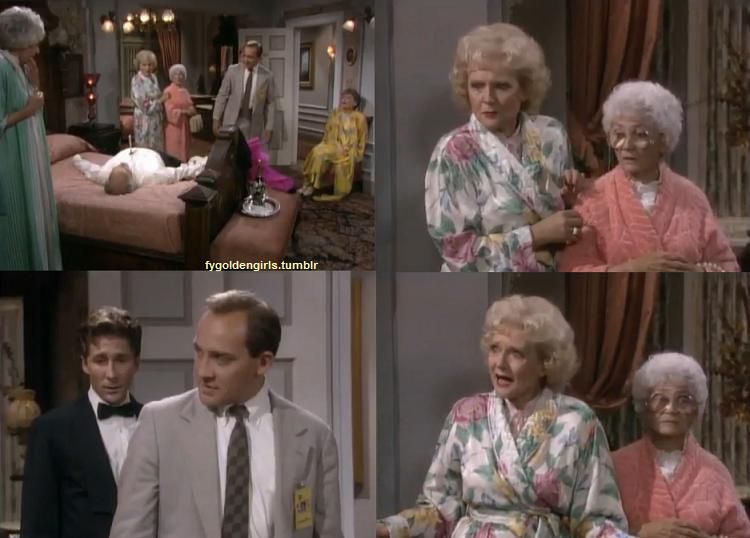
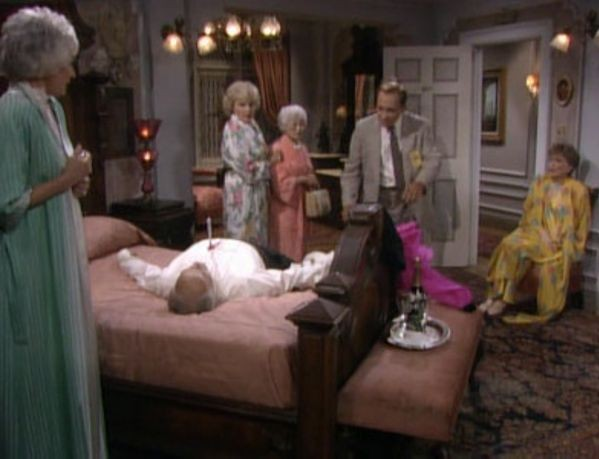
Later, in her room, Blanche leaves the bathroom and answers the door. She accepts champagne from a waiter. He steps into the room, and discovers Kendall’s body laying on the bed with a knife in his chest. (Blanche probably didn’t notice through the magic of it being just out of frame.)
COMMERCIAL BREAK!
As the waiter runs from the room, Dorothy, Rose, and Sophia arrive. Blanche is spooked, but Dorothy believes it’s all part of the murder mystery weekend. They check Kendall’s breath with a mirror, but there’s nothing. He’s dead.
The waiter arrives with Vaczy, hotel security, who immediately notices the method of death AND that Rose is from St. Olaf. He locks down the room and demands that no one leave the hotel, especially Blanche, who is his lead suspect.
Before we cut to the next scene, there’s a brilliant visual gag after Blanche is declared the lead suspect. As one of the main characters looks over at the next one and the camera follows, the music rises, as if asking a question.
The detective leaves, and Blanche looks at Dorothy, Dorothy looks at Sophia, Sophia looks at Rose, and Rose turns to look, but there’s no one left. It’s a really simple bit, but very funny and well-executed.
Blanche is distraught, but Dorothy promises that Blanche will be fine because she’s innocent. Rose is more skeptical, because the room was locked and only Kendall and Blanche had keys. Dorothy, unfortunately, has no solution to the locked room problem. Yet.
Later, all the guests are gathered in the dining room by Lt. Alvarez, who lays out the case. He mentions the two keys and the steak knife. (Blanche had steak for dinner, giving her opportunity to steal one of the knives.)
He asks if anyone can refute his case, and Dorothy speaks up, demanding a motive for Blanche’s crime.
[Sorry, this video has been mirrored.]
Posey McGlynn stands, accusing Blanche of trying to seduce Kendall into giving her the assistant job. Posey describes Blanche throwing her dress over the bed and changing into a negligee to await Kendall’s arrival. But she claims that Kendall asked to meet Blanche alone — and sent the champagne — to let her down easy, as he was giving the job to Posey. (Also, he couldn’t invite Blanche to his room, because Posey was already sharing a room with him. They were secretly lovers.)
She then accuses Blanche of murdering Kendall.
COMMERCIAL BREAK!
Lt. Alvarez prepares to arrest Blanche, but Dorothy defends her. First she asks why Blanche would bring a steak knife to what she thought was a romantic encounter. Alvarez ignores it. Dorothy suggests that a simple knock at the door could have caused Kendall to open it, expecting the champagne. (This would eliminate the locked room scenario.) Alvarez dismisses it as speculation.
Then Dorothy hits the jackpot. She remembers the hotel security cordoning off the murder scene, which limited access to the room. So the only people who could have observed the murder scene were the waiter, the hotel security, Alvarez and his officers, and the quartet of Rose, Blanche, Dorothy, and Sophia.
Posey’s description of events was too detailed. There’s only one way she could have known about Blanche’s dress on the bed: if she’s seen it before the room was locked down. This means she was the murderer.
Dorothy then describes the chain of events.
Dorothy: I think I see now how it happened: Last evening at dinner, when Miss McGlynn saw Blanche give Kendall Nesbitt her key, she was furious. She dropped a steak knife into her purse… Sophia: Big deal. I took a whole place setting. Dorothy: Not NOW, Ma!
She continues to explain the murder, and Posey pulls a gun on her, but Alvarez intervenes and the shot is directed toward the ceiling instead.
He’s about to arrest Posey when Kendall walks down the stairs, smiling and gleefully explaining that he has recovered from his death. He thanks the Maltese Falcon Club and Blanche for a marvelous weekend, and everyone claps.
Blanche pretends she was in on the ruse the whole time, then immediately confesses that she had no idea, and is mad about being the butt of the joke. Dorothy asks why Kendall’s breath didn’t show up in the mirror, and Rose reveals that she sprayed it with defogger at the request of the Club as revenge for Blanche stealing her earrings.
Sophia then happily declares that no crimes were committed at all, and it was all in fun. She then cannot lift her purse (thanks to all the stolen silverware inside) and asks Dorothy to carry it to the car.
The End!
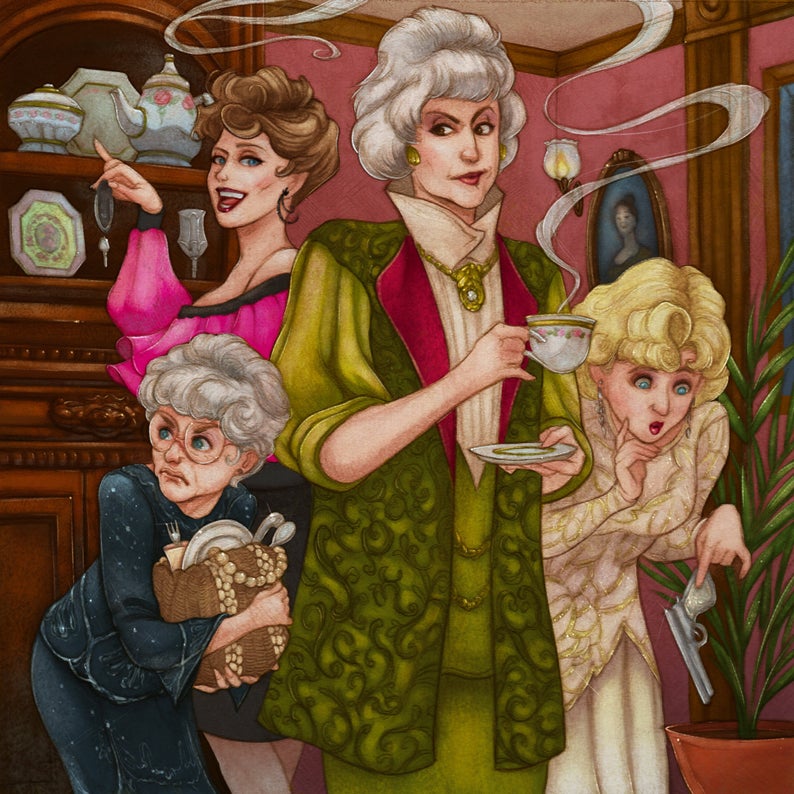
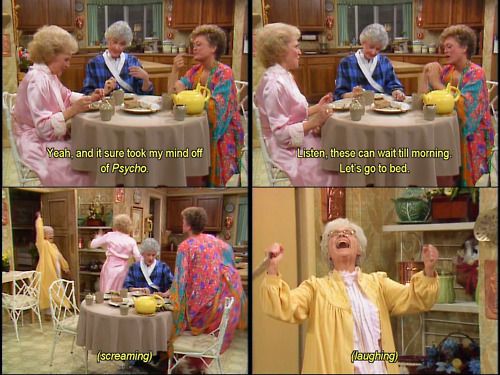
[This scene isn’t from this episode, but with a knife-wielding Sophia, I couldn’t resist.]
All in all, this is a terrifically puzzly episode. At the halfway point of the episode, we’ve already had a solid murder mystery solution AND a new mystery involving one of the main characters. A locked room mystery, to boot!
Dorothy’s glee in unraveling the mysteries is great fun, and seeing her thrive in the spotlight is a nice change of pace, given that (despite her withering one-liners) she’s often treated as the least attractive, desirable, or likable member of the quartet.
The “murder” of Kendall does play out more like a performance than an interactive murder mystery for the players to solve, so most of the museum attendees didn’t really get to enjoy the event as planned, but I suppose if they like some curiously intimate theater, the weekend might seem like a success.
As a viewer, I quite enjoyed the stylistic choices. The music was playful, and some of the camera work was surprisingly inventive, making the camera itself something of a character in the story.
Plus the casting was excellent. The waiter, fake detective, and house security are all played by strong character actors who would go on to great things in their careers (Leland Orser, Todd Susman, and Zach Grenier, respectively), and they all added nice touches to the episode.
Kendall does come off as a bit of a jerk for leaving Blanche in the dark about the whole thing, but hopefully she can use that as leverage to get the assistant’s gig she desires.
As someone who both enjoys and designs murder mystery dinner events, I think the team at the Queen of the Keys Hotel did a fairly impressive job, as did the writers of the episode.
Did you enjoy this nostalgic trip to the televised puzzly past, fellow solvers? Let us know in the comments section below! We’d love to hear from you.










 PuzzCulture