Puzzle History: The first NYT crossword

[A sculpture masquerading as a stack of newspapers.]

I like to think of December as Crossword History Month. It’s rather fitting, seeing as the anniversary of the crossword is celebrated on December 21. (It’ll be 102 this year!)

So it’s only appropriate that David Steinberg, friend of the blog and mastermind of the Pre-Shortzian Puzzle Project, recently published some newly revealed information about another intriguing part of crossword history: the first crossword puzzle published by The New York Times.

On February 15, 1942, a puzzle by Charles Erlenkotter was the very first, starting a long tradition of proud puzzlehood for the Times. (He ended up having eight puzzles featured in the New York Times.) His puzzles were also published by The Washington Post, The New York Herald Tribune, and Simon & Schuster, among many others. In fact, dozens of puzzles are credited to Mr. Erlenkotter.

All of the information released by David gels nicely with the research I did for our Crossword History timeline. In a memo dated December 18, 1941, an editor for the New York Times conceded that the puzzle deserved space in the paper, considering what was happening elsewhere in the world, and that readers might need something to occupy themselves during blackouts.

David and his contact Donald Erlenkotter, grandnephew of Charles, theorize that Margaret Farrar was behind choosing Erlenkotter’s puzzle. When Farrar was recruited to be the first puzzle editor for the Times, she wouldn’t have been able to use one of her own puzzles as the inaugural puzzle for the newspaper, since that would conflict with her work with Simon & Schuster.

But no doubt Charles had heard of her through her S&S work, contacted her with his own puzzles, and voila! He becomes the first of many constructors to test the puzzly mettle of crossword fans for decades to come!

I’ve long said that one of the most amazing things about the Internet is that connections can now be made that no other technology would’ve allowed for, and this is one more example. Due diligence, keen research, marvelous resources, and the ability to reach out to others with similar interests has added one more vibrant piece to the mosaic of puzzle history.

It’s moments like this that make me the history buff I am.


Thanks for visiting PuzzleNation Blog today! Be sure to sign up for our newsletter to stay up-to-date on everything PuzzleNation!

You can also share your pictures with us on Instagram, friend us on Facebook, check us out on TwitterPinterest, and Tumblr, and explore the always-expanding library of PuzzleNation apps and games on our website!

A Guide to Crossword Clues

[Image courtesy of npr.org.]

For someone who has never solved a crossword before — or has solved them before with less-than-stellar results — the field of clues that accompanies the grid is a daunting sight.

But if you take those clues one at a time, you’ll quickly find that there are different kinds of crossword clues, each with their own flavor and level of difficulty.

Now, I’m referring to American-style crosswords here. Cryptic or British-style crosswords have a completely different language when it comes to cluing. (Let me know if you’d like me to do a post on cryptic cluing!)

By far the most common style of crossword cluing is the synonym clue. The default form of cluing is simply offering a synonym or definition of the word. You practically can’t have a crossword puzzle without at least one.

Some recent examples of synonym clues from our Crossword Clue Challenge every weekday on Facebook and Twitter include “Before sunrise” for PREDAWN, “Ample” for ENOUGH, and “Talent” for KNACK. Simple and straightforward.

Another common cluing form is the fill-in-the-blank clue.

These clues can vary wildly in difficulty depending on how much information is offered. For instance, “Quentin Tarantino’s ____ Fiction” is a super-easy clue, whereas “____ Sea” would be pretty tough, even knowing how many letters are in the answer.

Along the same lines are the see-also clues. These are clues that reference other clues in the same puzzle, often by spreading a multiple-word answer across several entries.

For instance, you look at 3 Across, and it says “See 9 Down.” And when you look at 9 Down, it says, “With 3 Across, popular song by The Verve.” But you might need help from the crossings to get BITTER SWEET SYMPHONY reading across several spaces in the grid.

[Wait, wrong Clue…]

Some clues offer more information than you expect, if you’re observant. For instance, it’s common in many crosswords to signal a variant spelling, a foreign word, or an abbreviated word as an answer within the clue.

For instance, if the answer is AMEER (instead of EMIR), you might clue it as “Moslem chief” instead of “Muslim chief” to indicate the variant spelling. For REP, a standard clue would be “D.C. fig.” For SRA — short for SENORA — you might get “Mrs., in Madrid”.

(You can also employ wordplay with entries like these. For a French-fueled clue, how about “Nice, in Nice” for BIEN?)

And that serves as a marvelous segue into our final crossword cluing style: wordplay clues!

[Image courtesy of Rocky Smith Files.]

Wordplay clues employ some sort of pun or linguistic trickery to take them a step beyond the average clue. Often, these clues are marked with a question mark, indicating that there’s something going on beyond the surface meaning of the clue.

As you’d expect, wordplay clues are a favorite of mine, and they’ve been featured several times in our weekday Crossword Clue Challenge. Some previous examples include “Tot rod?” for TRICYCLE, “Tread the boards?” for WALK THE PLANK, “Star trek?” for SPACEWALK, and “Take the honey and run?” for ELOPE.

If you’ve never solved a crossword before — or never had much luck with them in the past — hopefully you’ll find some helpful tools here to guide you toward crossword-solving success.

And hey, if you need more practice, you can always check out the Crossword Clue Challenge every day at 2 PM EST on Facebook and Twitter!

Good luck!


Thanks for visiting PuzzleNation Blog today! You can share your pictures with us on Instagram, friend us on Facebook, check us out on TwitterPinterest, and Tumblr, and be sure to check out the growing library of PuzzleNation apps and games!

Goodbye, Merl.

[Picture courtesy of crosswordfiend.com.]

The puzzle world was stunned this weekend by the sudden passing of a true crossword legend: Merl Reagle.

Merl has been one of the biggest names in puzzles for a long time now, one of the few crossword constructors who was successful and prolific enough to work on puzzles full-time.

Between his appearance in the Wordplay documentary and a cameo on The Simpsons alongside New York Times crossword editor Will Shortz, he proudly represented both the love of puzzles so many solvers share AND stood as a standard-bearer for crossword construction and quality puzzling.

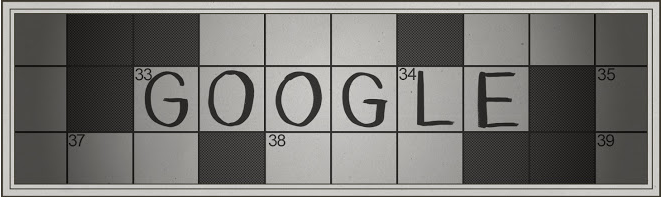
Merl sold his first crossword to the New York Times at age 16 — ten years after he started constructing puzzles, amazingly enough! In a career spanning five decades, his contributions to the world of puzzles were myriad. Nearly every year, one of his puzzles appears at the American Crossword Puzzle Tournament. The crossword he constructed for the 100th Anniversary of the Crossword was turned into a Google Doodle, and, based on my research, is the most solved crossword puzzle in history.

A craftsman with humor and heart (and no small amount of anagram skill), Merl was truly one of a kind.

[Picture courtesy of tucson.com.]

I had the privilege of meeting him at the American Crossword Puzzle Tournament this year. It was only for a few minutes while the tournament participants were tackling one of the early puzzles and the vendor’s floor was pretty empty. (Otherwise, there were always puzzlers crowded around Merl’s table between tournament puzzles. He was the center of gravity around which many fellow puzzle fans orbited, a master of ceremonies wherever he went.)

He was friendly and gracious, one of those people who can strike an instant rapport with virtually anyone. He put me at ease immediately as I checked out his latest puzzly offerings and we briefly chatted about the tournament itself. (I didn’t get the chance to challenge his legendary anagramming talents, sadly.)

Fellow puzzler and friend of the blog Keith Yarbrough was kind enough to share one of this experiences with Merl:

Merl gave me his philosophy of puzzle construction at the ACPT one year. His goal, he said, was to make the solver smile. Coming up with a funny theme was the main thing. His test when he came up with an idea was to run it past his wife, who is not a puzzler. If it made her smile, it was a keeper.

He wasn’t out to frustrate the solver with obscurities or unnecessary crosswordese, so he used common entries as much as possible. His mantra was that the fill should not be overly difficult.

[Picture courtesy of cltampa.com.]

The dozens of tributes I’ve seen online are a testament to how many friends and admirers Merl earned over the years. There are too many to link to here, but I want to highlight a few from fellow puzzlers Brendan Emmett Quigley, Deb Amlen, and David Steinberg.

Merl, you will be missed. Thank you, for the laughs, for the tough crossings, the trickiest-of-tricky clues, and the many unexpected delights you managed to spring on so many solvers.

You can check out Merl’s work on his Sunday Crosswords website as well as some of his collections on Amazon. Click the links. You won’t regret it.

Thanks for visiting PuzzleNation Blog today! You can share your pictures with us on Instagram, friend us on Facebook, check us out on TwitterPinterest, and Tumblr, and be sure to check out the growing library of PuzzleNation apps and games!

Hidden in a crossword!

[A grid from BeekeeperLabs.com.]

Everyone loves a little something extra, and that goes double for puzzle fans.

Whether it’s a hidden quote or a secret theme lurking in plain sight, a bonus answer revealed after a tough solve or a final twist that wows you with a constructor’s cleverness and skill, these little surprises are gifts every solver can appreciate.

In Sunday’s New York Times Crossword, what appears at first blush to be a simple themed puzzle — with poet WILLIAM CARLOS WILLIAMS paired with his poem THE LOCUST TREE IN FLOWER — turns out to be much more, as the entire poem is concealed within the grid!

[Image sourced from Amy Reynaldo’s Diary of a Crossword Fiend.]

While this is a particularly ambitious example, this is not an uncommon challenge for a constructor to tackle.

Sometimes, the bonus is announced upfront, as it was in Merl Reagle’s puzzle for the 100th anniversary of the crossword a few years ago. His puzzle was converted into a solvable Google Doodle, and Merl added a crafty word search element by hiding the word FUN multiple times in the grid.

Why “fun,” you ask? Because that was the set word in Arthur Wynne’s original “word-cross” puzzle over one hundred years ago!

[Click here if you haven’t tackled Merl’s marvelous puzzle.]

Our friends at Penny/Dell Puzzles have a recurring crossword variant, Revelation, which conceals a quotation in a standard crossword grid, using the same letters-in-circles technique as Jacob Stulberg did in his poem puzzle.

And, of course, I would be remiss in my duties if I didn’t mention the secret message reading out in both a New York Times crossword and a puzzle featured on The Simpsons, wherein Homer conceals an apology to Lisa inside a crossword with the help of Will Shortz.

[Check out the full puzzle by clicking here.]

So, crossword fans, be vigilant! You never know what hidden treats are lurking inside seemingly innocuous puzzles.

Thanks for visiting PuzzleNation Blog today! You can share your pictures with us on Instagram, friend us on Facebook, check us out on TwitterPinterest, and Tumblr, and be sure to check out the growing library of PuzzleNation apps and games!

Start your engines! It’s the Indie 500 crossword tournament!

Having recently attended the American Crossword Puzzle Tournament for the first time, I’ve been keeping my eyes peeled for other puzzle events and tournaments to check out.

And I stumbled across an upcoming tournament with a lot of positive buzz and interest: The Indie 500.

I decided to reach out to one of the participating constructors, Evan Birnholz of Devil Cross. Having met Evan at the ACPT this year, I knew he would be the perfect go-to guy to fill me in on everything Indie 500.

1.) What is The Indie 500?

The Indie 500 is a new crossword puzzle tournament started by five guys with their own free, independent crossword websites: Erik Agard, Peter Broda, Neville Fogarty, Andy Kravis, and myself. We’re each writing and editing the puzzles and we’re excited to hold our first tournament on May 30 down in Washington, DC.

2.) How does it differ from other crossword tournaments/events?

I think our tournament is, first, an outgrowth of the work we do on our respective websites. On a larger scale, it’s essentially a celebration of indie puzzling. The five of us behind the Indie 500 had published only a few puzzles in mainstream outlets before launching our sites, and now most of our crosswords are things that we’ve created for self-publication.

Because we each drew inspiration from independent puzzle writers like Brendan Emmett Quigley and Matt Gaffney and Ben Tausig, we wanted to give others who didn’t have many published puzzles to their name a chance to have a spotlight of their own, so we held a blind, open submission contest to find a sixth tournament constructor with fewer than ten publications in mainstream venues like The New York Times, The LA Times, CrosSynergy, and so on.

If nothing else, we figured this would inspire new constructors to be creative and submit something that they wouldn’t normally send in to a newspaper. We got several amazing submissions, and ended up picking a winner in Finn Vigeland.

[The six contributors to The Indie 500, plus initials.]

I believe our unique voices as puzzle-makers will help set our tournament apart from others. The puzzles on our sites tend to skew younger in content compared with mainstream puzzles — no surprise considering we’re all 31 or younger (I’m the oldest) — and so we like to dabble in themes and clues that reference modern and sometimes edgy material.

Because we don’t have the same space or “breakfast test” constraints that a newspaper puzzle might have, that gives us a lot of liberty to work with fresh and creative clues and themes, and we’re hoping to bring a similar vibe to our event.

We’re also throwing in some fun features that you likely won’t see at other tourneys. First, we’ll be releasing a separate meta puzzle suite before the tournament featuring puzzles by all five of us co-founders; the suite isn’t required for solving the tournament puzzles, but we think it will be fun all the same.

Next, the solvers who make it to the finals will get to have their own individual entrance music while we announce their names in style. How cool is that?

But the biggest thing that sets our tourney apart? Pie. There will be Pie. No other crossword tournament can promise you that.

[Pie: an Indie 500 guarantee.]

3.) How did it start? How did you get involved in the tournament?

We each started talking about running our own collaborative gig shortly after the 2014 American Crossword Puzzle Tournament. We just thought: events like this and Lollapuzzoola are such a blast, why not have our own tourney?

Of course we weren’t sure at first if it would be financially or logistically possible, but we got a great response from others in the puzzle world when we originally floated the idea. Over the last year, it’s just been a lot of planning, a lot of wrangling over the details, a lot of building and rebuilding grids… and now it’s almost here!

For myself, I just felt incredibly lucky to be included on the project with four other really talented puzzle constructors from the beginning. I had only published a small handful of puzzles on my website when we first discussed the idea of a new tournament, where the other four had been self-publishing for at least a year or two.

4.) As a constructor yourself, what’s your favorite part of an event like this? Do you have any favorite clues or puzzles you’ve crafted, either connected to the Indie 500 or on your own?

The best part about attending a crossword tournament is the camaraderie you get from hanging out with friends and meeting new people who enjoy the hobby of crosswords as much as you do. Solving the puzzles and creating them are fun to do, but that’s really secondary to the social aspect of a big event like this.

I’ve never had the chance to be on the other, more organizational side of things until now, but I will say that there’s a real rush I get from the thought of watching a whole room of people work on a puzzle of mine in real time.

[Solvers testing their skills at the Arlington Puzzle Festival.]

This won’t be the first time I’ve gotten that opportunity. Will Shortz once selected my first New York Times crossword as the final puzzle for the 2013 Westchester Crossword Tournament. That was a major thrill and I’m looking forward to that same adrenaline rush again.

As for favorite puzzles or clues of mine — I can’t really reveal much about what I’ve made for the tournament, but I’m a big fan of smooth grids with clues that really deliver a good a-ha moment, or at the very least make solvers laugh.

This early themeless puzzle is still one of my favorites because I was able to keep it relatively junk-free but still managed to fit in several longer, lively phrases.

This Halloween-themed puzzle was a nightmare to construct, but it had a fun gimmick and it gave me a chance to create some funny fake movie titles.

Often when I’m writing clues, I like to find quotations for famous people that may end up in my grids, especially comedians, since they’re usually a goldmine for funny sayings (like in 27-Down in this puzzle).

I’m also on the lookout for fresh angles on old crossword retreads — I once clued EDEN as [Apple site that was running perfectly until a couple of people violated its terms].

But for some reason, I still have a soft spot for a clue I wrote in the very first puzzle of mine that ever got published, in Ben Tausig’s Twenty Under Thirty compilation: [That’s what sheep said] (3 letters). The answer itself wasn’t exactly a great puzzle entry, but I figured, if the clue’s funny, people will still like it.


Thanks to Evan for taking the time out to answer my questions! You can check out the full details on The Indie 500 by clicking here!

I wish Evan and his fellow constructors the best of luck. Puzzle events and community-building efforts like this are always worthwhile endeavors.

Thanks for visiting PuzzleNation Blog today! You can share your pictures with us on Instagram, friend us on Facebook, check us out on TwitterPinterest, and Tumblr, and be sure to check out the growing library of PuzzleNation apps and games!

It’s Follow-Up Friday: ACPT Eve edition!

Welcome to Follow-Up Friday!

By this time, you know the drill. Follow-Up Friday is a chance for us to revisit the subjects of previous posts and bring the PuzzleNation audience up to speed on all things puzzly.

And in today’s post, I’m returning to the subject of the American Crossword Puzzle Tournament!

The 38th annual tournament kicks off tomorrow, and I’m definitely excited to be attending for the very first time! I’ll be sitting in with my pals at the Penny Press/Dell Magazines booth, offering some great puzzles and meeting topnotch competitors and constructors alike.

How many PuzzleNationers and fellow puzzle fiends are attending? Come by, I’d love to meet you!

Not only that, but Fred, our Director of Game Development, will be on hand to show off the Penny Dell Crosswords App!

This week, the names of the constructors contributing puzzles to the tournament this year were revealed, and it’s a terrific mix of first-class constructors. Some you may know, some you may not!

Merl Reagle (who masterminded Google’s 100th Anniversary of the Crossword puzzle) is contributing, along with prolific puzzlers Lynn Lempel, Joel Fagliano (currently Will Shortz’s assistant at The New York Times), and Jeff Chen (XWordInfo‘s webmaster)!

They’re joined by constructors Tracy Bennett, Paula Gamache, Patrick Berry, and Byron Walden (a Saturday NYT regular known for some seriously tough puzzles)! It’s entirely possible that the diabolical Puzzle #5 at this year’s tournament will be a Walden original.

Not only that, but several friends of the blog will be in attendance, like Penny Press variety editor Keith Yarbrough, constructor Ian Livengood, puzzler and author Eric Berlin, crossword gentleman Doug Peterson, and Uptown Puzzle Club editor Patti Varol!

Tuesday’s blog post will be a recap of the tournament, complete with pictures, but stay tuned to Twitter and Facebook this weekend for bonus posts and previews!

Thanks for visiting PuzzleNation Blog today! You can share your pictures with us on Instagram, friend us on Facebook, check us out on TwitterPinterest, and Tumblr, and be sure to check out the growing library of PuzzleNation apps and games!