The American Crossword Puzzle Tournament: Rising Stars and Familiar Names

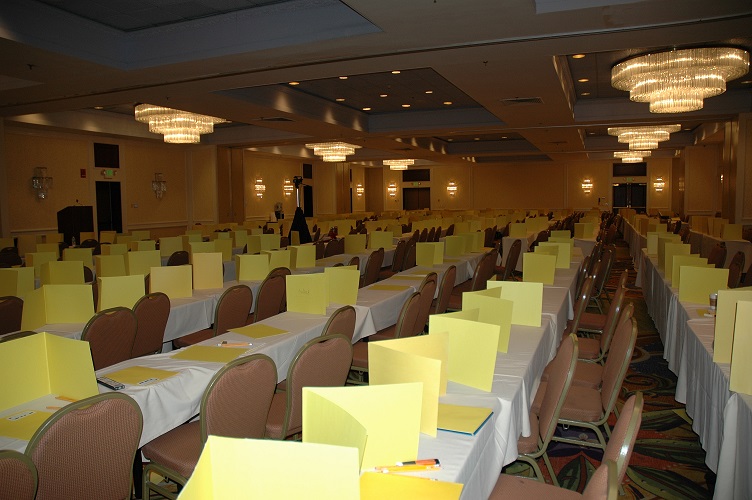
The American Crossword Puzzle Tournament was this past weekend, and unfortunately I wasn’t able to attend. I did my best to keep up with the event through social media, enjoying everyone’s observations, jokes, highlights, victories, trials and tribulations.

One message in particular stuck out to me, though.

I can’t remember if it was posting the results after the sixth or the seventh puzzle, but they remarked that they were excited to see some new blood in the top ten.

I couldn’t help but laugh, because all the names were pretty familiar to me.

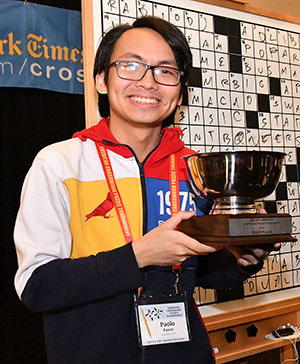
Paolo Pasco won the tournament for the second year in a row, dominating the final puzzle with a record-breaking time of 3 minutes and 45 seconds. (Solver Paul Edward did the math on Facebook and calculated that Paolo spent less than 34 minutes across the 8 puzzles that weekend. WOW.)

Will Nediger and former champ Dan Feyer duked it out for second place, with Will edging out Dan by ONE SECOND, solving the puzzle in 4 minutes and 38 seconds. What a nailbiter!


The next day, after the tournament was over, I still had that message lurking in my brainspace.

Now, anyone who reads this blog can tell that I’m a nerd for many things. I’m a nerd for puzzles, games, and RPGs. I’m a nerd for trivia.

And I am absolutely a nerd for statistics. I love numbers and analysis and compiling data.

If you’ve ever perused the website for the American Crossword Puzzle Tournament, you’ll find it to be a treasure trove of data just waiting for analysis.

So I read through the full results available for each tournament going back years, focusing on the top ten from this year’s tournament and reflecting on their ACPT careers. I had to see if that “new blood” message had any merit or not, and I figured this was the best way to find out.

Let’s see, shall we?


  1. Emily O’Neill

Emily has been competing since 2005 (unless there’s a name change involved, which is possible), and has been in the top ten twice. She has been in the top 30 ten times!

  1. Glen Ryan

Glen has been competing since 2013 (where he placed 3rd in Division B), and has been in the top ten five times. He has been in the top 30 ten times!

  1. Al Sanders

Al has been competing since 1999 (where he placed in the top three), and has been in the top ten TWENTY times. He has been second place twice and in the top 3 seven times. He has never ranked lower than 21!

  1. Stella Zawistowski

Stella has been competing since 2001, and has been in the top ten THIRTEEN times. She has been in the top 30 nineteen times!

  1. Andy Kravis

Andy has been competing since 2011, and has been in the top ten six times. He has been in the top 30 ten times!

  1. Tyler Hinman

Tyler has been competing since 2001 and is a seven-time champion! He has been in the top ten NINETEEN times (including five times in a row at second place and fourteen times in the top three). He was the Division B winner in his second appearance.

  1. David Plotkin

David has been competing since 2010, and has been in the top ten TWELVE times. He has been in the top 3 six times and has never ranked lower than 28th!

  1. Dan Feyer

Dan has been competing since 2008 and is a nine-time champion! He has been in the top ten SIXTEEN times (literally every time except his first tournament appearance).

[It’s not until the final two names that we really get anyone who qualifies as new blood.]

  1. Will Nediger

Will has been competing since 2021 and has been in the top 3 twice. He has been in the top ten three times (meaning every time he’s competed).

  1. Paolo Pasco

Paolo has been competing since 2021 and is a two-time champion! He has been in the top ten five times (every time he’s competed). He was also the Division B winner in 2022.

You have to go back to the year 1998 to find a tournament that didn’t feature one of these ten people as a solver. That’s amazing!


Originally, I was just going to focus on the top ten solvers from this year’s tournament and their many accomplishments.

But as I was going through the rankings year by year, I was struck by how many names I recognized, and how many times I got to see those names. I got to experience the tournament community as a microcosm across literal decades.

I watched the changing of the guard as some names slowly slipped out of the top ten and were replaced by others. Names like Anne Erdmann and Trip Payne and Jon Delfin and Ellen Ripstein and Douglas Hoylman. I was more familiar with some than others.

The slow evolution of solvers really struck both the puzzle nerd in me and the history nerd in me. I ventured back before my own career in puzzles started (back in 2003).

I’ve never competed at the ACPT, but I attended the event for several years, working the Penny Press / Puzzlenation table in the common area, and I grew familiar with a lot of attendees. Puzzle people are genuinely nice folks, and so many of them were happy to visit for a bit, introducing themselves, checking out our magazines, and taking advantage of our pencil sharpeners.

Everyone was so friendly, sharing their excitement for the event and letting me know their thoughts on each puzzle as the tournament went on. It really is a delight.

(Just don’t start a conversation about which pencils are the best for solving and you’ll be fine!)

New blood or not, the crossword scene is clearly thriving, and I can’t wait to see what next year’s tournament brings.

Happy puzzling, everyone!

Women of Letters (and Squares and Boxes and Clues and…)

Puzzles bring joy to so many of us. They’re an escape, a challenge, a satisfying little test of our wits, our dedication, our creativity, and our flexibility of thought.

In uncertain times, in times of trouble, people often turn to puzzles. Puzzles were a refuge for many during lockdown when COVID hung over our heads. And now, when so much seems uncertain, if not downright unstable, people will no doubt turn to puzzles again.

That’s not to say that puzzle solving is a mere flight of fancy, a desperate bit of escapism, a Hail Mary avoidance of difficult circumstances, hard questions, and treacherous times to come. Quite the opposite, in fact.

If you turn to puzzles now, you’ll see a road map that proves things can get better.

Because, like it or not, misogyny once dominated the world of puzzles. It was baked into crosswords from the very beginning.

Yes, Arthur Wynne created the template for crosswords. Simon & Schuster are credited with publishing the first crossword puzzle book, as well as all the bestselling puzzle books that followed, serving as the foundation that helped build their brand.

But it was women who made crosswords into something more.

Women like Richard Simon’s aunt Wixie. She insisted Simon look into publishing a limited release crossword book. (UPDATE: I originally wrote that none of the stories mentioned her name, but I later found some that included her nickname, Wixie. I later discovered her actual name is Hedwig Simon.)

Women like Margaret Farrar. While serving as “an unofficial editor of the crossword-puzzle section,” she prevented errors and helped establish some of the baselines that still stand in crosswords today.

Women like Ruth Hale. Ruth was the founding president of the Amateur Cross Word Puzzle League of America, an organization that set crossword standards like limiting black squares and symmetrical grids, building off of Farrar’s work.

Women like Nancy Schuster. Schuster (no relation to the aforementioned publisher) not only ran Dell Crosswords but was the first winner of the American Crossword Puzzle Tournament.

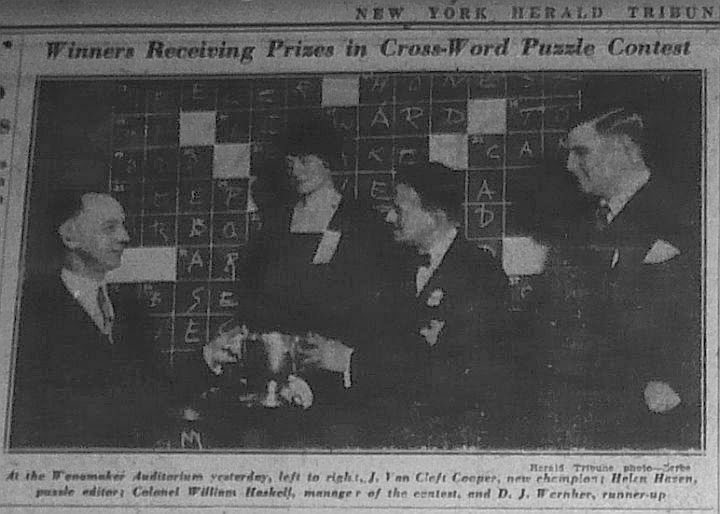
Women like Helen Haven. In the 1920s, Haven was the organizer of the first competitive crossword-solving contest and served as the puzzle editor for The New York Herald-Tribune.

As pointed out by Anna Shechtman in her book The Riddles of the Sphinx: Inheriting the Feminist History of the Crossword Puzzle, between 1913 and the 1960s, most crosswords were created by women.

Puzzles were literally women’s work! With all the connotations that phrase invites.

And crosswords were derided as a frivolous pastime because of it. Not only because women made crosswords, but because crosswords were predominantly solved by women.

The New York Times called the crossword “a primitive form of mental exercise” and female solvers were blamed for neglecting their families and wifely duties because of their “utterly futile finding of words the letters of which will fit into a prearranged pattern, more or less complex.”

Funny how their opinions changed just in time to profit on crosswords in the 1940s.

Much like the Beatles — who were dismissed as nothing more than a glorified boy band when thousands of women cheered at their shows, only for them to be recognized as a once-in-a-generation group of talents when men started paying attention — crosswords became “respectable” only when men took interest and took over.

The percentage of female constructors published in The New York Times went down during the Will Shortz era, as compared to the Will Weng and Eugene Maleska eras.

And like it or not, but “the average solver” concept — a problem I discussed years ago — is still using a white male yardstick for comparisons, to the detrimental of solving and constructing.

In a wonderful blog post on the subject of women in puzzles, the author of the piece opens with the line “I’ve always associated crossword puzzles with men.”

And I realized how lucky I was to NOT have that association. In fact, I don’t think I would be a puzzly guy without the women in my life.

My mother (the first female store manager in A&P history) still solves crosswords and jigsaw puzzles to this day, and encouraged my interest in puzzles in the first place. My oldest sister (a teacher) introduced me to wordplay. My older sister spent hours playing puzzle video games like Dr. Mario with me. My younger sister is not just a master jigsaw puzzle solver, but a fiend at trivia nights and escape rooms, forever challenging me to match her flow.

I was trained in crossword puzzle editing and construction by Penny Press’s crossword guru Eileen Saunders, and still lean on her creativity and wisdom every day (and marvel at her blistering speed and efficiency).

I was shepherded through the world of variety puzzles by Los Angeles Times crossword editor and puzzle badass Patti Varol. (Though it was probably more like dragging my deadweight body through molasses than “shepherding” if I’m being honest.)

And that’s not counting the undeniable and indispensable influence of Amy Roth (a shining light at Penny Press), Chris Begley, and so many other female voices that make Penny Press one of the best outlets for puzzles in the world.

I love puzzles because of those women. I have made a career in puzzles because of those women. I am better at puzzles because of those women.

The puzzle world is better because of women. It will continue to advance and innovate and thrive because of women.

How do I know this? Because women are doing incredible things in puzzles RIGHT NOW.

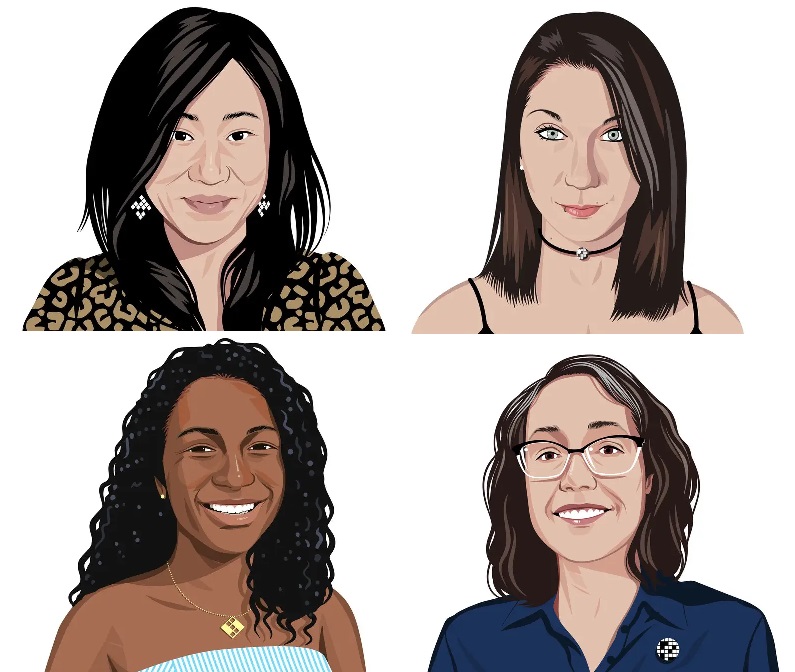
A small sampling of the women making puzzles better. Wyna Liu, Amanda Rafkin, Soleil Saint-Cyr, Tracy Bennett. Illustrations by Ben Kirchner.

Look at The New York Times. Tracy Bennett, Wyna Liu, and Christina Iverson are delivering great daily puzzles like Connections, Strands, and Mini Crosswords not just consistently, but brilliantly.

The aforementioned Patti Varol is absolutely crushing it at The Los Angeles Times crossword. With Katie Hale and Angela Kinsella Olsen on Patti’s team, every month since mid-April 2022 has had a minimum of 50% women constructors and often exceeds that, all while delivering topnotch puzzles.

The New Yorker, USA Today, The Slate Crossword? Liz Maynes-Aminzade, Amanda Rafkin, Quiara Vasquez. Brooke Husic runs PuzzMo (where Rachel Fabi constructed my favorite puzzle of the year!) and Amy Reynaldo co-edits Crosswords With Friends.

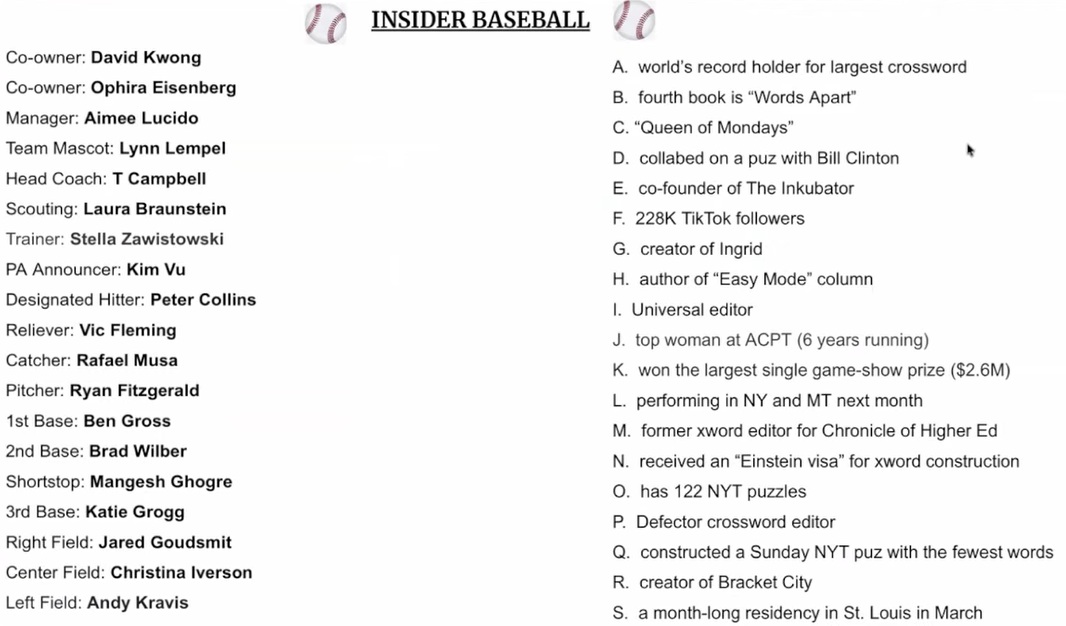
Rebecca Goldstein just won the Orca for constructor of the year. Smarter people than me have called Stella Zawistowski a crossword boss in every sense of the word. Ada Nicolle won the 2024 Lollapuzzoola crossword tournament.

The impact of projects like Women of Letters and The Inkubator weren’t just the tip of the iceberg, they were the tip of the spear. A spear aimed directly at the heart of outdated notions of who makes crosswords and who solves them, dismantling the idea of some mythical “average solver” that has never truly represented the crossword audience.

As constructors, editors, and solvers, women in the past shaped puzzles as we know them. And women in the present are redefining puzzles. Not just in terms of representation (both as grid answers and creators behind the scenes), but in terms of acknowledgment, respect, and appreciation.

As for women of the future? I, for one, can’t wait to see what they have in store for us.

(And thank you to several of the women mentioned above for making this post far, far better than it started.)

What Is Good Trivia?

Trivia is an integral part of many forms of puzzling. Crosswords involve a fair amount of trivia, as do many clued puzzles. Themed puzzles — particularly those that don’t give you a word list — also require some solid trivia knowledge. Brain teasers, riddles, escape rooms… all can involve trivia on some level.

But what do we mean when we say trivia? As it turns out, not everyone agrees.

Merriam-Webster defines trivia as “unimportant matters, trivial facts or details,” then acknowledges the secondary meaning “a quizzing game involving obscure facts,” a definition which didn’t come around until the 1960s.

That first definition certainly fits the bill in many trivia books and games. They’ll claim any random fact as trivia, obscure or otherwise.

But I don’t think obscurity defines trivia. After all, plenty of great evenings of bar trivia don’t require obscure topics or the minutiae of various subjects; they simply require a wide swathe of general knowledge and a decent grasp of recent news and pop culture.

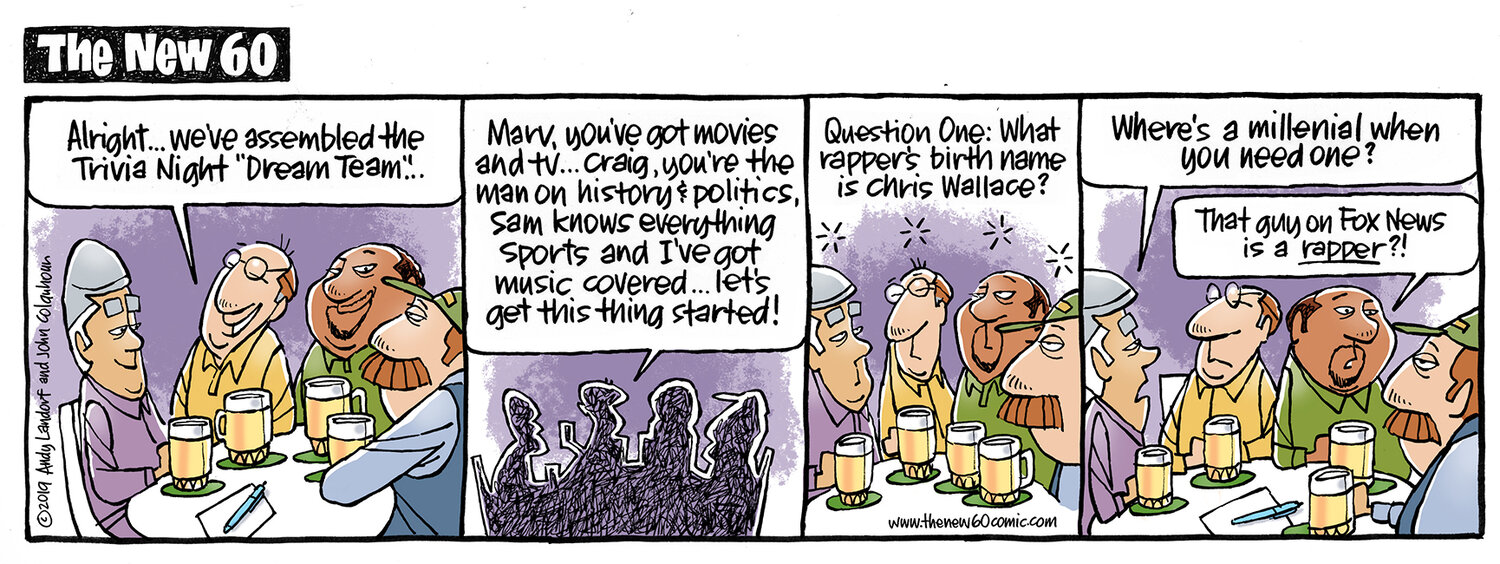
[Image courtesy of The New 60 comic.]

The first time I gave serious thought to the question “what is trivia?” occurred years ago when I started working on a movies and television-themed subscription crossword book for the folks at Penny Press. In addition to creating puzzles centered around a central theme for the issue — soap operas, Star Wars, animal movies, etc. — I also created lists of trivia questions to be included in the book.

I would compile a list of 25 or 30 trivia questions — brief enough to read along the bottom of the page, but hopefully interesting enough to be worth the solver’s attention — and sent them off for consideration.

That’s when Editorial Manager Warren Rivers introduced me to his definition of trivia:

What a lot of people call “trivia” strike me as things one should or could have learned in school. Those are things I don’t consider trivia. Trivia to me are the things that I wouldn’t expect a person to know, or better yet includes a “twist” or an element of surprise.

And I think that’s a key element in good trivia: that interesting twist or surprise. It’s not just informational recall. There’s something more there, whether it’s in the answer or the clever construction of the question.

But there are plenty of knowledgeable trivia enthusiasts out there, and I wanted their input as well.

One of the first people I asked was Stella Zawistowski, a crossword constructor, powerlifter, and trivia supplier for Geeks Who Drink, who clearly has one of the coolest resumes in the world.

I think what you are asking me is, “what is GOOD trivia”?

Good trivia accomplishes one of two things: teaches people something they don’t know and will find interesting, or nudges them to realize they know more than they think. This means that what constitutes good trivia is highly audience dependent. The astronomy question that is too easy to be interesting to a group of JPL employees could be fascinating to a general audience. Conversely, a general-audience question about Handel’s “Messiah” could be very boring to a group of classical music experts.

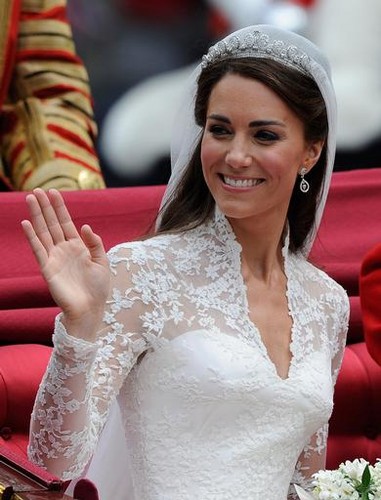
IMO one of the best trivia questions I’ve ever written is “The hand-cut and -sewn lace of this instantly famous wedding gown includes four types of plants: roses, shamrocks, daffodils, and what?”

The reason I think it’s good is that it fits into the “nudge people to realize they know more than they think” category. On its surface, this is a fashion question. How on earth is one supposed to know a detail as tiny as what flowers were embroidered on the lace of somebody’s wedding gown?

But if you think a little more carefully, you’ll see that the bride is marrying a British royal, and if you know that the three plants mentioned in the question — rose, shamrock, and daffodil — represent England, (Northern) Ireland, and Wales, respectively, you then realize: Oh, she’s representing the four UK countries, and the one that’s missing is Scotland. So the answer is the thistle, the national flower of Scotland.

I very carefully chose which one of those I left out, too! If you give shamrock, daffodil, and thistle, rose is incredibly easy, easier than I wanted the question to be. Take out shamrock, and I think it’s a bit harder to realize that the three remaining flowers are national symbols. Take out daffodil, and the solver unfairly has to choose between daffodil and leek, the latter of which is also a botanical national symbol of Wales. I don’t know that anybody ever wanted leeks on her wedding gown, but I didn’t want anyone to get the question wrong simply because they went with the wrong national symbol.

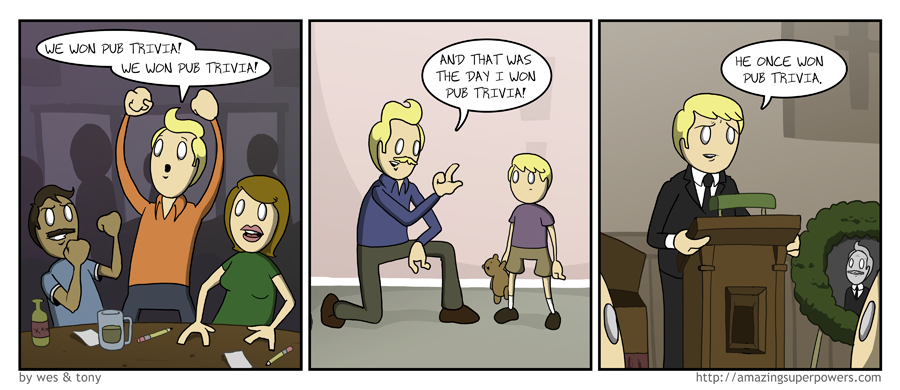
[Image courtesy of AmazingSuperPowers.]

Stella gets into a very important aspect of quality trivia that you don’t immediately consider: the phrasing and construction of the question.

Sure, the answer is the payoff, but the question is how you get there. The question is often the source of the a-ha! moment we so desire.

According to the crew at Geeks Who Drink, “the usual job of the conscientious quiz-writer is to start with a kernel of something you don’t know, and stir in just the right mix of hints and parallels to lead you to the correct answer (yes, no matter what it feels like, we DO want you to get most of them right).”

And that can take time. Thorsten A. Integrity, commissioner of the invite-only Learned League trivia website, can spend up to 30 minutes on each of the six trivia questions featured in a given day of trivia during one of the four seasonal competitions.

He usually starts with an interesting tidbit from a reference book and builds the question out from there. He fact-checks everything and has his questions professionally copyedited.

That effort creates a conversation in the brain. You ask yourself about different aspects. You rule things out, as Stella shows in her example. A good trivia question gives you enough to get you started and JUST enough to eliminate some false paths. (Although there’s nothing wrong with a tricky trivia question that leads you down the incorrect path a little bit.)

On trivia nights, or in trivia games, that conversation can quickly become fun and engrossing. As Ken Jennings once said of trivia, “It can lubricate social interaction. I like to see it as a way to build bridges.”

Are you a trivia fan, fellow puzzlers? Let us know your favorite trivia questions and bits of trivia below. We’d love to hear from you! (We could even compile them into a future blog post!)

dailypopwsicon

Have you checked out our special summer deals yet? You can find them on the Home Screen for Daily POP Crosswords and Daily POP Word Search! Check them out!

Thanks for visiting PuzzleNation Blog today! Be sure to sign up for our newsletter to stay up-to-date on everything PuzzleNation!

A New Weekly Crossword League Coming Soon!

boswords new

The internet puzzle community has done an impressive job over the last six months of adapting to the social distancing restrictions of the current COVID-19 crisis, with tournaments like Crossword Tournament From Your Couch, Lollapuzzoola, and Boswords successfully going virtual in 2020.

And now John Lieb and Andrew Kingsley, the creative team behind Boswords, have announced a new tournament-inspired online puzzle project to keep crossword fans engaged for the next few months!

It’s called The Boswords 2020 Fall Themeless League, and every Monday night in October and November, a new themeless crossword will be posted for competitors to solve. That’s eight puzzles (plus a championship round to follow), along with a preseason puzzle to get people used to the format.

Although each week’s puzzle only has one grid, there will be three sets of clues, each representing a different difficulty level for solvers. When you register to participate, you’ll choose the difficulty level for your clues.

From least challenging to most challenging, the ranks are called Smooth, Choppy, and Stormy. (Quite appropriate, given that we’re heading into unfamiliar waters here!)

120718_crossword_L

Each week’s puzzle will be accompanied by a Twitch stream where participants can follow along and discuss all things puzzly with their fellow crossword enthusiasts!

You can compete as an individual or as part of a pair, and with a one-time registration fee of $25 — or $5 for students and those in need — that’s very reasonable indeed!

Not only that, but they’ve already announced the team of constructors assembled for the League, and it is a stacked roster of talent.

Nate Cardin, Emily Carroll, Tracy Gray, David Quarfoot, Amanda Rafkin, Claire Rimkus, Sid Sivakumar, Yacob Yonas, and Stella Zawistowski are all contributing puzzles, and you won’t know ahead of time which constructor’s puzzle you’ll get on a given week, which keeps things interesting.

With experienced crossword constructor and editor Brad Wilber as the League’s puzzle editor and the dynamic duo of Lieb and Kingsley as assistant editors and League directors, I have high hopes for this project going forward.

Check out the full informational video on the Boswords homepage, as well as links for further info and registration! (Register by September 28th to participate!)

I think this is an incredibly cool and ambitious project, and a really neat way to bring tournament-style solving in a bite-size format to as many puzzlers as possible.

Will you be taking part in this exciting new puzzle challenge, fellow puzzlers? Let us know in the comments section below! We’d love to hear from you.


Thanks for visiting PuzzleNation Blog today! Be sure to sign up for our newsletter to stay up-to-date on everything PuzzleNation!

You can also share your pictures with us on Instagram, friend us on Facebook, check us out on TwitterPinterest, and Tumblr, and explore the always-expanding library of PuzzleNation apps and games on our website!

Delving into the Lollapuzzoola 13 puzzles!

lolla logo

The thirteenth edition of Lollapuzzoola, as is tradition, arrived on a Saturday in August, but for the first time ever, it was hosted online to allow tournament solving from home. As one of the highlights of the puzzly calendar, I was glad to see it make the virtual jump, as Boswords did before it.

I was not in virtual attendance, but I did sign up for the Next Day Division puzzle packet. Last weekend, I finally had a chance to sit down and try my hands at this year’s tournament puzzles, and I was not disappointed. Lollapuzzoola continues to push the envelope with inventive themes and unique spins on how to bring crosswords to life.

This year’s theme was “Don’t Touch That Dial!” so every puzzle had something to do with television or TV channels, and the constructors were clearly inspired in all sorts of ways. Let’s take a look at what they came up with.


Instead of Brian Cimmet’s usual Twinlets puzzle as a warm-up, this year featured two practice puzzles. The first, constructed by Patrick Blindauer and entitled “I Want My MTV,” allowed solvers to hit the ground running.

The accessible theme — adding the letter M to established TV shows, a la SCOOBYDOOM or AMERICAN MIDOL — is the sort of fun and frivolous idea to spark solver imaginations and ready them for a proper day of puzzling.

Interesting grid entries included DATUM and I’LL BE BACK (as well as some nice misdirection with YEE-haw instead of HEE haw), and my favorite clue was “Traffic cop?” for NARC.

The second practice puzzle, a themeless mini constructed by Brian Cimmet, offered a slight uptick in difficulty and a nice preview of the sort of solving tournament attendees would see in the final.

Interesting grid entries included BOBA TEA, ORCHESTRATE, and ROLLED R (as well as tournament constructor STELLA Zawistowski getting referenced!), and my favorite clue was “One of three in ‘Alexander and the Terrible, Horrible, No Good, Very Bad Day'” for COMMA.

soap opera

Puzzle 1: Soap Operas by Brooke Husic

The competition puzzles kicked off with this terrific opener, a 17×13 grid that showed off the flexibility and creativity of construction and grid design that keeps Lollapuzzoola fresh. (Also, I’m a sucker for a punny start to a tournament, so the theme was a plus for me.)

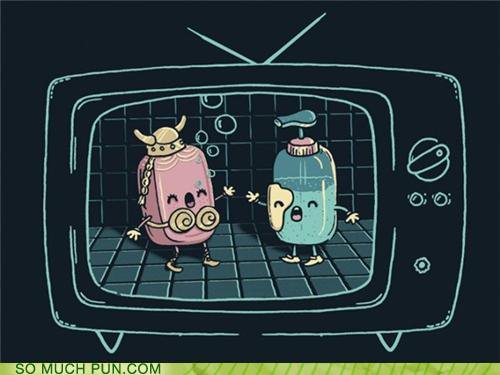
The themed entries featured commercial soap brands as part of common phrases (like IVORY TOWER and DOVE TAILED), which were then clued as “soap operas” for viewers.

It was a nicely constructed grid that flowed well, and it’s exactly the sort of puzzle to introduce new solvers to tournament puzzles while entertaining the established vets.

Interesting grid entries included DIWALI, ACADIA, and HOPE SO, and my favorite clue was “Card game that can go on and on and on and on and on and on and on, like this clue” for WAR.

Puzzle 2: The Final Countdown by Sid Sivakumar

This tall, thin 12×25 grid (coupled with THAT title) virtually guaranteed that Europe’s faux-epic anthem would be stuck in your head for a good chunk of the tournament, but I’ll forgive Sid, because I really enjoyed this puzzle’s hook.

The theme entries all began with a number (like 4 LETTER WORDS or 3-D TELEVISION), and as you expect, they counted down until reaching the climactic pronouncement AND WE’RE LIVE at the bottom part of the grid. It’s a fun idea that was complimented nicely by the unusual grid, and the puzzle flowed nicely from top to bottom as the entries counted down.

Interesting grid entries included PEARLED, RETURN KEY, MR SULU (which, before I looked at the clue, I kinda hoped would be MR. SHOW), and BUNGALOW. My favorite clues were “[Feed me! Pet me! Feed me! Play with me!] … or actually sometimes [Leave me alone!]” for MEOW and “‘Do not feed the ____’ (advice for bridge travelers and internet users)” for TROLL.

At this point, I noticed that both Puzzle 1 and 2 had an all-caps clue where the answer was a TV network. This feature continued throughout the tournament as a nice little through line, though its ultimate purpose wouldn’t reveal itself until after Puzzle 5. Stay tuned.

toy story

[Image courtesy of Pixar.]

Puzzle 3: Flipping Channels by Rachel Fabi

A swapping-themed puzzle is practically a tradition at Lollapuzzoola at this point, so I wasn’t at all surprised to see that idea adapted for TV with Puzzle 3’s hook. Each pair of theme entries not only included the names of channel, but swapped the second halves of phrases including those channels. For instance FOXGLOVES and OXYGENMOLECULES became OXYGENGLOVES and FOXMOLECULES.

As I solved, I wasn’t sure if these would be random pairs swapped, mirrored pairs swapped, or a continuous chain of swaps throughout the puzzle, so it took me a little longer to complete the grid. This was a definite step-up in difficulty from Puzzle 1 and 2, but not excessively so. (Some of the vocabulary also slowed me down, since I didn’t know NITTANY or INFODEMIC.) Still, it was a solid puzzle and an appropriate challenge for the midway point of the tournament.

Interesting grid entries included NOGOODNIK, CHEETO, HOT POCKET, GO GREEN, and the aforementioned INFODEMIC, and my favorite clues were “Nanjiani’s ‘The Lovebirds’ costar” for RAE and “Bisexual Greta of Old Hollywood” for GARBO, two clues that felt very fresh and topical, particularly for entries that solvers have seen plenty of times before.

meghan-markle-deal-or-no-deal

[Image courtesy of Game Show Network.]

Puzzle 4: Deal or No Deal by joon pahk

A big jump in difficulty and complexity, Puzzle 4 was an immensely clever and well-executed grid that took a familiar crossword concept — removing or adding letters from entries — and mined it for unexpected depth. On the left-hand side of the grid, a letter was added to both the clue AND the entry. For example, “Entranced cover” clued DAWNING. [Bolding is my own to highlight the added letter.]

On the right-hand side of the grid (but in the same row, one black square away), that entry was complemented by the same letter subtracted from both clue AND entry. The example above, for instance, was matched by “Go _own a spout” cluing _RAIN OUT. [Again, spacing added is my own to highlight the missing letter.]

These letter trades — the deal or no deal of the title — were tightly executed and made total sense to the solver without any explanation needed. Not only that, but the added/missing letter was always taken from the same part of the word on the other side! (Third letter E in FREIGHT was the missing third letter in SH_ARING next door.)

It’s incredibly impressive construction that is nicely balanced by solid fill and strong cluing. This is easily my favorite joon pahk puzzle I’ve ever solved, and will no doubt make my list of top puzzles of the year.

Interesting grid entries included GONZAGA, MEERKAT, NIP/TUCK, TWYLA, and SCHLEP, and my favorite clues were “Slightly subpar, ironically” for ONE OVER, “Wednesday the third?” for SILENT D, and “Snow or paint, in certain arenas” for AMMO.

conman1112

Puzzle 5: Schedule Swaps by Stella Zawistowski

This 21x marked the end of the regular tournament puzzles, and it felt like a suitable final boss for most solvers in the competition. The grid was dense, well-constructed, and challenging, featuring another smartly-executed swapping gimmick. This time around, the theme was common phrases where one of the words was also a TV show, but that show was replaced with another TV show to make a new phrase.

For example, the phrase BIRTHING COACH became BIRTHING SCRUBS as COACH was relocated elsewhere in the grid. Fitting in all these themed entries — six of them! — plus their accompanying TV shows was no doubt a hefty challenge for the constructor, but Zawistowski made it feel effortless in this demanding but well-made puzzle.

Interesting grid entries included GALILEO, SAN PEDRO, DISCIPLE, PETSIT, AIRPOPS, and SO SUE ME (as well as the thoroughly baffling ONE O’ CAT, which I had to look up after), and my favorite clue was “‘Silver Springs,’ to ‘Go Your Own Way'” for B-SIDE.

As for the all-caps TV network clues we spotted earlier? They also appeared in Puzzles 3, 4, and 5, and it turns out, they were part of a clever little metapuzzle hidden in the tournament grids.

The five TV networks, one in each puzzle, turned out to be TBS, VH1, SyFy, ESPN, and TNT. And if you take the first letter of each, you get the hidden answer TV SET.

Very nicely done, constructors!

berternie

Puzzle 6: Finals by Robyn Weintraub

As always, there were two sets of clues for the Finals puzzle, the Local and the more difficult Express clues. No matter which clues you were working with, you were in for a terrific tournament finale.

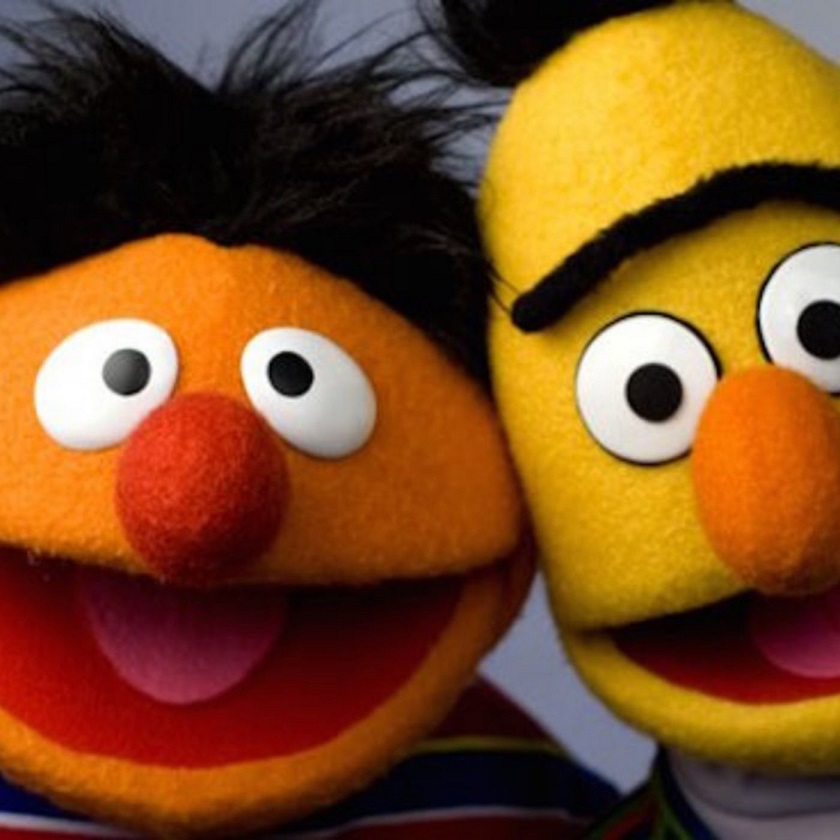
With a pair of 12-letter entries from classic children’s television as anchors for the puzzle — MISTER ROGERS and BERT AND ERNIE — Weintraub delivered a tight grid with some strong fill and plenty of long, crossing entries in the corners to keep solvers guessing.

For me, this was a nice tournament landmark, as I powered through the Express clues and completed the grid without having to reference the easier Local clues once. I know this is commonplace for the top solvers, but it was a nice confidence boost for me as an enthusiastic solver, but hardly the fastest or the most competent.

It was a perfect final puzzle to wrap up one of the most consistent and enjoyable puzzle sets they’ve ever assembled for the tournament. With over 1,000 solvers participating through the online format, I can’t think of a better way to introduce them to the spirit and style of Lollapuzzoola than this year’s puzzles. Nicely done, team!

Interesting grid entries included WENT TO BED, SQUARE PEG, FALSE ALARM, PECOS, and NSFW. Both the Local and Express sets of clues had some gems, so I’ll list them separately below:

Local clues:

  • “Big cheese with the bacon” for CFO
  • “Escape room finds” for KEYS
  • “Month in which National ‘Twilight Zone’ Day is observed” for MAY
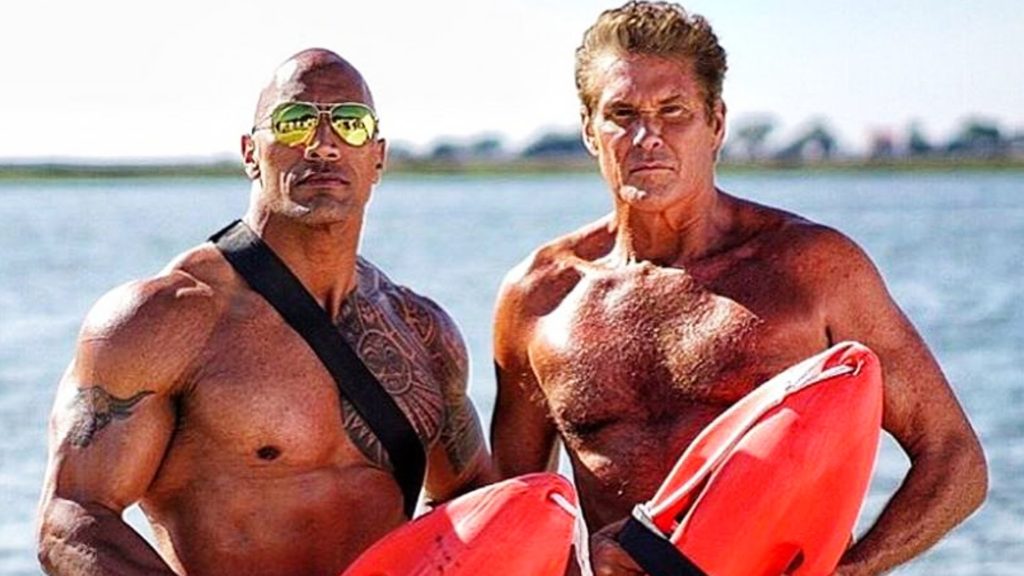
  • “‘____ Pressure’ (‘Baywatch’ episode with a punny title)” for PIER

Express clues:

  • “Place after place” for SHOW
  • “Canal zone?” for EAR
  • “‘Ua Mau ke Ea o ka ‘Aina i ka Pono’ or ‘Excelsior'” for STATE MOTTO
  • “PBS ‘Viewers Like You'” for DONORS
  • “‘Panic at Malibu ____’ (‘Baywatch’ pilot episode) for PIER

bay-5-1024x576

[Top(less) puzzlers.]

There was also a tiebreaker themeless mini by Amanda Rafkin (who we recently interviewed!). The mini was a quick and satisfying solve, loaded with great vocabulary, offering a nice cooldown after a strong tournament and several really engaging puzzles.

Interesting grid entries included MACARONI ART and SO EXTRA, and my favorite clue from the mini was “One paying dollars for quarters” for TENANT.


The puzzles at Lollapuzzoola always impress, and this year was no exception. The grids were tight, there was little crosswordese, and the creative themes, grid designs, and puzzle mechanics ensured that not only would fun be had by all, but that the puzzles would linger in your memory.

Mission accomplished, and congratulations on the competitors and the organizers who made it all happen, especially in a virtual format with so many additional solvers. Lollapuzzoola is only getting more creative, more groundbreaking, and more clever with each passing year, and it’s just awesome to watch it grow and evolve.

I can’t wait to see what they come up with next year!


Thanks for visiting PuzzleNation Blog today! Be sure to sign up for our newsletter to stay up-to-date on everything PuzzleNation!

You can also share your pictures with us on Instagram, friend us on Facebook, check us out on TwitterPinterest, and Tumblr, and explore the always-expanding library of PuzzleNation apps and games on our website!

Lollapuzzoola 13 Lands This Weekend! (Virtually!)

lolla logo

Yes, “the best tournament held in New York on a Saturday in August” is bringing a New York Saturday in August to you, as Lollapuzzoola 13 goes virtual.

Whether you’ll be solving on that Saturday or as part of the Next Day Division, you’re sure to encounter some top-notch puzzles worthy of the Lollapuzzoola name.

Just look at the constructors involved in this year’s tournament! Stella Zawistowski and Robyn Weintraub return for the second year in a row, and they’ll be joined Rachel Fabi, Brooke Husic, joon pahk, and Sid Sivakumar (who just constructed for this year’s Boswords tournament). I can’t wait to see what they have in store for the competitors!

lollapuzzoola13

Starting around 12:30pm Eastern, you can follow along on the Twitch livestream that will be running for the duration of the tournament. In addition to the five tournament puzzles and championship rounds, there will be bonus games and a virtual pizza party! (Be sure to bring your own pizza.)

This is not only another wonderful opportunity to bring the puzzle community together, it’s also a charitable event, as a portion of the proceeds from the tournament will be donated to Color of Change and the Save the Children Coronavirus Response Fund.

It should be a great time, either in person or for solvers at home. Lollapuzzoola is truly one of the highlights of the puzzle calendar.

You can click here for all things Lollapuzzoola, and to check out last year’s tournament puzzles, click here for our in-depth review!

Are you planning on attending Lollapuzzoola 13 or solving from home? Let us know! We’d love to hear from you!


Thanks for visiting PuzzleNation Blog today! Be sure to sign up for our newsletter to stay up-to-date on everything PuzzleNation!

You can also share your pictures with us on Instagram, friend us on Facebook, check us out on TwitterPinterest, and Tumblr, and explore the always-expanding library of PuzzleNation apps and games on our website!