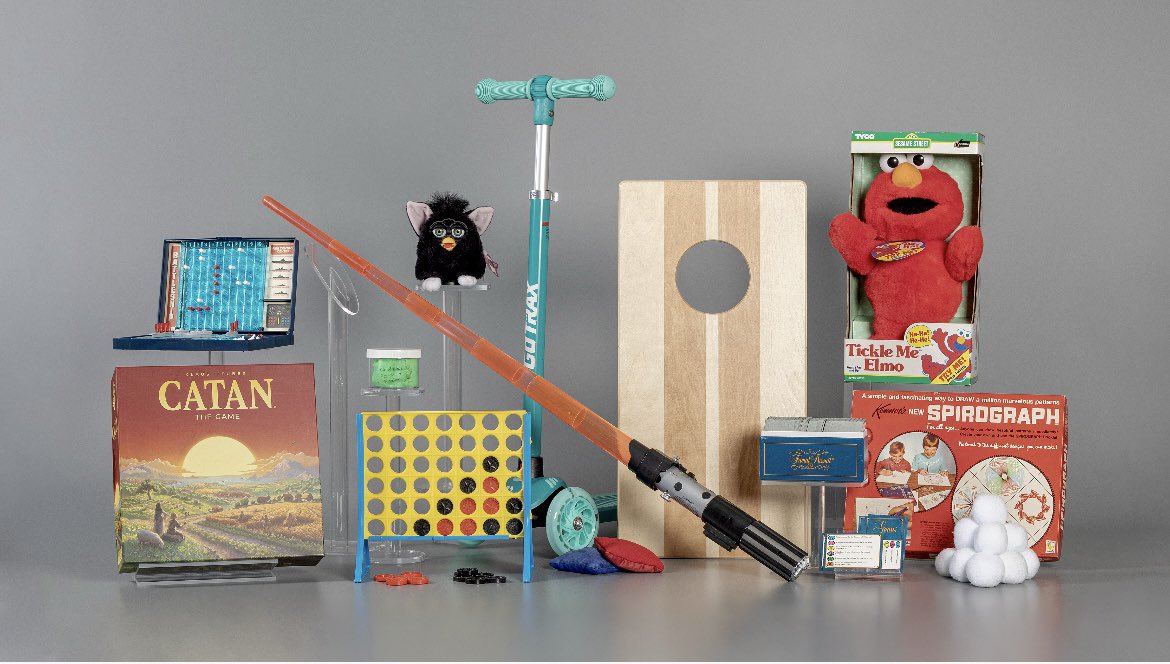
This year’s contenders for the National Toy Hall of Fame Class of 2025 have been whittled down to 12 finalists, and the competition is fierce.
You’ve got classic toys from across the decades (Furby, spirograph, Star Wars lightsaber, Tickle Me Elmo), representatives from more physical activities (scooter, cornhole), board games (Battleship, Catan, Connect Four, and Trivial Pursuit), and even materials kids play with (slime, snow).
The idea of “play” is represented in so many different ways across these 12 finalists, and it really encompasses just how vast and varied play is, how much imagination and expression and creativity are reflected in all sorts of different childhood experiences.
Personally, I’m rooting for the lightsaber, Trivial Pursuit, and snow to make the cut. I’ve been a Star Wars fan since I was 2. Trivial Pursuit was the first trivia game I can remember playing (even if it was an edition intended for players way older than I was at the time). And snow is so fundamental to winter play — sledding, snowmen, snowball fights, DAYS OFF FROM SCHOOL TO PLAY — that it’s surprising it hasn’t already been inducted.
(Though I suspect Catan, Connect Four, and Tickle Me Elmo will make the cut instead of some of my faves.)
Yes, while the final determinations are made by the National Toy Hall of Fame’s National Selection Advisory Committee — ooh, so formal! — the three toys that receive the most public votes will be submitted for consideration alongside the top three submissions from the Selection Committee.
Which of these twelve contenders would you like to see join such playtime luminaries as Lite-Brite, My Little Pony, the stick, the Atari 2600, and the Rubik’s Cube? Let me know in the comments section below! I’d love to hear from you.
And while you’re at it, tell me what toys you think should be in the National Toy Hall of Fame!
Many TV shows, films, and novels help add character to their narrative universes by mentioning the games played by the characters.
Shows and franchises as wildly disparate as Battlestar Galactica, New Girl, It’s Always Sunny in Philadelphia, The Witcher, and Pretty Little Liars have fictional games that enrich their worlds.
But sometimes, either through clever marketing or the affection of fans, these games go from fictional recreational activities to real ones, crawling fully formed from the imagination to be enjoyed across tabletops worldwide.
Today, I’d like to introduce you to a few of them. Let’s play, shall we?
Tri-Dimensional Chess
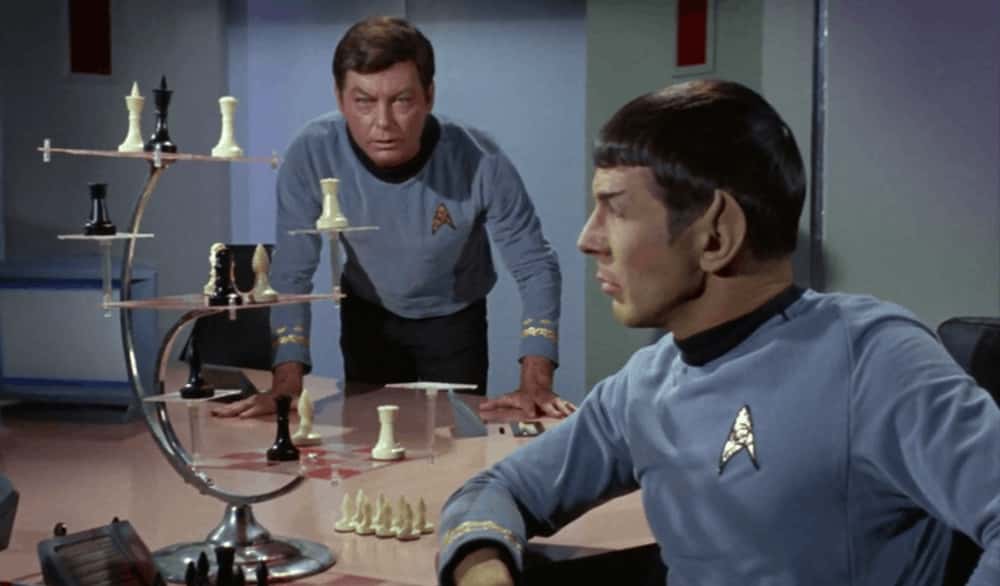
Star Trek has been a source of many fictional games and sports over the years. Dom-jot, Chula, Dabo, Parrises Squares, and Stratagema are some of the more famous ones, but the granddaddy of Star Trek games is Tri-Dimensional Chess.
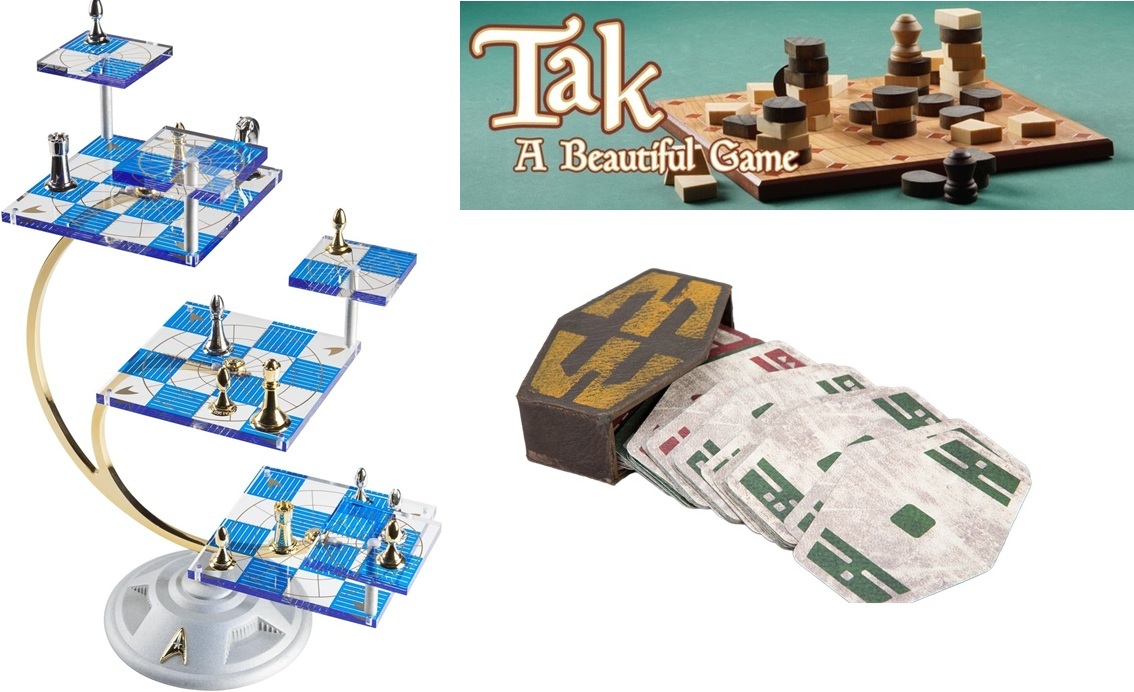
First appearing in the original series back in 1966, Tri-Dimensional Chess follows the normal rules of chess, but spread across different vertical levels. So a knight could move in its usual L-shaped format, but on its own board OR the boards above and below.
Over the years — and across different Star Trek series — we’ve heard stories about key maneuvers like the Aldabren Exchange and the Kriskov Gambit in games of Tri-Dimensional Chess, helping flesh out how influential the game is for several characters. (Heck, in one episode, Spock beats the Enterprise computer at the game, saving Kirk from a court martial!)
The Franklin Mint has released limited edition versions of the game on two occasions, and I’ve seen homemade games of Tri-Dimensional Chess at gaming and pop culture conventions over the years.
Chess remains incredibly popular — as do many variants of Chess — so it’s no surprise this fictional game made the leap to the real world. (I suspect the complicated three-person Chess game developed by Sheldon in The Big Bang Theory is less likely to make a similar leap. Especially since there are already three-person Chess games on the market today.)
Cones of Dunshire
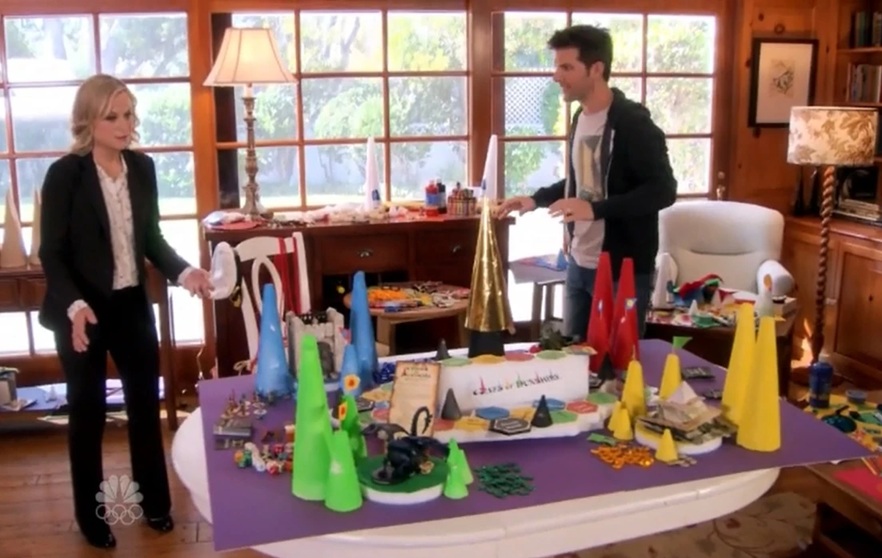
Ben Wyatt of Parks and Recreation enjoyed many nerdy pastimes, but Cones of Dunshire was his masterpiece.
Initially treated as a mistake, a nonsensical result of his boredom and frustrations, the game becomes a running gag in the show after Ben leaves a copy as a gift for the accounting firm that he has been hired by (and walked away from) several times during the show’s run.
Later, we find out the game has been commercially produced, and Ben stumbles across it when dealing with a dotcom company. He mentions that he invented it, but his claims are dismissed. He then proves not only his gaming skill but his authorship of the game when he beats the dotcom bosses in a tense playthrough.
It’s mentioned once that a gaming magazine called Cones of Dunshire “punishingly intricate,” a point that makes Ben proud.
Part of the fun of Cones of Dunshire (other than the parody of Settlers of Catan) is that the viewer never really understands what’s going on, so supposedly dramatic moments can be played for laughs. (I also appreciate that the name of the game is basically a fancy way of saying “dunce hat.”)
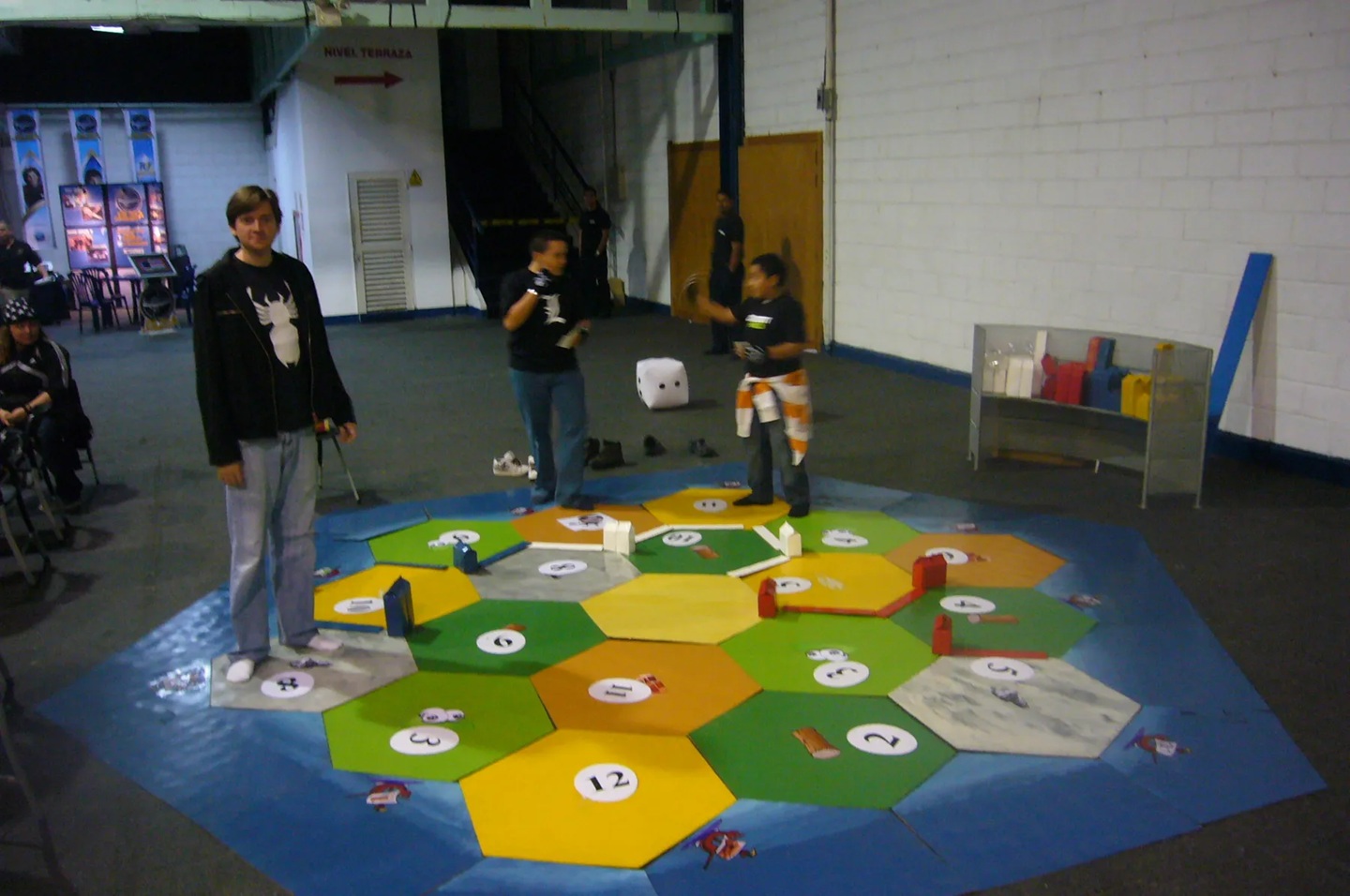
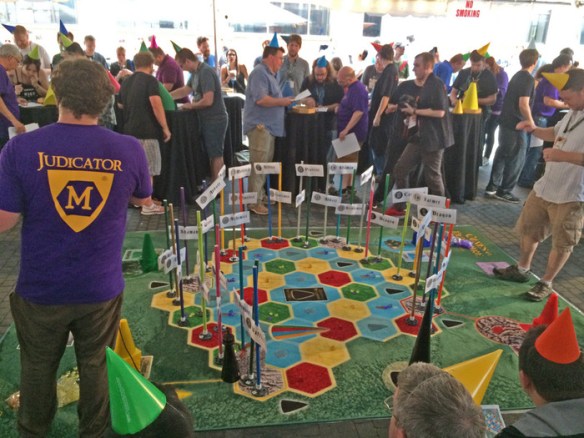
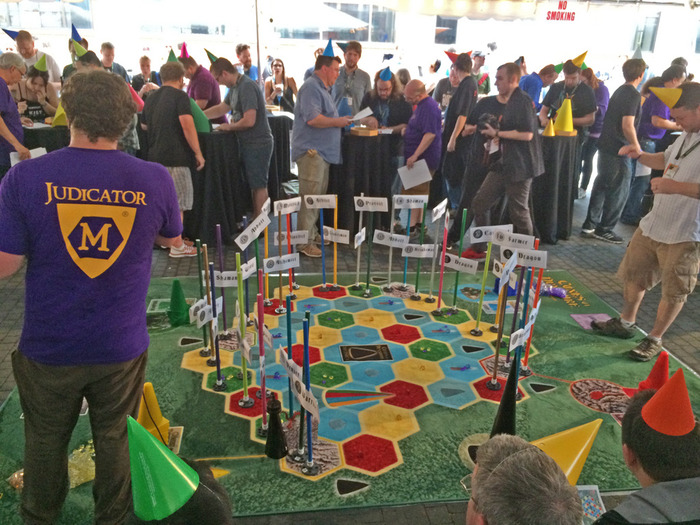
And, in the sort of cyclical storytelling that could only happen in a nerdly pursuit like board games, the company that made Settlers of Catan — Mayfair Games — produced a giant version of the game as part of a charity event at GenCon.
Both the silliest and most ambitious game to cross from fictional to real, Cones of Dunshire is a nerdy highlight of a now classic sitcom.
Tak: A Beautiful Game
Originally introduced in Patrick Rothfuss’s Kingkiller Chronicles novels as a tavern game, Tak made the leap to the real world as a stretch goal in a Kickstarter campaign for another game.
Game designer James Ernest accepted the challenge of bringing the game to life, and his collaboration with Rothfuss created one of my all-time favorite board games.
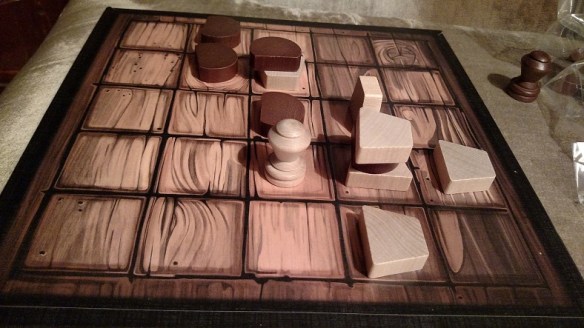
Tak has a very simple concept: two players each attempt to build a road connecting opposite sides of the game board. The first player to successfully complete their road wins.
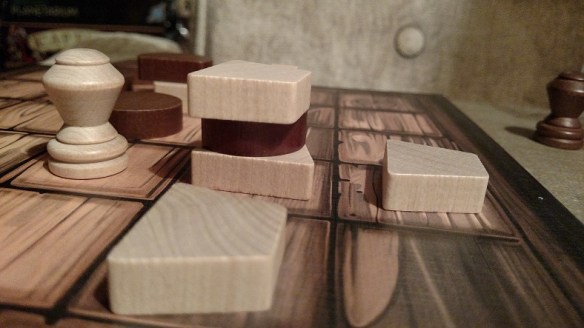
To do so, you place game pieces called stones, one at a time, on various spaces on the board. The stones can either be played flat (meaning they’re part of your road) or standing on edge (meaning they’re a wall, blocking any road’s passage through that space).
It’s a rare thing when a new game feels like something that could’ve been played in taverns centuries ago. For me, this is the gold standard when it comes to adapting fictional games to the real world.
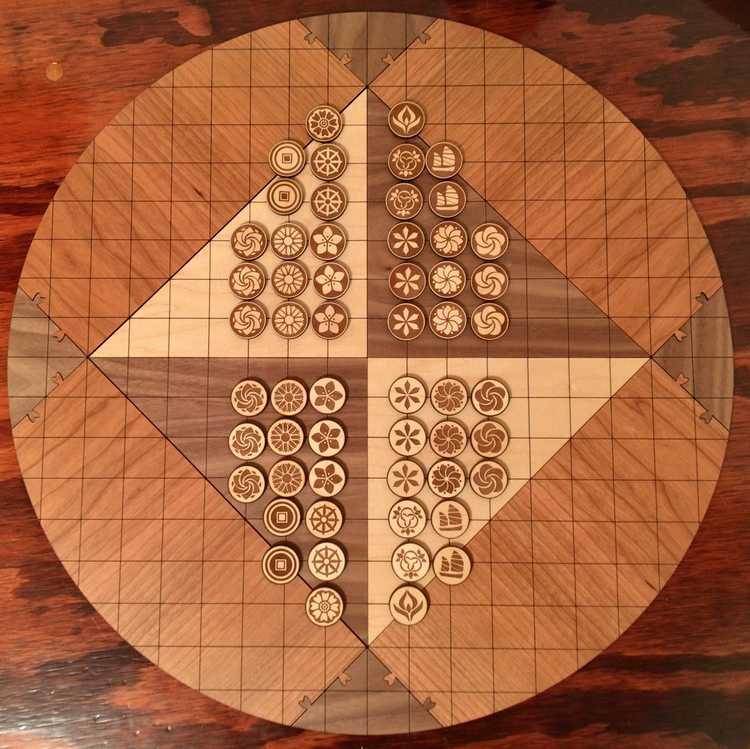
A key storytelling device in the much-beloved show Avatar: The Last Airbender, Pai Sho was a tactical tile-based game that reinforced important themes in the show.
The game had many variants (often played differently depending on the faction or nation featured) but each had the feeling of an ancient game passed down across generations.
In the most popular variant, Skud Pai Sho, the goal is to form a harmony ring around the center point of the board. Players create harmonies by placing two harmonious tiles on the same line without other tiles or obstacles. There are gates, gardens, and lines that help dictate play, as well as multiple flower tiles for players to place that accomplish different things when placed properly.
There are entire forums and websites dedicated to the rules of Pai Sho and its many variants, and the thriving fan community that continues to nurture these games well after the show’s conclusion make this one of the most heartfelt and successful transitions from fictional to real life that I can think of.
Image courtesy of starwars.com.
Sabacc
In The Empire Strikes Back, we learn about the friendly rivalry between Lando Calrissian and Han Solo, and how a wager led to the Millennium Falcon changing hands.
But exactly how it happened was only revealed later in supplementary material like the Star Wars Visual Encyclopedia and the novel Lando Calrissian and the Mindharp of Sharu.
The second draft of the script for The Empire Strikes Back mentioned that Lando won Cloud City in a “sabacca” game, but by the time additional stories fleshed out the relationship between Lando and Han, the game had been shortened to Sabacc.
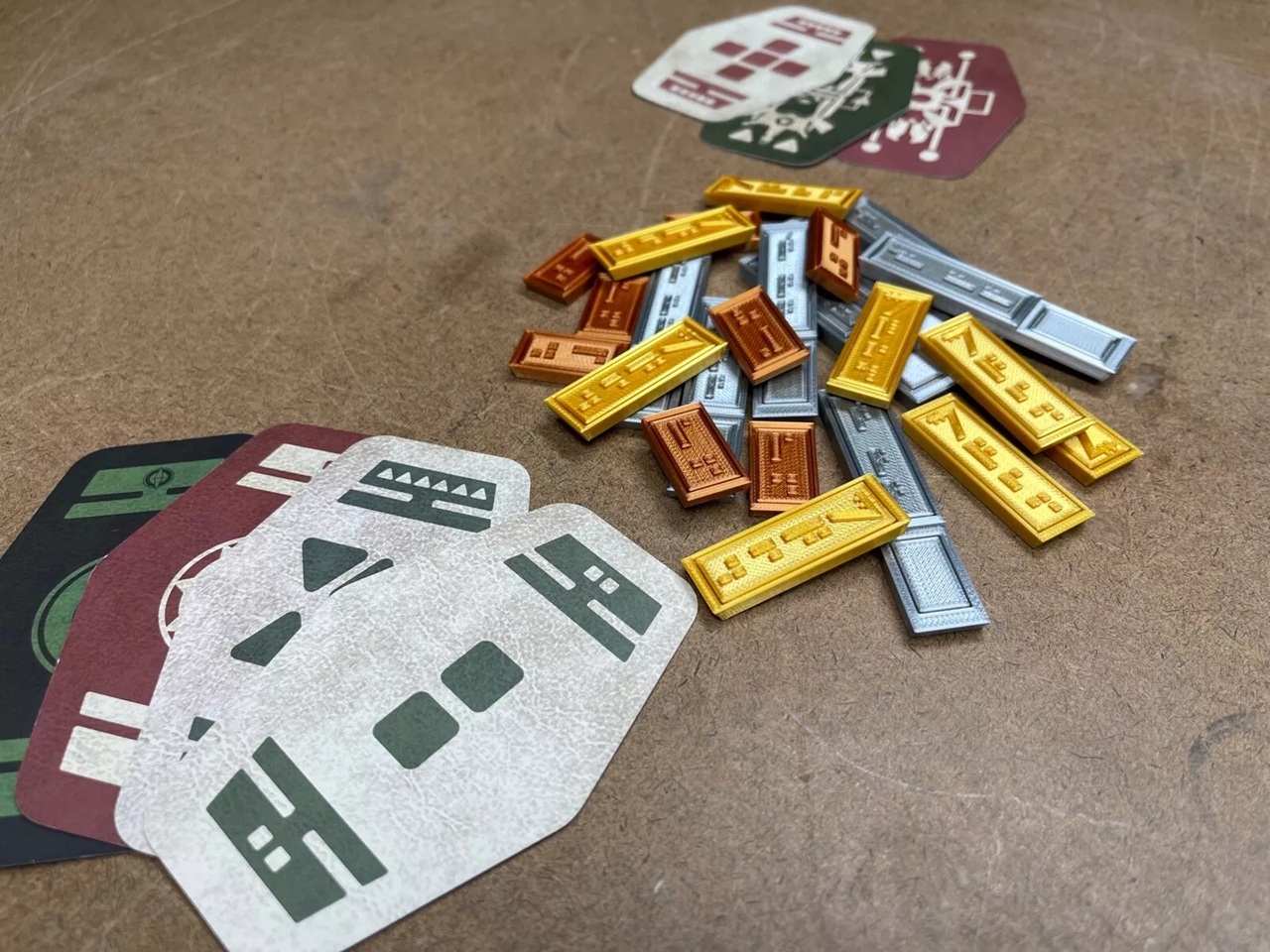
It’s sort of a combination of poker and Blackjack. You want the value of the cards in your hand to be as close to 23 or -23 as possible. Sounds simple, right?
Well, imagine a game of poker where the cards in your hand changed periodically unless you publicly locked them in by placing them on the table, where they stayed until the hand was over. That’s the basic idea behind Sabacc.
There were numerous fan versions of the game over the years, but now you can get Sabacc decks at Disney theme parks (alongside many, many, MANY other items).
Do you have a favorite fictional game that made the leap to the real world? Did we miss any major ones? Let us know in the comments below!
Before we start with today’s blog post, we’ve got a special offer for you from the puzzly folks at ThinkFun!
Have you checked out our reviews of their new unsolved crime series of puzzle games? In Cold Case, you’re tasked with going through the evidence and solving the case!
There are two editions of Cold Case; A Story to Die For is available for preorder now, and A Pinch of Murder will be available for preorder on June 14th!
And if you click this link and use the promo code 20COLDCASE, you’ll get the puzzle game for 20% off!
Enjoy!
Last week, we celebrated International Tabletop Day with some puzzly recommendations, suggestions, and an anagram mix-and-match puzzle, all in the spirit of celebrating gathering with friends and loved ones — in person or virtually — to play games together.
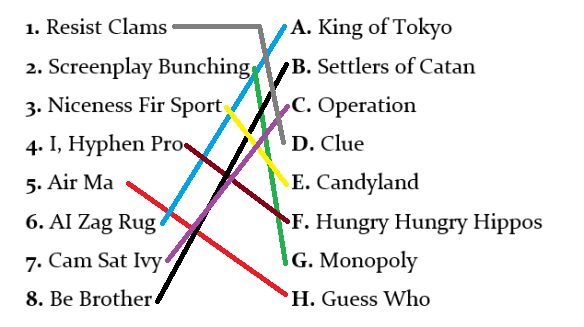
The challenge was to unscramble the names of famous board game characters from the entries on the left, and then match them up with the correct board game from the list on the right.
We’re sure you managed to unravel all those jumbled phrases, but just in case, let’s take a look at the solution.
First, let’s look at the anagrams.
Resist Clams = Miss Scarlet
Screenplay Bunching = Rich Uncle Pennybags
Niceness Fir Sport = Princess Frostine
I, Hyphen Pro = Henry Hippo
Air Ma = Maria
AI Zag Rug = Gigazaur
Cam Sat Ivy = Cavity Sam
Be Brother = The Robber
And now, for a splash of color, here is the solution for the matching portion of the puzzle.
How did you do with the puzzle? Did you enjoy International Tabletop Day? Let us know in the comments section below! We’d love to hear from you.
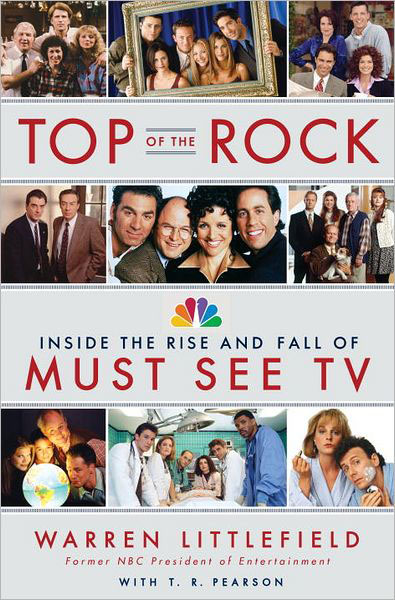
By the late 2000s and early 2010s, NBC’s Must See TV Thursday lineup was a thing of the past, but they were still putting out quality comedy content. My Name Is Earl, The Office, Community, Scrubs, Parks and Recreation, and 30 Rock all had loyal followings.
And you’d be surprised how much puzzle and game content ended up on those shows.
The Office featured in-house Olympics and betting games, as well as a Da Vinci Code-esque prank. Community had two Dungeons & Dragons-inspired episodes (which I should really cover at some point).
But those last two shows — Parks and Recreation and 30 Rock — both featured made-up games that either spoofed or were inspired by modern board games.
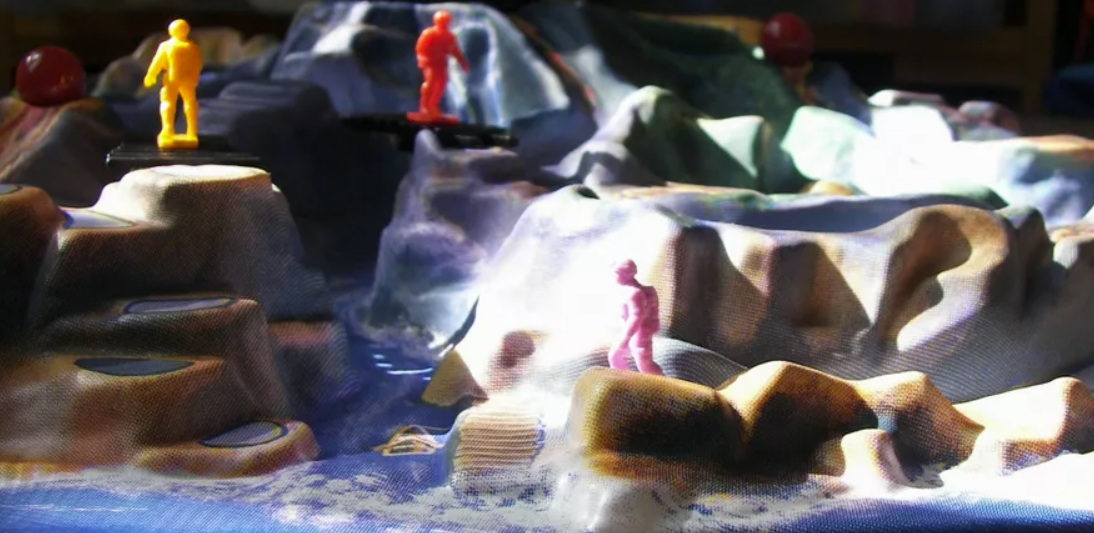
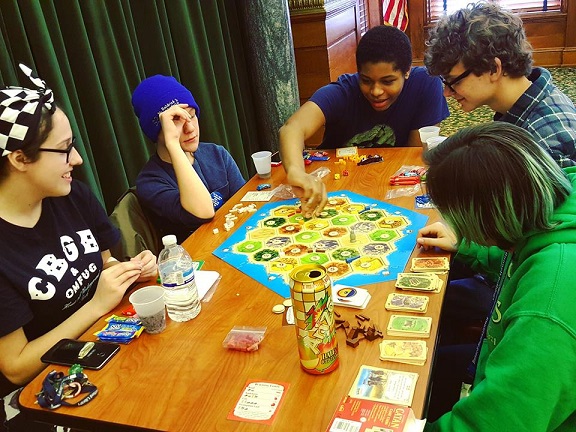
Parks and Recreation had The Cones of Dunshire, and 30 Rock had Colonizers of Malaar. Both of these games are much more elaborate takes on Settlers of Catan, a board game about resource management that is considered one of the top titles in modern board games.
In one episode of 30 Rock, executive Jack Donaghy is struggling with his position, given that NBC is under new ownership with Kabletown, and he finds refuge in a game of Colonizers of Malaar with the writers for comedy show TGS.
Jack believes his business acumen will make the game an easy victory, only to find the play experience strangely similar to his current problems at work. He flees the game for some fresh air.
Later, Jack returns to the game, inspired. He makes a seemingly ill-advised move — playing a fire card in a desert wasteland — that turns the game on its head. The fire turns all the sand into glass, a much-needed resource, and suddenly he’s back in control.
His success in the game inspires him to do the same with his new employers, and Jack leaves, reinvigorated.
The game itself allowed for a few silly throwaway lines, but Jack’s gaming experience was a clever way to allow him to reach rock bottom and rebound. Like many newcomers to a game, he struggled, found his way, and later triumphed, his day improved by playing the game.
Plenty of board game fans have had similarly joyful experiences.
Colonizers of Malaar, as far as we can tell, is a marketed game in the 30 Rock universe. The Cones of Dunshire from Parks and Recreation, on the other hand, is created by character Ben Wyatt and initially treated as a mistake, a nonsensical result of his boredom and frustrations.
The game becomes a running gag in the show. Ben leaves it as a gift at an accounting firm that he has been hired by (and walked away from) several times.
Later, we find out the game has been produced, and Ben stumbles across it when dealing with a dotcom company. He mentions that he invented it, but is shrugged off. He then proves not only his gaming skill but his authorship of the game when he beats the dotcom bosses in a tense playthrough.
It’s mentioned once that a gaming magazine called Cones of Dunshire “punishingly intricate,” a point that makes Ben proud.
Part of the fun of Cones of Dunshire is that the viewer never really understands what’s going on, so supposedly dramatic moments can be played for laughs. (I also appreciate that the name of the game is basically a fancy way of saying “dunce hat.”)
And, in the sort of cyclical storytelling that could only happen in a nerdly pursuit like board games, the company that made Settlers of Catan — Mayfair Games — produced a giant version of the game as part of a charity event at GenCon.
A Kickstarter campaign for a limited run of the game was launched twice, with copies costing $500 due to the insane complexity and number of pieces for the game, but it ultimately failed to reach its goal.
Nonetheless, these two fictional games made an impact on both the characters of the show and the fans as well. What more could you ask for?
Thanks for visiting PuzzleNation Blog today! Be sure to sign up for our newsletter to stay up-to-date on everything PuzzleNation!
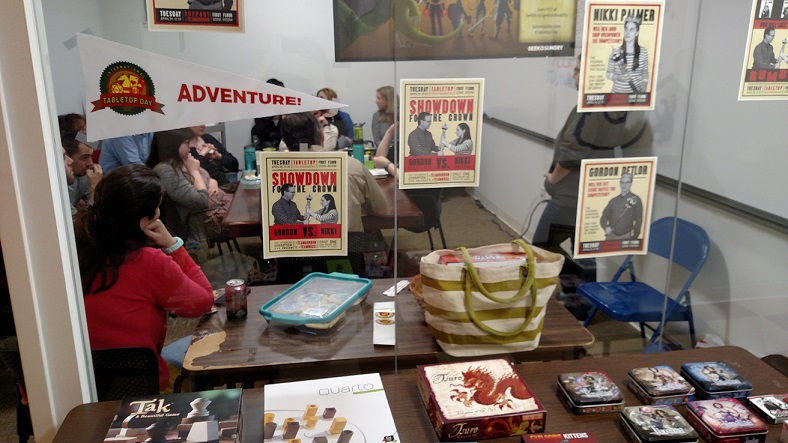
Saturday, April 28, is the sixth annual International Tabletop Day, and whether you play board games, role-playing games, card games, dice games, puzzles, or logic games, this is the holiday for you, family, and friends to come together and enjoy games.
And there are events happening all over, so if you think you won’t be able in indulge in some tabletop gaming delights, you might be mistaken. There’s a searchable map of Tabletop Day events on the official holiday website, and with even a cursory search, you can find so many awesome, fun events being held tomorrow!
For example, let’s look at my home state, Connecticut. There’s plenty of cool events to check out all over the state.
Gamer’s Gambit in Danbury is hosting all day, including game demos, raffles, a Settlers of Catan tournament, and competitions for games like Codenames and Kingdomino!
In New Haven, our friends at Elm City Games are offering a two-for-one day-pass deal, a potluck meal, and more!
If you don’t have a regular gaming group, Hawkwood Game Cafe in Milford is hosting an open table meetup at 3pm on Saturday! It’s a great way to meet fellow game fans, try out some new games, and socialize! Plus they’re running a contest to see who can build the tallest Jenga tower!
And in Middletown, The Board Room, a board game cafe, is running demos all day, so you’ll have opportunities to sample games as diverse as Codenames, Spyfall, Illimat, and Dungeons & Dragons!
But it’s not just game cafes and local game shops participating! Libraries are also getting in on the fun.
For instance, Stratford Library is showing off their new board game collection at their Tabletop Day event. Learn games like Settlers of Catan, The Resistance, and Tsuro while enjoying snacks with fellow game devotees! And feel free to bring your own favorite games to show off!
This is just the tip of the iceberg when it comes to International Tabletop Day events, my friends. With stores and communities hosting game sessions all over the world — including online! — there has never been a better time to get out there and hang out with fellow board game, card game, and RPG players.
Are you attending an event (or hosting an event) tomorrow? Let us know, we’d love to hear from you!
Thanks for visiting PuzzleNation Blog today! Be sure to sign up for our newsletter to stay up-to-date on everything PuzzleNation!
She suggests that board games provide a “temporary respite from the problems of 21st-century life.”
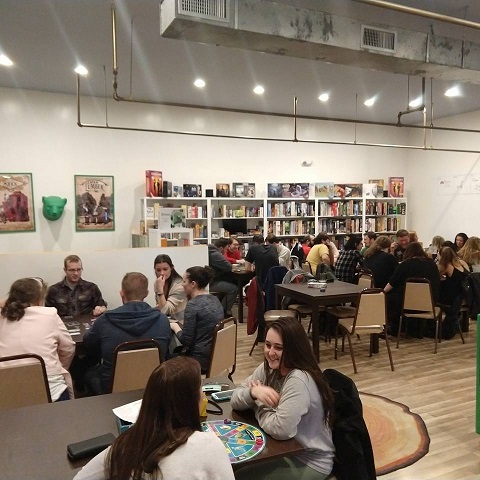
By bringing people together — something often lacking from today’s increasingly isolated lifestyles where people interact more through social media than face-to-face engagement — board games become a community builder, a catalyst for socialization.
From the article:
A good board game builds in enough chance so that any reasonably skilled player can win. Even in chess, famously associated with warfare and military strategy, the emphasis is not on who ultimately wins, but on the ingenuity that players display in the process.
In all of these ways, board games release players — however temporarily — from the maxim that life is divided into clear, consistent categories of winners and losers, and that there is a moral logic as to who falls into which category. As film and media studies professor Mary Flanagan tells The Atlantic, board games prompt us to reflect on “turn-taking and rules and fairness.”
What’s interesting to me about the article is that she mentions Euro-style games like Settlers of Catan and Carcassonne — which are two of the industry leaders, no doubt — but still games that pit players against each other.
What’s interesting to me about an article that’s meant to be about how board games can make you “a nicer person with better relationships” is that the author focuses exclusively on competitive games. I am a huge fan of a smaller subsection of board games — cooperative games — which invite the players to team up against the game itself. You collaborate, strategize, and work together to overcome challenges, succeeding or failing as a group.
In cooperative games, the glow of your successes are heightened because you get to share them with your teammates. And the failures don’t sting as much for the same reason.
Co-op games like SpaceTeam, Castle Panic!, Forbidden Island, The Oregon Trail card game, and Pandemic — not to mention many roleplaying games like Dungeons & Dragons — reinforce the positive, social qualities of all board games. I highly recommend checking them out.
And with the rise of board game cafes like The Uncommons in New York and Snakes and Lattes in Toronto, plus play areas at conventions like Gen Con and events at your Friendly Local Game Shop, there are more opportunities than ever to engage in some dice rolling camaraderie.
You can even make it a regular thing. Every Wednesday, we play a game at lunch time, and it quickly became one of the highlights of the week. (This week, we celebrated winning Forbidden Desert on our Instagram account! I always intend to post something every Game Wednesday, but I often forget because I’m so focused on playing the game.)
Take the time out to enjoy puzzles and games. You won’t regret it.
Thanks for visiting PuzzleNation Blog today! Be sure to sign up for our newsletter to stay up-to-date on everything PuzzleNation!