Let’s Make a Deal!

It’s a scenario every game show fan knows well. You’ve got three doors to choose from, and one of those doors will open to reveal a fabulous prize.

After you’ve made your choice (let’s say Door #2), our affable host Monty Hall plays Devil’s Advocate by opening one of the doors you didn’t choose (let’s say Door #1), revealing a goat or other lackluster result.

And then, Monty offers you a chance to change your mind. Will you stick with the door you initially chose, or will you switch to the other unopened door (Door #3)?

The average player sees two choices, Door #2 and Door #3, which on the surface sounds like a 50/50 shot, a coin flip. So would it surprise you to learn that people who switched from one door to the other doubled their chances to win the fabulous prize?

This is known as the Monty Hall Problem, an example of how statistics aren’t always what they seem, and it has puzzled people for decades.

It’s counterintuitive, isn’t it? I mean, you have two choices, so the odds should be 50/50. But you’re forgetting that third door that Monty eliminated. That third door makes all the difference, statistically speaking.

Let’s break it down. Your initial choice is between 3 doors, meaning you have a 1 in 3 chance of picking the correct door, and a 2 in 3 chance of picking the wrong one.

When Monty opens that other door, the odds haven’t changed. Only the number of options available has changed. Your door is still a 1 in 3 chance of being correct and a 2 in 3 chance of being wrong. But the remaining door now has a 2 in 3 chance of being correct!

So what appeared to be a coin flip between sticking with your choice and switching is now heavily weighted toward switching!

There have been several real-world tests of the Monty Hall Problem, and all of them have consistently shown that the people who switch were twice as likely to open the winning door!

The real puzzle here is how we fool ourselves. We take the numbers at face value — 3 doors become 2 doors, so a 1 in 3 chance becomes a 1 in 2 chance — and actually hurt our chances with those seemingly simple assumptions.

Being able to reconsider your assumptions is a major tool in the puzzler’s solving kit. Plenty of tricky crossword clues depend on you associating the clue with one thing, when the answer is something quite different.

After all, if you saw the clue “Unlocked” for a four-letter entry, you’d probably try OPEN before you tried BALD. Clever constructors are counting on that.

So be sure to remember Monty Hall and his three-door conundrum the next time you’re stumped on a puzzle. Maybe the answer is as simple as trying another door.

Thanks for visiting the PuzzleNation blog today! You can like us on Facebook, follow us on Twitter, cruise our boards on Pinterest, check out our Classic Word Search iBook (recently featured by Apple in the Made for iBooks category!), play our games at PuzzleNation.com, or contact us here at the blog!

PuzzleNation Product Review: ThinkFun’s Brain Fitness line

The folks at ThinkFun are always trying to raise the bar when it comes to puzzly games that keep the mind in fighting trim. (You may remember them from our review of Laser Maze over the summer.)

In that vein, they’ve unleashed the Brain Fitness line of puzzle games, offering all sorts of exercises to challenge you one-on-one and put your puzzly skills to the test.

They sent us copies of three Brain Fitness games to review, each with its own distinct flavor.

solitairechess

Brain Fitness Solitaire Chess

Solitaire Chess presents you with various layouts of pieces on a 4×4 grid, challenging you to clear the board of all but one piece. Every single move must eliminate a piece until only one remains.

Even the beginner puzzles gave me pause at first, because the need to knock out a piece with every move is a very different style of chess than I’m accustomed to. But I very quickly got into the groove of plotting out the chain of moves necessary to clear each board. With two pawns, two knights, two bishops, two rooks, a queen and a king, there are myriad layouts of varying complexity to solve, and some of them were serious brain melters.

Oddly enough, I found some of the expert-level grids easier than the advanced-level puzzles, though you could easily spend five or ten minutes on a single crafty puzzle.

Not only is it a terrific mental exercise, but it just might make you a better chess player in the long run.

Brain Fitness Chocolate Fix

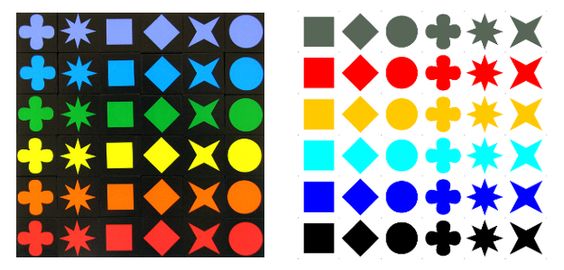
Chocolate Fix is a marvelous variation on the Sudoku model, offering nine sweets of varying shape and color, and tasking you with deducing the intended position of each in a 3×3 baking sheet.

The beginner-level puzzles are child’s play, and would actually be a terrific introduction for younger puzzlers. But as soon as you reach the intermediate-level challenges, the difficulty begins ratcheting skyward. Some clues give you colors only, others shapes only, and the occasional clue is centered around a given piece’s location on the baking sheet.

Midway through the advanced-level challenges, they stop referencing specific sweets at all, leaving you to do some serious deductive work with shapes and colors alone.

By the time you reach the expert puzzles (which abandon any clues providing all nine squares, leaving you to mentally assemble Tetris-like pieces with shape and color symbols), it becomes a serious mental workout that banishes any false confidence and bravado that the easy early rounds might’ve sparked.

Victory may be sweet, but Chocolate Fix’s later challenges will make you earn it.

Brain Fitness Rush Hour

Rush Hour is a variation on the classic sliding-tile game, except instead of tiles, you’re sliding cars and trucks back and forth in order to clear a path for your heroic little red car to escape the traffic jam.

Rush Hour (in various forms) has been a great success for ThinkFun over the years, and the Brain Fitness version is a brilliantly simple adaptation. Self-contained and perfect for puzzling-on-the-go, Rush Hour takes the chain-move thinking of Chess Solitaire to the next level.

The jump from beginner-level to intermediate-level challenges is a sobering one, if only because the playing grid seems absolutely packed with cars! But you quickly realize that a packed grid means fewer possible moves, which helps to point you toward the solution.

The grid thins out again when you reach the advanced-level puzzles, but greater movement only leads to tougher challenges, since so many more moves are available to you, requiring chains of increasing complexity in order to rescue your little red car.

Having thoroughly tested all three games, I found Rush Hour the most difficult of the three (though Solitaire Chess wasn’t far behind), but I must admit, the multilayered colors / shapes / positioning clue style of Chocolate Fix provided the most unexpected challenge.

As an experienced puzzler, I was thoroughly impressed by the scalability of each idea. The easy puzzles were terrific introductions to the game, and the expert puzzles were challenges quite worthy of your time.

ThinkFun recommends 15 minutes of puzzling time a day with any of their Brain Fitness products in order to give your brain a proper workout, but I suspect you’ll have a hard time stopping there. If only physical workouts were as much fun as these mental ones!

Thanks for visiting the PuzzleNation blog today! You can like us on Facebook, follow us on Twitter, cruise our boards on Pinterest, check out our Classic Word Search iBook (recently featured by Apple in the Made for iBooks category!), play our games at PuzzleNation.com, or contact us here at the blog!

PuzzleNation Product Reviews: Veritas

Here at PuzzleNation Blog, we’re constantly on the lookout for any and all things puzzly, happy to spread the word on anything that will appeal to puzzle solvers.

And we think Cheapass Games’ board game Veritas fits the bill nicely.

Veritas is a strategy game in the same vein as Risk and other map-based board games, but with a much quicker pace and a delightfully wicked sense of humor.

The game is set in France during the Dark Ages, and each player represents some version of the Truth, printed in a few books at a random monastery. As you make more copies of the Truth and spread the word to other monasteries and cities, your fellow players are doing the same with their own versions of the Truth, as each of you tries to become the prevailing Truth in the country.

Sounds like a pretty straightforward strategy game, right? But that’s where the element of luck comes in.

Every round, each player pulls from a set of tiles, each tile representing a monastery that will burn down that turn. As monasteries burn, the books they contain are scattered, and the map becomes a little smaller, a little more claustrophobic, and one player’s Truth begins supplanting that of others.

Veritas is a marvelous mix of chance and skill, encouraging both short-term and long-term strategizing (skills that puzzle solvers and puzzle gamers have in spades).

The element of randomness is key in separating Veritas from games with similar territorial stakes. There’s a fun element of the unknown as you pick your tile, and since books are scattered instead of destroyed, there’s significantly less chance of hard feelings when one player burns down another player’s monastery.

(Plus it’s always fun to explain to coworkers in the lunchroom what you’re doing. “Burning down French monasteries” is never the answer they expect. *laughs*)

(Confession: We were so involved in the gameplay that I forgot to take pictures of the board. Please enjoy this dramatic recreation.)

The Cheapass Games rationale is simple, but elegant. They know you’ve got board games at home, so why jack up the price of their games by making you buy another set of dice, another set of chips, another set of tokens and supplemental pieces?

Cheapass Games arrive in a slim white box — as our complimentary review copy did — containing exactly what you need to play the game, and describing precisely what you’ll need from other games to play.

In the case of Veritas, you receive the game board (split into 8 well-rendered cards), the monastery tiles (for randomized burning), and instructions. Simple and elegant. All you need are chips to represent books filled with your truth.

Dime-sized ones will work best, especially since they need to be stackable. Monasteries in key positions can start to resemble miniature games of Jenga, as opposing players keep adding to the stack.

We used Rolco plastic chips in our playtesting, but they didn’t stack particularly well. (The game’s designers highly recommend using smaller poker chips like the ones featured here, since they’re designed to be stacked and won’t take up too much space on the game board.)

The game’s setup is a snap, though you’ll want to give the instructions a thorough read before starting, since the multiple actions available to players on a given turn can take a minute or two to suss out completely. (Any rules we were fuzzy on became instantly clear after a round or two of play.)

Veritas is a terrific strategy game that will appeal to plenty of puzzle solvers and gamers of all ages, continuing the Cheapass Games tradition of clever games with their signature sense of humor.

After all, what’s a little monastery burning between friends? =)

[You can find more information on Veritas (or pick up a copy of your own) by clicking here.]

Thanks for visiting the PuzzleNation blog today! You can like us on Facebook, follow us on Twitter, cruise our boards on Pinterest, check out our Classic Word Search iBook (recently featured by Apple in the Made for iBooks category!), play our games at PuzzleNation.com, or contact us here at the blog!

PuzzleWriMo!

With NaNoWriMo (National Novel Writing Month) and NoJoMo (November Journaling Month) both in full swing, writing is in the air!

And we here at PuzzleNation would like to encourage the writers and aspiring writers with a little writing exercise/contest!

We’re looking for an opening line or opening paragraph that incorporates puzzles in some way. They can be funny or serious, dramatic or silly, one sentence or several. All we ask is that a puzzle or the spirit of puzzle solving is included in the snippet.

Let us know you’re participating by using the hashtag #PuzzleWriMo (or leave us a comment right here at the blog), and we’ll collect our favorites and feature them in their own PuzzleNation Blog post.

And those we choose will be eligible to win a great puzzly prize!

Put those thinking caps on and put your puzzlers to work! And good luck to all the writers and NaNoWriMo participants out there!

Puzzles in Pop Culture: The West Wing

In previous editions of Puzzles in Pop Culture, I’ve recapped classic episodes of M*A*S*H and MacGyver, as well as the numerous puzzly plotlines that’ve been featured on The Simpsons over the years.

But when it comes to erudite, hilarious references to solving crosswords, you’d be hard-pressed to find sharper puzzle-infused dialogue than the moments featured in episodes of Aaron Sorkin’s landmark political drama The West Wing.

Set in the West Wing of the White House, the show focused on the lives of the president and his advisors and staffers as they navigated political situations at home and abroad. To this day it’s a regular feature on most reviewers’ lists of the top television shows of all-time.

And in a show noted for sparkling wit and all kinds of intellectual wordplay, it’s hardly a surprise that the New York Times Crossword was referenced in the very first episode.

In the video below, Chief of Staff Leo McGarry is frustrated with the Times for misspelling the name of Muammar Qaddafi, and his attempts to contact the editor of the Times Crossword and get it corrected are stymied at every turn:

The White House staff’s dubious relationship with crosswords is revisited in the season 3 episode Dead Irish Writers. This time around, as the president’s wife Abbey prepares for both a birthday party and a potential ruling on her medical license, the President busies himself with a crossword in his own inimitable style:

Beyond the spirited humor of both scenes, there’s a marvelous undercurrent of how smart people react when their intellectual superiority is challenged. Leo responds by trying to correct what he sees as an egregious error, while the President bends the rules to suit his own expectations.

In addition to being a wonderful launchpad for the show’s signature rapid-fire banter, it’s a simple and effective way of shedding light on how each character views the world and his role in it. (With writing and direction this layered and engaging, it’s easy to see how The West Wing earned an astounding 26 Emmy Awards!)

Even as subplots in a much-larger narrative, these puzzles added color and personality to scenes that took us inside the minds of these characters. Pretty impressive for crosswords that are only mentioned briefly.

Puzzles… is there anything they can’t do? =)

Thanks for visiting the PuzzleNation blog today! You can like us on Facebook, follow us on Twitter, cruise our boards on Pinterest, check out our Classic Word Search iBook (recently featured by Apple in the Made for iBooks category!), play our games at PuzzleNation.com, or contact us here at the blog!

Answers to the PuzzleNation Punderful Halloween Costume Game!

Happy Day-After-Halloween, puzzlers and PuzzleNationers! (Also known as Candy Coma Day…)

It’s time for the answers to our PuzzleNation Punderful Halloween Costume Game! How did you do? Let’s find out!


PuzzleNation’s Punderful Halloween Costume Game: Answers!

#1

halloween1

She’s a spelling bee!

#2

halloween2

They’re the Black-Eyed P’s! [picture courtesy of ThinkingCloset.com]

#3

halloween3

Why, it’s a lovely Mail-Order Bride!

#4

halloween4

Dunkin’ Donuts!

#5

halloween5

French kiss!

#6

halloween6

It’s fantasy football for all to enjoy!

#7

halloween7

He’s a ceiling fan!

#8

halloween8

What a lovely Freudian slip!

#9

halloween9

It’s the Grapes of Wrath!

#10

SONY DSC

She’s a blessing in disguise! [picture courtesy of ThinkingCloset.com]

So how did you do, PuzzleNationers? I hope you enjoyed our little Halloween Costume challenge. Has this inspired you to create a punny costume of your own for next year? Let us know!

Thanks for visiting the PuzzleNation blog today! You can like us on Facebook, follow us on Twitter, cruise our boards on Pinterest, check out our Classic Word Search iBook (recently featured by Apple in the Made for iBooks category!), play our games at PuzzleNation.com, or contact us here at the blog!