Puzzles in Pop Culture: The Big Bang Theory

Puzzles in Pop Culture is all about chronicling those moments in TV, film, literature, art, and elsewhere in which puzzles play a key role. In previous installments, we’ve tackled everything from The West Wing, The Simpsons, and M*A*S*H, to MacGyver, Gilmore Girls, and various incarnations of Sherlock Holmes.

And in today’s edition, we’re delving into the world of The Big Bang Theory, CBS’s runaway hit about four nerdy scientists — Leonard, Sheldon, Howard, and Raj — bumbling their way through social interactions of all sorts.

Although the show covers all sorts of activities often deemed “nerdy” — roleplaying games like Dungeons & Dragons, The Lord of the Rings, comic books, cosplay, conventions, obsessive fandom, etc. — they rarely play puzzles. Usually, the closest they get are board games and card games, whether real ones like 3-D chess or fictional ones like Mystic Warlords of Ka’a.

But in episode 3 of season 7, The Scavenger Vortex, the boys and their girlfriends embarked on one of my favorite puzzly pursuits: the scavenger hunt.

Here, hunt organizer Raj lays down the rules with plenty of style:

The teams end up being the odd couples of Leonard and Bernadette (Howard’s girlfriend), Sheldon and Penny (Leonard’s girlfriend), and Howard and Amy (Sheldon’s girlfriend), allowing some new pairings for the writers to have fun with.

For instance, we’re treated to this exchange between Howard and Amy, where Amy references her unpopularity growing up:

Howard Wolowitz: Wow, you’re really good at puzzles.
Amy Farrah Fowler: I did them all the time as a kid. As my mom used to say: when you’re doing a puzzle, it’s like having a thousand friends. She was full of fun lies like that.

The game starts with a jigsaw puzzle, which quickly reveals the location of the next clue: the comic book store. (Although Sheldon forces Penny to wait while he completes the entire puzzle.)

When the competitors arrive at the comic book store, a cardboard cutout of the Riddler holds their next clue.

Riddle me this:
Arrah, Arrah, and gather ’round,
this hero is legion-bound,
He multiplies N by the number of He,
and in this room the thing you’ll see.

Sheldon instantly solves the riddle, followed by Howard and Amy, then finally by Bernadette and Leonard, highlighting how well the three teams are working together. (Either Sheldon or Penny takes the lead, depending on the task, while Howard and Amy collaborate well, and overcompetitive Bernadette basically yells at Leonard the entire time.)

Arriving at the geology lab at the university, Penny and Sheldon reveal the next puzzle: To continue on your quest, leave no stone unturned.

While they turn over various rock samples in the lab, Sheldon explains how he solved the riddle.

Arrah pointed to Jan Arrah, a member of the DC Comics superhero team The Legion of Super-Heroes, who goes by the name Element Lad. This pointed Sheldon to the Periodic Table of Elements, where he multiplied the atomic number of N, Nitrogen (7) by the atomic number of He, Helium (2), getting 14, the atomic number of Silica, which pointed him to either the geology lab or the chemistry lab.

And the final line of the riddle — “and in this room, the thing you’ll see” — pointed toward the Marvel superhero The Thing, who is made entirely of rock.

As Sheldon is showing off his impressive riddle-cracking skills, underdog Penny actually solves the current puzzle, realizing that “no stone unturned” didn’t mean the samples in the lab. It meant the Rolling Stones poster hung on the door, which she lifts to reveal map coordinates.

This sends them to a bowling alley, and then to the disused elevator shaft in Leonard, Sheldon, and Penny’s apartment building. A montage mentions further puzzles at the planetarium and the tar pits (and plans to attend a Neil Diamond concert for new chums Howard and Amy), before ending up in the laundry room at Leonard, Sheldon, and Penny’s apartment building.

Three bags of laundry await the players, and they quickly realize each bag contains only pants, except for a single shirt of Sheldon’s. A shirt with a spot on it.

Fans of the show, of course, know where their final destination — and the coin — awaits them. But when they tear apart the couch, there’s no coin.

In the end, we discover the final clue was a red herring, and Raj had slipped gold coins into everyone’s pockets earlier in the day. (Which is some pretty impressive sleight-of-hand, I must say.)

And although Raj’s big lesson — it’s getting together and playing that’s important, not the prize at the end — is lost on his fellow castmates, it really does encapsulate the best in group puzzling and gaming… the experience.

Maybe The Big Bang Theory gets puzzles after all.


Thanks for visiting PuzzleNation Blog today! You can share your pictures with us on Instagram, friend us on Facebook, check us out on TwitterPinterest, and Tumblr, and be sure to check out the growing library of PuzzleNation apps and games!
Puzzles in Pop Culture: Brooklyn Nine-Nine

brooklyn-nine-nine-season-2-episode-16-captain-holt-jake-peralta-terry-jeffords

In previous editions of Puzzles in Pop Culture, we’ve explored opinions about crosswords, embarked on scavenger hunts with sitcom characters, and even saved New York with brain teasers alongside John McClane in Die Hard with a Vengeance. But it’s rare when a movie or TV show poses a puzzler and leaves it to the audience to solve it.

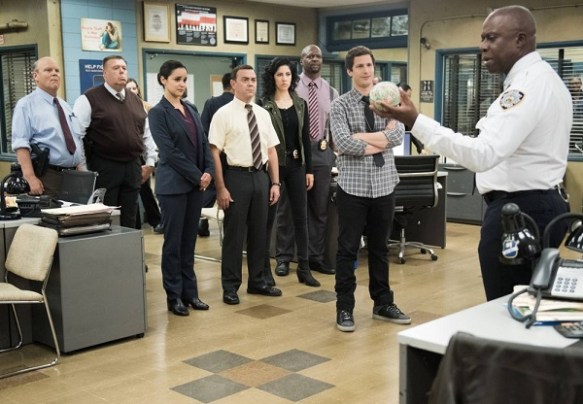
In “Captain Peralta,” a recent episode of the Fox police sitcom Brooklyn Nine-Nine, a subplot featured Captain Holt posing a brain teaser to his fellow officers.

There are 12 men on an island. 11 weigh exactly the same amount, but one of them is slightly lighter or heavier. You must figure out which.

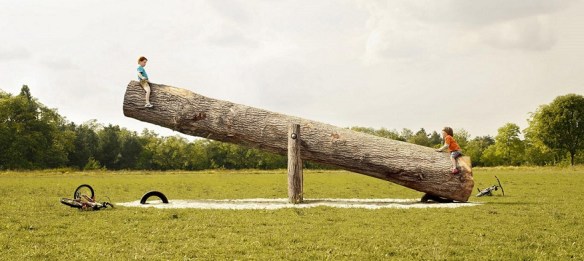
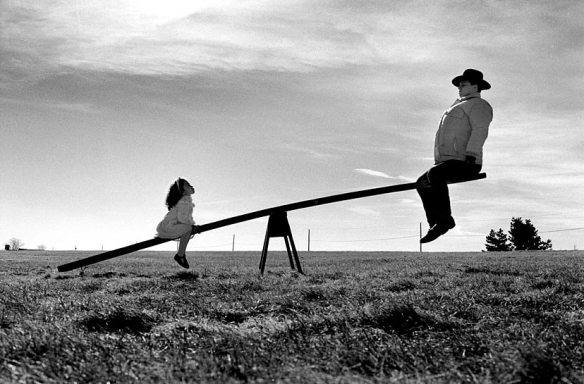
The island has no scales, but there is a seesaw. You can only use it three times.

maxresdefault4

With Beyonce tickets going to the person who solved the puzzle, the competition was fierce. Rosa suggested using the seesaw to threaten the men into confessing. Amy and Terry suggested that the first seesaw ride involve putting six men on one side and six on the other, which Captain Holt quickly said wouldn’t work.

As it turns out, Holt was hoping one of his officers would solve the puzzle for him, since he’s been unable to crack it for years. The episode ended without providing the audience with a solution.

Thankfully, your friends here at PuzzleNation Blog would never leave you high and dry like that. Let’s get puzzling!

bizarroshipwrecked07-02-95

Now, this WOULD be a simple logic problem if you knew you were looking for someone lighter or you knew you were looking for someone heavier. In that case, a 3×3 ride, 4×4 ride, or even the 6×6 ride Amy and Terry suggested, would eliminate part of the field immediately, and the remaining two uses could determine the heavy person or the light person.

Unfortunately, in Captain Holt’s puzzle, you don’t know if the person is heavier or lighter, which makes this more difficult. For instance, if you knew you were looking for someone heavier, you could immediately eliminate anyone on the side of the seesaw higher in the air. But if you don’t know if the subject in question is lighter or heavier, then you could have a heavier person on one side or a lighter person on the other.

Diabolical.

But, with some careful deduction, you CAN solve this puzzle.

First, let’s identify our 12 castaways with the letters A through L. Now let’s divide them into three groups of four: ABCD, EFGH, and IJKL.

seesaw

For the first seesaw ride, let’s weigh ABCD vs. EFGH.

There are three possible outcomes:

  • They balance, meaning we can eliminate all eight of them and our mystery person is in IJKL.
  • ABCD sinks while EFGH rises, meaning there’s a heavier person in ABCD or a lighter person in EFGH, so we can eliminate IJKL.
  • EFGH sinks while ABCD rises, meaning there’s a heavier person in EFGH or a lighter person in ABCD, so we can eliminate IJKL.

OUTCOME 1: They balance

For the second seesaw ride, we’ll take IJK and weigh them against any three of the eliminated people — let’s say ABC — because we know they weigh the same.

OUTCOME 1-1: if IJK balances against ABC, we know that L is our guy. For the third seesaw ride, weigh L against A to determine if L is lighter or heavier.

OUTCOME 1-2: if IJK sinks, one of them is heavier than ABC. For the third seesaw ride, weigh I against J. If they balance, K is the heavy one. If I or J sinks, he’s the heavy one.

OUTCOME 1-3: if IJK rises, one of them is lighter than ABC. For the third seesaw ride, weigh I against J. If they balance, K is the light one. If I or J rises, he’s the light one.


article-2401231-1b6471bd000005dc-74_634x452

OUTCOME 2: ABCD sinks while EFGH rises

For the second seesaw ride, we have eight possible suspects — four heavy, four light — so we mix up the two previous groupings in order to eliminate some suspects. We’ll take E, F, and A and weigh them against G, B, and L. That’s two from the lighter side and one from the heavier vs. one from the lighter, one from the heavier, and one we know is standard.

Again, there will be three possible outcomes:

OUTCOME 2-1: If EFA balances with GBL, they’re all eliminated, leaving either H as a lighter person or either C or D as a heavier person. For the third seesaw ride, weigh C against D. If they balance, H is lighter. If they don’t, whichever is heavier is our guy.

OUTCOME 2-2: If EFA sinks, either A is heavy (because E and F were on the lighter side before) or G is light (because B was on the heavier side and L has already been eliminated), and we can eliminate C, D, and H. For the third seesaw ride, weigh G against L. If they balance, A is heavy. If they don’t, then G is light.

OUTCOME 2-3: If EFA rises, either B is heavy (because G was on the lighter side and L has already been eliminated) or either E or F is light (because A was on the heavier side), and we can eliminate C, D, and H. For the third seesaw ride, weigh E against F. If they balance, then B is heavy. If they don’t, whichever is lighter is our guy.


giant-see-saw

OUTCOME 3: EFGH sinks while ABCD rises

For the second seesaw ride, we have eight possible suspects — four heavy, four light — so we mix up the two previous groupings in order to eliminate some suspects. We’ll take A, B, and E and weigh them against C, F, and L. That’s two from the lighter side and one from the heavier vs. one from the lighter, one from the heavier, and one we know is standard.

Again, there will be three possible outcomes:

OUTCOME 3-1: If ABE balances with CFL, they’re all eliminated, leaving either D as a lighter person or either G or H as a heavier person. For the third seesaw ride, weigh G against H. If they balance, D is lighter. If they don’t, whichever is heavier is our guy.

OUTCOME 3-2: If ABE sinks, either E is heavy (because A and B were on the lighter side) or C is light (because F was on the heavier side and L has already been eliminated), and we can eliminate D, G, and H. For the third seesaw ride, weigh C against L. If they balance, E is heavy. If they don’t, then C is light.

OUTCOME 3-3: If ABE rises, either F is heavy (because B was on the lighter side and L has already been eliminated) or either A or B is light (because E was on the heavier side), and we can eliminate D, G, and H. For the third seesaw ride, weigh A against B. If they balance, then F is heavy. If they don’t, whichever is lighter is our guy.


This was one whopper of a brain teaser, to be sure, and I’m not surprised it stumped even the likes of the impressive Captain Holt. But, as a special treat, if you’d like to see the Captain himself explain the solution, go here and check out the embedded video. Enjoy.

Of course, it doesn’t answer the real question: who cares about weight? Why aren’t they building a boat to escape the island?

Thanks for visiting PuzzleNation Blog today! You can share your pictures with us on Instagram, friend us on Facebook, check us out on TwitterPinterest, and Tumblr, and be sure to check out the growing library of PuzzleNation apps and games!
Puzzles in Pop Culture: Two Hollows

In today’s edition of Puzzles in Pop Culture, we visit two very different New England towns — Stars Hollow, Connecticut, and Sleepy Hollow, New York — in two very different TV shows.

Stars Hollow is the fictional setting of cancelled WB/CW drama Gilmore Girls, which spent seven seasons following the pop culture-fueled banter of mother/daughter team Lorelai and Rory Gilmore as they navigated relationships, family drama, and all the undeniable quirkiness of small-town America.

Sleepy Hollow is a very real town, but hopefully one unafflicted by headless horsemen, demonic plots, and a secret war against evil that’s been waged since the days of the American Revolution. At least that’s what’s going on in the fictional version of Sleepy Hollow in Fox’s eponymous TV show, now in its second season.

And, as it turns out, each has something interesting to say about crossword puzzles.

First, there’s this brief scene from Gilmore Girls, where Lorelai ponders both the challenge of crosswords and the social implications of NOT being a crossword solver:

Clearly Lorelai and Rory are crossword skeptics, or at the very least, indifferent to crosswords. But given that they’re staring at a collection of New York Times crossword puzzles, maybe they’re simply disillusioned after a few hard end-of-the-week puzzles.

The character of Henry Parrish from Sleepy Hollow, on the other hand, has much kinder things to say about crosswords.

He expressed himself quite eloquently in episode 10 of season 1, “The Golem.”

Lt. Abbie Mills: You doing crosswords?

Henry Parrish: As I said, it distracts me from my troubles. A good puzzle misleads you, it sends you in one direction, fools you into thinking you know what’s going on. But once you discover the trick, you see that’s there’s often a hidden meaning.

Now, there’s a man who has solved some quality crosswords in his time. Maybe he could recommend a few choice ones for the Gilmore girls.

Thanks for visiting PuzzleNation Blog today! You can share your pictures with us on Instagram, friend us on Facebook, check us out on TwitterPinterest, and Tumblr, and be sure to check out the growing library of PuzzleNation apps and games!

Puzzles in Pop Culture: Bones

In today’s edition of Puzzles in Pop Culture, we join the forensic team at the Jeffersonian Institute to uncover what happened to a prominent puzzler. It’s Bones, episode 8 of season 10, “The Puzzler in the Pit.”

The episode opens, appropriately enough, with Special Agent Seeley Booth solving a crossword. (Given the looser grid construction, it’s either a British-style crossword or a cryptic crossword. Either way, points to Agent Booth.)

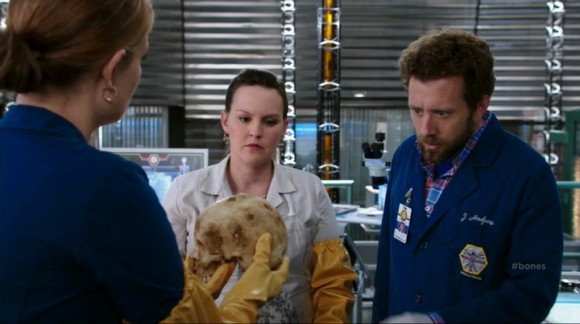
Both he and forensic anthropologist Dr. Temperance Brennan (Bones, to some) are called into work after a body is found in a fracking pit. The harsh chemicals in the pit are causing the body to deteriorate faster than normal, but some clever chemistry saves the day. Although a blood sample the team collects is too degraded for a positive match, they manage to identify the body from a rare surgery performed a few years before.

The body belongs to Lawrence Brooks, reclusive syndicated crossword constructor, considered by some to be a master in his field. His wife quickly points the fickle finger of blame squarely at his ambitious assistant, Alexis Sherman. Apparently, Brooks promised to use Alexis’s puzzles and dangled the possibility of a promotion to co-editor, but delivered on neither.

An analysis of a cast Brooks had on when he died reveals crossword clues written on it, but in two different handwriting styles. Some of the clues are straight-forward and simple synonym-style clues, hardly the work of a master constructor like Brooks.

“Despise,” 4 letters. Hate
“Blood feud,” 8 letters. Vendetta.

Other key words on the cast include punish, attack, payback, and justice. The team suspects the other clues are a message from his killer.

When Booth and Special Agent James Aubrey interview Alexis, she plays a nasty phone message from an unidentified man, claiming that a stranger has been hanging around lately. Alexis agrees to help a forensic artist sketch the mystery man.

Sadly, this is the last appearance of a visible puzzle in the episode, leaving solvers with Brooks’s murder to solve instead of a crossword grid.

The team swiftly gathers several suspects:

  • Emory Stewart (the man who matched the forensic artist’s drawing) claims to be writing a book about Brooks, and denies having left the phone message. He suggests another suspect:
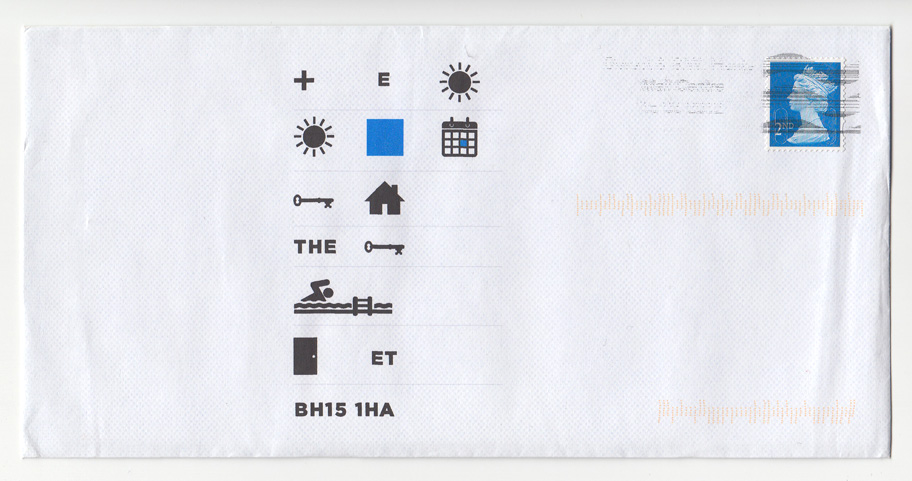
  • Donald McKeon, Brooks’s old college roommate and a fellow crossword constructor, who admits to leaving the angry phone message. When the team finds one of Brooks’s puzzles in McKeon’s possession, they accuse him of theft and murder, only for McKeon to claim Brooks had stolen the puzzle from him. (He says his copy of the puzzle is from a old publishing trick, mailing something to yourself to provide a verified date for the contents, like a poor man’s patent.)

[Not an image from the episode, just one of James Addison’s puzzly envelopes.]

Meanwhile, the team discovers that Brooks’s bones had been weakening for months before his death, implying illness or injury. As it turns out, Brooks might have been seeking treatment for early onset Alzheimer’s, triggered by a head injury in a boating accident years before.

The Alzheimer’s treatment explains the condition of his bones, and the illness itself explains both the different handwriting (a dementia symptom) and the conflict with McKeon. (Brooks may have stolen McKeon’s puzzle unknowingly.)

This points back to Mrs. Brooks. It turns out she was publishing puzzles Brooks had previously created but deemed unusable. She had accidentally published McKeon’s puzzle. She mentions being broke, and not knowing what happened to hundreds of thousands of dollars that should’ve been in their bank accounts.

[This is your brain. This is your brain on Internet gambling…]

It appears that Brooks gambled his money away in online gambling. But when Booth and Aubrey lure out the bookie who broke Brooks’s fingers, the bookie says that Brooks was bankrolling a woman: his assistant, Alexis.

The assistant confesses to stealing from Brooks, but claims she would’ve paid him back. She is booked for theft, since they can’t yet prove she committed the murder.

The team discovers Brooks’s neck was broken, and doubts that the assistant could’ve done it.

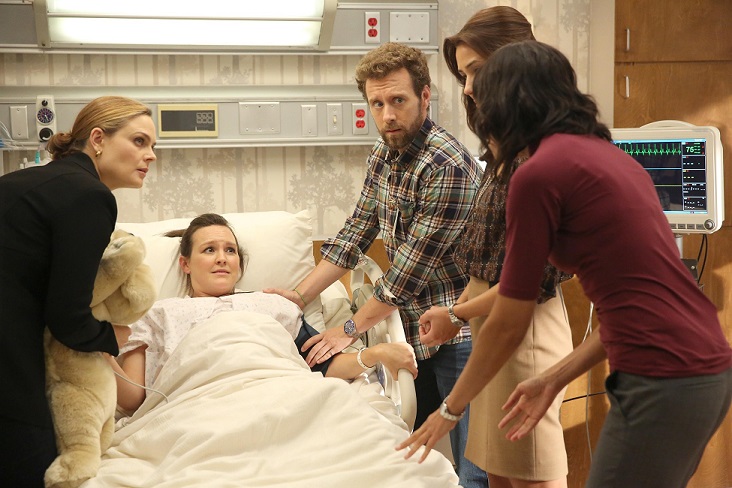
Oddly enough, the solution appears while the team rallies around a pregnant coworker, Daisy, who solves the case during her pre-delivery contractions. She supposes that the blood sample they found with Brooks wasn’t his. It has to be that of a blood relative.

Brooks had a son. Which brings us back to Emory Stewart, who turns out to be Brooks’s son from a previous relationship. Emory talked to Brooks, but when they met in person later that day, Brooks claimed to have no idea who he was. Angry, and unaware that Alzheimer’s was behind Brooks’s faulty memory, Emory shoved Brooks down a hill, unintentionally killing him.


This episode goes against the standard crossword mystery convention of having a puzzle at the center of the murder. There’s no puzzle left behind by the killer, no cryptic clue scribbled onto a grid by the victim, no need for a detective with a knack for crosswords to crack the case. There’s simply a murder mystery and a bit of fun clue-fueled wordplay.

Sadly, we never return to the curiously unpleasant list of clues and words on Brooks’s cast, which was one of the most interesting plot points to me. Oh well. (There’s also the whole “wife knows husband has Alzheimer’s, but doesn’t report him missing” plot hole. But, hey, puzzles, not plot holes, right?)

[Mr. Shortz, looking none too amused by the plot of this episode.]

This episode does raise an intriguing idea, though. Imagine a murder mystery dinner set at next year’s American Crossword Puzzle Tournament, where something dastardly had happened to Will Shortz. (Thankfully, we can lose the fracking pit and its acidic unpleasantness with this scenario.)

Who would YOU suspect had done the heinous deed? His equally ambitious and capable assistant? A wronged fellow constructor? Perhaps a jealous ping-pong rival? There’s a lot of possibility there.

Of course, considering how Puzzle #5 decimated the competition last year, perhaps Brendan Emmett Quigley would be a more likely target.

Thanks for visiting PuzzleNation Blog today! You can share your pictures with us on Instagram, friend us on Facebook, check us out on TwitterPinterest, and Tumblr, and be sure to check out the growing library of PuzzleNation apps and games!
Puzzles in Pop Culture: Are You Afraid of the Dark?

Everyone loves a good scary story, especially around Halloween, myself included. In fact, the only thing I like better than a good scary story is a good scary story with some puzzling included.

So, in the spirit of the spooky season, I thought we could delve into one of my favorites from Nickelodeon’s Saturday night (SNick) lineup: Are You Afraid of the Dark?

[Submitted for the approval of the Midnight Society…]

Are You Afraid of the Dark? was an anthology series, centered around a group of young storytellers who called themselves The Midnight Society. Each week, one of them would offer up a terrifying tale (but not too terrifying, because it was Nickelodeon, after all), oftentimes reminiscent of classic horror stories like “The Monkey’s Paw,” or episodes of The Twilight Zone or The Outer Limits.

Most of them featured your standard horror tropes — vampires, ghosts, evil magicians, cursed items — but a few of them dove headfirst into the puzzle-game realm, pitting the protagonists against fiendish foes with only their puzzly wits to protect them.

[Nope, not THAT pinball wizard.]

In “The Tale of the Pinball Wizard,” a young man named Ross gets a job at the mall, only to disobey his new boss by playing a pinball machine he discovered in the back room. Playing well past closing time, he leaves the store and finds himself locked inside the mall, where the storyline of the pinball game has come to life!

Battling the dark knight and trying to ensure the princess reaches the throne, Ross outwits the villains (with a bit of puzzly tactical finesse) and wins the game, forgetting a classic video game trope: when the game’s over, you go back to start. As his wronged boss looks down on him from outside the pinball game, Ross realizes he’s trapped… just in time for a giant pinball to loom menacingly from the top of the mall escalator.

(Yes, most of the “morals” of each story involved listening to your elders, not venturing off on your own, and generally being less of a brat.)

They would return to the game-comes-to-life gimmick later in “The Tale of the Forever Game,” where a jerkish young man plays a Jumanji-like game with his friends as the unwitting pieces. If he loses, he takes the place of his cursed opponent, condemned to lure other unsuspecting jerks into playing weird, poorly-scripted board games.

In one game-inspired story, “The Tale of the Zombie Dice,” a young gambler named Tate wagers a year’s worth of free arcade games against the not-in-any-way-transparently-evil Mr. Click, the arcade’s owner.

[Nope, not these Zombie Dice.]

As you might expect, Tate loses, and ends up shrunk down and locked away, intended to be sold overseas as a pet! (I know, very weird.) It’s up to his friend Alex to save the day (but not before first losing a round of Zombie Dice, because, you know, high stakes and all that).

Alex goes in double-or-nothing against Mr. Click, and gets to choose the wager. Alex, while not a gambler, employs an old-school bar bet brain teaser, betting that he can finish two big mugs of soda before Mr. Click can finish one small glass.

(His only condition? Mr. Click can’t start drinking until Alex has finished the first of his mugs. Mr. Click suspects Alex has a trick up his sleeve, like he’ll move Mr. Click’s glass, so Alex lays down a new rule: neither player can touch the other’s drinking glass.)

When Mr. Click agrees on the condition that Alex drink three mugs of soda, Alex instantly accepts, because crafty villains are rarely crafty enough to see a good guy scamming them. The bet is on!

If you figured out that Alex finishes his first mug and puts it down right over Click’s glass, congratulations! You’re smarter than this week’s villain.

Thwarted by the wager he accepted, Mr. Click is defeated and Tate is freed. (They never mention if Alex gets any free games at the arcade.)

But when it comes to puzzly stories, you have to go all the way back to the very first episode for the best one: “The Tale of the Phantom Cab.”

It’s a slightly-convoluted tale of two boys taken to a house in the woods by a strange cab, and confronting the weirdo who lives there, Dr. Vink. Said weirdo challenges the boys to answer riddles like “How far can you walk into the woods?” (To the credit of our protagonists, they knock out most of the riddles with ease.)

But when one riddle proves too tricky, the boys end up back in the cab. You see, the cab is actually a ghost cab, reliving the same deadly crash over and over again, and if the boys don’t solve the last riddle, their fate is sealed.

Thankfully, one of the boys solves the riddle in the nick of time, and they escape. But, seriously who would want their life resting on the riddle “what has no weight, can be seen by the naked eye, and if put in a barrel it will make the barrel lighter?”

It just goes to show you: it’s always good to keep your puzzly skills sharp, because you never know when you’ll have to outwit monsters, villains, and things that go bump in the night.

Thanks for visiting PuzzleNation Blog today! You can share your pictures with us on Instagram, friend us on Facebook, check us out on TwitterPinterest, and Tumblr, and be sure to check out the growing library of PuzzleNation apps and games!

It’s Follow-Up Friday: Macho Vanquish Fizgig Jukebox edition!

Welcome to Follow-Up Friday!

By this time, you know the drill. Follow-Up Friday is a chance for us to revisit the subjects of previous posts and bring the PuzzleNation audience up to speed on all things puzzly.

And today, I have another brief installment of Puzzles in Pop Culture.

Friend of the Blog Eric Berlin passed along this link about some puzzly fun lurking at the theaters last weekend.

Apparently, the top ten box office draws over the weekend formed a pangram!

For the uninitiated, a pangram is a sentence, paragraph, or other written item that contains all 26 letters in the alphabet. Not only do many puzzlesmiths endeavor to make their puzzles pangrams, but there’s a whole subset of puzzlers dedicated to writing short, hilarious, and immensely crafty sentences featuring all 26 letters.

The classic pangrammatic sentence — one many of us remember from typing class — is “The quick brown fox jumps over the lazy dog.” But that’s got a lot of repeated letters, and true pangram devotees try to repeat as few letters as possible.

(My personal favorite pangram? “Mr. Jock, TV quiz PhD, bags few lynx.”)

But this weekend, thanks to films like The Equalizer, Guardians of the Galaxy, and Teenage Mutant Ninja Turtles, we’ve got a box office pangram!

This is the sort of puzzles-in-plain-sight fun that I love, seeing clever people spot patterns most others would miss.

Thanks for visiting PuzzleNation Blog today! You can share your pictures with us on Instagram, friend us on Facebook, check us out on TwitterPinterest, and Tumblr, and be sure to check out the growing library of PuzzleNation apps and games!