Product Review: Bread Basket

[Note: I received a free copy of this game in exchange for a fair, unbiased review.]

Playing games and enjoying snacks have gone hand-in-hand forever, so it’s only natural that games about making snacks would evolve over time.

Today’s game from Crab Fragment Labs, Bread Basket, is a brilliant example.

Bread Basket is a card game all about earning points by building sandwiches with the cards in your hand. When I thought about shuffling cards and making sandwiches, it brought to mind Dagwood from the Blondie comic strip or Garfield from the cartoon, ready to unhinge their jaws and take an enormous bite!

You see, building a sandwich isn’t just a skill, it’s an art. You need to balance your ingredients, flavors, tastes and textures, all while making sure you can actually take a bite of the sandwich at the end.

And it’s the same idea with Bread Basket, but with point values instead of flavors.

There are rules to your sandwich making. Your sandwich must have bread (matching cards on each side) and the ingredients in between must be lower-numbered cards than the bread. But with each player adding only one card at a time to the shared sandwich-making space on the table, you’ll need timing, strategy, and luck to make a sandwich and score points.

A sandwich consists of a string of cards where two cards match on either hand, and the cards in the middle are of lower value. If you complete the sandwich with your bread, you collect the point value of the cards contained between the pieces of bread.
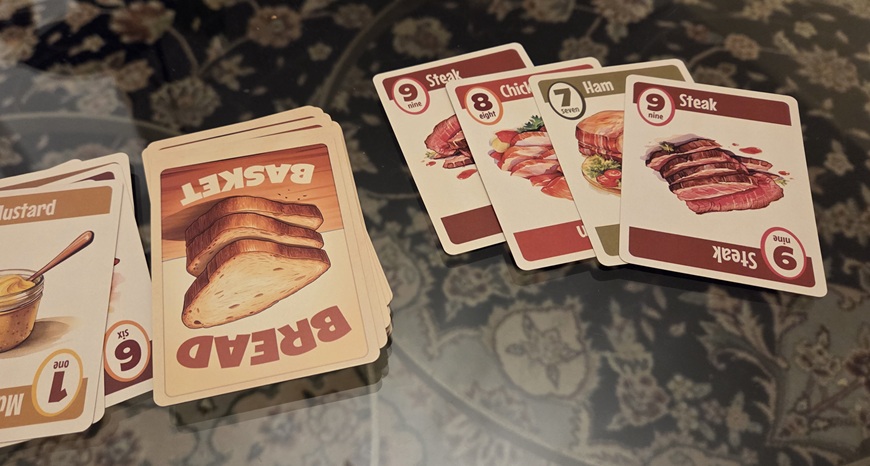
For instance here, the bread are the two steak cards, and the points earned in this sandwich would be 15.

Once one player is out of cards (or the deck of available cards to draw runs out), the hand is over. You get points for all of the sandwiches you’ve made, but you LOSE points for all of the cards remaining in your hand.

This mix of strategies adds to the challenge and the fun of the game, since you’re trying to form sandwiches to earn points, but also to eliminate cards from your hand. (This mimics a dual-play mechanic from one of my all-time favorite card games, 12 Days.)

You can use high cards to start potential sandwiches, but you can also use them to block sandwiches.
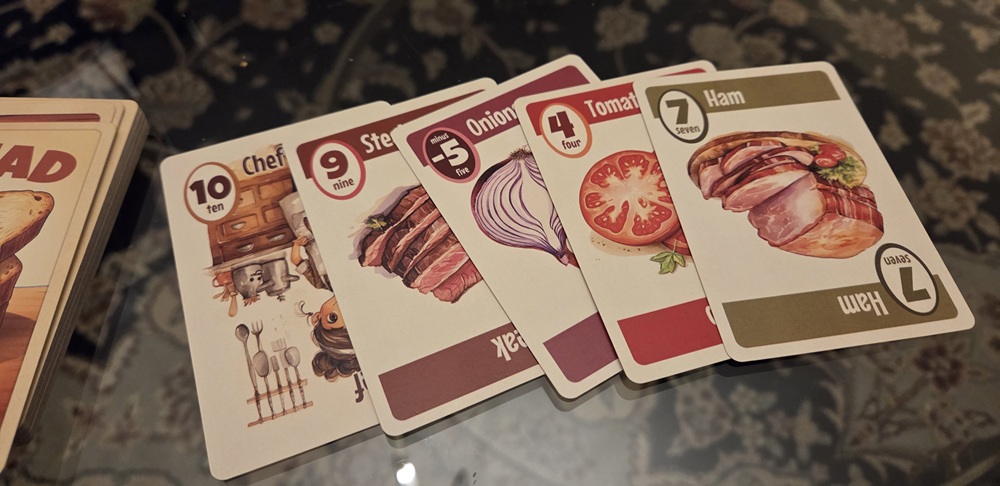
Here you see a string of cards played. But the following move does NOT complete a sandwich, since a sandwich can’t contain a higher number.
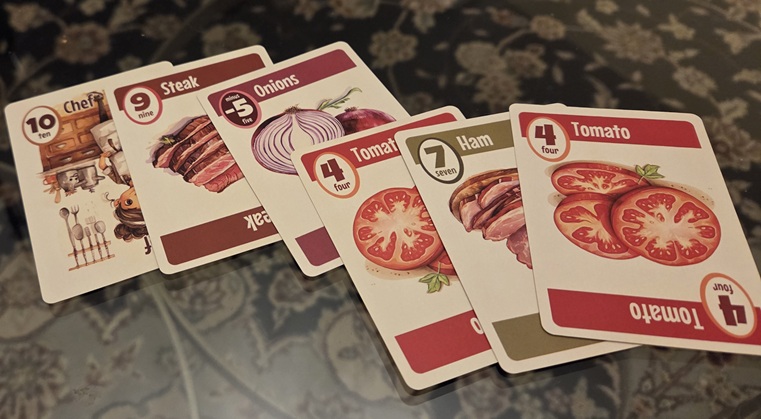
The gameplay changes rapidly as each new card is added. Do you shift from trying to make a sandwich to trying to block one, or do you prioritize dropping high-value cards from your hand, so you’re not penalized later? (Or do you drop a Ten in the middle of the string, accomplishing both in one move?)

For a game with only 55 cards (5 each of the cards 1-10, plus five onion cards valued at -5 points) and only two options on your turn (play card or draw a card), there is so much strategy and replay value packed into this deck.

And since you can play with as few as two players and as many as six, the gameplay is very different depending on the group.
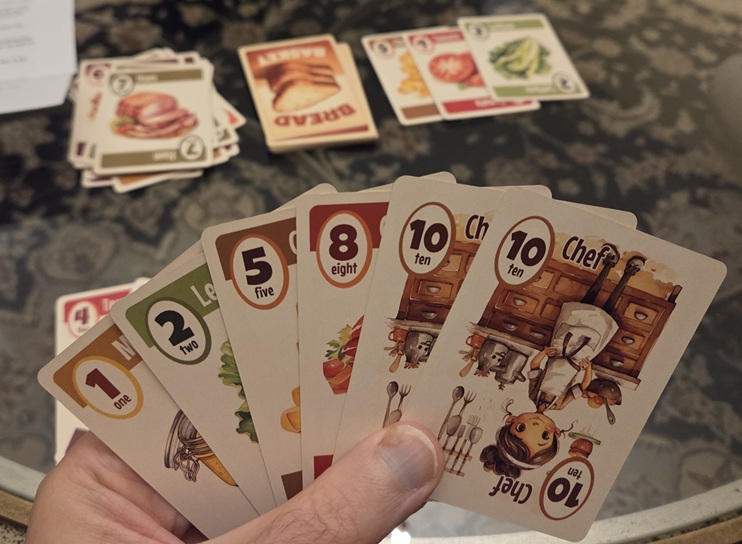
With six players, I found myself focusing more on emptying my hand, rather than making sandwiches, because the sandwich-making space changed so rapidly. In two-player games, there was more time to strategize the sandwich building, grabbing more points.

(We also played several house-rule versions we came up with, like using the first card as the highest possible card in a sandwich, or using Onions like Aces to capture and remove Tens and other high cards from the board.)

Like all great card games, Bread Basket is very quick to learn, but not so easy to master. After playing for two hours with family members, they’ve requested it make an encore appearance at Thanksgiving. How apropos!

Bread Basket is available in PDF form from Crab Fragment Labs for only $3 and in full printed deck form for $10.95 from DriveThruCards. (Actually, there are three decks available: the traditional deck, a pirate-themed Beard Basket deck, and a spooky Dread Basket deck.)
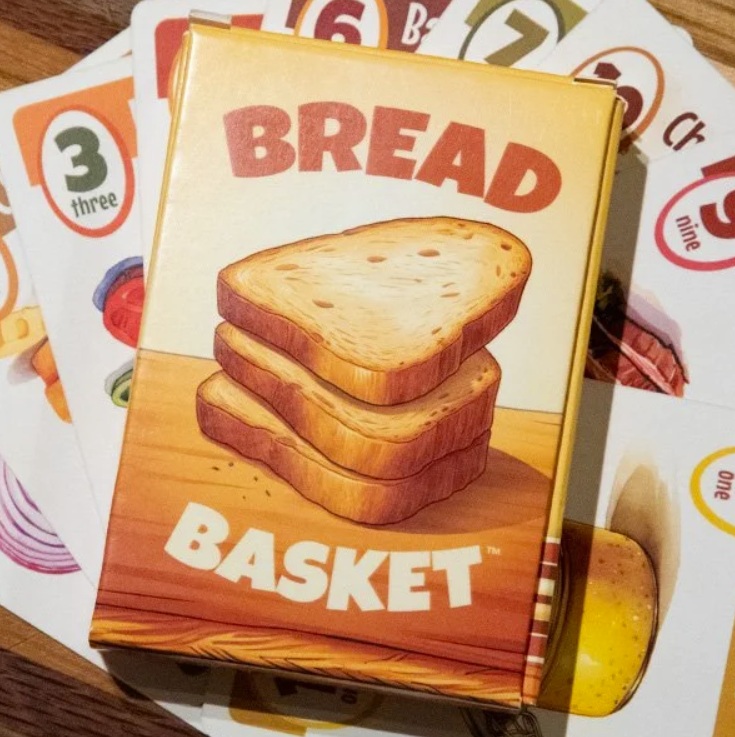
I’d recommend picking up a deck from DriveThruCards; the colors are warm and vibrant, the deck is made of quality card stock, and printer ink at home can be pricey.

You can check out Bread Basket and many more games at the Crab Fragment Labs website.
Product Review: Reflectron and Egyptian Triglyph

[Note: I received a free copy of these puzzles in exchange for a fair, unbiased review.]

Forgive these somewhat shorter reviews, but it’s really hard to talk about brainteasers and puzzle boxes without accidentally spoiling them for users. So you get a two-for-one review today!

The Rubik’s Cube is one of the cornerstones of brain-teaser puzzling, but the twisty puzzles inspired by that classic puzzle continue to amaze with their innovation and cleverness. We’ve seen speed cubes, ghost cubes, 3D-printed monstrosities like the Yottaminx, and even a self-solving cube!

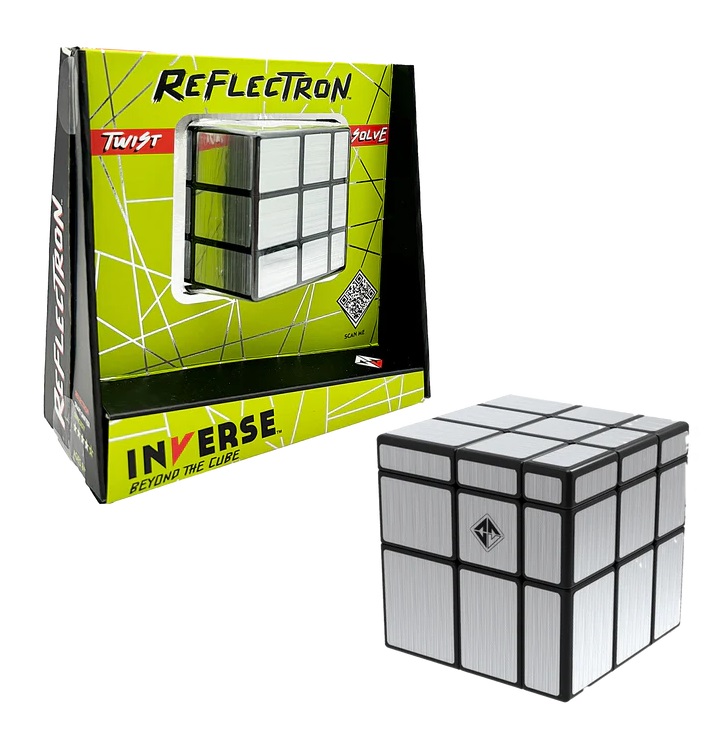
But I don’t know that I’ve seen a twisty puzzle that so neatly and cleanly reinvents the wheel quite like Project Genius’s Reflectron.

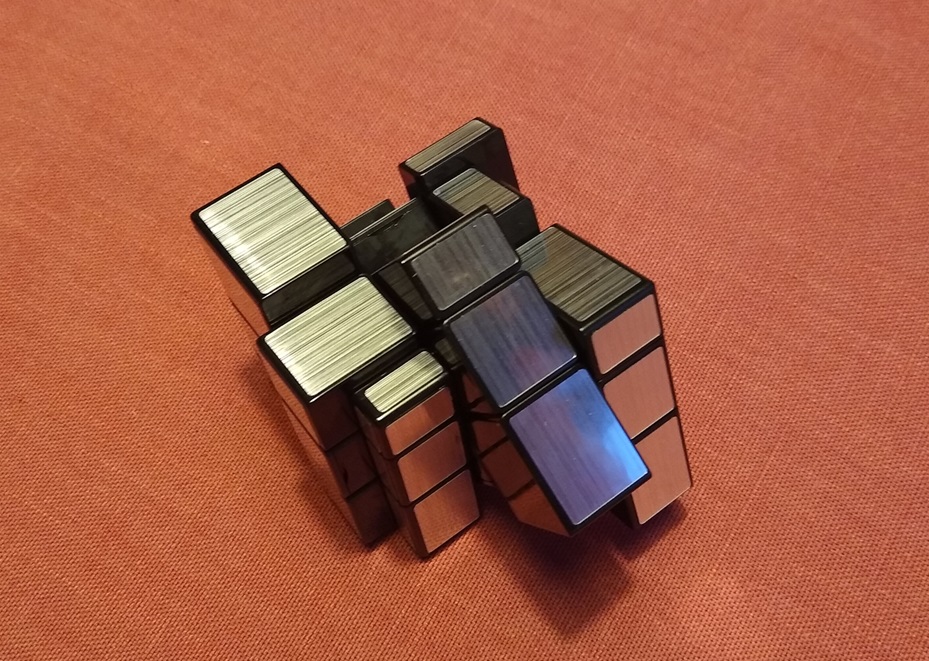
Unlike the same-sized cubes of traditional twisty puzzles, Reflectron’s squares are different sizes, meaning that it takes on wildly different and more mind-bending shapes with just a few twists!

As you can see, every twist makes Reflectron blockier, stranger, and more alien. The shiny reflective patterning also makes it feel more like an alien artifact you’re handling than the familiar, colorful twisty cube we’ve all seen before.

Reflectron takes this simple change and brings a whole new feel to this tactile solving experience, and I find myself idly returning to this twisty puzzle again and again. It’s a genuine treat to play with!

[Reflectron is for ages 8 and up, and it’s available from Project Genius and participating websites, starting at $14.99. It can also be found in this year’s Holiday Puzzly Gift Guide!]

While Reflectron offers many paths to a solution, our second brain teaser offers only one… and it’s a doozie.

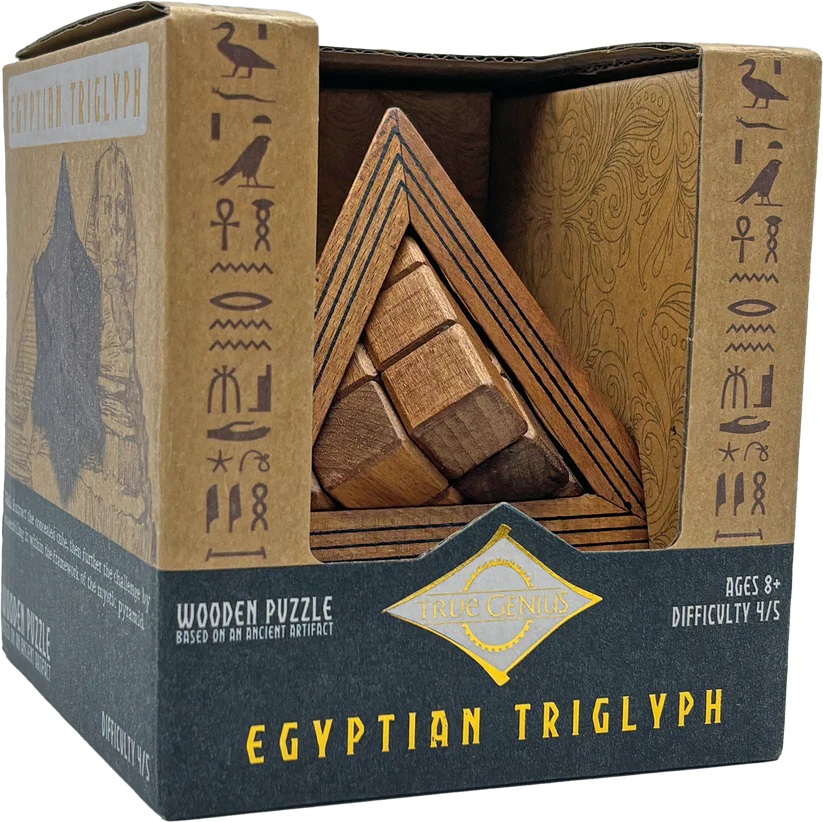
Say hello to the Egyptian Triglyph, a puzzle that combines tactile puzzle-solving with Tetris-style block pieces, absolutely warping your brain into a pretzel with its deviousness.

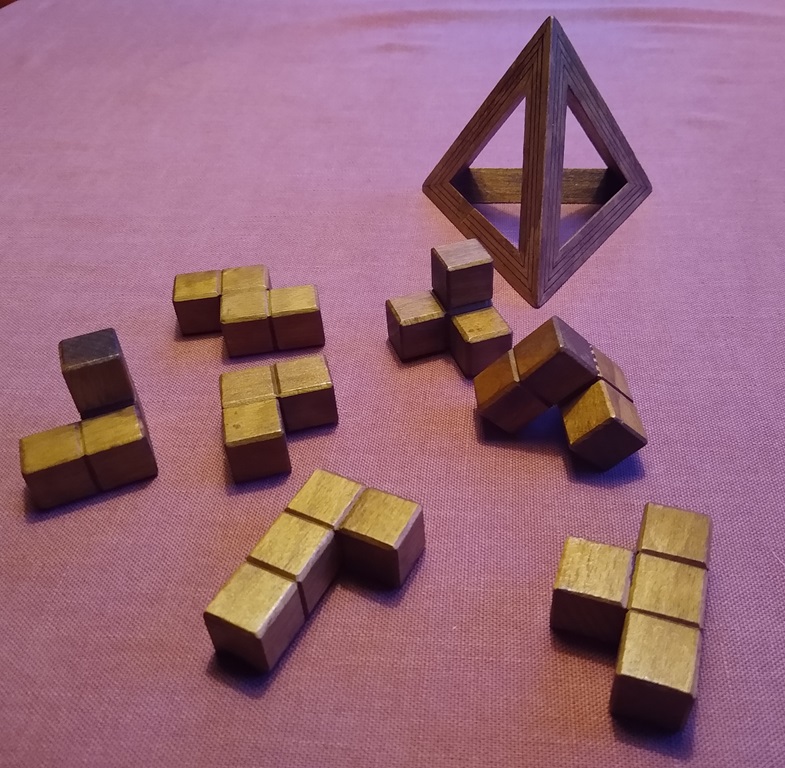
A cube inside a 3D triangular frame, Egyptian Triglyph challenges the solver to disassemble the cube into its component pieces and then reassemble the cube inside the frame.

And it’s difficult to describe the vast gulf in difficulty between unraveling this puzzle and putting it back together again.

I found disassembling the puzzle relatively easy, and I enjoyed maneuvering the pieces out of the surprisingly small gaps in the triangular frame.

But even if you pay close attention to the order in which you removed the pieces, you’ll find putting them back to be quite a daunting task. I would rank it as one of the most difficult puzzly experiences I’ve ever had.

You’ll need a steady hand, a keen eye, and loads of patience and skill to put the pieces all together again. But at least it’s less messy than old Humpty Dumpty.

Egyptian Triglyph proves that putting things back the way you found them is harder than it looks.

[Egyptian Triglyph is for ages 8 and up, and it’s available from Project Genius and participating websites, starting at $17.99. It can also be found in this year’s Holiday Puzzly Gift Guide!]

Product Review: Athena

[Note: I received a free copy of this puzzle in exchange for a fair, unbiased review.]

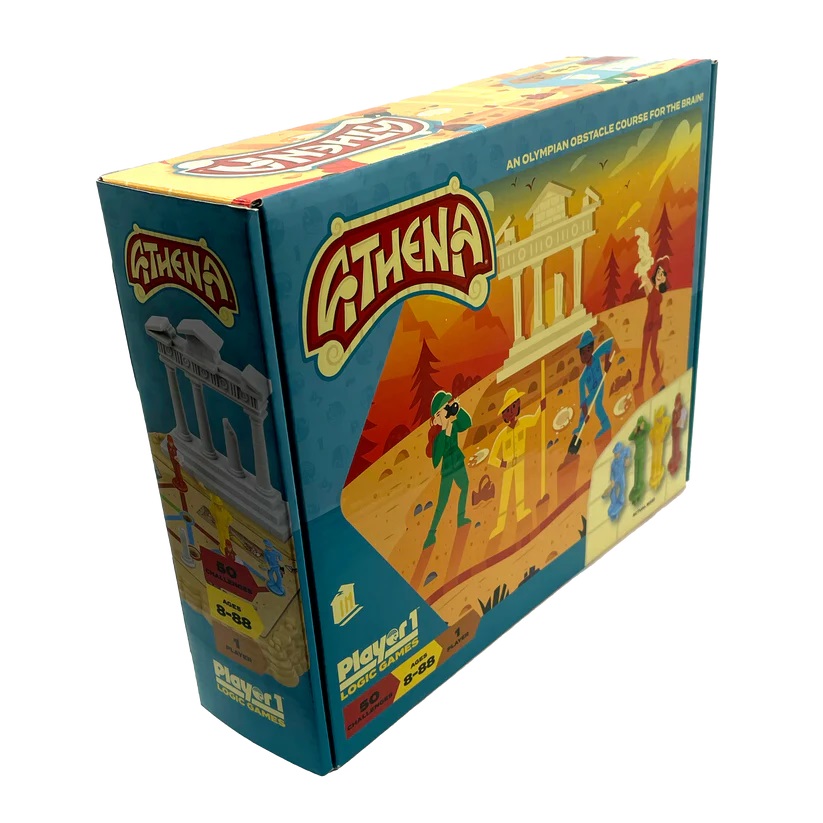
An archaeological dig site can be a very busy place. You’ve got your crew digging, folks photographing the scene and documenting artifacts, staffers keeping meticulous notes… and then there’s you, the lead archaeologist, holding part of a priceless relic: the bust of Athena.

Can you navigate a chaotic dig site and reunite the statue with its pedestal? That’s the puzzly challenge set before you in Athena.

A chain-solving brain teaser in the vein of sliding-tile puzzles or the famous Tower of Hanoi ring puzzle, Athena requires you to think like a tactician or a chess player. You must analyze the scene, move the pieces according to specific rules, and try to plot out the correct path for your lead archaeologist.

There are 50 challenge cards included, each with a particular arrangement of workers on the board and color-coded paths for the pieces to follow.

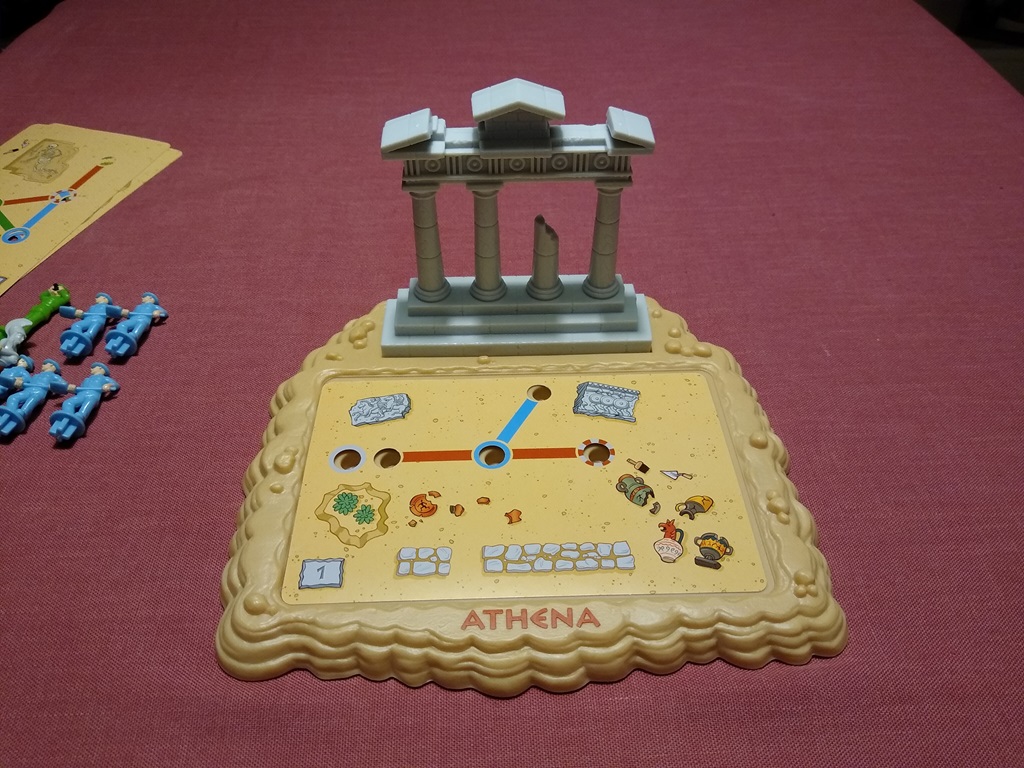
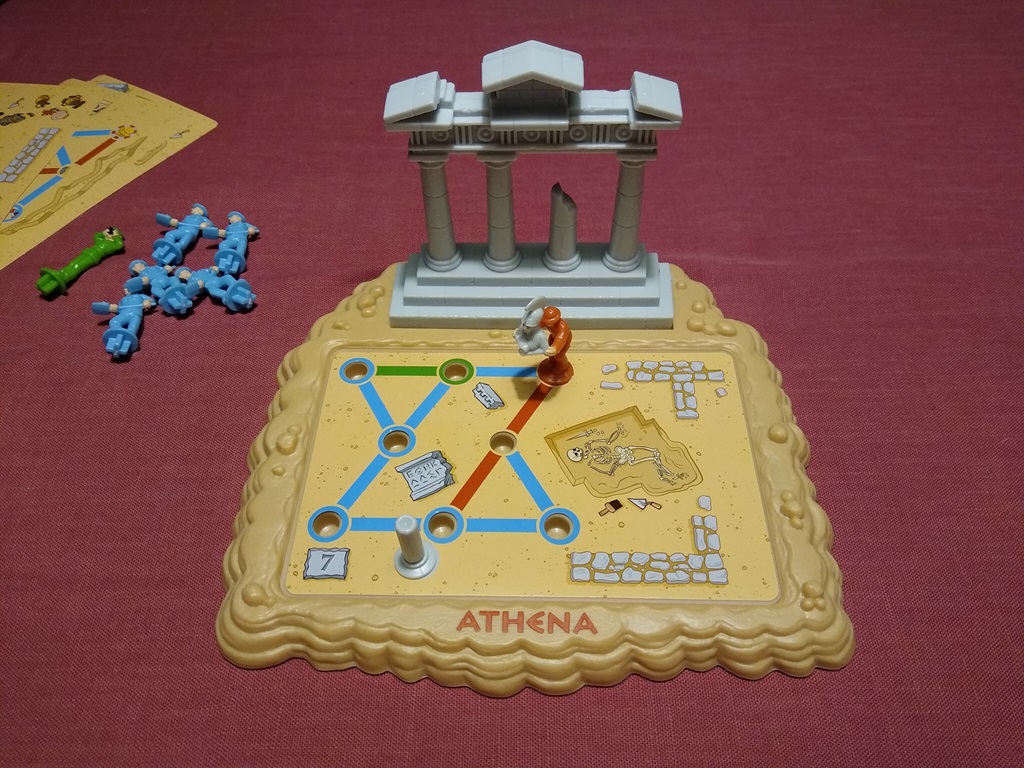
On card #1, you can see the paths available for the blue worker (who begins in the blue circle) and the lead archaeologist (who begins in the brown and gray circle). The pedestal sits in the gray circle.

The blue worker can only move between one of two spots along the blue path, and the lead archaeologist can move along the brown paths.

So you move the blue worker out of the lead archaeologist’s path, and bam, the statue is reunited with the pedestal.

This is a fairly simple setup. What could you need all these other worker pieces for?

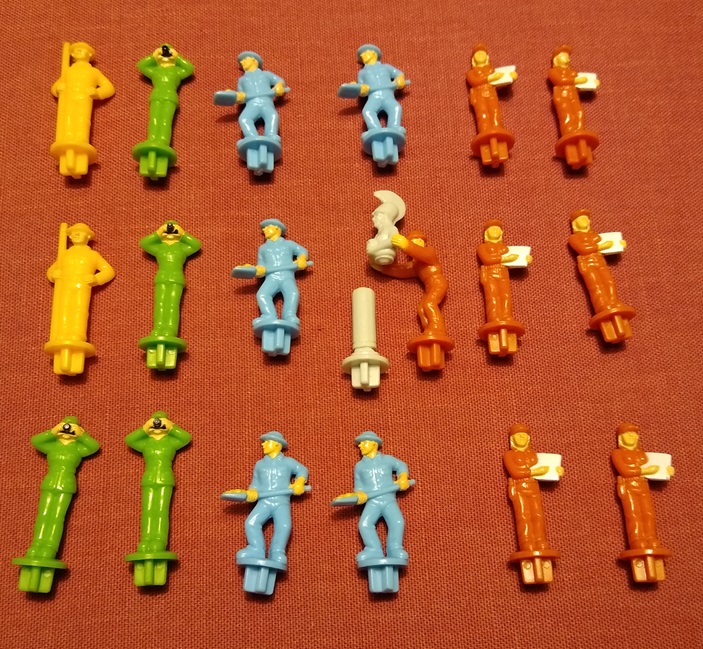
I mean, there’s seventeen of them, plus your lead archaeologist and the pedestal for the statue. Where could they all fit?

Oh!

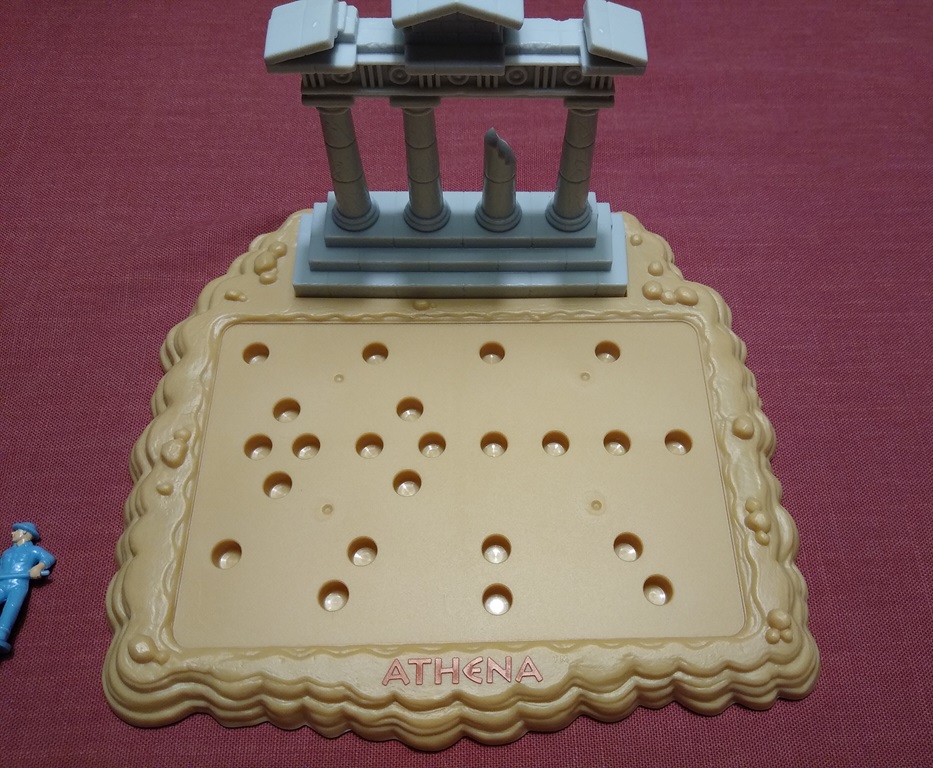
As you can see, the base allows for numerous places for the workers to be positioned, and trust me, those later challenge cards can get crowded very quickly.

Let’s take a look at another card as an example.

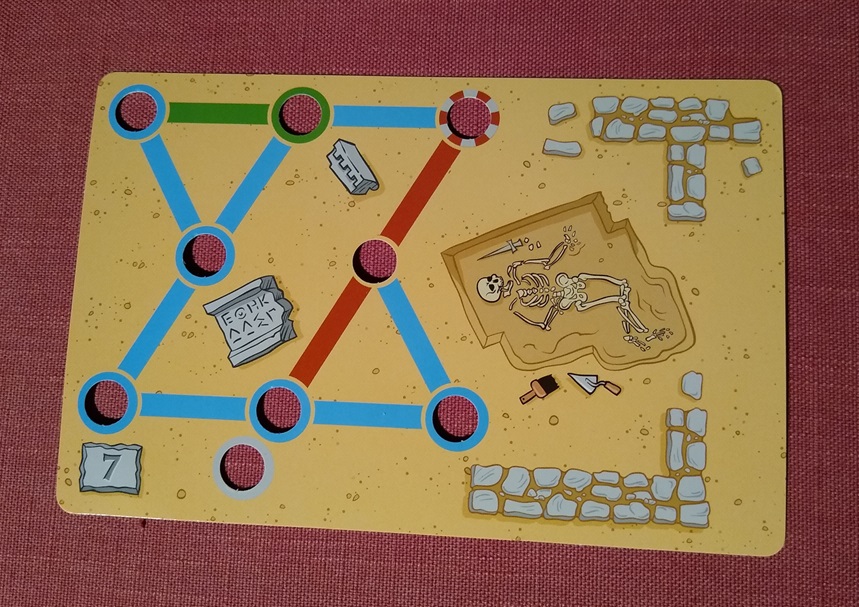
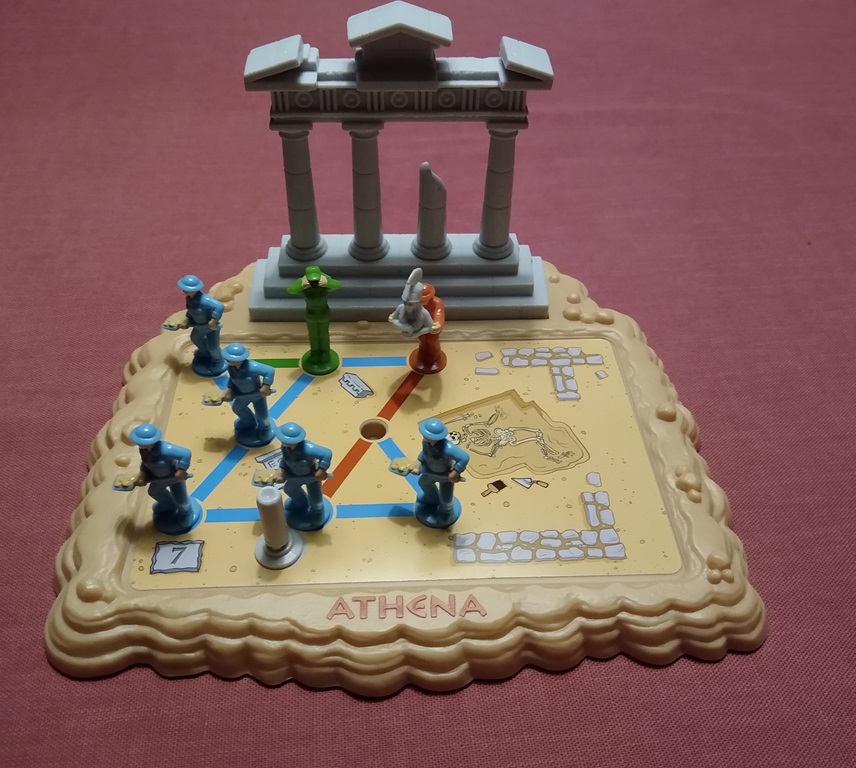
Here’s the challenge card. As you can see, the five blue workers (indicated by the five blue rings) have lots of options for movement, while the green worker and the lead archaeologist have very few.

But it seems simple enough. You only need to move the lead archaeologist two spots. How tough could that be?

Let’s finish setting the pieces and take a look.

Oh. That’s slightly more daunting.

With only one space available, you’re going to need to move all of the pieces around so that your lead archaeologist can proceed forward.

And suddenly, you’re thinking five moves ahead, looking at how one piece moving creates an opening for another piece, and then another. But wait, this piece can only move to one spot, so these pieces must go over here in this order…

Your mind adapts quickly. You begin to see ALL the possibilities unfurl in front of you. You develop patterns and ideas for how to move things as you’re placing new challenge cards down and setting the pieces in place.

Of course, the challenge cards increase in complexity and difficulty, so as soon as you start hitting your stride, you have new obstacles to overcome. And with some solutions requiring dozens of moves to complete, I can guarantee that you’ll have plenty of challenges awaiting you.

Athena is an engaging reinterpretation of classic chain-solving puzzles, adding a delightfully colorful touch to strategic puzzly thinking. Not only that, but it’s a terrific introduction to the kind of mental gameplay that chess and other puzzly pursuits require.

[Athena is for ages 8 and up, and it’s available from Project Genius and participating websites, starting at $24.99.]

Product Review: Roman Lock Box and Archimedes’ Gear

[Note: I received a free copy of these puzzles in exchange for a fair, unbiased review.]

Forgive these somewhat shorter reviews, but it’s really hard to talk about brainteasers and puzzle boxes without accidentally spoiling them for users. So you get a two-for-one review today!

The perfect puzzle gift box needs to walk a difficult tightrope. It has to be challenging enough to justify the cost, intuitive enough that a person understands the basic idea without instructions, and yet not difficult enough to ruin the holiday or event by causing frustration.

(Cue a vivid Christmas memory of my sister shaking a puzzle box so hard she accidentally solved it and sent a gift card flying across the room.)

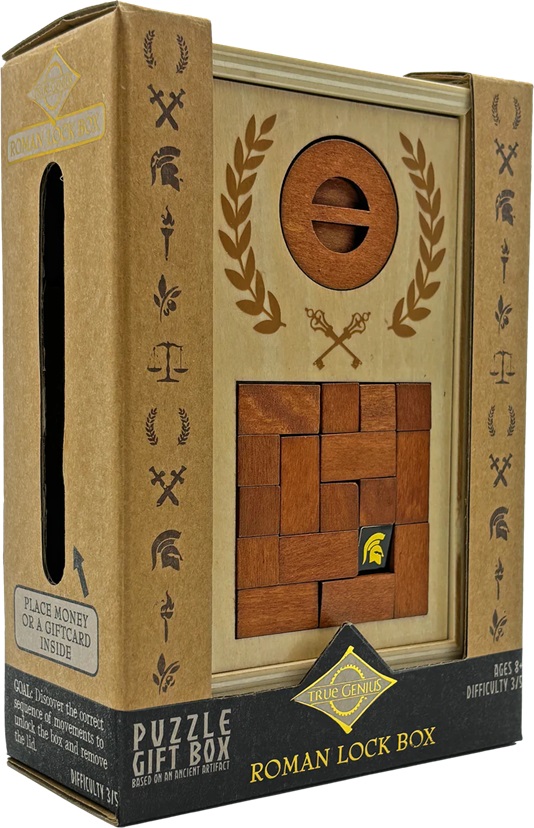
The Roman Lock Box walks that tightrope deftly. It manages to combine classic puzzle box elements (symbol clues, moving elements requiring careful positioning, parts that look seamless but aren’t) and combines them nicely with a sliding-block puzzle that offers a far different challenge than the usual puzzle box tricks.

Factor in the clean design, the well-made pieces, and the delightful slot in the side (allowing non-solvers to place their gift inside without actually having to solve the puzzle themselves!), and you have a suitably challenging way to keep your giftee busy for a bit.

[The Roman Lock Box is for ages 8 and up, and it’s available from Project Genius and participating websites, starting at $17.99.]

Our second brain teaser is a total 180 from the previous one. The Roman Lock Box has a number of moving parts and things to fiddle with and try out, offering a plethora of options to a solver.

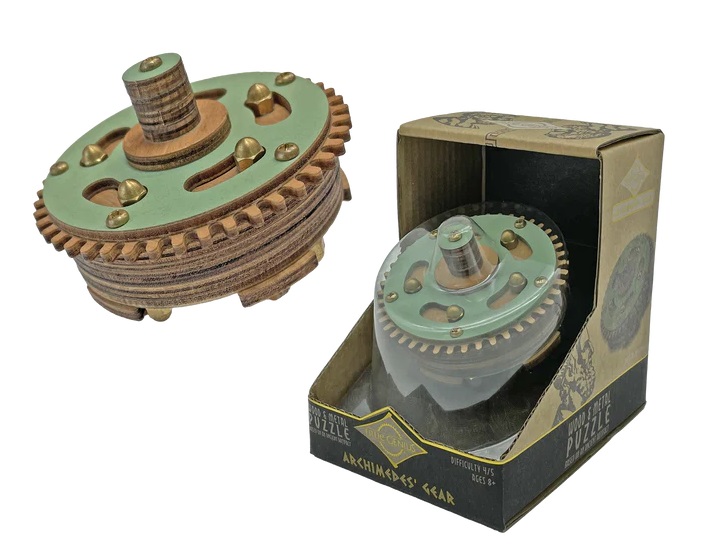
Archimedes’ Gear, on the other hand, is mind-scramblingly rigid. Brutally challenging in its simplicity. Twist and turn it, flip it, rearrange it, hold it at all angles, and it seems to give you nothing. I don’t know that I’ve ever been left so baffled at the start of a solve like I was with Archimedes’ Gear.

Naturally, that’s part of its genius. It really feels like a piece of ancient technology that fell into your hands, and you’re missing some valuable bit of insight that would help you operate it.

That initial bafflement does give you ample time to admire this absolutely beautiful puzzle, though. The color choices, the materials, the feel of the puzzle as you examine it from all sides. There’s even a lovely auditory quality to it, hinting at what awaits the solver inside if its secrets are uncovered.

This puzzle is ranked a 4 out of 5 in difficulty, and I think that’s very fair. I’ve solved a number of brain teasers and puzzles from Project Genius, and Archimedes’ Gear felt a step beyond most of them.

Of course, that only makes it more satisfying when you finally realize what’s going on here. Not a puzzle for the faint of heart (or those lacking in patience and determination), but still one definitely worth your time.

[Archimedes’ Gear is for ages 14 and up, and it’s available from Project Genius and participating websites, starting at $29.99.]

Product Review: That’s Not a Hat

[Note: I received a free copy of this game in exchange for a fair, unbiased review.]

Most memory games are pretty simple, falling into one of two categories: you either observe a pattern and repeat it, or you look at multiple items and remember where they are when hidden/concealed.

Memory games that include a social mechanic are rarer, and memory games with a social mechanic AND bluffing are rarer still.

Imagine a white elephant or Yankee swap gift exchange, except in reverse. You know what all the gifts are to start, but then they are wrapped one by one and traded around, and you need to remember what’s inside each one.

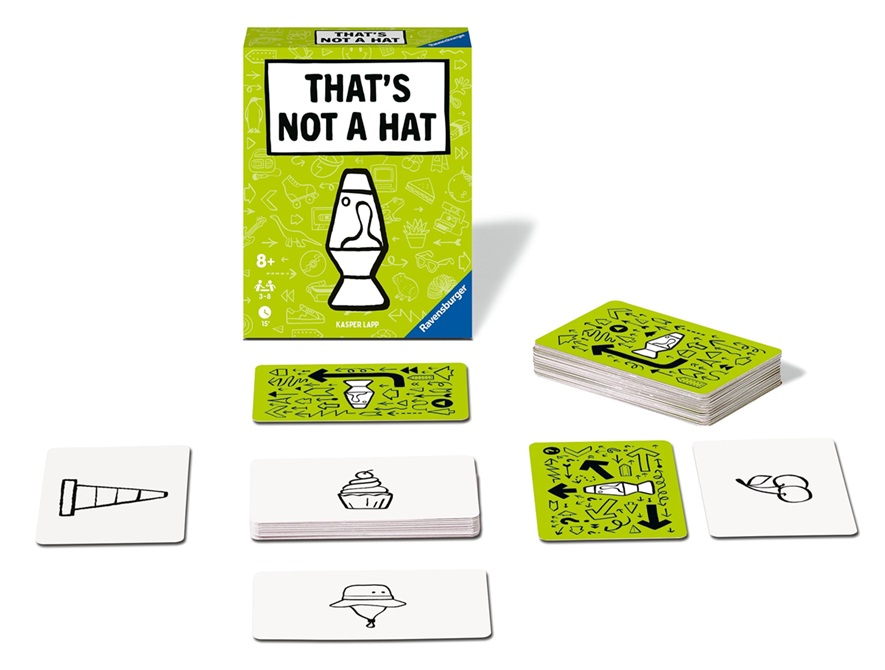
That’s the main idea behind Ravensburger’s social memory game That’s Not a Hat, and it’s brilliantly simple… until it is suddenly not so simple.

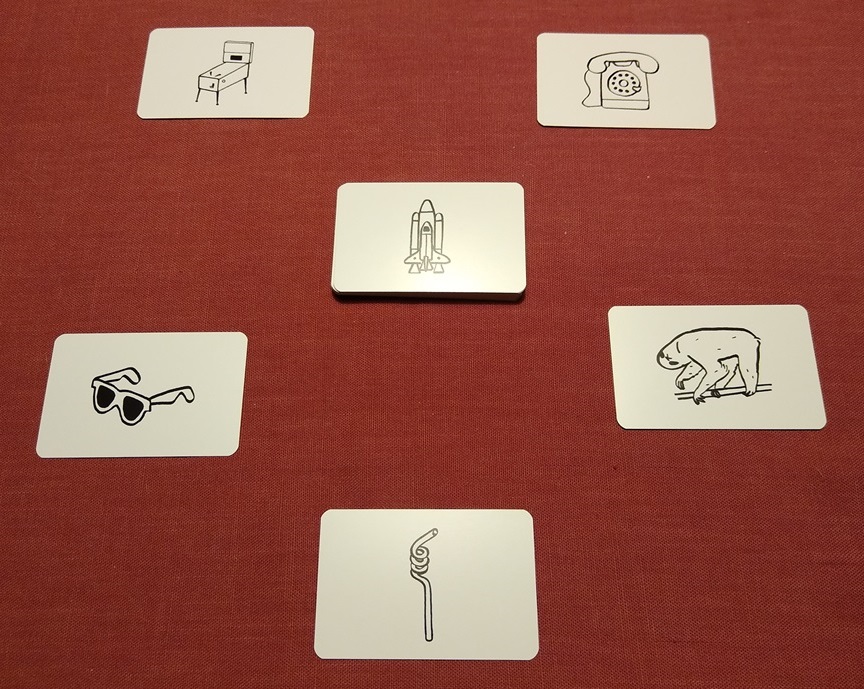
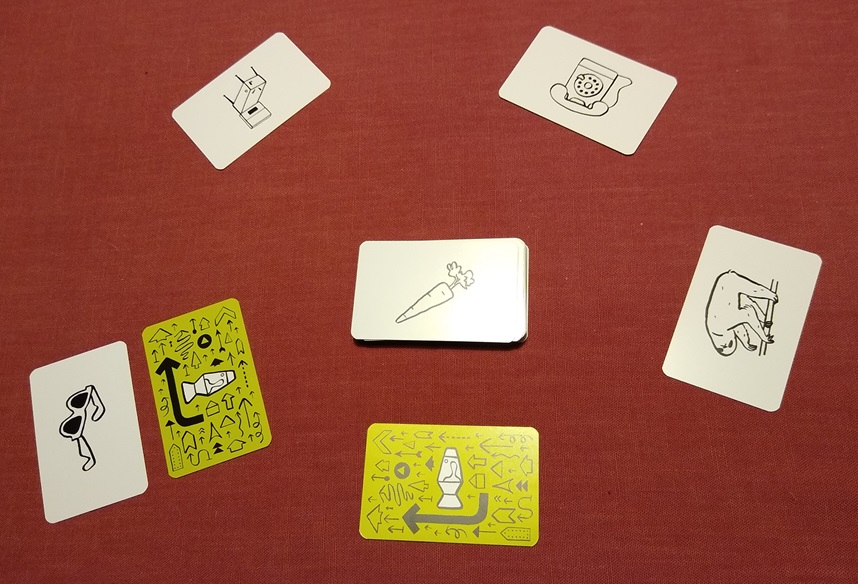
As you can see, everyone starts with a gift. The first player pulls a new gift from the stack in the center of the table, shows it to everyone, then places it facedown.

They then hand that gift to the player indicated by the arrow on the back of the card.

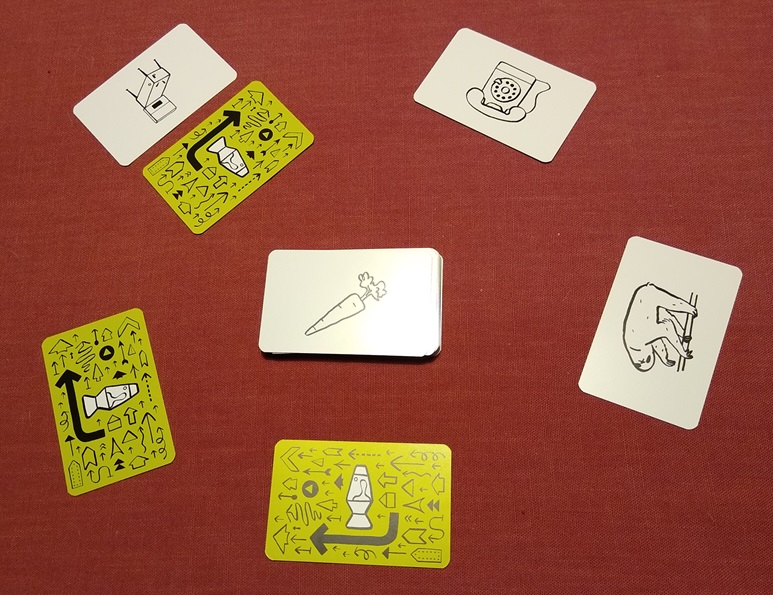
So the player to the right with the sloth card received the space shuttle, flipped it over, and handed it to the swizzle stick player to their left, saying “I have a nice space shuttle for you.”

The player receiving the gift has two options: accept the gift (meaning that they know it’s a space shuttle underneath and agree with the gift giver) or refuse the gift (meaning that they suspect the item underneath is NOT what the gift giver said).

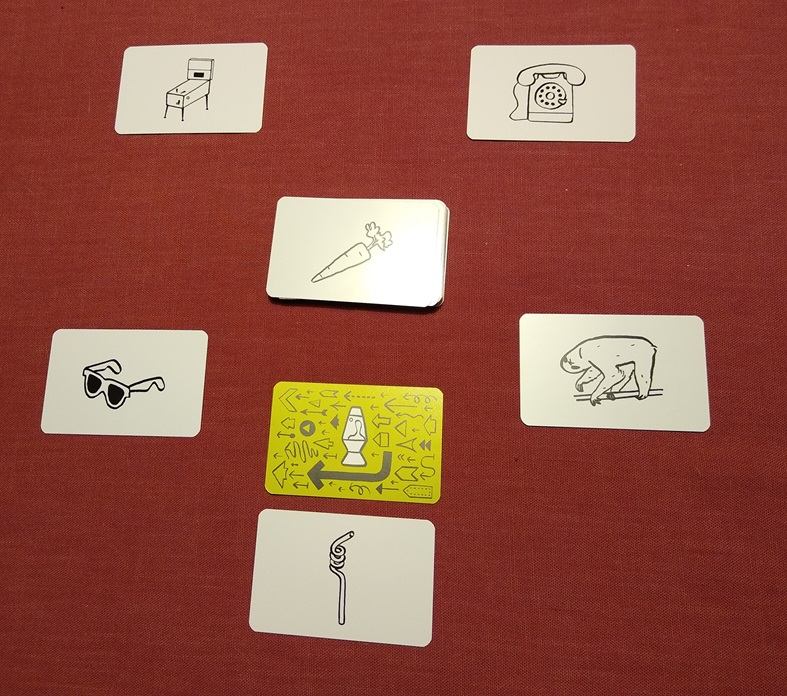
In this case, the game has just started, so our swizzle stick player accepts the gift.

It would be rude to immediately regift what they were just given, so the swizzle stick player turns over their “old gift” and follows the arrow, saying “I have a nice swizzle stick for you” and giving that card to the player to the left (the sunglasses player).

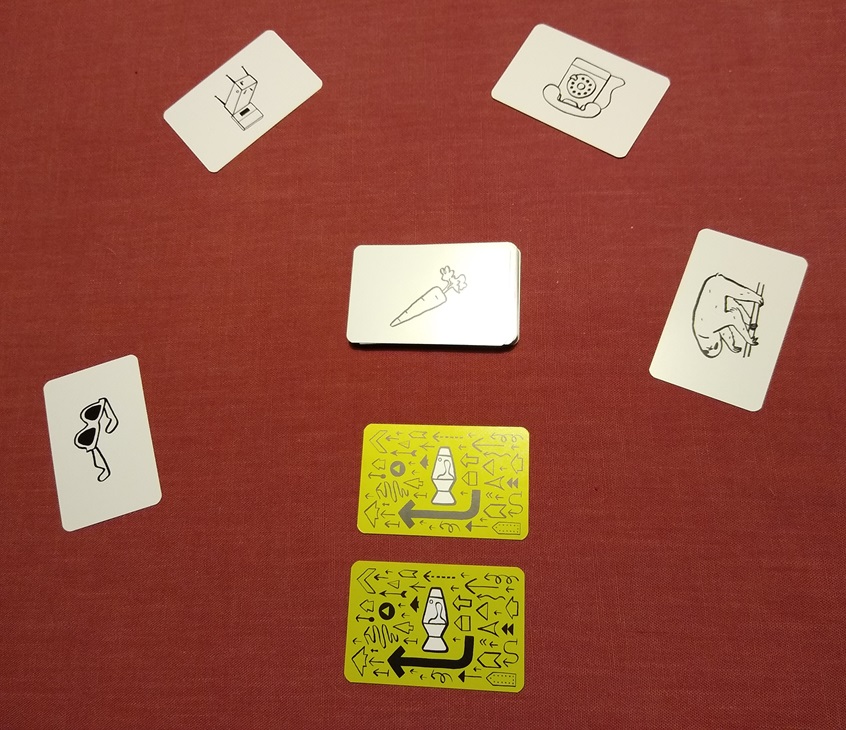
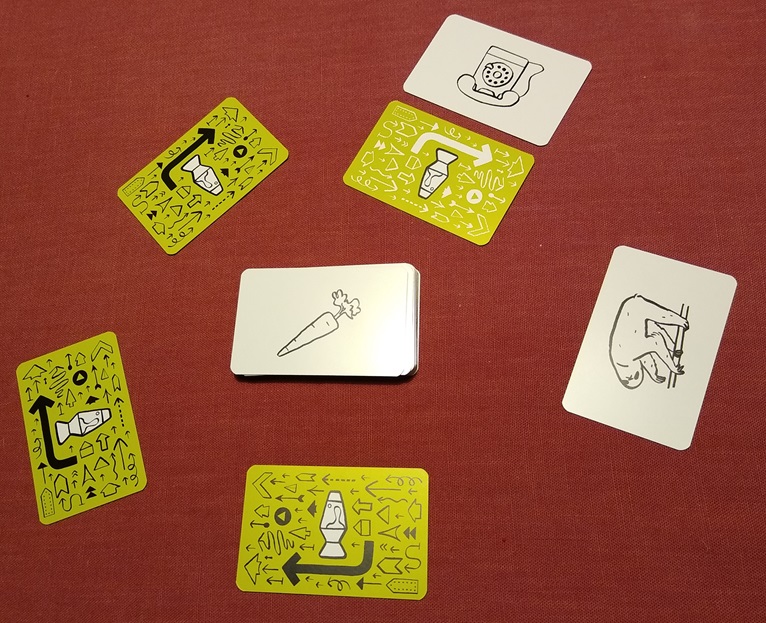
The sunglasses player accepts, turns over their old gift, says their line, and follows the arrow.

In this simplified version, the arrows only go in one direction, whereas in the regular game, arrows can go left or right (or, in the advanced play style, to any player, depending on the arrows).

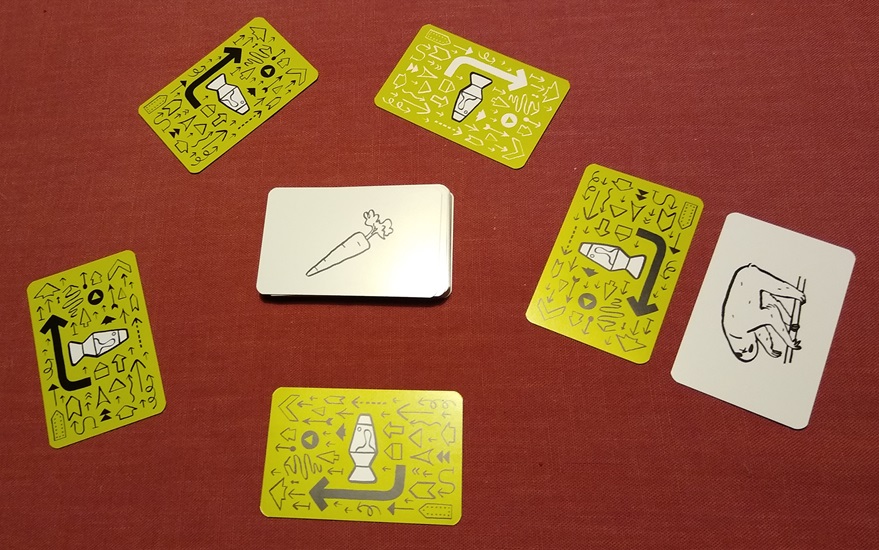
Now, as the cards continue moving around from player to player, can you remember what was under all those cards? You’re gonna have to, because it gets harder and harder to remember what each card represents.

Eventually, someone is going to forget, and their “I have a nice __ for you” is going to be met with a refusal. If the refusing player is correct and the gift giver has forgotten what’s under the card, the gift giver takes that card and gets a point. If the refusing player is incorrect and the gift giver correctly remembered what’s under the card, then the refusing player takes the card and gets a point.

The game then resumes with a new present and all the previous cards STILL flipped over. The game ends when one player gets three points.


This combination of memory, interaction, and bluffing (if you forget what’s under your card) makes for a very fun, very mellow play experience, one that only grows tougher and more entertaining the more you play.

On the second game, I had so many images in my head from previous rounds that I immediately forgot what was under my card and earned a point.

With up to eight players at the table, 110 cards to choose from, plus mechanics to make the game easier or harder for the players, That’s Not a Hat is instantly replayable and never feels tired.

Now, you may start to worry about your memory before too long. It’s okay, though, because you’ll quickly be distracted by the laughter (and bad bluffs) to come.

[That’s Not a Hat is for 2 to 8 players, ages 8 and up, and it’s available from Ravensburger and participating websites (in two editions) starting at only $9.99!]

Product Review: ThinkFun’s Math Dice

[Note: I received a free copy of this game in exchange for a fair, unbiased review.]

If you’re not currently in school, you probably haven’t thought about Order of Operations in a while. Maybe six little letters will bring it all back to you: PEMDAS. Parentheses, Exponents, Multiplication, Division, Addition, Subtraction. (I learned to remember it as “Please excuse my dear Aunt Sally.)

This was a handy mnemonic device to explain how to break down complex equations into simpler ones. But it’s also the basis for ThinkFun’s latest puzzly game: Math Dice.

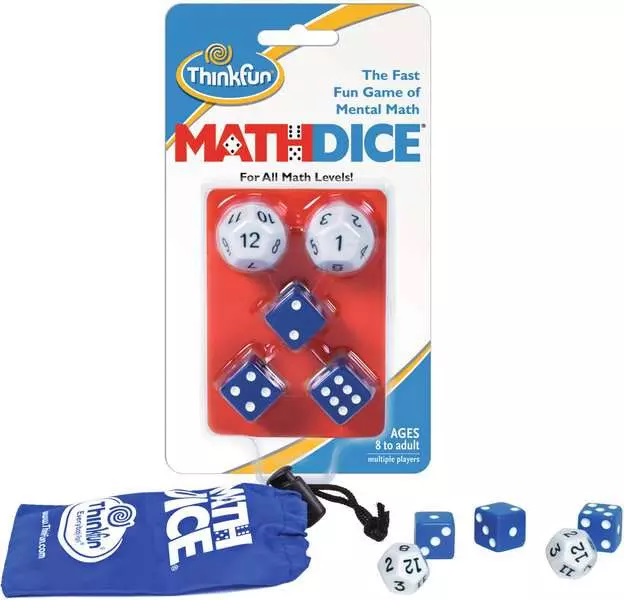
Math Dice challenges players to put their mathematical skills to the test, using randomly rolled dice and their own numerical ingenuity to get the closest to a given number.

But before we get started with the actual gameplay, I want to take a moment to appreciate how the instruction manual eases new players (and players with less confidence in their math skills) into the game.

After explaining the rules, and offering several techniques to make the game easier or harder, depending on player comfort levels, the manual offers numerous examples to make new players more familiar with all the options available to them.

It’s a terrific way to allay player uncertainty and show them some of the creative ways to mix different operations to make different totals.

Now let’s take a look at the gameplay:

For example, the two 12-sided dice rolled a 12 and a 1. When multiplied, you get your target number of 12. Now the players must try to either match 12 or get closer to 12 than any other player, using the 2, 3, and 6 rolled on the 6-sided dice.

Simple addition will get you to 11.
(3 x 2) + 6 will get you to 12.
(6 – 2) x 3 will also get you to 12.
Can you find any other ways to make 12 from those dice?

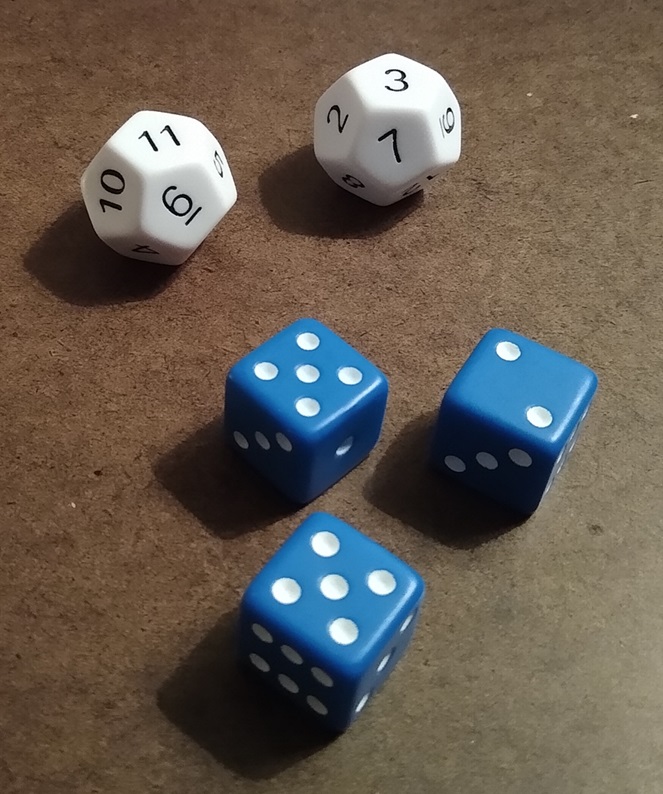
This one is a little tougher. The two 12-sided dice rolled an 11 and a 3, giving us a target number of 33. We also have less flexibility with the 6-sided dice, since we have a 2 and two 5s.

(5 x 5) + 2 will get you to 27. Pretty good!
5^2 + 5 will get you to 30.
2^5 + 5 will get you to 37.

In this case, player who got 30 wins a point!

As someone who is always idly playing with words and numbers during mental downtime or between tasks, this game really appeals to the playful side of my puzzly brain. The challenge of making two sets of numbers balance is both challenging and soothing in the best way, like the purely mental equivalent of a fidget toy or other tool to keep your hands and mind engaged.

But this is also a clever launchpad to introduce younger puzzlers to the idea that numbers aren’t just classwork or homework, they’re something to play with. They’re puzzle pieces to rearrange and put together in all sorts of ways to create new results.

ThinkFun excels at turning learning experiences into engaging puzzles and games. Over the years, they’ve done so with logic problems, optics, programming, gravity, deduction, mechanical puzzles, and more, so it’s no surprise they’ve managed to do the same quite deftly with the basics of mathematics.

[Math Dice is for 2 or more players, ages 8 to Adult, and it’s available from ThinkFun and participating websites starting at only $6.99!]