What Makes a Good Brain Teaser?

I was going through a collection of brain teasers a fellow puzzler gave me, and it occurs to me that “brain teaser” is one of the least specific puzzle terms around.

Riddles, logic and deduction, math puzzles, and wordplay games all fall under the brain teaser umbrella. So you never know what you’re gonna get. Are your math skills required? Your outside-the-box thinking? Your ability to pay attention to the specifics of the question itself?

In this collection alone, I found examples of each of these types of puzzles:

Riddle: Sometimes I’m green, sometimes I’m black. When I’m yellow, I’m a very nice fellow. That’s when I’m feeling mighty a-peeling. What am I?

Logic / deduction: 3 guys go into a hardware store, all looking for the same thing. William buys 1 for $1. Billy buys 99 for $2. Finally, Willie buys 757 for $3. What were they buying?

Math puzzle: The sum is 12 and the same digit is used 3 times to create the sum. Since the digit is not 4, what is the digit?

Wordplay: Which state capitals would you visit to find a ram, cord, bus, and dove?

So, if someone challenged you to a brain teaser, these would all be fair game. Would you be able to solve all four of them?
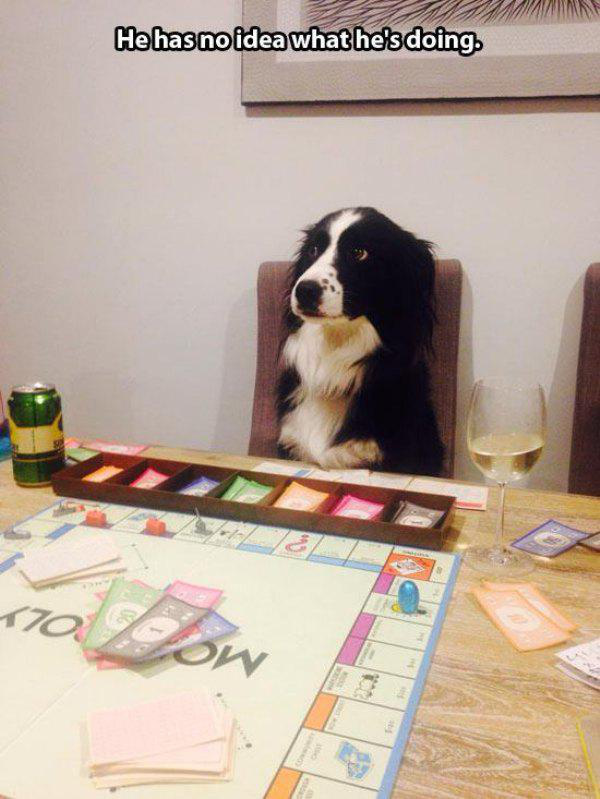

It’s possible you wouldn’t, because good and bad brain teasers alike employ tricks to keep you on your toes.

Some hide the answer in plain sight:

Homer’s mother has 4 children. 3 of them are named Spring, Summer, and Autumn. What is the 4th named?

Some use misdirection, purposely phrasing the question to get you thinking one way and steering you away from the real solution:

The big man in the butcher shop is exactly 6’4″ tall. What does he weigh?

In fact, both of these examples use plain sight (Homer, butcher shop) and misdirection (implying a pattern with seasons, specifying his height) to distract you.

I suspect you weren’t fooled by either of them, though.

Others try to overwhelm you with information so you bog yourself down in the details instead of clearly analyzing the problem at hand:

Nina and Lydia start from their home and each runs 2 miles. Nina can run a mile in 8 minutes 30 seconds and Lydia can run a mile in 9 minutes 10 seconds. When they finish running, what is the furthest apart they can be?

A lot of numbers get thrown at you, but they’re irrelevant, since the question only asks about the distance, not the time. So if they each run 2 miles, the furthest apart they can be is 4 miles. The rest is just smoke.

These are all effective techniques for teasing a solver’s brain. You’re given all the information you need to solve the puzzle, plus a little extra to distract, mislead, or overwhelm you.


Unfortunately, some brain teasers use unfair techniques to try to stump you:

Jacob and Seth were camping in June. Before going to sleep they decided to read a book. They both agreed to stop reading when it got dark. They were not fast readers, but they finished the entire encyclopedia. How?

Ignoring the fact that these two boys somehow brought an entire encyclopedia with them on a camping trip, we’re not actually given a lot of information here.

So that makes the intended answer seem like more of an insane leap than a logical jump to the conclusion: They were in Lapland, land of the midnight sun, and the sun didn’t set until September.

WHAT?

There’s no reasonable way for someone to reach this conclusion based on the information given. In fact, it makes less sense the more you read it. Presumably Jacob and Seth know where they are camping, and that it wouldn’t get dark for months. So why would Jacob and Seth agree to stop reading when it got dark IF THAT MEANT THEY’D BE READING UNTIL SEPTEMBER!?

This is gibberish, and you’d be surprised how often something like this gets passed off as acceptable in a collection of brain teasers. (I discussed a similar issue with detective riddles in a previous blog post.)


Let’s close out today’s discussion of the ins and outs of brain teasers with a few fun, fair examples, shall we?

  • In what northern hemisphere city can you find indigenous tigers and lions?
  • Scientists have found that cats are furrier on one side than the other. The side with the most fur is the side that cats most often lie on. Which side of a cat has more fur?
  • A woman married over 50 men without ever getting divorced. None of the men died and no one thought she acted improperly. Why?

Did you solve them all? Let us know! Also, please share your favorite brain teasers (or your tales of treacherous and unfair brain teasers) in the comments below!

Happy puzzling, everyone!

Intuitive vs. Non-Intuitive Puzzles

littlegirlatgrandmas

[Image courtesy of The Spruce Crafts.]

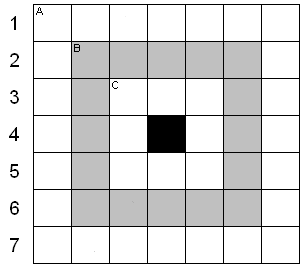
Sometimes, when you look at a puzzle, you know immediately what to do and how to solve. In my opinion, a great deal of Sudoku’s success is due to its intuitive nature. You see the grid, the numbers, and you know how to proceed.

Crosswords are similarly straightforward, with numbered clues and grid squares to guide new solvers. (The “across” and “down” directions also help immensely.)

That’s not to say that these puzzles can’t be off-putting to new solvers, despite their intuitive nature. I know plenty of people who are put off by crosswords simply by reputation, while others avoid Sudoku because they’re accustomed to avoiding ANY puzzle that involves numbers, assuming that some math is involved. (I suspect that KenKen, despite its successes, failed to replicate the wild popularity of Sudoku for similar reasons.)

But plenty of other puzzles require some explanation before you can dive in. A Marching Bands or Rows Garden puzzle, for instance, isn’t immediately obvious, even if the puzzle makes plenty of sense once you’ve read the instructions or solved one yourself.

The lion’s share of pen-and-paper puzzles fall into this category. No matter how eye-catching the grid or familiar the solving style, a solver can’t simply leap right into solving.

Thankfully, this won’t deter most solvers, who gleefully accept new challenges as they come, so long as they are fair and make sense after a minute or so of thought. Cryptic crossword-style cluing is a terrific example of this. At first glance, the clues might appear to be gibberish. But within each clue lurks the necessary tools to unlock it and find the answer word.

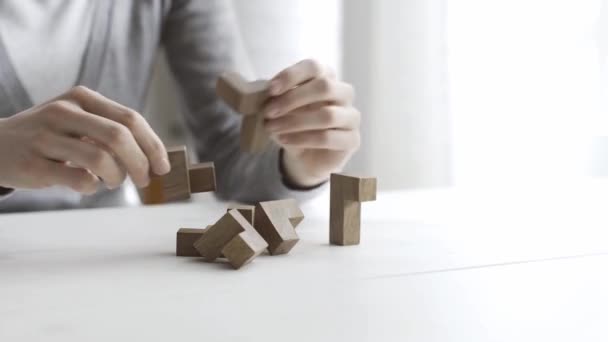
Brain teasers often function the same way. You’re presented with a problem — a light bulb you can’t see and three possible switches for it, for instance — and you need to figure out a way to solve it. It might involve deduction, wordplay, or some clever outside-the-box thinking, but once you find the answer, it rarely feels unfair or unreasonable.

solvingwoodenbrainteaser

[Image courtesy of Deposit Photos.]

But, then again, there are also puzzles that can baffle you even once you’ve read the instructions and stared at the layout for a few minutes. Either the rules are complex or the solving style so unfamiliar or alien that the solver simply can’t find a way in.

In short, puzzles as a whole operate on a spectrum that spans from intuitive to non-intuitive.

Want an example of baffling or non-intuitive? You got it.

GAMES Magazine once ran a puzzle entitled “Escape from the Dungeon,” where the solver had to locate a weapon in a D&D-style dungeon. A very small crossword puzzle was found in one room on a paper scroll.

But the solution had nothing to do with solving the crossword.

The actual solution was to take the crossword to a magician who removed letters from the fronts of words. Removing the C-R-O-S left you with a sword, completing the overall puzzle.

That sort of thinking is so outside the box that it might as well be in a different store entirely. Video games, particularly ones from the point-and-click era, have more than their fair share of non-intuitive puzzles like this. You can check out these lists for numerous examples.

3122

And as escape rooms grow in popularity, more of them seem to be succumbing to less intuitive puzzling as a result of trying to challenge solvers.

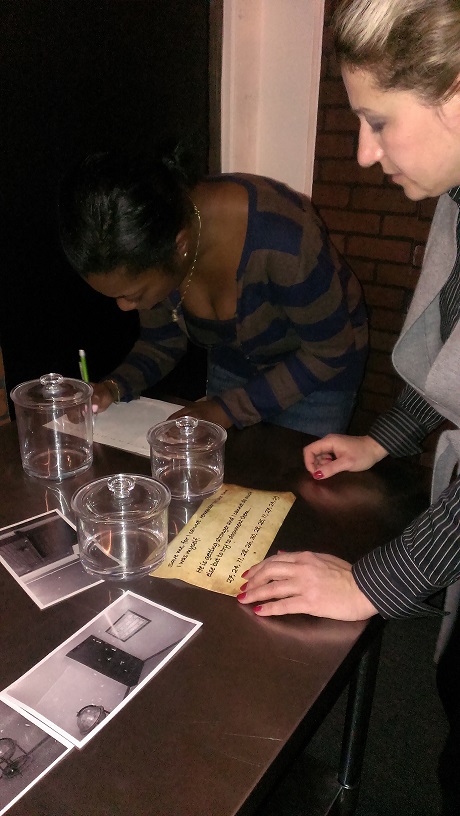
For example, in one escape room I tried, various fellow participants uncovered two stars, a picture of the three blind mice, and four different items that represented the seasons. Amidst all the locks to open, puzzles to unravel, and secrets to find, it never occurred to any of us that these three unconnected numbers would have to be assembled as a combination to a lock. By asking for a hint, we were able to figure out to put them together and open the lock, but it’s not a terribly intuitive puzzle.

Perhaps the greatest challenge for a puzzle constructor — be it a pen-and-paper puzzle, an escape room scenario, or a puzzle hunt dilemma — is not creating a dynamite, unique puzzle, but ensuring that finding the solution is fair, even if it’s difficult or mind-boggling.

This sort of thinking informs not only my work as a puzzlesmith, but the designs for my roleplaying games as well. If my players encounter a gap, there’s some way across. If there’s a locked door, there’s a way through it. Oftentimes, there’s more than one, because my players frequently come up with a solution that eluded me.

In the end, that’s the point. All puzzles, no matter how difficult, exist for one reason: to be solved. To provide that rush, that a-ha moment, that satisfaction that comes with overcoming the clever, devious creation of another sharp mind.

And non-intuitive puzzles are tantamount to rigging the game.


Thanks for visiting PuzzleNation Blog today! Be sure to sign up for our newsletter to stay up-to-date on everything PuzzleNation!

You can also share your pictures with us on Instagram, friend us on Facebook, check us out on TwitterPinterest, and Tumblr, and explore the always-expanding library of PuzzleNation apps and games on our website!