In the past, I’ve written about crosswordese, nemesis and irritant to many crossword solvers and constructors. For the uninitiated, crosswordese is shorthand for any and all obscure or curious words that you only encounter in crossword grids. From EPEE and OONA to Greek letters (ETA, RHO) and French rivers (AARE), these killer crossings are the bane of any solver’s existence.
And wouldn’t you know it, I encountered some crosswordese in a most unexpected place.
I was reading Patricia Marx’s book Let’s Be Less Stupid: An Attempt to Maintain My Mental Faculties, a humorous look at the common fear that our mental acuity declines as we get older. In the book, Marx references numerous ways she’s noted her brain working less efficiently than it used to, and she hilariously chronicles her attempts to combat this and keep her wits sharp.
As part of her ongoing efforts, she even created a crossword grid utilizing only tough crossword entries.
Her puzzle featured some truly great, funny clues, like “The side of the ship you want to be on if you don’t want your hair to get messed up” for ALEE and “No matter how bad your memory is, this is something to remember” for ALAMO.
While I wouldn’t count every entry in her grid as crosswordese, there were plenty of major offenders on her list. (You can check out the full puzzle in her book!)
And this gave me an idea. I would try my hand at creating my own 9×9 grid, composed entirely of crosswordese, utilizing some of the words from her list and some from lists submitted by fellow puzzlers.
[Forgive my nonstandard grid. I tried to go for the same homemade charm as Marx’s grid. Feel free to print out this post and try it out!]
ACROSS
1. Toward shelter, to salty types
3. Arrow poison OR how a child might describe their belly button in writing
5. Flightless bird OR Zeus’s mother
6. Hireling or slave
8. “Kentucky Jones” actor OR response akin to “Duh”
9. Compass dir. OR inhabitant’s suffix
12. Wide-shoe width OR sound of an excited squeal
15. No longer working, for short OR soak flax or hemp
16. Like a feeble old woman OR anagram of a UFO pilot
17. Actress Balin OR Pig ____ poke
DOWN
1. Mean alternate spelling for an eagle’s nest
2. Old-timey exclamation
3. Unnecessarily obscure French river or part of the Rhone-Alpes region
4. Supplement OR misspelling of a popular cat from a FOX Saturday morning cartoon
7. Maui goose
10. An abbreviated adjective covering school K through 12 OR how you might greet a Chicago railway
11. My least favorite example of crosswordese OR good and mad
12. Ornamental needlecase
13. Movie feline OR “Frozen” character
14. Shooting marble OR abbreviation for this missing phrase: “truth, justice, and ____”
Did you conquer this crosswordese-riddled grid? And what’s your least favorite example of crosswordese? Let me know! I’d love to hear from you!
Welcome to another edition of PuzzleNation Blog’s interview feature, 5 Questions!
We’re reaching out to puzzle constructors, video game writers and designers, board game creators, writers, filmmakers, musicians, and puzzle enthusiasts from all walks of life, talking to people who make puzzles and people who enjoy them in the hopes of exploring the puzzle community as a whole. (Click here to check out previous editions of 5 Questions!)
And I’m excited to have Hayley Gold as our latest 5 Questions interviewee!
An enthusiastic puzzle solver as well as an accomplished artist, Hayley combines her interests with Across and Down, a weekly webcomic devoted to The New York Times crossword.
She combines humor and the keen eye of a long-time solver to not only entertain, but offer worthwhile insight into crosswords as a whole and individual puzzles in particular. Whether she’s punning on themed entries or proving her pop culture savvy with references galore, each Across and Down comic brings something unique to the table.
Hayley was gracious enough to take some time out to talk to us, so without further ado, let’s get to the interview!
5 Questions for Hayley Gold
1. Which came first for you: puzzles or art? How did you discover puzzles?
Well, I think art is rather intuitive. As soon as a child gets hold of a crayon their artistic career begins. A lot of people are miffed when artists comment that they’ve been drawing all their life, but I actually did more drawing in my youth than in my maturity, when pressure became attached to it.
That being said, I find doing puzzles much more relaxing and more natural for me. So, though one may have preceded the other doesn’t mean that it’s the dominant hobby.
2. When did you launch Across and Down, and has it evolved from your original vision?
I started the site in January 2014 as a project for my web comics class. The whole operation was rather hasty. We were told we needed to come up with a comic that’s updated weekly, the teacher said the content was completely up to us, though her web comic followed a linear narrative, as did the comics of most of the other students.
I needed something I could do without too much time lost, as the class was only an elective and I had other comics to complete, and something that focused on writing more than visuals as that has always been my strong suit. And of course I wanted it to be fun, and something that I cared about.
I never imagined it would become what it has. Okay, let me rephrase that. I have wild fantasies about it being much MORE than it is, what I never imagined is how much I would NEED it. I experience withdrawal if I go too long without making one.
[Strategy, a wonderful crayon-and-pencil piece, as featured on her portfolio site.]
3. Your comics offer a wonderful mix of humor, tongue-in-cheek wordplay, and savvy commentary from a clearly experienced solver. How have the constructors reacted to your comics? Do you think couching your critiques in this format allows you to say more than a straightforward review or blog post?
In general, I get a good response from constructors. I certainly never got any flak from anyone. Many have reached out to thank me actually, which is a very rewarding gesture. And I’ve never attempting real blogging to compare the reactions side by side, but I would guess that giving everything a lighthearted air does assuage some of the severity of critique.
But, at the same time, I am rarely totally critical and try to be balanced. And though I often address the constructor directly, I try not to make any serious personal attacks if I thoroughly rip something apart, though, by and large, I don’t do comics on puzzles that are completely horrendous. Partly because I don’t wish to be horribly cruel to anyone, and partly because I don’t think it’s very entertaining. At least in a comic, I think nitpicking about the usual crossword faux pas gets repetitive.
[A sample of one of her most recent webcomics.]
4. What’s next for Hayley Gold?
I’m working on a graphic novel, but no ETA on that. And for anyone who’s a fan of my site, I’ll warn you that it’s totally different, both graphically and narratively, so no guarantees that you’ll like it. I also need a job. Hey, anyone out there, hire me! Would love to do some custom crossword comics!
5. If you could give the readers, writers, and puzzle fans in the audience one piece of advice, what would it be?
Er, I’m not really good with this. God knows, my life is a mess. But let’s try to narrow it down a bit. How about advice pertaining to webcomics? Make it about something you’re passionate about. Most of my peers quit their webcomic after the class finished. Now, my stick-to-it-iveness may be due to my uptight nature, but also because it really meant something to me.
Also, keep at it even if you think no one is reading. I hope to get more eyeballs as I go along, though my site still reaches relatively few readers. People may look over it once and then never come back instead of subscribing, or just never come across it even though they are ardent puzzle solvers.
When I go to comics events, so many people come up to me to tell me what a “great idea” my site is — but they personally don’t do the puzzle so it’s not for them. I’ve experienced a very small overlap in the fanbases. The way comics are promoted, as one big giant blob of content, is rather weird — as if readers would be attracted to all of it simply because of the medium, rather than it being placed into subcategories — but I digress.
Choose something you like, stick with it.
Many thanks to Hayley for her time. Check out AcrossandDown.net for her comics and links to her other works, and to keep up on all things Hayley, follow her Across and Down Facebook page, her Twitter (@HayleyRabbit), and her Etsy page! I can’t wait to see what she has in store for us next.
Everyone loves a little something extra, and that goes double for puzzle fans.
Whether it’s a hidden quote or a secret theme lurking in plain sight, a bonus answer revealed after a tough solve or a final twist that wows you with a constructor’s cleverness and skill, these little surprises are gifts every solver can appreciate.
In Sunday’s New York Times Crossword, what appears at first blush to be a simple themed puzzle — with poet WILLIAM CARLOS WILLIAMS paired with his poem THE LOCUST TREE IN FLOWER — turns out to be much more, as the entire poem is concealed within the grid!
While this is a particularly ambitious example, this is not an uncommon challenge for a constructor to tackle.
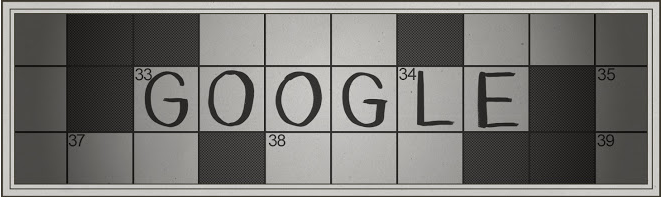
Sometimes, the bonus is announced upfront, as it was in Merl Reagle’s puzzle for the 100th anniversary of the crossword a few years ago. His puzzle was converted into a solvable Google Doodle, and Merl added a crafty word search element by hiding the word FUN multiple times in the grid.
Why “fun,” you ask? Because that was the set word in Arthur Wynne’s original “word-cross” puzzle over one hundred years ago!
[Click here if you haven’t tackled Merl’s marvelous puzzle.]
Our friends at Penny/Dell Puzzles have a recurring crossword variant, Revelation, which conceals a quotation in a standard crossword grid, using the same letters-in-circles technique as Jacob Stulberg did in his poem puzzle.
And, of course, I would be remiss in my duties if I didn’t mention the secret message reading out in both a New York Times crossword and a puzzle featured on The Simpsons, wherein Homer conceals an apology to Lisa inside a crossword with the help of Will Shortz.
Having recently attended the American Crossword Puzzle Tournament for the first time, I’ve been keeping my eyes peeled for other puzzle events and tournaments to check out.
And I stumbled across an upcoming tournament with a lot of positive buzz and interest: The Indie 500.
I decided to reach out to one of the participating constructors, Evan Birnholz of Devil Cross. Having met Evan at the ACPT this year, I knew he would be the perfect go-to guy to fill me in on everything Indie 500.
1.) What is The Indie 500?
The Indie 500 is a new crossword puzzle tournament started by five guys with their own free, independent crossword websites: Erik Agard, Peter Broda, Neville Fogarty, Andy Kravis, and myself. We’re each writing and editing the puzzles and we’re excited to hold our first tournament on May 30 down in Washington, DC.
2.) How does it differ from other crossword tournaments/events?
I think our tournament is, first, an outgrowth of the work we do on our respective websites. On a larger scale, it’s essentially a celebration of indie puzzling. The five of us behind the Indie 500 had published only a few puzzles in mainstream outlets before launching our sites, and now most of our crosswords are things that we’ve created for self-publication.
Because we each drew inspiration from independent puzzle writers like Brendan Emmett Quigley and Matt Gaffney and Ben Tausig, we wanted to give others who didn’t have many published puzzles to their name a chance to have a spotlight of their own, so we held a blind, open submission contest to find a sixth tournament constructor with fewer than ten publications in mainstream venues like The New York Times, The LA Times, CrosSynergy, and so on.
If nothing else, we figured this would inspire new constructors to be creative and submit something that they wouldn’t normally send in to a newspaper. We got several amazing submissions, and ended up picking a winner in Finn Vigeland.
[The six contributors to The Indie 500, plus initials.]
I believe our unique voices as puzzle-makers will help set our tournament apart from others. The puzzles on our sites tend to skew younger in content compared with mainstream puzzles — no surprise considering we’re all 31 or younger (I’m the oldest) — and so we like to dabble in themes and clues that reference modern and sometimes edgy material.
Because we don’t have the same space or “breakfast test” constraints that a newspaper puzzle might have, that gives us a lot of liberty to work with fresh and creative clues and themes, and we’re hoping to bring a similar vibe to our event.
We’re also throwing in some fun features that you likely won’t see at other tourneys. First, we’ll be releasing a separate meta puzzle suite before the tournament featuring puzzles by all five of us co-founders; the suite isn’t required for solving the tournament puzzles, but we think it will be fun all the same.
Next, the solvers who make it to the finals will get to have their own individual entrance music while we announce their names in style. How cool is that?
But the biggest thing that sets our tourney apart? Pie. There will be Pie. No other crossword tournament can promise you that.
[Pie: an Indie 500 guarantee.]
3.) How did it start? How did you get involved in the tournament?
We each started talking about running our own collaborative gig shortly after the 2014 American Crossword Puzzle Tournament. We just thought: events like this and Lollapuzzoola are such a blast, why not have our own tourney?
Of course we weren’t sure at first if it would be financially or logistically possible, but we got a great response from others in the puzzle world when we originally floated the idea. Over the last year, it’s just been a lot of planning, a lot of wrangling over the details, a lot of building and rebuilding grids… and now it’s almost here!
For myself, I just felt incredibly lucky to be included on the project with four other really talented puzzle constructors from the beginning. I had only published a small handful of puzzles on my website when we first discussed the idea of a new tournament, where the other four had been self-publishing for at least a year or two.
4.) As a constructor yourself, what’s your favorite part of an event like this? Do you have any favorite clues or puzzles you’ve crafted, either connected to the Indie 500 or on your own?
The best part about attending a crossword tournament is the camaraderie you get from hanging out with friends and meeting new people who enjoy the hobby of crosswords as much as you do. Solving the puzzles and creating them are fun to do, but that’s really secondary to the social aspect of a big event like this.
I’ve never had the chance to be on the other, more organizational side of things until now, but I will say that there’s a real rush I get from the thought of watching a whole room of people work on a puzzle of mine in real time.
[Solvers testing their skills at the Arlington Puzzle Festival.]
This won’t be the first time I’ve gotten that opportunity. Will Shortz once selected my first New York Times crossword as the final puzzle for the 2013 Westchester Crossword Tournament. That was a major thrill and I’m looking forward to that same adrenaline rush again.
As for favorite puzzles or clues of mine — I can’t really reveal much about what I’ve made for the tournament, but I’m a big fan of smooth grids with clues that really deliver a good a-ha moment, or at the very least make solvers laugh.
This early themeless puzzle is still one of my favorites because I was able to keep it relatively junk-free but still managed to fit in several longer, lively phrases.
This Halloween-themed puzzle was a nightmare to construct, but it had a fun gimmick and it gave me a chance to create some funny fake movie titles.
Often when I’m writing clues, I like to find quotations for famous people that may end up in my grids, especially comedians, since they’re usually a goldmine for funny sayings (like in 27-Down in this puzzle).
I’m also on the lookout for fresh angles on old crossword retreads — I once clued EDEN as [Apple site that was running perfectly until a couple of people violated its terms].
But for some reason, I still have a soft spot for a clue I wrote in the very first puzzle of mine that ever got published, in Ben Tausig’s Twenty Under Thirty compilation: [That’s what sheep said] (3 letters). The answer itself wasn’t exactly a great puzzle entry, but I figured, if the clue’s funny, people will still like it.
Thanks to Evan for taking the time out to answer my questions! You can check out the full details on The Indie 500 by clicking here!
I wish Evan and his fellow constructors the best of luck. Puzzle events and community-building efforts like this are always worthwhile endeavors.
The 38th annual American Crossword Puzzle Tournament was this weekend, and puzzlers descended on the Stamford Marriott Hotel in the hopes of putting their puzzly chops to the test in what has been dubbed “the Nerd Olympics.”
The tournament takes place over two days — with six puzzles to solve on Saturday, followed by one on Sunday — and then the championship puzzle, which the top 3 solve on white boards in front of the audience. On Friday and Saturday night, there are often puzzle events, demonstrations, and panels by top puzzlers and figures in the puzzle world as well.
I ventured down to Stamford myself Saturday morning amidst some unexpected snow flurries and sat in with my friends from Penny/Dell Puzzles at their booth.
They were armed to the teeth with tote bags, magazines, pencils, and freebie copies of The Crosswords Club, The Uptown Puzzle Club, Will Shortz’s Sudoku, and some of the tougher Penny Press and Dell Magazines titles. It was a sumptuous buffet of puzzly goodness, to be sure.
Joining me behind the tables were Penny Press proofreader and puzzler Debra Yurschak Rich and PuzzleNation‘s very own Director of Game Development, Fred Galpern, who was on hand to show off the Penny Dell Crosswords App.
We had a few hours before Puzzle #1 would kick off the tournament, so I wandered around, checked out the ballroom where the competition would take place, surveyed the other booths, and chatted with many tournament competitors and puzzlers.
Not only did I get to see friends of the blog like Uptown Crossword Club editor Patti Varol, author and puzzler Eric Berlin, constructor Ian Livengood and Penny Press variety editor Keith Yarbrough, but it was a great opportunity to match names and faces, since I’d had the chance to tweet, email, and otherwise interact with many of them online over the last few years, but never actually met them in person.
Among the folks I got to meet were crossword gentleman Doug Peterson, New York Times Wordplay blogger Deb Amlen, constructor and Pre-Shortzian Puzzle Project curator David Steinberg, constructor Joon Pahk, top solver and former champion Ellen Ripstein, Los Angeles Times crossword editor Rich Norris, constructor Alan Olschwang, Evan Birnholz of Devil Cross, top competitor and former champion Tyler Hinman, and New York Times puzzle editor Will Shortz.
[Will stops in at the Penny/Dell Puzzles booth, and poses with his namesake titles.]
One of my favorite things about the tournament is the absolute and unabashed puzzle love shown by so many competitors. I saw crossword-patterned sweaters, ties, shirts, and earrings, as well as punny t-shirts of all kinds. One guy even dressed up in full papal regalia, but with a crossword theme!
[Fred poses with the eye-catching Puzzle Pope. In nomine puzzle…]
Finally, it was time for the tournament to begin, so the competitors filed into the ballroom where Will Shortz introduced Puzzle #1, created by Tracy Bennett, which would be a Monday difficulty puzzle.
It’s an excellent warm-up puzzle for competitors, and rarely one that poses a significant challenge. Dan Feyer, reigning five-time champion, set a new tournament record by completing Puzzle #1 in under two minutes. WOW.
But, as it turns out, there was a bit of a kerfuffle surrounding the first puzzle. From the Puzzle Brothers blog:
A weird scoring anomaly took place when the Puzzle 1 results were announced, when a solver named William Hall appeared to have solved Puzzle 1 a full four minutes before Dan Feyer did. Since Dan solved the puzzle in less than two minutes – believed to be an ACPT first – that meant that Hall would have had to do some serious messing with the time-space continuum to finish the puzzle TWO MINUTES BEFORE HE EVEN STARTED.
[I believe I met a third of the names on this list over the course of the day.]
The glitch was soon resolved and Dan Feyer returned to his proper spot at the top of the leaderboard.
Puzzles #2 and #3 (constructed by Joel Fagliano and Merl Reagle, respectively) proceeded without any scoring scandals, and throughout the day, I was getting great insight into the puzzles themselves and the energy of the room with post-puzzle updates from Keith, Patti, Doug, and some of the other competitors.
After a break for lunch, the ballroom filled once more for Puzzle #4, Paula Gamache’s contribution to the tournament. And then, it was time for Puzzle #5.
If you recall my report from last year’s tournament, Puzzle #5 is routinely the toughest puzzle in the tournament. While Brendan Emmett Quigley’s puzzle last year was widely regarded to be a brutally challenging one, Will Shortz said this year’s entry (constructed by Jeff Chen) was “easy for Puzzle #5.” Which is akin to calling something “the friendliest volcano” or “the warmest Eskimo.”
I happened to bump into Dan Feyer outside the ballroom after he completed Puzzle #5, and he jokingly inquired, “Where is everyone?” I looked at him point-blank and replied, “You know exactly where everyone is, Dan!”
Not long after, I received the following text, from another competitor: Puzzle 5. *sad trombone*
The day’s puzzle wrapped up with Puzzle #6, a Lynn Lempel creation that helped set the stage for Sunday’s remaining two crosswords: Patrick Berry’s Puzzle #7 and Byron Walden’s championship closer.
And although I wasn’t present for Sunday’s tournament finale, I continued to get updates from friends and fellow puzzlers throughout the day. When it came time for the top three to solve on their white boards in front of their fellow competitors, a familiar trio of names were listed: Dan Feyer, Tyler Hinman, and Howard Barkin.
Due to his performance over the previous seven puzzles, Dan began with a 5-second head start over Tyler. And that made all the difference.
Watch as Dan and Tyler race to the finish:
Only a half-second separated Dan and Tyler’s times, a nail-biter in ANY competition, but Dan Feyer locked up his sixth straight ACPT championship!
Not only did he top Tyler’s streak of 5 straight wins, but he’s put himself in contention to match Jon Delfin’s record of seven tournament victories next year! Names like Anne Erdmann, Francis Heaney, Joon Pahk, and Al Sanders were not far behind.
And out of more than 560 competitors, friends of the blog had a strong showing themselves! David Steinberg ranked 36th overall, and was named the Division C champion, the youngest ever!
Patti Varol placed 109th, and only a few steps behind her was Eric Berlin at 112th! Keith Yarbrough placed 177th, and Doug Peterson was the top performer in our little cabal of puzzlers, delivering some outstanding solves and placing 14th overall!
(In case anyone was curious, the Puzzle Pope placed 463rd.)
I’ve never experienced anything quite like the ACPT, but I’m definitely going back next year. Congratulations to all the competitors!
By this time, you know the drill. Follow-Up Friday is a chance for us to revisit the subjects of previous posts and bring the PuzzleNation audience up to speed on all things puzzly.
And in today’s post, I’m returning to the subject of the American Crossword Puzzle Tournament!
The 38th annual tournament kicks off tomorrow, and I’m definitely excited to be attending for the very first time! I’ll be sitting in with my pals at the Penny Press/Dell Magazines booth, offering some great puzzles and meeting topnotch competitors and constructors alike.
How many PuzzleNationers and fellow puzzle fiends are attending? Come by, I’d love to meet you!
Not only that, but Fred, our Director of Game Development, will be on hand to show off the Penny Dell Crosswords App!
This week, the names of the constructors contributing puzzles to the tournament this year were revealed, and it’s a terrific mix of first-class constructors. Some you may know, some you may not!
Merl Reagle (who masterminded Google’s 100th Anniversary of the Crossword puzzle) is contributing, along with prolific puzzlers Lynn Lempel, Joel Fagliano (currently Will Shortz’s assistant at The New York Times), and Jeff Chen (XWordInfo‘s webmaster)!
They’re joined by constructors Tracy Bennett, Paula Gamache, Patrick Berry, and Byron Walden (a Saturday NYT regular known for some seriously tough puzzles)! It’s entirely possible that the diabolical Puzzle #5 at this year’s tournament will be a Walden original.
Not only that, but several friends of the blog will be in attendance, like Penny Press variety editor Keith Yarbrough, constructor Ian Livengood, puzzler and author Eric Berlin, crossword gentleman Doug Peterson, and Uptown Puzzle Club editor Patti Varol!
Tuesday’s blog post will be a recap of the tournament, complete with pictures, but stay tuned to Twitter and Facebook this weekend for bonus posts and previews!




 PuzzCulture