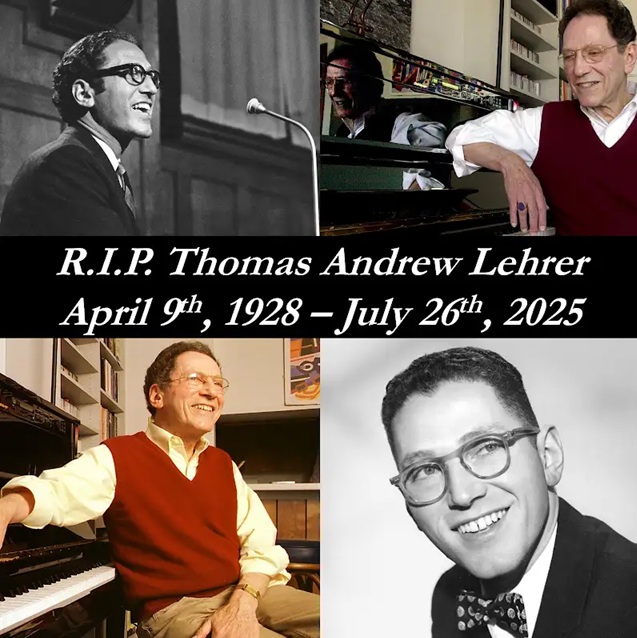
Farewell, Tom Lehrer.

The world of puzzles and games is larger than constructors and game designers. There are artists, writers, editors, wordsmiths, hosts, musicians, and influences that help shape puzzles and games in so many different ways. Their efforts enrich and popularize these beloved pastimes, contributing to the world by celebrating wordplay, creativity, and nerdy pursuits.

And sadly, the world grew a little less witty, a little less clever, and a lot less bold and outspoken about so many important topics when Tom Lehrer passed away a few days ago.

It’s hard to know where to begin.

How do you describe the cultural influence of a man whose songs still delight, inform, and push boundaries today, even though he wrote most of them over sixty years ago?

How do you describe a successful musician who walked away from public performance after three brilliant albums — thirty-seven songs, each an intricately-crafted dissection of some aspect of culture, science, or current events, often as poignant and sharp-tongued as they were hilarious — and spent the bulk of his life as a teacher and college professor instead?

How do you describe the genius of a man for whom wordplay flowed as easily as scientific lingo or political commentary, a man who could make you laugh (and think, really think) about nuclear annihilation, questionable post-war government programs, or even the Catholic Church itself?

His influence on pop culture can’t be overestimated. Across generations, his songs educated and inspired, and his legacy is bulletproof. He created songs for The Electric Company, Square One TV, and That Was The Week That Was. (Those shows were decades apart!)

He inspired performers like “Weird Al” Yankovic, and I think his fingerprints are unmistakable on other hilarious and educational projects, like the songs of Randy Rogel for Animaniacs. (Trust me, you can’t listen to “the Multiplication song” from Animaniacs and NOT think of Lehrer’s “New Math”.)

Tom retired from live performance in the late 1960s, having felt like he’d said everything he wanted to say with his music. (Plus, as he famously pointed out, “political satire became obsolete when Henry Kissinger was awarded the Nobel peace prize.”)

But his songs wouldn’t be denied.

Dr. Demento’s radio show brought Lehrer’s work to new ears in the 1970s, 80s, and 90s, and Honest2Betsy has brought him to yet another generation’s attention with her videos over the last few years.

His songs are timeless. “The Elements” alone has appeared in Better Call Saul, NCIS, Gilmore Girls, and The Big Bang Theory. (Not to mention Daniel Radcliffe’s famous rendition of the song on The Graham Norton Show, where he called Lehrer his hero. This actually led to Radcliffe starring in the film Weird: The Al Yankovic Story.)

Speaking of “Weird Al,” his New York Times crossword puzzle with constructor Eric Berlin namedropped Tom as part of the grid fill in this pun-heavy collaboration:
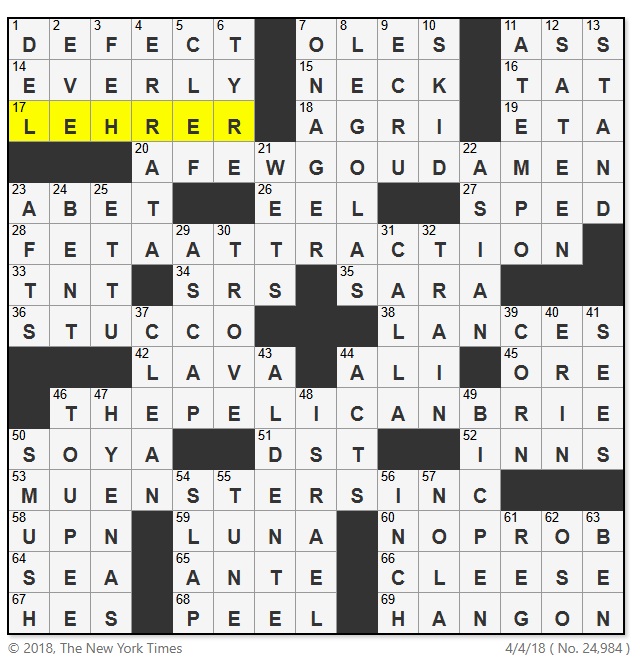
And it is a love of wordplay that sparked this tribute today.

Lehrer’s work is absolutely riddled with clever puns, comedic craftsmanship, and playing with the listener’s expectations: all things that great crossword cluing employs.

You can’t listen to songs like “Silent E” or “Without an S” and NOT imagine clues or themes that Lehrer’s linguistic legerdemain could inspire.

Not to mention this gem:
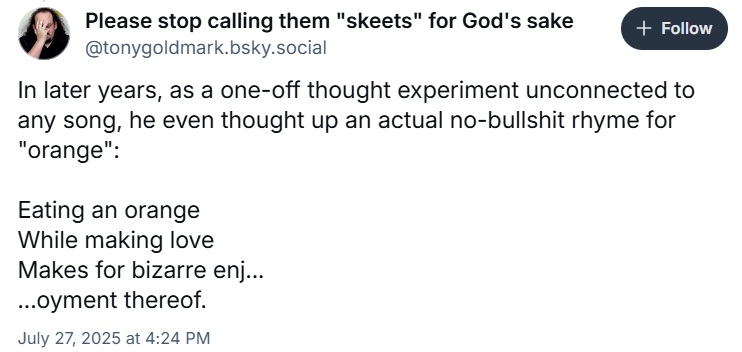
There’s a playfulness there, paired with technique, creativity, and an absolute willingness to bend conventions to their breaking point in order to make something new. How can you not love it?

But wordplay, commentary, and scientific and mathematical literacy weren’t Lehrer’s only gifts to the world.

He claimed to have invented the jello shot while in the military (to skirt rules about alcohol consumption). He wrote the song “Don’t Major in Physics,” which would have been good advice to me in freshman year of college, had I cared to listen.
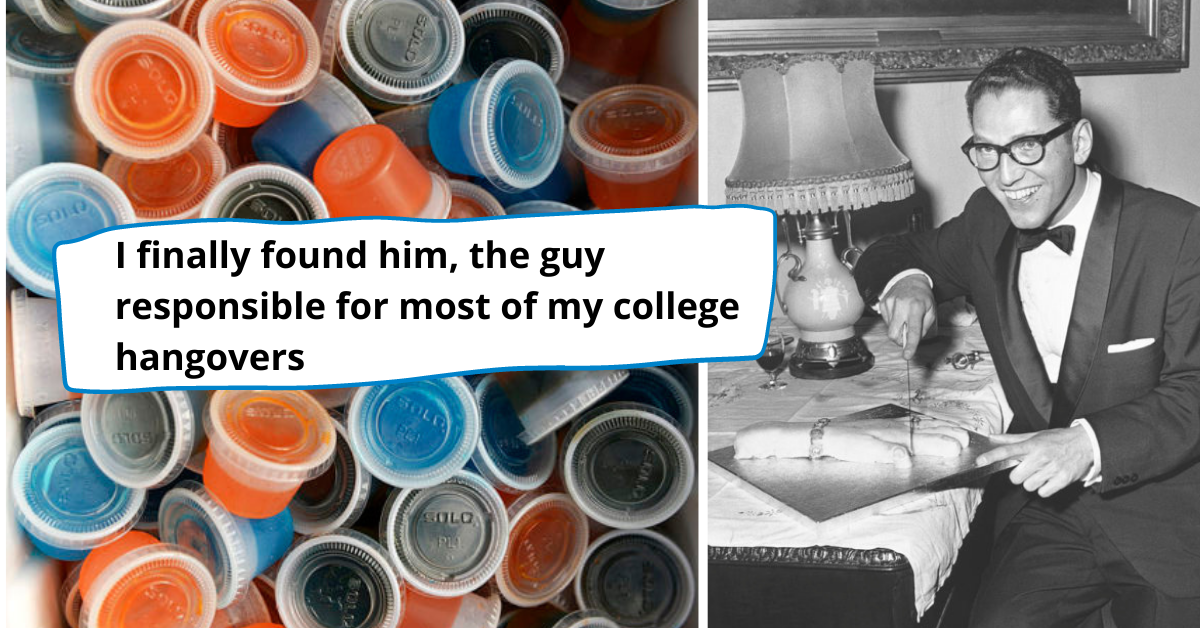
Image courtesy of warhistoryonline.

And he also made the incredible gesture in 2022 of transferring the music and lyrics for all the songs he had ever written into the public domain. He relinquished the copyright and performing/recording rights for his songs as well, making his music and lyrics free for anyone to use. Downloadable lyric and music files are available on his website.

His statement releasing all his works into the public domain concluded with this note: “This website will be shut down at some date in the not too distant future, so if you want to download anything, don’t wait too long.”

For now, at least, the website remains online.

And it seems so apropos that the man who walked away from music decades ago to share his love of mathematics, science, and teaching with others is also the man who would happily sign away the rights to his music to enrich the lives of others once again.

The humanities and the STEM fields both owe Tom Lehrer a debt that can never be repaid.

The world was blessed with his presence for 97 years, and I have no doubt that his words, his music, and the forceful spirit that infused both will be around for many many years to come.

Farewell, Tom. Thanks for warning us about Shakespeare.

Oh, and for this lovely little ditty:

Puzzles in Pop Culture: Brooklyn Nine-Nine (Plus Will Shortz!)

[Image courtesy of FOX.com.]

In our Puzzles in Pop Culture series, we’ve featured shows as diverse as Gilmore Girls, NCIS: New Orleans, The West Wing, Hell’s Kitchen, and Parks and Recreation.

But oddly enough, the puzzliest show in the series has proven to be Brooklyn Nine-Nine, FOX’s hit sitcom about a New York precinct and its oddball collection of detectives. Not only did they pose a diabolical seesaw brain teaser in one episode, but crosswords were at the heart of another key moment in the show just last year.

And today’s post marks the show’s third appearance. Join us as we delve into “The Puzzle Master,” episode 15 of season 5.


The episode opens with detective Amy Santiago passing the sergeant’s exam and doing a dorky dance. Good start.

[Image courtesy of Spoiler TV.]

Her fiance, fellow detective Jake Peralta, has a doozy of a last case for he and Amy to solve as detectives. He presents her with a serial arson case that seem to be connected to the Saturday crossword puzzle. Amy, as a crossword fiend, is overjoyed.

Two different buildings have been set ablaze on two consecutive Saturdays, each with a puzzle left at the crime scene. The only other clue is a note sent to the puzzle’s “author” — not constructor, oddly — Melvin Stermley.

Amy immediately geeks out, mentioning that Stermley once created a puzzle where every word in the grid was the word “puzzle” in a different language. Jake then mentions that Stermley himself is coming in to help them with the case.

[Image courtesy of Brooklyn Nine-Nine Wiki.]

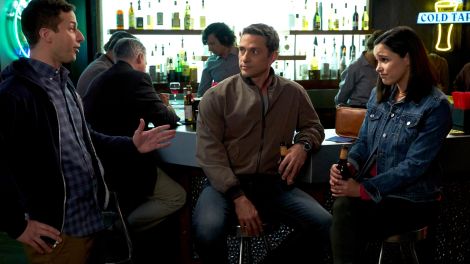
While Jake expects Melvin Stermley to be “a massive dork,” he turns out to be a handsome Hollywood tough guy type. Jake is instantly jealous. (For a nice bit of insider fun, Stermley is played by David Fumero, the husband of Melissa Fumero, who plays Amy Santiago.)

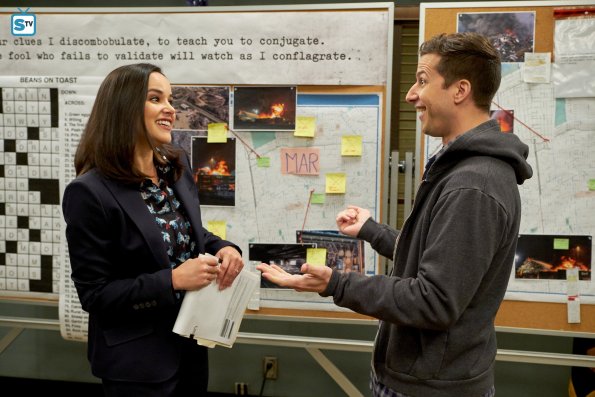
Amy has set up a display with both of Stermley’s puzzles connected to the fires, and the trio begin searching for leads. When Jake asks if he has the typical physique of a puzzler, he mentions that each puzzle only pays a couple hundred bucks, so he makes most of his money modeling. (No doubt a common response you’d get from any top constructor, right, folks?)

They read over the arsonist’s letter again: “Your clues I discombulate, to teach you to conjugate. The fool who fails to validate will watch as I conflagrate.”

Stermley suggests that they look at the answer grids of his puzzles for clues. Amy then jumps to anagramming some of the answer words. (The puzzler notes that Amy Santiago anagrams to “o, nasty amiga” and Jake Peralta to “eat a jerk, pal.”) Amy and Vin decide to split up the odd and even clues, leaving Jake out.

[Image courtesy of Spoiler TV.]

Getting nowhere with the anagrams, they wonder if “conjugate” in the arsonist’s letter means they should focus on the verbs, “the second best form of speech, after prepositions.” Jake suggests a different path, starting with possible suspects who don’t like Stermley, and the puzzler mentions the crossword night he’s hosting at a local bar. “It’s a total puz-hang,” according to Amy, and a good place to start looking.

While waiting in line outside the bar, Jake is disappointed no one is dressed like The Riddler. Amy points out someone wearing crossword-patterned pants. (Again, a common sight at the ACPT.) They chat with one of the other people in line, a woman who jokingly refers to Stermley as her future husband.

[Image courtesy of Spoiler TV.]

Before anyone can enter, they have to solve one of Stermley’s puzzles. Amy is tasked with anagramming the phrase “MEET A BRAINIER STUD, A” into the name of a place in the world. (Jake’s jealousy is piqued by the anagrammed message, of course.)

She quickly solves it — UNITED ARAB EMIRATES — and heads inside. But when Jake tries to follow, he discovers he has to solve a puzzle of his own to get in. The phrase “SAD ANUS LOSER, I GO IN” must be anagrammed into a film based on a classic book. Cut to Jake sneaking into the bathroom, because he couldn’t solve the anagram.

(It was DANGEROUS LIAISONS, by the way.)

While Jake waits in the bathroom for his pants to dry — he stepped into the toilet while climbing down from the window — two puzzle fans come in, discussing Stermley’s mad puzzle skills and how “Sam” must be pissed, as Stermley replaced him doing the Saturday crossword, bumping him down to work in Parade Magazine.

They mention Sam’s toughest clue, “a 5-letter word for a game popular in nursing homes,” to which Jake replies “BINGO.”

[Image courtesy of AV Club.]

Jake mentions it to Stermley, who says Sam Jepson is one of his best friends and has been out of town for weeks. Jake still thinks Jepson is a solid lead.

Amy and Stermley, meanwhile, have realized that both targeted buildings were at the intersection of numbered streets, and those numbered intersections also point to letters in Stermley’s puzzles: M and A. They plan to build a trap into Stermley’s next puzzle to catch the arsonist.

When given a choice between Jake’s approach and Stermley’s, Amy opts to go with the puzzle trap.

Back at the precinct, Amy has determined that the most common letters in people’s names that follow MA are L, X, R, and T — Malcolm, Max, Mark, and Matthew, for example — so Stermley constructs a puzzle using only one of each of those letters. (A pretty daunting challenge, but definitely doable — especially if the cryptic-style crossword grid on the board behind Amy is the puzzle in question. It would have fewer intersections.)

Amy plans to stake out the intersections for each of those four letters, assigning one of them to Jake. (Jake, meanwhile, makes a secret plan to have Charles stake out Sam Jepson’s apartment.)

[Image courtesy of Spoiler TV.]

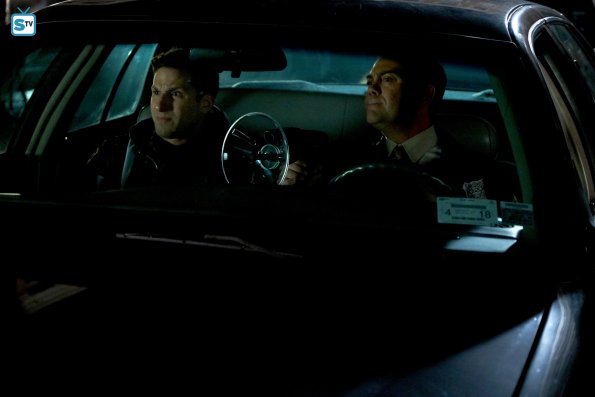
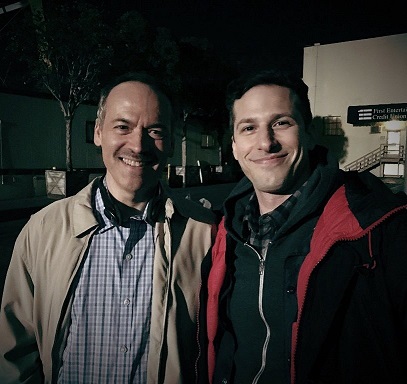
Charles spots Sam on the move — played by crossword guru Will Shortz, no less! — and Jake leaves his assignment to intercept. He and Charles follow Sam, who sits at a corner and eats soup, then calls his Mom. It turns out he has been out of town, only having returned tonight — and his marriage proposal was rejected. Bummer.

Jake returns to his assigned intersection, and the building is on fire. He has missed the arsonist.

Amy is understandably upset with Jake when they’re back at the office. Jake confesses he’s jealous of Stermley and doesn’t want Amy to wake up one day, regretting not marrying someone as smart as her. She reassures him that he’s a brilliant detective and that’s why she wants to marry him.

[Image courtesy of FOX.com.]

Jake has a epiphany, realizing that the arsonist’s name isn’t what’s being spelled out, it’s the word MARRY. (The word “conjugate” in the letter also pointed to marriage.)

And who wants to marry Stermley?

The woman in line at the bar on crossword night.

Jake and Amy bring the woman in, and it turns out the full message she intended to spell out with her fires was “MARRY ME OR ELSE I WILL KILL YOU, YOURS FOREVER, HELEN GERBELSON.”

That would take SO MANY FIRES. (I imagine she’d have to burn down several buildings more than once, given the sheer repetition of letters and the relatively few options for numbered streets.)

But, in the end, the arsonist has been caught, thanks to the power of puzzles and good police work.

[Image courtesy of Lauren Leti’s Twitter.]

Overall, I thought this was a very fun episode of the show. The anagram gags were the puzzly highlight, though I confess, I thought they’d do more with the Will Shortz cameo.

Here’s hoping there’s a crime at the Brooklyn Nine-Nine equivalent of the ACPT next year!

Also, as someone who has seen ARSON in a thousand grids, it is funny to see someone finally link the word and the act in a puzzly way.


Thanks for visiting PuzzleNation Blog today! Be sure to sign up for our newsletter to stay up-to-date on everything PuzzleNation!

You can also share your pictures with us on Instagram, friend us on Facebook, check us out on TwitterPinterest, and Tumblr, and explore the always-expanding library of PuzzleNation apps and games on our website!

Cultural Sensitivity and Crosswords

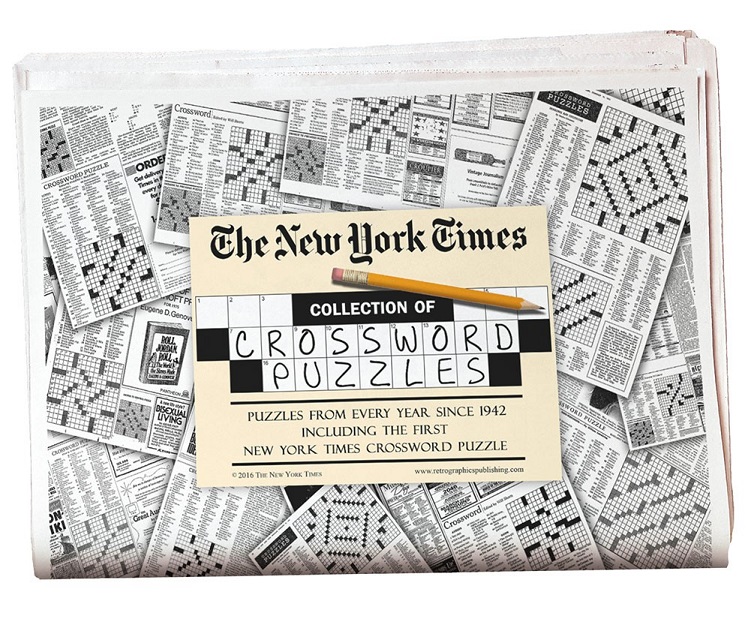
crossword-newspaper

Last summer, I wrote a blog post discussing an article on Slate by Ruth Graham. The article was entitled “Why Is the New York Times Crossword So Clueless About Race and Gender?”

So, what sort of progress has been made over the previous 365 days? Clearly not enough, given the title of an article published last week on The Outline, entitled “The NYT Crossword is Old and Kind of Racist.”

Adrianne Jeffries makes a strong case for how out-of-touch the crossword often seems these days:

…the Times crosswords, which have been edited by the famed crossword giant Will Shortz since 1993, are vexing for how outdated some of the clues and answers are, especially since in some cases the terms have been abandoned by the paper itself. The puzzle clearly isn’t seeking new talent or a new audience, and in its stodginess, it becomes clear that it is composed for a very particular reader with a very particular view of the world.

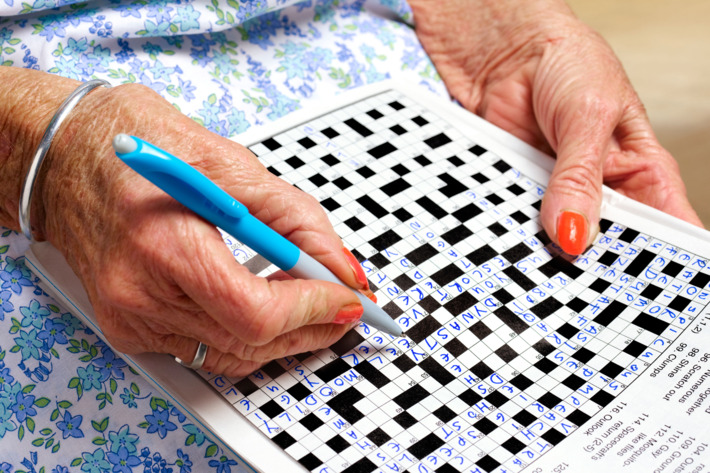
15-crossword-w710-h473

[Image courtesy of New York Magazine.]

She backs up her supposition with numerous examples of tone-deaf cluing and grid fill, like ESKIMO, Oriental, and SISSIES.

There is some overlap with Ruth Graham’s points from last year — including the reductive use of HOMIE regarding black culture and the clue “One caught by the border patrol” for ILLEGAL — and Jeffries went on to include examples of the issue I raised last year with the objectionable “This, to Juan” cluing style that abounds in crosswords.

But she takes things one step further than previous efforts by pointing out how the crossword is out-of-step with the rest of the New York Times newspaper, citing the year that various terms were marked offensive in the Times style guide. (“Oriental” as a descriptor, for instance, was banned in 1999.)

64207-c4090678

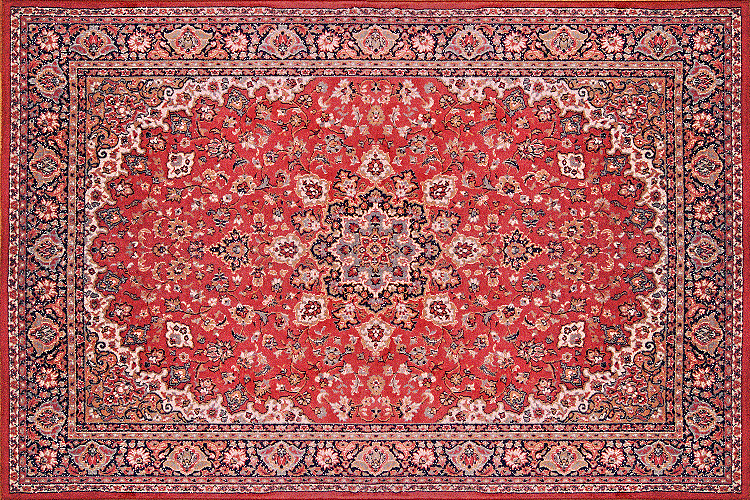
[This is oriental. People are not. Image courtesy of Rashid Oriental Rugs.]

It’s disheartening that articles like this are so necessary. Women and people of color deserve better representation in the Times puzzles, both as contributors of puzzles AND as subjects of clues and entries themselves.

Jeffries offered another damning example of dubious Shortzian editing:

I also found an exchange from 2011 illuminating. Shortz asked puzzle constructor Elizabeth Gorski to change an answer on her submitted puzzle. “There was one thing about the construction I didn’t like, and that was at 35 Down,” Shortz told The Atlantic. “The answer was LORELAI, and the sirens on the Rhine are of course ‘Lorelei,’ with an ‘e-i.’ Liz’s clue was Rory’s mom on Gilmore Girls, and I didn’t think solvers should have to know that.” He had the constructor revise the answer to make it 1) more old and 2) refer to mythical women who are so distractingly beautiful that they cause men to crash their ships on the rocks, instead of, a cool mom from a television show that millions of women (and some men) love.

6358790824238732801426659592_tumblr_mfc1fvm21i1qhewe3o1_500

[Image courtesy of The Odyssey Online.]

Even as a (relatively) younger voice in puzzles, I can’t deny many of her points. Puzzles should do a better job of acknowledging modern culture, of serving as a tiny, daily time capsule of our world.

As I said last year, crosswords are a cultural microcosm, representing the commonalities and peculiarities of our language in a given time and place. They represent our trivia, our understanding, our cleverness, our humor, and, yes, sometimes our shortcomings.

One year later, I wonder if progress will continue to feel so gradual, or if, sometime soon, we’ll begin to feel the cultural quakes and shifts that indicate real change is approaching.


Thanks for visiting PuzzleNation Blog today! Be sure to sign up for our newsletter to stay up-to-date on everything PuzzleNation!

You can also share your pictures with us on Instagram, friend us on Facebook, check us out on TwitterPinterest, and Tumblr, and explore the always-expanding library of PuzzleNation apps and games on our website!

Puzzles in Pop Culture: Square One TV

Puzzles in Pop Culture is all about chronicling those moments in TV, film, literature, art, and elsewhere in which puzzles play a key role. In previous installments, we’ve tackled everything from The West Wing, The Simpsons, and M*A*S*H to MacGyver, Gilmore Girls, and various incarnations of Sherlock Holmes.

And in today’s edition, we’re jumping into the Wayback Machine and looking back at the math-fueled equivalent of Sesame Street: Square One TV!

[The intro to Square One TV, looking more than a little dated these days.]

This PBS show ran from 1987 to 1994 (although reruns took over in 1992), airing five days a week and featuring all sorts of math-themed programming. Armed with a small recurring group of actors, the writers and producers of Square One TV offered many clever (if slightly cheesy) ideas for presenting different mathematical concepts to its intended audience.

Whether they were explaining pie charts and percentages with a game show parody or employing math-related magic tricks with the aid of magician Harry Blackstone, Jr., the sketches were simple enough for younger viewers, but funny enough for older viewers.

In addition to musical parodies performed by the cast, several famous musicians contributed to the show as well. “Weird Al” Yankovic, Bobby McFerrin, The Fat Boys, and Kid ‘n’ Play were among the guests helped explain fractions, tessellations, and other topics.

[One of the many math-themed songs featured on the show.]

Two of the most famous recurring segments on Square One TV were Mathman and Mathcourt. (Sensing a theme here?)

Mathman was a Pac-Man ripoff who would eat his way around an arcade grid until he reached a number or a question mark (depending on this particular segment’s subject).

For instance, if he came to a question mark and it revealed “3 > 2”, he could eat the ratio, because it’s mathematically correct, and then move onward. But if he ate the ratio “3 < 2”, he would be pursued by Mr. Glitch, the tornado antagonist of the game. (The announcer would always introduce Mr. Glitch with an unflattering adjective like contemptible, inconsiderate, devious, reckless, insidious, inflated, ill-tempered, shallow, or surreptitious.)

Mathcourt, on the other hand, gave us a word problem in the form of a court case, leaving the less-than-impressed district attorney and judge to establish whether the accused (usually someone much savvier at math than them) was correct or incorrect. As a sucker for The People’s Court-style shenanigans, this recurring segment was a personal favorite of mine.

But from a puzzle-solving standpoint, MathNet was easily the puzzliest part of the program. Detectives George Frankly and Kate Tuesday would use math to solve baffling crimes. Whether it was a missing house, a parrot theft, or a Broadway performer’s kidnapping, George and Kate could rely on math to help them save the day.

These segments were told in five parts (one per day for a full week), using the Dragnet formula to tackle all sorts of mathematical concepts, from the Fibonacci sequence to calculating angles of reflection and refraction.

These were essentially word problems, logic problems, and other puzzles involving logic or deduction, but with a criminal twist. Think more Law & Order: LCD than Law & Order: SVU.

Granted, given all the robberies and kidnappings the MathNet team faced, these segments weren’t aiming as young or as silly as much of Square One TV‘s usual fare, but they are easily the most fondly remembered aspect of the show for fans and casual viewers alike.

Given the topic of Tuesday’s post — the value of recreational math — it seemed only fitting to use today’s post to discuss one of the best examples of math-made-fun in television history.

Square One TV may not have been nearly as successful or as long-lasting as its Muppet-friendly counterpart, but its legacy lives on in the hearts and memories of many puzzlers these days.


Thanks for visiting PuzzleNation Blog today! Be sure to sign up for our newsletter to stay up-to-date on everything PuzzleNation!

You can also share your pictures with us on Instagram, friend us on Facebook, check us out on TwitterPinterest, and Tumblr, and explore the always-expanding library of PuzzleNation apps and games on our website!

Puzzles in Pop Culture: Two Hollows

In today’s edition of Puzzles in Pop Culture, we visit two very different New England towns — Stars Hollow, Connecticut, and Sleepy Hollow, New York — in two very different TV shows.

Stars Hollow is the fictional setting of cancelled WB/CW drama Gilmore Girls, which spent seven seasons following the pop culture-fueled banter of mother/daughter team Lorelai and Rory Gilmore as they navigated relationships, family drama, and all the undeniable quirkiness of small-town America.

Sleepy Hollow is a very real town, but hopefully one unafflicted by headless horsemen, demonic plots, and a secret war against evil that’s been waged since the days of the American Revolution. At least that’s what’s going on in the fictional version of Sleepy Hollow in Fox’s eponymous TV show, now in its second season.

And, as it turns out, each has something interesting to say about crossword puzzles.

First, there’s this brief scene from Gilmore Girls, where Lorelai ponders both the challenge of crosswords and the social implications of NOT being a crossword solver:

Clearly Lorelai and Rory are crossword skeptics, or at the very least, indifferent to crosswords. But given that they’re staring at a collection of New York Times crossword puzzles, maybe they’re simply disillusioned after a few hard end-of-the-week puzzles.

The character of Henry Parrish from Sleepy Hollow, on the other hand, has much kinder things to say about crosswords.

He expressed himself quite eloquently in episode 10 of season 1, “The Golem.”

Lt. Abbie Mills: You doing crosswords?

Henry Parrish: As I said, it distracts me from my troubles. A good puzzle misleads you, it sends you in one direction, fools you into thinking you know what’s going on. But once you discover the trick, you see that’s there’s often a hidden meaning.

Now, there’s a man who has solved some quality crosswords in his time. Maybe he could recommend a few choice ones for the Gilmore girls.

Thanks for visiting PuzzleNation Blog today! You can share your pictures with us on Instagram, friend us on Facebook, check us out on TwitterPinterest, and Tumblr, and be sure to check out the growing library of PuzzleNation apps and games!