This Puzzle Solves Itself!

The slow, steady march of technological advancement in all fields continues to progress, and the world of puzzles is no exception. In previous blog posts, we’ve discussed not only technological leaps forward in making puzzles (like 3-D printers), but also new developments in solving puzzles.

We’ve joked that robots are coming for our puzzles, thanks to advanced machines and AI programs that can play games like chess, Go, and Scrabble on par with — and sometimes, far better than — human experts.

It’s the same with Rubik’s Cubes and other twisty puzzles. Even though speed solvers continue to break new ground in terms of sheer speed and efficiency, we can’t compete with robots that solve cubes in the blink of an eye.

And now, it seems we’ve reached the natural end of this journey…

A self-solving Rubik’s Cube.

Check it out:

The creation of a Japanese technician and self-styled “hardware hacker,” this Rubik’s Cube is the same size as the traditional cube, but the similarities end there.

Instead of the traditional plastic network of connections that allows you to twist and turn the cube every which way, this cube is packed to the gills with electronics, wiring, a series of motors, and the interconnected pieces that give the Rubik’s Cube its signature movement and flexibility.

A marvel of miniaturization and design, this self-solving Rubik’s Cube clearly has its own built-in solving algorithm. It doesn’t simply memorize the twists employed to scramble the cube and then reverse them; the solution and scrambling are completely different chains of events.

All in all, it’s a thoroughly impressive creation. Of course, if I’d known there were going to be self-solving Rubik’s Cubes, I wouldn’t have wasted so much time trying to solve one myself!


Thanks for visiting PuzzleNation Blog today! Be sure to sign up for our newsletter to stay up-to-date on everything PuzzleNation!

You can also share your pictures with us on Instagram, friend us on Facebook, check us out on Twitter, Pinterest, and Tumblr, and explore the always-expanding library of PuzzleNation apps and games on our website!

The Curious World of Ancient Board Games

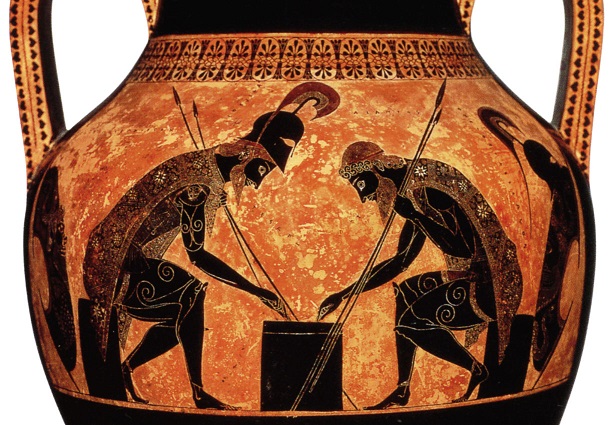
A few weeks ago, we delved into the surprisingly deep history behind games still commonly played today, like Go, chess, and various dice games. But we barely scratched the surface when it comes to ancient gaming. There are numerous games that fell out of favor centuries ago, only to be resurrected in the modern day by game enthusiasts and historians.

In today’s blog post, I’d like to dust off a few of these ancient games and briefly discuss what we know about them. It’s game history time!

[Image courtesy of Wikipedia.]

A popular Viking game whose heyday was between the fourth and twelfth centuries, Hnefatafl was a popular game throughout Scandinavia. This mouthful of a game — sometimes called Viking chess by modern game fans — was so ubiquitous back then that it was mentioned in several of the Norse Sagas.

Amazingly, although game pieces and fragments of game boards have been recovered, no one is entirely sure how the game is played, so rules have been reconstructed based on a similar game called Tablut.

Translated as “board game of the fist,” Hnefatafl is part of a family of games called Tafl games, all of which take place on a checkerboard-style play space with an uneven number of game pieces.

[Image courtesy of Wikipedia.]

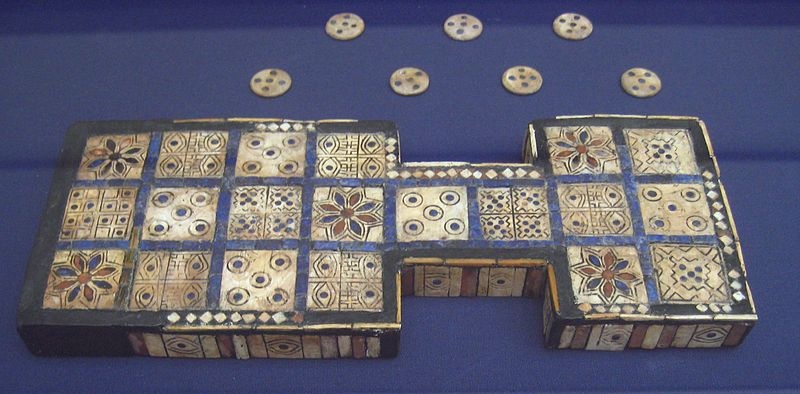
Unlike Hnefatafl, the Royal Game of Ur has survived the centuries pretty much unscathed, thanks to a copy of the rules recorded on a Babylonian tablet. Played in the Middle East centuries ago — in places like Syria and Iran — the Royal Game of Ur was clearly popular, as evidence of the game has been found as far away from the Middle East as Crete and Sri Lanka.

The game and its trappings penetrated deep into Middle Eastern society. An Ur game board was carved like graffiti into a wall in the palace of Sargon II (dating back to the 700s BC). The Babylonian tablet indicates that certain game spaces were believed to be good omens, and could be interpreted as messages from the beyond.

The game was eventually either supplanted by backgammon or evolved into a version of backgammon, depending upon different historical accounts.

[Image courtesy of Chess Variants.com.]

Tori Shogi dates back to 1799 in Japan. Also known as Bird chess — thanks to game tiles named after phoenixes, cranes, and swallows — Shogi is played on a board seven squares wide and seven squares deep.

Unlike many chess variants, Tori Shogi allows for captured pieces to return to play, a nice twist that deepens the familiar gameplay style.

[Image courtesy of Bodleian Libraries.]

But chess and backgammon aren’t the only games with centuries-old precursors. The geographical game Ticket to Ride also has an aged forebearer in Binko’s Registered Railway Game, which was built around a map of the United Kingdom.

An educational game about placing trains on the map and determining how far they travel, this game has survived the decades relatively unscathed by time.


Those are just four examples of games that were either lost and then rediscovered, or games that fell out of favor, only to be resurrected by curious modern players.

And once again, these games are just the tip of the iceberg. There are centuries-old versions of The Game of Life, Parcheesi, a dating game, checkers, and more when you start digging!

As you can see, games have been a part of human civilization dating back millennia. We were always meant to play puzzles and games, it seems.


Thanks for visiting PuzzleNation Blog today! Be sure to sign up for our newsletter to stay up-to-date on everything PuzzleNation!

You can also share your pictures with us on Instagram, friend us on Facebook, check us out on Twitter, Pinterest, and Tumblr, and explore the always-expanding library of PuzzleNation apps and games on our website!

Behold: The Lemonade Machine!

A Rube Goldberg machine, for the uninitiated, is a device designed to accomplish a simple task in as many unnecessary, ludicrous steps as possible. The name comes, appropriately enough, from Rube Goldberg, a cartoonist and inventor most famous for his cartoons featuring singularly silly and elaborate machines like the one pictured below.

We’ve posted videos of Rube Goldberg machines in the past, because they’re a perfect example of a mechanical puzzle in action. Only when things happen in a precise order does the machine complete its task.

But it turns out that an old friend of the blog — domino master Lily Hevesh, aka Hevesh5 — is now venturing into the world of Rube Goldberg machines.

And her first attempt was a doozy.

Teaming up with five machine-building YouTubers — essentially, videomakers who specialize in chain-reaction mechanical devices — Lily and the group descended upon an AirBnB in San Diego to build a Rube Goldberg machine that would span the entire house!

The Lemonade Machine, as they call it, travels from room to room, utilizing items commonly found in those rooms (silverware and a teapot in the kitchen, for instance) to construct an epic-length chain reaction with everyday household objects.

The end goal? Pouring a glass of lemonade for each member of the build team.

So, how did they do?

They constructed a real mechanical marvel here. It took three days to build, and another day to execute a complete successful run of all of the machine’s components in a single take. The end result was the largest Rube Goldberg device constructed in the United States this year.

Not only that, but Lily documented the entire process, so you can watch both the construction and the many MANY attempts on Falldown Day to achieve a successful run of The Lemonade Machine.

It’s a mind-blowing feat, combining puzzly skill, creativity, patience, and determination, and there’s no denying that they built something truly unique and pretty cool.

I’m gonna go watch it again.


Thanks for visiting PuzzleNation Blog today! Be sure to sign up for our newsletter to stay up-to-date on everything PuzzleNation!

You can also share your pictures with us on Instagram, friend us on Facebook, check us out on Twitter, Pinterest, and Tumblr, and explore the always-expanding library of PuzzleNation apps and games on our website!

Citizen Shoutout: Escape 101 Edition!

Welcome to the latest installment of our newest monthly feature on the blog, Citizen Shoutout!

Each edition of Citizen Shoutout is an opportunity to say thank you. It allows us to put the spotlight on folks in the PuzzleNation community who contribute to the world of puzzles and games in a meaningful way.

And in today’s edition, I’d like to highlight a local escape room that is delivering some marvelous puzzly experiences, Escape 101!

Located just off the highway and right by the Danbury Fair Mall in Danbury, Connecticut, Escape 101 offers some of the best, most immersive escape rooms I’ve ever had the pleasure of trying out. Every time the door is shut and the timer starts, you’re guaranteed a fun, challenging, wholly unique solving experience.

You can call or email Escape 101 to reserve a room, or book a room through their website. (It’s always best to do so at least a few days out from your desired date and time, just to give them the best chance to meet your expectations.)

You know you’re in for a quality challenge right away, as your Game Master gives you an opportunity to familiarize yourself with all of the different locks you’ll encounter in your chosen Escape Room. From combination locks and key locks to directional locks, and even a cryptex, they’ve got all sorts of diabolical tricks and challenges awaiting you, so make good use of your time before the room opens.

There’s a quick instructional video, and then you and your group of solvers will decide how many clues you want for your Escape Room.

There are three options:

  • Original: You get three clues and three clues only. Once they’re gone, they’re gone, and you’re on your own.
  • Meet Me Halfway: You get more than three clues, giving you additional chances (at your request) to get past frustrating or confusing stumbling blocks while still giving you a fair chance to escape.
  • Finish the Game: Your Game Master delivers unlimited clues and hints, maximizing your chances of escaping the room within the one hour time limit.

Personally, I like “Meet Me Halfway,” because you can still set the goal of using no more than three clues, but you still have the opportunity to ask for more if you need them. It’s the best of both worlds.

But what about the escape rooms themselves, you ask? Well, I’ve only tackled two of them so far, but I thoroughly enjoyed both experiences.

The easier of the two was The Ice Cream Truck room, wherein you and your group find yourselves in a local park with a simple goal: collect enough money for all of you to hit the ice cream truck before it leaves!

You’ll have to explore your environment, accomplish tasks, and help fellow parkgoers to accomplish your mission.

If you’ve never done an escape room before, I think this is the perfect introductory room. The puzzles are fun and challenging without being overwhelming, and the very environment is soothing, which counteracts the pressure of knowing you’ve only got one hour to escape.

[No pictures of the room, because I didn’t want to spoil any of the surprises for you.]

Of course, if you’re looking for something more challenging, Escape 101 has you covered there as well… with the Doomsday Room.

The Doomsday Room is a combination office/laboratory for the mysterious Dr. Apocalypse. You and your group have snuck into his workspace in the hopes of escaping with a very important bit of information: the date of the end of the world.

But Dr. Apocalypse won’t make it easy. You’ll need to explore the entire space, conduct experiments, show off your observational skills, and more in order to escape in the time allotted. It’s a genuine challenge, but a spectacularly fun one, even if you don’t manage to escape in time.
And if that’s not enough to entice you to visit and test your mettle against one of their escape rooms, we’ve got something special just for local PuzzleNation solvers.

Yes, for the entire month of October, if you make a reservation for a room at Escape 101 and you have one of the PuzzleNation puzzle apps on your phone, you can show it to them at the door and they’ll give you a 10% discount on the entire booking!

That’s right, whether it’s Daily POP Crosswords, Penny Dell Crosswords, Penny Dell Sudoku, or Penny Dell Crosswords Jumbo 1, 2, or 3, being a PuzzleNation solver will give you a discount on a terrific solving experience.

How cool is that?

Be sure to take advantage of this amazing offer, and let us know if you do! We’d love to hear from you!

Thank you for reading our latest Citizen Shoutout. Writing this month’s edition has been great fun.

But what about next month? I’m glad you asked.

As always, I am happy to take suggestions from my fellow puzzlers and PuzzleNationers for individuals, groups, and businesses to highlight in each month’s post.

So, if there’s a puzzler or designer who inspires you, a constructor who challenged you or surprised you with a puzzle, or someone who did something kind in a puzzly way, let us know!

Maybe you have a favorite local game shop / hobby shop where you meet other puzzlers, or that introduced you to a favorite game. Maybe your local library held an event that piqued your puzzly interest.

Maybe you’d like to give a shoutout to an escape room you think others would enjoy (like I did today), or to a puzzly event, like a scavenger hunt, a tournament, or a how-to solve event.

Or maybe, you’d like to put the spotlight on someone who went above and beyond to make a puzzly experience truly memorable.

You can submit your suggestions for the next Citizen Shoutout on Facebook, on Twitter, or in the comments section below. We’d love to hear from you.


Thanks for visiting PuzzleNation Blog today! Be sure to sign up for our newsletter to stay up-to-date on everything PuzzleNation!

You can also share your pictures with us on Instagram, friend us on Facebook, check us out on Twitter, Pinterest, and Tumblr, and explore the always-expanding library of PuzzleNation apps and games on our website!

New Puzzle Sets for PDCW App and Daily POP Crosswords!

Hello puzzlers and PuzzleNationers! Happy Friday!

We’re excited to announce new puzzle sets for both of our marvelous crossword puzzle apps! Yes, whether you’re a fan of our Penny Dell Crosswords App or our Daily POP Crosswords app, we’ve got something special for you!

First off, we have the Cheers! Deluxe Set for the Penny Dell Crosswords App!

With special themed puzzles and plenty of great puzzles at all difficulty levels for you to enjoy, it’s the perfect way to cap off the end of summer, the start of the school year, or just a pleasant Friday at home!

And for the Daily POP Crosswords users, we have our latest featured set, Out of This World!

Consisting of ten puzzles, all with space-related themes, this puzzle set offers the fresh, pop culture-savvy cluing you’ve come to expect from PuzzleNation, all in ten terrific puzzles collected for your convenience and enjoyment!

Both are available now for in-app purchase, so don’t miss out on these terrific new puzzle bundles!

Happy puzzling, everybody!


Thanks for visiting PuzzleNation Blog today! Be sure to sign up for our newsletter to stay up-to-date on everything PuzzleNation!

You can also share your pictures with us on Instagram, friend us on Facebook, check us out on Twitter, Pinterest, and Tumblr, and explore the always-expanding library of PuzzleNation apps and games on our website!

A 5-Letter Word Related to Crossword Skills? Try “Music”

A few years ago, I wrote a post discussing the curious intersection of music and puzzles. It centered around several studies about the effects both listening to music and performing music can have on individuals taking tests or solving puzzles.

There were two intriguing takeaways from these studies:

  • Both adults and children perform better on tests, puzzles, and problem-solving exercises when music is involved (ex.: if they listen to music before or during the test).
  • Children who are given music lessons often achieve greater heights in other subjects, including math and sports.

But it didn’t occur to me until much later that the connection between music and crosswords in particular has been in evidence for quite some time.

There are two 7-time champions in the history of the American Crossword Puzzle Tournament: Dan Feyer and Jon Delfin. Think about that. Fourteen out of forty-one ACPT tournaments have been won by one of these men. Practically one out of every three!

And both of them have a musical background as pianists and music directors.

But they’re not the only ones. Constructor Patrick Blindauer, puzzler and actress Whitney Avalon, Lollapuzzoola co-founder Brian Cimmet, and even our own Director of Digital Games Fred Galpern are all musicians.

So what’s the connection between music and crossword puzzles?

No one can say for sure, but there are theories.

In the crossword documentary Wordplay (and quoted from the article linked below), former New York Times Public Editor Daniel Okrent mentioned why he felt that musicians and mathematicians were good fits as crossword solvers:

Their ability to assimilate a lot of coded information instantly. In other words, a piano player like John Delfin, the greatest crossword player of our time, he sits down and he sees three staffs of music and he can instantly play it. He’s taken all those notes and absorbs what they mean, instantaneously. If you have that kind of mind, and you add it to it a wide range of information, and you can spell, you’d be a really great crossword puzzler.

Crossword constructor and psychology professor Arthur Schulman — known for a series of seminars entitled “The Mind of the Puzzler” at the University of Virginia — would agree with that statement. He posited a correlation between word puzzles, math, and music, in that they all involve a quick and intuitive understanding of symbols. It’s about “finding meaning in structure.”

In an interview with the New York Times, Dan Feyer built on this idea, stating that music, math, and puzzles all have pattern recognition in common, quickly recognizing combinations of blanks and spaces and mentally filling in possible answer words, even before reading the clues.

Now, clearly, musical skill and proficiency isn’t required to be a good crossword solver — I’d classify myself as a pretty good solver and I have an almost magical lack of musical talent — but it’s intriguing to ponder how puzzling could easily be wrapped up with a musical bow.

Do you know any other puzzlers with a musical background, or are you a lyrical solver yourself? Let us know in the comments section below! We’d love to hear from you!


Thanks for visiting PuzzleNation Blog today! Be sure to sign up for our newsletter to stay up-to-date on everything PuzzleNation!

You can also share your pictures with us on Instagram, friend us on Facebook, check us out on Twitter, Pinterest, and Tumblr, and explore the always-expanding library of PuzzleNation apps and games on our website!