Puzzles Endanger, Then Save, a Nation: The Spy Who Couldn’t Spell

While working on our multi-part series of posts about the history of codebreaking in America during the 20th century, I mentioned that some of the recent revelations about the National Security Agency were the result of Edward Snowden’s actions during his time as a government contractor.

What you might not know is that he has not been the only contractor to sneak information off of government computers in that fashion: a decade before Edward Snowden, there was Brian Patrick Regan.

Regan was a career soldier in the Air Force who eventually reached the rank of Master Sergeant and worked in signals intelligence.

Buried under hundreds of thousands of dollars in credit card debt, Regan decided his only way out of financial ruin was to try to sell US government secrets to a foreign government. He copied page after page of sensitive documents from national defense systems and snuck them out of his office, eventually amassing more than 15,000 pages, CD-ROMs, and other material in his home.

He would later bury bundles of these documents in various locations, including state parks, concealing the GPS coordinates of these valuables caches through a complicated series of encryptions where letters and numbers became three-digit sets.

You see, Regan had spent a fair amount of time studying cryptography, and fancied himself a top-shelf codemaster.

Regan used another set of encryptions of lesser complexity when he attempted to contact agents of the Libyan, Iraqi, and Chinese governments in order to sell off the treasure trove of secrets he’d amassed during his time at the National Reconnaissance Office.

One of these packets — a collection of three parcels intended for Libya — ended up in the hands of an FBI agent named Steven Carr.

From The Spy Who Couldn’t Spell by Yudhijit Bhattacharjee:

In the first envelope was a four-page letter with 149 lines of typed text consisting of alphabets and numbers. The second envelope included instructions on how to decode the letter. The third envelope included two sets of code sheets.

One set contained a list of ciphers. The other, running to six pages, listed dozens of words along with their encoded abbreviations: a system commonly known as brevity codes. Together, the two sets were meant to serve as the key for the decryption.

Some of the document had already been decrypted by FBI agents, and it revealed a member of the US intelligence community — claiming to be CIA, which was unverified, but definitely someone with top secret access — was trying to sell government secrets.

And this person had terrible spelling.

Brian Patrick Regan suffered from severe dyslexia. And, despite concerted efforts to perfect both his encryptions and his plan to net millions by selling government secrets, that dyslexia would be one of the clues that led Steven Carr to Regan’s doorstep.

It took Carr six months to connect Regan to the Libyan package, but once he did, surveillance on Regan began immediately.

When Regan attempted to board a plane to Zurich in 2001 — intending to meet with Iraqi and Libyan embassy officials — he was nabbed by the FBI and taken into custody.

Again, excerpted from The Spy Who Couldn’t Spell:

On searching Regan, officials found a piece of paper tucked between the inner and outer soles of his right shoe, on which were written addresses of Iraqi and Chinese embassies in Europe. The other materials they found on him and in his belongings were more mystifying. In a trouser pocket, Regan was carrying a spiral pad containing a page with 13 words that didn’t add up to anything: like tricycle, rocket and glove.

He had another 26 random words scribbled on an index card. Among the contents of Regan’s wallet was a piece of paper with a string of letters and numbers that read “5-6-N-V-O-A-I …” And in a folder he was carrying in his duffel bag were four sheets with handwritten lines of three-digit numbers.

FBI cryptanalyst Daniel Olson decoded some of the messages found on Regan when he was captured, but he had failed to unravel the multi-stage encryptions that concealed where Regan had buried his secret parcels. The government knew which state parks, but with acres and acres of possible hiding places, they needed more precise information.

And those parcels were the key, because they weren’t just packages to be sold to the highest bidder. No, those parcels doubled as a ransom in order to secure a better deal for himself with the US government. He wanted to blackmail the government for a reduced sentence.

They were his insurance plan.

As Thomas G. West said in Seeing What Others Cannot See, a book about visual thinking and dyslexia, “It’s not hard for a dyslexic to think ‘out of the box’ because they have never been in the box.”

Thankfully, Regan eventually realized that cooperation was in his best interest, and he revealed that each of the elaborate three-digit codes concealed a backdoor key built into the code itself.

Regan designed them this way so that, if he forgot the actual details of the encryption, all he would need is the starter word, a spark that would unlock the built-in key and help him decode the entire message.

This backdoor key system worked in a similar fashion to the Vigenere cipher, where a keyword or key phrase served as the entry point for a longer string of encrypted text. The trouble is… you need to know the cipher word or source in order to crack the code.

For example, during World War II, German agents in Europe used Daphne du Maurier’s Rebecca as the basis of a code for transmitting intelligence from Cairo to support a campaign by the Axis powers against the Allies in North Africa.

The discovery of the book among the possessions of two German radio operators who didn’t read English ultimately led to the breaking of the code, which in turn led to the capture of the German spies in Cairo.

Regan revealed the cipher words for the various hiding spots in state parks — which used cipher words from sources as peculiar as Regan’s own high school yearbook — and soon, the FBI recovered all but one of the buried parcels.

But Regan couldn’t remember the cipher word for the last one.

Daniel Olson would then step in, having learned some of Regan’s techniques as they uncovered the other parcels, and partially decrypting the remaining message enough to spark Regan’s memory. Regan finally came up with the last cipher key, and the final parcel was recovered.

Yes, once again, puzzly perseverance had saved the day!

Regan was found guilty on two counts of attempted espionage and one of gathering national defense information, and sentenced to life imprisonment with parole. Which, quite honestly, is getting off easy, considering that prosecutors were seeking the death penalty for his treasonous acts. (If prosecutors had gotten their way, he would’ve been the first person executed for espionage since the Rosenbergs in the ’50s.)

For the full story, including more in-depth explanations of Regan’s elaborate encryptions, check out The Spy Who Couldn’t Spell by Yudhijit Bhattacharjee.


Thanks for visiting PuzzleNation Blog today! Be sure to sign up for our newsletter to stay up-to-date on everything PuzzleNation!

You can also share your pictures with us on Instagram, friend us on Facebook, check us out on Twitter, Pinterest, and Tumblr, and explore the always-expanding library of PuzzleNation apps and games on our website!

Farewell, @midnight…

For a couple of years now, we’ve been doing monthly puzzle-themed hashtag games with our pals at Penny Dell Puzzles.

In fact, just last week, we collected and shared all of the responses to our #PennyDellPuzzleMyth hashtag game that combined the names of puzzles from Penny Press and Dell Magazines with various characters and storylines from famous mythical traditions, like Greek, Roman, and Norse mythology.

We’re far from the only ones who play such games online. Hashtag games or hashtag wars are an immensely popular pastime on Twitter, often encouraged by comedy bloggers or pun-based game companies like our friends at Galactic Sneeze, who created Schmovie.

But, when it comes to hashtag games, most if not all of them can be traced back to one interactive television show: @midnight with Chris Hardwick.

This Comedy Central show has aired four nights a week for four years (originally at midnight, as the name suggests, then later on at 11:30 pm), and every night, they’ve offered up a new hashtag war to challenge and entertain with.

Not only do the comedians on the show strut their punny stuff during the game, but anyone on Twitter can contribute their best efforts at games like #CarSongs or #AddALetterRuinAMovie.

And each show, one of the submissions from those Twitter users is chosen as Tweet of the Day and shared on national television. Which is pretty cool.

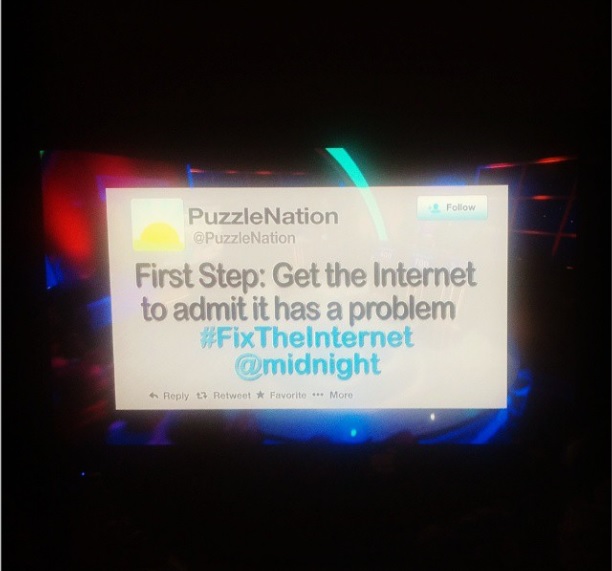
Not to brag, but PuzzleNation has won Tweet of the Day not once, but twice, back when we used to participate in hashtag wars on a nightly basis.

And although we don’t indulge our hashtag urges more than once a month, we’re grateful for @midnight, not only for their creativity and humor, but for inspiring us to never stop finding fun, puzzly ways to engage our audience.

Sadly, after four years on the air, @midnight will wrap up their impressive run in the next few weeks. I’m sad to see the show go, because many of my favorite lesser-known comedians got a lot of air time on the show and got to show off their hilarious punny chops.

The show comes to an end on its 600th episode, and it will be missed. Thank you to the cast, crew, and host Chris Hardwick for all their hard work, all their silliness, and all their wit.


Thanks for visiting PuzzleNation Blog today! Be sure to sign up for our newsletter to stay up-to-date on everything PuzzleNation!

You can also share your pictures with us on Instagram, friend us on Facebook, check us out on Twitter, Pinterest, and Tumblr, and explore the always-expanding library of PuzzleNation apps and games on our website!
Crosswordese: Now with Rhythm!

[Image courtesy of Crosswordese Selfies.]

Crosswordese is the bane of solvers and constructors alike.

For the uninitiated, crosswordese consists of words that appear frequently in puzzles, but not nearly as often in conversation or common use. (My favorite variation on that definition: “words that crop up a lot but are otherwise pretty useless.”)

Not only does crosswordese prevent new solvers from enjoying crosswords to the fullest — by forcing them to learn a weird, esoteric jargon that feels exclusionary — but it hounds constructors who are trying to build solid, engaging grids, tempting them with easy letter combinations and tricky corner resolutions.

Crosswordese is so prevalent in the field that some crossword enthusiasts try to craft stories that include as many examples of crosswordese as possible.

The father of Reddit user Cheedrifin went another way, though, penning a delightful poem full of crosswordese!

We’ve posted it in full below. Enjoy!


THE CRUCIVERBALIST’S BALL

I was stunned, I’ll admit, when I got the call
To go to this year’s cruciverbalist’s ball.
For eons I’d wanted to earn such a bid
To see all the bigwigs who live in the grid.

I should say that I don’t have a poet’s portfolio
Up to describing this fabulous olio,
But I’ve always said “Carpe diem’s my motto.”
I’ll give it a shot with some help from Erato.

The lot of us boarded a sleek SST
And flew over what looked like the dry Aral Sea.
But just where it was held, I can’t properly say.
They swore me to silence at point of epée.

But it might have been Riga, or maybe Oman.
The Rhine? The Rhone? Iraq or Iran?
It could have been Agra—I know it was far—
Or maybe an aerie perched over the Aare.

Wherever it was, they served us some naan,
Aioli and Nehi and roasted eland.
And down at our heels, keeping watch for dropped pasta
Were dogs from the A-list: Ren, Odie, and Asta.

We all settled down at the sound of a raga
Announcing arrivals of sri, shah, and aga.
Still more eastern royals stepped out of the car:
An Arab emir and a ranee and tsar.

The big names could not keep away from this forum.
Mel Ott! Ernie Els! William Inge and Ned Rorem.
And brimming with pride both paternal and filial,
The architects Saarinen: Eero and Eliel.

Sajak was stoked to meet old Ayn Rand.
And Ezio Pinza hailed Elia Kazan.
Malia and Oprah remembered Chicago,
And Amis and Imus examined Iago.

James Agee went on about where he had been
With Ani DiFranco and Anaïs Nin.
We saw Uta Hagen, who didn’t speak German
To Yma and Uma (yeah, Sumac and Thurman).

E. Utne shared new-age convictions with Moby
While Cheri Oteri was tying her obi.
We sampled the ahi (it’s really just tuna)
With dear Mrs. Chaplin, who said “Call me Oona.”

We sang and we danced till they all had to go,
Catching planes to the Urals, or trains to St. Lo.
Now I’m stuck for an ending. Have one I can borrow?
I guess I’ll just wait for the answer tomorrow.


So many of the chronic crosswordese offenders are included! Did the poem miss any of your favorites/least favorites? Let us know in the comments section!

Thanks for visiting PuzzleNation Blog today! Be sure to sign up for our newsletter to stay up-to-date on everything PuzzleNation!

You can also share your pictures with us on Instagram, friend us on Facebook, check us out on Twitter, Pinterest, and Tumblr, and explore the always-expanding library of PuzzleNation apps and games on our website!

The Labyrinth? Why, you must be mythtaken!

Oh yes, it’s that time again! It’s to unleash our puzzly and punny imaginations and engage in a bit of sparkling wordplay!

You may be familiar with the board game Schmovie, hashtag games on Twitter, or @midnight’s Hashtag Wars segment on Comedy Central.

For years now, we’ve been collaborating on puzzle-themed hashtag games with our pals at Penny Dell Puzzles, and this month’s hook was #PennyDellPuzzleMyth, mashing up Penny Dell puzzles with anything and everything mythological! Greek, Roman, Egyptian, Celtic, Norse, whatever!

Examples include: Helen of Troy-Angles, Odin and Around, and Heads and Heads and Heads and Heads and Heads and Heads and Heads and Heads and Heads and Tails (because it’s a hydra).

So, without further ado, check out what the puzzlers at PuzzleNation and Penny Dell Puzzles came up with!


Greek Puzzle Myths!

Homer Runs

Odyssey It Again

Odysseycret Word

Letter Illiaddition / Iliadd One

Midas Touch Tank

Crostyx

Dionysuspended sentence / Pegasuspended Centaurence

Dionysus Fill-In

Places, Pleiades

Hera and Theras / Hera & Thor

Roll of the Diana

Kraken-jacks

Krak-uro

Animal Krakens

Seven-Up Against Thebes

Roll of the Eurydice

Psycheword

Minotaur-Crosswords

Muse Calling

Nemean Lion ‘Em Up

Pandora’s Boxes

Janus Face to Face

Square Nine Muses

Cerberus in the Square

Face to Face to Stone

Math Maze/Labyrinth: Plus and Minotaurus

Apollo to Zeus Maze

Minotaur’s-Eye Spiral

Hecuba Match


Norse Puzzle Myths!

Bricks and Thor-tor

Thor ‘n’ Aft

Freya Know the Odds

Frigg-erits!

Frigg-zag

Frigg-saw Squares

Mimir Mimir

Mimir Image

Annar-gram Magic Square

Tyr-Angles

Tyr-amid Words

Buri Treasure

Loki Score

Loki Star

Lokiword

Loki Double Cross

Exchange Borr

Quo-Dagr-ams

Fulla Circle


Egyptian Puzzle Myths!

Sphinx’s Riddle Me This

Picking up Osiris Piece by Piece

Horus and There

Shu-doku

Khepri It Moving

Pyramiddle of the Road

Hierocryptics


Crypto Puzzle Myths!

Mega Sudoku

Nessie Solitaire

Mathsquatch

Anagram Mongolian Death Word

Chupacommon Combos


There were a few submissions that deserve their own section, as several of our intrepid puzzlers went above and beyond.

Grand Minotaur (obviously in the Labyrinth, son of the Cretan Bull’s-eye Spiral and killed by Theseus Three)

Siren Says “Come down from that Mast-to-hear-our-words” You know the Odysseus… facing yet another Dilemma. Sailors have him Family Tied and only bind him tighter. I’m sure he has A Few Choice Words for them. 😉

Roll the Dionysus before he Looses his Tiles! He had Two at a Time all night!

Riddle Me This in the Middle of the Road: “Which creature walks on four legs in the morning, two legs in the afternoon, and three legs in the evening?” asks the Sphinx guarding the route to the city of Thebe.

Spell and Score: In retribution for Minos the King of Crete’s failure to sacrifice a white bull Poseidon sent him, Poseidon ordered Aphrodite to cast a spell on Minos’ wife, Pasiphae, to fall in love with the Cretan bull; they mated, and their offspring was Minotaur.


Have you come up with any Penny Dell Puzzle Myths entries of your own? Let us know! We’d love to see them!

Thanks for visiting PuzzleNation Blog today! Be sure to sign up for our newsletter to stay up-to-date on everything PuzzleNation!

You can also share your pictures with us on Instagram, friend us on Facebook, check us out on Twitter, Pinterest, and Tumblr, and explore the always-expanding library of PuzzleNation apps and games on our website!
The Rubik’s Cube World Championship!

This past week, Rubik’s Cube enthusiasts from around the world convened in Paris, France, for the Rubik’s Cube World Championship.

The event spanned three days, welcoming over 1,000 competitors from dozens of different countries to test their speed-solving abilities against fellow solvers.

Think about that. Dozens of countries. The Rubik’s Cube is truly ubiquitous these days. (Rubikquitous, perhaps?)

Although the bulk of the competitions were centered around speed, the list of events was pretty impressive, including solving a cube in the fewest moves, solving blindfolded, solving one-handed, and even solving with your feet! Plus there were events where competitors solved variations on the classic cube!

[From left to right, a Skewb, a Megaminx, and a Pyraminx. All three cube variants were used in speed-solving competitions.]

You can check out all of the results from the Championship by clicking here. But I do want to make a point of highlighting just how quick these competitors are.

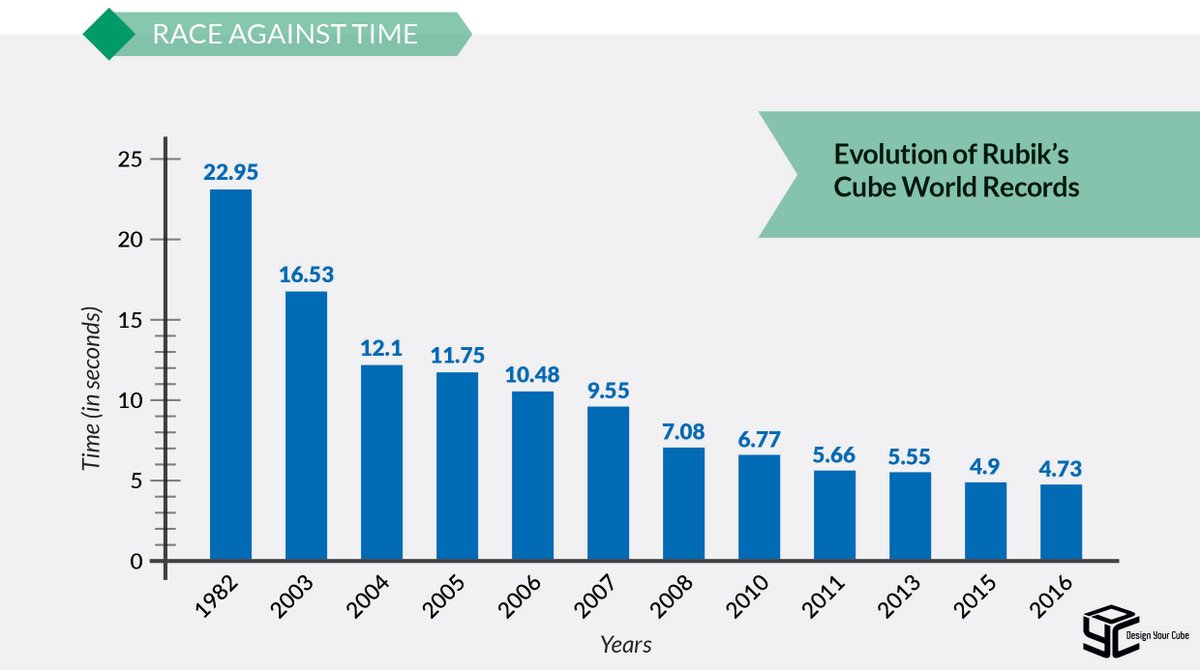
The speeds we are talking about here? Mind-blowing. The 3×3 cube champion averaged 6.85 seconds across 5 solves. His fastest solve was 5.87 seconds. That’s madness.

And that level of speed was not an outlier. You had to ratchet things up in both size and complexity, all the way to a 6×6 cube, before a championship-winning time exceeded one minute.

But individual achievement was not the only game in town here. For the first time, three-member teams from various countries competed in the Rubik’s Nations Cup.

The competition was modeled around a relay race. The first team member would solve a cube, then the second, then the third, and their aggregate time (as well as individual times) recorded.

72 teams competed in the Nations Cup, but the victory went to one of the German teams! Although it wasn’t a sanctioned event, it was a real crowd pleaser, and something that would definitely offer some puzzly bragging rights on the speed-solving circuit.

And although this was a competition, the spirit of camaraderie and community that infused the event was wonderful. You could really sense that this was an opportunity to make friends, to show off your skills, and to remember that puzzling is a universal language, whether you’re talking crosswords or cubes.

You can check out some of the event highlights, as well as a message from Erno Rubik himself, in this video:

All in all, it looks like an absolute blast was had. Now that’s some quality puzzling.


Thanks for visiting PuzzleNation Blog today! Be sure to sign up for our newsletter to stay up-to-date on everything PuzzleNation!

You can also share your pictures with us on Instagram, friend us on Facebook, check us out on Twitter, Pinterest, and Tumblr, and explore the always-expanding library of PuzzleNation apps and games on our website!

Puzzle(r)s in Pop Culture: Superhuman

Superhuman is a television show on FOX that combines elements of game shows and talent shows, wherein people with exceptional mental abilities are tested on the air, competing for a $50,000 grand prize.

The show has featured exhibitions of memorization, visual acuity, math and puzzling skills, and more, offering people the rare opportunity to show off the mind’s amazing capabilities. (It also bucks the trend of modern reality competition shows by not having the contestants judged by a smug British man.)

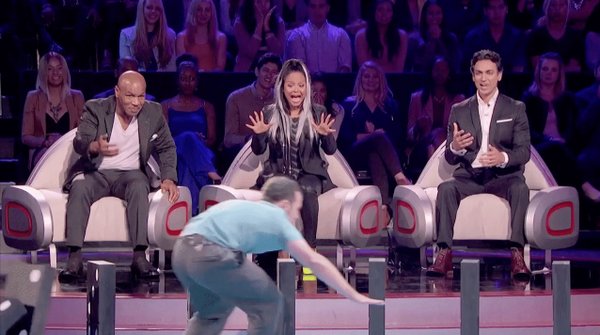
Actor Kal Penn hosts the show, and the three panelists who comment on performances and help choose the winner are boxer Mike Tyson, singer Christina Milian, and neuroscientist Dr. Rahul Jandial.

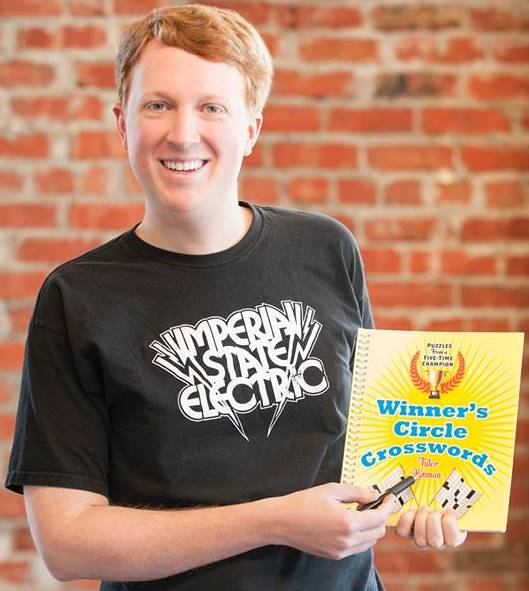
And on last week’s episode, “All Parts Extraordinary,” a face familiar to puzzlers and crossword fans appeared on the show: Tyler Hinman.

The former 5-time American Crossword Puzzle Tournament champion was pitted against four other contestants with impressive mental abilities.

Chris Authement, a math whiz, was tasked with adding up all the pips on giant dominoes as they fell, correctly counting 535 pips in the time allotted.

Tatiana Marquardt, a mother of three with impressive memory recall, was tasked with memorizing five days of scheduling for three different kids. Each day had four activities. The judges then randomly chose a child and a day of the week, and she had to pack their backpacks for each day’s agenda. And she nailed all three days.

Dave Farrow, a computer scientist with a focus on robots, memorized a grid of 108 blue and red balloons (laid out in an 18×6 grid). Then, based on the judge’s choices, he was asked to recall the color of a particular balloon, the pattern of a particular column of balloons, and finally, a particular row of balloons. Recited backwards. And he did so.

Luke Salava, a lawyer with a knack for facial recognition, had to learn the faces of 100 members of the studio audience. Then, three of those people were removed, and that entire section of the audience was reshuffled. His task was to identify the three new people in the crowd. And he did so with ease.

When it was Tyler’s turn to show off his puzzly skills, he had a serious challenge ahead of him.

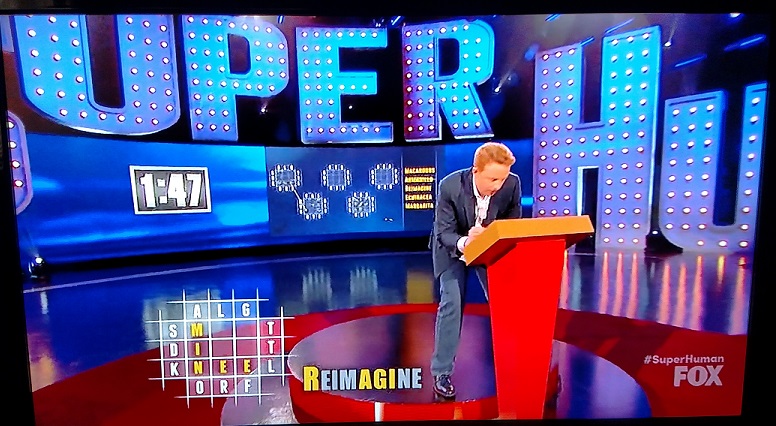
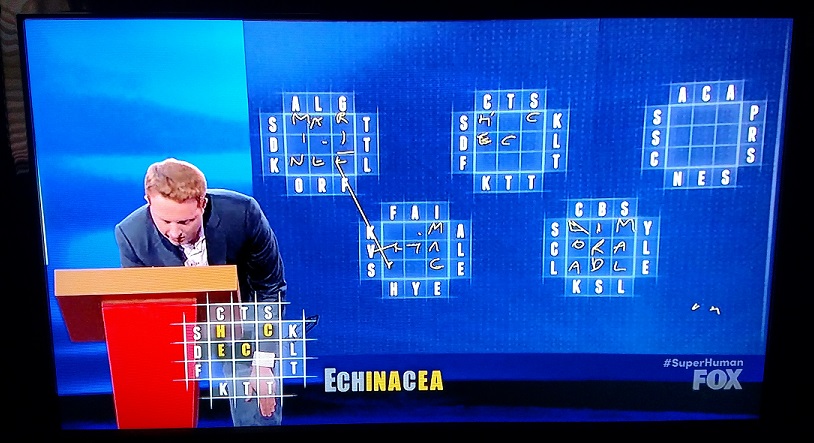
This grid of crisscrossing 5-letter words can only be completed with the letters in a 9-letter word provided alongside the grid. But Tyler had five of these grids to solve, and he wasn’t told which of the five 9-letter words went with which grid.

Oh, and he only had 3 minutes and 30 seconds in which to solve all five grids.

He went right up to the wire, but solved all five grids, showing off not only his deductive reasoning, but his vast vocabulary and his speed-solving technique, honed by years of crossword solving and tournament competition.

After all five competitors had their time to shine, the judges narrowed the field to three: Chris, Dave, and Tatiana. And the audience voted electronically for the winner: Dave Farrow, master of balloons.

Honestly, I thought both the judges and the audience picked wrong. Tyler was the only one who really had to work out his technique in front of the crowd, showing missteps and false paths that he corrected on the fly.

He actually talked through the process as he solved, which to me was more engaging and interesting.

Don’t get me wrong, the acts of memorization were very impressive, but only Tyler and math whiz Chris were really under a time limit. (Tyler’s was literal, while Chris’s was kinetic, since the dominoes were toppling.)

Also, I can’t believe that Luke didn’t at least make the top three, let alone win. 100 faces to memorize and reshuffle in your head? That’s mind-boggling to me.

Alas, such is the flying fickle finger of fate. Still, it was a strong showing for a world-class puzzler, an exhibition of puzzly talent that did not fail to impress.


Thanks for visiting PuzzleNation Blog today! Be sure to sign up for our newsletter to stay up-to-date on everything PuzzleNation!

You can also share your pictures with us on Instagram, friend us on Facebook, check us out on Twitter, Pinterest, and Tumblr, and explore the always-expanding library of PuzzleNation apps and games on our website!