The Puzzling Art of Letterlocking

letterlocking

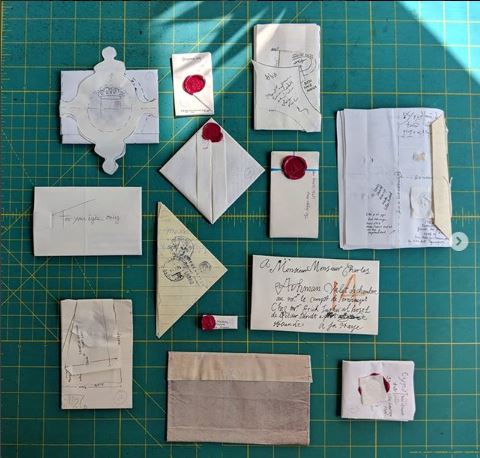
[Image courtesy of Letter Writers Alliance.]

When you think about puzzles and personal security, what comes to mind?

Do you think of puzzle boxes, those delightfully tricky little wooden creations with all their sliding pieces and hidden compartments? Or does your mind go to encryption, the art of concealing your message in plain sight with ciphers, scytales, and other techniques meant to baffle anyone but those in the know?

Some puzzle box designs date back centuries, and ciphers can be traced back even further. (One is named after Caesar, after all.)

But there’s another centuries-old puzzly procedure you might not know about, and it kept letters and messages safe using nothing more than paper and wax.
butterflylock

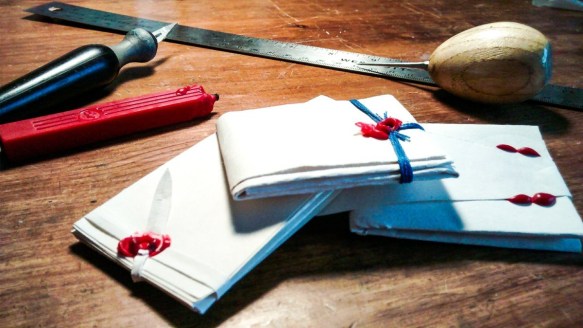
[Image courtesy of ibookbinding.com.]

This technique is known as letterlocking. It involves a mix of precise folds, interlocking pieces of paper, and sealing wax in order to create a distinctive design or pattern.

Although the pattern itself can work like a puzzle — requiring a particular trick to unfold it and reveal the message without ripping or damaging the letter — that’s only a secondary line of defense. The true goal of letterlocking is to reveal tampering. The folding techniques are distinctive, and the wax creates points of adhesion.

If you receive a letter and the folds are done (aka redone) incorrectly, or the wax is smeared (or the paper ripped where the wax would have held it tight), then you know the letter has been compromised.
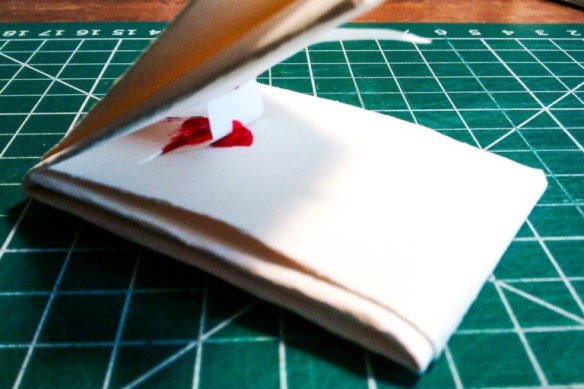
daggertrap

[Image courtesy of ibookbinding.com.]

Some examples of letterlocking trace back to the 13th century, and key figures like Queen Elizabeth I, Machiavelli, Galileo, and Marie Antoinette employed letterlocking security in the past. Mary, Queen of Scots, wrote a message and letterlocked it with a butterfly lock six hours before her beheading. (For a more modern reference, letterlocking was employed in the Harry Potter films as well, most famously in Dumbledore’s will.)

The various techniques involved are as distinctive as knots. The triangle lock. The dagger-trap. The pinwheel letter. And some historians believe that those techniques imply connections between some of the important players in history.

For instance, both poet John Donne and the spymaster of Queen Elizabeth I employed a similar letterlocking style. Did they share a common source, or even an instructor in common? Or did a particular letterlocking technique provide a clue as to the contents of the letter within?

Letterlocking is a historical curiosity that was seemingly lost to time after the proliferation of the envelope and other security techniques, but it is slowly being rediscovered by a new generation, as well as reverse engineered by scientists and scholars. Yale and MIT both have teams exploring the burgeoning field of letterlocking.

Museums are discovering treasure troves of letterlocked messages by going directly to the source: post offices. A cache of 600 undelivered letters in the Netherlands, for instance, are being analyzed by researchers.
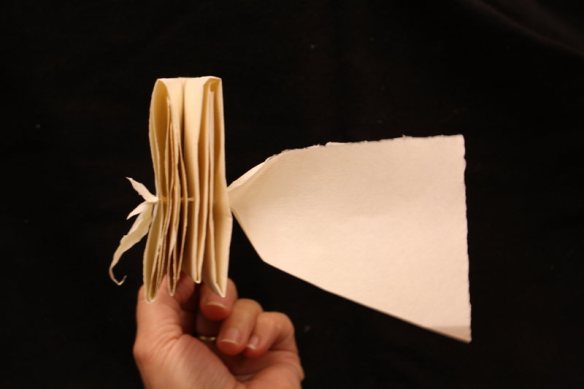
trianglelock

[Image courtesy of Atlas Obscura.]

It’s a remarkable thing, really, this union of centuries-old skills with twenty-first century knowledge. These are puzzles, frozen in time, waiting to be solved and placed into the larger picture of history.

Letterlocking is nothing less than a rare and beautiful art combining puzzles and privacy, as elegant as it is clever. There are no doubt many more secrets to be found behind the folds, slits, and wax seals of these lovingly crafted messages.


Thanks for visiting PuzzleNation Blog today! Be sure to sign up for our newsletter to stay up-to-date on everything PuzzleNation!

You can also share your pictures with us on Instagram, friend us on Facebook, check us out on Twitter, Pinterest, and Tumblr, and explore the always-expanding library of PuzzleNation apps and games on our website!

A Corn Maze for Grown Ups?

Summer is officially here!

Usually, that doesn’t really mean much in the world of puzzles. After all, puzzles are a year-round activity, not beholden to seasonal changes in weather or temperature.

Unless, of course, we’re talking about corn mazes.

Cultivated and shaped over the course of weeks or months, corn mazes are grand puzzly creations, as immersive as they are impressive. Few puzzles can inspire the same feeling of wonder as a corn maze as you explore and roam the various twists and turns laid out by intrepid farmers and entrepreneurs.

Plus they’re family-friendly. It’s rare for a corn maze to provide a genuine challenge, so the genre as a whole tends to be viewed as an endeavor more suitable for families or children than adults on their own.

The folks at Holmberg Orchards & Winery in Gales Ferry, Connecticut, however, have something in different in mind this year.

winemaze1

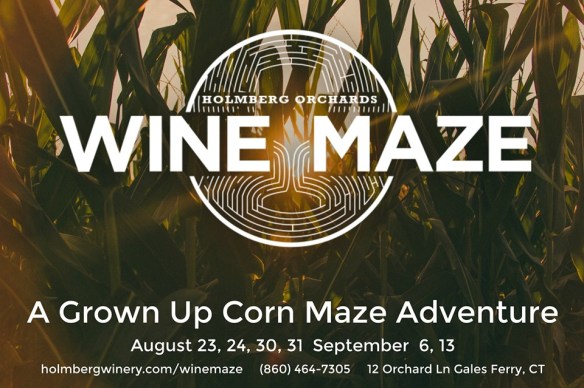
Find the Wine: A Grown Up Corn Maze Adventure is being held in August and September, and puzzlers must be 21 years old and up in order to attend.

This corn maze features stations hidden amongst the various labyrinthine pathways, and these stations will be offering samples of both wine and hard cider for your enjoyment!

Each event runs from 6 pm to 8:30 pm, which is ample time to explore both the maze and various libations in a relaxed and unique puzzly environment, and there will be live music and food truck options available after you’ve completed the maze.

winemaze2

You can click here for ticket details, or visit their websites for further information on the event. There are six Find the Wine dates available — Friday August 23rd, Saturday August 24th, Friday August 30th, Saturday August 31st, Friday September 6th, and Friday September 13th — and tickets are both limited and date-specific.

I think it’s a clever take on the traditional corn maze, and a very smart marketing concept for the winery itself, eliminating some of the noise and chaos of kid-friendly events and creating more of an air of a date night or casual social gathering.

It sounds like a pleasant evening of puzzling for the tipplers out there, don’t you think?


Thanks for visiting PuzzleNation Blog today! Be sure to sign up for our newsletter to stay up-to-date on everything PuzzleNation!

You can also share your pictures with us on Instagram, friend us on Facebook, check us out on Twitter, Pinterest, and Tumblr, and explore the always-expanding library of PuzzleNation apps and games on our website!
ALIEN VS. EDITOR: Caption Contest Results!

Long-time readers know that we periodically invite our fellow puzzlers and PuzzleNationers to show off their wordplay skills with puzzly prompts like our recurring hashtag game. We even invite our friends at Penny Dell Puzzles to participate!

But this month, we did things a little differently. A member of the Penny Dell crew cooked up an image for us, New Yorker-style, and we challenged our friends and readers to compose the perfect caption for it.

So, without further ado, let’s check out what all these clever folks conjured up!


captioncontest1

“Well General, it appears he’s looking for a 2-letter word for ‘Spielberg Film.’”

“He appreciates the mention in the Crossword, but he still thinks that two-letter entries are bad form.”

“He wants an answer for 3 Across, ‘Earth ending.'”

“He says they come in peace, but that could deteriorate very rapidly if we don’t give him the answer to 17-Across.”

“He travelled 47.2 light-years to tell us he needs help with 23-Across.”

“I guess he finds the clue ‘Little green man’ offensive. Some aliens are so touchy!”

“Sheesh, he thinks we have nothing better to do than help him with the Sunday Crossword every week? And they accuse us of being non-intelligent life forms.”

“Take me to your proofreader.”

“He appreciates the Crossword as a gesture of goodwill, but says he’s partial to Sudokus.”

“They harnessed nuclear fusion and have spaceships that travel three times the speed of light, but they still can’t make heads or tails of that Crossword.”

“Well this is awkward. He says his name is Oz, he comes from the planet Toto, and that Crossword he’s holding? He thinks it’s a map of Kansas.”

“Oh crap. Doug, remember that time capsule that we planted on Mars? The one with the Crossword puzzle? I guess we forgot to include the answer.”

“Apparently, on Proxima Centauri, they’ve never heard of Britney Spears.”

“All right…which one of you is Will Shortz?”

“IT’S A COOKBOOK!!!”

“I guess E.T. wants us to phone Dell”.

“Commander, he’s armed with a Easy Fast & Fun Crossword, someone get Penny Dell Puzzles on the phone!”

“Guess they don’t like being defined as aliens!”

“Says they found an alt-solve!”

“We don’t want to cross him.”

“He looks pretty cross.”


“Excuse me, can you show me where we are?”

In the background another alien yells out “Honey, I told you we don’t need directions!”

And the other, “Ugh, this is so embarrassing.”


And members of the PuzzleNation readership also got in on the fun!

One of our Facebook followers, Pat Manzo, offered up the delightful “He’s from the planet Rebus.”


Have you come up with any fun captions for this image? Let us know! We’d love to see them!

Thanks for visiting PuzzleNation Blog today! Be sure to sign up for our newsletter to stay up-to-date on everything PuzzleNation!

You can also share your pictures with us on Instagram, friend us on Facebook, check us out on Twitter, Pinterest, and Tumblr, and explore the always-expanding library of PuzzleNation apps and games on our website!

Putting Clever Cluing to the Test?

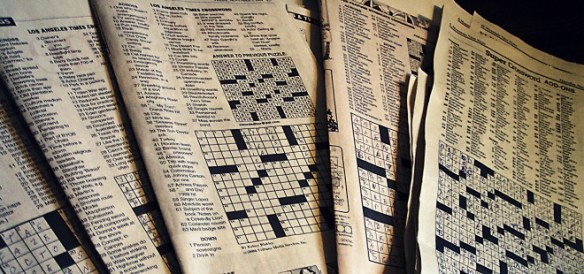
crossword1

As a puzzler, there are few article titles that serve as more efficient clickbait than “6 CHALLENGING CROSSWORD PUZZLE CLUES THAT WILL LEAVE YOU CLUELESS,” so when I saw that title, fellow puzzlers, you know I clicked.

This article by the crew at Wealth Words claims to offer “the trickiest clues that have ever existed.” That is quite a bold statement. Shall we try our luck and see how we do?


Now, before we start, it’s worth noting that we’re at a huge disadvantage here, because any clue, easy or tough, can be made easier if you know some of the letters in the word thanks to words in the grid you’ve already placed that cross this particular entry. We don’t have any of those helper letters, so we’re going to have to rely solely on our sharp wits, wordplay skills, and love of punnery.

Okay, let’s get to it.

Clue #1: Leaning column? (9 letters)

Most crossword fans know that a question mark virtually always means there’s wordplay afoot, so you know you can’t take this clue at face value, which means anything relating to Pisa is probably out. If you focus on “leaning,” that could take you anywhere from Jenga to drunkenness, so let’s play with “column.” Other columns appear in graphs, Excel files, and newspapers.

A-ha. Newspaper column. And some of those “lean” to either the left or the right, depending on the author. This train of thought leads us to the intended answer OPED PIECE.

Grade: A- (It’s a solid clue where the answer doesn’t necessarily immediately jump out at you, but makes total sense once you’ve puzzled it out.)

Clue #2: Strips in a club (5 letters)

[Now, to be fair, “club” was capitalized in the clue on the webpage, but I felt like that was misleading, so I fixed it here. After all, capitalization can be used to great effect in crafty cluing — particularly if you conceal the capital word by making it the first word in the clue, which is always capitalized regardless — but here, it becomes an unnecessary red herring.]

This one is slightly harder, because you don’t immediately get the hint that there’s wordplay involved, since there’s no question mark.

This is one of my favorite kinds of clever cluing, the sort where our preconceived notions of word forms works against us. (Also, it sounds naughty, but isn’t, which I also quite enjoy.) At first glance here, the phrasing makes it sound like “strips” is a verb, when it’s really a plural noun.

And once you get into that mindset, you realize that we’re not talking about that kind of club, and the intended answer emerges: BACON.

Grade: A (Misdirection plus a tongue-in-cheek bit of lewdness? Great stuff.)

Clue #3: Group of crows (6 letters)

I have no idea how this one made it onto the list. Anyone who knows their animal groupings knows that a group of crows is a MURDER. There’s no tricky cluing or misdirection here, just something that might not be in the common knowledge. (But again, I think people are more likely to come up with this one that “exaltation of larks,” “smack of jellyfish,” or “parliament of owls.”)

Grade: D- (Could be difficult for some solvers, but only for unfamiliarity, not style.)

Clue #4: “Yep, perfectly clear” (7 letters)

Okay, this one has quotations around it, which both means it’s a spoken line and it’s likely non-standard, so you won’t find it in a dictionary. It’s probably a phrase, and used in casual conversation.

The answer, as it turns out, is I HEAR YA, which I don’t think any solver would come up with unless they had a few crossing letters filled in for them. The slangy spelling of YA and the informal wording altogether pretty much precludes this from being a “see-it-and-get-it” sorta clue.

Grade: C

Clue #5: [Boo-Hoo] (5 letters)

Brackets are used less commonly than quotation marks or question marks in crossword clue, so it’s more likely that a casual solver wouldn’t immediately recognize what to do with this clue. Usually, brackets indicate this is a non-traditional clue, either making an oblique reference to something or indicating it’s a non-verbal clue like a cough.

In this case, this is meant to be the actual sound of someone crying or something of that nature. So it could be something informal like CRYIN’ or TEARS (as opposed to the more traditional “in tears”) or something like that.

As it turns out, they were looking for I’M SAD. Which is pretty blah. It’s not a standard phrase, and comes off as a cheaply constructed way out of a bad corner, not a solid bit of fill to keep the puzzle interesting.

Grade: F

Clue #6: They come in last (3 letters)

This clue is fairly tough, because it’s both vaguely worded and has a curious letter count. It’s plural phrasing (with “they”), so that immediately makes you want to tack an S onto the end of the word. But it’s also such a short entry that a two-letter word plus S doesn’t seem to fit the clue.

So what comes in last? “End” would fit, if not for the plural phrasing. “P.S.” comes in last, but “P.S.’S” is really clunky, and I don’t recall ever seeing that pluralized.

So what were they looking for? XYZ. Ah. Alphabet entries. You’ll usually see entries like this centering around the first three letters (ABC) or a random string (“RST” seems to come up more often than most), and XYZ certainly fits the bill. But, in the end, it’s not a real entry, and it feels a little cheap, despite the decent wordplay involved in the cluing.

Grade: C-


So, what did I think of the Wealth Words “6 CHALLENGING CROSSWORD PUZZLE CLUES THAT WILL LEAVE YOU CLUELESS” challenge?

I thought it started off very strong with two clever, slippery clues that required you to play with the words and come at them from several angles before stumbling upon the correct solution, and I quite enjoyed those clues.

But the quiz took a real nose dive in quality starting with Clue #3, which had no wordplay at all. #4 and #5 relied heavily on being slangy non-standard verbiage rather than adept cluing or creative fill, and #6 was a bit of a cop-out, even if the cluing quality rebounded nicely.

All in all, I thought the specious entries outweighed the clever cluing on display early on, making for an underwhelming set of clues.

Final grade: C+.

What did you think of these group of challenging clues, fellow puzzlers and PuzzleNationers? Did you enjoy them or find them wanting? Let us know in the comment section below, we’d love to hear from you!


Thanks for visiting PuzzleNation Blog today! Be sure to sign up for our newsletter to stay up-to-date on everything PuzzleNation!

You can also share your pictures with us on Instagram, friend us on Facebook, check us out on Twitter, Pinterest, and Tumblr, and explore the always-expanding library of PuzzleNation apps and games on our website!

Puzzles and Brain Health: Finally Some Definitive Data?

For years now, brain health and puzzle-solving have been intertwined topics.

There have been many, MANY published studies touting all sorts of effects, both positive and negative, of solving puzzles. Alongside those studies, there have been numerous products of a puzzly nature that claim to do everything from improving memory to staving off Alzheimer’s, dementia, and other debilitating conditions.

I’ve been reading articles on the subject for more than six years now, and the results, for the most part, have been inconclusive. This is often due to small sample sizes for the experimental data, or evidence that leads to likelihoods rather than verifiable, repeatable, reliable data.

Across all of these articles, there are essentially three suppositions:

  • A. Solving puzzles helps maintain or improve brain function
  • B. Specific “brain-training” exercises, programs, or products help maintain or improve brain function more so than traditional/unfocused puzzle solving
  • C. Solving puzzles (whether traditional or “brain-training”) helps stave off conditions like dementia, Alzheimer’s, and memory loss later in life

When it comes to Supposition B, I’ve yet to see anything that proves a “brain-training” or “brain-boosting” puzzle regimen actually helps in a meaningful way. In fact, at one point, one of these “brain-training” companies had to pay a two-million-dollar fine for making promises that their program couldn’t verifiably deliver on.

[Image courtesy of SharpBrains.com.]

But let’s leave that nonsense aside for a moment and focus on Supposition A, the idea that solving puzzles is good for the brain.

For the first time, we have a study performed by a reputable organization with a sample size large enough that it may finally allow us to draw some decent conclusions. Two articles published this month in the International Journal of Geriatric Psychiatry have concluded that adults age 50 and older who regularly solve puzzles like crosswords and Sudoku have better brain function than those who do not.

The study, conducted by researchers from the University of Exeter, involved a test group of more than 19,000 participants.

From an article on Science Daily discussing the study:

Researchers asked participants in the PROTECT study . . . to report how frequently they engage in word and number puzzles and undertake a series of cognitive tests sensitive to measuring changes in brain function. They found that the more regularly participants engaged with the puzzles, the better they performed on tasks assessing attention, reasoning and memory.

From their results, researchers calculate that people who engage in word puzzles have brain function equivalent to ten years younger than their age, on tests assessing grammatical reasoning, and eight years younger than their age on tests measuring short term memory.

Yes, this is only one study, and yes, obviously more testing and sampling is needed to apply this to the millions upon millions of folks age 50 and older who might benefit from this. But it’s worth giving this topic deep consideration. A sample size of 19,000 is impressive, and there’s no profit or “brain-training” scam behind the study.

And, regarding Supposition C, while this study didn’t offer anything definitive, it remains a possibility. Dr. Anne Corbett of the University of Exeter Medical School said, “We can’t say that playing these puzzles necessarily reduces the risk of dementia in later life but this research supports previous findings that indicate regular use of word and number puzzles helps keep our brains working better for longer.”

How much longer, who can say? But, when it comes to better brain health, it seems we can finally say that puzzles are good for you. (I always suspected.)


Thanks for visiting PuzzleNation Blog today! Be sure to sign up for our newsletter to stay up-to-date on everything PuzzleNation!

You can also share your pictures with us on Instagram, friend us on Facebook, check us out on Twitter, Pinterest, and Tumblr, and explore the always-expanding library of PuzzleNation apps and games on our website!
TableTop Day 2019: PuzzleNation Style!

tabletopday_logo

International TableTop Day is one of our favorite days of the year around here! Whether you play board games, role-playing games, card games, dice games, puzzles, or logic games, this is the holiday for you, family, and friends to come together and play games.

As we discussed in a previous post, there has been some controversy surrounding the date of TableTop Day this year, so we decided to celebrate our own in-house TableTop Day last Tuesday!

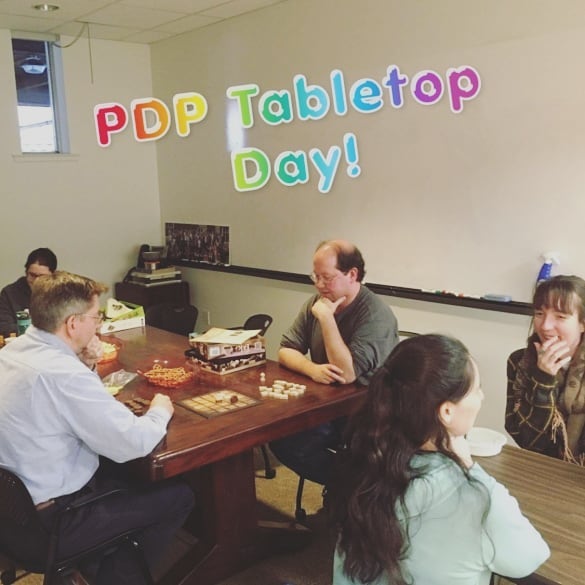
For the seventh year in a row, we put aside some time to indulge in some puzzles and games with our friends at Penny Dell Puzzles, and as always, it was a delight. Games were played, snacks were consumed, and fellow puzzlers and PuzzleNationers were introduced to some terrific games.

For our TableTop Day event, we focus on quick-play games and games for 2 to 4 players, since that allows people the opportunity to try several games without taking too big a bite out of the workday. Not only that, but with smaller groups or 1-on-1 games, it’s easier to introduce someone to a game and really get into the mechanics and gameplay swiftly.

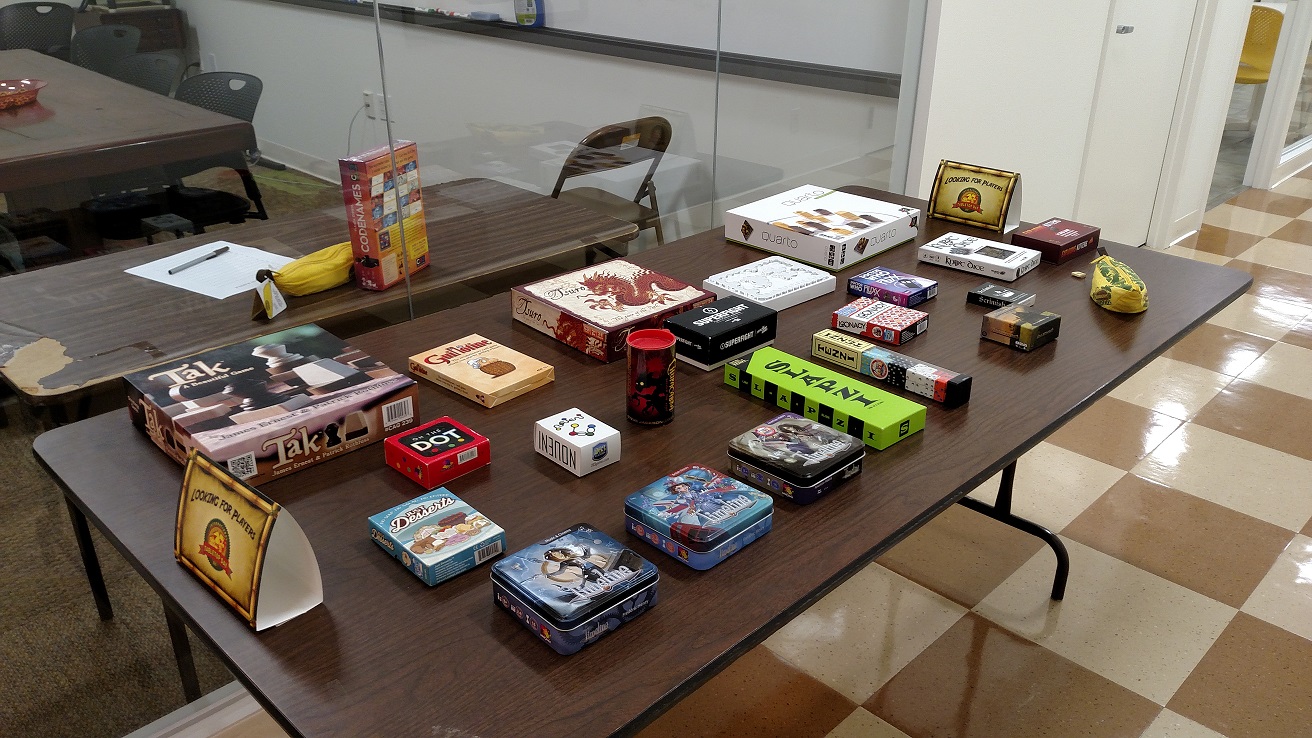
[The spread of games available for the event. Can you name them all?]

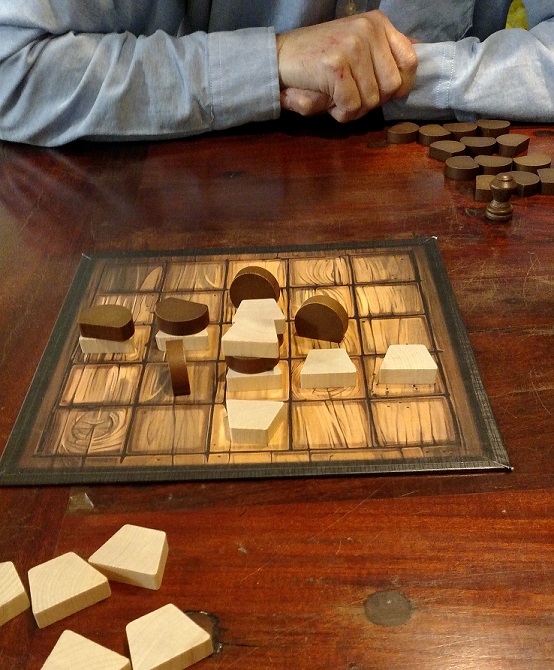
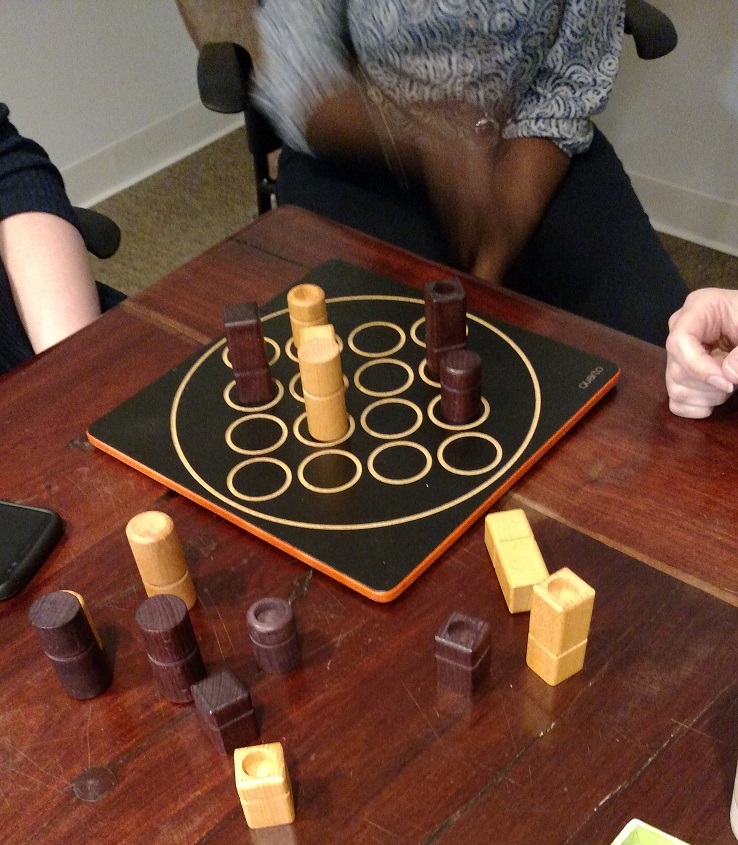
As usual, the event started with people picking out their favorites and introducing new players to the game. Quarto was immediately snatched up, and I played several rounds of Tak with a newcomer to the game who really enjoyed the board game’s strategy, simplicity, and elegant design.

At another table, several rounds of the quick-play pattern-matching card game Loonacy marked a fast-paced and chaotic start to the day’s festivities for new players and familiar faces alike.

A few games of the British History edition of Timeline soon followed, as well as new players trying out the labyrinth-building challenge of The Abandons, which quickly proved both difficult and addictive for one particular celebrant. One-player puzzles like Puzzometry and Knot Dice were also popular.

We concluded our celebration of gaming and community in suitably epic fashion with a round of Exploding Kittens. The players bravely tried to avert and avoid the catastrophes induced by various adorable, oblivious, combustible cats, and it made for a fun, silly ending to another terrific event.

People got to blow off some steam, try some new games, and enjoy some snacks. What more can you ask for? All in all, we definitely call that a success!

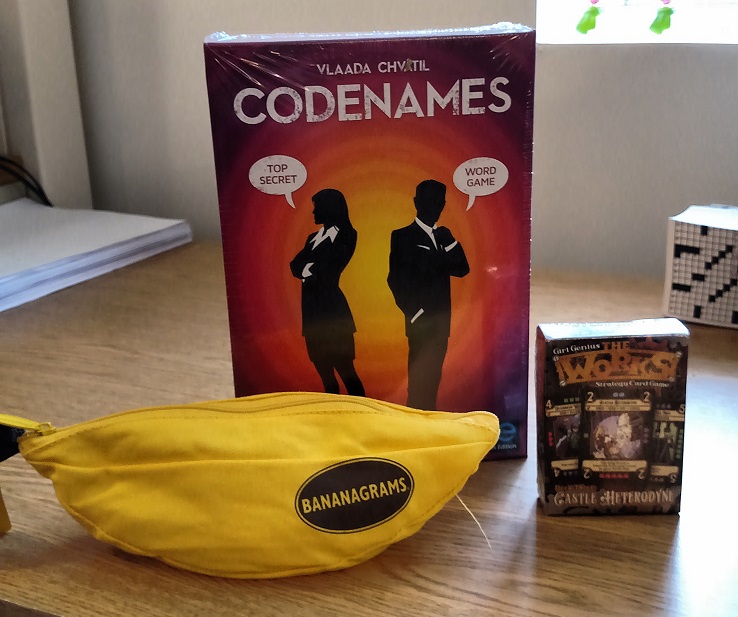
[Naturally, people waited with baited breath to see who won our raffle AND this terrific bundle of games and goodies!]

So, fellow puzzlers and PuzzleNationers, do you celebrate International Tabletop Day? Let us know in the comment section! We’d love to hear from you!


Thanks for visiting PuzzleNation Blog today! Be sure to sign up for our newsletter to stay up-to-date on everything PuzzleNation!

You can also share your pictures with us on Instagram, friend us on Facebook, check us out on Twitter, Pinterest, and Tumblr, and explore the always-expanding library of PuzzleNation apps and games on our website!