Women of Letters (and Squares and Boxes and Clues and…)

Puzzles bring joy to so many of us. They’re an escape, a challenge, a satisfying little test of our wits, our dedication, our creativity, and our flexibility of thought.

In uncertain times, in times of trouble, people often turn to puzzles. Puzzles were a refuge for many during lockdown when COVID hung over our heads. And now, when so much seems uncertain, if not downright unstable, people will no doubt turn to puzzles again.

That’s not to say that puzzle solving is a mere flight of fancy, a desperate bit of escapism, a Hail Mary avoidance of difficult circumstances, hard questions, and treacherous times to come. Quite the opposite, in fact.

If you turn to puzzles now, you’ll see a road map that proves things can get better.

Because, like it or not, misogyny once dominated the world of puzzles. It was baked into crosswords from the very beginning.

Yes, Arthur Wynne created the template for crosswords. Simon & Schuster are credited with publishing the first crossword puzzle book, as well as all the bestselling puzzle books that followed, serving as the foundation that helped build their brand.

But it was women who made crosswords into something more.

Women like Richard Simon’s aunt Wixie. She insisted Simon look into publishing a limited release crossword book. (UPDATE: I originally wrote that none of the stories mentioned her name, but I later found some that included her nickname, Wixie. I later discovered her actual name is Hedwig Simon.)

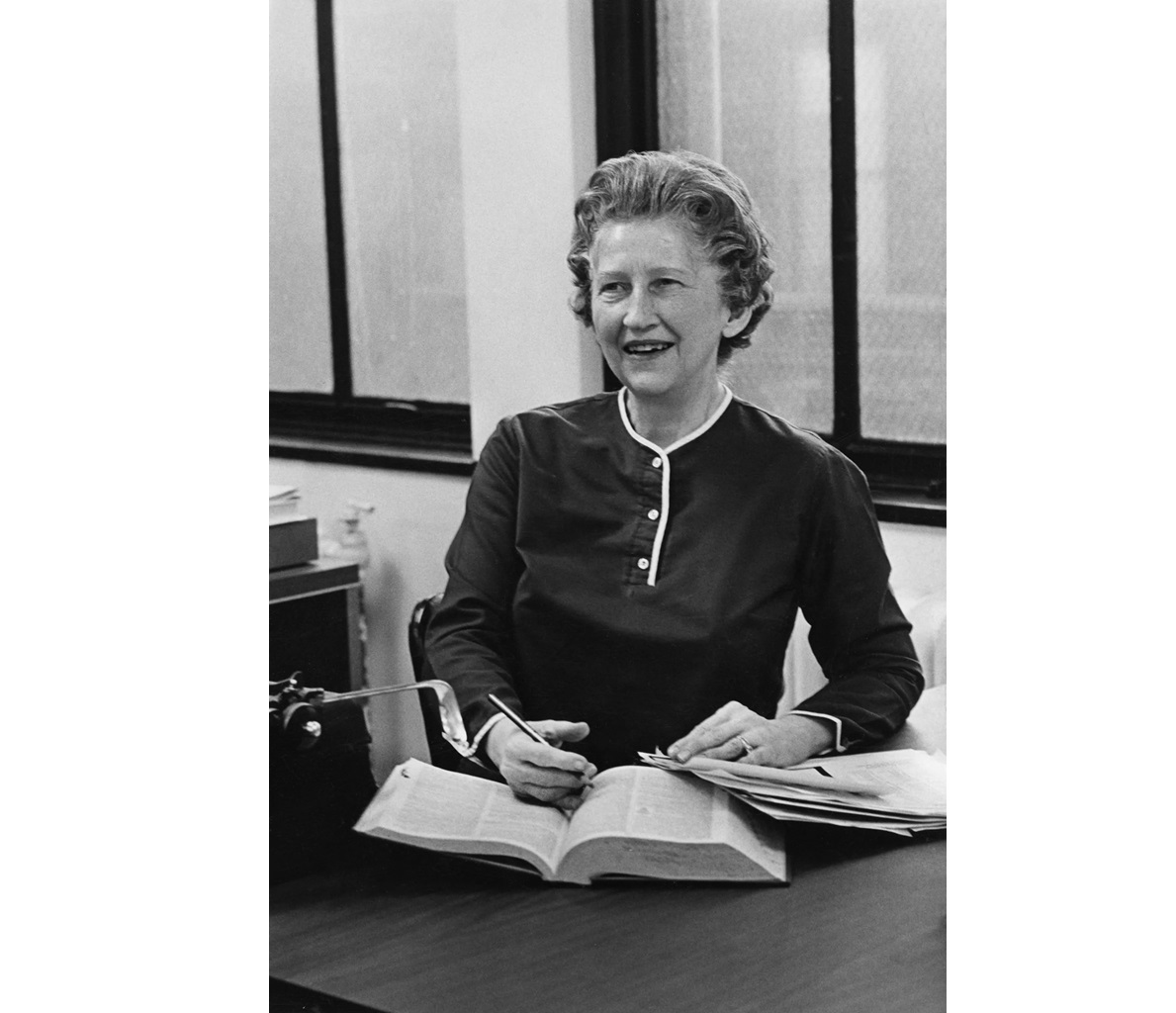
Women like Margaret Farrar. While serving as “an unofficial editor of the crossword-puzzle section,” she prevented errors and helped establish some of the baselines that still stand in crosswords today.

Women like Ruth Hale. Ruth was the founding president of the Amateur Cross Word Puzzle League of America, an organization that set crossword standards like limiting black squares and symmetrical grids, building off of Farrar’s work.

Women like Nancy Schuster. Schuster (no relation to the aforementioned publisher) not only ran Dell Crosswords but was the first winner of the American Crossword Puzzle Tournament.

Women like Helen Haven. In the 1920s, Haven was the organizer of the first competitive crossword-solving contest and served as the puzzle editor for The New York Herald-Tribune.

As pointed out by Anna Shechtman in her book The Riddles of the Sphinx: Inheriting the Feminist History of the Crossword Puzzle, between 1913 and the 1960s, most crosswords were created by women.

Puzzles were literally women’s work! With all the connotations that phrase invites.

And crosswords were derided as a frivolous pastime because of it. Not only because women made crosswords, but because crosswords were predominantly solved by women.

The New York Times called the crossword “a primitive form of mental exercise” and female solvers were blamed for neglecting their families and wifely duties because of their “utterly futile finding of words the letters of which will fit into a prearranged pattern, more or less complex.”

Funny how their opinions changed just in time to profit on crosswords in the 1940s.

Much like the Beatles — who were dismissed as nothing more than a glorified boy band when thousands of women cheered at their shows, only for them to be recognized as a once-in-a-generation group of talents when men started paying attention — crosswords became “respectable” only when men took interest and took over.

The percentage of female constructors published in The New York Times went down during the Will Shortz era, as compared to the Will Weng and Eugene Maleska eras.

And like it or not, but “the average solver” concept — a problem I discussed years ago — is still using a white male yardstick for comparisons, to the detrimental of solving and constructing.

In a wonderful blog post on the subject of women in puzzles, the author of the piece opens with the line “I’ve always associated crossword puzzles with men.”

And I realized how lucky I was to NOT have that association. In fact, I don’t think I would be a puzzly guy without the women in my life.

My mother (the first female store manager in A&P history) still solves crosswords and jigsaw puzzles to this day, and encouraged my interest in puzzles in the first place. My oldest sister (a teacher) introduced me to wordplay. My older sister spent hours playing puzzle video games like Dr. Mario with me. My younger sister is not just a master jigsaw puzzle solver, but a fiend at trivia nights and escape rooms, forever challenging me to match her flow.

I was trained in crossword puzzle editing and construction by Penny Press’s crossword guru Eileen Saunders, and still lean on her creativity and wisdom every day (and marvel at her blistering speed and efficiency).

I was shepherded through the world of variety puzzles by Los Angeles Times crossword editor and puzzle badass Patti Varol. (Though it was probably more like dragging my deadweight body through molasses than “shepherding” if I’m being honest.)

And that’s not counting the undeniable and indispensable influence of Amy Roth (a shining light at Penny Press), Chris Begley, and so many other female voices that make Penny Press one of the best outlets for puzzles in the world.

I love puzzles because of those women. I have made a career in puzzles because of those women. I am better at puzzles because of those women.

The puzzle world is better because of women. It will continue to advance and innovate and thrive because of women.

How do I know this? Because women are doing incredible things in puzzles RIGHT NOW.

A small sampling of the women making puzzles better. Wyna Liu, Amanda Rafkin, Soleil Saint-Cyr, Tracy Bennett. Illustrations by Ben Kirchner.

Look at The New York Times. Tracy Bennett, Wyna Liu, and Christina Iverson are delivering great daily puzzles like Connections, Strands, and Mini Crosswords not just consistently, but brilliantly.

The aforementioned Patti Varol is absolutely crushing it at The Los Angeles Times crossword. With Katie Hale and Angela Kinsella Olsen on Patti’s team, every month since mid-April 2022 has had a minimum of 50% women constructors and often exceeds that, all while delivering topnotch puzzles.

The New Yorker, USA Today, The Slate Crossword? Liz Maynes-Aminzade, Amanda Rafkin, Quiara Vasquez. Brooke Husic runs PuzzMo (where Rachel Fabi constructed my favorite puzzle of the year!) and Amy Reynaldo co-edits Crosswords With Friends.

Rebecca Goldstein just won the Orca for constructor of the year. Smarter people than me have called Stella Zawistowski a crossword boss in every sense of the word. Ada Nicolle won the 2024 Lollapuzzoola crossword tournament.

The impact of projects like Women of Letters and The Inkubator weren’t just the tip of the iceberg, they were the tip of the spear. A spear aimed directly at the heart of outdated notions of who makes crosswords and who solves them, dismantling the idea of some mythical “average solver” that has never truly represented the crossword audience.

As constructors, editors, and solvers, women in the past shaped puzzles as we know them. And women in the present are redefining puzzles. Not just in terms of representation (both as grid answers and creators behind the scenes), but in terms of acknowledgment, respect, and appreciation.

As for women of the future? I, for one, can’t wait to see what they have in store for us.

(And thank you to several of the women mentioned above for making this post far, far better than it started.)

The Crosswordese Champion?

Crosswordese is an omnipresent part of crossword discussion online.

It’s a scourge! It’s annoying! It ruins the solving experience! Can’t constructors just somehow avoid these particular three- and four-letter combinations, no matter how convenient or crucial they are to the grid?!

Rarely a week goes by without a Reddit post dedicated to the subject or a prominent complaint about some aspect of grid fill in one of the blogs/outlets dedicated to covering the daily crosswords.

And it’s understandable. Whether it’s yet another directional clue or a team’s abbreviation on a scoreboard, some entries just irk people. It raises their ire.

Oh no! The crosswordese is slipping into my everyday vernacular!

Quick, summon some longer vocabulary that’s not conducive to crosswording. Gumption. Hurly-burly. Syzygy. Defenestration.

Phew! That’s better. Now where was I?

Right, crosswordese.

I was pondering the plague of crosswordese, and it occurred to me that there’s probably one particular source that has contributed more crosswordese than any other.

But what could it be?

There’s the music industry, of course. There are loads of musicians common to crosswords: ARIE, ENO, SIA, ARLO, ENYA, DRE, ETTA, ELLA.

The same thing goes for celebs. UMA, ANA, ESAI, INA.

The sports world has its own infamous crosswordese as well: ORR, OTT, PELE, ELS, ITO, ALOU, AROD, ASHE, ILIE, SOSA, YAO, ISAO AOKI.

But those are huge swathes of pop culture. Is there a single pop culture property that has helped (or hindered, according to critics) crosswords the most?

There are a few that come to mind.

Peter Pan offers not just PAN, but SMEE, HOOK, TINK, and NANA.

The Beatles gave us ONO, STARR, and SGT (for Pepper).

Lord of the Rings is certainly worth mentioning, adding ORC, ENT, and LOTR.

Game of Thrones was ubiquitous at one point, helpfully resurrecting OONA and adding ARYA (and to a lesser extent BRON, SANSA, HODOR, and CERSEI).

Then there are some serious heavy-hitters.

The Simpsons has NED, MOE, APU, OTTO, EDNA, and STU (of the Disco variety).

On the sci-fi side, Star Trek offers WORF, TROI, LEVAR, LUC (as in Jean-__), and options for USS. Star Wars is handy as well, with ARTOO, REY, EWOK, POE, HAN, and LEIA.

Not to be outdone, M*A*S*H has plenty to offer: SWIT, ALAN ALDA, FARR, RADAR, and of course NEHI.

I considered awarding the Crosswordese Crown to one of the franchises above, but it occurred to me that I might have to look back a little farther to find the Crosswordese Champion.

Okay, a lot farther.

Some might take issue with me calling the Bible part of pop culture, but there’s no denying its influence in crosswords: LEAH, CAIN, ABLE, ADAM, EVE, ESAU, NOAH, ENOS, EDEN…

That’s a pretty impressive list of crossword regulars.

And yet…

My gut says I might have to give credit to Roman Numerals as a whole. I mean, has any single cultural/pop cultural entity saved more cruciverbalists who’ve constructed themselves into a corner?

And has ANY solver cheered or celebrated when seeing a clue featuring a math equation AND Roman Numerals?

The balance of crosswordese gibberish and solver disinterest just might tip the scales here.

What do you think, fellow puzzlers? Is it the Bible, Roman Numerals, or another source that I missed? Let me know in the comments section below!

Puzzles in Pop Culture: Ten-Letter Word for “Fundamental”

Arthur Conan Doyle’s tales of Sherlock Holmes have myriad adaptations, some with a cast of mice, some medical dramas, some featuring aliens and government conspiracies. Still others hew closer to the original nineteenth-century stories, whether in the form of a period piece, like the films starring Robert Downey Jr., or a modernization, like BBC’s Sherlock. My favorite of this genre is the undersung CBS police procedural/drama Elementary, which ran from 2012 to 2019. Starring Jonny Lee Miller as Sherlock Holmes and Lucy Liu as Joan Watson, Elementary is set in modern-day New York, with Sherlock acting as a pro-bono consultant to the NYPD (he describes himself as a specialist in “deductive reasoning”). While former surgeon Joan Watson eventually becomes Sherlock’s partner in crime-solving, initially, her role is to be his sober companion.

Elementary stays faithful to Arthur Conan Doyle’s depiction of his protagonist as a drug user, opening with Sherlock escaping early from rehab, only to find Joan waiting for him, as she was hired by his father to help him stay sober. His struggles with addiction, time in 12-step meetings, and relationships with other addicts remain mainstays of the series throughout all seven seasons. The work that Sherlock performs, using his deductive reasoning skills for the police, is considered by both him and Joan to be an integral part of his recovery process. Crime-solving keeps his mind busy, giving him constant puzzles to solve.

At its heart, this is a show about solving puzzles. Sherlock’s job is putting together murder motives and methods; his hobbies are picking locks and stockpiling trivia. He gazes at the world as though it is one big jigsaw puzzle and everything needs to be placed just so to make sense. All the pieces are there; you just need to know how to look at them correctly. One episode even hinges on a love of crosswords.

Season one, episode eight, “The Long Fuse,” depicts a bomb going off in the vent of a web design firm’s office. When Sherlock and Joan are called to consult, they discover that the bomb was built four years prior to detonation. The episode is set in 2012, but the logo on the bomb’s battery is from October 2008, as are the newspaper pieces that were stuffed inside. Pieced together, the newspaper shows a Barack Obama who was still only a senator. The man who detonated the bomb did so by mistake: intending to order a sandwich, he called the detonating pager instead of the deli.

Meanwhile, the specter of Sherlock’s addiction reappears. He goes to investigate the company that rented the bombed office four years prior, rifling through the threatening letters they’ve received from ecoterrorists. The company’s head, Heather Vanowen—played by House’s Lisa Edelstein—walks in on Sherlock’s research and says that she recognizes him as a fellow addict. The moment is tense, until she clarifies, “Crosswords.” She used to have her habit under control, but ever since The New York Times put their archives online, she can’t get enough.

This confession is her undoing. Sherlock didn’t just discover the October 2008 date on the newspaper; he also found the imprints of someone writing on a page above—the word NOVOCAINE, which happened to be the answer to the clue “Pain’s enemy” in that day’s crossword. NOVOCAINE serves as a sufficient sample of the perpetrator’s handwriting; all it takes is asking Heather to fill out a few forms, and presto! Her handwriting can be matched to the crossword, clearly identifying her as the bomb’s builder.

The episode comes to an end with Sherlock’s new 12-step sponsor, Alfredo (Ato Essandoh) pulling up to Sherlock and Joan’s brownstone with a shiny new car. A former carjacker and current security consultant, he’s been tasked with trying to break into the car’s security system. Knowing Sherlock’s love of puzzles, he figured he would first let Sherlock take a crack at it.

Earlier in the episode, Alfredo explained the key to being Sherlock’s sponsor: patience. He needs someone to be patient and methodical, the way anyone solving a puzzle must be. As I said, puzzles are the heart of the show, not just in the sense that they’re at its core, but that they permeate the emotional aspects as well. In the world of Elementary, one must be patient and methodical to solve a murder, to solve a crossword, to break into a car’s security system, and to grow and heal.


To think, a prison sentence could have been avoided had Heather simply stuck to solving digital crosswords like Daily POP’s. No ink-stained muss, no legal fuss, no trace of handwriting or physical evidence left lying around in an office vent, waiting to explode.

You can find delightful deals on puzzles on the Home Screen for Daily POP Crosswords and Daily POP Word Search! Check them out!

Thanks for visiting PuzzleNation Blog today! Be sure to sign up for our newsletter to stay up-to-date on everything PuzzleNation!

A Rising Tide

The New Yorker declared in 1959 that the “most important person in the world of the crossword puzzle” was a woman: Margaret Farrar, then the crossword editor of the New York Times. Here in the twenty-first century, whether the most important person in the world is a woman or not seems to be a thornier question. A 2014 work of criticism by constructor Anna Shectman reported that the crossword world was very much dominated by men, and that this problem had only worsened in the previous two decades. An important development since that piece’s publication is the Los Angeles Times’ recent announcement that PuzzleNation’s own editor, Patti Varol, will be taking over as its crossword editor, but while this is a huge step forward, a lot of work remains.

In her Washington Post piece earlier this month, “I’m a Black woman who creates crossword puzzles. That’s rare, but it shouldn’t be,” Portia Lundie summarized the central ironic issue at play: “crosswords as we know them were standardized by a profound woman, yet the authority on language still seems to be in the hands of a few White men.”

For Women’s History Month, rather than looking back at Margaret Farrar, we want to look forward: toward the women making crossword history in the here and now, paving the way for a more equitable future. Toward Anna Shectman, Portia Lundie (see the “Three of a Kind” crossword for more of Lundie’s work), and other profound women seeking not to standardize crosswords, but to complicate the idea that standardization should be the ideal.

We don’t believe in just one spider-themed hero, just one important woman, or just one approach to constructing crosswords!

These days, The Inkubator is a funded and functional crossword subscription service, sending puzzles by women and nonbinary constructors to subscribers a few times each month. As their mission statement puts it, the project serves as “a venue for women to exhibit and get paid for high-quality puzzles, especially (but not exclusively) puzzles that may not have a chance at mainstream publications due to feminist, political, or provocative content.”

Back in October 2018, The Inkubator was just a dream with a Kickstarter. Around this time, Hailey Gavin interviewed co-founder and constructor Laura Braunstein about her vision for The Inkubator’s future. In response to a question about the suffocating nature of mainstream crossword norms, Braunstein put forth the inspiring challenge: “If this is a pluralistic culture and people are threatening that, could the puzzle be a place where we fight back? Could the puzzle be a place of resistance?”

Braunstein nods to another project, spearheaded by Deb Amlen, Amy Reynaldo, and Patti Varol. Women of Letters is a puzzle packet by some of the industry’s top constructors who happen to be women. The puzzles serve as an incentive for solvers to donate to women-centric causes—if you give at least ten dollars to one of the charities listed on the project’s page, and email your screenshot to WomenofLettersCrosswords@gmail.com, you’ll receive the packet in return. By combining a platform for crossword-constructing women with a call for financial support for activism, Women of Letters shows us a concrete way in which the puzzle can be a place of resistance.

Even if it didn’t link arms with other causes, Women of Letters, like The Inkubator, would be a remarkable example of women fighting for a pluralistic culture. It is a radical act just to represent an alternative set of perspectives to those typically laid out in the grids that we allow to define valuable knowledge (“Crosswords are strange arbiters of cultural relevance,” after all). These projects are especially radical because they put a name to how these constructors’ perspectives defy institutional norms, shining a light on gender’s importance. Portia Lundie put it elegantly: “In my opinion, there’s no such thing as a view from nowhere,” no such thing as an objective relationship to language or to knowledge of the world around us.

A pluralistic culture can only be represented in the plural, by a rising tide of women, all with different views from different places, lifting all boats. Solidarity matters more than figureheads when it comes to making real change.


Daily POP walks the walk, regularly bringing you puzzles constructed and edited by women.

You can find delightful deals on puzzles on the Home Screen for Daily POP Crosswords and Daily POP Word Search. Check them out!

Thanks for visiting PuzzleNation Blog today! Be sure to sign up for our newsletter to stay up-to-date on everything PuzzleNation!

Do You Accept the Challenge of “The Impossible Crossword”? You absolutely should!

Part of the challenge for many crossword solvers is that you can’t adjust the difficulty of the cluing on a given day. The clues you get are the clues you get.

New York Times crossword solvers are intimately familiar with this, talking about Tuesday puzzles and Saturday puzzles and understanding what each means in terms of expected puzzle difficulty.

Our own Penny Dell Crosswords App offers free puzzles across three difficulty levels each day, but those are three distinct puzzles, not three different clue sets for one particular puzzle.

Having options for more than one set of clues is fairly rare. Lollapuzzoola has two difficulty-levels for their final tournament puzzle, Local and Express. GAMES Magazine previously offered two sets of clues for their themeless crossword, entitled The World’s Most Ornery Crossword.

The tournament final of the American Crossword Puzzle Tournament offers different clue difficulties for three separate divisions. The Boswords Spring and Fall Themeless Leagues work in a similar manner, offering three levels of clue difficulty — Smooth, Choppy, and Stormy — for competitors to choose from.

The concept of Easy and Hard clues is not unheard of… it’s just rare.

And it’s only natural that someone, eventually, was going to take this concept and dial it up to a Spinal Tap 11.

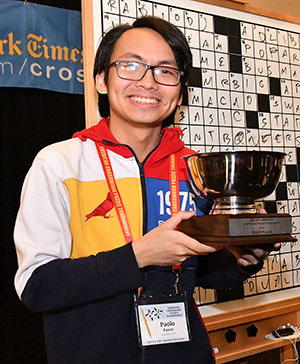
The pair of someones in question are Megan Amram and Paolo Pasco.

Paolo is fairly well-known around crossword circles, having contributed puzzles to the American Values Club crossword, The New York Times, The Los Angeles Times, The Wall Street Journal, and other outlets, while also serving as associate crossword editor for The Atlantic.

And Megan is an incredibly talented television and film writer who has written for Parks and Rec, The Simpsons, and The Good Place. Anytime you saw a hilariously shameless punny name for a store in The Good Place, it was undoubtedly one of Megan’s.

Together, they unleashed The Impossible Crossword in the print edition of The New Yorker‘s December 27 issue, its first ever Cartoons & Puzzles issue. (It was made available on the website the week before.)

The instructions are simple: This crossword contains two sets of clues to the same answers. Toggle to the set labelled “Hard” to impress people looking over your shoulder. (And toggle to “Easy” when they look away.)

This 9×9 crossword’s Easy clues were fair and accessible, but the Hard clues were the real stars. They ricocheted between immensely clever, wildly obscure, and hilarious parodies of themselves.

For instance, the word JEST was clued on the Easy side as “Infinite ____” but received the brilliantly condescending add-on “Infinite ____” (novel that’s very easy to read and understand) in the Hard clues as a reference to the famously dense and impenetrable nature of the novel.

For the word APPS, the Easy clue was “Programs designed to run on mobile devices,” while the Hard clue was “Amuse-gueules, colloquially.”

(I had to look that one up. An amuse-gueule is “a small savory item of food served as an appetizer before a meal.”)

And those are just two examples.

When you finally finish the puzzle, this is your reward:

“You’re a genius! You can tell your mom to get off your case about going to law school.”

All at once, The Impossible Crossword manages to be a fun puzzle to solve on its own, a riotously fun gimmick that lampoons clue difficulty in general, and the most meta puzzle I’ve solved all year.

Kudos to Megan and Paolo for pulling it off. What a way to welcome the Cartoons & Puzzles era of The New Yorker while the rest of us close out another year of puzzling.


   dailypopwsicon

Treat yourself to some delightful deals on puzzles. You can find them on the Home Screen for Daily POP Crosswords and Daily POP Word Search! Check them out!

Thanks for visiting PuzzleNation Blog today! Be sure to sign up for our newsletter to stay up-to-date on everything PuzzleNation!

Speed and Stats in Solving: The Pros and Cons of Streaks

Even before the advent of puzzle apps, stats and record-keeping in puzzle-solving was a thing.

Plenty of solvers keep track of their solving times — here at PuzzleNation we share ours during our Daily POP posts across social media each morning — and it can be for any number of reasons. Maybe they like to keep in tournament-solving shape, maybe they enjoy a bit of friendly competition with fellow solvers, or maybe they simply like testing themselves against their own previous times.

Whether it’s a thread on Reddit’s r/crossword forum or in a conversation with another puzzler regarding how look it took to complete that devious Saturday stumper, these numbers matter to many solvers.

streak 1

When you factor in the stat-keeping of puzzle apps, that numeral awareness increases. Take Daily POP Crosswords, for instance. It tracks your best times across the seven different daily categories, as well as the number of days in a row you’ve solved the daily puzzle.

And these streaks — unbroken chains of solved puzzles across days, weeks, and even months — are prized achievements for some solvers.

I get it. During my best run of daily solving, I managed 150 days or so in a row until I slipped and missed a day one weekend. We even celebrated a friend of the blog hitting a one-year streak back in 2019!

365screenshot

But sometimes, it seems like streak hunting is becoming too much of a priority for some solvers. I see posts where people lament “ruining” a potential month of clean solves by missing a day.

I mean, if you enjoyed solving the puzzles, missing a day can’t wipe away the good time you had solving those other 30 puzzles that month. Right?

Focusing just on time and statistics can mean you’re not taking the opportunity to really drink in all that puzzle has to offer.

We should be taking the time to appreciate the clues and solving experience, even if we’re looking to top our best Tuesday time or hoping to complete week three of a month-long run of success solves.

Heck, one of our own constructors suggested we slow down and smell the roses after posting a time he claimed was too fast for him to fill the grid… and he designed the grid!

streak 2

To be fair, I always go back and read through the clues once I’ve solved a puzzle, in case I’ve missed any choice cluing by zipping through the grid. But that doesn’t mean our constructor’s argument lacks merit.

Hopefully, avid solvers can strike a solid balance and get the most out of each and every solve.

Now, if you’ll excuse me, I’m hoping for a sub-4 minute solve on this Daily POP Plus puzzle.

What do you think, fellow solvers? Are you a streak hunter? Do you track your times? Do you find yourself taking more time on paper or through an app? Let us know in the comments section below! We’d love to hear from you.


   dailypopwsicon

Treat yourself to some delightful deals on puzzles. You can find them on the Home Screen for Daily POP Crosswords and Daily POP Word Search! Check them out!

Thanks for visiting PuzzleNation Blog today! Be sure to sign up for our newsletter to stay up-to-date on everything PuzzleNation!