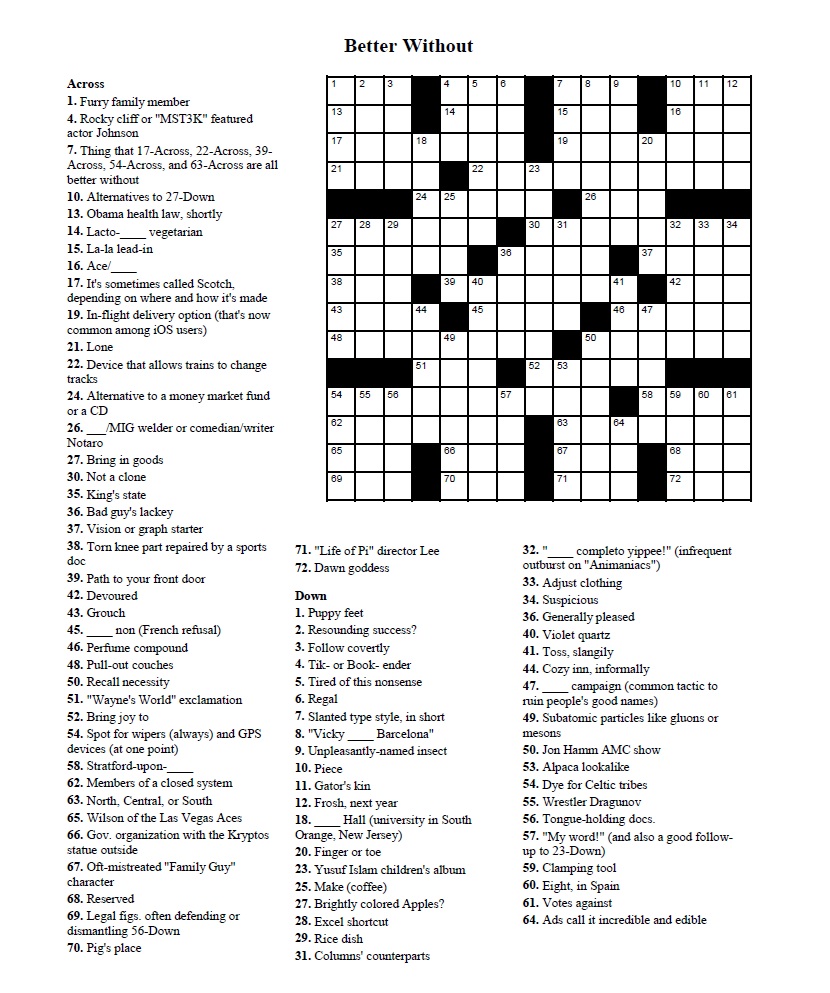
Delving into the 2025 Westwords Tournament Puzzles!

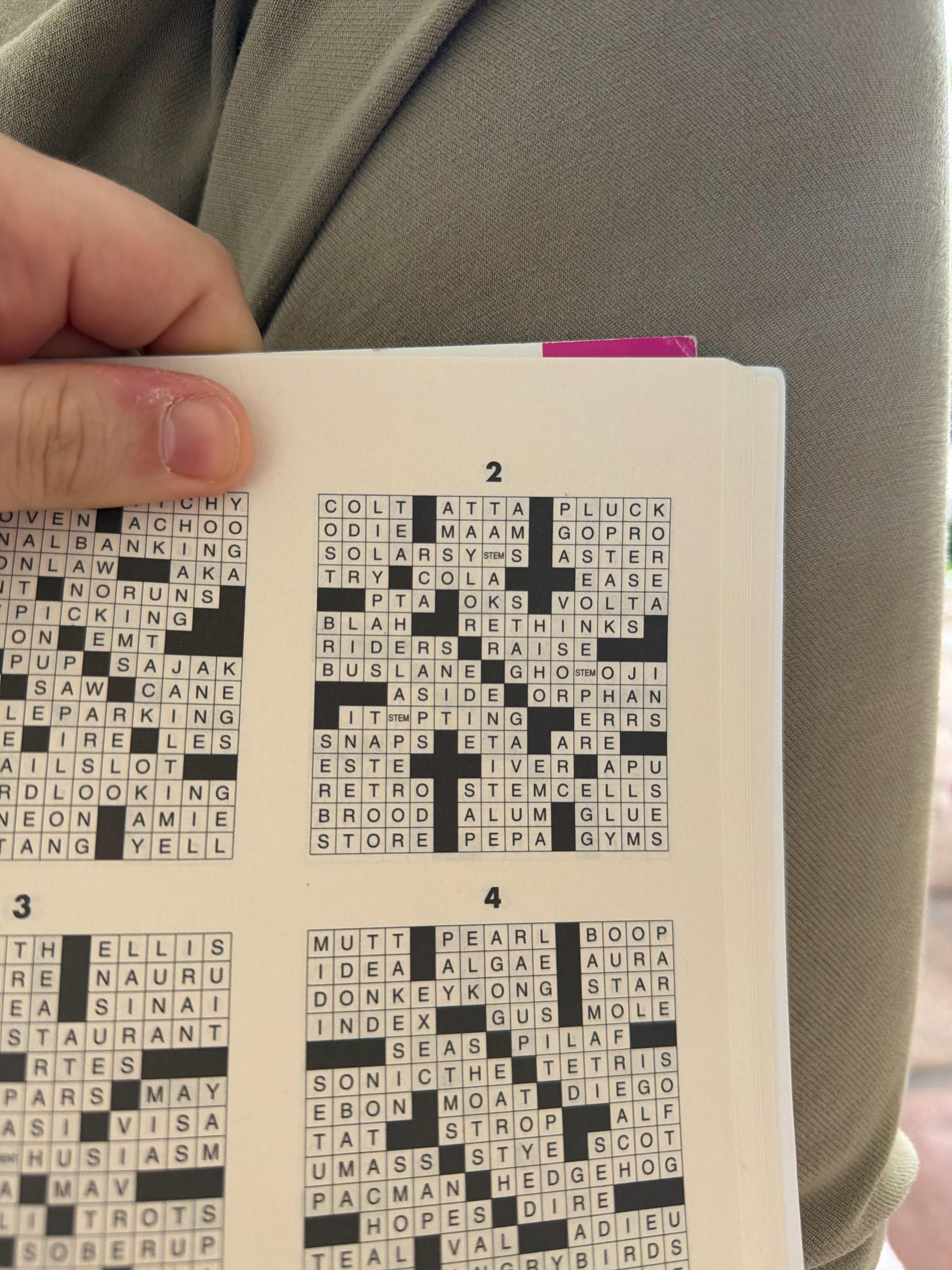
I finally had a chance to sit down and try my hand at the puzzles from this year’s Westwords Crossword Tournament. Given the talent involved amongst the organizers and constructors, I had high expectations, and I was not disappointed.

So let’s put those puzzles under the microscope and see what’s what!


Puzzle #1: Brace for Turbulence by Kevin Christian

The tournament launched with this 16×15 grid loaded with two-word entries (ROUGH CUT, SAVAGE GARDEN) where the first word (the west word) was a synonym for “wild,” aligning with the revealer WILD WEST.

It was a solid starter puzzle with a nice flow and cluing that knocked any solving ring rust from the competitors and prepared them for the day’s events. My only qualm was the repetition of ALL with ALL EARS and AFTER ALL, but that’s more a personal preference than any fault with the construction.

Interesting grid entries included CAJOLED, SALINAS, BEER RUN, and VALLEJO, and my favorite clues were the dual usage of the clue “Pizzazz” for ZING and BRIO, and “Online ‘Reader’ whose name is hidden in ‘Nunavut News'” for UTNE. Nice bit of Crostic-style cluing there!

Puzzle #2: Suspension of Disbelief by Willa Angel Chen Miller

The second tournament puzzle was a freestyle 16×15 with a grid-crossing spanner nicely tying the grid together. It was definitely tougher than Puzzle #1, but the stellar fill and engaging cluing made this one of my favorite puzzles of the tournament.

Miller absolutely made the most of this themeless and jammed loads of long entries into an elegantly constructed grid.

Interesting grid entries included DEAR LORD, EGGS BENNY, SAINTLY, and the pair of WE SHOULD TALK and I BLAME YOU, and my favorite clues were “Device that can affect its user’s balance” for ATM, “Big name in construction” for LEGO, “Two objects in a row?” for OARS, and “The rest of the day?” for SIESTA.

Puzzle #3: State Lines by Amie Walker

The third and largest puzzle of the tournament was this 21x puzzle where the themed entries across were clued with state nicknames — “Beehive state?” for GENERATING BUZZ or “Gem state?” for PEARL CLUTCHING) — and crossed entries where the state abbreviation for that state-specific clue was concealed in the down entry. (CA crossed the entry clued “Golden state?” for example.)

This was really smart and well-executed construction, managing it six times in the grid and never feeling shoehorned-in or inorganic. The simple title not only hinted at the cluing but allowed solvers to add “crossing” to “State Lines” subconsciously. This puzzle was a treat.

Interesting grid entries included HAT TIP, BARBIELAND, OBI-WAN, and SATSUMA, and my favorite clues were “Bird with a notable top spin?” for OWL, “What’s rhymed with ‘pretty mama’ in the Beach Boys’ ‘Kokomo'” for BAHAMA, and “This is so you-coded” for DNA.

Wait, right message, wrong West…

Puzzle #4: Go Dubs! by David Steinberg

With this devious 15x, Puzzle #4 in Westwords could build a similar reputation to the eternally-challenging Puzzle #5 at the American Crossword Puzzle Tournament.

The toughest puzzle of the tournament, this very clever entry from Steinberg featured several entries clued with words starting with W where you had to ignore the W to read the actual clue.

For instance, one clue was “Witch”, but the actual clue was “Itch” and the “W” was a directional hint. The answer, HANKERING, had to be entered into the grid facing west, like GNIREKNAH. Each themed entry followed this pattern, giving us EIGHT literal west-running words for Westwords (as confirmed by the revealer)!

Interesting grid entries included ACETIC, RENATA, PRELAW, and VAIO, and my favorite clues were “One thing, or two people” for ITEM and “Performance at 100-120 BPM” for CPR.

Puzzle #5: L.A.byrinth by Nate Cardin

After Puzzle #4’s trickery, it was nice to have some clear directions to follow with Puzzle #5, an 18×15 grid where Cardin’s clues literally directed solvers through a series of LA roadways grayed out in the grid from top to bottom. Each clue containing part of the pathway through the grid was written like someone giving you directions, i.e. “Okay, now take the 101…” for ENTRY LEVEL COURSE.

Using number-based clues that both hint at the answer and feel like proper conversational directions is a narrow tightrope to walk, but Cardin does a terrific job balancing the style with the substance. This felt totally different from every other puzzle in the tournament and the visual element was great fun.

Interesting grid entries included CORONAL, WAVES HI, and SO SORRY, and my favorite clues were “Board game with ‘RuPaul’s Drag Race’ and ‘Scooby-Doo’ versions” for CLUE and the very appropriately thematic “Like one navigating a freeway maze, hopefully” for ALERT.

Puzzle 6: Final by Caitlin Reid

The final puzzle for the tournament boasts a different set of clues for each of the divisions — Beach and Mountain — and Reid constructed a puzzle with loads of intriguing entries and personality to spare.

The Beach cluing was smooth and accessible while still testing solvers, while the Mountain side offered some very challenging trivia and clever wordplay to keep competitors guessing to the very end.

Interesting grid entries included ROSHAMBO, AU REVOIR (very fitting), LIVE IT UP, COMIC-CON, and ADORBS.

As for favorite clues, here’s a list:

BEACH: “Word before can or tan” for SPRAY
BEACH: “Like a town that’s hardly worth a dot on the map” for ONE-HORSE
BEACH: “Las Vegas institution with a silent partner?” for PENN AND TELLER
MOUNTAIN: “Current law maker?” for AMPERE
MOUNTAIN: “Seat in the House of Lords?” for ARSE


Overall, I really enjoyed my first experience with Westwords. (I have the puzzles from the 2024 event but haven’t solved them yet). Solvers have high expectations when it comes to crossword tournaments these days, and the creativity and skill level of the constructors for this year’s Westwords puzzles absolutely did not disappoint.

We got several different puzzles playing on the Westwords gimmick, some delightful visuals, and a host of terrific clues for fresh grid fill and classic crossword words alike.

If you’ve never tackled tournament-style puzzling before, I would highly recommend giving Westwords a try. The puzzles are tricky and fair in equal measure, and I enjoyed the arrangement of puzzle difficulty throughout the day.

West Coast puzzlers, you’re in excellent hands.


Did you attempt this year’s Westwords tournament puzzles, fellow solver? If so, I’d love to hear from you in the comments section below!

What Belongs in Crosswords: Another Look

Years ago I wrote a blog post discussing how crosswords have to walk a tightrope, balancing topicality and freshness vs. familiarity and family-friendly content.

I mentioned that older solvers may decry newer names, slang, terminology, or pop culture references, while younger solvers will bemoan not just older references they consider passe, but long-established crossword-friendly words they quickly tire of seeing.

And it’s frustrating to still encounter an elitist mentality when it comes to certain crossword solvers.

Now, you’re obviously allowed to have preferences when it comes to grid fill and cluing. But there’s a line, and these elitists stomp across it, barking all the way.

I’ve had commenters rant about the “ignorant ghetto language” in the LA Times crossword, citing “sup,” “did,” and “street cred.” And recently, a commenter shared their annoyance at pop culture references in crosswords, claiming that “doing a puzzle is a test of one’s general knowledge of history, science, and the arts.”

And I’m sorry, but that’s simply untrue. Doing a puzzle — specifically a crossword — is a test of one’s ability to answer clues, deduce words from letter placement, and test one’s vocabulary and knowledge of MANY facets of culture, pop or otherwise.

Different venues will provide different solving experiences, and you’re welcome to cherry-pick your crossword outlets that fit your preferences, but you don’t get to wholesale dismiss other puzzles, grid fill, clues, and content simply because you consider it beneath you.

In the past, I pondered the idea of the “average solver” — something my fellow blogger and puzzler Rae also wrote quite eloquently about — and we both came to the same conclusion: crosswords are better when they try to reach further, to challenge, to evolve.

As Rae wrote:

If we construct a puzzle for the average solver, are we really constructing a puzzle for anyone at all? Or has all the life been sucked out of the puzzle, all the potential for anyone to connect with its quirks?

I love seeing a constructor’s preferences, humor, and interests reflect in a puzzle’s grid fill and cluing. There’s such personality to it!

And it’s a very slippery slope to want puzzles limited to what YOU consider relatable.

Years ago, I was amazed when anyone outside the tri-state area had heard of Action Park, but now, thanks to a documentary about that now-infamous entertainment venue, I wouldn’t be surprised to hear it referenced by someone from either coast of the US or beyond!

Mystery Science Theater 3000, the beloved comedy show where a presenter and their robot chums throw zingers at z-grade movies, used to be famed for its Wisconsin- and Minnesota-specific references and humor. As a teenager from Connecticut, I didn’t get all of them (thankfully, a friend from Wisconsin was able to fill those knowledge gaps for me), but I still very much enjoyed the show.

Later, when it was brought back through Kickstarter campaigns and a Netflix revival, writers from outside the Wisconsin/Minnesota area got to add their experiences and references to the show. Some fans complained that it was no longer their niche little treat, but I for one loved hearing references from my pop cultural childhood that never would’ve graced an MST3K episode from years past.

It’s fine not to know something. It’s not a flaw.

I certainly have my weaknesses when it comes to certain topics and fields of interest. Anyone matched up against me in Learned League should be rooting for questions about flowers, artists, and the names of athletes. I haven’t put in the time to educate myself on those topics, so I can’t be mad when I don’t get some of those trivia questions.

But when it comes to crosswords, I don’t get angry when I don’t know an entry or a reference. I look it up and learn and move on. Hardly a week goes by without learning a new word or phrase from Puzzmo crosswords and cluing. Heck, I’ve lost count of the cultural references and names I’ve learned from collections like A Trans Person Made Your Puzzle and Juliana Pache’s Black Crosswords!

There’s no shame in not knowing something.

There SHOULD, however, be shame in refusing to learn. There SHOULD be shame in excluding things that don’t fit YOUR definition of “culture.” To dismiss pop culture, to dismiss the unfamiliar, is to limit yourself and diminish the art of crosswords.

To argue, as that commenter did, that “sports, transient celebrities, and TV shows” aren’t part of general knowledge or are somehow inferior to their definition of “culture” is unfortunately fighting the tide of how culture works.

Puzzles are constantly evolving as we evolve, and whether you call it culture or pop culture, it all belongs in a crossword grid. We should be making puzzles MORE inclusive, not less.

In closing, I am inspired one last time by our commenter, who said that “a quote from Virginia Wolfe is more resonant than the title of a children’s book written by a former model or ice skater.”

So let’s wrap up this post with a quote from both Virginia Woolf and a quote from a children’s book with quite the resonant title, shall we?

“Lock up your libraries if you like; but there is no gate, no lock, no bolt that you can set upon the freedom of my mind.” — Virginia Woolf, A Room of One’s Own

“I’ll solve a puzzle, read a book, and learn a fun new fact!” — Jessica Hische, Tomorrow I’ll Be Brave

Happy puzzling, everyone!

The Curious Case of Richard Simon’s Aunt, Hedwig

Back in November, I wrote about how women have shaped the world of puzzles, both in the past and in the present.

One of the first women I mentioned was Richard Simon’s aunt. According to the lore of Simon & Schuster, she was the one who inspired Simon to publish a limited release book — the first crossword puzzle book — that launched their publishing empire.

While I was writing that post, I spent a little time researching, and I never came across her actual name. Everywhere I looked, it was simply Richard Simon’s aunt.

And that question festered in my brain for a while.

So, one day, I reached out to Simon & Schuster directly, asking for more information on Simon’s influential aunt. I heard back from Hannah Brattesani, their backlist manager, who not only volunteered to comb through the various company histories, but also suggested a book for my research (Turning the Pages by Peter Schwed).

While Hannah investigated from the S&S side of things, I decided to pursue what was publicly available about the Simon family tree. Perhaps I could look up his aunt directly and find a name that way.

I found that Richard L. Simon was the son of Leo Leopold Simon and Anna Simon (nee Mayer). Leo apparently only had brothers, while Anna’s only sister, Julia, died young.

Okay, that was a dead-end. Ah! But what about women who married into the family?

Anna’s brother Max Reinhard Meyer married a woman named Harriet and Leo’s brother Alfred Leopold Simon married a woman named Hedwig.

So we have two possibilities, but nothing concrete tying either of them to crosswords or S&S’s early days.

I heard back from Hannah, who unfortunately came up empty while searching the S&S archives. The closest we got was a reference from a book celebrating S&S’s 75th anniversary, mentioning “Mr. Simon’s strong-willed aunt.”

Sadly, not an actual picture of Richard Simon’s aunt…

Before I continue, I want to take a moment to ponder all the different permutations of the Richard Simon’s aunt story. For a casual anecdote that adds charm to a business’s first success story, there are a surprising number of variations.

In Turning the Pages and The Centenary of the Crossword, the story goes that Dick Simon had been asked by his aunt for a little help with a crossword puzzle to which she had become addicted. She considered there should be a book of these published.

In an article in Pressreader, she asked him where she could buy a book of crosswords like the ones in her favorite newspaper.

In What’s Gnu?: A History of the Crossword Puzzle by Michelle Arnot, she wants a collection of crossword puzzles for her daughter, an avid fan of the weekly puzzle in The World. In The Crossword Century and Thinking Inside the Box, Simon goes to dinner with his aunt, whose niece was addicted to crosswords.

So the only common threads are Simon, his aunt, and crosswords. Sometimes it’s for her (described as “puzzle mad” or, as we’ve already seen, “strong-willed”), or her daughter, or her niece, or a friend. Sometimes he notices her solving crosswords, sometimes she tells him. Sometimes it’s at her house, or over tea, or at dinner.

Sure, lots of anecdotes evolve over the decades. Any story from your family probably has a number of variations, depending on who tells the tale.

But it’s fascinating that such a fundamental moment in S&S’s history doesn’t really have an official version as part of the narrative.

So, we have Richard Simon, his aunt, and crosswords. Those were the common threads.

And it was the third one in that list that finally led me to her name. Not crosswords per se, but crossword history.

There are several marvelous books about the history of crosswords — I’ll post a list of my sources at the bottom of today’s post — and wouldn’t you know it, several of them include a name for Simon’s aunt!

Well, not a name. A nickname.

Wixie.

Yes, it’s somehow so brilliantly fitting that the woman who launched crossword publishing (for herself, a daughter, a niece, whomever) would have a whimsical nickname like that.

Aunt Wixie.

As it turns out, this nickname was sort of an open secret in the annals of crossword history and I’d managed to miss it in my previous searches across the internet. My grand mystery would have been solved much faster if I’d simply asked some of my fellow puzzlers and puzzle historians.

But I wasn’t disappointed to learn that I was late to the table. On the contrary, I was excited to add “Wixie” to the search parameters and see what I came up with.

A few more online sources were revealed, but sadly, not much else about Aunt Wixie herself.

Now, sharp-eyed readers, you’ve probably come to the same conclusion I did at this point.

Thinking back to what I’d learned about the Simon family tree, I had two possible aunts who had married into the family who could be our crossword-loving inspiration.

One was Harriet and one was Hedwig.

It seems like a natural conclusion that Aunt Wixie and Aunt Hedwig would be one and the same. But none of the sources, paper or digital, ever mentioned her real name.

I could’ve called it here, and written my blog post, and gone on my merry way.

But I wanted that last piece of puzzle that I could definitively point to and say, this, this is her.


In all those Google Books links and online articles, there was one source I couldn’t view publicly, because it was behind a paywall. Naturally, it was also the oldest source I could find online that came up using “Wixie” as a keyword: an issue of Publisher’s Weekly from 1954.

And I could read it… for a fee.

You may find it funny that I balked at spending twenty bucks for access to an article. But I did. I mean, none of the other sources told me more than her nickname and some variation on the crossword book creation myth. Would this one be any different?

As it turns out, yes, yes it would.

From the writeup in Publisher’s Weekly:

Among the devotees of the World’s crosswords was a New York Lady, Mrs. Alfred L. Simon. She had a nephew named Richard L. Simon to whom she was known as Aunt Wixie.

It is so perfectly typical that the smoking gun in my search for Richard Simon’s aunt’s name STILL doesn’t directly mention her by name, using her husband’s name instead. What an insanely fitting denouement.

Nonetheless, I finally had the connective tissue to tie the whole story together. From my deep dive into the Simon family tree, I knew that Mrs. Alfred L. Simon was none other than Hedwig Simon (nee Meier), our elusive Aunt Wixie.

So what do we know about Hedwig?

Sadly, very little. She was born in Frankfurt Am Main, Regierungsbezirk Darmstadt, HE, Germany on February 27, 1868. She had two children, Robert and Helen (hopefully a puzzle lover like her mother, depending on the story), and she died in May 26, 1932 in Manhattan.

That’s it. Several Hedwig Simons come up when you search the name, but unfortunately, I wasn’t able to find anything else I could verify was truly about Aunt Wixie.

Date of birth. Names of her children. Date of death. That’s all we know.

Oh, we actually do know one other thing.

We know that she, in some way, influenced the creation of the very first crossword puzzle book, helping to launch a literary dynasty that lasts to this very day.

But did she though?

It turns out… there’s an asterisk on the historical record that’s worth mentioning.

There is a chance that this entire story is apocryphal, and the influential hand of Aunt Wixie in Simon & Schuster’s earliest days was not as influential as the story makes it seem.

Michelle Arnot reported in her book that Margaret Farrar, first crossword puzzle editor for The New York Times, had her doubts about Aunt Wixie’s role in the creation of S&S’s first crossword book.

In the foreword to Eugene T. Maleska’s 1984 book Across and Down: The Crossword Puzzle World, Farrar herself wrote:

There had never been a book of crosswords and Dick Simon’s aunt had suggested one. (Dick later admitted to me that this was all a joke, even unto the framed memo up on the office wall noting this earth-shaking idea.)

Could Aunt Wixie’s role in the history of crosswords simply be Richard Simon’s invention to help sell crossword books and add some whimsy and down-home family charm to Simon & Schuster’s first of many success story?

Margaret Farrar seemed to think so, and she was one of the most respected names in puzzles.

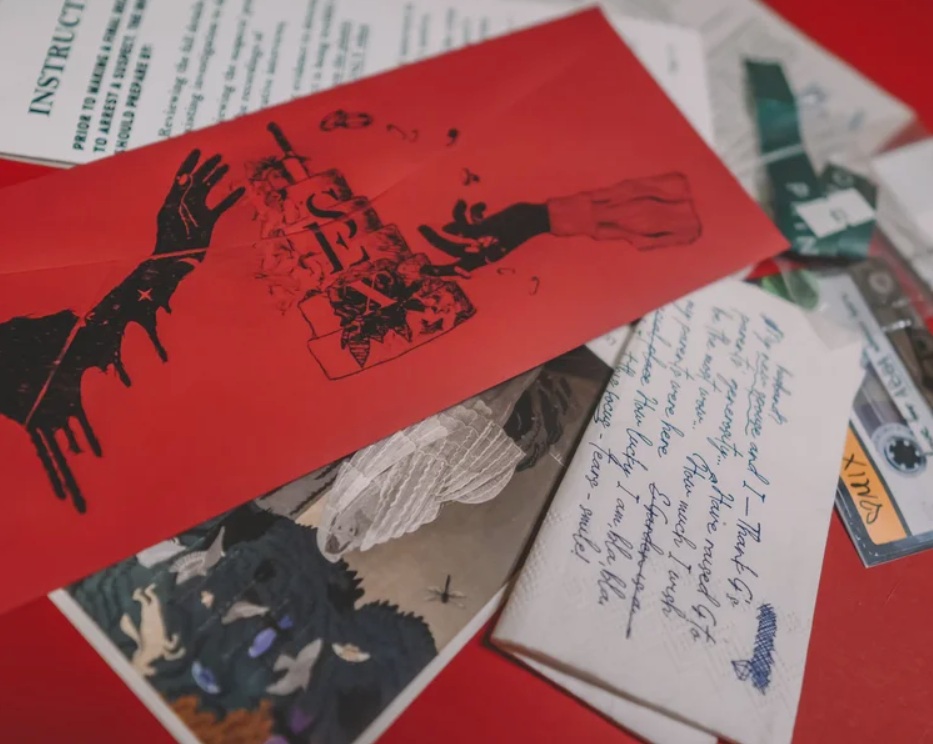
If this IS the case, Simon seemed to go out of his way to sell the story. He had a framed memo on his wall, as Farrar mentioned. He had a presentation copy of the first crossword puzzle book inscribed by both himself and Max Schuster to Aunt Wixie (the note pictured above), which was returned to Richard Simon upon her death, and which now resides in Will Shortz’s private collection.

Will’s collection also includes a copy of 1925’s Celebrities’ Cross Word Puzzle Book, a collection by S&S featuring puzzles created by (you guessed it) celebrities. It’s a leatherbound presentation copy specially printed for “Aunt Wixie.”

By the end of 1924, S&S already had four bestselling crossword compilations on the shelves. By the time The Celebrities’ Cross Word Puzzle Book was published in 1925, would Simon still have bothered with perpetuating the Aunt Wixie story, given the runaway success of S&S’s crossword puzzle books?

It seems a tad unnecessary.

The many variations on how Aunt Wixie, Simon, and crosswords influenced that first puzzle book could mean the story was made up, taking on a life of its own as it was shared anecdotally. Or it could mean that it’s true, as many stories from a hundred years ago have variations from being shared over and over again, retold many times. It’s hard to say either way.

That first book sparked a long, successful series…

I choose to believe that Hedwig Simon was in fact the impetus behind that first book. Maybe it’s naive to want her to be a true crossword enthusiast (or the mother of one, or the aunt of one), and not simply one more corporate invention to sell something to someone.

But I’m okay with that.

I’m happy to have spent this time and energy trying to unearth her name and learn a bit more about her, and I’m hoping that I might have the opportunity in the future to continue learning about her.

And I’m happy that this post, in some small way, might bend search algorithms and lead more people to associate the name Hedwig Simon with Simon & Schuster’s successes.

Narratively, I probably shot myself in the foot a little by putting her name in the title of the blog post. But this entire endeavor has been about learning more about her, learning her name, and it would be the height of selfishness to bury it in hundreds of words of text just for a ta-da moment.

So, in closing, let me just say, thanks Aunt Wixie, and it was nice to meet you, albeit very briefly, Hedwig.


My sincere thanks to Hannah Brattesani of Simon & Schuster, Rebecca Rego Barry of finebooksmagazine.com, and especially Ben Zimmer, who provided several key sources and links (and confirmed that the Publisher’s Weekly was the earliest source on the subject).

Sources:

-Turning the Pages: An Insider’s Story of Simon & Schuster 1924-1984 by Peter Schwed
-What’s Gnu?: A History of the Crossword Puzzle by Michelle Arnot
-The Centenary of the Crossword by John Halpern
-The Crossword Century by Alan Connor
-Thinking Inside the Box: Adventures with Crosswords and the Puzzling People Who Can’t Live Without Them by Adrienne Raphel
-Publishers Weekly (April 17, 1954, Volume 165, Issue 16)

Boswords, Westwords, MoMath, and Free RPG Day: A Big Week for Puzzles and Games!

There’s so much going on this week in the intertwined worlds of puzzles and games to get into, so let’s skip the intro and get to the good stuff!

Boswords Summer Tournament registration is open!

Sunday July 27th marks the latest edition of the Boswords crossword puzzle tournament, and that’s only six weeks away! Thankfully, registration is now open to reserve your spot in this year’s event.

You can participate either in-person or online (as an individual or in pairs) and test your mettle in 5 themed puzzles and a themeless championship puzzle constructed by a marvelous lineup of cruciverbalists: Ross Trudeau, Chandi Deitmer, Hemant Mehta, John Harrington, Mary Tobler, and Quiara Vasquez!

Go to boswords.org for details, to register, or to sample content from previous Boswords events!


Westwords this weekend!

Boswords may be six weeks in the future, but the second annual Westwords Crossword Tournament is happening this Sunday, June 22nd!

This event is also being held both in-person and online, with four themed puzzles and two themeless/freestyle puzzles to challenge solvers. The list of constructors for this year’s event is quite impressive: Amie Walker, Caitlin Reid, David Steinberg, Kevin Christian, Nate Cardin, and Willa Angel Chen Miller!

Go to westwordsbestwords.com for full details and get in on the fun!


One Up Event at the National Museum of Mathematics (MoMath)

If you’re looking for a family friendly puzzly event to check out, MoMath has you covered on Friday, June 20th.

They’ve invited puzzler Rodolfo Kurchan to share the story behind the latest puzzle taking the world by storm, the logic puzzle One Up!

You can learn solving tricks, learn the origins of this puzzle, and spend some quality puzzling time with friends and family.

Go to momath.org/family-fridays for more details!


Free RPG Day

Last, but certainly not least, Free RPG Day is this Saturday, June 21st.

The concept behind Free RPG Day is simple. All over the world (but mostly in the United States), local game shops, hobby shops, and other outlets team up with RPG publishers to distribute new, fresh, and most importantly, free material for all sorts of different roleplaying games, systems, and settings.

Explore the world of roleplaying games at your friendly local game shop and pick up some game quickstarts and free swag along the way!


Will you be participating in any of these puzzle- and game-fueled activities this weekend, fellow puzzler? Let us know in the comments section below. We’d love to hear from you!
The World Cryptic Crossword Championship Is Almost Here!

Are you a fan of cryptic crosswords and looking for a challenge that suits your skill set and tricky puzzle of choice?

Then you should consider testing your puzzly mettle in this year’s World Cryptic Crossword Championship!

Debuting on the weekend of June 28th and 29th, the WCCC is composed of two events: an individual online championship on the 28th (which is open to any and all competitors) and a World Cup-style offline team championship format on the 29th.

The individual championship involves two cryptic grids, each of which must be solved within 30 minutes. Click here to register!

But please be aware that you’re competing in IST — Indian Standard Time — so you’ll have to adjust your schedule accordingly to have a chance at the cash prize for the top three solvers!

The World Cup Final is being held in person in London on the 29th, and consists of two rounds. The first puzzle will whittle down the field of competitors to the four top contestants from four different countries, who will then compete onstage to solve the final puzzle.

Some of the World Cup competitors have been invited for their past puzzly achievements, but there is an offline preliminary for anyone seeking to try their hand (and can be in London on the day in question to compete).

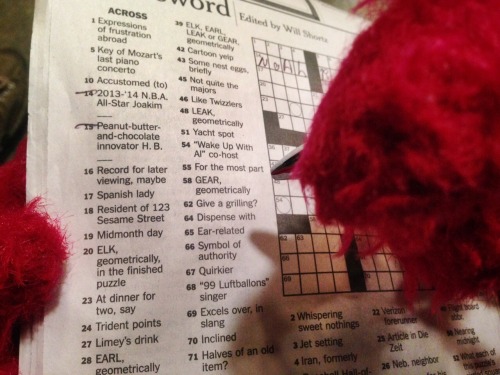
This looks like my scribblings while solving a cryptic… minus the wedding ring, that is.

I’m definitely not the fastest cryptic crossword solver, so I’m not sure I’ll try my hand at this competition… this year. But if it returns next year, I might just shoot my shot.

Cryptic crossword solving involves many of the same skills as American-style crosswords, but there’s also the wordplay element that makes it quite a different experience for those unaccustomed to that puzzly style.

For a good primer on getting into cryptic crosswords, check out this breakdown of cryptic-style cluing from our friends at Penny Dell Puzzles.


Will you be trying your hand at competitive cryptic crossword solving, fellow puzzlers? Let us know in the comments section below, we’d love to hear from you!
A Gateway Puzzle for Crossword Solving?

Where do you get started with crossword solving?

I see that question a lot. And the advice offered to new solvers varies. Sometimes they’re pointed particular crossword outlets promising a more newbie-friendly solve. You certainly don’t want someone tackling a crossword too difficult for their skill level and getting discouraged.

Often, they’re told to just plug away at it, since the only way to get better at crosswords… is by solving crosswords.

None of this advice is wrong. I’m sure people follow these suggestions and slowly start to enjoy this puzzly world that many of us have embraced for decades.

You might think that Mini Crosswords, like those featured in the New York Times puzzle app, are the way to go. But while the grid is smaller, that also means new solvers have fewer chances to find crossings and work on their solving.

Imagine a regular crossword. A Mini is essentially one corner of the grid. If you started a crossword in one corner, and didn’t get any entries, you can move to another spot. But if you’re stumped on a Mini, where do you go?

I also think the running timer feature — although obviously not a necessity for solvers — can add to a new solver’s anxiety. If you’re stumped, and you’re just sitting there, watching the timer tick away, that’s going to eat at your confidence a bit.

crisscross

You might think that crisscross-style puzzles (like the one above) would be less intimidating, since they don’t have the same dense grid surrounded by clues that crosswords have, but I’ve found that folks don’t warm to those quickly. No matter how well-constructed the crisscross, it tends to remind people of activity books for kids, and no one wants to feel patronized when trying out a new hobby or giving it another go.

Not only that, but they are missing one of the most helpful components to crossword solving: all the overlapping letters! In a crossword, you have two chances at every single box because of the across and down clues. But in a crisscross, you usually only have one or two points of overlap, so if the clue isn’t helpful or intuitive, you’re just stuck. That doesn’t build solver confidence.

I do have a suggestion, though.

I’ve tried this with several friends and acquaintances who had sworn off crosswords entirely, and not only introduced them to a new puzzle they didn’t know, but opened their eyes to the possibility of more puzzle solving in the future.

My solution was: Fill-Ins.

fillin sample
A sample puzzle from our friends at Penny Dell Puzzles.
Check out their fill-in library here!

For the uninitiated, fill-ins utilize the same general grid style as a crossword. But instead of answering numbered clues to place the words in the grid, you’re already given the answer words, organized by word length. Your task is to place them all into the grid, using other words and letters in the grid to guide you.

It’s closer to Sudoku-style solving than crosswords, because you’re eliminating options in a logical manner, rather than figuring out clues to place the words.

I believe solving fill-ins helps remove the intimidation factor of crosswords in three ways:

1. No trivia or outside knowledge is required, which removes a huge burden from a solver who has probably felt overwhelmed by crossword cluing in the past.

2. It makes empty crossword grids less intimidating. Do you ever have those moments where you read three or four crossword clues in a row and you don’t immediately conjure up answers? And then you look at all those empty spaces in the grid and feel dumb? It happens. But fill-ins often have a set word to get you started, and once you start placing letters, recognizing useful crossings, and filling the grid, all that goes away.

3. Fill-ins help strengthen another skill valuable in crossword solving: letter-blank recognition. If you see B _ U _ , a regular solver instantly starts listing off possibilities: BOUT, BLUE, BLUR, BAUD, etc. But a new solver — who might not have that reflexive knowledge of possible words — can read through the list of four-letter words and see what fits, helping to build that mental lexicon for future solving.

120718_crossword_L

After solving a handful of fill-ins, word placement goes quicker, confidence in filling in those letter blanks increases, and empty grids become fields of potential puzzle fun, not stark empty spaces.

I’ve suggested fill-ins to several crossword-shy or puzzle-shy friends, and usually, a few weeks later or so, they start asking what other puzzles are out there, or where a good place to start with crosswords might be. And that’s a win.

Happy puzzling, everyone!