Farewell, David.

The puzzle world is a relatively small one, and sadly, over the last month or so, it has grown a bit smaller.

I know some of you are already aware of the passing of Raymond Smullyan, the mathematician and puzzlesmith who popularized, among other things, the logic puzzle known as “The Lady or the Tiger?”

What you may not know is that a long-time member of the Penny Dell Puzzles family also passed recently.
david158aef32a50a5b

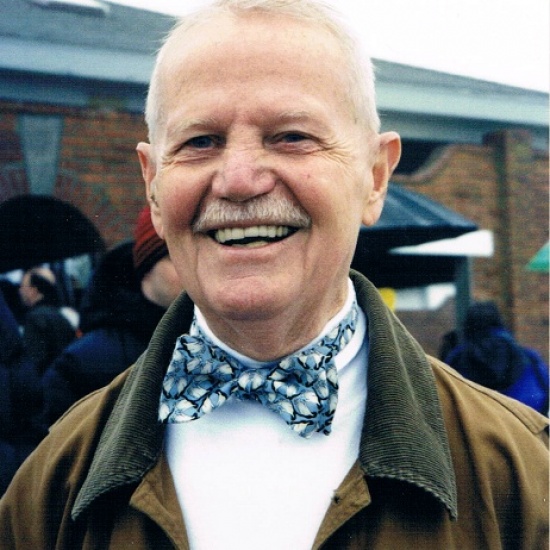
A Yale-educated lawyer, David Lindsey was a fixture at Penny Press for decades, but his influence on the world of puzzles extends back years before he joined that company.

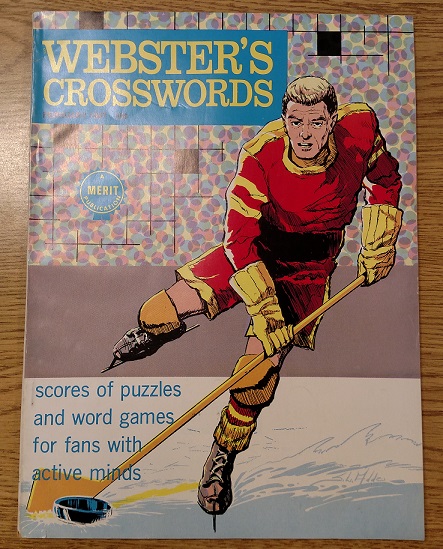
The earliest editing credit I’ve been able to track down is a 1967 edition of Webster’s Crosswords, published by Merit, which is also one of the few publications where I’ve seen him credited under his real name. So, if you’ve ever enjoyed a puzzle credited to Dee Stewart or George Spelvin (a famous pseudonym from the American theater), you have David to thank for it.

Penny Press president Peter Kanter associates David with puzzles as far back as the early 70s, though it’s unclear when exactly David began working for Penny Press on a part-time basis. (I suspect it would have been around the time the Merit brand was acquired by Penny Press.)
img_20170309_142647758

He signed on full-time in 1987, and served as a puzzle editor, though perhaps his greatest legacy was the role he played in establishing its acquisitions department, the route by which outside puzzle creators and constructors could have their work featured in Penny Press magazines. David set quality standards for the puzzles that would be accepted, and served as the gatekeeper for all sorts of new puzzles.

He is also credited with creating or popularizing puzzles that are synonymous with Penny Dell Puzzles to this day. Secret Word, Chess Words, Chess Solitaire, Weaver Words, Diagramless Fill-In, Word Games Puzzles, and more flourished under his watchful eye and exacting attention to detail.

He would work the entire editing process, from concept to the final tweaks. At one point, David introduced a new type of puzzle in every issue of Variety Puzzles and Games, a Herculean feat.

His “Lindsey Lessons” — meetings where he would introduce and explain the nuances of puzzles — were invaluable to fellow editors, taking challenging puzzles like Word Math and making them more accessible, stripping away the mysteries that might have made them daunting to those who were unfamiliar with that sort of puzzling.

He even participated in a potluck-style puzzle group outside the office that would create and workshop new puzzle ideas together.
davidbday358b03746beb45

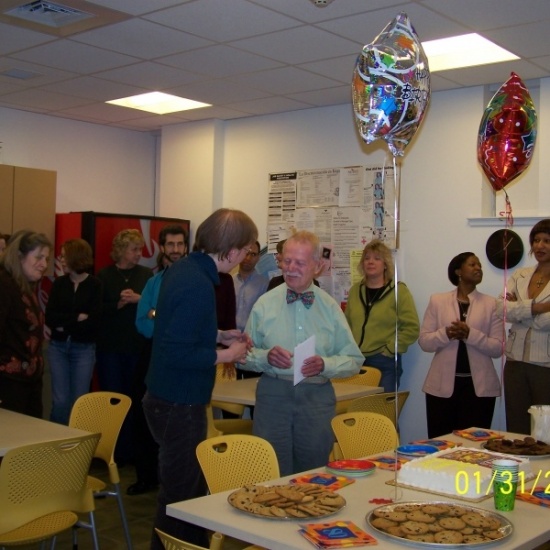
[A photo from David’s 80th birthday celebration.]

But when I asked people about David, it wasn’t his work in puzzles that left a lasting influence on them. It was his strong sense of self, a quiet confidence that he was who he was, uncompromisingly. He was at home with his choices, his quirks, and his beliefs.

There were stories about the injured coyote he cared for, stories about him jogging shirtless in winter, and stories about the snacks he brought into the office, the fruits of his many experiments with the food dehydrator given to him by members of a cardiac rehab exercise class he conducted.

David said, “I never eat sugar”, but curiously enough, he was always first in line when cookies or cakes were about.

He was never without one of his signature bowties, and he actually taught Peter Kanter how to tie one. (To this day, Kanter still uses the instructions David gave him, on the rare occasion he has to tie a bowtie.)

He was a pillar of his community, singing in a men’s chorus, participating in Daffodil Days events for the American Cancer Society, contributing recordings to some of the first Reading for the Blind programs, and even doing the Penguin Plunge well into his 80s to raise money for the Special Olympics.

It was my privilege to work with David for over a decade, and I’ll miss him very much. And I know that I’m far from the only one who feels that way.

Farewell, David.


Thanks for visiting PuzzleNation Blog today! Be sure to sign up for our newsletter to stay up-to-date on everything PuzzleNation!

You can also share your pictures with us on Instagram, friend us on Facebook, check us out on TwitterPinterest, and Tumblr, and explore the always-expanding library of PuzzleNation apps and games on our website!
The Art & Design of a Geometric Puzzle

It’s rare to get a glimpse inside the puzzly creative process.

Sure, plenty of crossword constructors are happy to share how particular puzzles of theirs came to be, but many constructors and designers, whether we’re talking mechanical puzzles, pen-and-paper puzzles, or electronic puzzles, keep their techniques and tricks secret. They’re like magicians that way.

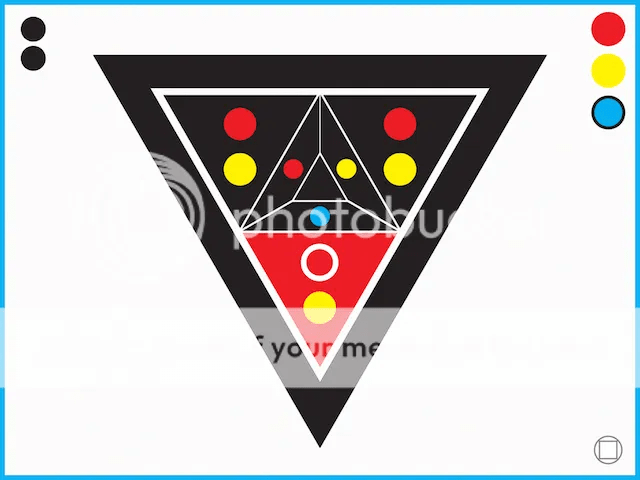
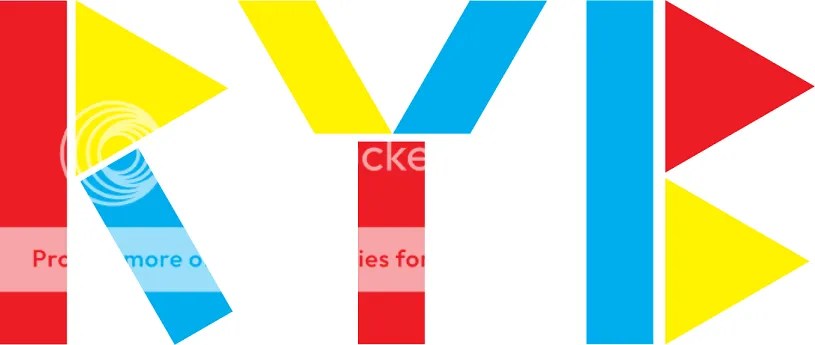
So when a puzzler takes you behind the curtain, it’s a rare and special treat. The website Gamasutra recently hosted such an event when app designer and puzzler Paul Hlebowitsh explained in detail how he designs the puzzles for his app RYB.

In Paul’s words, “RYB is very similar to ‘Minesweeper’ or ‘Hexcells,’ but instead of using numbers or symbols, it uses colors. The colored dots inside of a shape tell you how the neighboring shapes are colored.”

I love the devilish simplicity behind the solving. It’s so universal that it transcends the language barrier. Simply show another person the first step, and they’ll pick it up immediately.

Paul goes on to explain how one particular puzzle evolved as he sought the perfect mix of puzzly challenge and unique solvability.

He took this:

and eventually ended up with this:

It’s a fascinating read, one I can’t do justice to with a brief summary, so I suggest everyone check out the full post to watch an impressive constructor at work. Being walked step-by-step through a build by the designer is a delight.

I also have to praise the puzzles themselves. The mix of geometric shapes and colors creates a truly striking image. I think I’m gonna get a print made of this one and put it on my wall:


Thanks for visiting PuzzleNation Blog today! Be sure to sign up for our newsletter to stay up-to-date on everything PuzzleNation!

You can also share your pictures with us on Instagram, friend us on Facebook, check us out on TwitterPinterest, and Tumblr, and explore the always-expanding library of PuzzleNation apps and games on our website!

5 Questions with Puzzler/Artist Hayley Gold!

Welcome to another edition of PuzzleNation Blog’s interview feature, 5 Questions!

We’re reaching out to puzzle constructors, video game writers and designers, board game creators, writers, filmmakers, musicians, and puzzle enthusiasts from all walks of life, talking to people who make puzzles and people who enjoy them in the hopes of exploring the puzzle community as a whole. (Click here to check out previous editions of 5 Questions!)

And I’m excited to have Hayley Gold as our latest 5 Questions interviewee!

An enthusiastic puzzle solver as well as an accomplished artist, Hayley combines her interests with Across and Down, a weekly webcomic devoted to The New York Times crossword.

She combines humor and the keen eye of a long-time solver to not only entertain, but offer worthwhile insight into crosswords as a whole and individual puzzles in particular. Whether she’s punning on themed entries or proving her pop culture savvy with references galore, each Across and Down comic brings something unique to the table.

Hayley was gracious enough to take some time out to talk to us, so without further ado, let’s get to the interview!


5 Questions for Hayley Gold

1. Which came first for you: puzzles or art? How did you discover puzzles?

Well, I think art is rather intuitive. As soon as a child gets hold of a crayon their artistic career begins. A lot of people are miffed when artists comment that they’ve been drawing all their life, but I actually did more drawing in my youth than in my maturity, when pressure became attached to it.

That being said, I find doing puzzles much more relaxing and more natural for me. So, though one may have preceded the other doesn’t mean that it’s the dominant hobby.

2. When did you launch Across and Down, and has it evolved from your original vision?

I started the site in January 2014 as a project for my web comics class. The whole operation was rather hasty. We were told we needed to come up with a comic that’s updated weekly, the teacher said the content was completely up to us, though her web comic followed a linear narrative, as did the comics of most of the other students.

I needed something I could do without too much time lost, as the class was only an elective and I had other comics to complete, and something that focused on writing more than visuals as that has always been my strong suit. And of course I wanted it to be fun, and something that I cared about.

I never imagined it would become what it has. Okay, let me rephrase that. I have wild fantasies about it being much MORE than it is, what I never imagined is how much I would NEED it. I experience withdrawal if I go too long without making one.

[Strategy, a wonderful crayon-and-pencil piece, as featured on her portfolio site.]

3. Your comics offer a wonderful mix of humor, tongue-in-cheek wordplay, and savvy commentary from a clearly experienced solver. How have the constructors reacted to your comics? Do you think couching your critiques in this format allows you to say more than a straightforward review or blog post?

In general, I get a good response from constructors. I certainly never got any flak from anyone. Many have reached out to thank me actually, which is a very rewarding gesture. And I’ve never attempting real blogging to compare the reactions side by side, but I would guess that giving everything a lighthearted air does assuage some of the severity of critique.

But, at the same time, I am rarely totally critical and try to be balanced. And though I often address the constructor directly, I try not to make any serious personal attacks if I thoroughly rip something apart, though, by and large, I don’t do comics on puzzles that are completely horrendous. Partly because I don’t wish to be horribly cruel to anyone, and partly because I don’t think it’s very entertaining. At least in a comic, I think nitpicking about the usual crossword faux pas gets repetitive.

[A sample of one of her most recent webcomics.]

4. What’s next for Hayley Gold?

I’m working on a graphic novel, but no ETA on that. And for anyone who’s a fan of my site, I’ll warn you that it’s totally different, both graphically and narratively, so no guarantees that you’ll like it. I also need a job. Hey, anyone out there, hire me! Would love to do some custom crossword comics!

5. If you could give the readers, writers, and puzzle fans in the audience one piece of advice, what would it be?

Er, I’m not really good with this. God knows, my life is a mess. But let’s try to narrow it down a bit. How about advice pertaining to webcomics? Make it about something you’re passionate about. Most of my peers quit their webcomic after the class finished. Now, my stick-to-it-iveness may be due to my uptight nature, but also because it really meant something to me.

Also, keep at it even if you think no one is reading. I hope to get more eyeballs as I go along, though my site still reaches relatively few readers. People may look over it once and then never come back instead of subscribing, or just never come across it even though they are ardent puzzle solvers.

When I go to comics events, so many people come up to me to tell me what a “great idea” my site is — but they personally don’t do the puzzle so it’s not for them. I’ve experienced a very small overlap in the fanbases. The way comics are promoted, as one big giant blob of content, is rather weird — as if readers would be attracted to all of it simply because of the medium, rather than it being placed into subcategories — but I digress.

Choose something you like, stick with it.


Many thanks to Hayley for her time. Check out AcrossandDown.net for her comics and links to her other works, and to keep up on all things Hayley, follow her Across and Down Facebook page, her Twitter (@HayleyRabbit), and her Etsy page! I can’t wait to see what she has in store for us next.

Thanks for visiting PuzzleNation Blog today! You can share your pictures with us on Instagram, friend us on Facebook, check us out on TwitterPinterest, and Tumblr, and be sure to check out the growing library of PuzzleNation apps and games!

A puzzler, by any other name…

Fake names, stage names, noms de plume… they’re more common than you might think. Authors, musicians, actors, and performers of all sorts can take on new identities, either to make themselves more marketable, to build a brand, or simply to create a public persona in order to keep their private lives separate.

As I mentioned in a previous blog post, crossword constructors in the UK (known as setters) also employ pseudonyms, literally making a name for themselves as they create challenging cryptic crosswords for their solving audience.

Evocative names like Araucaria, Gordius, Crucible, Otterden, Anax, Charybdis, Tramp, Morph, Paul, Enigmatist, Hypnos, Phi, Nutmeg, Shed, Arachne, and Qaos grace the puzzles in England’s The Guardian newspaper.

That made me wonder… if American constructors were given the same opportunity, what UK-style names would they choose?

So, I reached out to some of my fellow puzzlers, and as I compiled their replies, some curious patterns emerged. I thought I’d share their responses with the PuzzleNation readership.

Whereas several UK setters have employed the names of former members of the Inquisition and other nasty sorts — like Torquemada, Ximenes, and Azed (which is Deza backwards) — to highlight the torturous challenges solvers could expect, some of their American counterparts prefer to highlight the playful, tricky aspect of constructing.

Constructor Robin Stears would publish under the name Loki or Anansi (citing two famous mythological tricksters), while meta-puzzle master Matt Gaffney would ply his craft under the name Puck. (He actually played Puck in sixth grade in a performance of A Midsummer Night’s Dream.)

[Loki, as played by Tom Hiddleston in the
Marvel cinematic universe, seems to approve…]

Other constructors embraced wordplay involving their names, like Brendan Emmett Quigley who chose Beck (his initials pronounced phonetically) or Penny Press variety editor Cathy Quinn, who chose the nom de plume Sequin (for C. Quinn).

Still others revealed their feelings about those curious words that are only found in crosswords. Variety editor Paula Curry opted for the name Ese-Averse to show her disdain for crosswordese, while puzzle historian and constructor David Steinberg selected Osier, both for its crosswordese appeal and its homophone pronunciation (OCR, representing the Orange County Register, for whom David has served as crossword editor for years).

[This crossword features several infamous crosswordese
clues as entries. Do you recognize them all?

Naturally, my fellow puzzlers at Penny Press had some of my favorite puzzly stage names. Will Shortz’s WordPlay editor Leandro Galban sets himself firmly against the heroic solver by choosing Grendel, while variety editor Andrew Haynes opted for either Bob the Settler or The Flying Penguin. (He feels that “the” adds a certain arrogance to the pseudonym, and Bob has that delightfully bland palindromic quality.)

Editor Ariane Lewis would be known simply as Dub, leaving interpretation up to the solvers, while editor Maria Peavy offered a plethora of possible pennames, including Pushkin, Excelsior, Kutuzov (in the spirit of Torquemada), Sphinx (another famous riddler) or Grail.

Or you could adopt a full false moniker like variety editor Keith Yarbrough did, and go by Rufus T. Firefly.

As for me, I haven’t decided if I want something esoteric like Syzygy (alluding to the rare alignment of both planets and quality crossword grids), something obscure and wordnerdy like Snurp or Timmynoggy or Interrobang, or something meaningless but fun to say aloud, like Skylark or Guava.

So watch out, UK setters, because one of these days, you might see names like Sequin or Osier or The Flying Penguin baffling your solvers with cryptic crossword cleverness.

Thanks for visiting PuzzleNation Blog today! You can share your pictures with us on Instagram, friend us on Facebook, check us out on TwitterPinterest, and Tumblr, and be sure to check out the growing library of PuzzleNation apps and games!

It’s Follow-Up Friday: Fond Farewell edition!

Welcome to Follow-Up Friday!

By this time, you know the drill. Follow-Up Friday is a chance for us to revisit the subjects of previous posts and bring the PuzzleNation audience up to speed on all things puzzly.

And today’s update is all about constructor Robin Stears.

You’ve probably seen her puzzles in various Penny Press magazines, not to mention her delightful Team StearsWords mailings and products. She’s a prolific and creative constructor, a longtime friend of the blog, and an all-around good egg whose body of work spans two decades of terrific puzzling.

So I admit, I was a little sad to see her latest blog post a few days ago.

In short, Robin is taking time away from crosswords to embark on a new adventure: returning to college to study mathematics, in the hopes of sharing her love of math with the world.

While I’m overjoyed to see her tackling new and exciting challenges, I must confess that as a fan of her crosswords, I’m a little sad. Robin’s crosswords always feature clever, topical themes and fun entries, and her support, humor, and friendship over the last two years has been wonderful. She has always been unflinchingly kind and generous when it comes to PuzzleNation, granting interviews and contributing her wisdom, drive, and expertise to several blog posts.

Robin, I wish you the very best in starting a new chapter in your life. For many, many reasons, thank you.

Thanks for visiting PuzzleNation Blog today! You can share your pictures with us on Instagram, friend us on Facebook, check us out on TwitterPinterest, and Tumblr, and be sure to check out the growing library of PuzzleNation apps and games!

Crosswords, Cryptics, Constructors, and… Setters?

One of the privileges of writing two or three posts a week for this blog is that it pushes me to expand my own horizons when it comes to puzzles. I reach out to puzzlers, game designers, and pop culture personalities of all sorts; I try out new games and puzzles; I obsessively scour the Internet for new projects, new products, and new stories that involve puzzles.

Oftentimes, that continuous search takes me beyond the borders of the United States, allowing me to explore what puzzles mean to other countries and cultures. And I am forever intrigued by the differences in crossword puzzles between America and the UK.

The world of cryptic crosswords (or British-style crosswords, as some call them) is a bit different from the world of American crosswords. Instead of constructors, they have compilers or setters, and while constructor bylines and attributions were a long time coming on this side of the Atlantic, setters in the UK have been drawing loyal followings for decades, thanks to their unique and evocative pseudonyms.

While Will Shortz, Merl Reagle, Patrick Blindauer, Brendan Emmett QuigleyPatrick Berry, Trip Payne, Matt Gaffney, and Bernice Gordon represent some of the top puzzlers to grace the pages of the New York Times Crossword, names such as Araucaria, Qaos, Arachne, Crucible, Otterden, Tramp, Morph, Gordius, Shed, Enigmatist, and Paul are their word-twisting counterparts featured in The Guardian and other UK outlets.

In fact, beloved setter Araucaria will soon be the subject of a documentary. For more than 50 years, he challenged and delighted cryptic crossword fans, amassing a loyal following. In January of 2013, he even shared his cancer diagnosis with the audience through a puzzle in The Guardian.

While the Wordplay documentary, as well as interviews on PuzzleNation Blog and other sites, have given solvers some insight into the minds and lives of constructors and setters, it’s wonderful to know that the life of a fellow puzzler will be chronicled in so intimate a format.

Thanks for visiting PuzzleNation Blog today! You can share your pictures with us on Instagram, friend us on Facebook, check us out on TwitterPinterest, and Tumblr, and be sure to check out our library of PuzzleNation apps and games!