Valentine’s Day is fast approaching…

puzzle-pin-valentines-day-craft-photo-420-ff0299vala16

Valentine’s Day is this Saturday, and it can be tough to find something appropriate for your significant other that’s sincere and interesting and heartfelt. This is as true for puzzle lovers as it is for everyone else.

So, in the spirit of romance, love, affection, and all things Valentine’s Day, I’ve compiled a few puzzly suggestions for what to give your significant other.
4903-13710

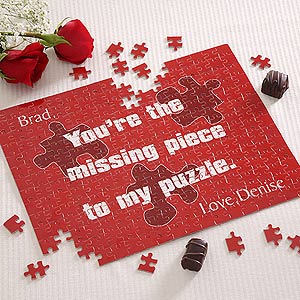
Now, you can always start with something simple, like a subscription to a puzzle service like The Uptown Puzzle Club, The American Values Club Crossword, or Matt Gaffney’s Weekly Crossword Contest. New puzzles every week or every month are a great gift. (Especially the Valentine’s Deluxe Set for the Penny Dell Crosswords app on PuzzleNation! *wink*)

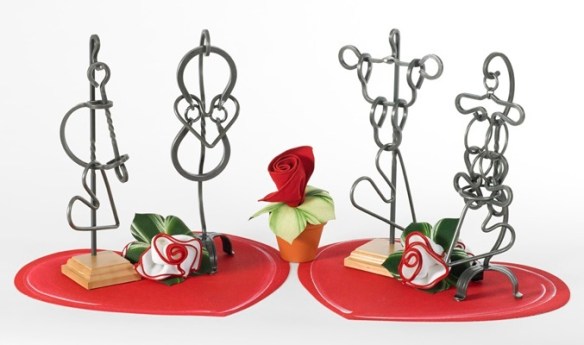
If they’re more into mechanical puzzles, our friends at Tavern Puzzles offer several brain teasers that incorporate a heart shape.
heartpuzzle

But if you’re looking for something more personalized, why not make a crossword for them yourself?

(Yes, you can also commission a top puzzler to do one for you — Brendan Emmett Quigley for one — but you’d usually want to get the ball rolling on something like that well before Valentine’s Day.)

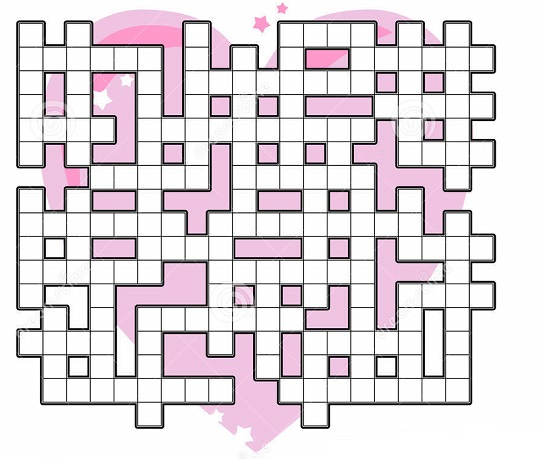
Now, to be fair, crosswords can be tough and time-intensive to make, so if that feels a little daunting, why not try a Framework puzzle instead? It involves the same crossing style, but doesn’t require you to use every letter.
valentine-s-day-love-wedding-criss-cross-word-game-romance-themed-puzzle-also-known-as-fill-blanks-crossword-puzzle-36632791

[This grid is presented fill-in style, in case you
don’t want to use crossword-style numbering.
Check out the original here.]

It allows you to maintain a terrific word list all about you and your significant other without all the effort of filling in every square crossword-style.

Some themed entries could include where you first met, favorite meals, favorite movie… heck, if you’ve been together a long time, the names of your kids, or your favorite vacation spots.

Or you could write the object of your affection a coded love letter! All throughout history, people have employed different tricks and techniques to keep their private messages away from prying eyes, and you could do the same! Whether it’s a simple letter-shifting cipher or something more complex, make sure your message is worth reading. =)

If that’s not your cup of tea, maybe do a scavenger hunt! You could leave clues around leading to a gift, or a romantic dinner, or some other grand finale. Maybe a rose with each clue.
img_8721

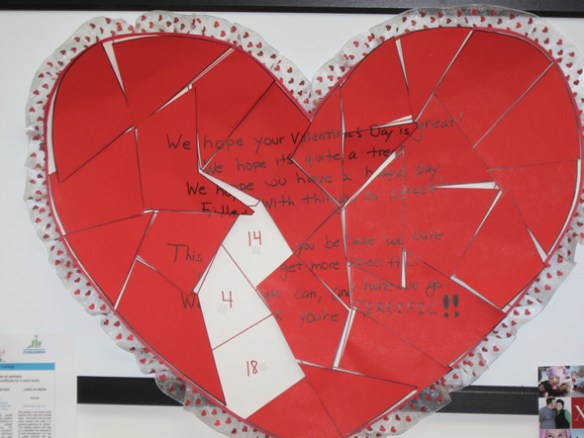
Or you could hide jigsaw pieces around the house that, when put together, spell out a Valentine’s message or a picture of the two of you.

Put your own spin on the idea. A little bit of effort can go a long way, plus it doesn’t cost anything.

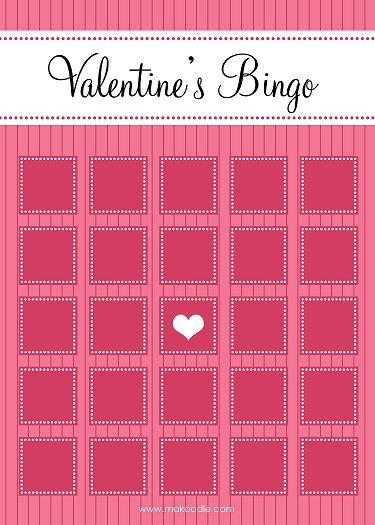
You could even make a game of it! Play Valentine’s Day Bingo.
valentines-bingo-stripes-blank-blog

[I found this blank template on Makoodle.com.]

Maybe go for a walk or take your loved one out to dinner, and see if they can get bingo by observing different things. A couple holding hands as they walk, a Valentine’s Day proposal, outrageously priced flowers…

The possibilities are endless when you put your mind to it.

A friend of mine did something puzzly and romantic for his girlfriend, creating cryptic crossword clues she had to solve in order to receive each birthday gift he’d gotten her. When all of the clues were solved, they spelled out a special message. (You can check out the story here.)

And let me know if you or your significant other have ever shared any puzzly romantic moments!

Thanks for visiting PuzzleNation Blog today! You can share your pictures with us on Instagram, friend us on Facebook, check us out on TwitterPinterest, and Tumblr, and be sure to check out the growing library of PuzzleNation apps and games!

Farewell, Bernice.

Part of writing for PuzzleNation Blog is constantly learning and unearthing new aspects of puzzle history. Whether it’s the history of puzzles themselves, like the 100th anniversary of the crossword in 2013, or significant moments from history that involved puzzles, like the use of crosswords to recruit cryptographers for Bletchley Park’s codecracking efforts during World War II.

And you simply can’t talk about the history of puzzles without mentioning constructor Bernice Gordon, one of the most recognizable names in crosswords for more than half a century.

Bernice’s first crossword was published in The New York Times in 1952, establishing a legacy of elegant, well-constructed puzzles that would span nearly seven decades. A favorite of both The New York Times and The Los Angeles Times, Bernice actually didn’t start creating crosswords until she was 35, a late start for someone with such an expansive track record to come.

She set records for the longest tenure as a crossword constructor and eldest crossword constructor — publishing puzzles at 101 years old! — as well as teaming up with constructor and friend of the blog David Steinberg for largest age gap between collaborators, with 86 years between them!

Will Shortz estimated that Bernice published more than 120 puzzles with the Times, and you can check out the lion’s share of them over on XWordInfo, dating back as far as 1965.

Sadly, Bernice passed away early Thursday morning, having left an indelible mark on the world of crosswords, with many friends and admirers celebrating her marvelous life and decades of sparkling puzzly wordplay.

Many puzzlers and admirers have written wonderful tributes to Bernice, but I have to single out the heartfelt words of David Steinberg, who memorialized his friend and fellow constructor in fine form here.

I only know Bernice through her puzzles, but I always found them to be clever, charming, and constructed with grace and skill. And based on what I’ve read about her over the last few days, many of those admirable qualities are reflections of the woman behind the puzzles.

Thank you, Bernice. You will be missed.

It’s Follow-Up Friday: New Years Resolutions edition!

Welcome to Follow-Up Friday!

By this time, you know the drill. Follow-Up Friday is a chance for us to revisit previous posts and bring the PuzzleNation audience up to speed on all things puzzly.

And today, with the new year freshly started, it seems all too appropriate to return to the subject of new years resolutions.

Last year, I asked several prominent puzzlers about their resolutions for 2014. It’s one year later, so let’s see how they did!

Constructor Robin Stears resolved “to interact more with puzzle fans…, to attend some crossword tournaments and trivia nights and spend some time getting to know the contestants and finding out what kinds of puzzles they like.” How did that resolution go for her?

Well, I really missed the boat on that resolution. There weren’t any crossword tournaments in my area, and I couldn’t convince my local librarian to host one. But thanks to PuzzleNation, I’ve been able to keep up with what’s new in the puzzle world. The hottest thing this year was the emoji; in fact, emoji were so popular, I made up a bunch of emoji crossword puzzles.

And since I couldn’t attend any tournaments in person, I scoured the Internet for puzzle blogs and puzzle forums, and still managed to interact with puzzle fans in the virtual world. Puzzle fans are the nicest people, and they always have great ideas.

Constructor (and field marshal of The Pre-Shortzian Puzzle Project) David Steinberg resolved to “finish the Pre-Shortzian Puzzle Project’s litzing stage and to construct more Sunday crosswords.” How did that resolution go for him?

The Pre-Shortzian Puzzle Project’s litzing stage is now complete. We’ve litzed all the available puzzles–16,077 of them! We’re missing 148 puzzles, though, most of which weren’t published in New York because of newspaper strikes.

The proofreading stage is well on its way — 24 years of proofread puzzles are now up on XWord Info. A two-month proofreading contest is currently in progress, and we’re almost done proofreading the 1969 puzzles. I’ve also been busy constructing more Sunday crosswords, one of which was recently accepted by the Times.

Puzzle poet Peter Valentine resolved to “get up early and finish the poem before anyone else is awake.” How did that resolution go?

Sadly I did terribly on that resolution and can probably count on one hand the number of times that happened. Nevertheless, still keeping up with them daily when kids are in school! (Holidays are a wash.)

Baffledazzle creator Rachel Happen made several resolutions for 2014. How did she do?

1. Exercise brain as much as body — I’d give myself an 11 out of 10 on this one. The first Baffledazzle Kickstarter campaign was a problem-solving obstacle course that demanded all sorts of brain agility! Now that I’m post-campaign, I’m back in puzzle research/development mode and maxing out my library card again. So yes, mission accomplished there.

2. Make puzzles for friends / family birthday gifts — I’d give myself 7 out of 10! I did make a ton of custom puzzly things for gifts though I missed a few months when I was in the thick of Baffledazzle production. Next year, summer-birthday-friends, there will be puzzles for all!

3. Try a new puzzle / puzzly game each month — Oh man I get a 3 out of 10 for this one, but maybe a 5 out of 10 for intention!! My pile of Springboks [jigsaw puzzles] has only gotten taller… sigh. 😉

4. Make puzzles the new black — Ah, ∞ out of 10. This one’s a life-long mission!! Full speed ahead into another year of puzzling!


What about you, fellow puzzlers? Did you make any resolutions this year, puzzly or not? Let me know! I’d love to hear about them!

Thanks for visiting PuzzleNation Blog today! You can share your pictures with us on Instagram, friend us on Facebook, check us out on TwitterPinterest, and Tumblr, and be sure to check out the growing library of PuzzleNation apps and games!

It’s Follow-Up Friday: Cinematic Crossword Codecracking edition!

Welcome to Follow-Up Friday!

By this time, you know the drill. Follow-Up Friday is a chance for us to revisit the subjects of previous posts and bring the PuzzleNation audience up to speed on all things puzzly.

And today, I’d like to revisit one of my favorite puzzle constructors, David Kwong!

[Check out David’s session of 5 Questions here.]

Not only is he a topnotch constructor, he’s also a magician who performs his own signature tricks while consulting for film projects and television shows. He’s worked on The Mindy Project, The Incredible Burt Wonderstone, and Now You See Me (as well as the upcoming sequel).

And his latest collaborative efforts just hit theaters yesterday in The Imitation Game, the Benedict Cumberbatch/Keira Knightley film detailing Alan Turing’s efforts at Bletchley Park to break the infamous German Enigma Code during World War II.

But it was David’s crossword skills on display this time around, as he constructed the crossword Alan Turing uses in the film to test potential cryptographers in the movie.

I don’t have that crossword for you to solve, unfortunately, but thanks to The New York Times and Deb Amlen’s Wordplay blog, I can offer you a link to an actual crossword Alan Turing created for The Telegraph.

Plus, the official website for The Imitation Game has a puzzle you can solve to unlock exclusive content. (Just click the link and then click “Crack the code” in the lower right-hand corner of the screen.)

The film is already being hailed as one of the best of the year. I can’t wait to see what David works on next.

Thanks for visiting PuzzleNation Blog today! You can share your pictures with us on Instagram, friend us on Facebook, check us out on TwitterPinterest, and Tumblr, and be sure to check out the growing library of PuzzleNation apps and games!

The Ultimate Jigsaw Puzzle

Jigsaw-style puzzling is a huge part of puzzle culture, one that’s easy to overlook. Even the average jigsaw is hardly average these days.

You can get them without squared-off edges — removing that crucial first step of finding all the border pieces — or with extra pieces that aren’t intended to fit anywhere. Some, like Baffledazzle puzzles, come without the final image as a guide, leaving you to rely on texture as well as shape. Others involve incredibly detailed or repetitive patterns, eliminating “find this color/image”-style searching. Some are even double-sided!

(My sister had a 550-piece edgeless puzzle that was nothing but coffee beans and some random cups. Another was golf balls and tees. They were mind-melting.)

Then there are the three-dimensional ones that tax your dexterity as well. Whether you’re making a sphere or a replica of the Taj Mahal, your jigsaw skills will be tested severely.

[A massive 3-D puzzle of New York’s skyline… in progress.]

Other forms of puzzles are hardly immune to jigsaw-style solving. Tangrams and pentominoes eschew jigsaw shapes for triangles, squares, and Tetris-style pieces. Even some pen-and-paper puzzles, like Penny/Dell’s Brick by Brick crossword, employs jigsaw pieces.

And, of course, there are all the building toys that rely on the same hand-eye coordination and pattern-finding skills that jigsaw puzzles require. Erector sets, K’Nex, Mega Bloks and LEGO and Tinker Toys and Lincoln Logs and many many others… all have their roots in jigsaw-style puzzling.

But I think I’ve stumbled across one of history’s greatest jigsaw puzzles, and I’m curious if any of the jigsaw puzzle enthusiasts in the PuzzleNation community think they could’ve handled this challenge.

An entire London mansion, broken down and reconstructed jigsaw-style.

Yes, between 1910 and 1912 a mansion in Essex called Cedar Court was dismantled and moved piece-by-piece over 70 miles to its new home in Surrey and painstakingly rebuilt.

The mansion was already over 400 years old at the time, and it’s become known as the “jigsaw puzzle” house ever since.

According to the article in The Telegraph, “Every part of the building was sectioned out and numbered so that it could be stuck back together again exactly as it was after its trip across the capital.”

This was clearly a monumental undertaking, and even with careful planning, I suspect a few jigsaw-savvy workmen were required to get the mansion back in shape.

And hey, are any jigsaw aficionados out there interested in owning this bit of puzzle history? It’ll only cost you fourteen MILLION pounds to acquire it.

Thanks for visiting PuzzleNation Blog today! You can share your pictures with us on Instagram, friend us on Facebook, check us out on TwitterPinterest, and Tumblr, and be sure to check out the growing library of PuzzleNation apps and games!

What crosswords have taught me

I’m a huge proponent of puzzles not just being fun, but being great for the brain as well. There are numerous studies (and PuzzleNation blog posts) touting the ways that certain puzzles can keep you sharp and perhaps even stave off developmental issues later in life.

Whether it’s crosswords helping with retrieval of previously learned information or Sudoku exercising your concentration, attention, and formation of new memories, puzzles are good brain food.

[Please note that I am making no promises about potential health benefits of our puzzles; I’m simply reporting on the results of certain studies regarding puzzles and brain health. The jury is definitely still out on this subject.]

And then there are the curious facts and new words we learn simply by solving crosswords and other puzzles.

In the decade plus that I’ve been constructing and editing puzzles, I’ve encountered all sorts of strange vocabulary and interesting trivia that wouldn’t have crossed my path in other fields.

Through proper crossword cluing and fact-checking, I’ve learned the difference between Inuit and Eskimo (and why they are not interchangeable). I’ve learned which Hawaiian islands the nene calls home.

I now know that cows are fed magnets in order to cope with the random bits of wire and other metals that they unintentionally swallow. A puzzle about rationing during World War II taught me that an ordinary piano contains enough steel, copper wire, and brass to make a dozen bayonets, a corps radio, and sixty-six thirty-caliber cartridges.

My Latin has certainly improved from years of studying word etymologies. Did you know that “ita erat quando hic adveni” is Latin for “it was like that when I got here?” That’s a handy phrase to have in your back pocket.

Heck, I now know how pineapples grow because of crosswords. How cool is that?

And it doesn’t stop there.

Crosswords provoke your curiosity and lead you down unexpected avenues of thought. Crossword clues cause you to ask questions you probably never would otherwise, like “Is ‘L.A. Law’ two words or three?” or “Is ‘bat-signal’ hyphenated?”

(Both of those are actual topics of discussion for puzzles of mine in the past.)

What sorts of interesting facts and weird vocabulary have crosswords introduced you to, fellow puzzlers? Let me know! I’d love to hear about it!

Thanks for visiting PuzzleNation Blog today! You can share your pictures with us on Instagram, friend us on Facebook, check us out on TwitterPinterest, and Tumblr, and be sure to check out the growing library of PuzzleNation apps and games!