The Puzzly Legacy of Edgar Allan Poe

[Image courtesy of the Poetry Foundation.]

Edgar Allan Poe is one of the most influential writers in all of American literature. Not only did he come to epitomize all things ghastly and unnerving in Gothic horror with chillers like “The Tell-Tale Heart” and “The Cask of Amontillado,” but he also trailblazed the detective fiction genre with his character C. Auguste Dupin.

He also made an impact on the world of puzzles.

[Image courtesy of the National Cryptologic Museum Foundation.]

Those familiar with Poe’s works of fiction probably think I’m referring to his story “The Gold-Bug,” one of, if not the first, stories to not only mention cryptography, but to include a substitution cipher (a cipher where each letter in the alphabet is represented by a different letter, number, or symbol).

In “The Gold-Bug,” an unnamed narrator meets the unusual William Legrand, a man obsessed with restoring his family’s lost fortune. Legrand shows off a large scarab-like insect, the titular gold bug. A month later, the narrator and Legrand are reunited when the obsessed Legrand (along with his servant Jupiter) goes off on a expedition to discover the location of the buried treasure of the legendary Captain Kidd.

As it turns out, a piece of paper Jupiter used to collect the gold bug had traces of invisible ink on it, revealing a cipher containing instructions for how to find Kidd’s gold.

[Image courtesy of Bookriot.]

But this was far from Poe’s only dalliance with codebreaking. In fact, he helped popularize the art and science of cryptography with a series of articles in a Philadelphia publication called Alexander’s Weekly Messenger.

In December of 1839, he laid out a challenge to his readers, boasting that he could crack any substitution cipher that readers submitted:

It would be by no means a labor lost to show how great a degree of rigid method enters into enigma-guessing. This may sound oddly; but it is not more strange than the well know fact that rules really exist, by means of which it is easy to decipher any species of hieroglyphical writing — that is to say writing where, in place of alphabetical letters, any kind of marks are made use of at random. For example, in place of A put % or any other arbitrary character –in place of B, a *, etc., etc.

Let an entire alphabet be made in this manner, and then let this alphabet be used in any piece of writing. This writing can be read by means of a proper method. Let this be put to the test. Let any one address us a letter in this way, and we pledge ourselves to read it forthwith–however unusual or arbitrary may be the characters employed.

For the next six months, Poe tackled every cipher sent to Alexander’s. According to Poe, he received around a hundred ciphers, though historians have stated that only 36 distinct ciphers appeared in Alexander’s Weekly Messenger, 15 of which had solutions or partial solutions printed.

Nonetheless, it’s believed that Poe solved each of those 36 ciphers.

[Image courtesy of Awesome Stories.]

He followed up this impressive feat with an essay about cryptography in July of 1841 for Graham’s Magazine, “A Few Words on Secret Writing,” in which he discussed ancient methods of encryption and decryption, name-dropping codebreaking icons like Trithemius, Vigenere, and others.

He also published two cryptograms for the readers to solve, both submitted by a man named W.B. Tyler, “a gentleman whose abilities we highly respect.” Poe claimed he didn’t have time to solve either cryptogram, leaving them to the readers to crack. (Naturally, some scholars theorize that W.B. Tyler was none other than Poe himself.)

It would be over a century before the first verifiable solution to a W.B. Tyler cryptogram appeared. Professor Terence Whalen published his solution to the first Tyler cryptogram in 1992, and even offered a $2500 prize to whomever could solve the remaining Tyler cryptogram.

[Image courtesy of Cryptiana.web.]

That prize was claimed 8 years later by a Canadian software expert named Gil Broza, who cracked what turned out to be a polyalphabetic cipher, one in which several substitution alphabets are used.

Naturally, Poe’s interest in secret messages and codebreaking has led some to suspect that secret messages are lurking in his poetry and works of fiction. (Similar conspiracy theories abound regarding the works of Shakespeare.)

To be fair, there is something to this theory.

In a manner similar to Lewis Carroll hiding Alice Liddell’s name in an acrostic poem at the end of Through the Looking-Glass, Poe dedicated a poem to friend and poet Sarah Anna Lewis by hiding her name, one letter per line, in the poem itself.

[Image courtesy of The Baltimore Post Examiner.]

Of course, Poe’s method was more intricate than Carroll’s. The S in Sarah was the first letter on the first line, the A was the second letter on the second line, the R was the third letter on the third line, and so on. (Hiding coded messages in plain sight in this manner is known as steganography.)

And to this day, the hunt is on for secret messages in Poe’s works, particularly his more esoteric and oddly worded pieces. For instance, his prose poem “Eureka” — a musing on the nature of the universe itself, which actually proposed a Big Bang-like theory for the birth of the universe well before scientists offered the same theory — is believed to contain some sort of secret message or code.

Poe stated on more than one occasion that “human ingenuity cannot concoct a cipher which human ingenuity cannot resolve.” So if there is a code lurking in his works, someone will surely find it.

And in the meantime, we can still enjoy the chills, the grand ideas, and the mysteries he left behind. That’s quite a puzzly legacy.


Thanks for visiting PuzzleNation Blog today! Be sure to sign up for our newsletter to stay up-to-date on everything PuzzleNation!

You can also share your pictures with us on Instagram, friend us on Facebook, check us out on Twitter, Pinterest, and Tumblr, and explore the always-expanding library of PuzzleNation apps and games on our website!
The Voynich Manuscript: Finally Cracked?

[Image courtesy of BBC.com.]

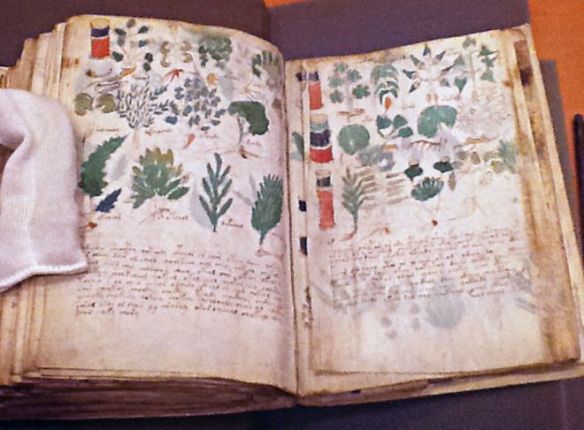
A year and a half ago, I introduced my fellow puzzlers and PuzzleNationers to the Voynich Manuscript, a cryptologic curiosity unlike anything else we’ve seen before. Discovered over a hundred years ago but believed to date back to the fifteenth century, the Voynich Manuscript is a hand-written book that has baffled linguists and puzzlers for decades.

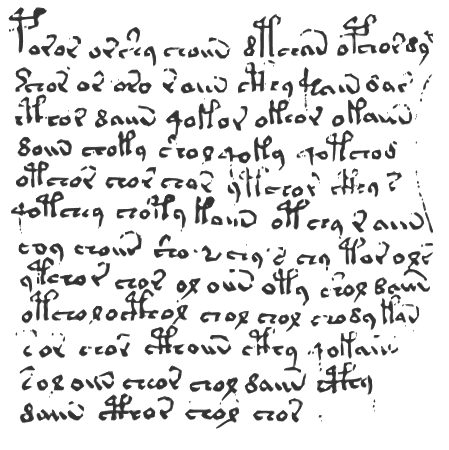
The writing, which reads from right to left, has yet to be identified. It’s unclear if this is some sort of sophisticated code, an unknown or lost language which was then encoded, an invented language, an example of glossolalia (a written equivalent of speaking in tongues), or simply an elaborate hoax.

The only known copy of the text resides in Yale University’s Beinecke Rare Book and Manuscript Library, although Yale has printed replica texts.

From the Yale University website:

Many call the fifteenth-century codex, commonly known as the “Voynich Manuscript,” the world’s most mysterious book. Written in an unknown script by an unknown author, the manuscript has no clearer purpose now than when it was rediscovered in 1912 by rare books dealer Wilfrid Voynich. The manuscript appears and disappears throughout history, from the library of the Holy Roman Emperor Rudolf II to a secret sale of books in 1903 by the Society of Jesus in Rome. The book’s language has eluded decipherment, and its elaborate illustrations remain as baffling as they are beautiful.

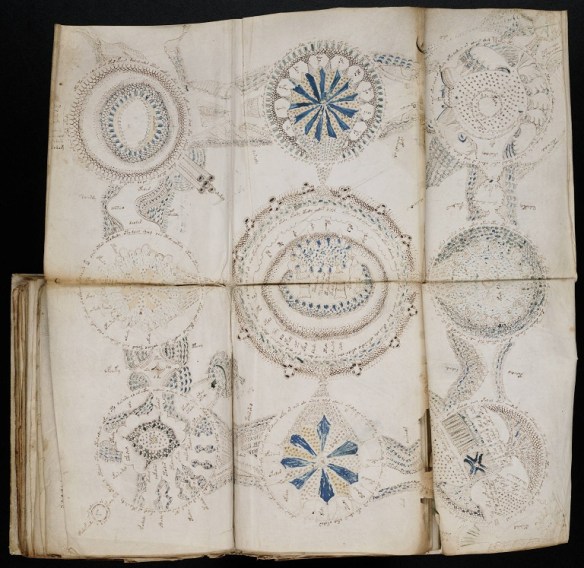
[One of several fold-out pages in the manuscript.
Image courtesy of Wikipedia.org.]

But computer scientists at the University of Alberta believe they’ve finally unraveled some of the mysteries behind the Voynich Manuscript.

They designed an artificial intelligence program with the intent of figuring out the language in the manuscript. The AI analyzed versions of the UN’s Universal Declaration of Human Rights in 400 different languages in order to establish different linguistic patterns to compare against the text of the Voynich Manuscript.

And according to the AI, the text was most likely written in Hebrew.

Now that they had a language to work with, they needed to begin deciphering precisely how that language was encrypted.

[Image courtesy of Wikipedia.org.]

There have been many theories regarding what form of encryption was employed in the Voynich Manuscript. Some investigators theorized that vowels had been removed from the words in the text in order to obscure their meaning further, while others have suggested writing that has been mirrored or otherwise written backwards. Anagrams and other forms of word manipulation are a common theory, and the University of Alberta team went with a variation on the anagram idea.

They theorized that the encoded words were alphagrams, anagrams where the letters in a word are placed in alphabetical order. (For instance, if VOYNICH was encoded this way, it would read CHINOVY.)

Turning loose the AI once again under these parameters, they found that 80% of the words in the Voynich text could be anagrammed into Hebrew words. They managed to cobble together a possible opening sentence for the text:

“She made recommendations to the priest, man of the house and me and people.”

Is it clunky? Sure. But it’s also a partial translation that has held up to some scrutiny, which is better than most amateur AND professional attempts to crack the Voynich Manuscript have done.

The team is currently hoping to team up with experts in ancient Hebrew and continue the process, but until then, they’re excited to apply their AI to other ancient manuscripts to see what it uncovers.

Although we are a long way from calling the Voynich mystery solved, this is a very intriguing step forward for cryptographers and codebreaking enthusiasts everywhere.


Thanks for visiting PuzzleNation Blog today! Be sure to sign up for our newsletter to stay up-to-date on everything PuzzleNation!

You can also share your pictures with us on Instagram, friend us on Facebook, check us out on Twitter, Pinterest, and Tumblr, and explore the always-expanding library of PuzzleNation apps and games on our website!
The PN Blog 2017 Countdown!

It’s one of the final blog posts of the year, so what do you say we revisit all of 2017 with a countdown of my ten favorite blog posts from the past year!


#10 Farewell, David

I don’t mean to start off this countdown on a sad note by mentioning the loss of fellow puzzler and Penny Dell colleague David Lindsey. But it was an incredibly rewarding experience to talk to those who knew him better than I did, and put together a memorial piece in his honor. I learned so much, and it was a valuable part of the healing process for all of us. I had two different opportunities to get to know David, and that’s a rare gift.

#9 The Puzzle of the Bard

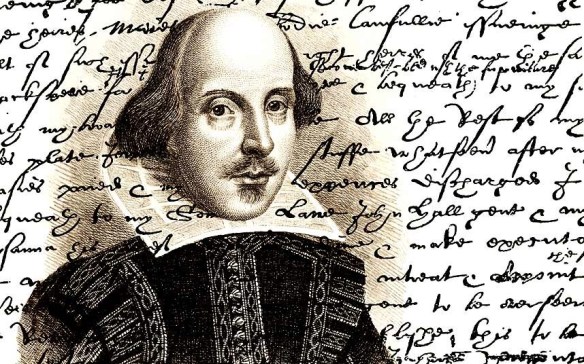
Puzzle history, codes, and wordplay are three common topics around here. So when I found a story that neatly covers all three, I simply couldn’t resist. Although this one is more conspiracy theory than verifiable puzzle history, it was great fun to do a deep dive into the ongoing debate surrounding Shakespeare’s identity and put a puzzly spin on the subject. The research alone made this one worthwhile.

#8 Holiday Puzzly Gift Guide

Every year, one of my favorite activities is putting together our Holiday Puzzly Gift Guide. I get to include the best products sent to me for review by top puzzle and game companies, mix in some of my own favorites, and draw attention to terrific constructors, game designers, and friends of the blog, all in the hopes of introducing solvers (and families of solvers) to quality puzzles and games.

#7 Cultural Sensitivity and Crosswords

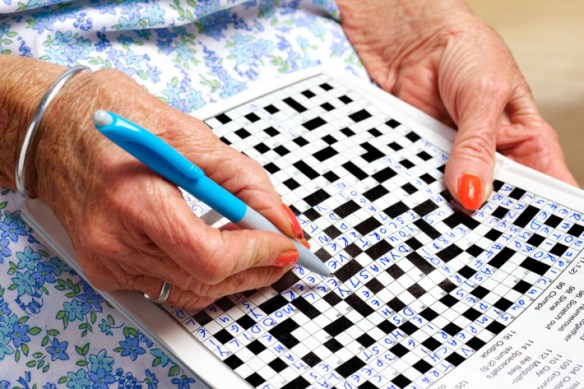
Sadly, crosswords in general, and New York Times crosswords in particular, have a reputation for being stodgy, steeped in arcane vocabulary, obscure facts, and antiquated cultural references. As part of the ever-evolving narrative surrounding cultural sensitivity — not just ethnic, but in terms of gender and sexuality as well — it’s important to do more than acknowledge the debate. You have to participate in it.

#6 Puzzles in Unexpected Places

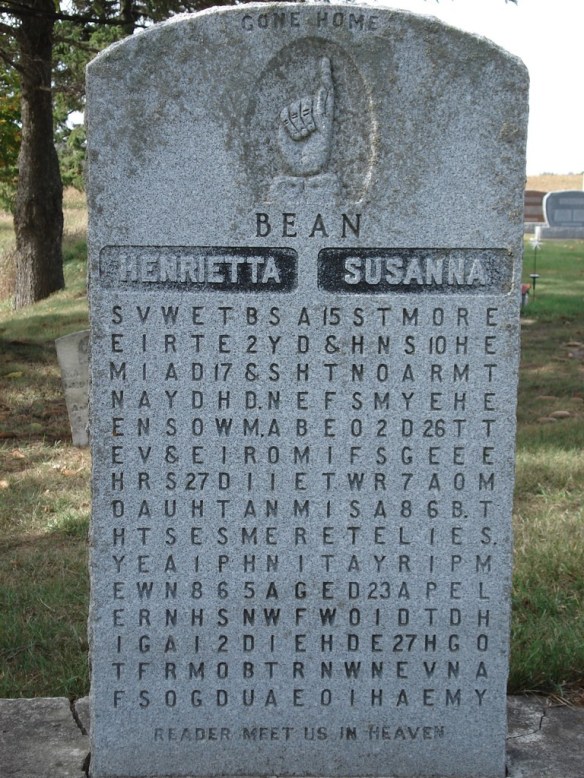
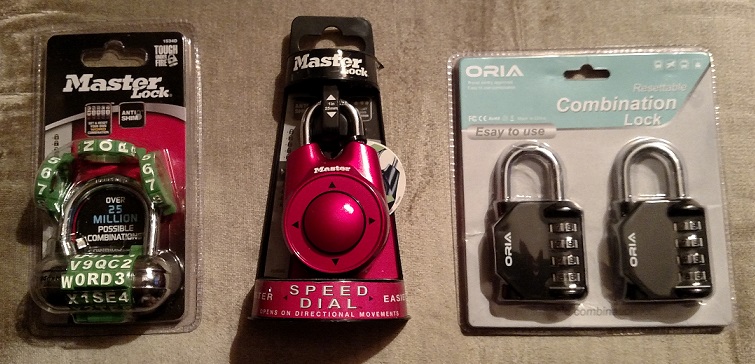
One was tucked away on a university website. Another sat in plain sight on a tombstone. The third came to light in a music fan’s collection. What did all three have in common? They represented a simple fact: puzzles are everywhere, a part of the cultural fabric in innumerable ways. I’m cheating a bit by mentioning three posts here, but they all fit the pattern. And it’s so much fun to discover puzzles in unexpected places.

#5 Puzzles for Pets

April Fools Day pranks are an Internet tradition at this point. Some websites go all out in celebrating the holiday. (Heck, ThinkGeek has started using the holiday to tease the public’s interest level in “fake” products, going on to actually release some of those April Fools pranks as real items later in the year!)

So when the idea was floated for PuzzleNation to get in on the pranking fun, I couldn’t resist. The result — Puzzles for Pets — was as layered as it was silly, complete with fake quotes, splash pages, and more. I even got my own dog, Bailey, in on the gag.

#4 Design Your Own Escape Room

Bringing a puzzle-solving mindset into other social activities has always been a passion of mine. I’ve written in previous blog posts about using my puzzly experiences in designing murder mystery dinners and other events. This year, I had the opportunity to try my hand at designing an escape room-style experience for a friend’s birthday, and sharing some of what I learned with you was a genuine treat.

#3 ACPT, New York Toy Fair, and more

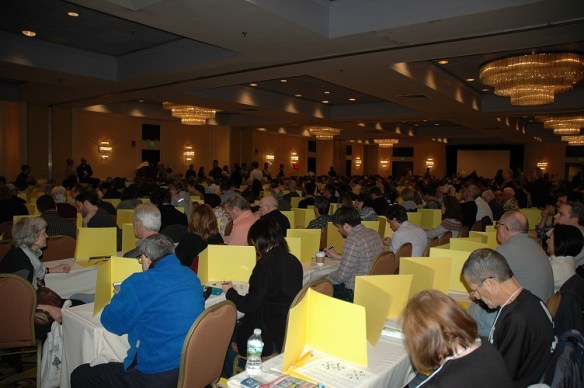
There are few things better than spending time with fellow puzzlers and gamers, and we got to do a lot of that this year. Whether it was supporting new creators and exploring established companies at New York Toy Fair or cheering on my fellow puzzlers at the American Crossword Puzzle Tournament, getting out and talking shop with other creators is invigorating and encouraging. It really helps solidify the spirit of community that comes with being puzzly.

#2 Puzzle History

I mentioned puzzle history as a frequent blog post topic in #9, but recent revelations by government agencies in both the United States and Great Britain have allowed puzzlers greater access than ever before to the history of codebreaking over the last century or so.

In fact, so much information has come to light that I was able to do a three-part series on the history of the NSA and American codebreaking post-World War II. This was a labor of love that took weeks to put together, and I think it’s some of the best work I’ve ever done for the blog.

#1 Daily POP Crosswords

There’s nothing more exciting than getting to announce the launch of a product that has been months or years in the making, so picking #1 was a no-brainer for me. It had to be the announcement of Daily POP Crosswords.

But it’s not just the app, it’s everything behind the app. I’ve had the opportunity to introduce you to several of the terrific constructors we’ve recruited to make the puzzles as fresh and engaging as they can possibly be, and you’ll get to meet a few more in the weeks to come.

It may sound self-serving or schlocky to talk about our flagship products as #1 in the countdown, but it’s something that we’re all extremely proud of, something that we’re constantly working to improve, because we want to make our apps the absolute best they can be for the PuzzleNation audience. That’s what you deserve.

And it’s part of the evolution of PuzzleNation and PN Blog. Even as we work to ensure our current products are the best they can be, we’re always looking ahead to what’s next, what’s on the horizon, what’s to come.

Thanks for spending 2017 with us, through puzzle scandals and proposals, through forts and festivities, through doomsday prepping and daily delights. We’ll see you in 2018.


Thanks for visiting PuzzleNation Blog today! Be sure to sign up for our newsletter to stay up-to-date on everything PuzzleNation!

You can also share your pictures with us on Instagram, friend us on Facebook, check us out on Twitter, Pinterest, and Tumblr, and explore the always-expanding library of PuzzleNation apps and games on our website!
PuzzleNation Blog Looks Back on 2017!

2017 is quickly coming to a close, and as I look back on an eventful year in the world of puzzles and games, I’m incredibly proud of the contributions both PuzzleNation Blog and PuzzleNation made to the puzzle community as a whole.

Over the last year, we explored board games and card games, strategy games and trivia games, dice games and tile games, do-it-yourself puzzlers and pen-and-paper classics. We met game designers, constructors, artists, and creative types of all kinds.

We unraveled math puzzles and tackled the Crossword from Hell. We accepted the challenge of diabolical brain teasers, optical illusions, Internet memes, and more, even pondering our place in the world of puzzles as electronic solvers like Dr. Fill and AlphaGo rise in capability.

We delved into puzzle history with posts about the legacy of female codebreakers in World War II, game dice from centuries ago, theories about Shakespeare’s secret codes, and the long history of cryptography and the NSA. We brought to light valuable examples of puzzles in art, popular culture, famous quotations, and even the natural world as we pondered whether bees are verifiable problem-solvers like crows and octopuses.

We spread the word about numerous worthwhile Kickstarters and Indiegogo campaigns, watching as the puzzle/game renaissance continued to amaze and surprise us with innovative new ways to play and solve. We shared worthy causes like Puzzles for Progress, as well as amazing projects like new escape rooms, dazzling corn mazes, and the ongoing Kubrick’s Game interactive experience.

We cheered the 75th anniversary of the New York Times Crossword, and chronicled the many celebrations that marked the occasion, from guest crossword constructors like Bill Clinton and Lisa Loeb to a puzzle-centric cruise across the Atlantic!

We also mourned as friends and fellow puzzlers passed on. We said goodbye to David Lindsey and Raymond Smullyan, two underappreciated giants of the field. The pun-fueled show @midnight this year, which inspired our monthly hashtag game, also closed up shop, sadly.

We celebrated International TableTop Day, made puzzly bouquets in honor of International Puzzle Day, marveled at the records broken at the Rubik’s Cube World Championship, attended the American Crossword Puzzle Tournament and New York Toy Fair, and dove deep into an ever-expanding litany of puzzle events like the Indie 500, BosWords, Lollapuzzoola 10, and Crosswords LA.

We found puzzly ways to celebrate everything from Pi Day, the Super Bowl, and Star Wars Day to Halloween, Thanksgiving, and Christmas, and we were happy to share so many remarkable puzzly landmark moments with you. We even discovered Puzzle Mountain!

It’s been both a pleasure and a privilege to explore the world of puzzles and games with you, my fellow puzzle lovers and PuzzleNationers. We marked five years of PuzzleNation Blog this year, I recently penned my 800th blog post, and I’m more excited to write for you now than I was when I started.

And honestly, that’s just the blog. PuzzleNation’s good fortune, hard work, and accomplishments in 2017 went well beyond that.

Every month, we delivered quality content for the Penny Dell Crosswords App. From monthly deluxe sets and bonus boxes to Dell Collection sets and holiday bundles, dozens upon dozens of topnotch puzzles wended their way to our loyal and enthusiastic solvers.

And just last month, we launched our newest puzzly endeavor — Daily POP Crosswords — bringing you fresh, up-to-date cluing and relatable themes in world-class puzzles created by some of the industry’s best constructors! (Many of whom you’ve gotten to know in our recent interview series, Meet the Daily POP Crosswords Constructors!)

But whether we’re talking about the Penny Dell Crosswords App or Daily POP Crosswords, I’m proud to say that every single puzzle represents our high standards of quality puzzle content crafted for solvers and PuzzleNationers.

And your response has been fantastic! Daily POP Crosswords is thriving, the blog has over 2200 followers, and with our audience on Facebook, Twitter, Instagram, and other platforms continuing to grow, the enthusiasm of the PuzzleNation readership is both humbling and very encouraging.

2017 was our most ambitious, most exciting, and most creatively fulfilling year to date, and the coming year promises to be even brighter.

Thank you for your support, your interest, and your feedback, PuzzleNationers. The new year looms large, and we look forward to seeing you in 2018!


Thanks for visiting PuzzleNation Blog today! Be sure to sign up for our newsletter to stay up-to-date on everything PuzzleNation!

You can also share your pictures with us on Instagram, friend us on Facebook, check us out on Twitter, Pinterest, and Tumblr, and explore the always-expanding library of PuzzleNation apps and games on our website!

These Puzzly Puns Will Echo Through Eternity…

Oh yes, it’s that time again! It’s time to unleash our puzzly and punny imaginations and engage in a bit of sparkling wordplay!

You may be familiar with the board game Schmovie, hashtag games on Twitter, or the Hashtag Wars segment that used to run on @midnight on Comedy Central.

For years now, we’ve been collaborating on puzzle-themed hashtag games with our pals at Penny Dell Puzzles, and this month’s hook was #PennyDellPuzzleHistory, mashing up Penny Dell puzzles with historical figures, historical moments, and historical quotations!

Examples include: Daisy Defeats Truman, V-Words-Day, or “Ask not what your mystery country can do for you…”

So, without further ado, check out what the puzzlers at PuzzleNation and Penny Dell Puzzles came up with!


Penny Dell Puzzle Historical References!

Oregon Word Trails

Monrows Garden Doctrine

Woodstock Flower Power

Right of Wayflower Compact

Christopher Explore-a-word Columbus

Samson says and Dilemma

Lucky Star of Bethlehem

Lincolnwords

Federalist-a-Crostic Papers

Hannibal Crisscrossing the Alps

Washington Cross Pairs the Delaware

Military Sudo-coup

Alan Turing’s Codebreaking and Cryptocrossing during WWII

Fancy Ninety-Five Theses / Ninety-Five of Diamonds

Transcontinental Railroad Ties

Circles in the Tiananmen Square

Enigmatch-up Machines (for making Codewords)

Middle of the Silk Road

Boston Three-D Party

Sum Totals of ’69

Spanners Armada

The Treaty of Versyllability

The Stars-Spangled On Parade Word Search Banner


Penny Dell Puzzle History Quotes!

“Four Letter Score and seven years ago” / “Plus fours scorewords and seven-up years ago…”

“Other than that Mrs. Lincoln, how was the Word Play?

“Read my Blips: No new text messages…”

“The Buck Stoplines Here” / “The Buck Stops Here & There”

“Ich bin ein Berlinkworder…”

Napoleon: “Never interrupt your enemy when he’s making a Give-and-Take.”

Churchill: “The Battleship of Britain is about to begin.”

“Letterboxes them eat cake!”

Bill Parcells: “No matter how much you’ve won, no matter how many games, no matter how many championships, no matter how many Super Bowls, you’re not winning now, so you stink.”

Even Shakespeare can get into the hashtag game! From The Tempest:

ALONSO
And Trinculo is reeling ripe. Where should they
Find this grand liquor that hath gilded ’em?—
How camest thou in a pickle?

TRINCULO
I have been in such a pickle since I saw you last that,
I fear me, will never out of my bones. I shall not fear flyblowing.


There were also several submissions that deserve their own section, as these intrepid puzzlers went above and beyond.

One player offered this historical summation: HubCaptain Smith Who Became More than a Blip When He Ventured Across and Down with His Ship: A Titanic Tradeoff

Another player created his own puzzly Pledge of Allegiance:

“I pledge Accordion Words, to the flag, of the Untied Mystery States of America.
And to the republic, for which it Anagrams, one nation under Guess Who,
in Decisions, with liberty and Jigsaw Puzzles for all.”


Have you come up with any Penny Dell Puzzle History entries of your own? Let us know! We’d love to see them!

Thanks for visiting PuzzleNation Blog today! Be sure to sign up for our newsletter to stay up-to-date on everything PuzzleNation!

You can also share your pictures with us on Instagram, friend us on Facebook, check us out on Twitter, Pinterest, and Tumblr, and explore the always-expanding library of PuzzleNation apps and games on our website!
Unsung Tales of Women in American Code Breaking!

[Image courtesy of Amazon.]

Dot Braden. Agnes Driscoll. Betty Hyatt. Elizebeth Friedman. Genevieve Grotjan. Ann Caracristi. Virginia Aderholdt. Ruth “Crow” Weston.

You don’t know these names, but you should. Everyone should. They’re bona fide American heroes who dedicated their time and energy to protecting not only our country, but also every soldier in the Allied forces during World War II. And they did so when they should have otherwise been continuing their collegiate studies.

That’s right, these women who came from majors as diverse as botany, math, psychology, and English, were recruited out of college in order to build a dedicated code-breaking unit for the US armed forces.

Thankfully, their stories are now being told in Liza Mundy’s new book, Code Girls: The Untold Story of the American Women Code Breakers of World War II. And these are some amazing stories.

It all started in early 1942, as secret letters began showing up in college mailboxes. Schools like Bryn Mawr, Mount Holyoke, Barnard, Radcliffe, and more posed two questions to prospective female recruits:

1. Did she like crossword puzzles?
2. Was she engaged to be married?

All of these women replied yes, they like crossword puzzles, and no, they’re not engaged or soon-to-be engaged.

After answering these questions, the women began attending introductory meetings. They were issued manila envelopes containing “a brief introduction to the arcane history of codes and ciphers, along with numbered problems sets and strips of paper with the letters of the alphabet printed on them.”

Their orders? Complete the problem sets every week.

[Image courtesy of YouTube.]

Each packet contained one problem that could not be solved, to show that sometimes, a jumble of letters or numbers doesn’t stand for anything. Sometimes, gibberish remains just that, because sometimes a code-breaker fails.

They developed working knowledge of foreign languages they didn’t speak. They memorized the most common English letters — E, T, O, N, A, I, R, S — and took frequency counts.

And that’s how America built its answer to England’s Bletchley Park code-breaking operation. (The American effort, known as Arlington Hall, was considered by their Bletchley Park rivals as “just a lot of kids playing at ‘office’.”)

College presidents like Ada Comstock, the president of Radcliffe College (the women’s counterpart to Harvard), were recruited to identify candidates to learn cryptanalysis to help shorten the war.

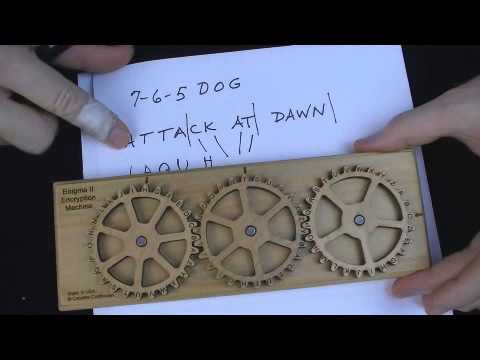
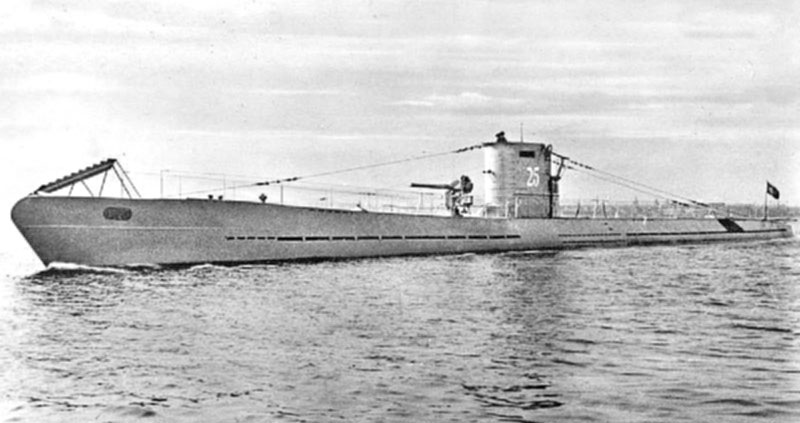
And make no mistake, they did shorten the war. They helped crack Enigma, which was key to decimating the German U-boat fleet, and their code-breaking efforts were instrumental in defeating Japan as well, providing valuable intel on the island-to-island battles of the Pacific theater.

[Image courtesy of Military Factory.]

Of the US Army’s World War II code-breaking force, nearly 70 percent was female. We’re talking 7,000 female code-breakers. When you factor in US Navy recruits as well, that number jumps to 11,000 women out of 20,000 code-breakers.

From Code Girls: “Code breaking required literacy, numeracy, care, creativity, painstaking attention to detail, a good memory, and a willingness to hazard guesses. It required a tolerance for drudgery and a boundless reserve of energy and optimism.”

Genevieve Grotjan was key to cracking the Japanese cipher known as Purple, and William Friedman, the man who initially ran the Arlington Hall operation, described the Purple cipher as “by far the most difficult cryptanalytic problem successfully handled and solved by any signal intelligence organization in the world.” He specifically pointed to the contrbutions of Grotjan, Mary Louise Prather, and other women in the Arlington Hall group.

Codes used by twenty-five different nations were analyzed by Arlington Hall, including codes of friends and foes alike. “There was a French code called Jellyfish, a Chinese enciphered code they called Jabberwocky, another they called Gryphon.”

But even their staggering efforts in code-breaking weren’t all they contributed to the cause. They were also crucial to the success of the D-Day invasion, as many of the women were put to work reverse-engineering messages in order to create false information about imaginary troop movements and landing areas. And in order to create fake signal traffic, they had to know the real traffic backward and forward.

I could go into more detail, breaking down how they cracked some of the war’s most important code languages, or exploring their personal lives and how life changed for these college students-turned-military operatives, but I don’t want to reveal more than I have already.

Read Code Girls. You won’t regret it. It’s another terrific entry in a year of books full of revelations about wartime puzzle history. We’ve been taken behind the scenes of the NSA, Bletchley Park, and now Arlington Hall.

And once more, important and influential female voices are getting the limelight far later than they deserve. It’s about time.


Thanks for visiting PuzzleNation Blog today! Be sure to sign up for our newsletter to stay up-to-date on everything PuzzleNation!

You can also share your pictures with us on Instagram, friend us on Facebook, check us out on Twitter, Pinterest, and Tumblr, and explore the always-expanding library of PuzzleNation apps and games on our website!