A Horror Game For Every Day of October!

It’s officially time for all things spooky, scary, terror-inducing, and horror-fueled to take over for a whole month, and that should include your games! So I’ve assembled a list of 31 games fit for the season. Some are silly, some are tense, but all fit the Halloween vibe nicely.

So, without further ado, let’s get to the list!
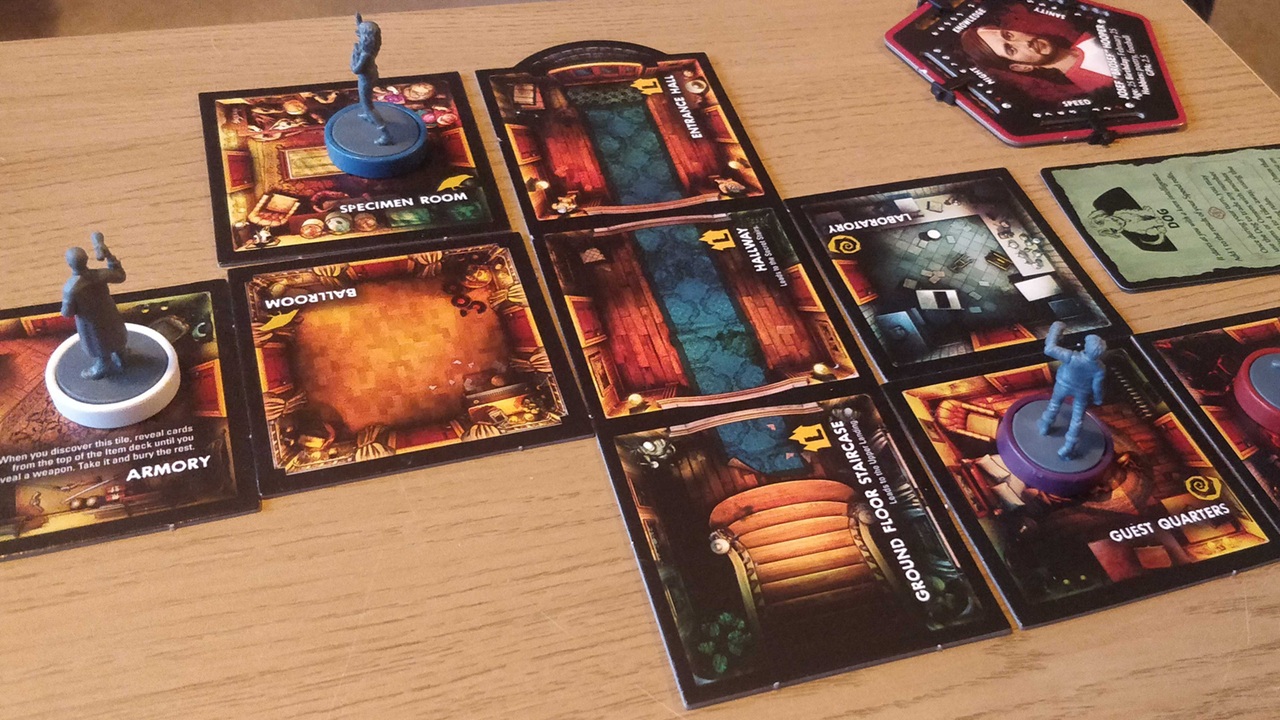

OCTOBER 1: Betrayal at the House on the Hill

Let’s get a classic out of the way first. This game is loaded with various storylines to keep you spooked for hours on end, and its ever-shifting game board makes every play great fun. Controversial take: The Scooby Doo edition is the superior edition.
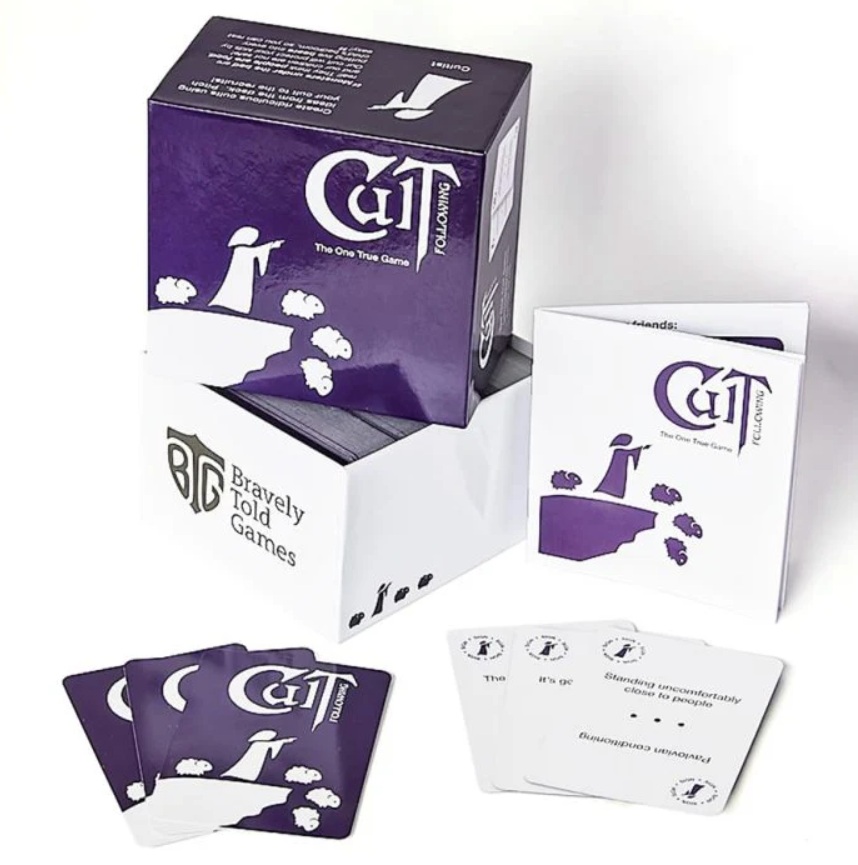

OCTOBER 2: Cult Following

Looking for a party game with a sinister twist? Look no further than Cult Following, the card game where you try to build the best cult and pitch it to your fellow players in the hopes of winning their hearts, minds, and unending loyalty. This is definitely on the sillier side, but the cult gimmick makes it perfectly Halloween-appropriate.
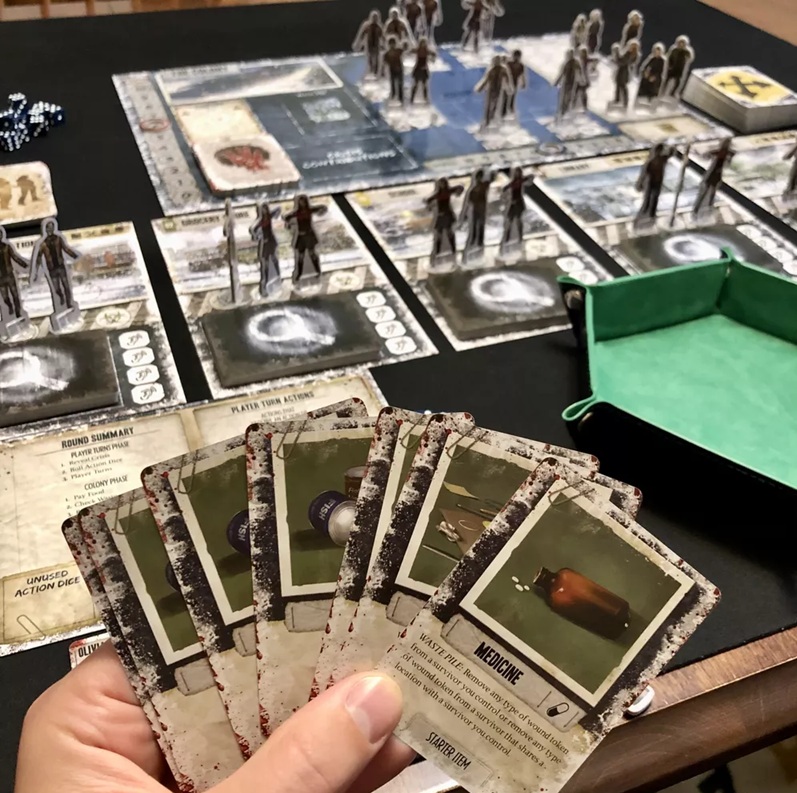

OCTOBER 3: Dead of Winter

If you’re looking for tension, high stakes, cooperative gaming, and the potential for self-serving surprises, it’s hard to beat Dead of Winter. The players are trying to survive the zombie apocalypse, but each player also has their own agenda (which might not always align with the group’s interests). This is an awesome game with plenty of replay value.
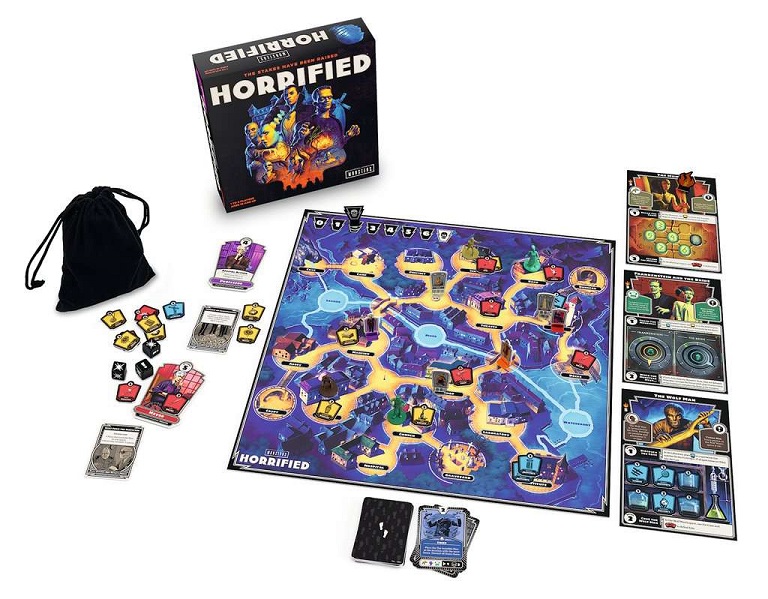

OCTOBER 4: Horrified

More family friendly than some other spooky games, Horrified is a good way to balance scares and good times. In this cooperative game, your group of heroes is pitted against some of the classic Universal movie monsters like The Bride of Frankenstein, The Wolfman, and The Creature from the Black Lagoon. You must work together to complete specific tasks in order to defeat the monsters. (There are loads of different versions. My current favorite is the American Monsters edition!)
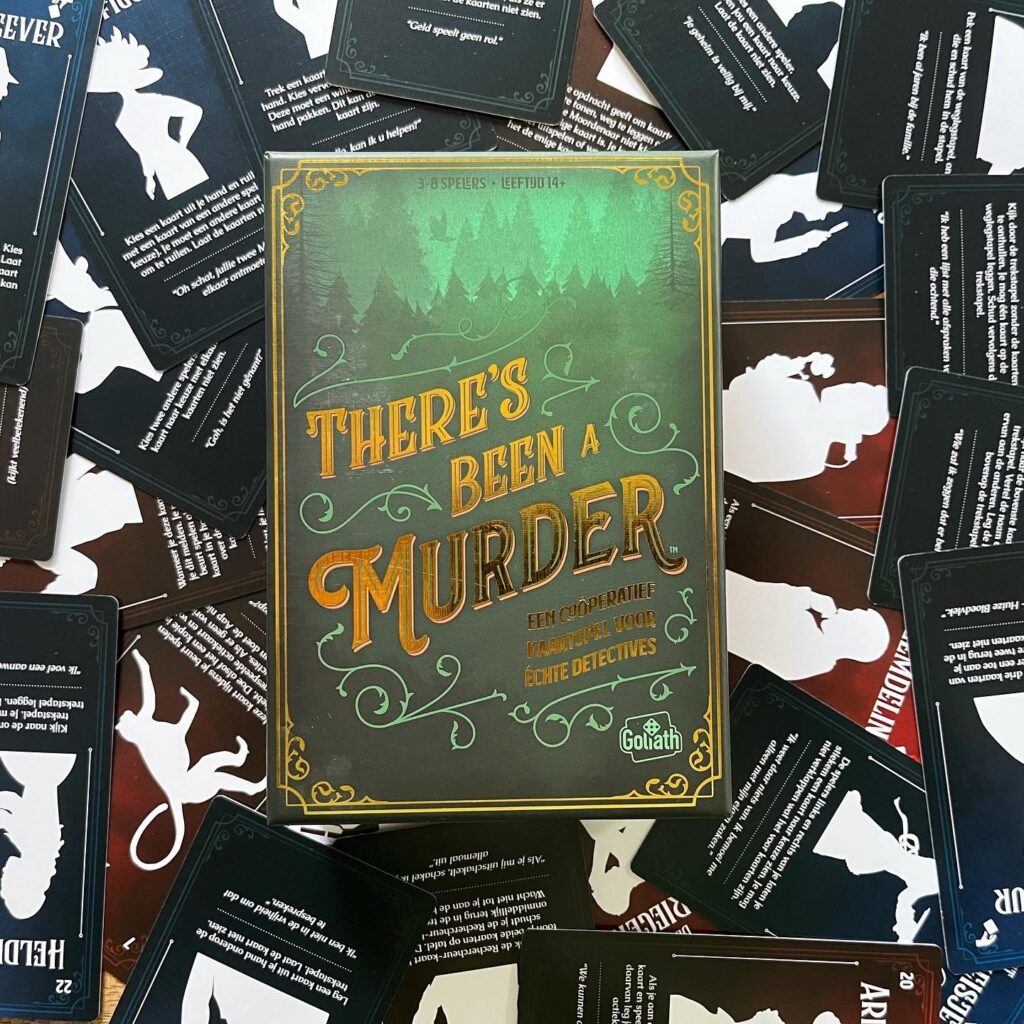

OCTOBER 5: There’s Been a Murder

In this card game that’s quick to learn but harder to master, there’s a murder to be solved, and every card can help or hinder the investigation, depending on your motives. Will you help the Detective solve the crime, or will the Murderer dispatch the Witness and get away scot-free? This is a murder mystery condensed into a card game, and it’s brilliantly done.
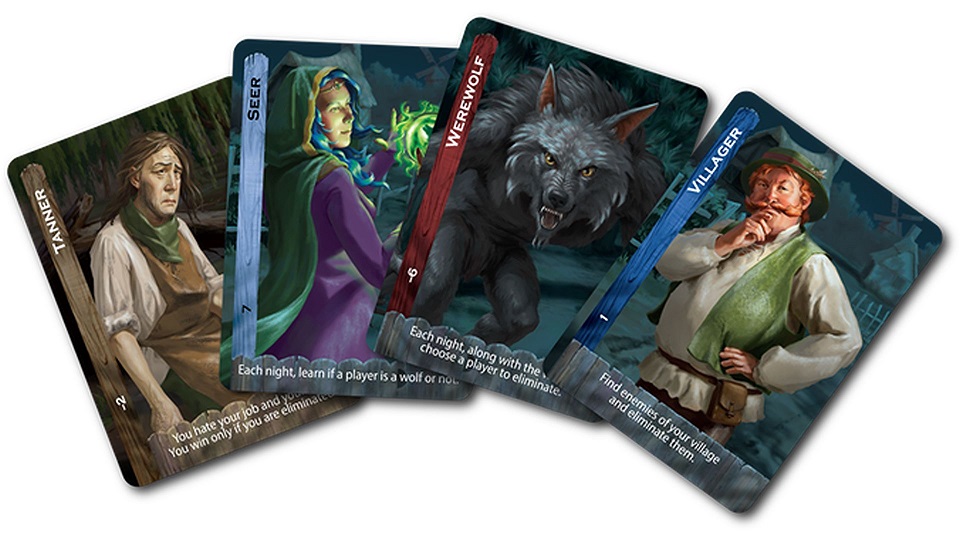

OCTOBER 6: Werewolf

With the full moon, how could I not put this here? This is a classic social deduction game where a group of townsfolk are trying to find the werewolf in their midst. A great party game with very little prep, it’s always a winner. (For similar gameplay but different story trappings, check out Salem 1692 and Are You the Robot?)
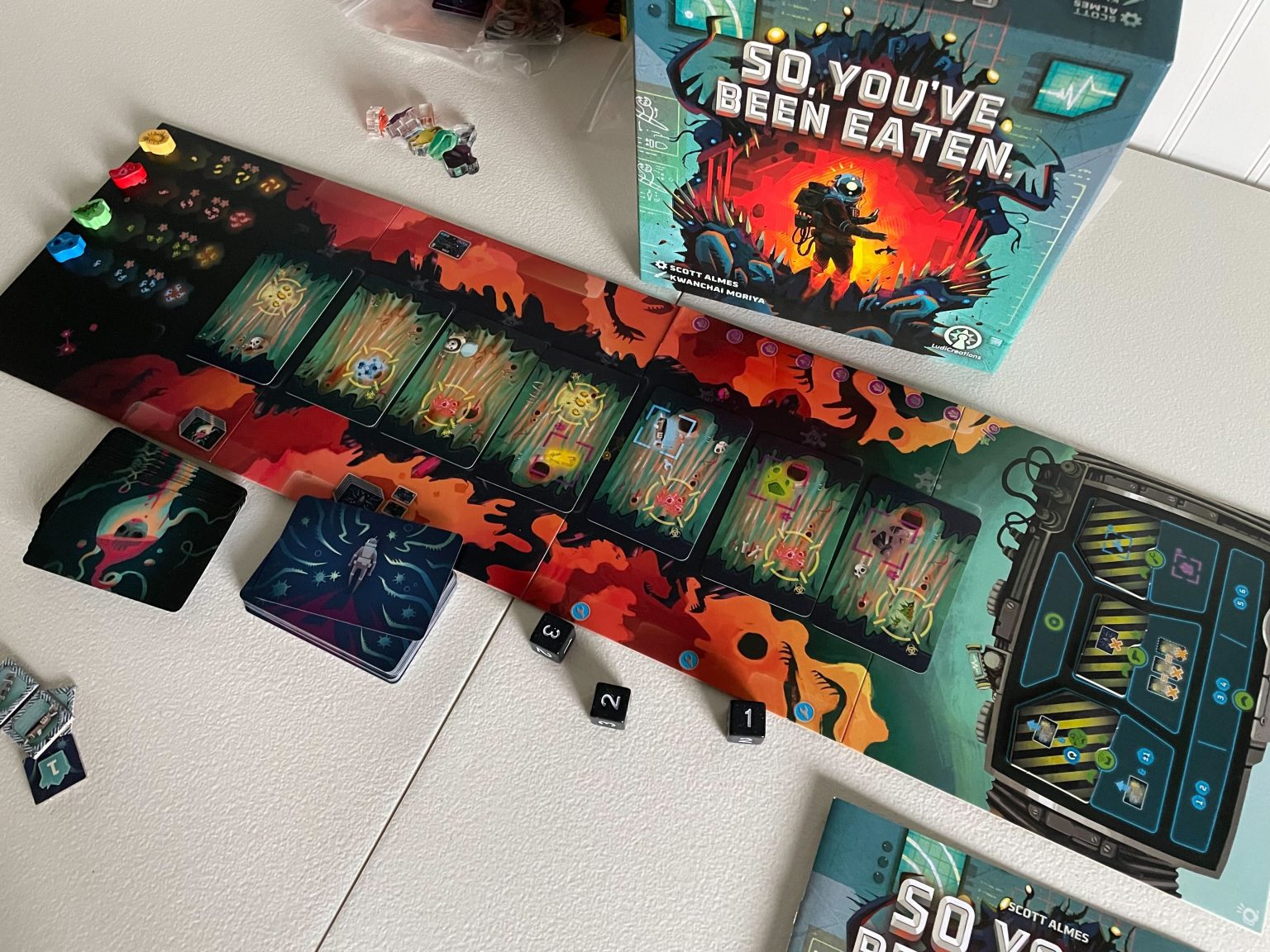

OCTOBER 7: So You’ve Been Eaten

This is more sci-fi than horror, but I think the concept still fits the bill. You’re a miner inside the body of a giant space beast, and you’re trying to get your crystals before the beast’s bacteria turn you into so much bodily detritus. This game can be played with 1 player (as the beast or the miner) or with 2 players (the beast versus the miner), and it’s a peculiar mix of sci-fi horror and strategy.
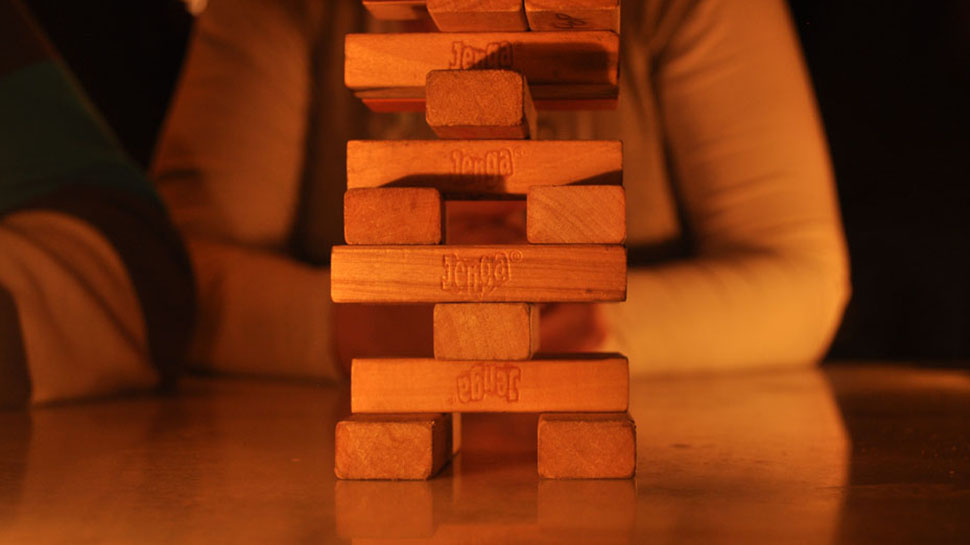

OCTOBER 8: Dread

Ever play a scary game with your friends involving nothing but imagination and a Jenga tower? That’s the brilliant concept behind Dread, a horror roleplaying game where your choices lead you to pulling blocks from the tower, and if it falls, you die! With all sorts of scenarios to play, Dread is a new game every time you play. A perfect introduction to roleplaying games for anyone.
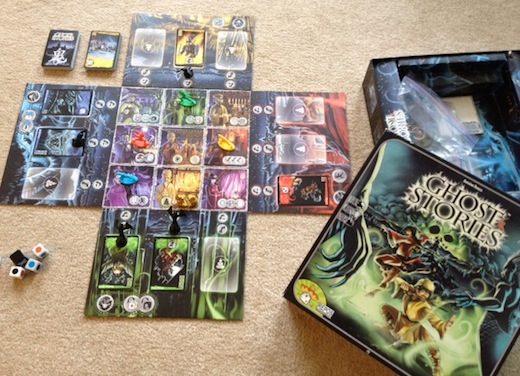

OCTOBER 9: Ghost Stories

The players take on the roles of Taoist priests protecting village from ghosts. This feels like a Halloween-fueled variation on Castle Panic!, given both the difficulty of the game and the relentless waves of spirits to defeat. But it’s a great time and one of the best cooperative horror games out there.
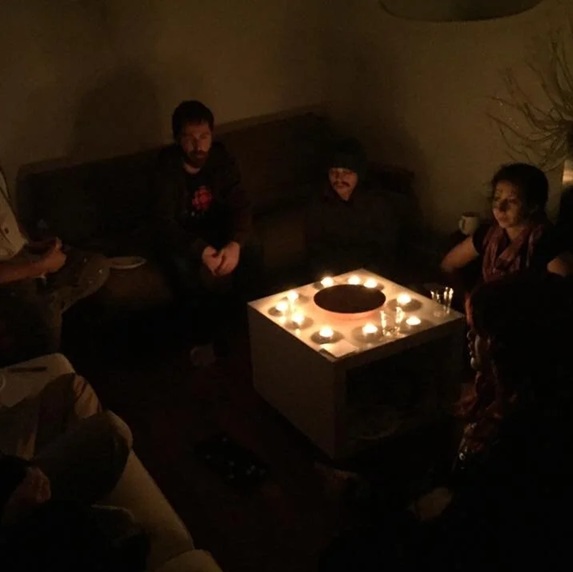

October 10: Ten Candles

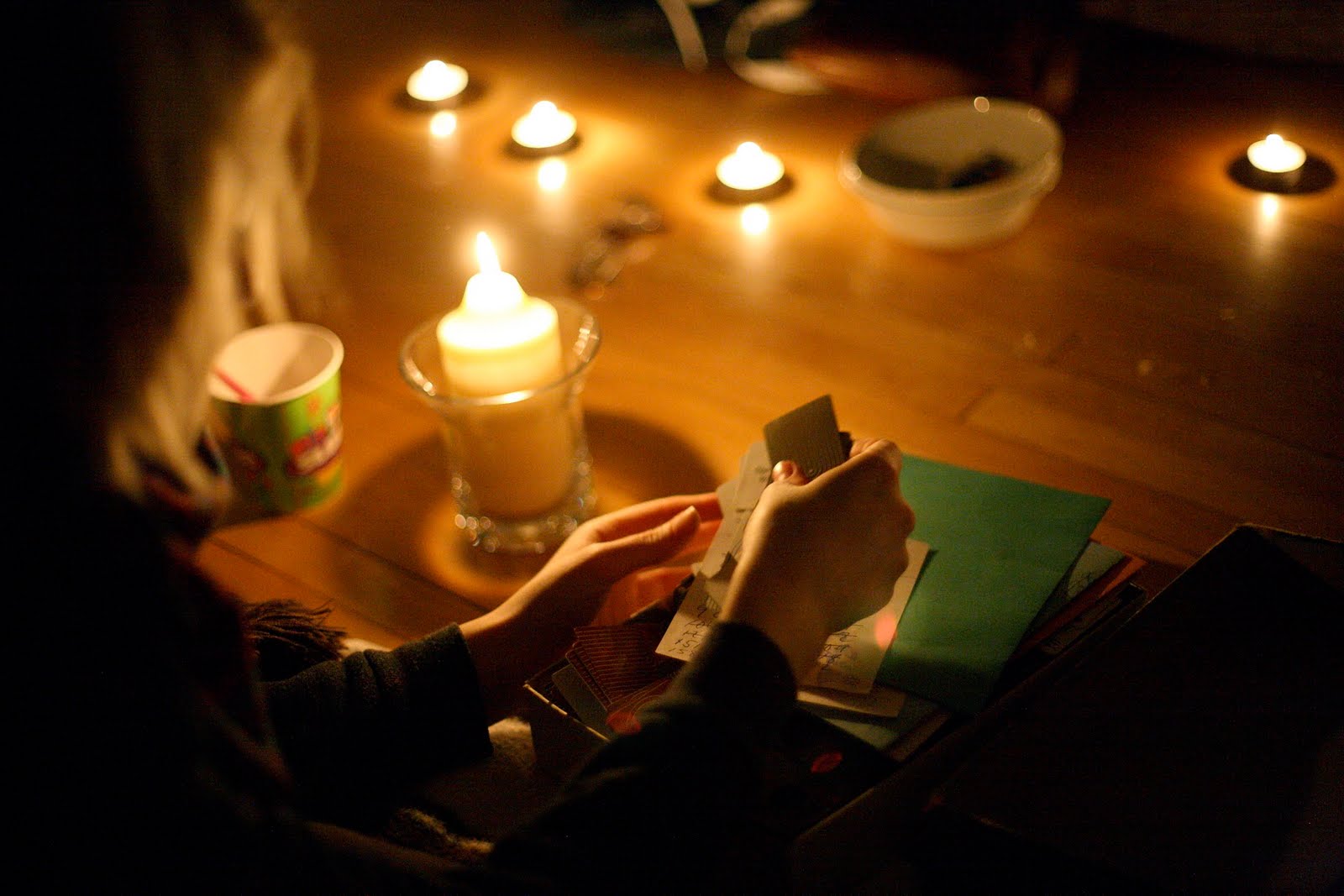
Easily the bleakest game on the list, Ten Candles is a game about the secrets we keep until the end. This collaborative storytelling game after trying to endure as long as the candlelight lasts. It’s fantastically dark and makes you appreciate every single moment.
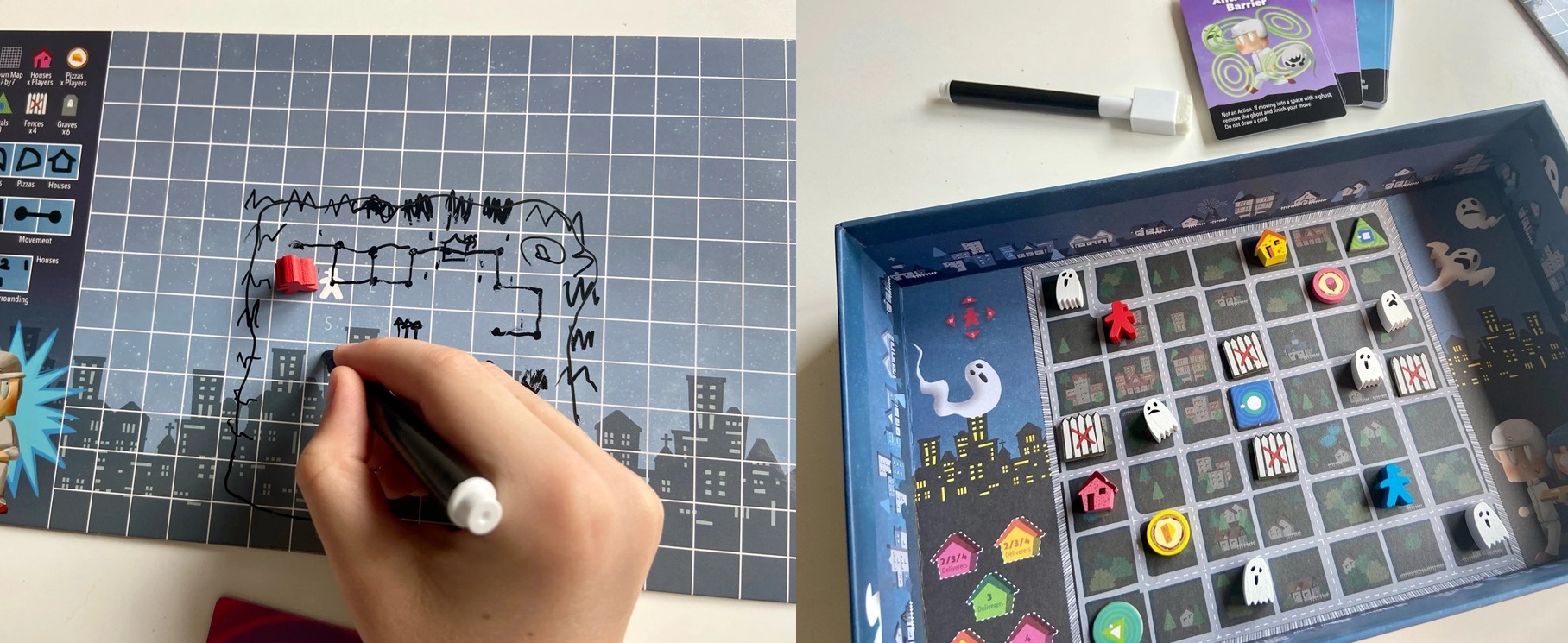

OCTOBER 11: Psychic Pizza Deliverers Go to Ghost Town

What if 20 Questions, but about psychics delivering pizza while battling ghosts? That’s the insanely creative idea behind Psychic Pizza Deliverers Go to Ghost Town. One player (the Mayor) builds the town and challenges the other players (the aforementioned Psychic Pizza Deliverers) to find a pizza and deliver it to the proper house in 20 turns or fewer. It’s bonkers, but with the right group, it’s so so fun.
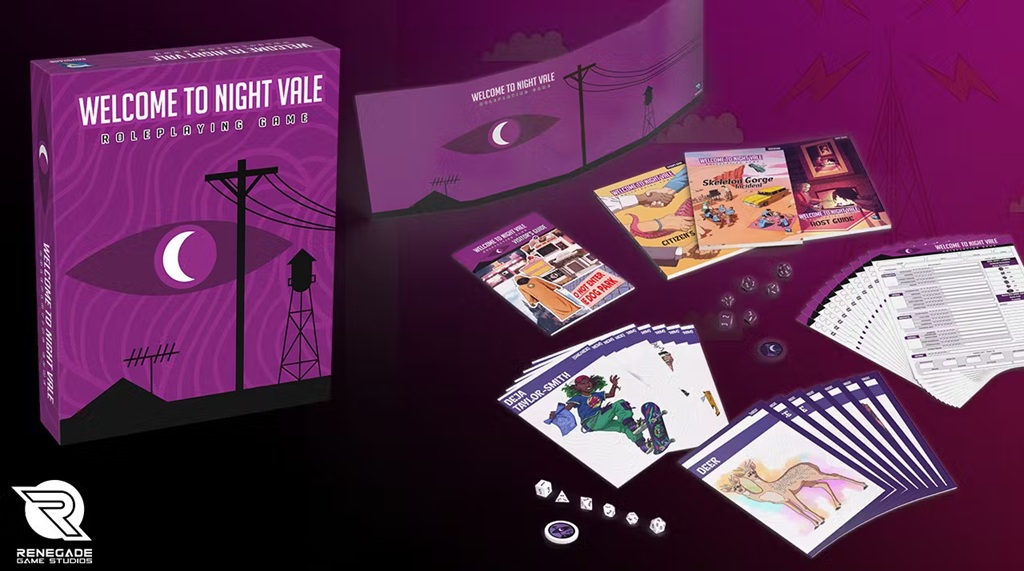

OCTOBER 12: Welcome to Night Vale RPG

If you’re not paranoid or horrified enough yet, this is the perfect game to put you over the top. A roleplaying game set in the town from the wonderful titular podcast, Welcome to Night Vale RPG gives you eldritch horrors, governmental conspiracies, and all the weird your brain can handle. Fun and scary in equal parts, this is great stuff.
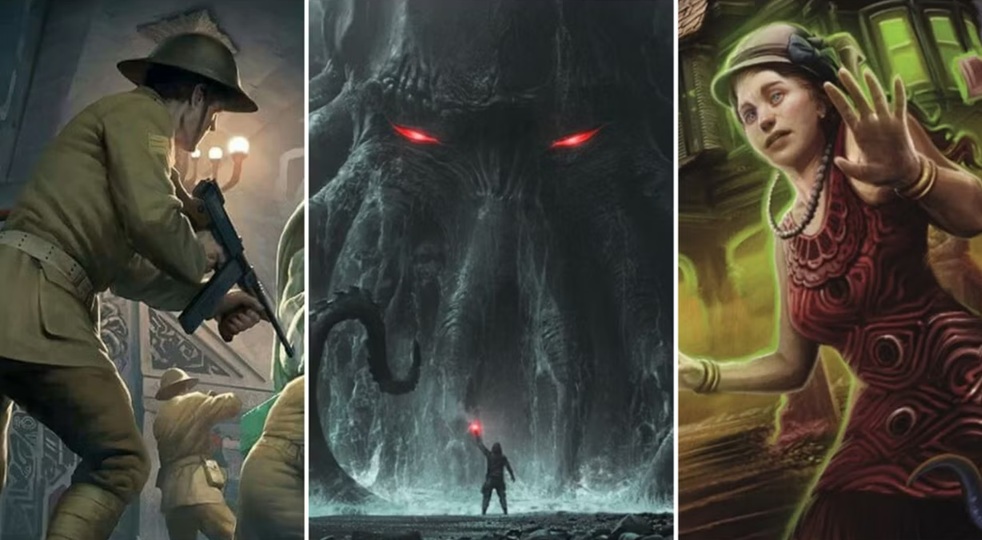

OCTOBER 13: Call of Cthulhu RPG

If you’re looking for mind-shredding scares and sanity-challenging evils, Call of Cthulhu has been the champion of the genre for decades. Based on H.P. Lovecraft’s legendary mythos, Call of Cthulhu has very human, very mortal characters dealing with unknowable cosmic horrors. Tension runs rampant in this game, so be warned.
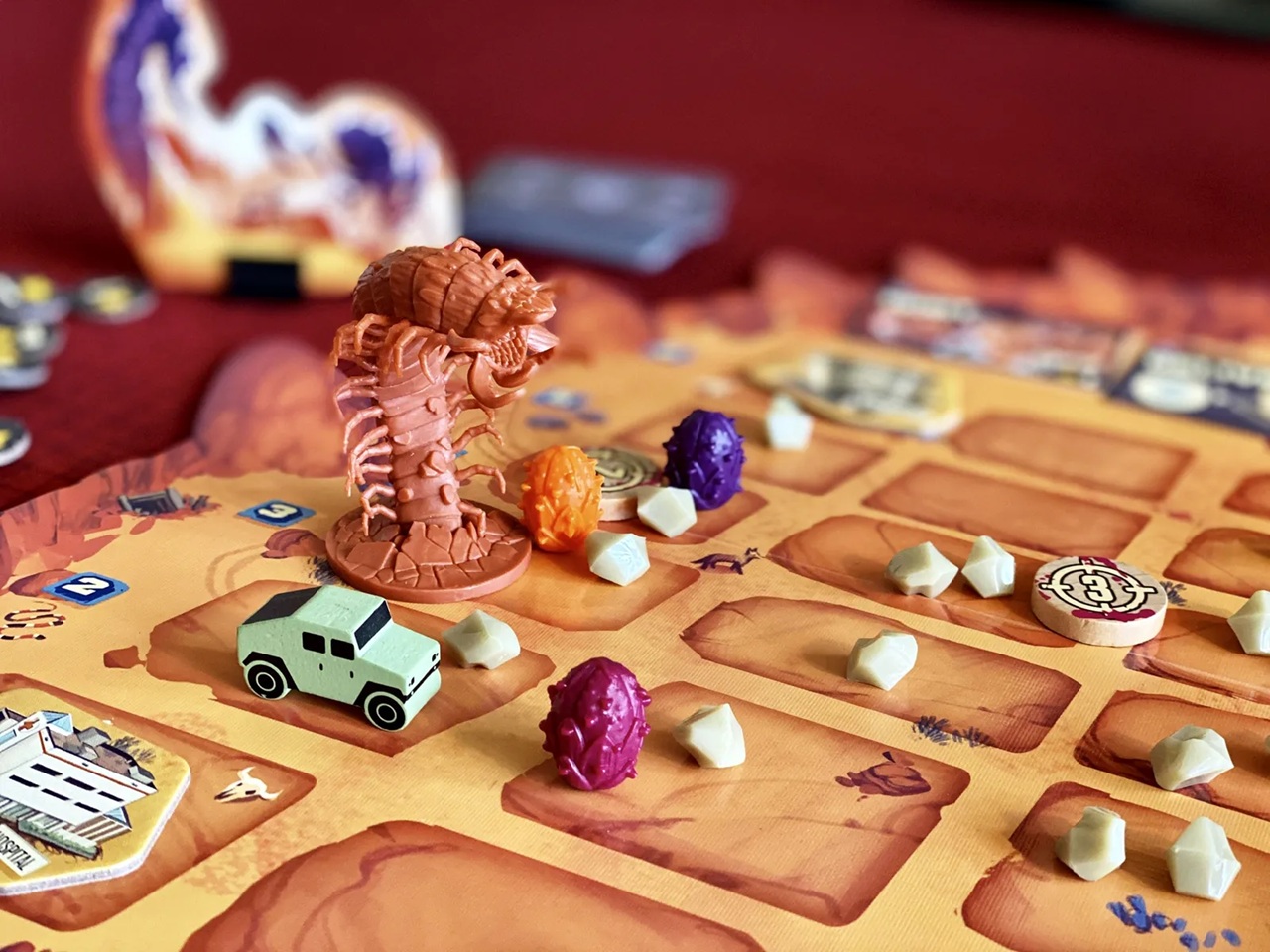

OCTOBER 14: Terror Below

Ever wanted to test your mettle in a Tremors-style scenario? Terror Below is where it’s at. Featuring tense gameplay, beautiful design (especially the minis), and all the giant worms you’ll ever need, Terror Below is an underappreciated gem.


OCTOBER 15: Nyctophobia

There’s perhaps no fear more primal than the fear of the dark, and Nyctophobia uses that to its advantage, plunging all but one player into darkness. (Blackout glasses are provided for the players.) The now-blind players must try to escape a dark forest, while the one player who can see stalks them, removing them from the game one by one. When properly executed, there’s no board game more immersive and scary than this one.
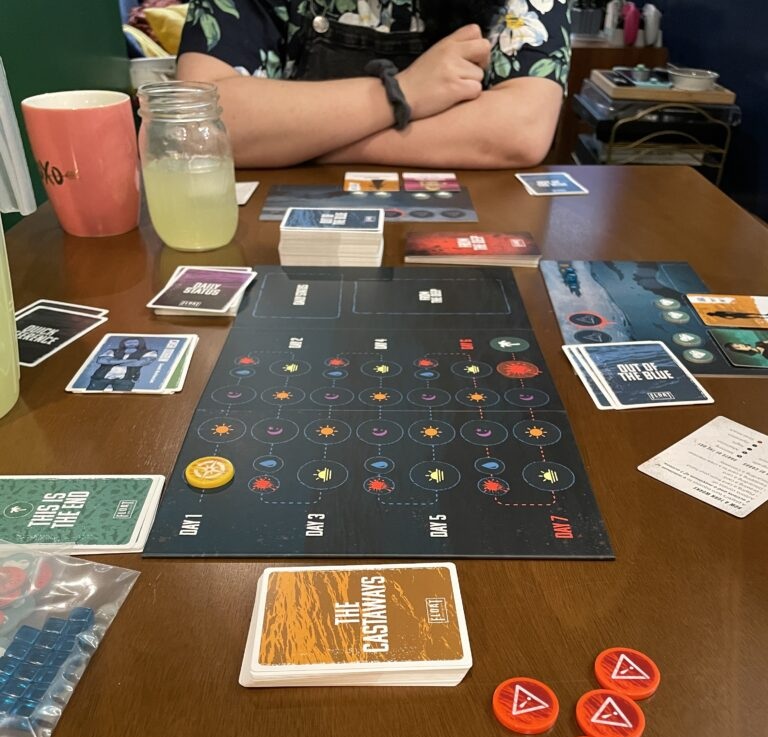

OCTOBER 16: Float from the Deep

You’re lost at sea, with untrustworthy people on the raft with you, and strange terrors lurking in the deep below. Can you make it to the island in the distance before your fellow players betray you, you drown in the unforgiving waters, or something drags you into the briny deep? This survival game (that could be cooperative, depending on the cards) might start a fight at the table, but it’s gonna be one heck of a game night.
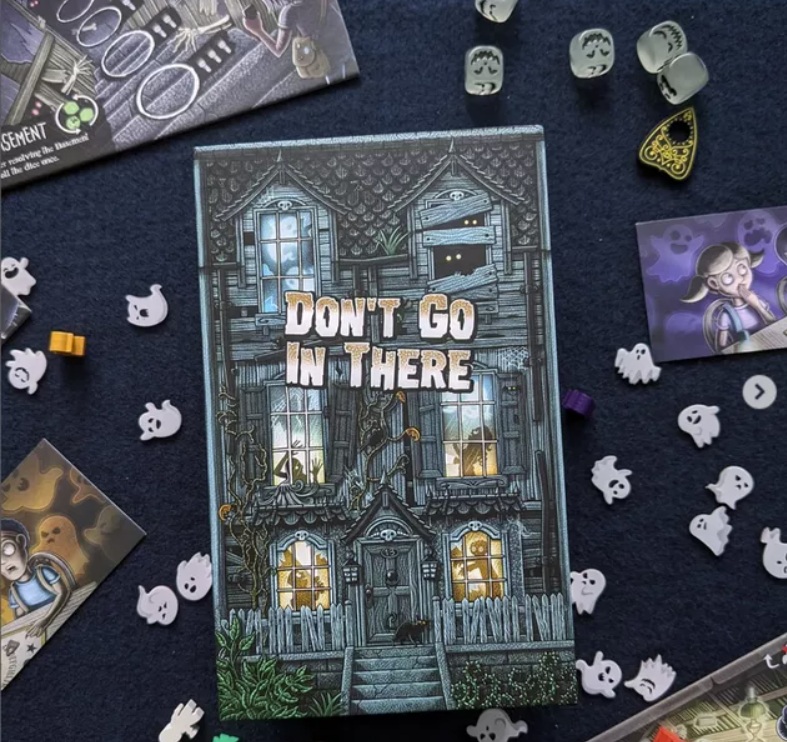

OCTOBER 17: Don’t Go In There

You know how kids are with haunted houses? They wander in, they get haunted by ghosts, and they desperately try to get out alive. This is definitely on the less-spooky end of the selections in today’s list (and one of the shortest to play), but it is still a good time and worthy of a spin at your table, especially with newer players.
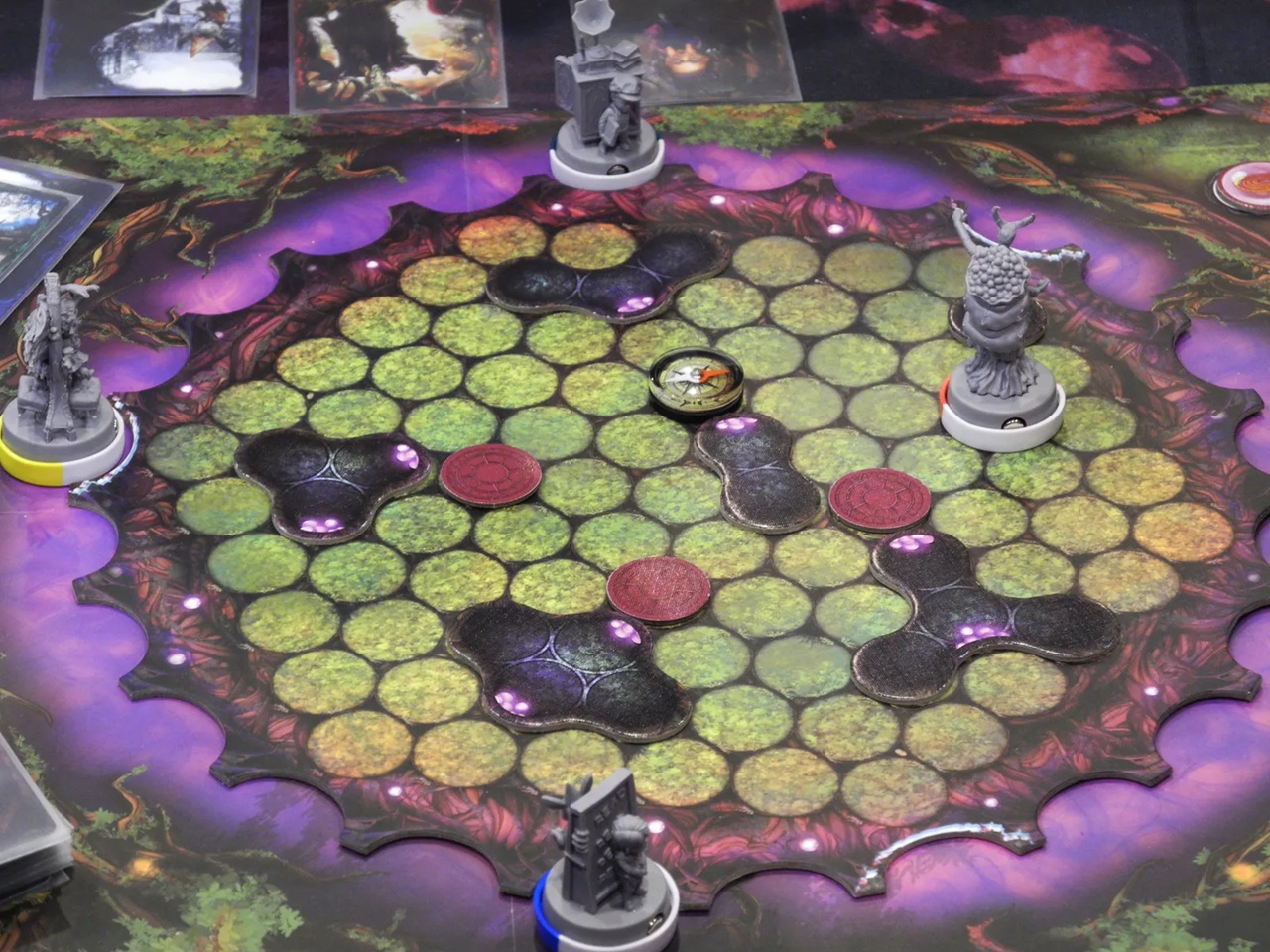

OCTOBER 18: The Faceless

In this game that feels like Stranger Things but with magnets instead of powers, you must navigate your group around the board, following a compass’s directions, manipulating it with cards and the magnetic figures around the board. Part-strategy game, part-scary hunt for your friend’s lost memories, The Faceless is a unique experience.
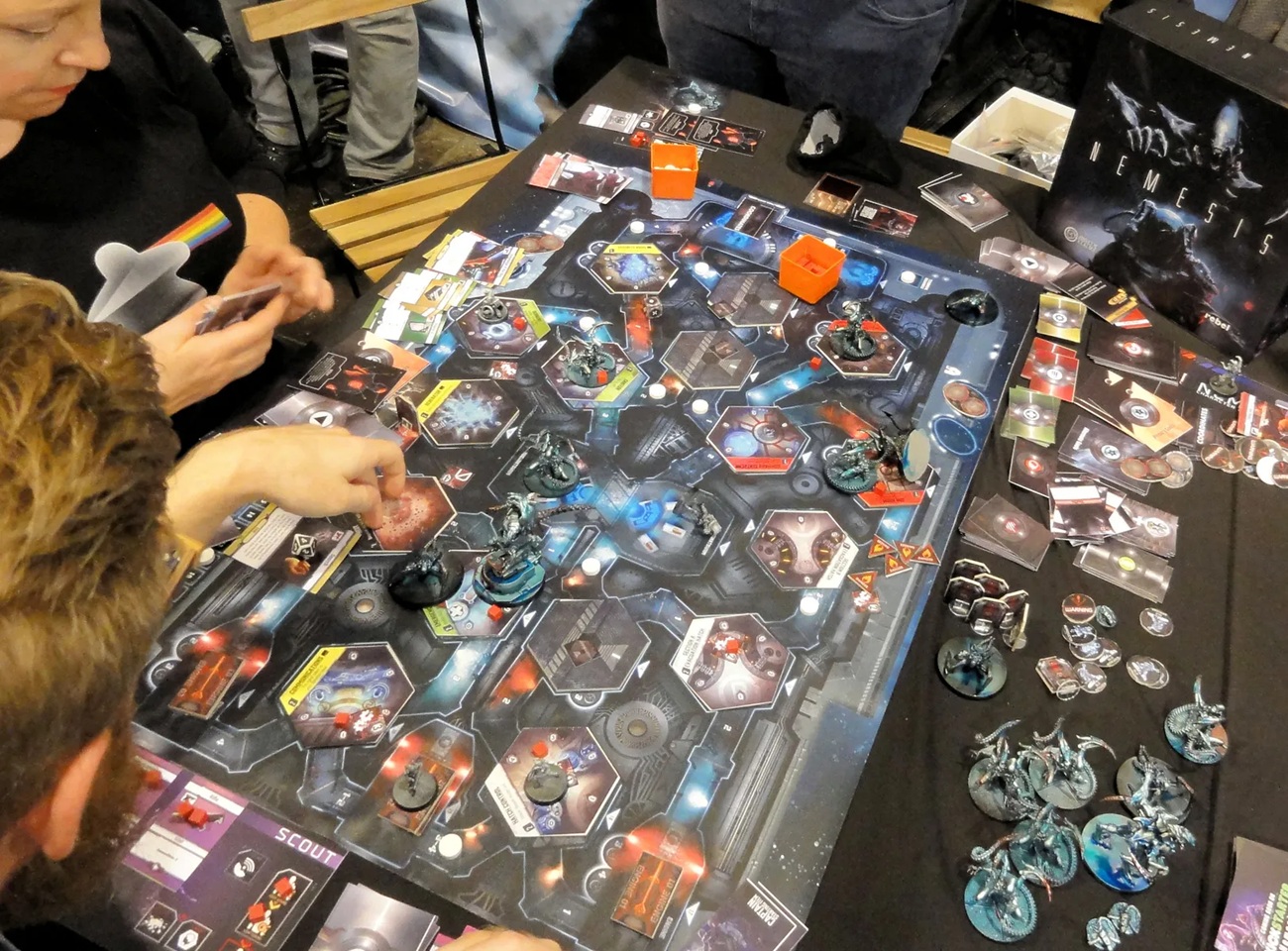

OCTOBER 19: Nemesis

This is, hands down, the best way to play the movie Alien with your friends. Aboard a deteriorating ship, overrun with alien monsters, you can only trust your skills and your fellow crewmates… despite their own agendas. Oh, and the longer the game takes, the stronger the monsters become.
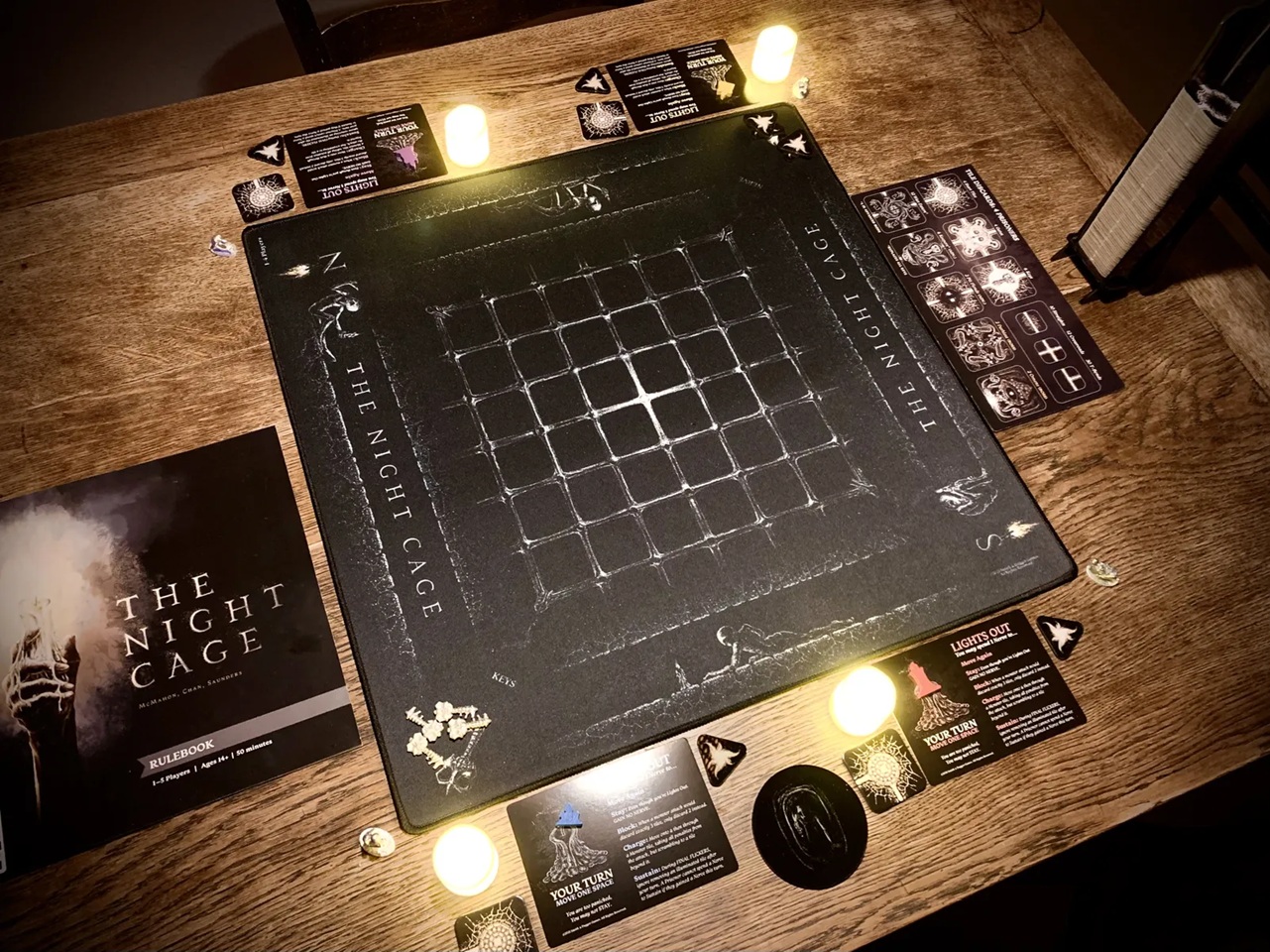

OCTOBER 20: The Night Cage

The light is fading. The tunnel behind you looks different than it did before. There’s something in the dark, and it’s getting closer. The Night Cage is brilliantly anxiety-inducing, so challenging and scary and atmospheric. I cannot say enough good things about this game.
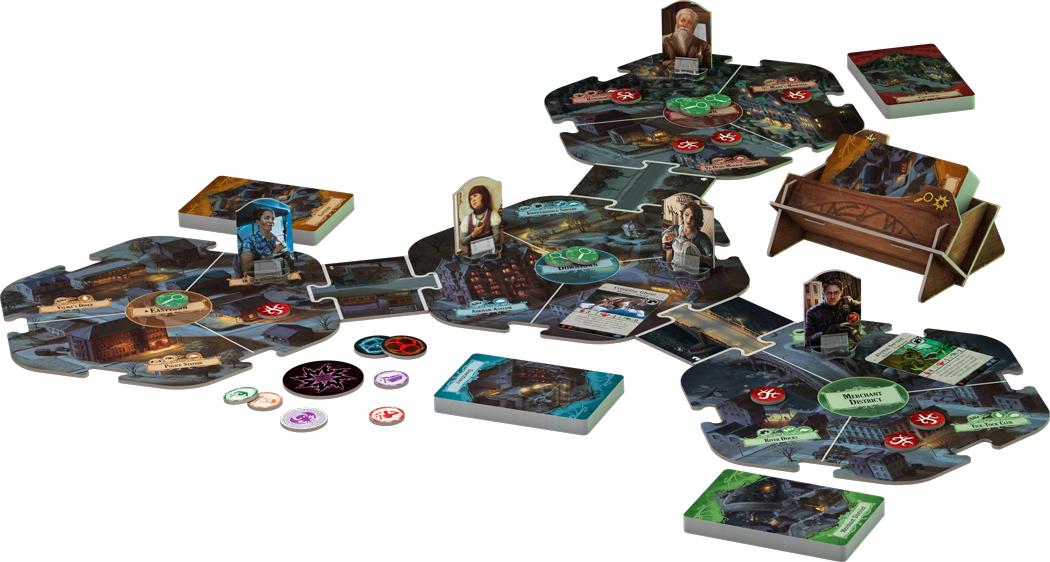

OCTOBER 21: Arkham Horror

During the Roaring Twenties, you and your fellow investigators must hunt monsters and prevent one of the Old Ones, a great cosmic evil, from being released and dooming the world to insanity and darkness. This cooperative game puts a little bit more of an action-y spin on the Lovecraftian horror genre, but it’s still an engaging horrorshow of an experience.

OCTOBER 22: Mysterium

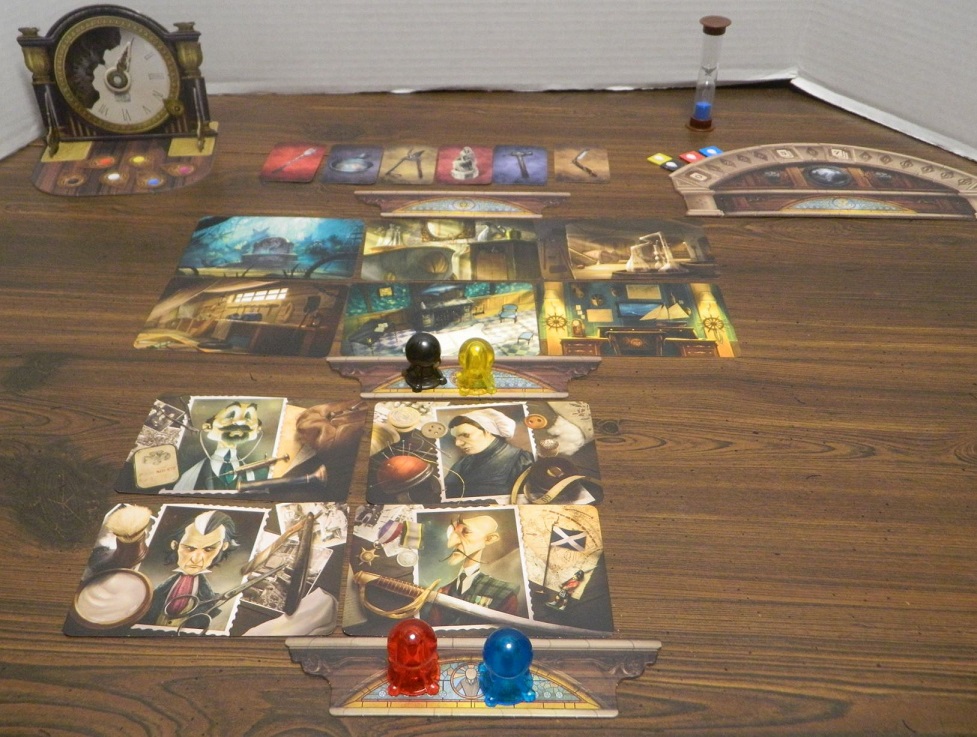
Nothing makes a game atmospheric like a murder to solve, and Mysterium goes way beyond Clue by having players work together to find the murderer. But there’s a twist, as one of the players is a ghost, and cannot speak. Instead, they offer visual clues to all of the other players, who are psychic mediums. The mix of clever communication and immersive storytelling makes this an excellent choice for a macabre night of gameplay and murder-solving.

OCTOBER 23: The Thing

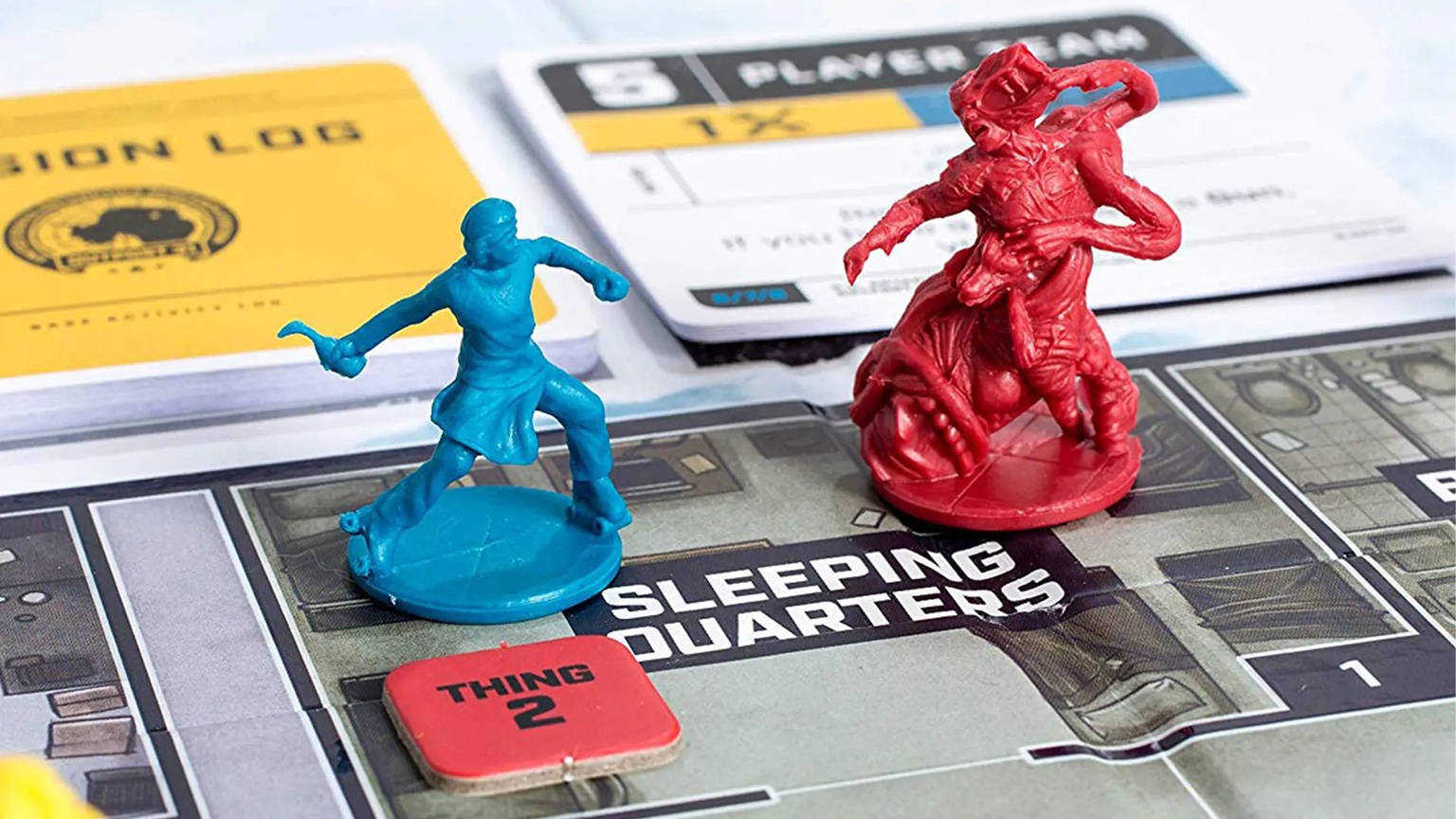
It’s hard to make a board game capture the tension and paranoia of an all-time classic horror movie, but man, The Thing does one hell of a job translating the creeping terror of that isolated polar station at your table. Can you figure out which player is the creature before it’s too late?

OCTOBER 24: Grave Robbers from Outer Space

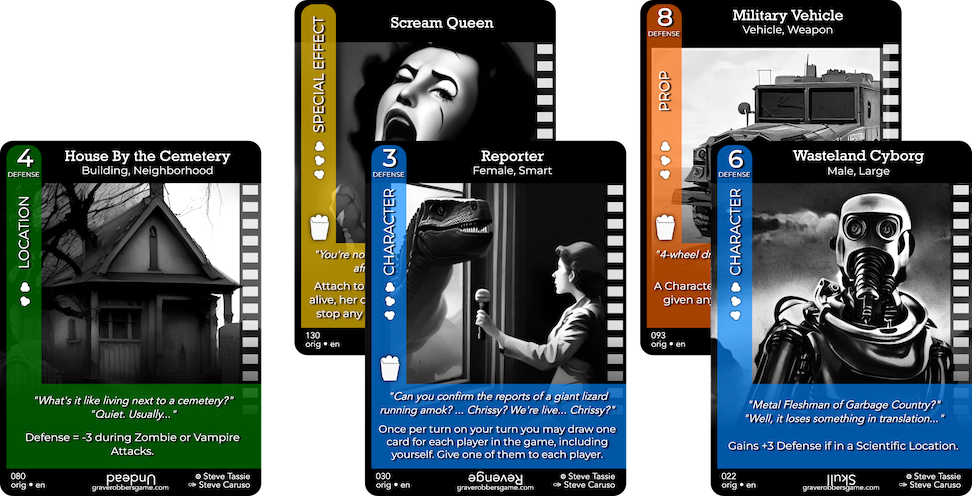
I love movie-based games that break the fourth wall, and this game hits all the high notes for that genre of gameplay. You are the producer of a B-grade monster or slasher movie, sending monsters or villains to attack the movies behind made by your fellow players. It’s meta in the best way, and a really good time.

OCTOBER 25: Sub Terra

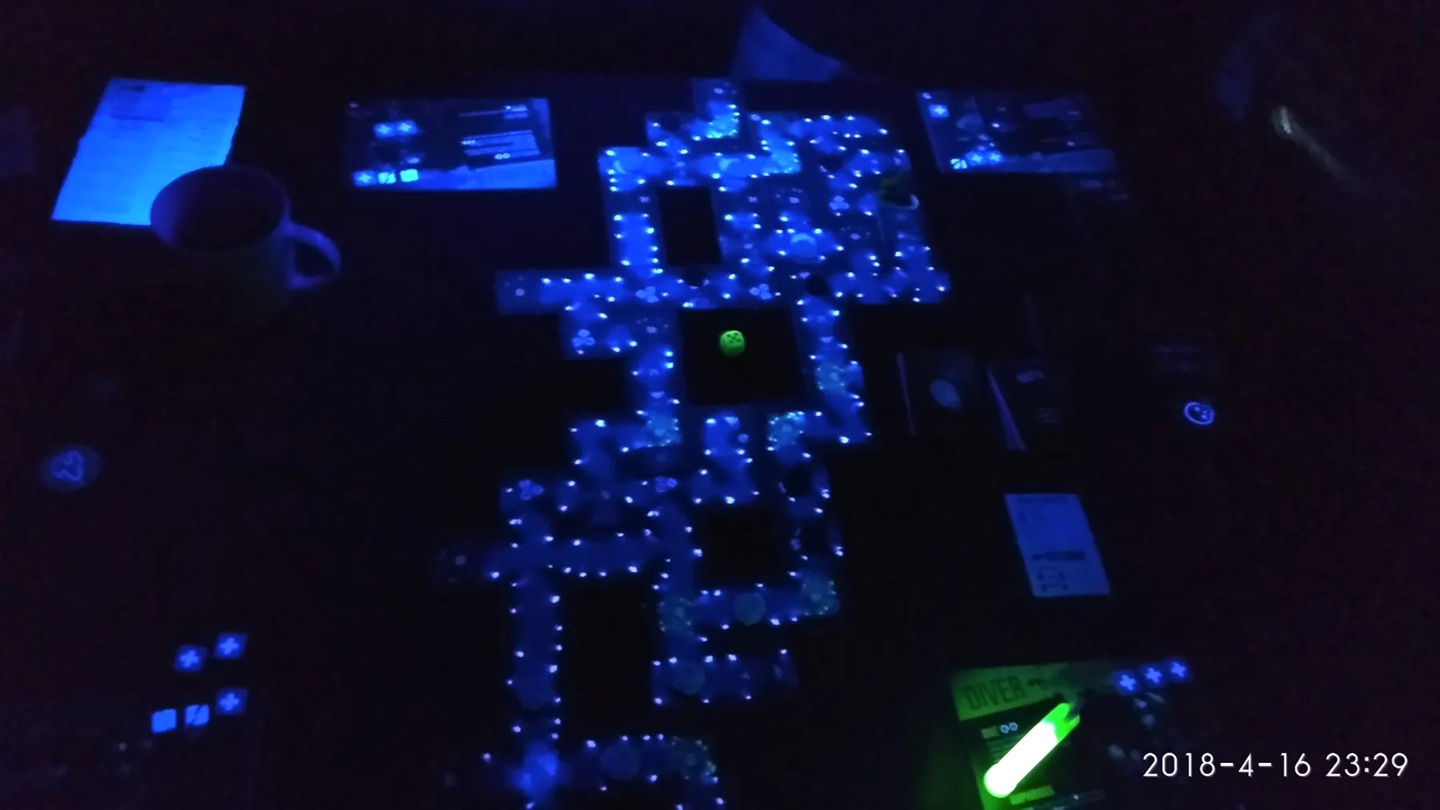
Some horror scenarios are very simple and terribly effective, and this is one of them. In this cooperative game, you’re a group of cavers exploring a network of subterranean tunnels, and you’re trying to find your way out with diminishing light and resources. This tile-laying game is brilliantly claustrophobic and will get your heart pumping!
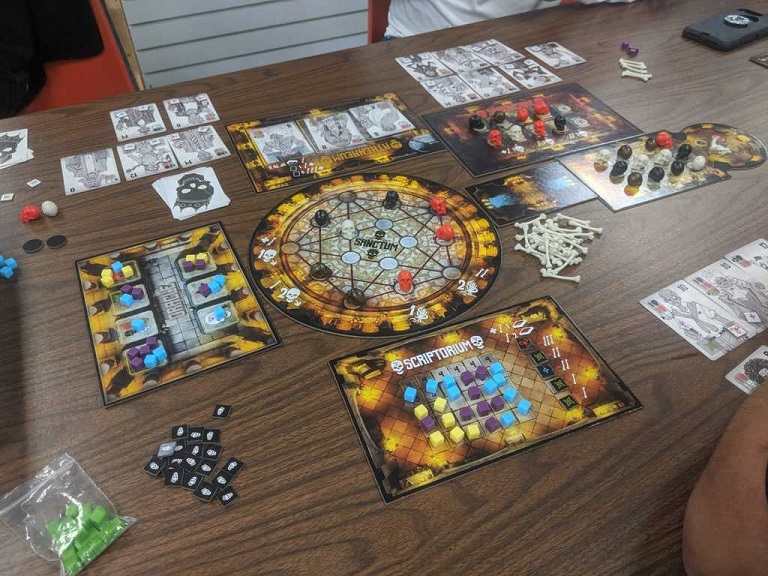

OCTOBER 26: Dead Man’s Cabal

Sometimes it’s hard to gather friends and loved ones for a party. Well, in Dead Man’s Cabal, that’s not a problem, since you can simply raise the dead and make them attend your party! As players compete to gather the most undead partygoers for their event, they can affect not only which guests arrive for their party, but the queue for other players’ resurrected guests as well. The dark tongue-in-cheek humor of the game only enhances the experience, making for a raucous and ridiculous time for all involved.
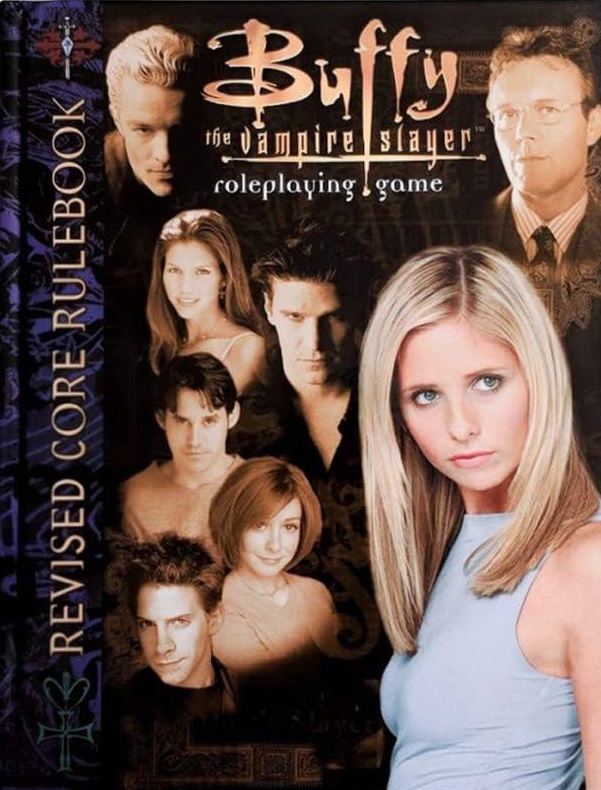

OCTOBER 27: Buffy the Vampire Slayer RPG

If you want scares and monster-slaying, wrapped in a story-fueled package, the Buffy the Vampire Slayer RPG is the perfect way to get it. Told like a season of the show, you get to build your character’s strengths and flaws, battle the forces of evil, and maybe trigger a plot twist or two along the way. This is a top-5 roleplaying game for me. Do yourself a favor, grab some friends, and try it out.
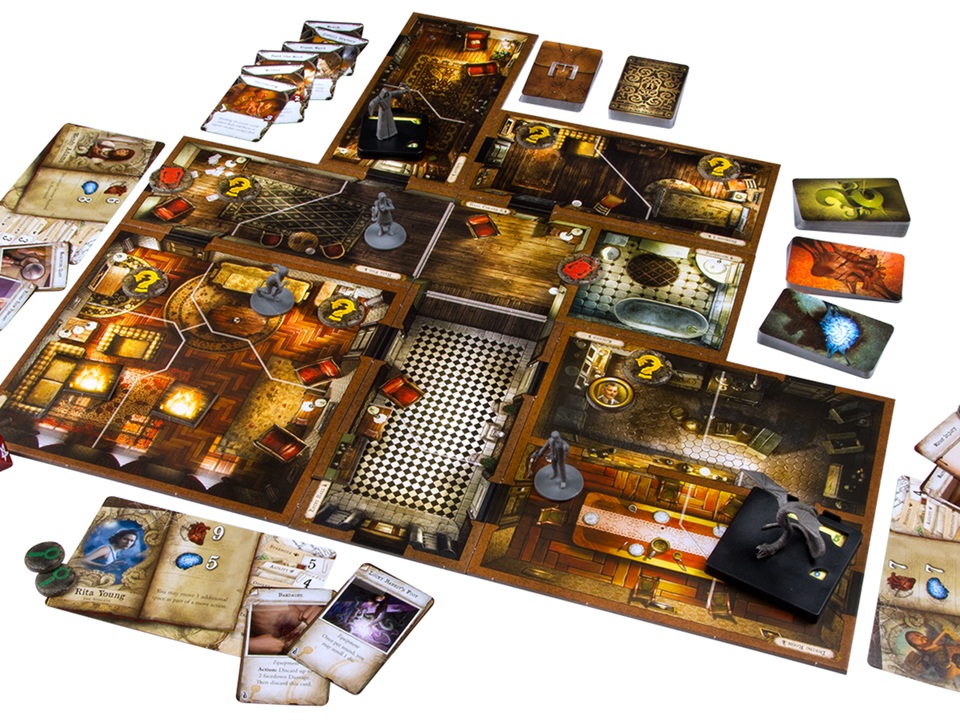

OCTOBER 28: Mansions of Madness

Can you survive a Lovecraftian horror in a mansion? That’s the question posed by this app-assisted game that will have you in knots for hours. With numerous scenarios and game pieces to choose from, this hits a lot of the same checkmarks as Betrayal, but with a decidedly more sinister vibe. Plan your whole night around this one.
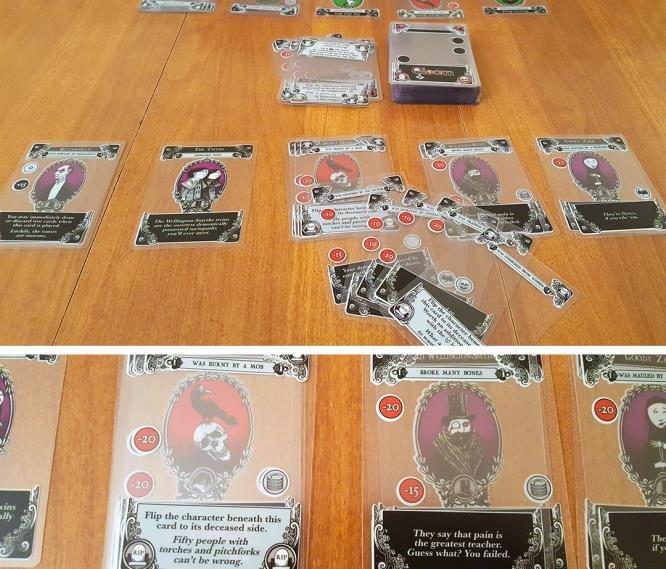

OCTOBER 29: Gloom (or Gloomier)

If you’re looking for a darkly fun game with shades of The Addams Family or Edward Gorey, then Gloom is the game for you. In Gloom, each player is the head of a spooky family, and it’s your job to make them miserable in hilariously ghastly ways before they croak. And as you do so, you regale your fellow players with the ongoing tragic tale of their fates. The gameplay is accentuated by the beautiful clear playing cards, which allow you to stack different events and effects on your family characters and still be able to see what’s going on!
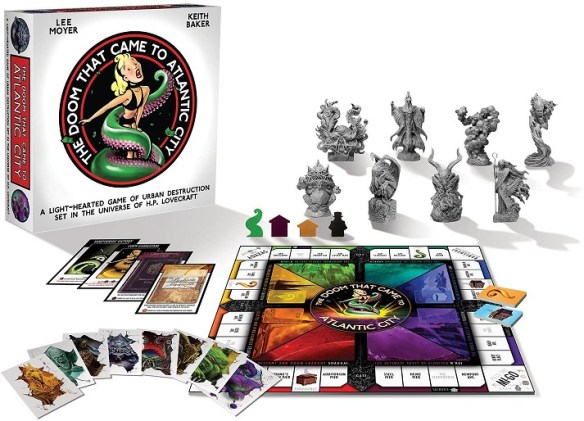

OCTOBER 30: The Doom That Came to Atlantic City

Have you ever wanted to play Monopoly but steeped in APOCALYPTIC MALICE instead of greed? Good! In this game, you crush houses to claim properties, play Chants (instead of Chance) cards, and basically try to be the best doomsday cultist at the table, summoning your monstrous god to end the world before the other players can. It’s tongue-in-cheek and great fun.
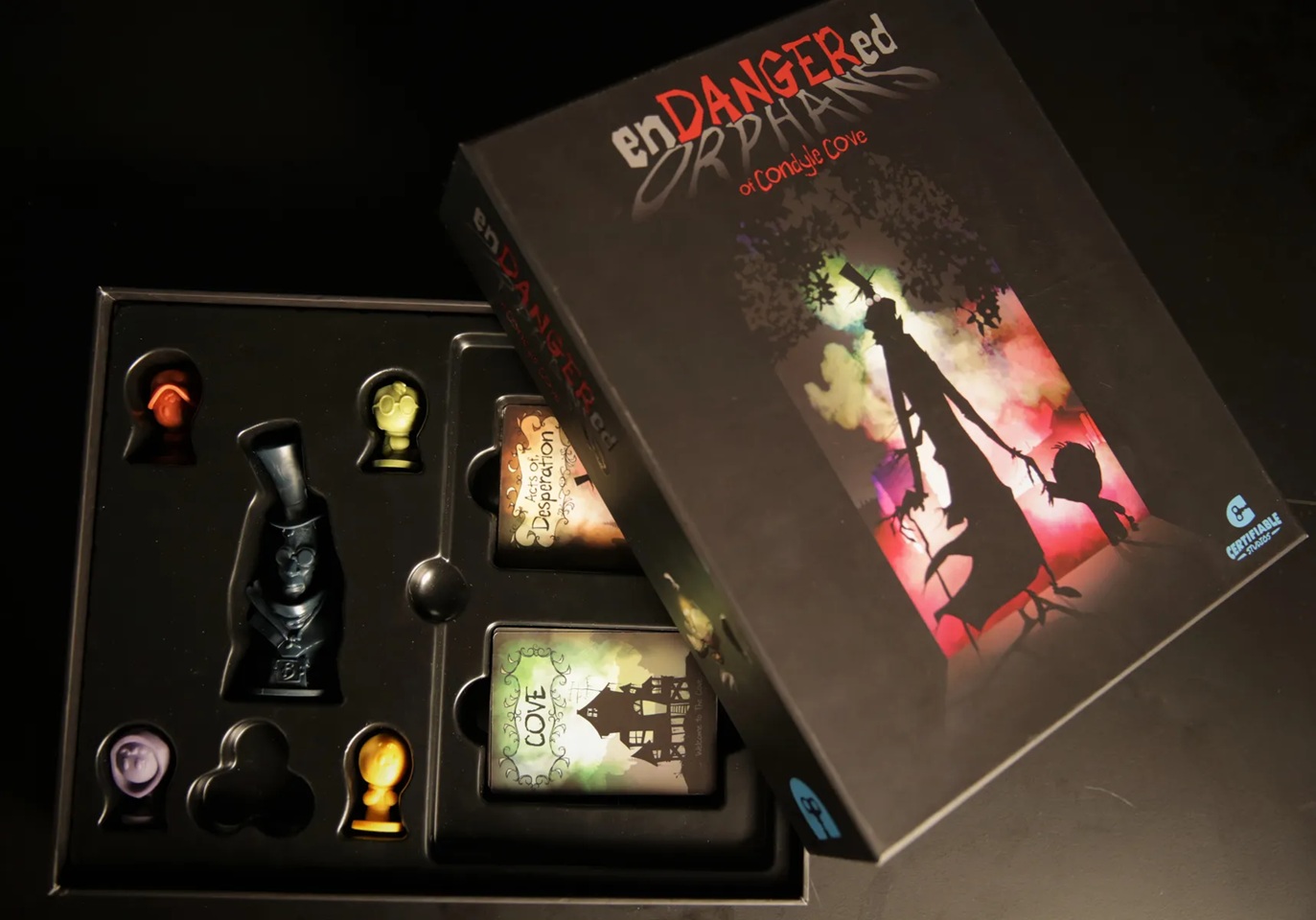

OCTOBER 31: Endangered Orphans of Condyle Cove

Here is my all-time favorite spooky game. Everyone plays orphans visiting all the creepiest places in town, hoping to be the last one standing before the boogeyman gets you. It’s so gloriously dark and creepy and an incredibly good time. This one might be hard to find, but it’s so worth it.


Will any of these games be haunting your Halloween game tables, fellow players? Or is there a spooky favorite of yours that I missed? Let me know in the comments below!

The 2025 Conference on BIPOC Game Studies

The 2025 Conference on BIPOC Game Studies convened this past weekend, bringing together students, game designers, college professors, and influential names in the games industry. It was organized in part by the Strong National Museum of Play in Rochester, New York.

The goal? To share research, showcase games, and discuss the future of game studies through the lens of BIPOC experiences (Black, Indigenous, and People of Color).

Here is a bullet point list of themes the conference was designed to explore:

  • Representation and Identity in Video Games
  • Digital & Analog Games as Cultural Artifact
  • Games By & About Black and Indigenous Communities
  • Decolonizing Game Development & Design
  • Integration of Indigenous & Black Knowledge Systems
  • Afrofuturism in Gaming
  • Cultural Preservation & Digital Heritage
  • Social Impact & Activism Through Games
  • Diversity, Equity & Inclusion in Playful Technologies

Both board games and video games were topics of discussion across the three-day event, with panels and presentations covering properties as varied as Yu-Gi-Oh!, collegiate Esports, The Last of Us, murder mystery games, Dragon Age, virtual reality, the cultural value of arcades, and more.

Lindsay Grace, co-chair of the Conference and Knight chair in Interactive Media at the University of Miami, eloquently explained to WXXI News why this conference was not just necessary, but invaluable:

“I think one of the most important things to recognize about games is that they are kind of a cultural artifact. And being a cultural artifact, it’s important to ask questions about what these things mean in society, or what these things mean to the people who make them.”

“… One of the things I think is really interesting in game studies is we have the opportunity to think critically about the kinds of problems we’re solving and then also the kinds of solutions we’re offering. So a lot of what people talk about in, say, decolonizing games is about reinvestigating those two questions, what’s the real problem here? What’s the source of that problem? Similarly, how are we solving the problem?”

For years, I have discussed in this blog how the world of puzzles and games not only reflects our culture and choices, but why that’s important. But I can only examine those things through one particular lens, that of a white cishet male. There are blindspots I’m unaware of and experiences I simply don’t have, despite my best efforts.

That’s why it’s so important to have other voices included in the discussion, and events like this are crucial to the health of the games industry and our understanding of why we play games at all.

While I wasn’t in attendance, I have read through the various studies and papers associated with the conference, trying to better educate myself on these topics.

And the topics presented are fascinating.

How the experiences of Black users suffer in virtual reality due to whiteness as a default in so many games.

How the roles of Black and Latinx characters in games like Overwatch and Marvel Rivals contribute to not just representation, but reinforce perceptions of particular ethnic groups only in violent situations, not those of support or providing nonviolent solutions.

How video games are being used to preserve Latinx culture and the artistic legacy of the Hmong.

I learned about topics like Quare Theory and Misogynoir (how racist and anti-Black depictions affect the public perception of Black women), explained through the medium of video games.

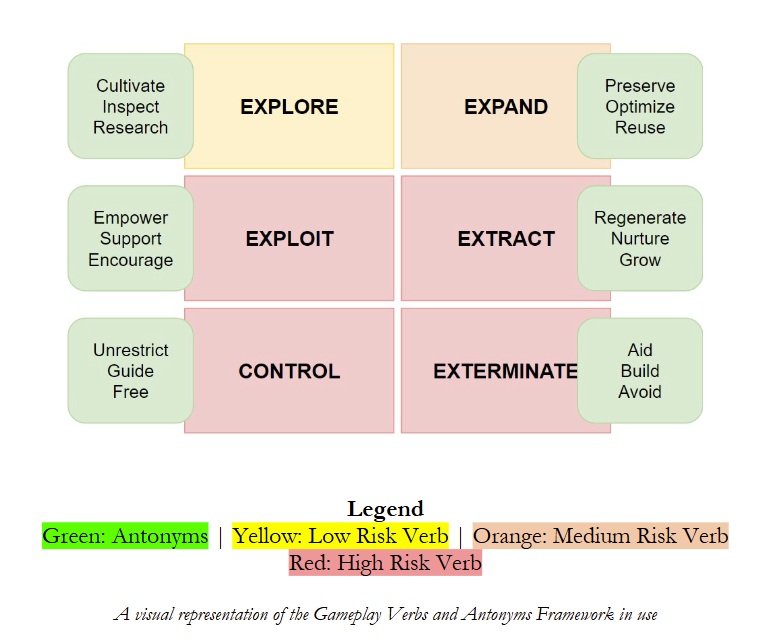
But the article I found myself returning to several times over the last few days was “Decolonizing Play: Exploring Frameworks for Game Design Free of Colonial Values.”

It was startling to realize just how many video games are foundationally built on the values of Colonialism, and how easy it would be to NOT reinforce those harmful cyclical patterns.

From the paper by Elaine Gomez: When the topic of colonization arises, many game developers often hesitate to get involved in meaningful and constructive design conversations around how to mitigate values that are heavily ingrained in game theory and player expectations.

Some of the conversations broached by these panels and papers are uncomfortable, but difficult conversations are worth having. Challenging the biases and preconceived notions that games are often built upon is worthwhile. (I’m hoping to reach out to some of the Conference’s participants for more details in the coming weeks to follow up on these enlightening discussions.)

In the meantime, I encourage everyone to read the proceedings from the event and take some time to really ponder the topics presented.

The world of puzzles and games is big enough for everyone, and only gets better when everyone feels included. The 2025 Conference on BIPOC Game Studies is proof of that.

Happy gaming, everyone.

The RPG and Board Game Community Reaches Out!

One of the best parts of being a puzzle and board game guy is the amazing community of fellow players, puzzlers, and game designers that surrounds you. Yes, puzzles and games are a business, obviously, but every week I see examples of creators and companies giving back, doing charitable acts, and participating in fundraisers for good causes.

Today, I’d like to highlight a few and hopefully bring more attention to these worthwhile endeavors.


Accessible Games: Global Accessibility Awareness Day

Accessible Games understands that every person is different, and that there are many people who don’t feel represented in modern roleplaying games. To that end, they created Survival of the Able, an RPG with disabled protagonists set in medieval Europe during a zombie plague. It shows the challenges people face every day, but also shows that those people are capable of accomplishing extraordinary things. (They even published a special edition of the game that is designed to be more accessible for dyslexic players.)

Between Survival of the Able, their zine Accessible Gaming Quarterly, and their guide to more inclusive tabletop creation — Accessible Guide to RPG Layout — they’re doing a lot of advance the cause of gaming for everybody.

In honor of Global Accessibility Awareness Day (which is Thursday May 15th), they’re offering a 30% discount on their entire accessibility-focused library. You can get your discounted copies between May 15th and May 22nd at this link. Please consider participating.


Kids in the Attic: Hershey Family Recovery Bundle

Kids in the Attic is a roleplaying game company that likes to highlight the weird and whimsical in their fantasy, space, and horror games, but this week, they’re turning their attention to bringing light and kindness to a horrible situation.

They’re currently organizing the Hershey Family Recovery Bundle to support the family of Rick Hershey, a prolific artist in the tabletop roleplaying game community. All of his children were involved in a devastating car accident caused by another driver. Thankfully, they all survived, but the road ahead will be long, and everyone knows the burden that medical bills can impose.

You can click this link to see everything included in the Hershey Family Recovery Bundle and to learn more about Rick. Please consider donating to help Rick’s family get back on their feet.


Tycoon Games: The Box of Giving

Tycoon Games has been an industry leader in charitable work and outreach for years, donating to Toys for Tots, the Boys and Girls Club, and many other worthy organizations.

Their latest endeavor is The Box of Giving, a collection of games intended to help underserved communities, schools, libraries, gaming conventions, and local non-profits experience the joy and camaraderie that comes with playing games. For the cost of shipping alone, each organization receives $500 worth of games!

Please click this link to apply for the Box of Giving program and share the link for any groups that you think would benefit from this wonderful endeavor.


Are there any charitable efforts in the board game or roleplaying world that you’d like to shout-out? Let us know in the comments below! We’d love to hear from you.
Happy gaming, everyone!

Free Board Games and RPGs?

At the start of the pandemic in 2020, game companies around the world rallied around their customers, offering discounts, producing print-and-play versions of their games, and creating new online variants of their games to allow for Zoom play or remote play.

It was a remarkable effort at a very trying time, one that many board game enthusiasts like myself remember warmly.

So, five years later, as this baffling tariff war threatens the industry as a whole, we’re seeing the board game industry again roll with the punches and work with the audience to survive.

Some are having “tariff sales” at deep discounts to help clear inventory, gauge audience interest in certain games, or create a cash bumper to help them weather the uncertain tariff storms.

Others are making PDFs more available to customers, helping mitigate both prices for the audience and reduce production costs for the company.

Today, I want to highlight a few companies that have gone beyond that, offering free products for customers to enjoy.

Yes, they would obviously rather that you visit their shops and pay for PDFs or physical copies, but the fact that they have free board game libraries AT ALL is worthy of attention and admiration.

So here we go!


9th Level Games

Every year, dozens of roleplaying game companies create Free RPG Day handouts for game stores to offer fans. Sometimes they’re quickstart versions of the games to introduce new players. Sometimes they’re exclusive adventures or modules to play either in-store or at home. Othertimes, they’re entirely new games, free of charge.

For five years now, 9th Level Games has created their own Free RPG Day offering, the Level 1 Anthology. It’s a collection of new games by up-and-coming and established RPG creators, all centered around a theme. Last year’s edition was all about programming. This year’s is about the end of the wild west.

You can visit your friendly local game shop on June 21st this year to pick your physical copy of the game.

But if you want to check out ANY of the previous years’ Level 1 Anthologies, they continue to offer the PDFs free of charge!

9th Level Games is one of my favorite RPG companies — making classics like Kobolds Ate My Baby!, Mazes, Return to Dark Tower, and The Very Good Dogs of Chernobyl — and I’m proud to have a game featured in last year’s Level 1 collection as well as a game in this year’s upcoming collection. Please check out both the freebies and the full lineup of games on their website.


Crab Fragment Labs

A company called Cheapass Games launched with a very simple idea: they only give you what you need to play the game. No reselling you tokens and dice and chips and fake money that you can already borrow from other games. Just what you need to play their games. It was affordable and brilliant.

They’ve created some of my all-time favorite board games, including:

The Big Idea (can you put two cards together to make a silly product and market it to your investors/other players?)
Kill Doctor Lucky (can you eliminate the luckiest man alive?)
Unexploded Cow (can you combine unexploded World War II ordnance and mad cows to turn a profit?)
U.S. Patent Number 1 (can your time machine beat other time machines to the day the patent office opened and claim the very first patent?)

And while many games from the Cheapass Games era are still available, their creative legacy lives on through Crab Fragment Labs, a game company that not only develops their own clever and challenge games, but also hosts a free print-and-play library of many board games for you to enjoy.

They have a shop as well, where you can support their gaming mission. Please check them out!


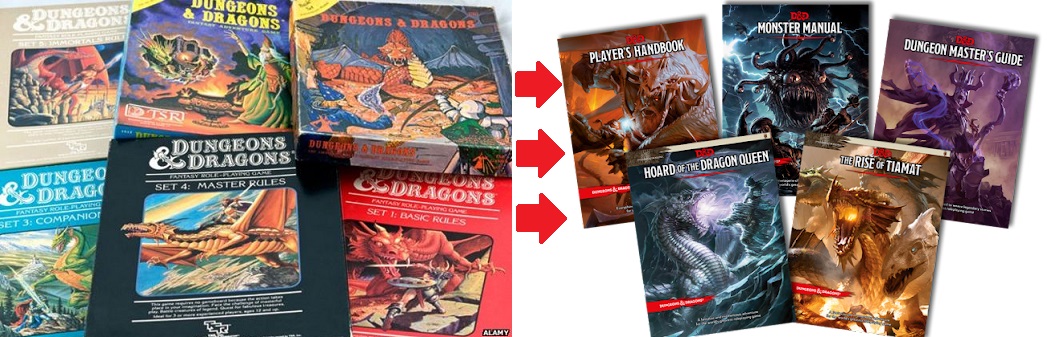
Dungeons & Dragons

I know that the prices of D&D books can seem daunting these days, but what you might not know is that there are publicly available rulesets for you to enjoy right now! You can use their own quickstart rules, as well as the advice on DnDBeyond.com to delve into building your own game world free of charge!


Rowan, Rook, and Decard

If Dungeons & Dragons is still a little intimidating, no worries! Have you ever tried a one-page RPG?

Rowan, Rook, and Decard offers a brilliant library of RPG games at all price levels, and many of their one-page RPGs designed by Grant Howitt are Pay What You Want. It’s a delightfully affordable way to try out the hobby without breaking the bank! (There’s also a free RPG section!)

Want to play bears planning the perfect crime? Try Honey Heist.

Want to play a group of seagulls causing mayhem? Try Everyone Is Seagulls.

Want to see Sean Bean finally survive film? Try Seans Bean Star In: A Very Northern Christmas.

Want to combine Regency romance with giant robots? Try Pride and Extreme Prejudice.

Comedy, horror, action, long-form, short-form? They’ve got it all. Check out their entire library here!


If you’re looking to play online, you have options like Free Board Games.org, Tabletopia, and Calculators.org, as well as this list from RPG Geek.

For those with 3D printers at home, How-To Geek has collected ten board games you can print at home right now. The list includes Connect 4, Battleship, Chess, and Settlers of Catan.

You’d be amazed at what’s out there for gamers on a budget if you just know where to look. Please support any and all of these companies where you can. They’re helping keep the hobby alive, affordable, and exciting.

Happy tabletopping, everyone!

Nominees Announced for the World Video Game Hall of Fame!

Rochester, New York is the home of The Strong National Museum of Play, and they have a very important mission: to chronicle the history and importance of play.

Child development, social interaction, imagination… all of these key features in a healthy individual are facilitated by play, and the staff at The Strong help us not only understand that process, but celebrates it by hosting both the National Toy Hall of Fame and the World Video Game Hall of Fame under its brightly-colored umbrella.

As you might have guessed, puzzles and games play a significant role in The Strong’s work, and they’re represented in both Halls of Fame. Clue, Chess, Scrabble, the Rubik’s Cube, and Dungeons & Dragons are all inductees in the National Toy Hall of Fame, while Myst, Tetris, The Oregon Trail, and Where in the World is Carmen Sandiego? are among the puzzlier inductees on the video game side of things.

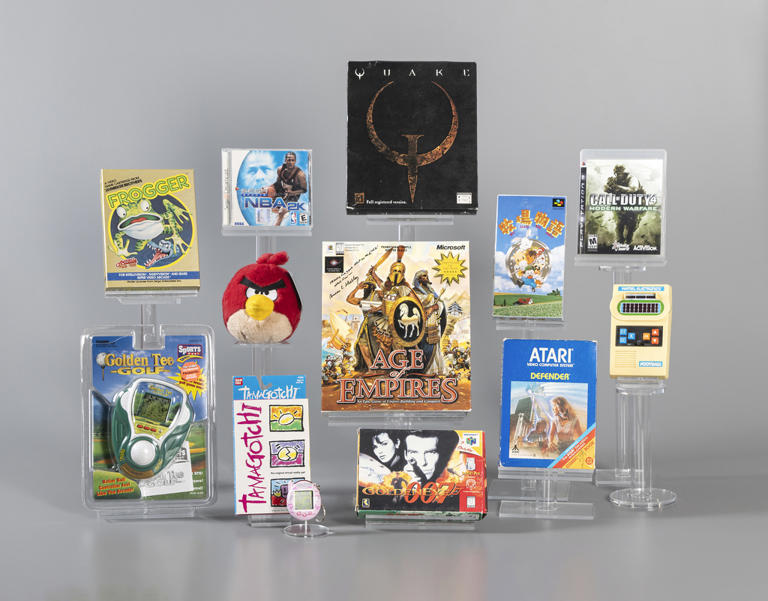
And The Strong have recently announced the nominees for this year’s class of video games to be inducted in the World Video Game Hall of Fame.

This year’s finalists for the 2025 class run the gamut from 8-bit classes, modern phenomenon, and games that took play to surprising new places, and they represent different genres, play styles, and aspects of gaming across decades.

The 2025 finalists are: Age of Empires, Angry Birds, Call of Duty 4: Modern Warfare, Defender, Frogger, Golden Eye, Golden Tee, Harvest Moon, Mattel Football, Quake, NBA 2K and Tamagotchi.

What a field! Everywhere from arcades (Frogger) to pocket games (Tamagotchi) are on display here, as well as social gaming both in person (Golden Eye) and online (Quake).

The nominees were chosen from thousands of nominations online. The field was then narrowed by staff members at The Strong based on “longevity, geographical reach, and influence on game design and pop culture.” Only a small handful of these finalists will be selected by an international committee of experts as this year’s inductees.

Everyone has an award show that they geek out over, and you’re probably not surprised to discover that these Halls of Fame are two of my favorite awards given out each year. I love seeing deserving games and puzzles get the spotlight they deserve for helping change how we play and interact with each other.

You can check out the full list of National Toy Hall of Fame inductees and World Video Game Hall of Fame inductees at these links. Do yourself a favor and take a stroll through not only your childhood, but the childhoods of generations past. It’s a real treat.

What toys and games would you like to see inducted in the future? Let us know in the comments below!
Fictional Games That Became Real!

Many TV shows, films, and novels help add character to their narrative universes by mentioning the games played by the characters.

Shows and franchises as wildly disparate as Battlestar Galactica, New Girl, It’s Always Sunny in Philadelphia, The Witcher, and Pretty Little Liars have fictional games that enrich their worlds.

But sometimes, either through clever marketing or the affection of fans, these games go from fictional recreational activities to real ones, crawling fully formed from the imagination to be enjoyed across tabletops worldwide.

Today, I’d like to introduce you to a few of them. Let’s play, shall we?


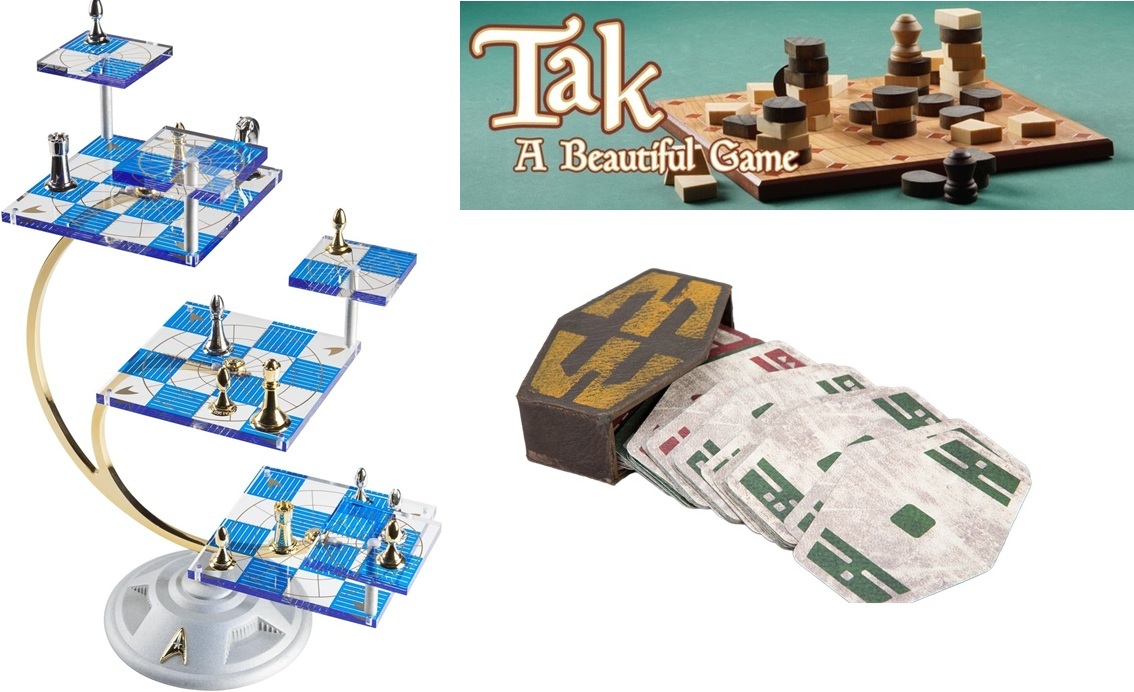
Tri-Dimensional Chess

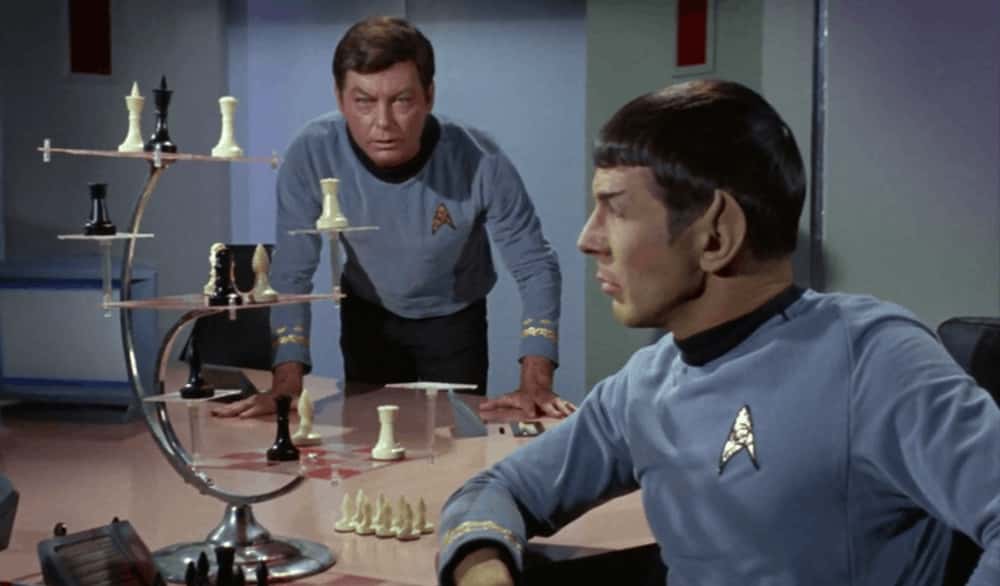
Star Trek has been a source of many fictional games and sports over the years. Dom-jot, Chula, Dabo, Parrises Squares, and Stratagema are some of the more famous ones, but the granddaddy of Star Trek games is Tri-Dimensional Chess.

First appearing in the original series back in 1966, Tri-Dimensional Chess follows the normal rules of chess, but spread across different vertical levels. So a knight could move in its usual L-shaped format, but on its own board OR the boards above and below.

Over the years — and across different Star Trek series — we’ve heard stories about key maneuvers like the Aldabren Exchange and the Kriskov Gambit in games of Tri-Dimensional Chess, helping flesh out how influential the game is for several characters. (Heck, in one episode, Spock beats the Enterprise computer at the game, saving Kirk from a court martial!)

The Franklin Mint has released limited edition versions of the game on two occasions, and I’ve seen homemade games of Tri-Dimensional Chess at gaming and pop culture conventions over the years.

Chess remains incredibly popular — as do many variants of Chess — so it’s no surprise this fictional game made the leap to the real world. (I suspect the complicated three-person Chess game developed by Sheldon in The Big Bang Theory is less likely to make a similar leap. Especially since there are already three-person Chess games on the market today.)


Cones of Dunshire

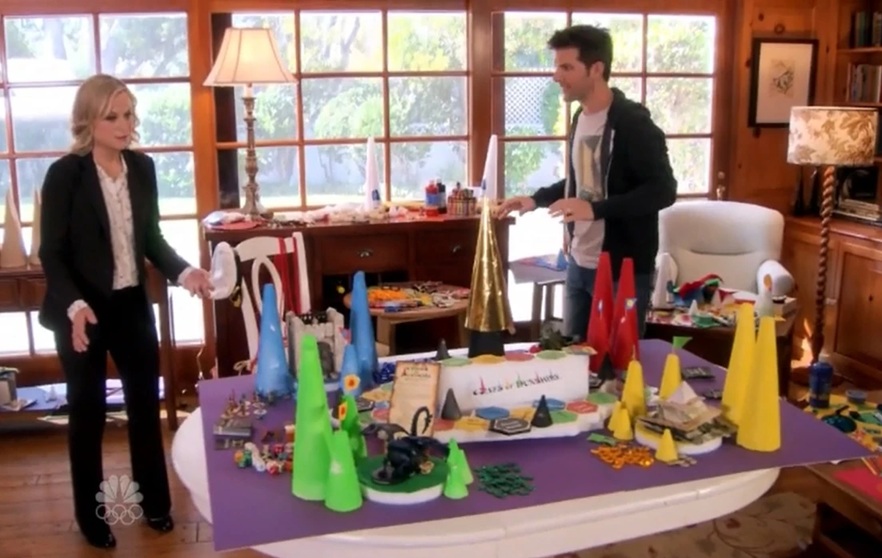
Ben Wyatt of Parks and Recreation enjoyed many nerdy pastimes, but Cones of Dunshire was his masterpiece.

Initially treated as a mistake, a nonsensical result of his boredom and frustrations, the game becomes a running gag in the show after Ben leaves a copy as a gift for the accounting firm that he has been hired by (and walked away from) several times during the show’s run.

Later, we find out the game has been commercially produced, and Ben stumbles across it when dealing with a dotcom company. He mentions that he invented it, but his claims are dismissed. He then proves not only his gaming skill but his authorship of the game when he beats the dotcom bosses in a tense playthrough.

It’s mentioned once that a gaming magazine called Cones of Dunshire “punishingly intricate,” a point that makes Ben proud.

Part of the fun of Cones of Dunshire (other than the parody of Settlers of Catan) is that the viewer never really understands what’s going on, so supposedly dramatic moments can be played for laughs. (I also appreciate that the name of the game is basically a fancy way of saying “dunce hat.”)

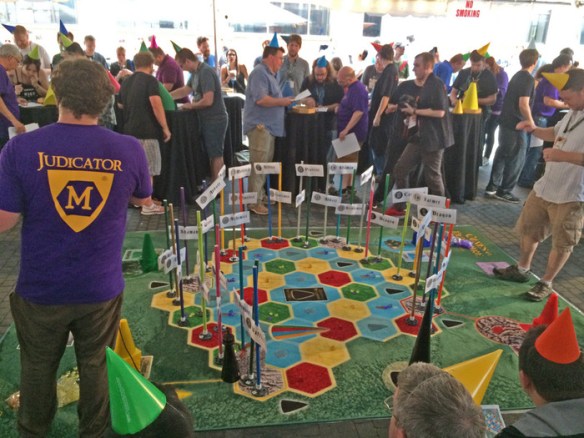
And, in the sort of cyclical storytelling that could only happen in a nerdly pursuit like board games, the company that made Settlers of Catan — Mayfair Games — produced a giant version of the game as part of a charity event at GenCon.

2783642-2767076242-563bb

Both the silliest and most ambitious game to cross from fictional to real, Cones of Dunshire is a nerdy highlight of a now classic sitcom.


tak1

Tak: A Beautiful Game

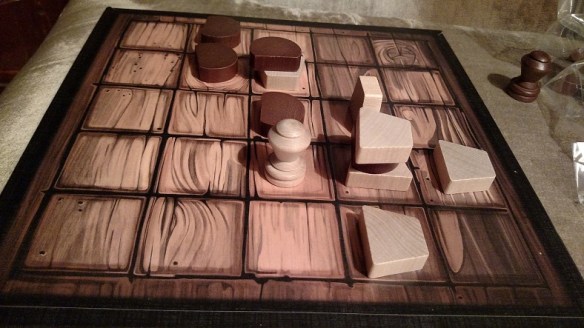
Originally introduced in Patrick Rothfuss’s Kingkiller Chronicles novels as a tavern game, Tak made the leap to the real world as a stretch goal in a Kickstarter campaign for another game.

Game designer James Ernest accepted the challenge of bringing the game to life, and his collaboration with Rothfuss created one of my all-time favorite board games.

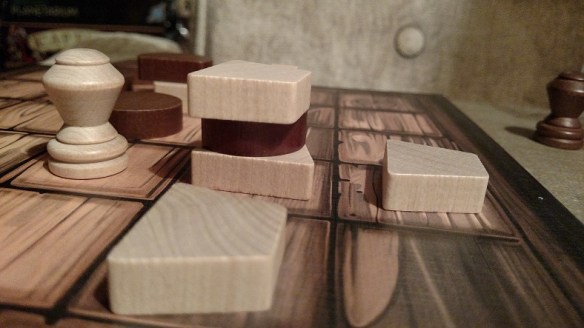
Tak has a very simple concept: two players each attempt to build a road connecting opposite sides of the game board. The first player to successfully complete their road wins.

tak2

To do so, you place game pieces called stones, one at a time, on various spaces on the board. The stones can either be played flat (meaning they’re part of your road) or standing on edge (meaning they’re a wall, blocking any road’s passage through that space).

It’s a rare thing when a new game feels like something that could’ve been played in taverns centuries ago. For me, this is the gold standard when it comes to adapting fictional games to the real world.


Image courtesy of Glowforge.com

Pai Sho

A key storytelling device in the much-beloved show Avatar: The Last Airbender, Pai Sho was a tactical tile-based game that reinforced important themes in the show.

The game had many variants (often played differently depending on the faction or nation featured) but each had the feeling of an ancient game passed down across generations.

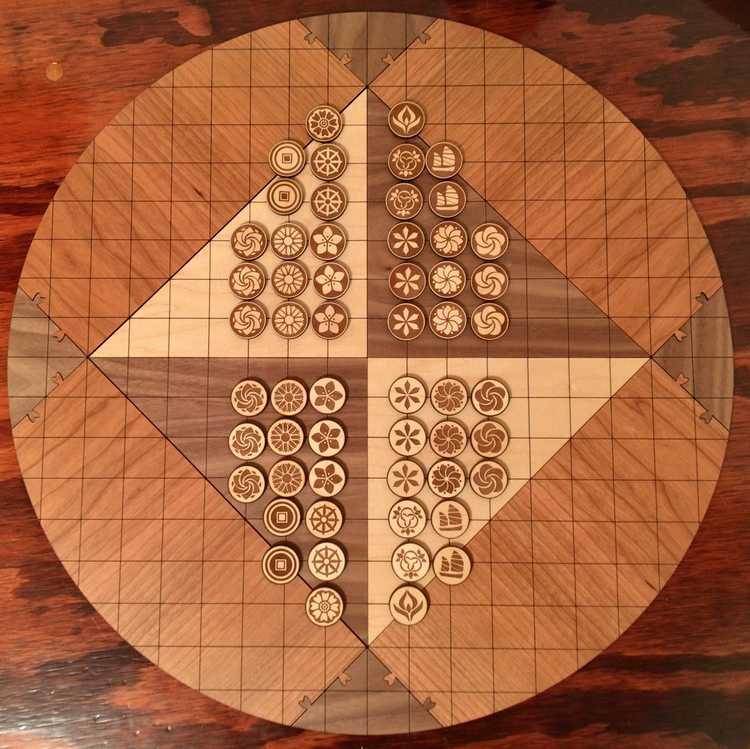
In the most popular variant, Skud Pai Sho, the goal is to form a harmony ring around the center point of the board. Players create harmonies by placing two harmonious tiles on the same line without other tiles or obstacles. There are gates, gardens, and lines that help dictate play, as well as multiple flower tiles for players to place that accomplish different things when placed properly.

There are entire forums and websites dedicated to the rules of Pai Sho and its many variants, and the thriving fan community that continues to nurture these games well after the show’s conclusion make this one of the most heartfelt and successful transitions from fictional to real life that I can think of.


Image courtesy of starwars.com.

Sabacc

In The Empire Strikes Back, we learn about the friendly rivalry between Lando Calrissian and Han Solo, and how a wager led to the Millennium Falcon changing hands.

But exactly how it happened was only revealed later in supplementary material like the Star Wars Visual Encyclopedia and the novel Lando Calrissian and the Mindharp of Sharu.

The second draft of the script for The Empire Strikes Back mentioned that Lando won Cloud City in a “sabacca” game, but by the time additional stories fleshed out the relationship between Lando and Han, the game had been shortened to Sabacc.

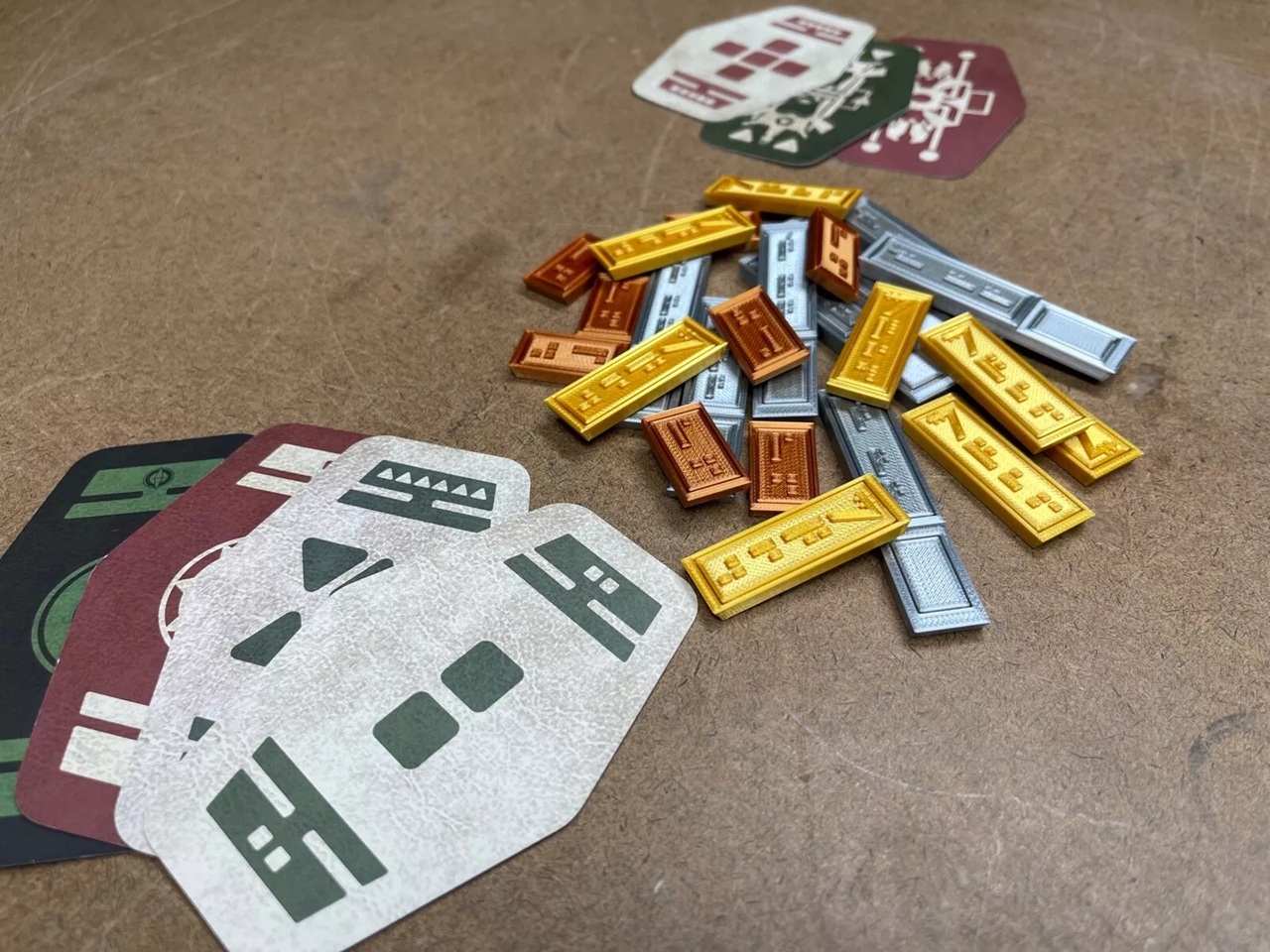
It’s sort of a combination of poker and Blackjack. You want the value of the cards in your hand to be as close to 23 or -23 as possible. Sounds simple, right?

Well, imagine a game of poker where the cards in your hand changed periodically unless you publicly locked them in by placing them on the table, where they stayed until the hand was over. That’s the basic idea behind Sabacc.

There were numerous fan versions of the game over the years, but now you can get Sabacc decks at Disney theme parks (alongside many, many, MANY other items).


Do you have a favorite fictional game that made the leap to the real world? Did we miss any major ones? Let us know in the comments below!