Welcome to the PuzzleNation Blog 2016 Holiday Gift Guide!

We’re so excited to be bringing you our biggest ever gift guide! There are so many tremendously fun and puzzly products to share with you this year. We just might be your one-stop shop for all things puzzly!
This guide is broken down by age group, so we’re sure you’ll find the perfect gift for puzzlers of any age on your list!
For Ages 6 and Up
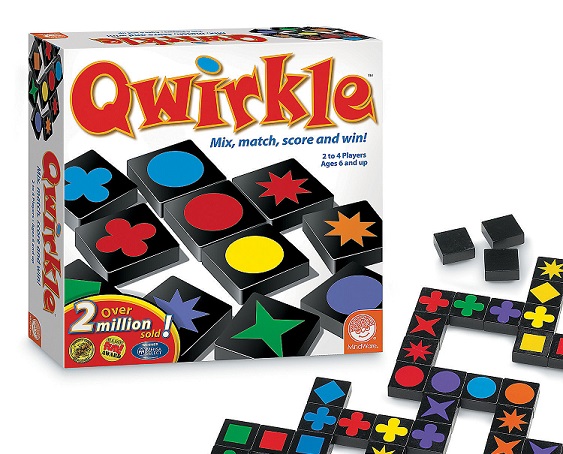
Qwirkle (MindWare, board game)
A wonderful mix of Uno and Mexican Train Dominoes, Qwirkle is all about placing your tiles to maximize points and minimize helping your opponents. With six bright colors and six different shapes to match up, Qwirkle is endless fun that’s so easy to jump into! ($34.99)
For Ages 7 and Up
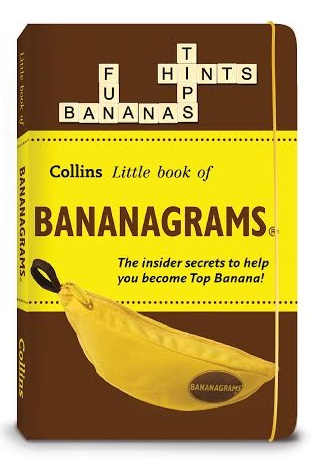
Collins Little Book of Bananagrams (puzzle book)
Are you a Bananagrams fan who’s looking for something to give you an edge? The Collins Little Book of Bananagrams might be just what you need! With a list of puzzle words you might not otherwise think of, suggestions for other games to play with Bananagrams tiles, and techniques for speeding up your gameplay, you’re sure to be Top Banana with this handy guide in your pocket. ($9.95)
For Ages 8 and Up
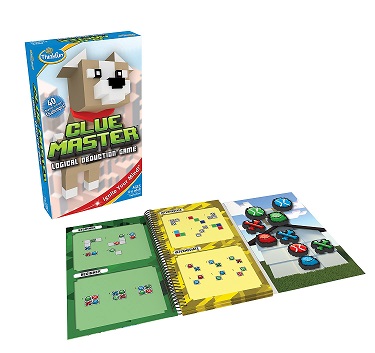
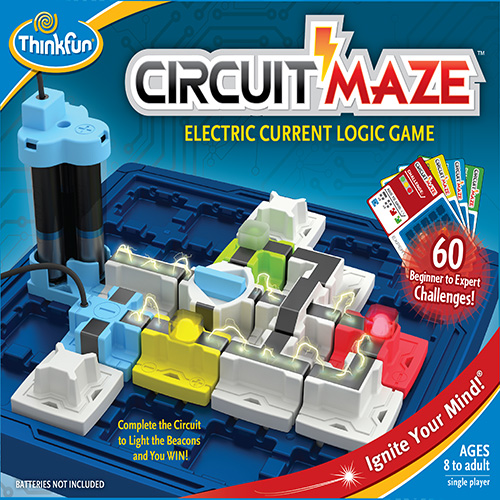

Clue Master, Circuit Maze, and Back Spin (ThinkFun, puzzle games)
ThinkFun meshes learning and gameplay with three logic games ready to challenge kids and adults alike. Whether it’s the Rubik’s-inspired twisty-turny solve of Back Spin ($14.99), the Sudoku-style deduction of Clue Master ($12.99), or the electrical grid-building challenge of Circuit Maze ($29.99), young minds and older minds will soon be in fighting trim for puzzling!
[Check out our full product reviews of Back Spin by clicking here, Clue Master by clicking here, and Circuit Maze by clicking here!]
Pyramid Arcade (Looney Labs, board game)
With 22 different games in one box, Pyramid Arcade takes the Looney pyramid series above and beyond anything you’ve seen before. Challenge yourself or other players with strategy games, Tic-Tac-Toe-style competitions, stacking challenges, and more! ($77)
[Review coming soon!]
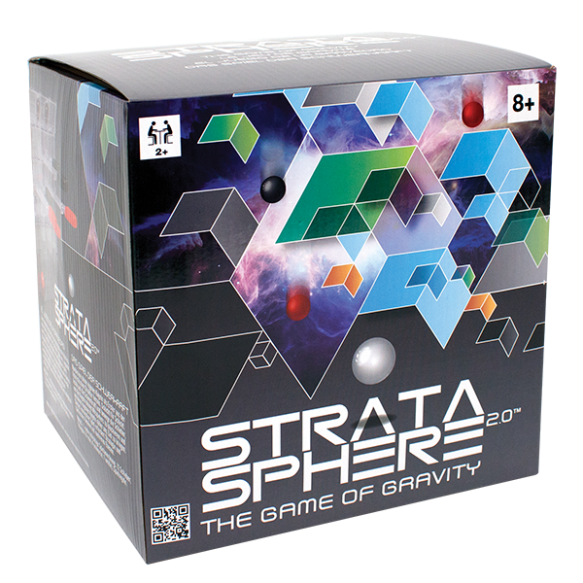
Strata Sphere (Family Games America, puzzle game)
Can you crack the three-dimensional challenge of Strata Sphere? First you place each of the sliding bars into the gridwork, then you try to free all of your spheres before your opponent can do the same! A terrific, mind-bending puzzle unlike anything else! ($30.97)
[Check out our full product review of Strata Sphere by clicking here!]
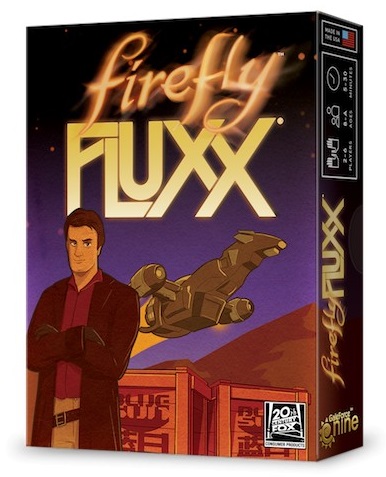
Firefly Fluxx (Looney Labs, card game)
The purveyors of sweet-tooth strategy game Just Desserts and quick-draw pattern-matching game Loonacy return to their flagship brand with one of the most beloved sci-fi shows in recent memory with Firefly Fluxx. Tackle the ever-changing rules in the hopes of finding the two cards you need for victory, all while enjoying inside jokes and references to this one-season wonder of a TV show! ($20)
[Check out our full product review of Firefly Fluxx by clicking here!]
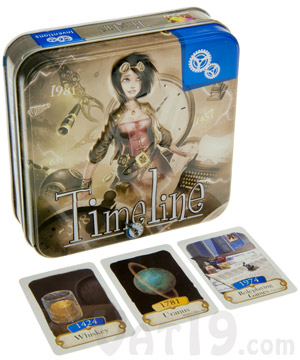
Timeline (Asmodee Games, card game)
Timeline pits your knowledge of history against a growing timeline of important events, inventions, and historical moments. You don’t have to know exact dates; you just need to know if something happened before OR after something else. Was the toothbrush invented before or after the syringe? Which came first, language or agriculture? Timeline is a fast, fun way of learning (or relearning) history! ($14.99)
AnimaCrostics series (Cynthia Morris, puzzle book)
These collections of easy, animal-themed puzzles for kids and new acrostic solvers are perfect to introduce a different style of puzzling to puzzlers who might only know crosswords, word seeks, and the like. With vocabulary and topics geared for younger readers, AnimaCrostics are a terrific source of puzzle fun for family solving! ($9.95)
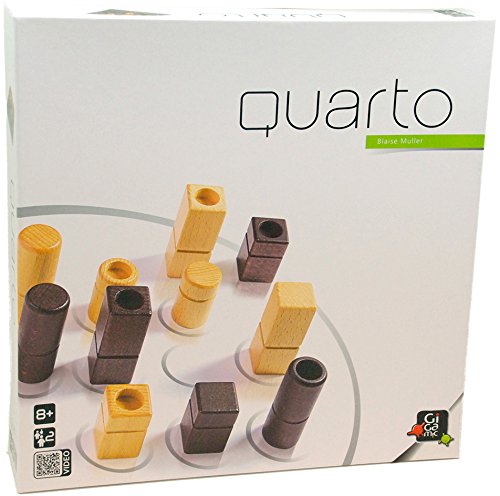
Quarto (Gigamic Games, board game)
Four-in-a-row puzzle games are a staple of the genre, but rarely are they as beautiful or as diabolically simple as Quarto. With blocks of different shapes, sizes, and colors to choose from, you can attack the game from any angle. But watch out, or a crafty opponent just might beat you at your own game! ($34.99)
[Check out our full product review of Quarto by clicking here!]
Scrimish (Nexci, card game)
Combine the card game War with elements of Chess and Memory, and you’ve got something approximating Scrimish, a card game that’s effortless to learn, but offers endless possibilities. Can you protect your crown card while hunting down your opponent’s? With cards for both defense and offense, there’s a lot packed into just 25 cards apiece! ($9.99)
[Check out our full product review of Scrimish by clicking here!]
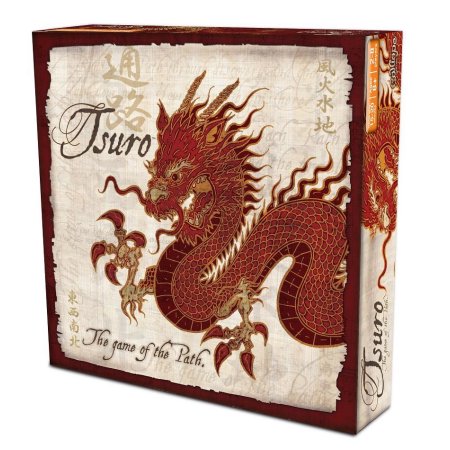
Tsuro: The Game of the Path (Calliope Games, board game)
A path-laying game with tons of style and historical spirit, Tsuro casts up to eight players as flying dragons, and tasks you with laying out your path with special tiles. Your goal is to avoid meeting another dragon or flying off the board. It’s a simple mechanic with plenty of replay value, and perfect for quick games with large groups. ($29.99)
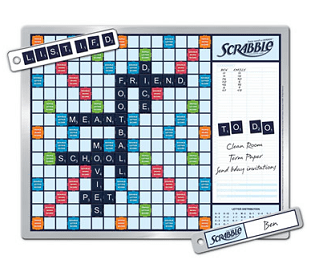
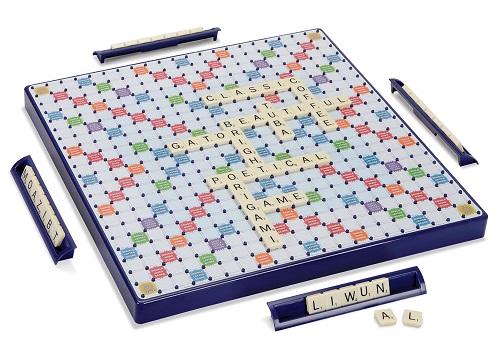
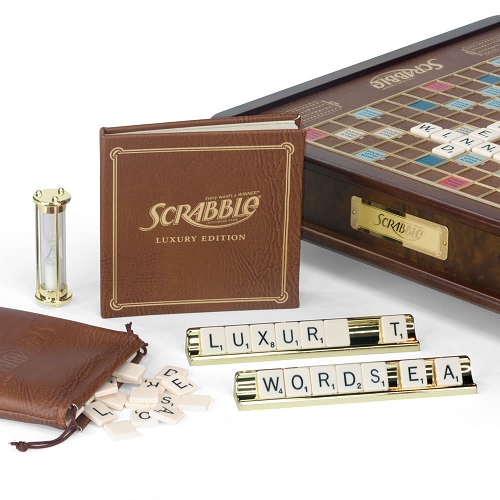
Walk-By Scrabble Board, Lexicographer’s Extended Scrabble, and Drawing Room Scrabble (Hammacher Schlemmer, board games)
Hammacher Schlemmer has several Scrabble variants available, including the Lexicographer’s Extended Scrabble for those with mega-syllabic ambitions ($29.95) and Drawing Room Scrabble for those with swankier taste ($149.95) — not to mention the mindboggling World’s Largest Scrabble Game for $12,000! — but few are as clever or as convenient as the Walk-By Scrabble Board! Designed as a family game for people on the go, it’s a perfect way to bring back Board Game Night for busy families! ($29.95)
[Check out our full product review of the Walk-By Scrabble Board here!]
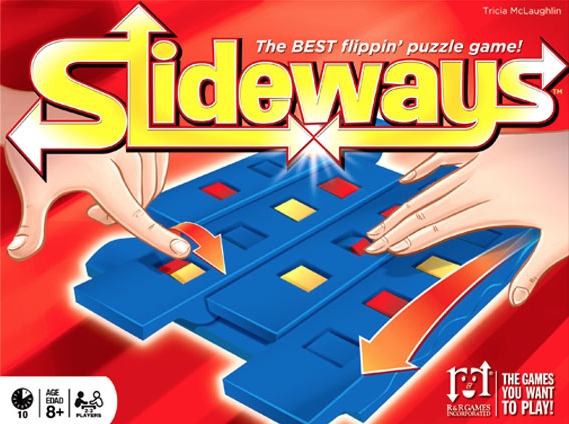
Slideways (R&R Games, board game)
Take Connect Four-style puzzling to the next level with Slideways! Not only can you shift pieces to the side here, but you can flip your opponent’s moves to your own color! It’s a race to four-in-a-row in this easily-portable game that will have you thinking five steps ahead! ($14.99)
[Check out our full product review of Slideways by clicking here!]
Oh My Gods! (Gameworthy Labs, card game)
Take Clue to the next level with Oh My Gods! as you investigate a crime on Mount Olympus! Play cards to reveal information or increase your chances for success, but please, try not to tick off the gods! ($24.98)
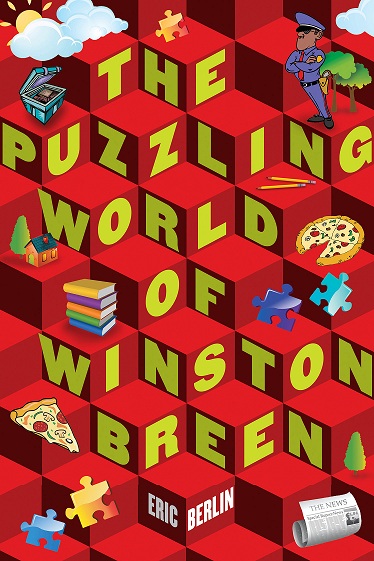
The Puzzling World of Winston Breen (Eric Berlin, puzzle novel)
Join intrepid young puzzler Winston in unraveling an unexpected mystery in The Puzzling World of Winston Breen! Crack puzzles alongside him as he tries to uncover who’s behind a hometown puzzle hunt that’s gone unsolved for 25 years! And if you enjoy this one, there are two follow-up books to keep you engaged and solving! ($7.99)
[Check out our review of The Puzzling World of Winston Breen by clicking here!]
For Ages 9 and Up
Puzzle Your Kids (Eric Berlin, subscription puzzles)
A puzzle subscription designed specifically for children, Puzzle Your Kids is the brainchild of constructor and author Eric Berlin, and guarantees two puzzles a week emailed right to you, designed with younger solvers in mind! ($18 for 3 months, $32 for 6 months, $60 for 1 year)
For Ages 10-12 and Up
The Great Dinosaur Rush (APE Games, board game)
Bring the insane real-life rivalry of paleontologists Cope and Marsh to life in The Great Dinosaur Rush! As you collect fossils and discover your own unique dinosaur, you must also steal bones, sabotage other scientists, and more! Show off your cunning and creativity in this game that proves historical truth is weirder than fiction! ($50)
[Review coming soon!]
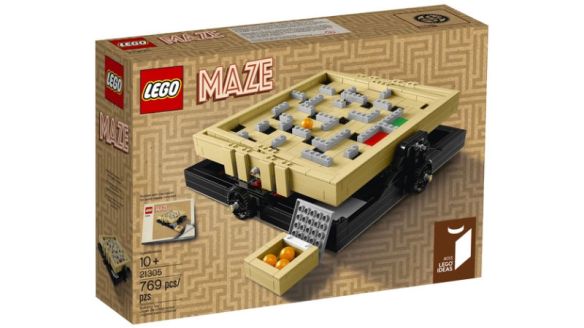
LEGO Ideas: Maze (LEGO, puzzle game)
Combine the classic puzzly hand-eye coordination of a wooden labyrinth with everyone’s favorite building toys, and you’ve got the Lego Ideas: Maze. Customizable with all sorts of different maze layouts and obstacles, this one is both fun to build and fun to solve! ($69.99)
[Check out our full product review of LEGO Ideas: Maze by clicking here!]
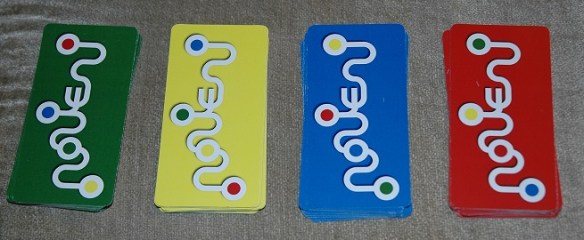
Noueni (263 Games, card game)
You’ll need all of your strategy and cunning to win Noueni, a game of connections, overlaps, and careful card placement. Can you claim more territory than your opponents, or will they outthink you and steal your spotlight at a key moment? ($12.99)
[Check out our full product review of Noueni by clicking here!]

Kill Doctor Lucky: Deluxe 19.5th Anniversary Edition (Cheapass Games, board game)
You might be skilled at unearthing murderers in games like Clue, but how are you at committing them? In Kill Doctor Lucky, your only goal is to dispatch the fortuitous fellow without being seen by anyone! Strategy and timing are key in this wickedly enjoyable game. ($40)
[Check out our full product review of Kill Doctor Lucky by clicking here!]
Secret Agent Training Manual (Elizabeth Singer Hunt, puzzle book)
Looking for a terrific introductory guide to codebreaking and encryption for younger solvers? Check out the Secret Agent Training Manual, covering anagrams, ciphers, and other forms of encryption, complete with codes for readers to crack themselves! ($6.99)

Mad Libs: The Game (Looney Labs, party game)
Looking for a family-friendly alternative to Cards Against Humanity? Something that traffics in silliness instead of shock value? Mad Libs: The Game has got you covered. Draw cards to fill in the blanks and craft hilarious sentences to amuse one and all! ($20)
[Check out our full product review of Mad Libs: The Game by clicking here!]
Get Lucky (Cheapass Games, card game)
At a very peculiar dinner party, everyone is trying to kill Doctor Lucky, but can you outwit your opponents and Get Lucky first? Practice makes perfect in this game of persistence where every murder attempt increases your chances of knocking off the most desirable target in all of gaming! ($17)
[Check out our full product review of Get Lucky by clicking here!]
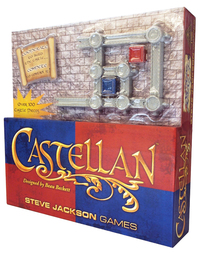
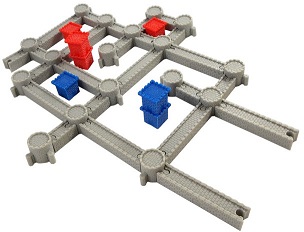
Castellan (Steve Jackson Games, board game)
Build a castle and then occupy it in Castellan, a game of strategy and opportunity. With great modeled pieces that really add to the aesthetic, Castellan has style and substance. ($34.95)
[Check out our full product review of Castellan by clicking here!]
Movie Buff (Golden Bell Entertainment, party game)
How well do you know your movies, actors, characters, and famous quotes? Movie Buff will put your knowledge to the test, but instead of answering questions, you’re trying to make connections between films! It’s a fast-paced version of Six Degrees of Separation, but in a fun and frantic card game! ($24.95)
Schrodinger’s Cats (9th Level Games, card game)
In this wagering game based on the famous scientific thought experiment, you have to figure out how many of Schrodinger’s Cats survived the experiment! And just like in poker, you can share some information while you wager in the hopes of improving your chances of success! With shameless card puns and opportunities for bluffing, this isn’t your usual card game! ($19.22)
[Check out our full product review of Schrodinger’s Cats by clicking here!]

Puzzometry (jigsaw puzzle)
For a next-level jigsaw challenge, Puzzometry is tough to top. These beautiful pieces can be combined in seemingly endless combinations, and yet, there’s only one solution. Available as Puzzometry ($16), Puzzometry Jr. ($11), and Puzzometry Squares ($16), you’ve got three distinct challenges appropriate for different ages!
[Check out the full review of Puzzometry by clicking here!]
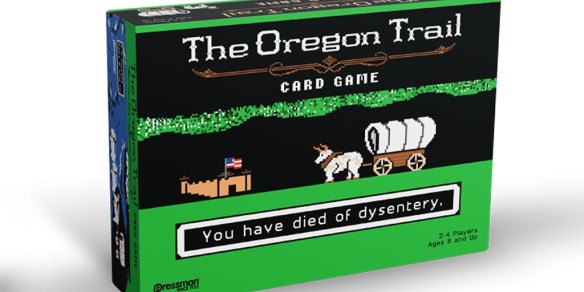
The Oregon Trail (Pressman Toys, card game)
The classic computer game comes to life as you and your fellow players team up to survive the perilous journey along The Oregon Trail. With art evoking old-school computer games, rampant threats and calamities to endure, and a long and challenging road to travel, will any of you will make it to Oregon? ($14.99)
[Check out our full product review of The Oregon Trail by clicking here!]
For Ages 13-14 and Up
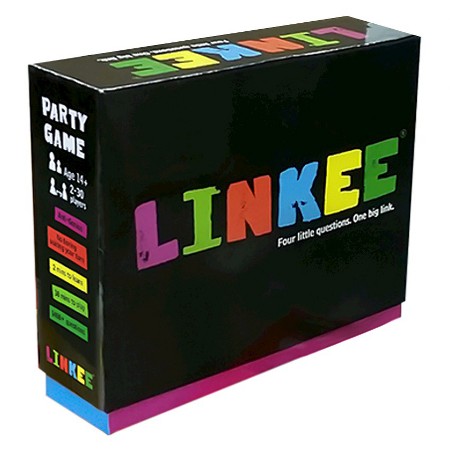
Linkee (Bananagrams/Big Potato Games, trivia games)
Something connects a series for four trivia questions. Can you figure out what? If you can, Linkee is right up your alley. This trivia game is about more than answering questions, challenging players to make associative connections before the other trivia buffs in the room can! ($22.49)
[Check out our full product review of Linkee by clicking here!]
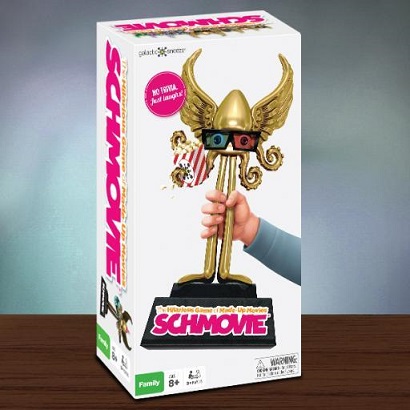
Schmovie (Galactic Sneeze, party game)
Are you the funniest, punniest one in your group of friends? Find out by playing Schmovie, the party game that pushes you to scribble down the best name for an imaginary movie created on the spot! Now redesigned in a sleeker box and playable by all ages, this is the movie game for everyone. ($19.95)
[Check out our full product review of the original version of Schmovie here!]
Mr. Lister’s Quiz Shootout (Bananagrams/Big Potato Games, trivia game)
Put your knowledge to the test in Mr. Lister’s Quiz Shootout as two teams compete to name more entries on a Family Feud-style list. If you do, you win a drink! Collect five different drinks, and you win! A game of trivia and opportunity perfect for a group setting! ($19.99)
[Check out our full product review of Mr. Lister’s Quiz Shootout by clicking here!]
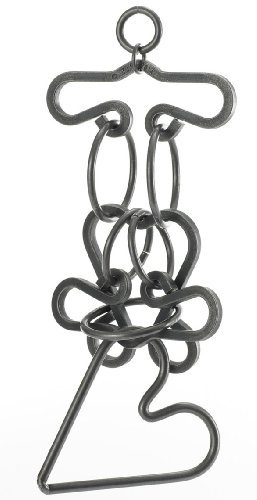
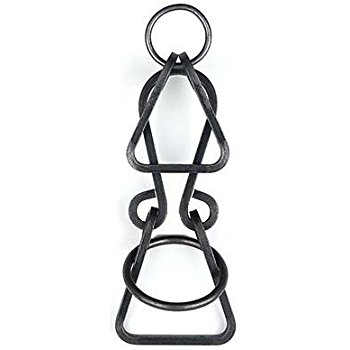
Tavern Puzzles (jigsaw puzzles)
These hand-forged beauties are ready to challenge your dexterity and cleverness, as you accept the Tavern Puzzles challenge. Whether you’re trying to free your heart from the tangled pieces of Heart’s Desire or remove the ring from the Iron Maiden, you’re sure to put your skills to the test. ($22)
For Ages 18 and Up
Most puzzle books would probably fall in the Age 9-10 and Up range, but oftentimes, the cluing is geared toward an older audience, so to avoid confusion, I’ve bundled the majority of the puzzle books here.
Our friends at Penny Dell Puzzles have put together some outstanding holiday collections with puzzles galore to be solved!
Maybe you’re looking for one kind of puzzle, like Colossal Grab-a-Pencil Book of Logic Problems ($10.50) or the Fill-In Value Pack ($8.95). Or perhaps you like some variety in your solving, and you’d prefer the Stocking Stuffer Pack ($9), complete with pencils to keep you puzzling, or the Super Grab-a-Pencil Pocket Puzzle 4-Pack ($24.50). Or you’d like to unwind with their Coloring Book 4-Pack ($17.95) and sip some coffee from a vibrant Word Nerd mug ($9.50). Either way, the folks at Penny Dell Puzzles have got you covered.
And be sure to check out their deals on Facebook and Twitter throughout the holiday season. 15% off all sorts of puzzle bundles and books!
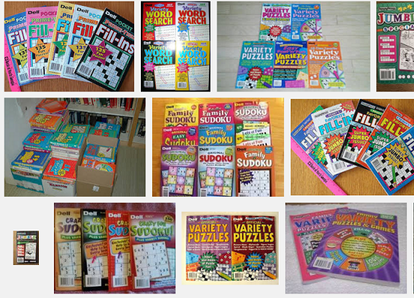
And while we’re on the topic of puzzle books, some of the best constructors working today have released their own books for your perusal! And with New York Times and Los Angeles Times crosswords to their credit, you’re sure to find some quality puzzlers within these pages!
–David Steinberg’s Juicy Crosswords from the Orange County Register ($6.88)
–Patrick Blindauer’s Easy Like Monday Morning Crosswords ($6.26) and Easy Breezy Crosswords ($8.95)
–Todd McClary’s Fresh Freestyle Crosswords ($8.95)
–Brendan Emmett Quigley and Francis Heaney’s Drunk Crosswords ($7.95)
–Patrick Berry’s Son of the Crypt Cryptic Crosswords ($15)
–David L. Hoyt’s Word Winder ($6.95) and Jumble puzzles ($9.95)
–Cynthia Morris’s American Acrostics, CynAcrostics, and AnimaCrostics ($9.95)
And that doesn’t even cover the many great by-mail and downloadable puzzle books and sets available this holiday season!
Many top constructors and organizations market their puzzles directly to solvers, so between by-mail offers, subscriptions, and downloadable puzzle bundles, you’ve got plenty of quality choices!
—The Crosswords Club, edited by Patti Varol (puzzle bundles by mail, available in both regular and large print; $39.95 for 12 issues, $59.95 for large print)
—Piece of Cake Crosswords by Patrick Blindauer ($30 for 1 year)
—The American Values Crossword (subscription and daily puzzles) ($20 for 1 year)
–Matt Gaffney’s Daily Crossword ($24 per year) and Weekly Crossword Contest ($26 per year)
–Andrew Ries’ Aries Xwords ($12 per year)
–Peter Gordon’s Fireball Crosswords ($25 for 1 year)
–Joon Pahk’s Rows Garden puzzles ($20 for 1 year) and Variety puzzles ($15 for 1 year)
–Patrick Blindauer’s Various Themed Puzzlefests ($15 each)
–The LA Times’ Crossword LA 2016 puzzle pack ($5)
–Patrick Merrell’s Punchline Puzzles ($10) and Aha! Word Puzzles ($10)
And naturally, PuzzleNation offers terrific puzzle apps for the discerning puzzle solver!
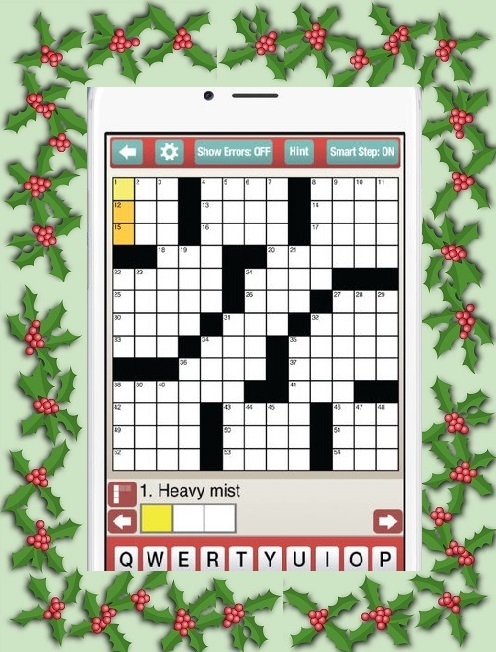
The Penny Dell Crossword App, available for both iOS and Android users, not only features bundles of terrific puzzle content, but it offers a free daily puzzle to all solvers!
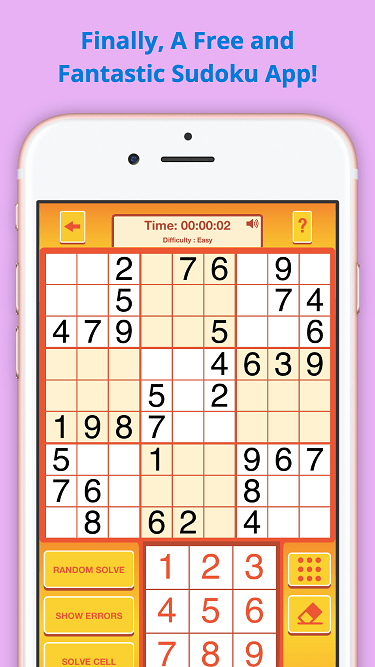
Our new Penny Dell Sudoku app is also available for both Android and iOS, and offers four different difficulty levels: Easy, Medium, Hard, and Expert! Whether you’re a newbie to Sudoku or a master, you’ll find the right puzzles for you!
You can check out our full line of puzzle apps on the PuzzleNation website!
Thank you to all of the constructors, designers, and companies taking part in this year’s holiday puzzly gift guide!
And thanks for visiting PuzzleNation Blog today! Be sure to sign up for our newsletter to stay up-to-date on everything PuzzleNation!
You can also share your pictures with us on Instagram, friend us on Facebook, check us out on Twitter, Pinterest, and Tumblr, and explore the always-expanding library of PuzzleNation apps and games on our website!



 PuzzCulture