A Look at Ambigrams in Honor of John Langdon

Symmetry is nothing new to puzzle enthusiasts.

After all, diagonal symmetry is one of the fundamental rules of crossword grid design. (Along with the occasional example of vertical symmetry.)

Puzzlers are used to linguistic symmetry as well. A well-constructed palindrome, the same message reading forward and backward, has delighted and challenged many a puzzly mind. Go hang a salami, I’m a lasagna hog.

Ambigrams scratch the same itch, combining artistic flourish with clever letter placement to create a message with rotational symmetry, allowing you to rotate the image 180 degrees and see the same message.

The curious thing about ambigrams that they feel ancient, like an artistic work steeped in history from centuries past, but in reality, they’ve only been around since the 1970s! (The term itself was coined by Douglas Hofstadter in 1984.)
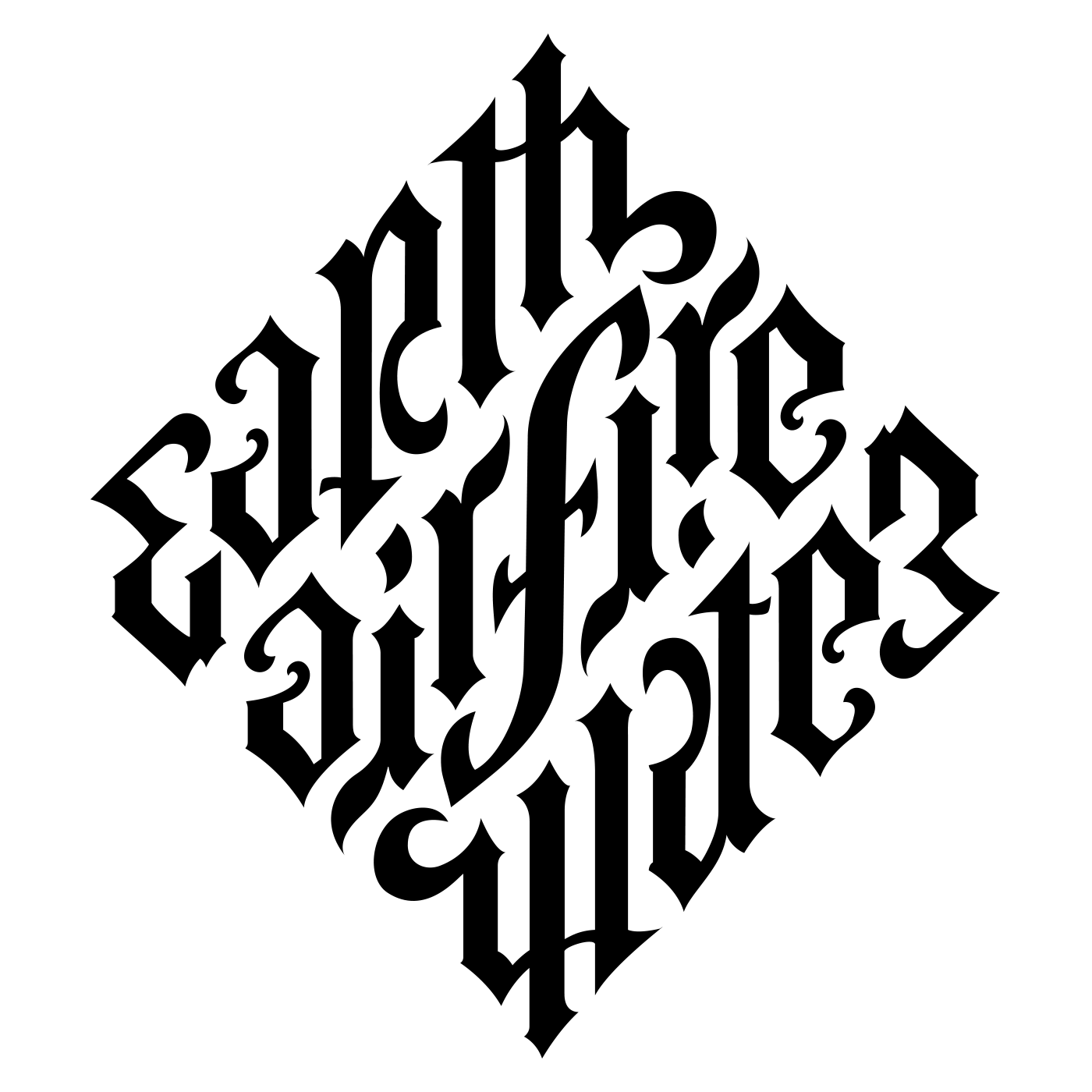
The four elements as a single ambigram.

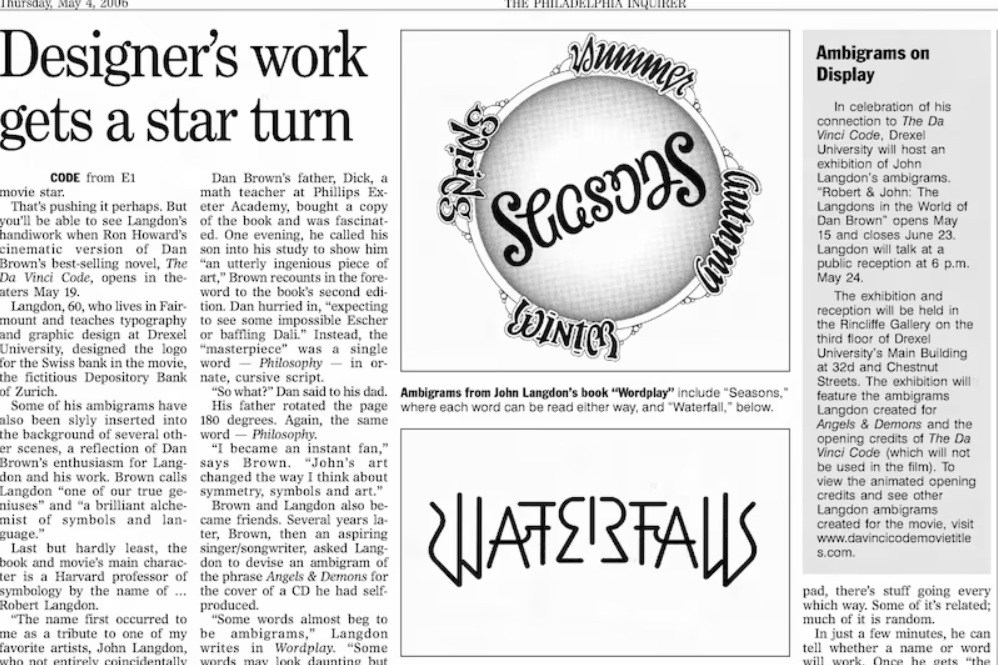
The creation of Philadelphia painter, writer, professor, and graphic designer John Langdon, he always envisioned his ambigrams as a visual presentation of words intended to present a familiar concept in an unfamiliar way.

In an interview in 2006 with Newswise.com, he said, “In the early ’70s, I tried to do with words what Dali and Escher did with images.”

Most famously, he created several ambigrams for Dan Brown’s book Angels & Demons, adding a mystical aura to Robert Langdon’s adventures involving the church and the Illuminati.
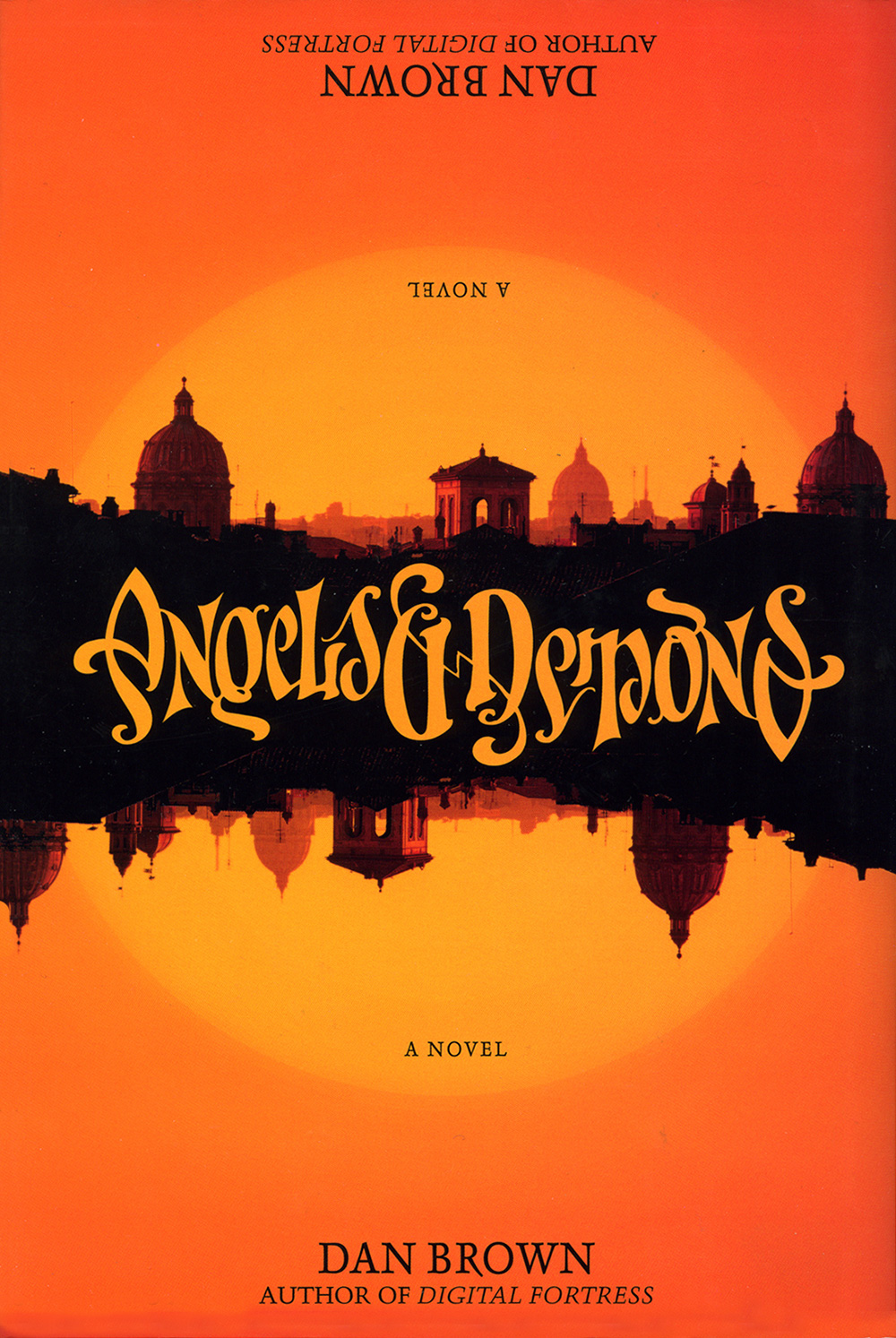
Oh, yeah, you noticed that, did you? Yes, the protagonist of The Da Vinci Code and several other bestselling works is named after John Langdon.

In an interview, Brown shared the story of his father, a math teacher, showing him Langdon’s book Wordplay, and he was instantly hooked. “John’s art changed the way I think about symmetry, symbols, and art.”

We sadly lost John earlier this year at the age of 79, but his lasting influence in the world of wordplay is alive and well, not only with his literary legacy and namesake, but in the work of other ambigram artists.

The YouTube channel Write Words – Make Magic has gone viral over the last few years by creating ambigrams for viewers’ names, as well as other cultural touchstones, and it’s absolutely worth a watch. They happily show off their techniques for creating ambigrams, and it’s a true delight.

Ambigrams, and Langdon’s art in general, are all about revisiting one’s perspective. “Ambiguity makes people uncomfortable. But the lesson of Taoism is that if you have only one vantage point, you’re not seeing the truth.”

Puzzles are often about viewing things from another angle. Wordplay, punnery, manipulating language to surprise and playfully mislead… these are hallmarks of crosswords and crossword cluing.

A “very strong sense of legibility but also a marvelous sense of esthetics, flow, and elegance.” This could easily describe a great crossword puzzle, but it’s actually Douglas Hofstadter’s description of John Langdon and his work.

I guess it’s all a matter of perspective. Insight and wordplay, lurking within the symmetry.

If you just know how to look for it.


Do you have any favorite palindromes, ambigrams, or examples of symmetrical puzzling, fellow reader? Let us know in the comments section below! We’d love to hear from you.

Happy puzzling!

Puzzles and Games With a Sacred Touch?

In recent times, religion and the world of puzzles and games have crossed paths with sometimes surprising results.

The film adaptation of The Da Vinci Code, a fairly puzzle-centric thriller, was widely denounced by members of the Catholic Church, and there was similar resistance, though less vocal, against the sequel film, Angels & Demons.

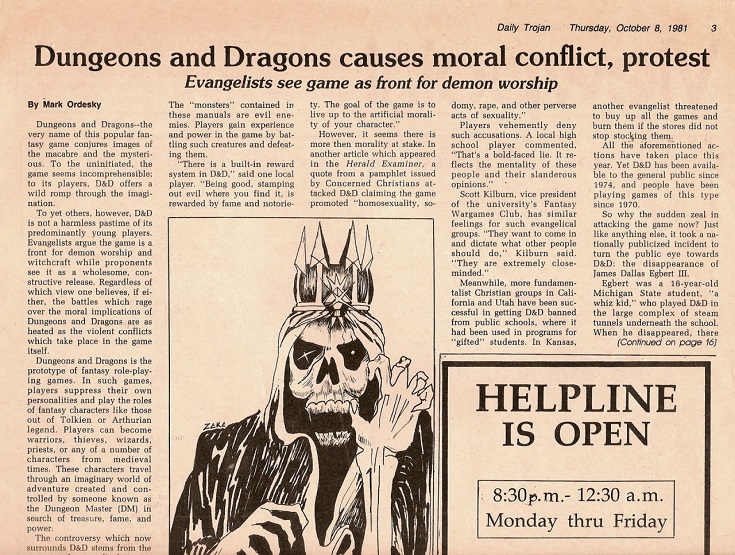
And, of course, in the 1980s, the roleplaying game Dungeons & Dragons was condemned as Satanic and dangerous to young minds.

I say that the above is strange because, for the most part, these seem to be anomalies or isolated incidents. There are numerous instances throughout history where puzzles and games were embraced by religion, even used as tools to teach aspects of religious beliefs.

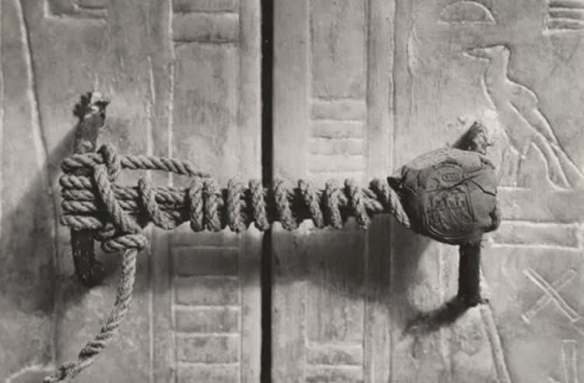
For instance, in ancient Egypt, we’ve seen evidence of puzzly techniques used not just to secure the tomb of Tutankhamun, but also to disguise the language and rituals employed by elite members of their society. Puzzles were entrusted to keep their secrets well beyond the grave.

the seal on king tut's tomb

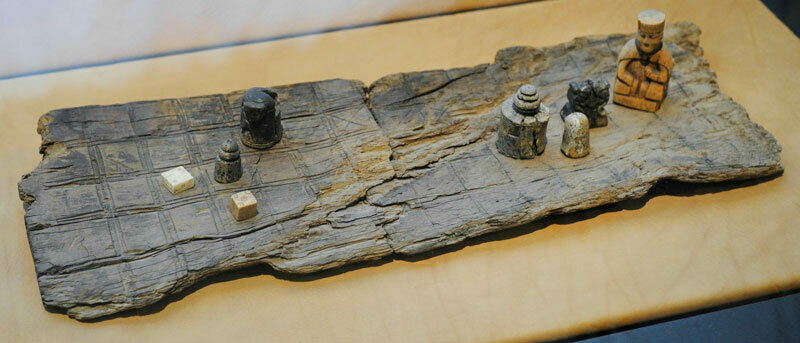
Plus one of the most ancient games in the historical record, Senet, seems to have evolved from being an enjoyable pastime into a spiritual tool.

You see, some Senet boards have religious iconography on them, believed to symbolize the journey into the afterlife. So gameplay — or the inclusion of the gameboard itself among the belongings of the deceased — represented that journey and the quest to learn more about it.

Some online articles have taken to referring to Senet as “the Rosicrucian board game of death,” which is a harsh misinterpretation.

There was also an afterlife connection with games for the Vikings.

According to Mark Hall, a curator at Perth Museum and Art Gallery, there have been 36 burials where board games of some description have been found in the graves around Northern Europe.

These grave sites grant intriguing insight into how the Vikings viewed board games as a learning tool. It’s believed that including a board game among the effects of the deceased signaled not only their skill and status as a warrior, but their preparedness for the afterlife itself. Heck, their win-loss records were even recorded for posterity!

Palindromes were believed to work as magical shields that protected those wearing the talismans bearing such clever wordplay.

Heck, even the shape of dice were influenced by changing religious views. Early dice games gave very little consideration to the shape or evenness of dice, because rolls were believed to be guided by Fate or some greater outside force, so the shape didn’t matter.

As religious beliefs evolved away from gods and greater forces intervening in such things, the general spirit of fairness in dice began to prevail, and the shape, balance, and pip distribution of dice became much more standardized.

And as for the Catholic Church, I certainly didn’t mean to make it look like I was picking on them in the introduction, because there are positive associations between the church and the world of puzzles and games as well.

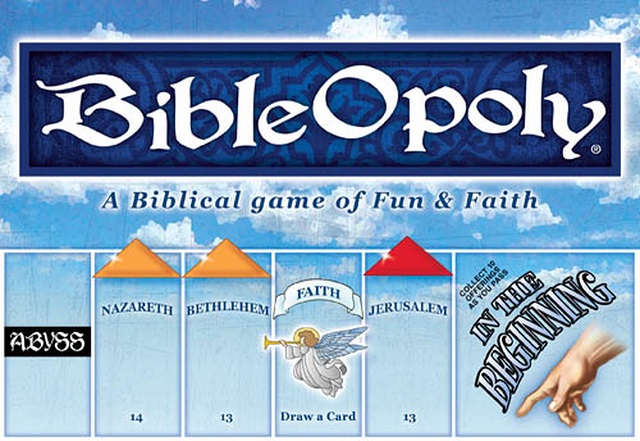
And no, I’m not just talking about lighthearted products like BibleOpoly or the cottage industry of family-friendly games like Bible editions of Outburst, Scattergories, Apples to Apples, Scrabble, and Taboo.

Chess boards and other game boards have been found in houses formerly used by the Knights Templar, for instance.

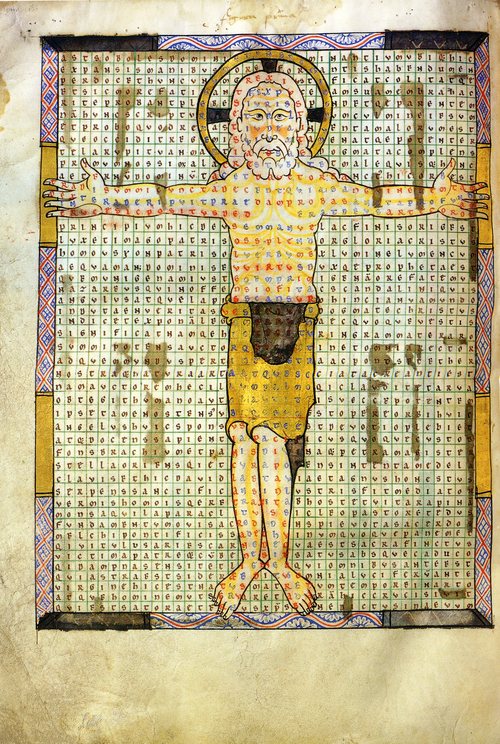
There’s also the puzzly art of carmina figurata, poems wherein either the entire body of the poem or select parts form a shape or pattern. These works originated as religious tributes, poems where letters were colored red to stand out from the regular black lettering in order to draw attention to or highlight a certain religious figure.

tumblr_m6a31vnnxo1qggdq1

[“De laudibus sanctae Crucis” by Oliverus.
Image courtesy of WTF Art History.]

There would be hidden words or messages concealed in the text, some speaking of the religious icons at the center of the piece in glowing terms.

Do you have any favorite puzzles and games that have an element of religion to them, fellow puzzlers and PuzzleNationers? Let us know in the comments section below. We’d love to hear from you!


dailypopwsicon

Halloween is almost here, and we have some spookily good deals for you to check out. You can find them on the Home Screen for Daily POP Crosswords and Daily POP Word Search! Check them out!

Thanks for visiting PuzzleNation Blog today! Be sure to sign up for our newsletter to stay up-to-date on everything PuzzleNation!

It’s Follow-Up Friday: Puzzle Book edition!

Welcome to Follow-Up Friday!

By this time, you know the drill. Follow-Up Friday is a chance for us to revisit the subjects of previous posts and bring the PuzzleNation audience up to speed on all things puzzly.

And today, I’m posting the results of our #PennyDellPuzzleBooks hashtag game!

You may be familiar with the board game Schmovie, hashtag games on Twitter, or @midnight’s Hashtag Wars segment on Comedy Central.

For the last few months, we’re been collaborating on puzzle-themed hashtag games with our pals at Penny/Dell Puzzles, and this month’s hook was Penny/Dell Broadway Puzzles!

Examples might be The Lord of the Diamond Rings or The Da Vinci Codeword or Alphabet Soup for the Soul.

So, without further ado, check out what the puzzlers at PuzzleNation and Penny/Dell Puzzles came up with!


Charlotte’s Spider’s Web

Right Angles and Demons

The Grapes of Word Math

The Scarlet Letterboxes / The Scarlet Letter Logic

The Fault in Our Starspell / The Fault in Our Star Words

Harry Potter and the Halftime Prince

Harry Potter and the Sorcerer’s Stepping Stones

Brave New Word Seeks / Brave New Word Games

The Lion, the Witch, and the Word Seek

The Wizard Words of Oz

The “Mystery Person” of Edward Drood

To Kill a Missing Word (List)

The Fountainheads & Tails Word Seek

Around the Block in Eighty Days / Around the Bend in 80 Days

A Tale of Two-Step Cities

The Three of a Kind Musketeers

Oh, the Places, Please You’ll Go!

Peyton’s Places, Please

Anagrams Karenina

Anagram of Green Gables

North & South of Eden

The Swiss Family Robinson Ties

Bowl Game of Thrones

Ender’s Bowl Game

Fahrenheit Two for One / Fahrenheit 451 and Only

Sudoku Road

Cryptograms Wake / Fill-Ins Wake / Figgerits Wake

Kakuro Pioneers!

Little Puzzler on the Prairie

First and Last of the Mohicans

The Picture Sleuth of Dorian Gray / The Picture This of Dorian Gray

Watership Spelldown

Buried Treasure Island

The Countdown of Monte Cristo

Take It from There to Eternity

The Sign of Four Corners / The Big Four Corners

The Doomsday Bookworms

Great Crostictations

A Wrinkle in Time Machine

The Perks of Being a WallFlower Power

Catch-22 for One

The Hotel on the Poet’s Corner of Bitter and Sweet

50 Shades of Grey Shadows

The Joy Luck Crosswords Club

Jurassic Park What’s Left

My What’s Left Foot

Only The Shadow Knows

From Alphabet Soup to Nuts

Match Up Made in Heaven

Beat the Clock-work Orange

A Hive for a Honeycomb

Star Words

The Lost Symbol-lic Logic

Lord of the Rings: The Fellowship of the Ringmaster

The Sylla-rillion

The Hunger Word Games

198-Four Square

The Sum Totals Also Rises

And one overachiever…

The “Lion” (‘Em Up), the “Which” (Way Words), and the “Word”robe by C(ircle) S(ums) Lewis


We also received a terrific one from @_Screenhog, Cross Sums of All Fears!

Have you come up with any Penny/Dell Puzzle Books of your own? Let us know! We’d love to see them!

Thanks for visiting PuzzleNation Blog today! You can share your pictures with us on Instagram, friend us on Facebook, check us out on TwitterPinterest, and Tumblr, and be sure to check out the growing library of PuzzleNation apps and games!