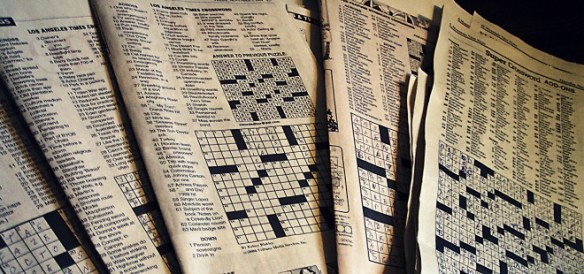
A Women’s March for Crosswords

crossword1

For years now, we’ve been discussing the gender gap in crossword construction and representation of women in published outlets. Heck, in 2018, we even shared detailed statistics on the percentage of women published by major outlets, thanks to the research of Patti Varol and Erik Agard.

Since then, we’ve seen projects like The Inkubator and Women of Letters highlighting female constructors, and there’s been a concentrated effort in the puzzle community (if not the major outlets) to support, foster, and cultivate more minority voices in crosswords.

And this month in particular has seen three different projects dedicated to female constructors come to fruition. Although many voices have been involved in these efforts, a huge chunk of the credit definitely belongs to constructor Rebecca Falcon, who pushed for outlets to publish only female constructors for an entire month.

The goal? A Women’s March.

The Wall Street Journal sought to meet Falcon’s request, but they didn’t have enough submitted puzzles to do so. They did do a week of female-constructed puzzles, though, including the traditional Friday contest puzzle with a meta solution, constructed by Joanne Sullivan.

Users of The New York Times Crossword app can also enjoy the fruits of these creative labors, as a Women’s History Month pack of 20 puzzles is available through both the App Store and Google Play as an in-app purchase! This project, accomplished in partnership with The Inkubator, features puzzles by Rebecca Falcon, Joanne Sullivan, Stella Zawistowski, Wendy L. Brandes, Rachel Fabi, Juliana Tringali, Annemarie Brethauer, Martha Jones, Wyna Liu, and Mary Lou Guizzo.

And it should come as no surprise that the ambitious and well-connected David Steinberg, editor of the Universal Crossword, succeeded in amassing the talent necessary for a full Women’s March.

As David said in the FB post announcing the project:

Each of the 36 Universal Crosswords this month has been constructed by a different woman or pair of women, and—to my knowledge—10 of the puzzles will be their constructors’ world debuts! Some of the puzzles’ themes are easy, some are a bit tricky, and a few are unlike anything I’ve seen in all my years of editing. One thing I noticed across all the March puzzles, though, was a refreshing woman-centric voice, both in the clues and grids.

Women’s March will continue into April for a few days, since so many women submitted excellent puzzles that the original 36 slots I’d allocated weren’t enough. As I see it, this event is not so much a Women’s March as the beginning of a Universal Crossword Women’s Movement, and I hope the puzzles this month inspire more women to construct for Universal as well as for other markets.

Andrew McMeels Universal put together a graphic celebrating all of the women involved in the project:
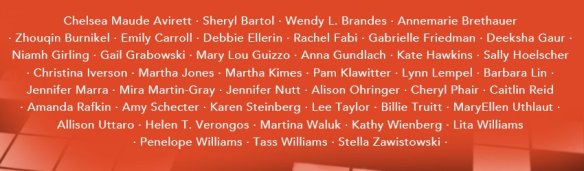
womensmarch

It’s so cool to see so many deserving constructors represented, not to mention all of the newcomers to the puzzle community! Here’s hoping that Women’s March is the start of equal puzzle representation across the board. That would be something truly special.

Are you aware of any other crossword outlets participating in Women’s March, fellow puzzlers and PuzzleNationers? Let us know in the comments section! We’d love to hear from you AND spread the word!


Thanks for visiting PuzzleNation Blog today! Be sure to sign up for our newsletter to stay up-to-date on everything PuzzleNation!

You can also share your pictures with us on Instagram, friend us on Facebook, check us out on TwitterPinterest, and Tumblr, and explore the always-expanding library of PuzzleNation apps and games on our website!

A One-Year Anniversary Update from Alex Trebek

One of the biggest news stories of the last few years in the world of puzzles and games has been Jeopardy! host Alex Trebek’s ongoing battle with pancreatic cancer.

If you somehow don’t already know, Trebek was diagnosed with Stage IV pancreatic cancer early last year, and he has been giving fans and well-wishers periodic updates on his condition.

Back when he first announced his diagnosis, Trebek stated, “I plan to beat the low survival rate statistics for this disease,” then joked, “I have to because under the terms of my contract, I have to host Jeopardy! for three more years.”

Despite the hardships both obvious and unseen during his treatment, Alex has continually proven to be a beacon of strength and support for those suffering with similar ailments. He has spoken more than once about taking things day by day.

This week, to make the one-year anniversary of his diagnosis, Trebek posted an update:

It would have been easy for him to simply offer an update and move on, but it’s very telling that he discussed the bad times and the struggles. He’s not sugarcoating this for anyone. He’s sharing his journey, warts and all.

It’s a remarkable bit of honesty, confronting the doubts, depression, and pain that comes with a battle like this. But by waging it in public for all to see, Alex not only spreads the word about cancer awareness and treatment, but he serves as a focal point for all the people fighting their own battles.

“If we take it just one day at a time, with a positive attitude, anything is possible.” A powerful message, to be sure. One full of hope, but still acknowledging the hard road ahead.

All our best wishes to you, Alex.


Thanks for visiting PuzzleNation Blog today! Be sure to sign up for our newsletter to stay up-to-date on everything PuzzleNation!

You can also share your pictures with us on Instagram, friend us on Facebook, check us out on TwitterPinterest, and Tumblr, and explore the always-expanding library of PuzzleNation apps and games on our website!
The King of the Monsters Rampages Across the World of Board Games!

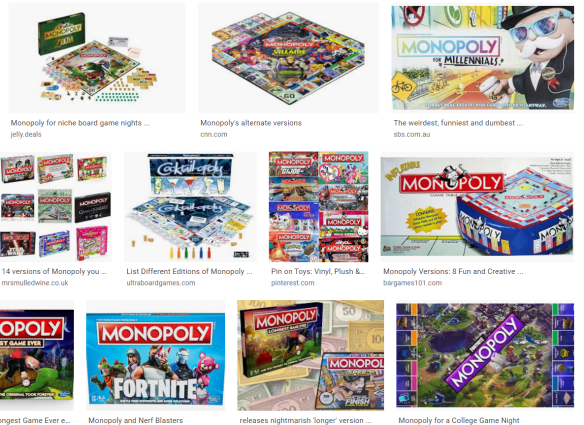
monopolyvariations

When it comes to licensing and variant titles, no board game comes close to the empire of different versions available that has been amassed by Monopoly.

Not only can you get one tailored to every one of the 50 states, but there’s a version of Monopoly for practically every pop culture phenomenon out there, covering everything from Game of Thrones and Star Wars to Spongebob Squarepants and The Office. There are versions with credit cards instead of cash, and even a cheater’s edition where players can be handcuffed to the board.

Sure, other classic board games are following suit. You can find versions of Clue centered around The Golden Girls or Dungeons & Dragons, and a Nightmare Before Christmas version of Operation out there.

But that’s a drop in the ocean compared to the myriad versions of Monopoly that are available for board game fans.

Even Godzilla is getting in on the fun.

monopolygodzilla

[Image courtesy of Mental Floss.]

Yes, there’s a Godzilla-themed Monopoly game now, complete with renamed properties, monster-influenced money, special game pieces, and rebranded Chance and Community Chest cards.

There are even factories and bases to build instead of houses and hotels.

But I must ask the obvious question. If you’re moving a monster token around the board, why aren’t you smashing houses and hotels instead of building bases and factories? I mean, the only monopoly your average kaiju is looking for is a monopoly on destruction, am I right?

Maybe a few intrepid players will cook up some fun variant rules that encounter the monsters to rampage rather than rebuild.

Of course, if you’re looking for an excuse for destruction, maybe the accompanying Godzilla-themed Jenga will be more up your alley.

godzilla-jenga

[Image courtesy of Bloody Disgusting.]

Yes, it’s just like normal Jenga, except the tower pieces are painted to look like pieces of a building, and Godzilla is slowly marching toward it, his atomic breath glowing as he anticipates the unbridled joy of knocking over yet another skyscraping edifice.

That’s certainly more in keeping with the King of the Monsters and his traditional manner for dealing with massive man-made structures. It won’t be as destructive as, say, Smash City or Terror in Meeple City, but it’s certainly a step in the right direction.

And, honestly, if there are two games that could use a little destructive sprucing up, it’s Monopoly and Jenga.


Thanks for visiting PuzzleNation Blog today! Be sure to sign up for our newsletter to stay up-to-date on everything PuzzleNation!

You can also share your pictures with us on Instagram, friend us on Facebook, check us out on TwitterPinterest, and Tumblr, and explore the always-expanding library of PuzzleNation apps and games on our website!

Did a Typo Help Defeat the Enigma Code and Win World War II?

During World War II, the Enigma code was one of the most daunting weapons in the German arsenal. Cracking the code would be the key to intercepting crucial information and outmaneuvering the Nazi war machine. In fact, unraveling the secrets of Enigma was so important that both England and the United States poured massive resources into building their own codebreaking operations, Bletchley Park and Arlington Hall, respectively.

Loads of fascinating information about the day-to-day operations of Bletchley Park and Arlington Hall have emerged over the last decade or so, and one of the most peculiar anecdotes to make the rounds recently claims that a typo is partially responsible for cracking Enigma.

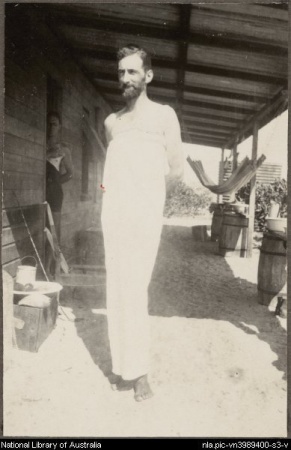
As the story goes, a man named Geoffrey Tandy was recruited by the UK Ministry of Defense to work at Bletchley Park as part of their growing team of cryptography experts. Scholars and professions from all over the country were being enlisted in the war effort, and cryptographers (or cryptogramists) were at the top of the list.

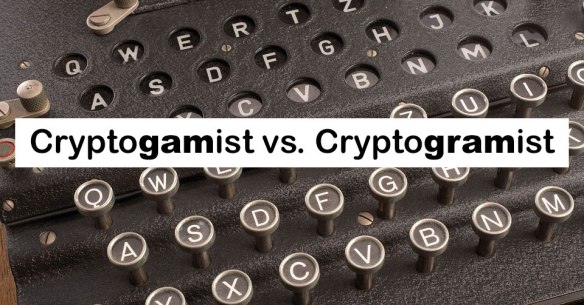
But Tandy wasn’t a cryptogramist. He was a cryptogamist, aka an expert on mosses, algae, and lichen.

Despite the error, Tandy remained at Bletchley Park, and a year or two after his mistaken hiring, his expertise proved invaluable when a German U-boat was sunk and cryptographic documents relating to Enigma were recovered. You see, his experience preserving water-damaged materials and specimens helped salvage the water-logged documents so they could be used to crack the German code.

And thus, a typo helped end World War II.

cryptogam

[Image courtesy of Did You Know Facts.]

It’s a great story. And like many great stories, there’s a hint of truth to it. There’s also a lot of exaggeration to make it a tale for the ages.

It was no fluke that Tandy was recruited for Bletchley Park. In addition to his cryptogamist credentials, he was assistant keeper of botany at the National History Museum of London. His work included managing the voluminous library, working with fragile documents and samples, and a facility with multiple languages.

Those linguistic skills and organizational talents made him a perfect choice for Bletchley Park, since they were recruiting all sorts of experts. Remember that the field of cryptography was in its early stages. You couldn’t just go looking for cryptographers. You had to build them from scratch, as well as the folks who would be support staff for those codebreakers-in-training.

That would be Tandy’s role. He was part of a division known as NS VI, responsible for archiving foreign documents and helping the cryptographers deal with any technical jargon they might encounter, particularly in foreign languages.

tandy

[Image courtesy of the National Museum of Australia.]

So where did the typo idea come from?

Well, it’s entirely possible it came from Tandy. The cryptogram/cryptogam mistake is just the sort of joke that would appeal to linguists and other professorial types, so either another member of the Bletchley Park team or Tandy himself could have downplayed his credentials in tongue-in-cheek fashion with the story of an erroneous typo.

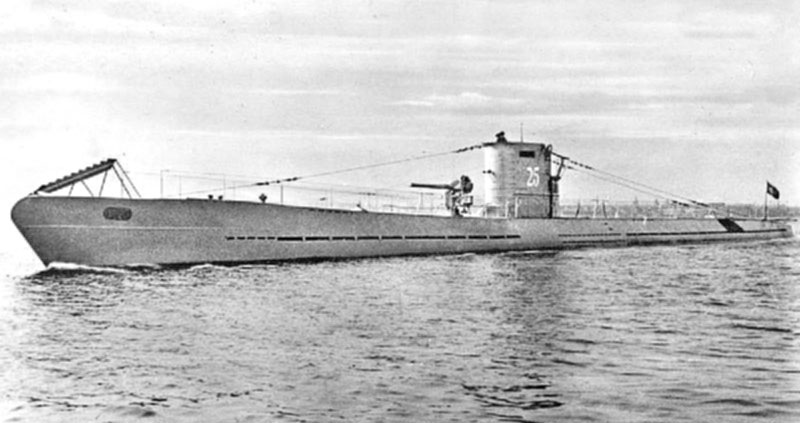
As for the other part of the story — where he saved the documents — there is some debate as to whether that happened. As the story goes, he used his knowledge of preserving documents to save a waterlogged set of cryptographic codes from a sunken U-boat.

[Image courtesy of Military Factory.]

The anecdote as reported usually cites the year 1941, whereas many books about Bletchley Park’s codebreaking efforts reference a U-boat from 1942, U-559, where documents AND a working Enigma machine were recovered.

I believe he DID participate in rescuing/preserving documents from a U-boat because it’s not some great heroic deed, it’s literally part of why he was hired in the first place. The crux of the anecdote is on the wordplay and the faux-fortuitousness of his employment, not on the actual events.

So, in the end, no, a typo didn’t help end World War II. But Geoffrey Tandy certainly did.


Thanks for visiting PuzzleNation Blog today! Be sure to sign up for our newsletter to stay up-to-date on everything PuzzleNation!

You can also share your pictures with us on Instagram, friend us on Facebook, check us out on TwitterPinterest, and Tumblr, and explore the always-expanding library of PuzzleNation apps and games on our website!

Farewell, Kazuhisa Hashimoto, Creator of the Konami Code

We talk about codes a lot in this blog. We’ve discussed codebreaking, hidden messages, encryption, spycraft, and password protection in the past. But we haven’t talked much about another kind of code, the sort that grants secret access to new abilities, powers, and other benefits.

In the video game world, these are commonly known as cheat codes. There are various famous ones from different eras of gaming, but one code stands head and shoulders above the rest: the Konami Code.

konamicode

[Image courtesy of Newegg.]

Up, Up, Down, Down, Left, Right, Left, Right, B, A, Start.

Ubiquitous in the 1980s and 1990s, the Konami Code was named for Konami, the video game publisher whose games utilized this code. It was first used in the Nintendo version of the arcade game Gradius in 1986, giving the player the full set of power-ups (rather than forcing the player to earn them throughout the game).

You see, the video game designer and producer working on converting the game, Kazuhisa Hashimoto, found the game too difficult to play during his testing phase. He then created a cheat code to make the game easier, allowing him to complete his testing. The code he chose became known as the Konami Code.

It’s most famously associated with the game Contra, a side-scrolling platformer that pitted Rambo-inspired heroes against an invading alien force. The game was famously difficult because one hit could kill you, and you only had three lives for the entire game. Entering the Konami Code granted the player 30 lives and a much greater chance of success.

(I, of course, could beat it without the Konami Code. But this article isn’t about me and my old-school video game wizardry.)

The code became part of video game pop culture, continuing to appear not only in Konami games, but all sorts of other games, up through the modern day. Often with different results.

In Teenage Mutant Ninja Turtles: Turtles in Time, you got extra lives. But if you used it in Tony Hawk’s Pro Skater 2, it would unlock a playable version of Spider-Man. If you use the code in Assassin’s Creed 3, a turkey will wear the character’s famous hood, weirdly enough.

The code has transcended gaming as well, not only becoming the name of a famous wrestler’s gaming-centric YouTube channel, but appearing everywhere from Family Guy and Wreck-It Ralph to Dance Dance Revolution and Rocket League.

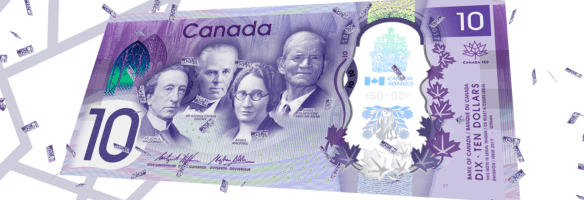
It even allows for a bit of festive fun on the website for Bank of Canada. On the page revealing the new $10 bank note, inputting the code hilariously activates a rain of money-confetti and plays the Canadian National Anthem.

konamicanada

Sadly, the reason that I’ve got the Konami Code on my mind today is that Kazuhisa Hashimoto passed away this week. The veteran game designer was 61 years old, and after being hired by the company in his twenties, spent nearly 30 years working for Konami, first on coin-operated games and later on console titles.

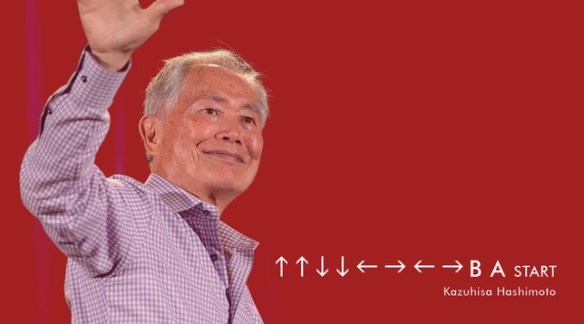
There’s not a huge amount of information readily available about Hashimoto or his life outside the world of video games. In fact, some articles about Hashimoto claim he was 79 years old at the time of his death. And the one photo I can find that’s attributed to him appears to be a picture of Star Trek actor George Takei instead.

konamitakei

We here at PuzzleNation mourn the loss of this influential designer and contributor to pop culture. May both his games and his famous code live on as fine, smile-inducing examples of his hard work and playful nature.


Thanks for visiting PuzzleNation Blog today! Be sure to sign up for our newsletter to stay up-to-date on everything PuzzleNation!

You can also share your pictures with us on Instagram, friend us on Facebook, check us out on TwitterPinterest, and Tumblr, and explore the always-expanding library of PuzzleNation apps and games on our website!

A Puzzle Design Competition Hosted by a Secretive Puzzly Society?

yoshi0

[Image courtesy of Activist Post.]

What if I told you that there’s a secret cabal of puzzle enthusiasts lurking in the shadows of the global puzzle community? A group that meets once a year in different locations, rotating between the United States, Europe, and Japan. An invite-only assortment of puzzle collectors and innovators who bring mechanical puzzles to challenge and delight their fellow attendees.

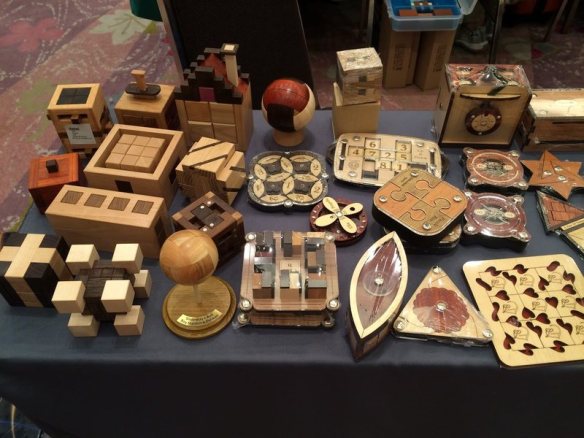
Yes, we’re talking about a clandestine event where puzzle collectors discuss, show off, and trade mechanical puzzles and brain teasers they’ve designed or crafted themselves.

yoshi2

[Image courtesy of Atlas Obscura.]

No commercially available puzzles can be brought as gifts, since you might duplicate a puzzle that’s already in someone’s collection.

But swapping and selling puzzles isn’t all that happens at one of these International Puzzle Party events. No, they’re also home to the Nob Yoshigahara Puzzle Design Competition, an annual award centered around mechanical puzzles. More specifically, the winners of the competition are announced at the IPP.

yoshi1

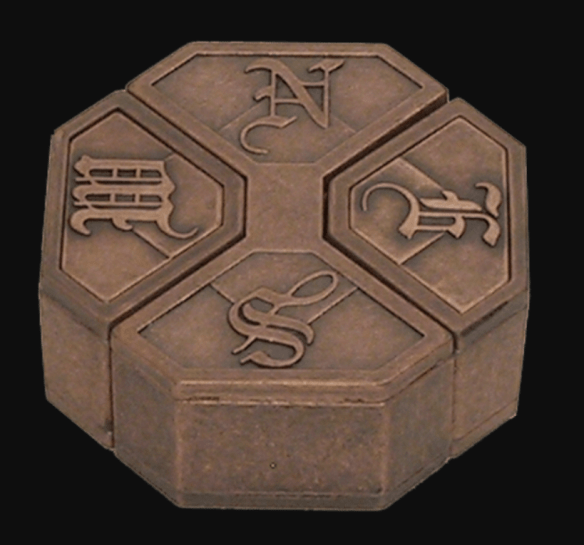
[One of Yoshigahara’s most famous puzzles. Image courtesy of Mr. Puzzle.]

Named after the prolific and innovative puzzle designer Nob Yoshigahara, the competition was founded in 2001, and named after Yoshigahara in 2005.

The entries for this year’s competition have until June 15th, 2020, to submit their puzzle for consideration. (This year’s competition was announced back in November of last year.)

Usually, only 5-7 puzzles out of all those submitted will be selected by one of that year’s judges for consideration. Each puzzle is graded on how innovative the concept is, how well the puzzle is physically designed (both aesthetically and mechanically), and how enjoyable the solving experience is.

[The 2017 competition winner, Kakoi.]

Anyone may submit his or her own mechanical puzzle design, independent of Puzzle Party affiliation.

There is a Puzzlers’ Award for the top design as well as Jury Prizes for other submissions (a grand prize, 1st prize, and honorable mention).

You can check out a listing of the 2018 competition submissions here to see the incredible variety and creativity represented in a single year’s pool of submissions. (Including links for purchase if any of them catch your eye!)

Personally, I’m a sucker for secret societies, invite-only activities, and so on, so I love the concept of a puzzle competition created for and judged by fellow puzzlers.

Oh, wait. Before I go. You may be asking yourself why all the secrecy? Well, apparently, there were several attempts by companies to infiltrate the event and bootleg puzzle ideas for market. It’s simultaneously insane and totally believable for spycraft like this to be taking place at a puzzle event.

In any case, I wish the best of luck to everyone submitting their puzzles to this year’s competition!


Thanks for visiting PuzzleNation Blog today! Be sure to sign up for our newsletter to stay up-to-date on everything PuzzleNation!

You can also share your pictures with us on Instagram, friend us on Facebook, check us out on TwitterPinterest, and Tumblr, and explore the always-expanding library of PuzzleNation apps and games on our website!