And BosWords director John Lieb announced yesterday that they’re holding Open Submissions for one of the themeless puzzles in this year’s Spring Themeless League!
It’s only open to constructors who HAVEN’T had a themeless crossword published in The New York Times and also HAVEN’T constructed for a previous BosWords event.
Yes, it’s an opportunity for new faces and fresh talent to show what they can do!
You can find the full submission details on the BosWords website, including parameters for grid design, fill content, and words to avoid.
I think this is such a cool way to encourage interest in both the construction side of puzzles and the great fun to be had with themeless crosswords.
The submission deadline in February 15th, so if you’re feeling inspired, get to puzzling!
And if you haven’t already, please strongly consider checking out the Spring Themeless League. It’s a blast and really shows off the creativity and constructing skill it takes to make an enjoyable, compelling themeless crossword.
Good luck to all the potential cruciverbalists out there!
AI continues to encroach on nearly every aspect of our lives, online or otherwise, and crosswords are not immune to this effect.
Actually, crosswords and computers have walked hand-in-hand for a long time.
Some companies use computer programs to generate their unthemed crosswords, no human intervention necessary. Computer programs like Crossword Compiler aid constructors in puzzle design and grid fill, allowing them to build and cultivate databases of words with which to complete their grids.
Matt Ginsberg’s ever-evolving crossword-solving program Dr. Fill won the American Crossword Puzzle Tournament in 2021 — although the top prize still went to a flesh-and-blood solver — a first-time occurrence which garnered a lot of media attention:
The first computer to win the event, Dr. Fill completed most puzzles in well under a minute and only made three mistakes, edging out its top human competitor by 15 points.
To be fair, several constructors responded by vowing to make a crossword for the following year’s tournament that would thwart any computer. And I respect such inspired declarations immensely.
(I’ll have to do more research and find out if any of them succeeded!)
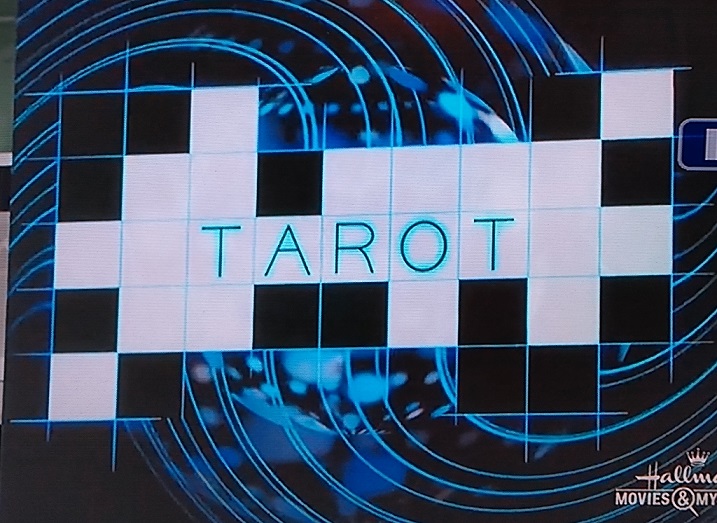
Really, we shouldn’t be surprised. They wrote an entire Crossword Mysteries movie on the Hallmark Channel about a crossword-clue-solving AI (and the people who would kill for the technology).
But I digress.
I have AI on the brain today because I just checked out an AI-fueled competitive mini-crossword arena, and I have mixed feelings about it.
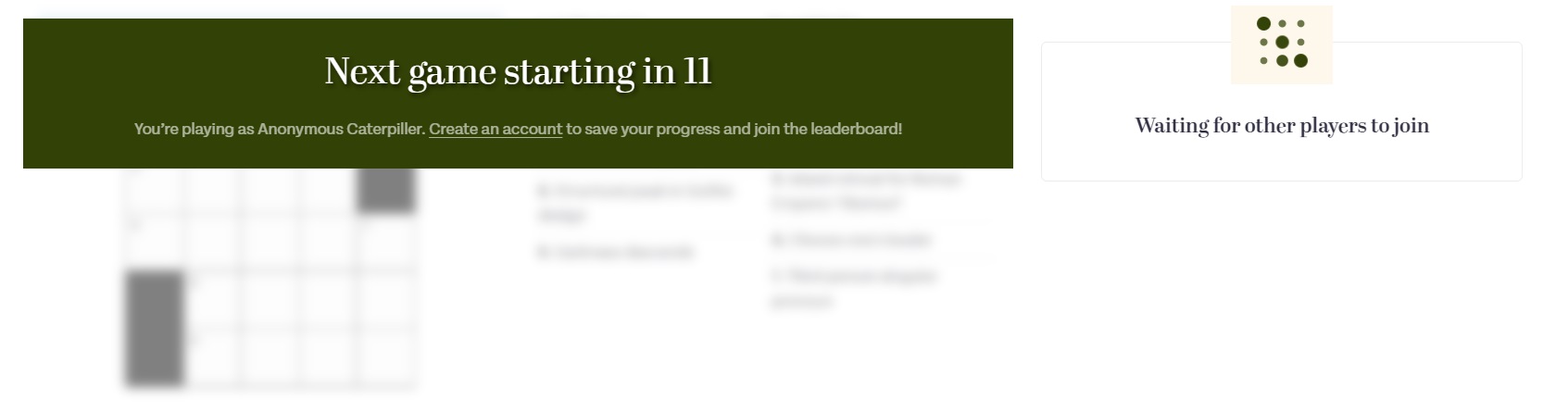
It’s called Crossword Race, and it uses AI to generate 5×5 mini-crosswords, clue them, and load them up for solvers to complete in as fast a time as possible.
Yes, the cluing is very bland and overly technical (feeling more like oddly-worded dictionary definitions), but there seems to be a genuine desire to build and serve a puzzle-solving community.
And I can see the value.
If you’re a puzzler trying to get better at solving — especially if you have friends posting their mini-crossword results on the daily — this is a safe space to practice your solving, your grid navigation, and shake off the nerves that come with any timed competitive endeavor. (You can create a profile to track your stats or play anonymously.)
But I’m also a writer, a puzzler, a content creator, and such push-button “creativity” gives me the ick. Beyond the soullessness that comes with so many AI creations that lack the heart and inspiration of human touch, there are already too many computer-generated crosswords these days with crap clues, poor fill, and frustrating Naticks/crossings that would stump the average solver.
I looked at a puzzle book from one of these companies a few years ago. I mean, it was almost impressive that one computer-generated puzzle managed to cram FIFTEEN abbreviations into a 13×13 grid, often crossing or piled together in corners. It was an abysmal solving experience.
Now, abysmal is not a fair word to use when discussing Crossword Race’s grids. Let me be fair here. I don’t like the cluing, but the grids are reliably filled with beginner-appropriate vocabulary.
And I want PuzzCulture to be a place where we discuss what’s going on in the world of puzzles. That includes AI.
So it’s up to you, fellow puzzlers, if you decide to use Crossword Race or not, or if Crossword Race is a net good for puzzlers worldwide. Time will tell, I suppose.
In the meantime, I wish you happy puzzling, folks! And remember to support your friendly neighborhood cruciverbalist! Sign up for a Patreon, buy a puzzle book, attend a crossword tournament, every little bit helps!
I did a roundup of Crossword News last week, but one important bit of news came through too late to be included, so it gets its own post today!
BosWords has only been around since 2017, but every year, they deliver several outstanding puzzly experiences.
Their flagship event has longbeentheSummerTournament, but you’re missing out if you don’t participate in their other events. Their Spring and Fall Themeless League events are all-virtual weekly puzzles to solve over a two-month period. It’s a great way to stretch your solving muscles without the pressure of in-person tournament-style solving.
And speaking of at-home solving, they just announced that registration is open for the 2025 Winter Wondersolve event.
It’s taking place on Sunday, February 2, from 1-4:30 PM Eastern, and features three themed puzzles and a themeless. The best of both worlds!
Plus they’ve lined up a terrific team. You’ve got event directors John Lieb and Andrew Kingsley, puzzle editor Brad Wilber, and a quartet of constructors handling the puzzling this year: Alina Abidi, Kareem Ayas, Carly Schuna, and Andrew White.
Check out the Boswords website for all the details (including a video narrated by John Lieb).
Will you be participating in the Winter Wondersolve (or any other Boswords events this year), fellow puzzlers? Let us know! We’d love to hear from you.
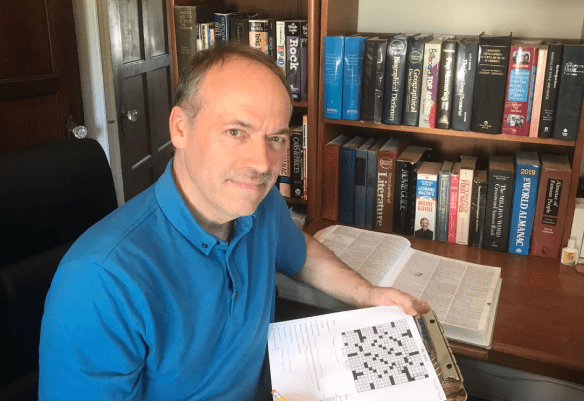
This is wonderful news, as Will had to step back from his editing work in February to attend to his recovery.
For those who were unaware, Will suffered a stroke that affected his mobility — he offered details on both the stroke and his recovery to Brain & Life magazine — but he is back to editing and playing table tennis.
From the NYT article:
In addition to completing hours of physical therapy and rehab, Will slowly returned to puzzle making and editing throughout the year. He directed the American Crossword Puzzle Tournament, returned as the creator of NPR’s Weekend Edition Sunday Puzzle in April and resumed choosing puzzles for The Times in May.
We wish Will all the best in his continued recovery and return to puzzling. I’ve had the pleasure of interacting with Will a number of times — mostly at the ACPT, though I did interview him for the blog years ago — and I’m very glad to hear that he’s well enough to enjoy both of his favorite pastimes again.
Once again being hosted in Stamford, CT, the ACPT is a weekend-long puzzle extravaganza of solving, puzzle-themed events, fun, and community.
This year’s tournament runs from April 4th through the 6th, and you can click here for more details (and to register for this year’s event, should the spirit move you).
Are you planning on competing this year? Let us know in the comments below! We’d love to hear from you.
Our last bit of crossword news was brought to our attention by friend-of-the-blog DGhandcrafted.
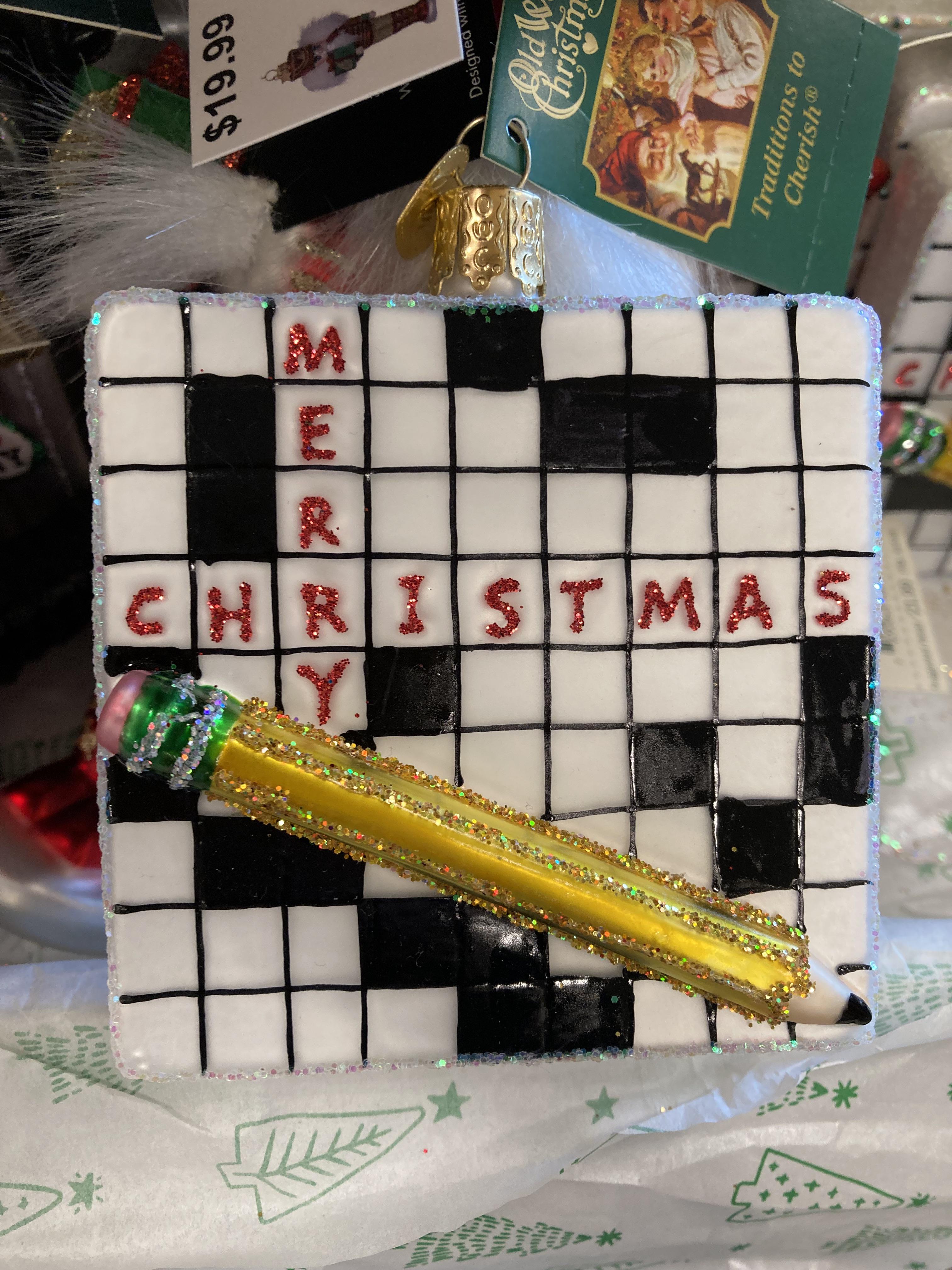
There is a crisscross grid featured on the site for the entire month of January, and the numbered answers correspond to what’s on sale that particular day!
There’s even a chance to win a bonus prize if you solve the entire puzzle early!
It’s a pretty clever way to bring solvers and crafters back to the site throughout the month, and hopefully it’s a success for both the customers and Lima Beads.
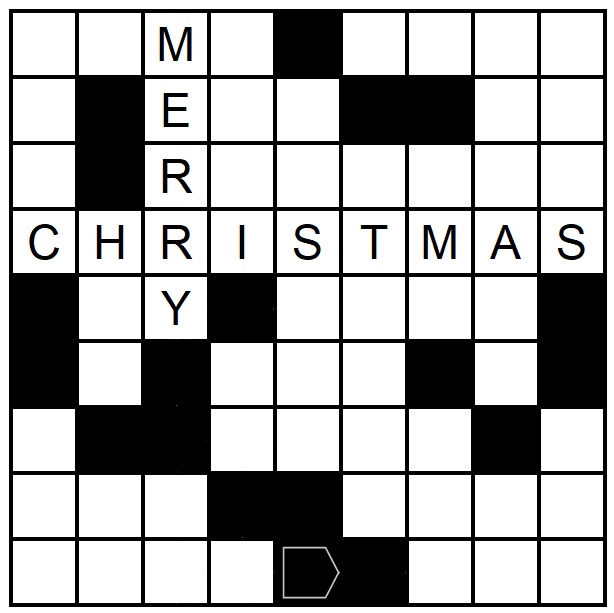
Now, there are a few caveats here. Obviously this is not a traditional crossword grid. It has no symmetry (either radial or axial), and it is littered with one- and two-letter entries, which are not allowed. There is also the small matter of the bottom left corner being completely disconnected from the rest of the grid.
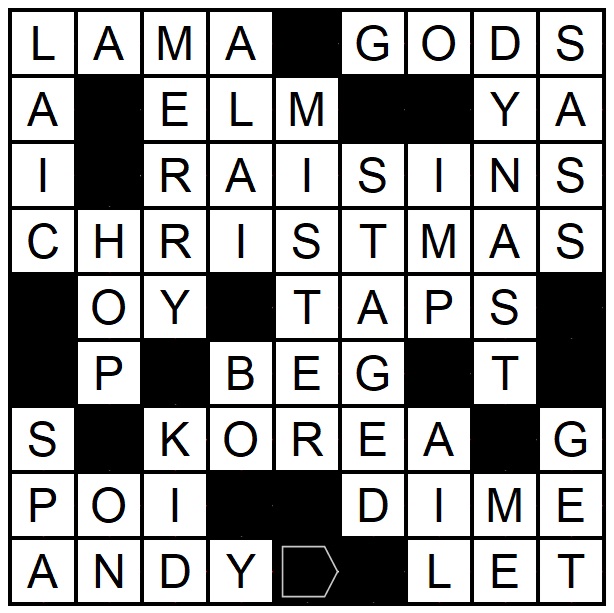
Here is the empty grid with MERRY and CHRISTMAS preset (without the pencil blocking several squares):
Now, to stick to the reddit request, I left the grid mostly as is.
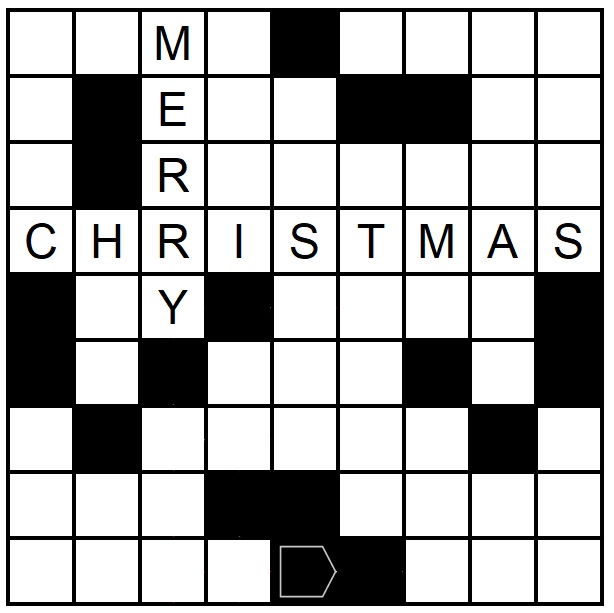
However, I could not in good conscience have part of the grid disconnected from the rest, so I removed a single black square in order to connect the grid fully.
There we go.
Oh. And one additional challenge: I only allotted myself ten minutes to fill the grid.
As usual in crossword construction, I tried to avoid abbreviations and variant spellings as much as possible (even with the two-letter entries), and keep the vocabulary as accessible as possible.
The only real challenge in this grid was finding a seven-letter word starting with R that aligned nicely with CHRISTMAS as the neighboring word.
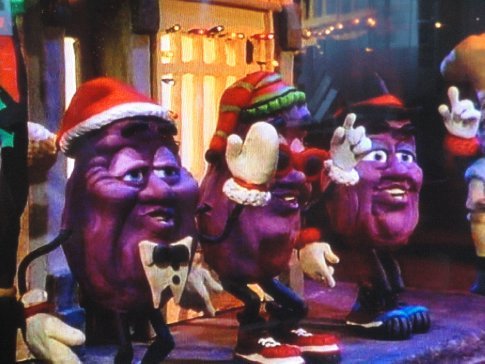
In keeping with the holiday theme, I chose RAISINS, as the California Raisins and their long-lost classic Christmas special came to mind.
From that point, it was a pretty quick job filling in the rest of the grid.
There are more plurals than I’d prefer, and DYNAST is by far the most difficult entry in terms of vocabulary, but otherwise, I’m pleased with my nine minutes and thirteen seconds’ worth of work.
What do you think?
I might come back to this one and see if I could clean it up more. Eliminate all the plurals, or maybe put themed words for all the border words along the edge. Something to really challenge me.
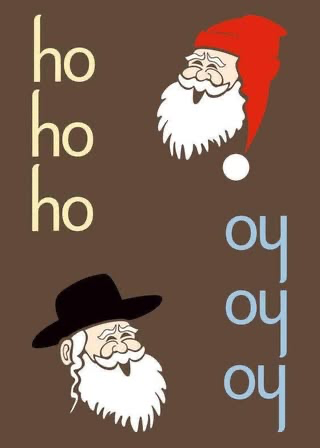
Christmas has come and gone, but Hanukkah has only just begun, and thanks to the creative minds of George Barany and Michael Hanko, I’m delighted to have an additional puzzle to share with you all at this festive time!
George and Michael have titled their puzzle December 25, 2024 (clued to midweek difficulty), and they’ve provided the following preface:
This holiday puzzle, with its dual time options and its two sets of clues, offers you the gift of choice. To accentuate your experience of your holiday–whether you celebrate Christmas or Hanukkah–choose the clue set that corresponds to your personal tradition. Or, to ramp up your puzzle’s level of difficulty, choose a clue set that is outside your personal tradition. However you choose to approach our puzzle, we wish you a happy and/or merry solve!
Reminder, a SINGLE answer grid is produced by solving from either clue set. George and Michael are grateful to Noam Elkies, Charles Flaster, Theresa Horan, and Markand Thakar for taking time from each of their busy holiday leadups to test solve both versions and make helpful suggestions that improved it.
By request of the constructors, if you like the puzzle, please spread the cheer to your own circle.



 PuzzCulture