The Ultimate Jigsaw Puzzle Table?

puzzle tables

Whether you’re a jigsaw puzzle solver or a tabletop game enthusiast, you’ve probably seen puzzle and game tables. A relatively new addition to the furniture options available for puzzlers and game fans, these tables generally come in one of two forms.

Either they have a removable top with a recessed area underneath to keep your puzzles mid-solve or games mid-play, or they have a central solving surface and side drawers to contain separated pieces. Sometimes this solving surface tilts up / tilts toward you to make it easier to work on.

But those are generally what you’ll see when it comes to puzzle / gaming tables.
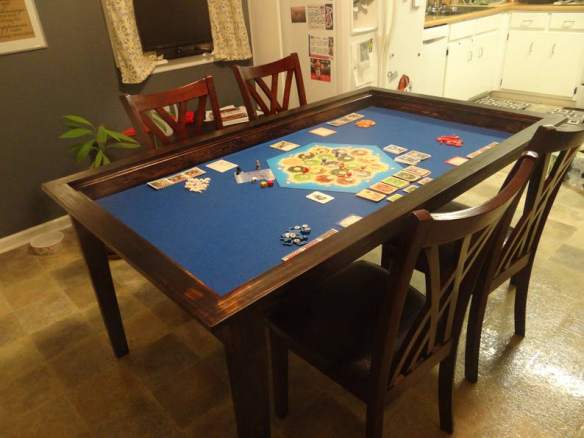
il_794xN.1390654132_bmcv

[This table is available on Etsy.]

Each has its pluses and minuses. With the removable top version, you have to put the top somewhere, and then you have the deeper solving space, which some solvers find uncomfortable.

With the center table and drawers, you’re still dedicating most of a table to puzzles, and many of them struggle to keep your work in place when folded up or moved around. (Some of these have a removable tray, which can slide into the body of the table, but this can also be unwieldy.)

simone table 3

As they say in the infomercials, there’s gotta be a better way. And YouTuber/inventor/DIY guru Simone Giertz came up with her own solution.

Simone is known for her wacky, inventive, hilarious, and creative construction projects, many of which involve robotics or moving parts. So let’s see what she came up with.
Puzzle-Table-feature-image-10012021

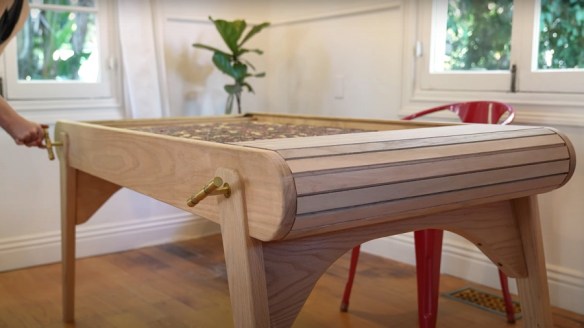
Her table features two hand cranks, each of which solves one of the problems with the removable top version of a puzzle/gaming table.

The first crank turns gears which roll the table top underneath and out of the way, revealing the hidden puzzle-solving space inside. This prevents you from having to worry about storing or handling a heavy or cumbersome tabletop while you solve.
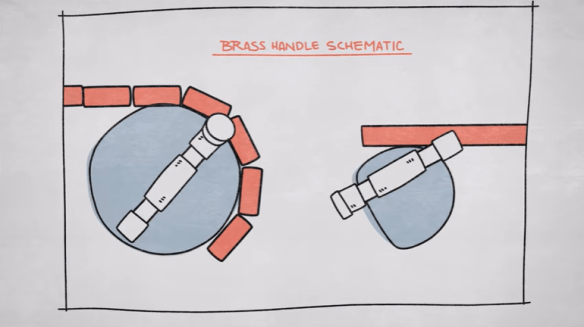
simone table 2

The second crank raises the solving space until it’s flush with the sides of the table. This removes any need to lean down into a recessed play area or solving space to enjoy your puzzles and games. The puzzle literally comes to you!

simone table 4

Plus, this solves some of the issues with other solving tables. There’s no removable tray to navigate, or sliding drawers or flaps that could cause what you’ve already built to shift or fall apart. It simply lowers into the body of the table itself, otherwise resting just as you left it.
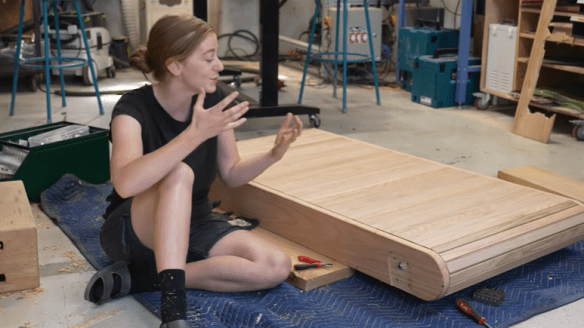
simone table

This video shares the entire construction process, including missteps, problems, new solutions, and the eventual successful reveal. (Fair warning: the video is mostly safe for work, but there are two random f-bombs in it, so be aware.)

As you can see, the final product is absolutely beautiful, and unlike virtually every other puzzle or game table you see on the market today.

Pretty much every jigsaw solver I know — and a fair few board game players — would love a piece like this in their house, myself included.

simone table 5

What do you think, fellow puzzlers and PuzzleNationers? Would you like to have this lovely table in your house? Or is there another piece of puzzly furniture that’s caught your eye? Let us know in the comments section below! We’d love to hear from you.


dailypopwsicon

Well, summer’s over, but we still have deals galore for you to check out. You can find them on the Home Screen for Daily POP Crosswords and Daily POP Word Search! Check them out!

Thanks for visiting PuzzleNation Blog today! Be sure to sign up for our newsletter to stay up-to-date on everything PuzzleNation!
PuzzleNation First Look: The Case of the Golden Idol

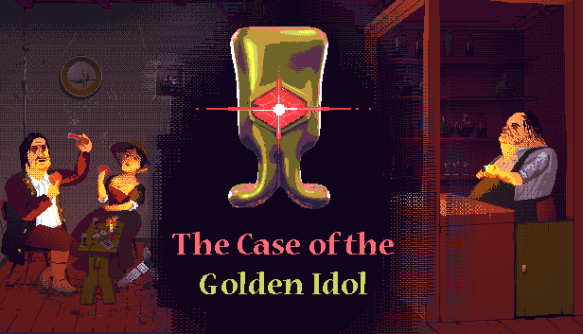
Case of Golden Idol steam logo 616 x 353

Video games have taken puzzles in some fascinating directions. From Limbo and Little Nightmares to Portal and The Talos Principle, puzzling constantly adapts and evolves across many platforms.

One of the most intriguing developments is how modern video games combine logic/deduction puzzles with visual mystery stories for the player to unravel.

After seeing our writeup of Return of the Obra Dinn, the team at Color Gray Games reached out to us with a puzzly investigation demo to try out, intriguingly named The Case of the Golden Idol.

Naturally, we couldn’t resist an offer like that. To put the game through its paces, we recruited friend of the blog Laura — puzzler, gamer, cat (and Cats) enthusiast, and former Tabletop Tournament Champion — to accept the case and give us a comprehensive review.

So, without further ado, let’s turn things over to Laura for her thoughts on the demo of The Case of the Golden Idol.


lady

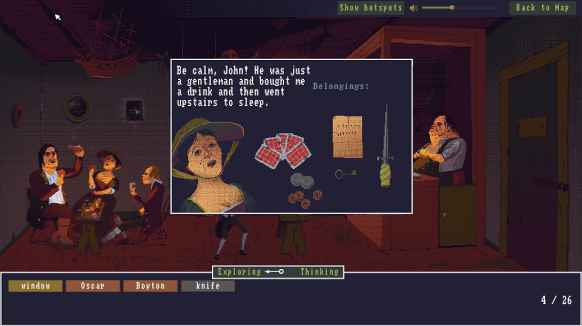
In a cozy 18th-century inn, a crew of people whiles away the evening playing cards round a table. Upstairs, a man lies murdered in his room. Who was he? Why was he killed? Whodunit? And how?

These are the questions you’ll answer in the Steam demo for The Case of the Golden Idol, a pixel art detective game from two-person Latvian studio Color Gray Games. Cast in the role of crime-solver, your job is to investigate several cases and put the pieces together, a phrase that Color Gray Games takes quite literally.

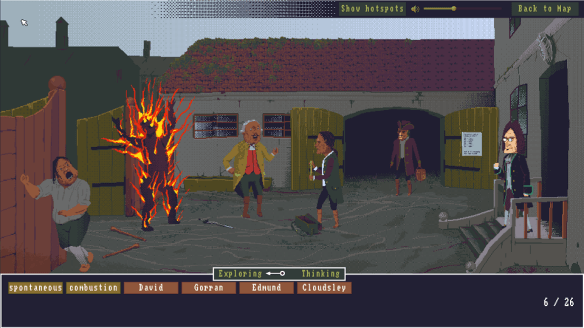
The investigation element of Golden Idol — its “exploring” tab — will feel familiar to those who have played point-and-click adventures before. As you scrutinize each frame, you can click on points of interest to learn more information. As you do so, you’ll gather clues in the form of words — names, locations, objects, etc. — that populate the bottom of your screen, ready to be used in the game’s “thinking” tab.

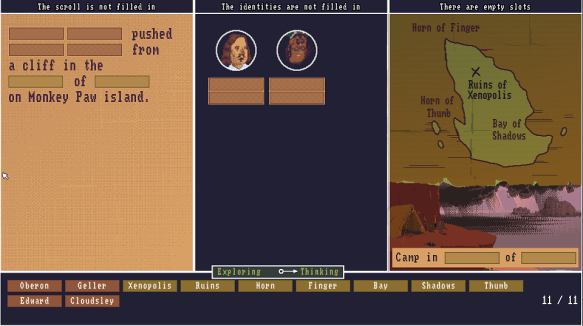
There, you’ll drag-and-drop your collected words to match names with faces and reconstruct the events of the case in a fill-in-the-blank format.

cliffside_solver

Golden Idol’s demo offers four cases in total. The first is simple enough to be solved in a matter of minutes, and the second is only marginally more difficult. Taken together, they feel more like a tutorial than anything else, giving you a grasp of the mechanics without taxing your mind very heavily.

Thankfully, the latter two cases beef up the complexity. They offer deeper mysteries that the player can sink their teeth into, and it’s here where the demo truly shines. At its best, The Case of the Golden Idol’s demo plays like an engaging, interactive logic problem. These cases serve you a platter of multiple suspects, all with motives and means, as well as red herrings to potentially lead you astray.

There’s little room for getting truly stuck, though. In each environment, the “hotspots” for clues are easy to spot. The art, while not as eye-poppingly pretty as other pixel games, is never muddy or unclear, and in each case, I found the clues with no frustration. Still, the demo offers a toggle that shows all hotspots with a bright visual cue, a great option for visually impaired players, or someone who just needs a bit of help finding that last missing word.

Golden Idol’s drag-and-drop nature does leave itself vulnerable to brute-forcing, however, especially as your solving nears its end. Each area of its “thinking” tab, once entirely filled in, will tell you if you’re right or wrong, and there’s no punishment for an incorrect guess. So if you’ve correctly identified your key players, for example, but don’t know the culprit, you could easily test your suspects one by one until you found the right answer. None of these cases has so many moving pieces that this is unreasonable.

outside

But doing this would sap the fun out of it, and if logic problems and murder mysteries are your cup of tea, Golden Idol is just that: a fun flex of your deductive skills, played solo or with a partner at your side to discuss theories with. Crack all of the demo’s cases and you’ll even see the threads (and the titular golden idol) connecting them.

How satisfying that overarching story will be, and how far Color Gray Games can go with their established mechanics, is yet to be determined. As a proof of concept, though, The Case of the Golden Idol’s demo certainly does enough to intrigue.

Ratings for The Case of the Golden Idol demo:

  • Enjoyability: 4/5Golden Idol isn’t for everyone, but if this is your niche, you’ll likely enjoy it. Its replayability is low, but such is the nature of mystery games.
  • How well puzzles are incorporated: 5/5 — The game is the puzzle; the puzzle is the game.
  • Graphics: 3.5/5 — Indie games have flooded with pixel art in recent years, and competition is fierce. I’ve seen art, particularly character art, that wowed more, but Golden Idol‘s lighting and colors still create a distinct atmosphere.
  • Gameplay: 4/5Golden Idol’s demo is mechanically accessible and easy to learn, and the loop of gathering & piecing together clues is satisfying, particularly in the more complex cases.

dailypopwsicon

Well, summer’s over, but we still have deals galore for you to check out. You can find them on the Home Screen for Daily POP Crosswords and Daily POP Word Search! Check them out!

Thanks for visiting PuzzleNation Blog today! Be sure to sign up for our newsletter to stay up-to-date on everything PuzzleNation!
How to Define Success vs. Failure in Roleplaying Games

Roleplaying games are some of my absolute favorite pastimes. The simple act of telling a story with friends is rejuvenating for me. I love sitting at a table — or on a Zoom call — with friends and collectively creating an adventure in our imaginations.

I know that the dice and the rulebooks and all the numbers can be daunting for new players, but honestly, they’re just the laws of physics, fate, and chance given form. In the simplest form, roleplaying games consist of you telling the gamemaster / dungeon master / game runner what you want to do, and the dice determining how it goes.

In many RPGs, there’s a success/failure line. If you roll above a certain number, you succeeded. If you roll below it, you failed.

[Image from Stranger Things courtesy of The Verge.]

That’s certainly simple enough. But it can be frustrating for some players, new and old. After all, if you had to beat a 15 and you rolled a 14, why should the result be the same as if you’d rolled a 2? The 14 is much closer, after all.

Some roleplaying games stick to the strict success/failure model. But others have a different approach that players might find more rewarding.

star-wars-edge-empire-rpg-core_1_97bac45707850006a463c742ecc746af

Fantasy Flight Games offers a Star Wars-themed roleplaying game that has one of my favorite dice systems. There are different colored dice that represent different aspects of the game (your character’s ability to do something, the difficulty of the action they’re attempting, advantages and disadvantages to their action at the time, etc.), and the dice don’t have the traditional number values you’d expect.

Instead, they have symbols that represent success, failure, advantage, threat, triumph, and despair.

So, depending on the dice roll, it’s not just a success or a failure. You can have an overwhelming success, or an overwhelming failure, or many things in between. You can fail at the task, but end up with something unexpected and advantageous still happening. Or you can succeed, but with some consequence.

It opens up the narrative floodgates WAY beyond the success/failure binary option, and it has led to some of my absolute favorite moments in roleplaying.

Naturally, this requires a little more creativity from both the player and the game runner, but together, you can tell some fantastic adventures.

81YTNmLLMLL

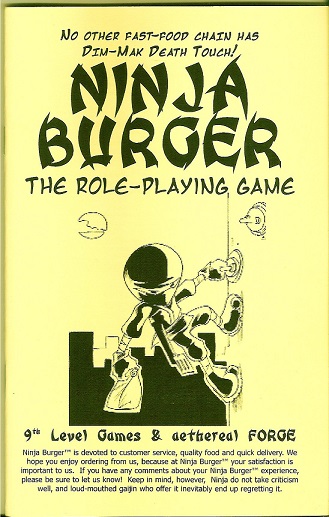
Ninja Burger is a humorous quickplay roleplaying game that uses standard six-sided dice. In the game, you’re a ninja secretly delivering fast food. It’s very silly and great fun.

One rule in the game that can lead to enjoyable chaos AND take the sting out of the traditional success/failure mechanic of roleplaying games is that you are instructed to act as if you never fail. Even if you’re failed a roll.

So, say you’re using wujenitsu (ninja magic) to pretend to be a bag of golf clubs to sneak into a country club. But you failed your roll. The caddy who grabbed you is clearly carrying a ninja on his back, not a bag of golf clubs.

But you must proceed as if you succeeded, no matter how ridiculous things get.

Sure, failure has consequences in any game, even silly ones, but if you’re in on the joke, then failure isn’t so bad. Especially if you can find a way to make your friends laugh along the way.

dreadJenga

Dread is a roleplaying game that doesn’t use dice at all. Instead, you set up a Jenga-style tower of blocks, and to accomplish certain tasks, you have to pull a certain number of blocks from the tower without collapsing it.

It’s a brilliantly simple way to add tension to a game AND put your fate in your own hands. There’s no single unlucky dice roll that can condemn you to defeat. Just gravity and your own steady (or unsteady) hand.

And of course, as the game continues and the tower grows unsteadier — and your options for wood blocks to pull become fewer and fewer — the tension mounts and mounts.

Eventually, the tower — and your character’s chances — collapse in a clatter.

[Image courtesy of Lewis Brown.]

Of course, the rules of every roleplaying game are eventually up to the people running/playing the game. If you decide that the success/failure rules of your game should be more nuanced, you can do something about it immediately.

But for new players and new game runners, sometimes it helps to remind them there are always other options available. Whether you ditch numbers entirely for narrative dice like in FFG Star Wars, pretend failure isn’t failure at all in Ninja Burger, or ignore the dice completely with something like Dread, you can still build tension and tell some wonderfully fun, exciting, and action-filled stories.

Good luck, and happy roleplaying, everyone!


dailypopwsicon

Well, summer’s over, but we still have deals galore for you to check out. You can find them on the Home Screen for Daily POP Crosswords and Daily POP Word Search! Check them out!

Thanks for visiting PuzzleNation Blog today! Be sure to sign up for our newsletter to stay up-to-date on everything PuzzleNation!
Emmy-Winning “Queen’s Gambit” Ignores Actual Grandmaster’s Legacy?

queengambit 1

The popularity of chess goes through ebbs and flows over the decades, but there’s something universal about the game that ensures it will never go away.

Right now, chess is going through something of a pop culture resurgence thanks to the popularity of the Netflix series The Queen’s Gambit, a show that won eleven Emmy Awards just this weekend.

queengambit 2

The show depicts the journey of fictional chess player Beth Harmon. As Beth rises to prominence, she gains the attention of the world through her masterful playing style while dealing with a secret dependence on drugs.

Beth is a fictional character, but she’s often navigating the historical record of the actual chess world, one steeped in pride and impressive accomplishments by men and women alike.

And one of those women takes umbrage at how she has been depicted in the show.

queengambit 3

Meet Nona Gaprindashvili, the fifth women’s world chess champion, and the first woman to be named Grandmaster by the International Chess Federation. This Soviet and Georgian woman played in the Women’s Chess Olympiads across four decades (from the 1960s through the 1990s), winning numerous championships, and having success against both male and female opponents.

Not only did the show misidentify her as Russian, but she was said to have never played against men, unlike the fictional Beth who regularly competes against men.

Gaprindashvili considers the comment grossly sexist, and claims in her lawsuit that by 1968 — the year depicted in the series — she had already defeated many male players, including ten grandmasters. Gaprindashvili herself pointed out in an interview with The New York Times the cruel irony in the show celebrating a fictional trailblazer by disregarding an actual trailblazer.

She is suing Netflix for false light invasion of privacy and defamation, seeking $5 million dollars in damages.

Netflix seems optimistic that the lawsuit has no merit, and they may be right, but it is amazing how easily this could have been avoided. You could have simply not mentioned Gaprindashvili at all, or focused on making Beth’s accomplishment a huge achievement for American women at the time.

Some fans of the show are twisting themselves in knots trying to ignore the contradiction, some saying that since this is a fictionalized story, they have a fictional version of Gaprindashvili in the show who DIDN’T accomplish what she did in real life. This is arguably more insulting than the show’s treatment of the Georgian grandmaster.

It will be interesting to see how things proceed from here. If nothing else, it will hopefully give more attention to the genuine accomplishments of a legendary female chess player who certainly deserves some of the spotlight.


dailypopwsicon

Well, summer’s over, but we still have deals galore for you to check out. You can find them on the Home Screen for Daily POP Crosswords and Daily POP Word Search! Check them out!

Thanks for visiting PuzzleNation Blog today! Be sure to sign up for our newsletter to stay up-to-date on everything PuzzleNation!
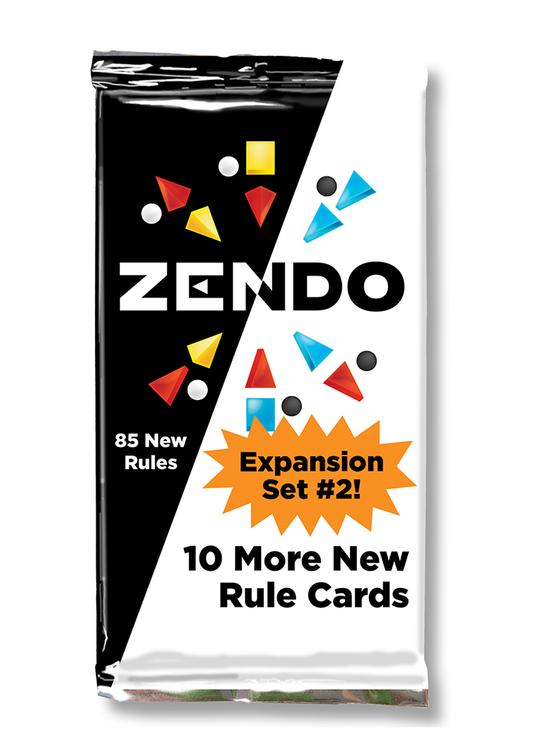
PN Product Review: Zendo Expansion #2

[Note: I received a free copy of this game in exchange for a fair, unbiased review. Due diligence, full disclosure, and all that.]

Even the best designed games need a little sprucing up from time to time. This is especially true of logic/deduction games, where after a while, it can feel like you’ve seen every trick either the game or the other players can offer.

And there are very few game companies that consistently deliver great expansions. It’s a brutal tightrope to walk; you have to add to the established game in an interesting or fresh way, but without breaking the rules, introducing problems that players won’t know how to handle mechanically, or betraying in some manner the spirit of the original game.

For the team at Looney Labs, though, creating an expansion pack seems like another day at the office. We’ve reviewed expansion packs in the past for Fluxx (Fluxx Dice), Just Desserts (Just Coffee/Better with Bacon), and Star Trek Fluxx (the Bridge Expansion), and each one revitalizes the game and adds delightful new wrinkles without hampering any of the qualities that made the original game such a treat.

Today, we’re looking at a new expansion pack for one of the company’s most immersive and challenging puzzle games: Zendo.

In Zendo, the players pull pieces from a communal pile in order to build different structures, using pyramids, wedges, and blocks. One player, the moderator, chooses a secret rule for the players to uncover, and builds two structures. One of these structures follows the secret rule, and one does not, and both are marked as such.

Secret rules can be as simple as “must contain all three shapes” or “must contain exactly four pieces.” They can be as complex as “must contain more blue pieces than blocks” or “must contain at least one yellow piece pointing at a blue piece.” Some rules involve how pieces touch, or how they’re stacked, while others demand no touching or stacking whatsoever. The field is wide open at the start of the game.

Players then try to deduce the secret rule by building structures themselves, arranging pieces from the communal pile into various patterns and asking the moderator for more information.

So, how does Zendo Expansion #2 affect the original?

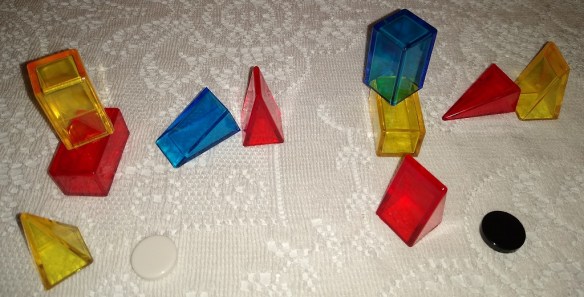
[Here are two sculptures: one that follows the secret rule and one that doesn’t. Can you figure out the secret rule? Is it about shapes? Colors? Placement? More?]

Zendo Expansion #2 is a ten-card deck of new secret rule cards that allow the moderator to create fresh challenges for the other players to unravel. The structures and arrangements may look the same, but players must reexamine what they think they know and observe to figure out the new secret rules.

Because, you see, the cards offer more than just the new rules. They demand greater cleverness from the moderator, in order to create designs that are fair for the players — not immediately obvious, but not impossible to discern either. It’s a difficult task for moderators.

And the challenge is even greater for players. After all, it’s not just about the shapes and how they interact, but all aspects of what the players see. Zendo Expansion #1 had cards where the rule involved the shape of the structure’s shadow. You could look at the pieces, the colors, how they’re placed, where they’re placed, how close, how far away, how many of each, and the shape of the shadow could NEVER occur to you.

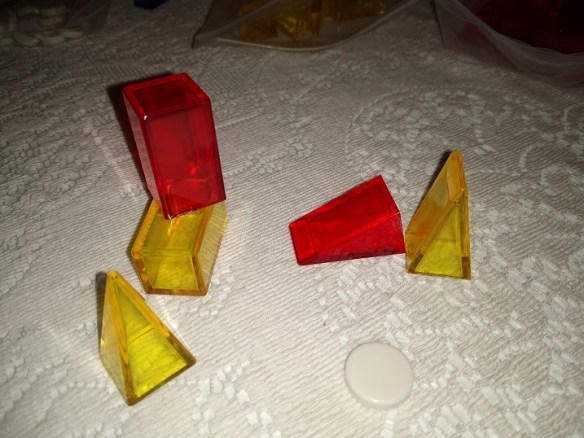
[Here’s another sculpture that removes blue pieces as a possible
element in the secret rule. Have you figured it out yet?]

With one medium rule card and nine difficult rule cards (as opposed to the easy-to-difficult range of the first expansion pack), the game will only become more surprising and thoughtful from here.

These cards include rules about relationships between pieces, conditional rules (example: something that’s true of the sculpture if something else happens theoretically), and even rules regarding something that ISN’T happening in a particular sculpture. Players will have to wrack their brains and truly example both sculptures from every angle to puzzle out these new rules.

There are even decoy tags on certain cards, to make players think the card has more variables than there actually are! Diabolical!

Although I’m a moderator far more frequently than a player, I’m excited to try out both sides of these new rule cards. After all, with the base set and two expansions’ worth of cards, there’s no way I can remember ALL of the possible combinations available. I’m as likely to be outwitted and outpuzzled as the next player.

[One more chance. Here’s a much simplified version that DOESN’T
adhere to the secret rule. What can we learn from this one?]

And that’s the charm of Zendo. From a small gathering of pieces and rules, you can make practically any scenario you wish. Will the players figure it out first try, or will the moderator’s ability to reinvent their sculptures as needed be put to the ultimate test?

Zendo is at once the most collaborative and one of the most curiously devious puzzle-games in the Looney Labs catalog, and with this expansion pack, only the truly inventive and observant will thrive. What a treat.

[Zendo and the new Zendo Expansion #2 are available from Looney Labs, and the expansion pack is only $5!]


Oh, and if you figure out our secret rule for the post, we’ll send you a Zendo-themed prize!


dailypopwsicon

Have you checked out our special summer deals yet? You can find them on the Home Screen for Daily POP Crosswords and Daily POP Word Search! Check them out!

Thanks for visiting PuzzleNation Blog today! Be sure to sign up for our newsletter to stay up-to-date on everything PuzzleNation!
The Newest Twist on Twisty Puzzles!

history

[Picture courtesy of Rubiks.com.]

Rubik’s Cubes and other twisty puzzles come in all shapes and sizes. With the advent of 3-D printing and innovative home designs that can be shared with a few clicks, the field is constantly evolving. This is a huge plus for puzzle fans.

Naturally, there are puzzle designers who aspire to make the largest twisty puzzle possible. In previous blog posts, we’ve chronicled some of these ambitious endeavors.

One of the first to draw the attention of online solvers was Oskar van Deventer’s 17x17x17 cube known as the “Over the Top” Rubik’s Cube.

Here’s a video of someone solving this diabolical design:

This was later topped by a design by corenpuzzle, who created a 22x22x22 cube. The build was so complex that the cube actually exploded (twice!) during construction.

But it’s not only cube-style twisty puzzles that are drawing the attention of designers. There’s also the minx series of twisty puzzles.

These are dodecahedrons rather than cubes. A dodecahedron is a 12-sided shape formed from pentagons. The smallest of this form is known as a kilominx.

71+IOUAhXQL._AC_SL1487_

The megaminx version (pictured above) was the first to attract greater attention in the puzzle world. It had 50 moving parts, as opposed to the 20 movable pieces of a standard Rubik’s Cube. You can find all sorts of solving videos on YouTube featuring megaminx puzzles.

The quest to build the largest minx-style twisty puzzle has taken puzzling to strange new places. Gigaminx, Petaminx, and more followed as the puzzles grew increasingly complex.

For a while, the champion of these puzzles was Matt Bahner, who created the Yottaminx. It’s a basketball-sized twisty puzzle that took four months to build. With 2,943 parts, it’s the twisty equivalent of a 15x15x15 cube.

Here you can see Bahner showing off his creation:

No record stands forever, though, and corenpuzzle recently returned to the top of the leaderboards with Atlasminx, the new record holder.

This 19-layer dodecahedron weighs in at over 17 pounds, and was assembled from 4,863 moving parts.

Skip to 1:53 to see the finished version of the puzzle and see it in action.

You could literally spend a lifestyle twisting and turning that puzzle and never reach the end.

These mindbending designs continue to wow solvers everywhere while pushing the creative envelope in clever new ways, and I’m definitely not alone in saying we cannot wait to see what comes next.


dailypopwsicon

Have you checked out our special summer deals yet? You can find them on the Home Screen for Daily POP Crosswords and Daily POP Word Search! Check them out!

Thanks for visiting PuzzleNation Blog today! Be sure to sign up for our newsletter to stay up-to-date on everything PuzzleNation!