Find Balance in This New Variation of Tetris: Uraomotetris!

When it comes to puzzly video games, Tetris is the granddaddy of them all.

Yes, there are some amazing puzzle games that have come along in the years since — Portal, The Talos Principle, and Baba Is You, to name just a few — but Alexey Pajitnov’s creation is ubiquitous. It’s part of our cultural fabric. Everyone knows Tetris with just a glance.

And people are still innovating with Tetris decades later.

Previously I’ve written about variations on Tetris that have caught my eye.

There’s Hatetris, where the computer gives you the worst possible piece on every turn, as well as Lovetris, where the computer gives you the exact piece you need to clear a single line.
schwerk2

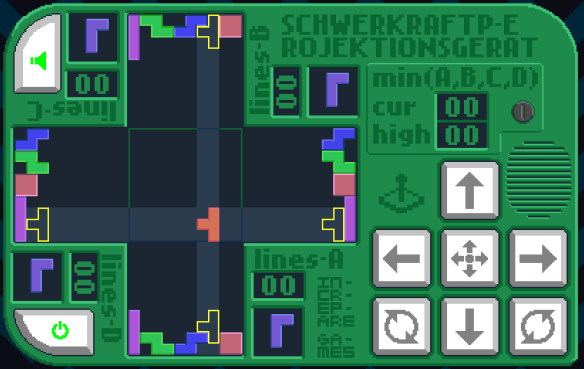
There’s also Schwerkraftprojektionsgerät, aka 4-directional Tetris, where you have four Tetris games running at once.

So when a new version of Tetris catches my eye, you know I’m gonna give it a shot.

Say hello to Uraomotetris, aka Uraomote Tetris, the creation of gamer and programmer Hirai_Sun.

Uraomote (ウラオモテ) is a Japanese term meaning “two sides” or “front and back,” which is very thematically appropriate, particularly with the stark black and white color scheme.

And although it looks like a two-player game, like the old Push Mode from Tetris DS, this is actually a single-player game.
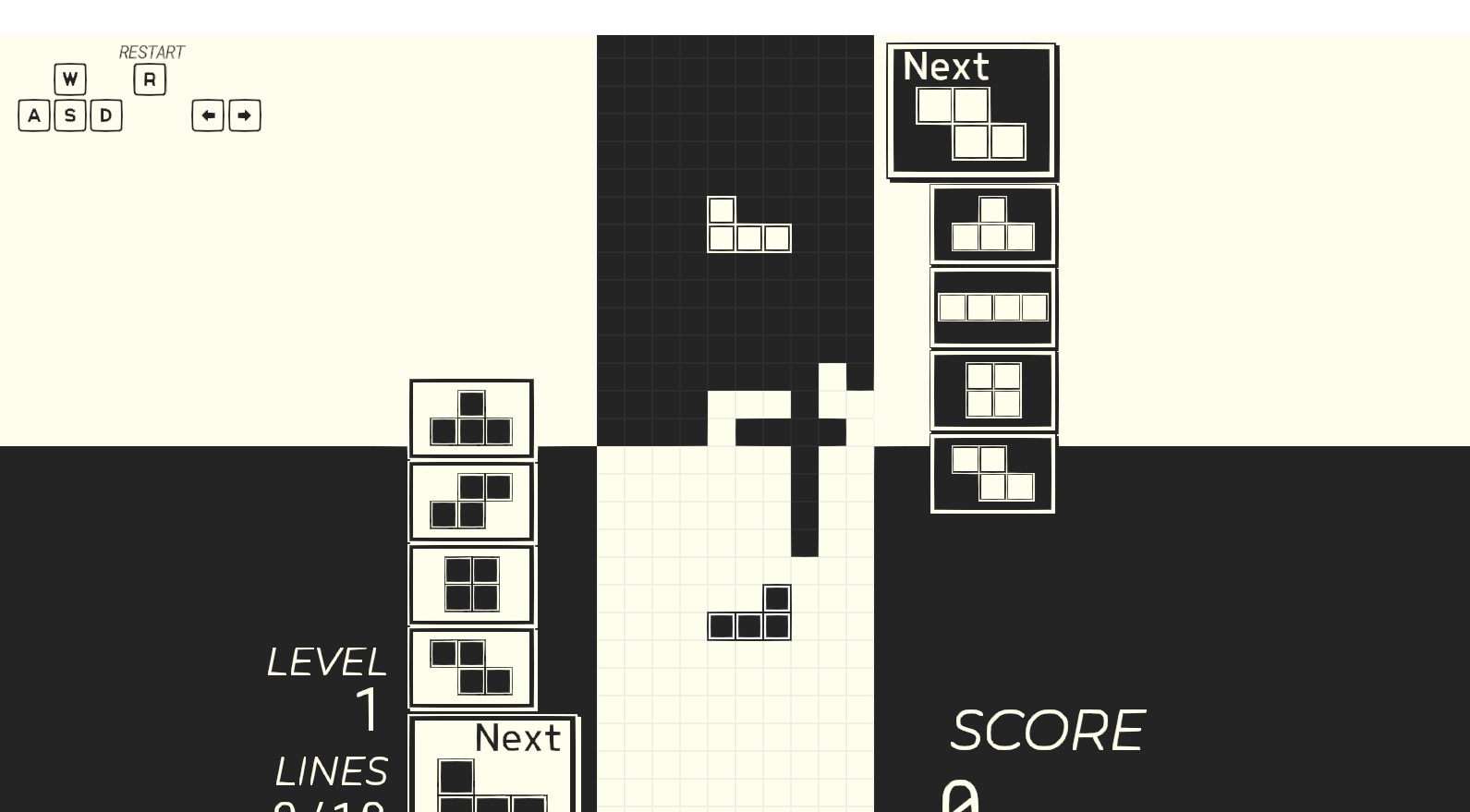
Your goal is to play the game simultaneously from above and underneath, using the white pieces falling from above and the black pieces rising from below.

You control the rotation of pieces with the arrow keys, and the placement of them with the A, S, D, and W keys. It takes a little getting used to, but once you get into the rhythm of placing one white piece, then one black piece, back and forth and back and forth, it becomes a really engaging puzzle.
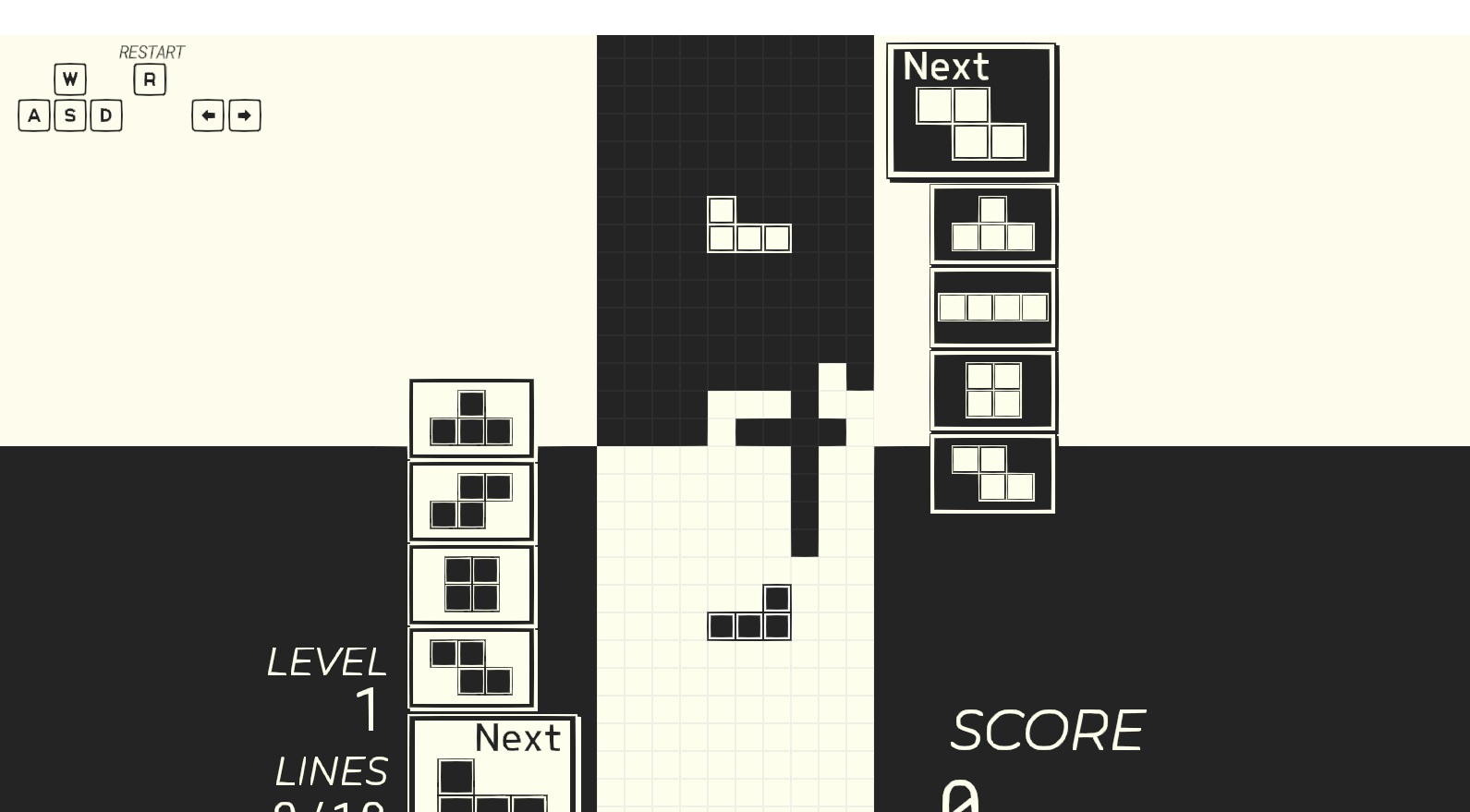
You’re not just trying to think in terms of cancelling lines, you’re also trying to set yourself up for success from both sides. You begin plotting two and three moves ahead. You’re stoked when the same piece arrives from above and blow, so you can strategize.

Of course, then I would manage to hit the wrong key and mess it all up.

But a more dexterous player could have an absolute blast with this game.


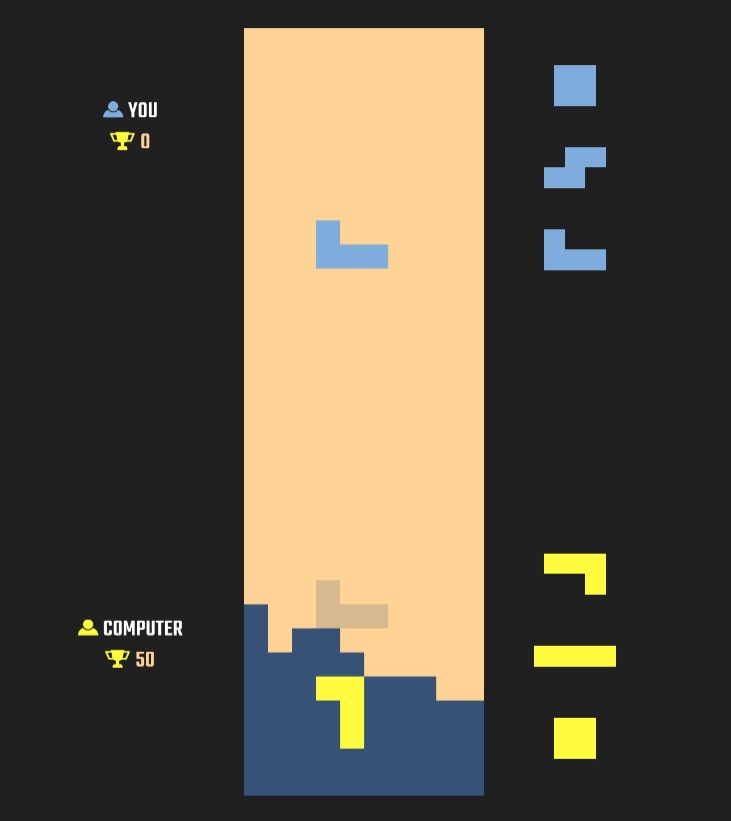
Oh, and if you wanted a two-player competitive version, you can check out Tetrio.io. It allows you to play against the computer in single player or share your link with a friend to compete against them.

The goal is to push your opponent past their border (yours to the north, theirs to the south) by completing lines and lowering their playfield.

This is honestly a great way to practice for Uraomotetris. Once you’ve gotten into the habit of playing your side while defending against your opponent’s, it helps you visualize playing both sides simultaneously on your own.
There’s a wonderful sense of balance in Uraomotetris, because unlike most versions of Tetris, where you’re aiming for the bottom and eliminating lines and pieces, in this game, you really want to keep it as close to the center line as possible.

Your very goal is not to do what you do in every other version of Tetris.

It’s very zen, in a way, and quite lovely. (But also weirdly nerve-wracking at the same time.)


Have you tried any Tetris variants, fellow puzzler? Let me know in the comments section below! I’d love to hear from you.

PuzzleNation First Look: The Case of the Golden Idol

Case of Golden Idol steam logo 616 x 353

Video games have taken puzzles in some fascinating directions. From Limbo and Little Nightmares to Portal and The Talos Principle, puzzling constantly adapts and evolves across many platforms.

One of the most intriguing developments is how modern video games combine logic/deduction puzzles with visual mystery stories for the player to unravel.

After seeing our writeup of Return of the Obra Dinn, the team at Color Gray Games reached out to us with a puzzly investigation demo to try out, intriguingly named The Case of the Golden Idol.

Naturally, we couldn’t resist an offer like that. To put the game through its paces, we recruited friend of the blog Laura — puzzler, gamer, cat (and Cats) enthusiast, and former Tabletop Tournament Champion — to accept the case and give us a comprehensive review.

So, without further ado, let’s turn things over to Laura for her thoughts on the demo of The Case of the Golden Idol.


lady

In a cozy 18th-century inn, a crew of people whiles away the evening playing cards round a table. Upstairs, a man lies murdered in his room. Who was he? Why was he killed? Whodunit? And how?

These are the questions you’ll answer in the Steam demo for The Case of the Golden Idol, a pixel art detective game from two-person Latvian studio Color Gray Games. Cast in the role of crime-solver, your job is to investigate several cases and put the pieces together, a phrase that Color Gray Games takes quite literally.

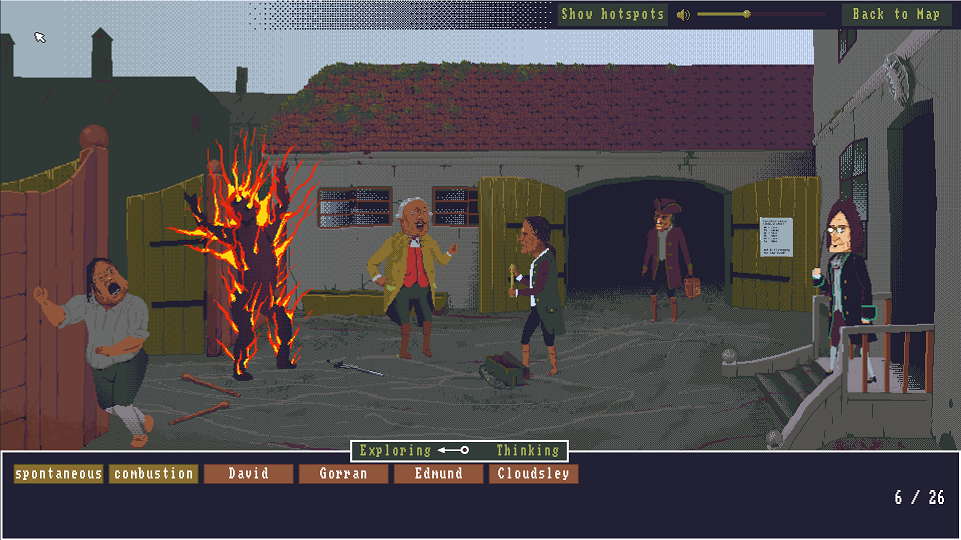
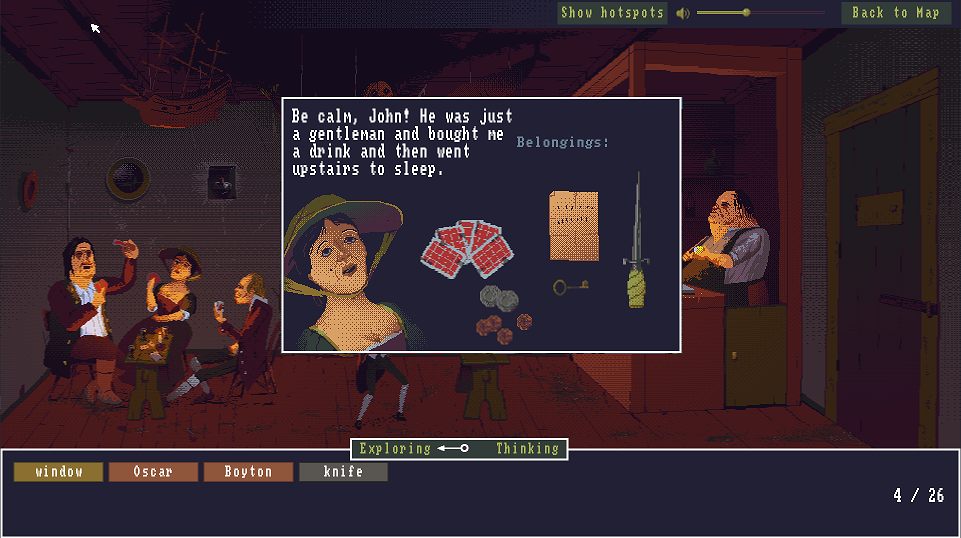
The investigation element of Golden Idol — its “exploring” tab — will feel familiar to those who have played point-and-click adventures before. As you scrutinize each frame, you can click on points of interest to learn more information. As you do so, you’ll gather clues in the form of words — names, locations, objects, etc. — that populate the bottom of your screen, ready to be used in the game’s “thinking” tab.

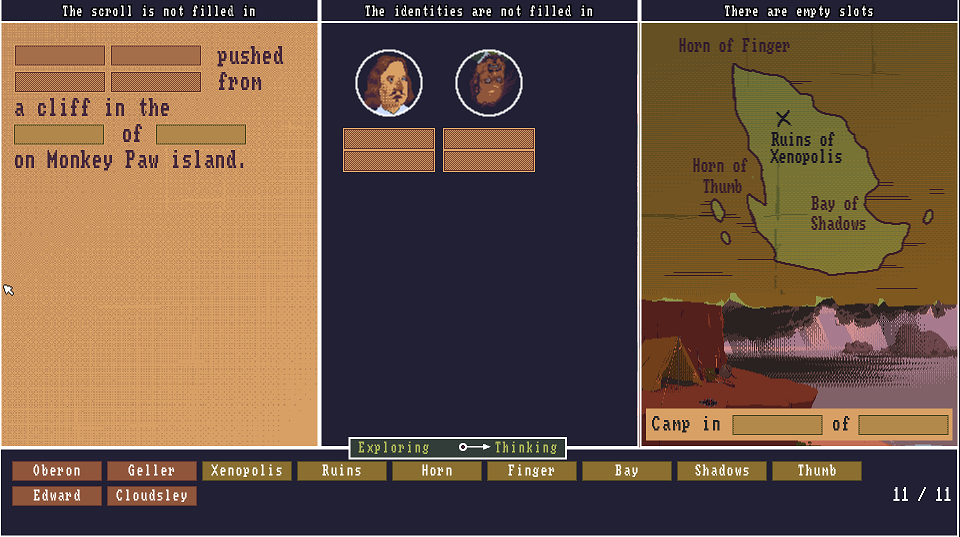
There, you’ll drag-and-drop your collected words to match names with faces and reconstruct the events of the case in a fill-in-the-blank format.

cliffside_solver

Golden Idol’s demo offers four cases in total. The first is simple enough to be solved in a matter of minutes, and the second is only marginally more difficult. Taken together, they feel more like a tutorial than anything else, giving you a grasp of the mechanics without taxing your mind very heavily.

Thankfully, the latter two cases beef up the complexity. They offer deeper mysteries that the player can sink their teeth into, and it’s here where the demo truly shines. At its best, The Case of the Golden Idol’s demo plays like an engaging, interactive logic problem. These cases serve you a platter of multiple suspects, all with motives and means, as well as red herrings to potentially lead you astray.

There’s little room for getting truly stuck, though. In each environment, the “hotspots” for clues are easy to spot. The art, while not as eye-poppingly pretty as other pixel games, is never muddy or unclear, and in each case, I found the clues with no frustration. Still, the demo offers a toggle that shows all hotspots with a bright visual cue, a great option for visually impaired players, or someone who just needs a bit of help finding that last missing word.

Golden Idol’s drag-and-drop nature does leave itself vulnerable to brute-forcing, however, especially as your solving nears its end. Each area of its “thinking” tab, once entirely filled in, will tell you if you’re right or wrong, and there’s no punishment for an incorrect guess. So if you’ve correctly identified your key players, for example, but don’t know the culprit, you could easily test your suspects one by one until you found the right answer. None of these cases has so many moving pieces that this is unreasonable.

outside

But doing this would sap the fun out of it, and if logic problems and murder mysteries are your cup of tea, Golden Idol is just that: a fun flex of your deductive skills, played solo or with a partner at your side to discuss theories with. Crack all of the demo’s cases and you’ll even see the threads (and the titular golden idol) connecting them.

How satisfying that overarching story will be, and how far Color Gray Games can go with their established mechanics, is yet to be determined. As a proof of concept, though, The Case of the Golden Idol’s demo certainly does enough to intrigue.

Ratings for The Case of the Golden Idol demo:

  • Enjoyability: 4/5Golden Idol isn’t for everyone, but if this is your niche, you’ll likely enjoy it. Its replayability is low, but such is the nature of mystery games.
  • How well puzzles are incorporated: 5/5 — The game is the puzzle; the puzzle is the game.
  • Graphics: 3.5/5 — Indie games have flooded with pixel art in recent years, and competition is fierce. I’ve seen art, particularly character art, that wowed more, but Golden Idol‘s lighting and colors still create a distinct atmosphere.
  • Gameplay: 4/5Golden Idol’s demo is mechanically accessible and easy to learn, and the loop of gathering & piecing together clues is satisfying, particularly in the more complex cases.

dailypopwsicon

Well, summer’s over, but we still have deals galore for you to check out. You can find them on the Home Screen for Daily POP Crosswords and Daily POP Word Search! Check them out!

Thanks for visiting PuzzleNation Blog today! Be sure to sign up for our newsletter to stay up-to-date on everything PuzzleNation!