A Gateway Puzzle for Crossword Solving?

Where do you get started with crossword solving?

I see that question a lot. And the advice offered to new solvers varies. Sometimes they’re pointed particular crossword outlets promising a more newbie-friendly solve. You certainly don’t want someone tackling a crossword too difficult for their skill level and getting discouraged.

Often, they’re told to just plug away at it, since the only way to get better at crosswords… is by solving crosswords.

None of this advice is wrong. I’m sure people follow these suggestions and slowly start to enjoy this puzzly world that many of us have embraced for decades.
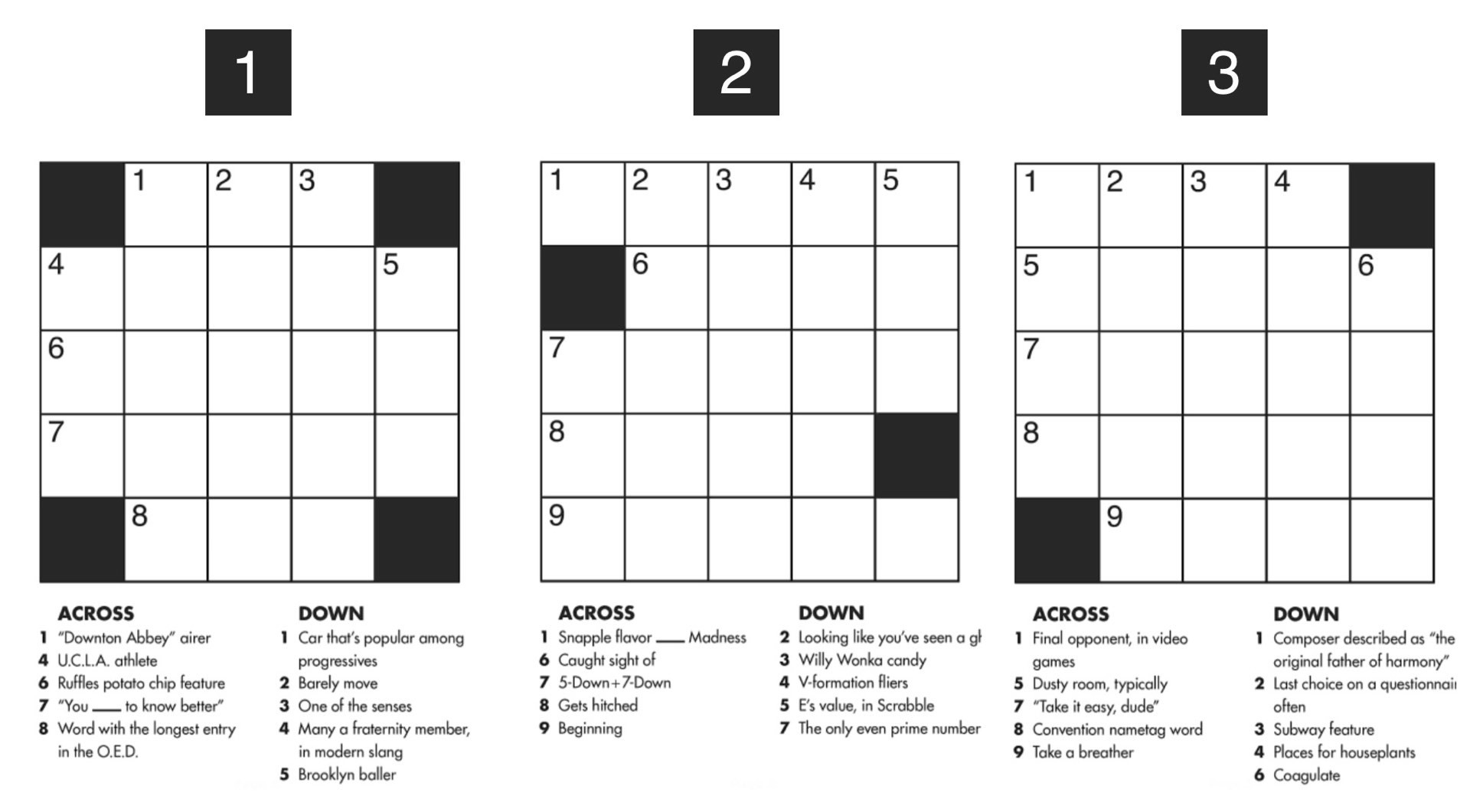
You might think that Mini Crosswords, like those featured in the New York Times puzzle app, are the way to go. But while the grid is smaller, that also means new solvers have fewer chances to find crossings and work on their solving.

Imagine a regular crossword. A Mini is essentially one corner of the grid. If you started a crossword in one corner, and didn’t get any entries, you can move to another spot. But if you’re stumped on a Mini, where do you go?

I also think the running timer feature — although obviously not a necessity for solvers — can add to a new solver’s anxiety. If you’re stumped, and you’re just sitting there, watching the timer tick away, that’s going to eat at your confidence a bit.
crisscross

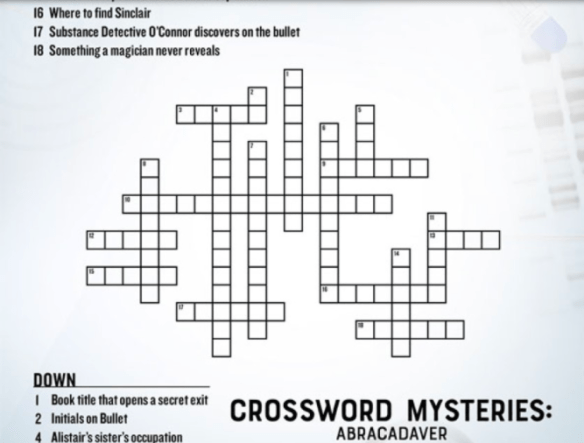
You might think that crisscross-style puzzles (like the one above) would be less intimidating, since they don’t have the same dense grid surrounded by clues that crosswords have, but I’ve found that folks don’t warm to those quickly. No matter how well-constructed the crisscross, it tends to remind people of activity books for kids, and no one wants to feel patronized when trying out a new hobby or giving it another go.

Not only that, but they are missing one of the most helpful components to crossword solving: all the overlapping letters! In a crossword, you have two chances at every single box because of the across and down clues. But in a crisscross, you usually only have one or two points of overlap, so if the clue isn’t helpful or intuitive, you’re just stuck. That doesn’t build solver confidence.

I do have a suggestion, though.

I’ve tried this with several friends and acquaintances who had sworn off crosswords entirely, and not only introduced them to a new puzzle they didn’t know, but opened their eyes to the possibility of more puzzle solving in the future.

My solution was: Fill-Ins.
fillin sample
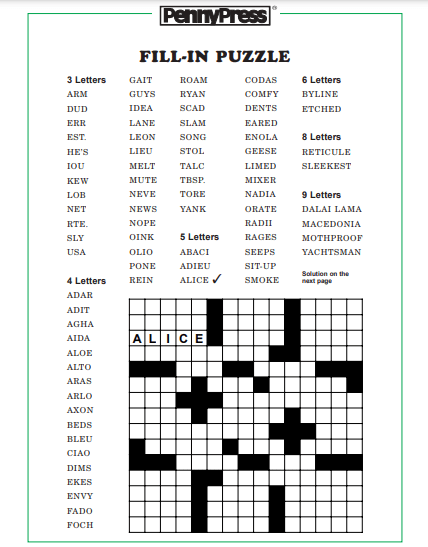
A sample puzzle from our friends at Penny Dell Puzzles.
Check out their fill-in library here!

For the uninitiated, fill-ins utilize the same general grid style as a crossword. But instead of answering numbered clues to place the words in the grid, you’re already given the answer words, organized by word length. Your task is to place them all into the grid, using other words and letters in the grid to guide you.

It’s closer to Sudoku-style solving than crosswords, because you’re eliminating options in a logical manner, rather than figuring out clues to place the words.

I believe solving fill-ins helps remove the intimidation factor of crosswords in three ways:

1. No trivia or outside knowledge is required, which removes a huge burden from a solver who has probably felt overwhelmed by crossword cluing in the past.

2. It makes empty crossword grids less intimidating. Do you ever have those moments where you read three or four crossword clues in a row and you don’t immediately conjure up answers? And then you look at all those empty spaces in the grid and feel dumb? It happens. But fill-ins often have a set word to get you started, and once you start placing letters, recognizing useful crossings, and filling the grid, all that goes away.

3. Fill-ins help strengthen another skill valuable in crossword solving: letter-blank recognition. If you see B _ U _ , a regular solver instantly starts listing off possibilities: BOUT, BLUE, BLUR, BAUD, etc. But a new solver — who might not have that reflexive knowledge of possible words — can read through the list of four-letter words and see what fits, helping to build that mental lexicon for future solving.
120718_crossword_L

After solving a handful of fill-ins, word placement goes quicker, confidence in filling in those letter blanks increases, and empty grids become fields of potential puzzle fun, not stark empty spaces.

I’ve suggested fill-ins to several crossword-shy or puzzle-shy friends, and usually, a few weeks later or so, they start asking what other puzzles are out there, or where a good place to start with crosswords might be. And that’s a win.

Happy puzzling, everyone!

New Rubik’s Speed-Solving Record: Blink and You’ll Miss It!

Clever, quick-fingered solvers are constantly pushing the boundaries of what can be accomplished with a Rubik’s Cube.

I’ve seen the world’s most complex Rubik’s-style cube being solved, a building turned into a solvable Rubik’s Cube, and a Rubik’s Cube solved one move at a time by strangers across the globe.

I’ve even seen a Rubik’s Cube solved during a skydive.

But, amidst all those amazing achievements, there has been something lurking in the background. Over the years, there has been an escalating cold war in the world of Rubik’s Cubes.

The two sides? Human and machine.

The battlefield? Speed-solving.

Human speed-solvers often count their records in seconds, not minutes. The current record for a 3×3 cube solve is 3.05 seconds!

But speed-solving devices are often so fast that they end up ripping the cube to pieces instead of completing the solve. So puzzly designers must carefully walk a tightrope between speed and power in order to challenge speed records for mechanical solvers.

The record for an automated solve is an astonishing 0.305 seconds – ten times faster than the fastest human solve! — set by Mitsubishi Electric engineers in Japan in May 2024.

Or it was, until a few days ago.

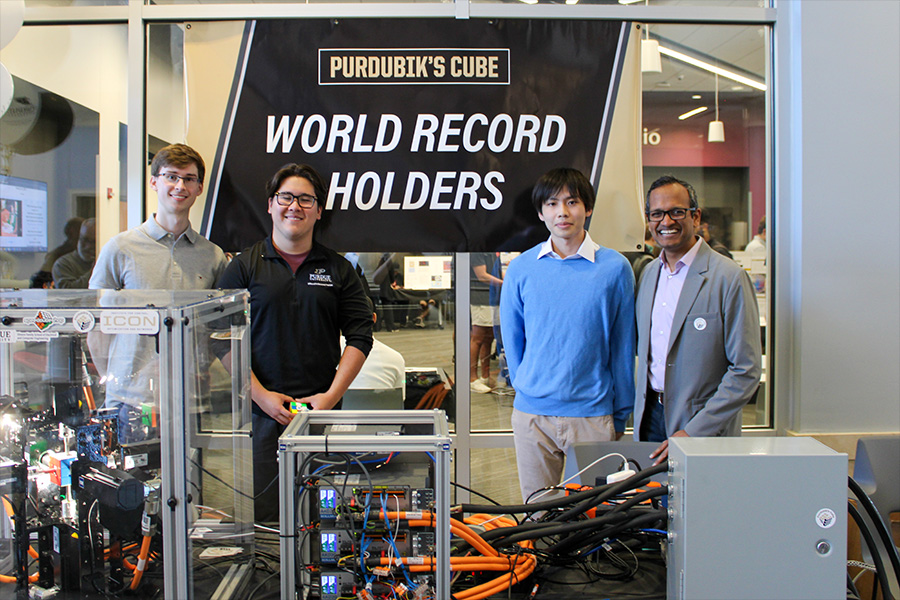
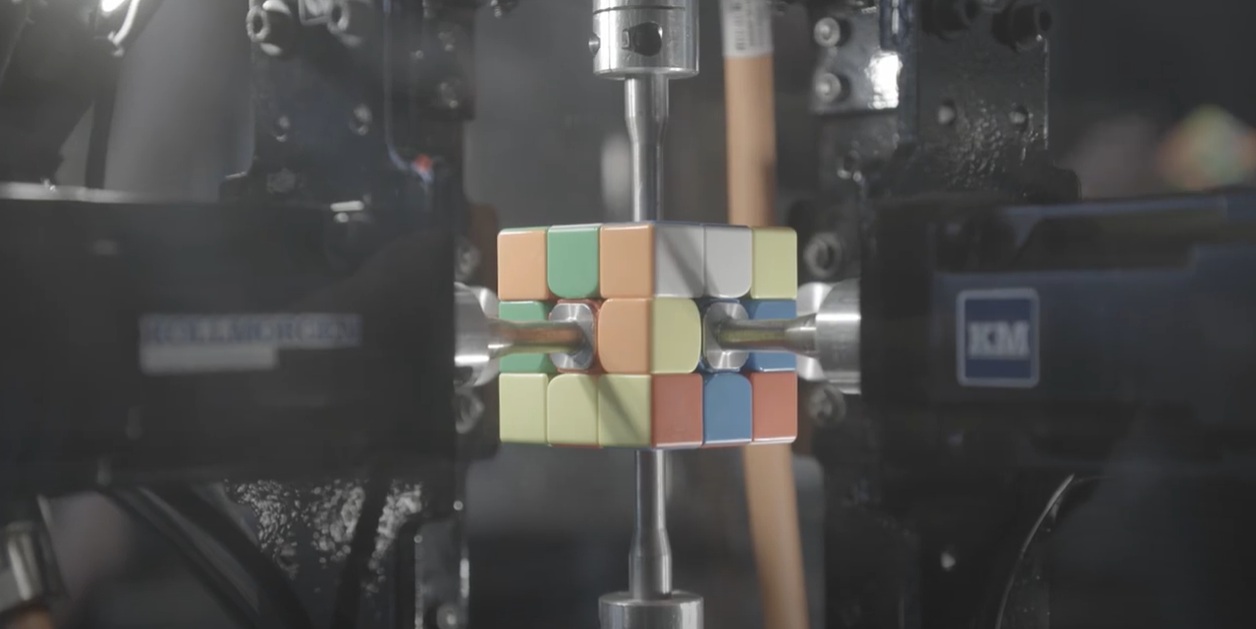
The new Guinness World Record for “Fastest robot to solve a puzzle cube” belongs to Purdubik’s Cube, the robot created by Junpei Ota, Aden Hurd, Matthew Patrohay, and Alex Berta, a team of students from Purdue University’s Elmore Family School of Electrical and Computer Engineering.

The new record? 0.103 seconds.

It’s hard to fathom how quick that is. Thankfully, one of Purdubik’s Cube’s creators has an apt analogy:

“We solve in 103 milliseconds,” Patrohay said. “A human blink takes about 200 to 300 milliseconds. So, before you even realize it’s moving, we’ve solved it.”

Utilizing a combination of color recognition and finely-tuned industrial-grade motion-control hardware — guided by algorithms written by the students themselves — Purdubik’s Cube carefully accelerates and decelerates its movements faster than the eye can see.

And despite the fact that a team of four college students smashed a record previously held by a billion-dollar corporation, they’re not done yet.

They aspire to solve a Rubik’s Cube with Purdubik’s Cube in less than a tenth of a second! I don’t know how they expect to shave a few milliseconds off their time to achieve their goal, but you know what? I fully believe they can do it. In less than a year, they set their goal of a new Guinness World Record and achieved it.

Who knows what they’ll achieve next?

[You can read the full story of their journey from the initial goal to their world record success on the Purdue Engineering website. I highly recommend it!]

The RPG and Board Game Community Reaches Out!

One of the best parts of being a puzzle and board game guy is the amazing community of fellow players, puzzlers, and game designers that surrounds you. Yes, puzzles and games are a business, obviously, but every week I see examples of creators and companies giving back, doing charitable acts, and participating in fundraisers for good causes.

Today, I’d like to highlight a few and hopefully bring more attention to these worthwhile endeavors.


Accessible Games: Global Accessibility Awareness Day

Accessible Games understands that every person is different, and that there are many people who don’t feel represented in modern roleplaying games. To that end, they created Survival of the Able, an RPG with disabled protagonists set in medieval Europe during a zombie plague. It shows the challenges people face every day, but also shows that those people are capable of accomplishing extraordinary things. (They even published a special edition of the game that is designed to be more accessible for dyslexic players.)

Between Survival of the Able, their zine Accessible Gaming Quarterly, and their guide to more inclusive tabletop creation — Accessible Guide to RPG Layout — they’re doing a lot of advance the cause of gaming for everybody.

In honor of Global Accessibility Awareness Day (which is Thursday May 15th), they’re offering a 30% discount on their entire accessibility-focused library. You can get your discounted copies between May 15th and May 22nd at this link. Please consider participating.


Kids in the Attic: Hershey Family Recovery Bundle

Kids in the Attic is a roleplaying game company that likes to highlight the weird and whimsical in their fantasy, space, and horror games, but this week, they’re turning their attention to bringing light and kindness to a horrible situation.

They’re currently organizing the Hershey Family Recovery Bundle to support the family of Rick Hershey, a prolific artist in the tabletop roleplaying game community. All of his children were involved in a devastating car accident caused by another driver. Thankfully, they all survived, but the road ahead will be long, and everyone knows the burden that medical bills can impose.

You can click this link to see everything included in the Hershey Family Recovery Bundle and to learn more about Rick. Please consider donating to help Rick’s family get back on their feet.


Tycoon Games: The Box of Giving

Tycoon Games has been an industry leader in charitable work and outreach for years, donating to Toys for Tots, the Boys and Girls Club, and many other worthy organizations.

Their latest endeavor is The Box of Giving, a collection of games intended to help underserved communities, schools, libraries, gaming conventions, and local non-profits experience the joy and camaraderie that comes with playing games. For the cost of shipping alone, each organization receives $500 worth of games!

Please click this link to apply for the Box of Giving program and share the link for any groups that you think would benefit from this wonderful endeavor.


Are there any charitable efforts in the board game or roleplaying world that you’d like to shout-out? Let us know in the comments below! We’d love to hear from you.

Happy gaming, everyone!

A Secret Egyptian Code Hiding in Plain Sight?

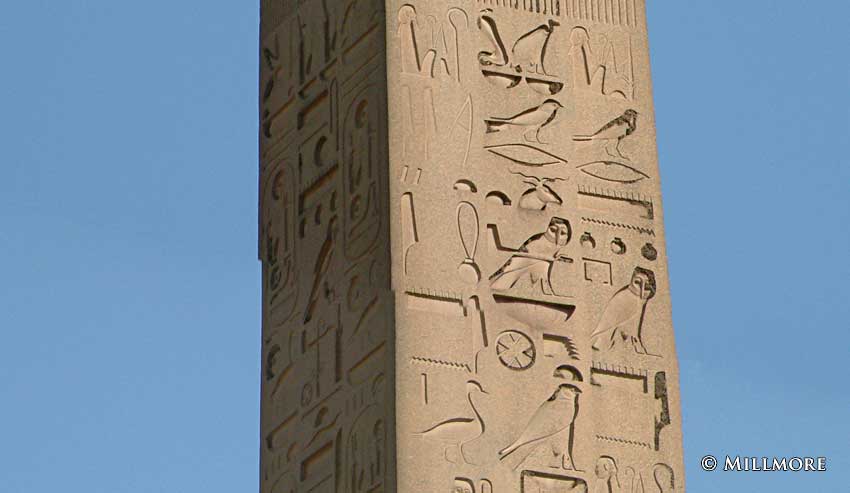
Thirty-three hundred years ago, an obelisk was carved in ancient Egypt. It stood at the entrance of the Luxor temple as part of a pair.

Almost two hundred years ago, the obelisk was given to France by Egypt’s ruler. It stands at the Place de la Concorde in Paris, thousands of miles from its sibling in Egypt.

Two centuries of students and tourists and philosophers and photographers and scholars gazing at the obelisk, reading the intricately carved hieroglyphs.

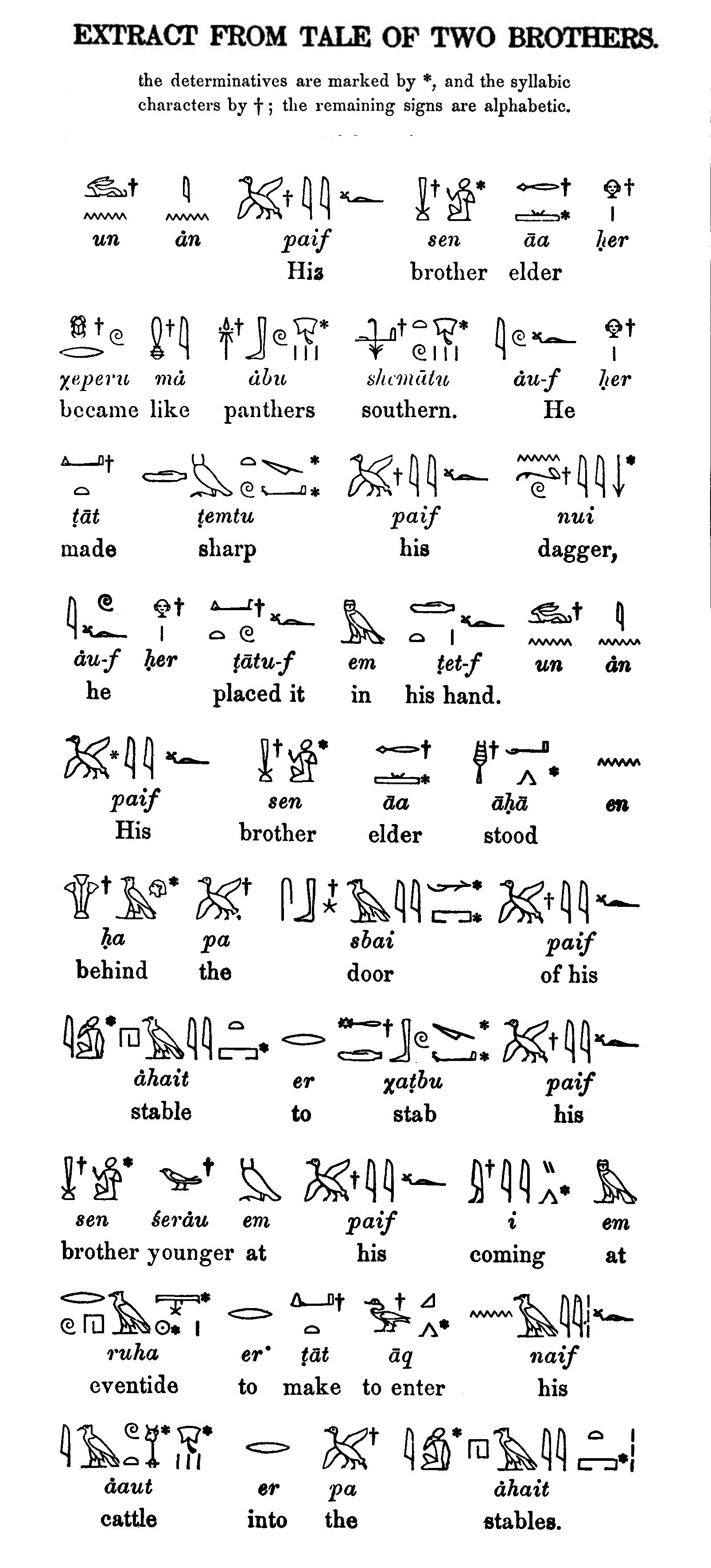
Hieroglyphs were traditionally written in columns reading downward. But there are also left and right directional markers, marking the beginning of a sentence, often indicated by which direction a human or animal figure is facing.

As you can see, the placement of different symbols allows them to combine with others, both vertically and horizontally, to create different words or concepts.

And whomever did the inscriptions on the obelisk used the multidirectionality of the language to conceal messages in plain sight.

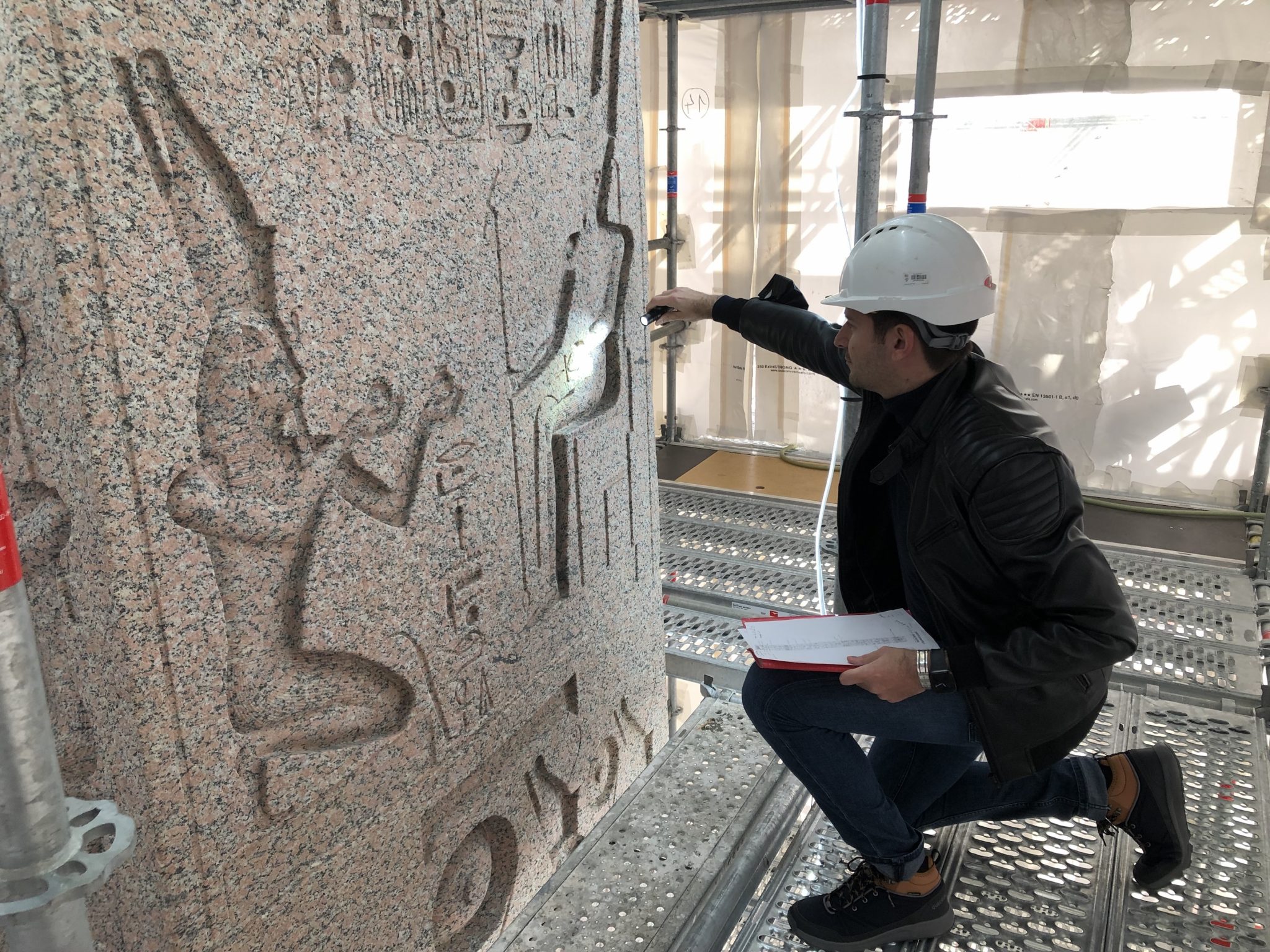
Even after centuries of study, it took a keen eye and some lucky conditions for Egyptologist Jean-Guillaume Olette-Pelletier to uncover the hidden messages.

You see, the obelisk was surrounded by scaffolding as part of its renovations, and this allowed Olette-Pelletier to get up close to the highest point of the obelisk and observe the inscriptions rarely seen by casual observers.

The hidden messages required him to read the hieroglyphs horizontally rather than vertically, and at a particular angle as well. This three-dimensional study of the inscriptions, known as crypto-hieroglyphs, allowed the creator to conceal messages that didn’t simply sing the praises of Pharaoh Ramses II, but actually point to his rulership as divine right, claiming his power came directly from the gods themselves.

It was propaganda, intended to reinforce the pharaoh’s status in the eyes of the elites of Egypt, cloaked in messages for the common people. (One of the messages, for instance, could only be seen by those arriving by boat, a privilege available only to the elite.)

For example, from an article in EuroWeekly News:

“People had not noticed that under [one of the drawings] of the god Amun, there is an offering table. This allows us to discover a sentence where no element is missing: an offering that the king gives to the god Amun,” Olette-Pelletier told BFMTV. Combinations of the newly identified inscriptions produce additional meanings in what’s called three-dimensional cryptography. In total, the Egyptologist identified seven encrypted messages across the obelisk’s various facades. He explained that the enigmatic text can only be understood by walking around the monument.

Imagine the creator of the obelisk, carving with specific angles and readers in mind, an iconic gift to the pharaoh… only for the code to be cracked thousands of miles away, thousands of years in the future, by a different kind of elite.

The puzzly kind.

That’s amazing.

Optical Illusions Made of Wood!

Learning about the science behind optical illusions has been one of my favorite parts of this job. More and more, scientists are figuring out WHY optical illusions work on us, utilizing combinations of color, shadow, perspective, and how we process information to create impossible images, illusions of movement, and visual wonders to challenge how we interpret the world.

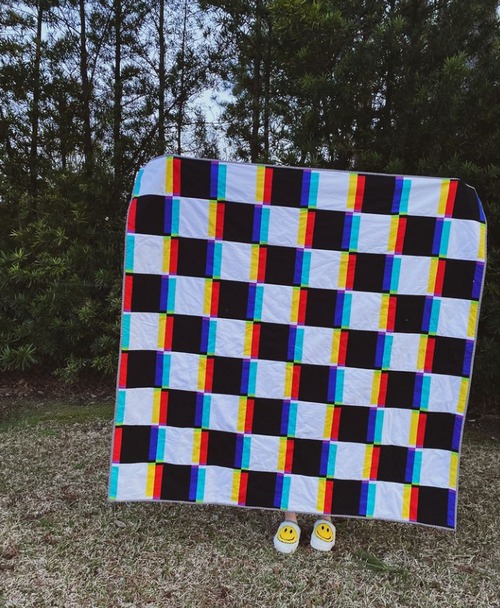
And I love seeing how people have responded by pushing the boundaries of what we can do with optical illusions. Earlier this year, I wrote about the glitch quilt, a fascinating and eye-wobbling work of brain-melting color play and meticulous execution.

In a world increasingly reliant on computer assistance and push-button AI-fueled shortcuts, there’s something both comforting and immensely charming about glitch quilts being handmade.

So it should come as no surprise to you, fellow puzzler, that I was overjoyed to discover another example of handmade optical illusion crafting… this time, made of wood.

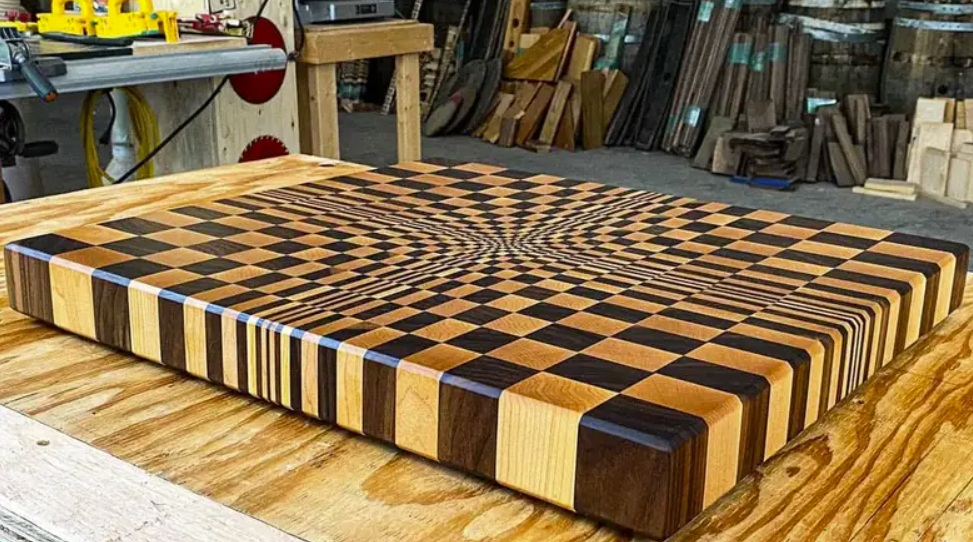
This is the end grain optical illusion cutting board. It appears to bend and swirl and warp as you stare at it, despite being made of straight lines and alternating colors.

Although I discovered it through Obsessed Woodworking, this particular piece is the handiwork of Ryan Hawkins, who has a woodworking YouTube channel where he detailed the elaborate step-by-step process involved in creating this sturdy perspective-twisting delight:

Ryan, to his credit, pointed to another woodworking content creator who supplied the design plans for the cutting board: mtmwood.

mtmwood has numerous examples of handcrafted visual tricky, employing tessellations and tricks of perspective to fool the eye into following intricately laid patterns, and my favorite is easily one that they call the butterfly board:

Employing a similar technique to the optical illusion cutting board, but managing to shape four twisting patterns, is truly impressive and a testament to the hard work, skill, and technique required to bring these stunning pieces to life.

And, as you might expect, this sent me down a YouTube rabbit hole looking for other wooden optical illusions, and there are plenty to choose from.

This is a nicely executed attempt at showing dimension and depth to get us started.

Whereas this one walks us through all the stages of preparing to take a familiar optical illusion from a drawing to a three-dimension form:

I confess, I watched this next one three times in a row, trying to spot the seams:

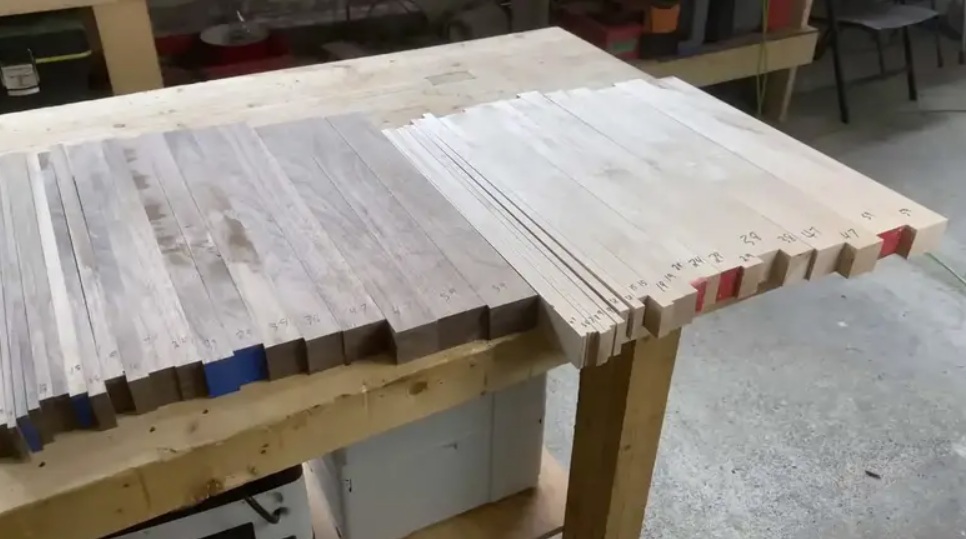
I could go on and on, but honestly, instead of closing out on the illusions, I’d like to end this celebration of creativity and artisanship with a simple photo showing the preparation and painstaking work it takes to bring these pieces to life.

This is the optical illusion cutting board in its embryonic stage, a lineup of different pieces and thicknesses of wood. All marked and cut with precision, waiting for the next step in assembly. I stare at this picture, and consider every mark, every cut, every spin of the table saw’s blade as the creator runs piece after piece after piece through those whirling metal teeth, each of them perfect and crisp.

It’s a remarkable thing to ponder, and a joy to watch in both progress and in final realization. I’m glad I could share that with you today.

Happy puzzling, everyone!
A Puzzle Party for Reproductive Justice!

There’s a long history of activism and advocacy through puzzles. Women of LettersGrids for GoodQueer Qrosswords, These Puzzles Fund Abortion… these are just a few prominent examples of constructors and creators donating their time and puzzly efforts to benefit the world at large.

And the wonderful team at Frontera Fund are using puzzles to help raise awareness next Thursday, May 8th with their Puzzle Party event!

Cactus Valley Art in Harlingen, Texas, will be hosting the event.

There will be puzzles, community support, and discussions of the modern abortion access landscape and the challenges involved in ensuring that women and those assigned-female-at-birth have the support and resources they need.

This is a wonderful way to help get the word out. I hope that you’ll participate in the event, either by attending in person, by following through social media, or by donating to the cause!


I’d also like to take the opportunity to shout out These Puzzles Fund Abortion 5 . This year marks the fifth edition of the project, collecting 23 puzzles centered around social and reproductive justice themes, all for a minimum donation of $25.

If you donate $50 or more, you will also receive the puzzle packs for the previous four years of TPFA.

Whether you support Frontera Fund or the five important charities involved in These Puzzles Fund Abortion, I thank you for your time, your donations, and your participation in helping protect and provide healthcare for others.

Together, puzzlers can change the world.