Women of Letters (and Squares and Boxes and Clues and…)

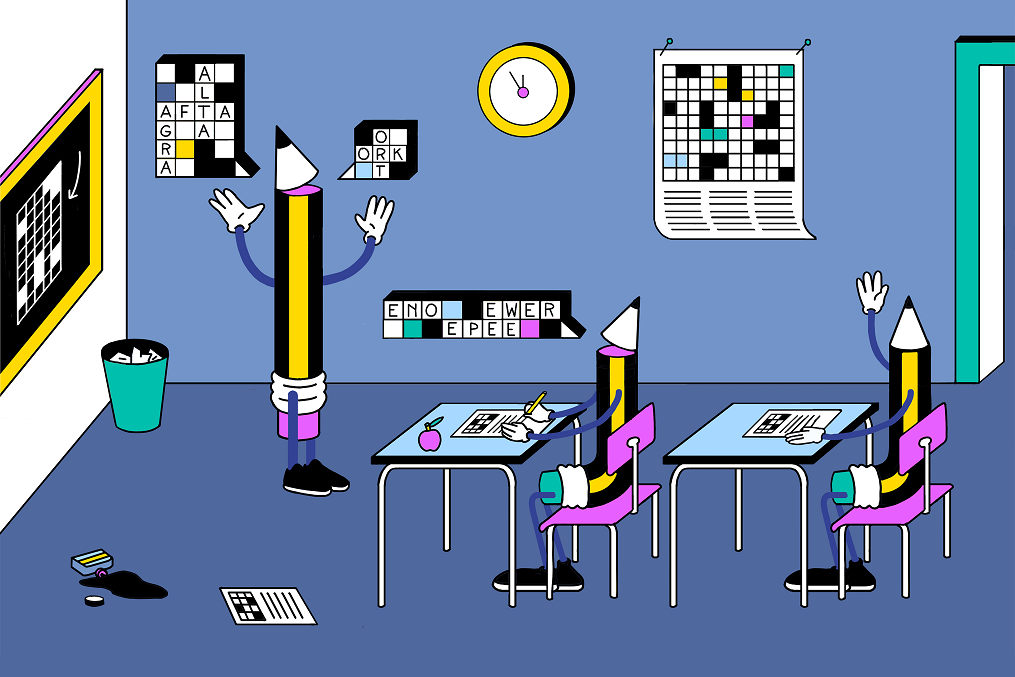
Puzzles bring joy to so many of us. They’re an escape, a challenge, a satisfying little test of our wits, our dedication, our creativity, and our flexibility of thought.

In uncertain times, in times of trouble, people often turn to puzzles. Puzzles were a refuge for many during lockdown when COVID hung over our heads. And now, when so much seems uncertain, if not downright unstable, people will no doubt turn to puzzles again.

That’s not to say that puzzle solving is a mere flight of fancy, a desperate bit of escapism, a Hail Mary avoidance of difficult circumstances, hard questions, and treacherous times to come. Quite the opposite, in fact.

If you turn to puzzles now, you’ll see a road map that proves things can get better.
Because, like it or not, misogyny once dominated the world of puzzles. It was baked into crosswords from the very beginning.

Yes, Arthur Wynne created the template for crosswords. Simon & Schuster are credited with publishing the first crossword puzzle book, as well as all the bestselling puzzle books that followed, serving as the foundation that helped build their brand.

But it was women who made crosswords into something more.

Women like Richard Simon’s aunt Wixie. She insisted Simon look into publishing a limited release crossword book. (UPDATE: I originally wrote that none of the stories mentioned her name, but I later found some that included her nickname, Wixie. I later discovered her actual name is Hedwig Simon.)

Women like Margaret Farrar. While serving as “an unofficial editor of the crossword-puzzle section,” she prevented errors and helped establish some of the baselines that still stand in crosswords today.

Women like Ruth Hale. Ruth was the founding president of the Amateur Cross Word Puzzle League of America, an organization that set crossword standards like limiting black squares and symmetrical grids, building off of Farrar’s work.

Women like Nancy Schuster. Schuster (no relation to the aforementioned publisher) not only ran Dell Crosswords but was the first winner of the American Crossword Puzzle Tournament.

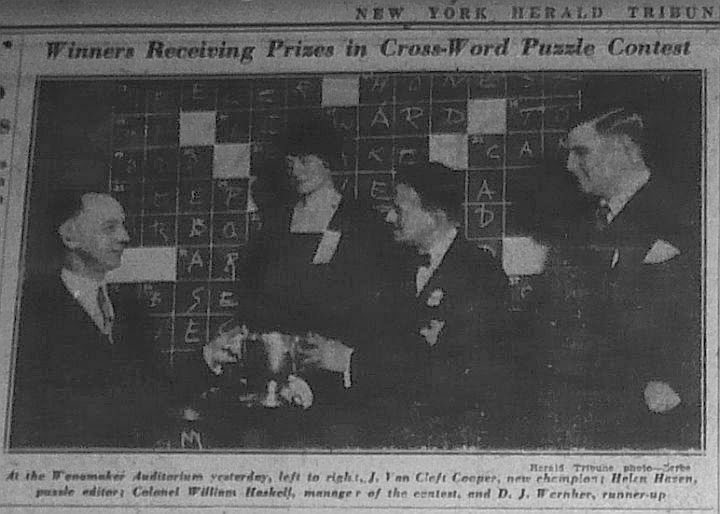
Women like Helen Haven. In the 1920s, Haven was the organizer of the first competitive crossword-solving contest and served as the puzzle editor for The New York Herald-Tribune.
As pointed out by Anna Shechtman in her book The Riddles of the Sphinx: Inheriting the Feminist History of the Crossword Puzzle, between 1913 and the 1960s, most crosswords were created by women.

Puzzles were literally women’s work! With all the connotations that phrase invites.

And crosswords were derided as a frivolous pastime because of it. Not only because women made crosswords, but because crosswords were predominantly solved by women.

The New York Times called the crossword “a primitive form of mental exercise” and female solvers were blamed for neglecting their families and wifely duties because of their “utterly futile finding of words the letters of which will fit into a prearranged pattern, more or less complex.”

Funny how their opinions changed just in time to profit on crosswords in the 1940s.

Much like the Beatles — who were dismissed as nothing more than a glorified boy band when thousands of women cheered at their shows, only for them to be recognized as a once-in-a-generation group of talents when men started paying attention — crosswords became “respectable” only when men took interest and took over.

The percentage of female constructors published in The New York Times went down during the Will Shortz era, as compared to the Will Weng and Eugene Maleska eras.

And like it or not, but “the average solver” concept — a problem I discussed years ago — is still using a white male yardstick for comparisons, to the detrimental of solving and constructing.
In a wonderful blog post on the subject of women in puzzles, the author of the piece opens with the line “I’ve always associated crossword puzzles with men.”

And I realized how lucky I was to NOT have that association. In fact, I don’t think I would be a puzzly guy without the women in my life.

My mother (the first female store manager in A&P history) still solves crosswords and jigsaw puzzles to this day, and encouraged my interest in puzzles in the first place. My oldest sister (a teacher) introduced me to wordplay. My older sister spent hours playing puzzle video games like Dr. Mario with me. My younger sister is not just a master jigsaw puzzle solver, but a fiend at trivia nights and escape rooms, forever challenging me to match her flow.

I was trained in crossword puzzle editing and construction by Penny Press’s crossword guru Eileen Saunders, and still lean on her creativity and wisdom every day (and marvel at her blistering speed and efficiency).

I was shepherded through the world of variety puzzles by Los Angeles Times crossword editor and puzzle badass Patti Varol. (Though it was probably more like dragging my deadweight body through molasses than “shepherding” if I’m being honest.)

And that’s not counting the undeniable and indispensable influence of Amy Roth (a shining light at Penny Press), Chris Begley, and so many other female voices that make Penny Press one of the best outlets for puzzles in the world.

I love puzzles because of those women. I have made a career in puzzles because of those women. I am better at puzzles because of those women.

The puzzle world is better because of women. It will continue to advance and innovate and thrive because of women.

How do I know this? Because women are doing incredible things in puzzles RIGHT NOW.
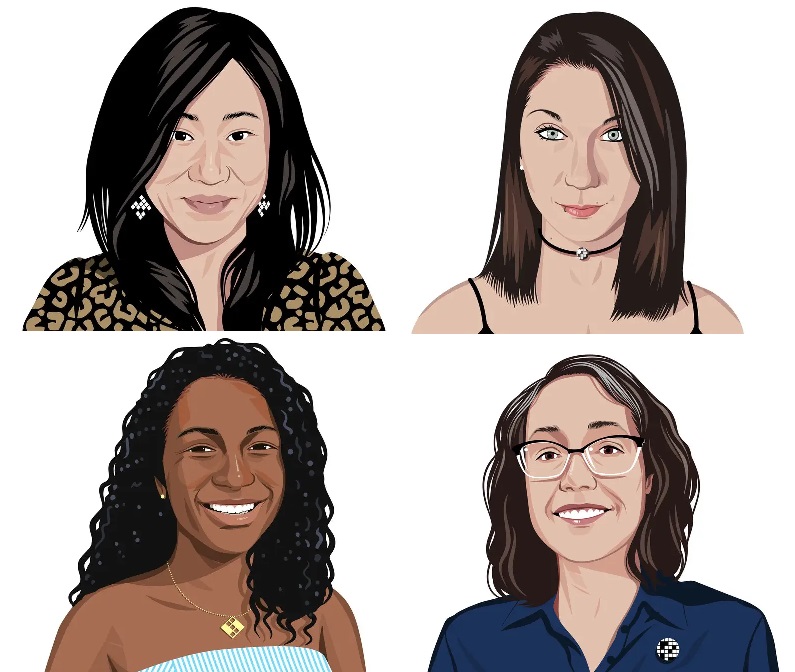
A small sampling of the women making puzzles better. Wyna Liu, Amanda Rafkin, Soleil Saint-Cyr, Tracy Bennett. Illustrations by Ben Kirchner.

Look at The New York Times. Tracy Bennett, Wyna Liu, and Christina Iverson are delivering great daily puzzles like Connections, Strands, and Mini Crosswords not just consistently, but brilliantly.

The aforementioned Patti Varol is absolutely crushing it at The Los Angeles Times crossword. With Katie Hale and Angela Kinsella Olsen on Patti’s team, every month since mid-April 2022 has had a minimum of 50% women constructors and often exceeds that, all while delivering topnotch puzzles.

The New Yorker, USA Today, The Slate Crossword? Liz Maynes-Aminzade, Amanda Rafkin, Quiara Vasquez. Brooke Husic runs PuzzMo (where Rachel Fabi constructed my favorite puzzle of the year!) and Amy Reynaldo co-edits Crosswords With Friends.

Rebecca Goldstein just won the Orca for constructor of the year. Smarter people than me have called Stella Zawistowski a crossword boss in every sense of the word. Ada Nicolle won the 2024 Lollapuzzoola crossword tournament.

The impact of projects like Women of Letters and The Inkubator weren’t just the tip of the iceberg, they were the tip of the spear. A spear aimed directly at the heart of outdated notions of who makes crosswords and who solves them, dismantling the idea of some mythical “average solver” that has never truly represented the crossword audience.

As constructors, editors, and solvers, women in the past shaped puzzles as we know them. And women in the present are redefining puzzles. Not just in terms of representation (both as grid answers and creators behind the scenes), but in terms of acknowledgment, respect, and appreciation.

As for women of the future? I, for one, can’t wait to see what they have in store for us.

(And thank you to several of the women mentioned above for making this post far, far better than it started.)
Let’s Try Within-onyms!

The heart of this blog is celebrating puzzles and wordplay in as many forms as possible, so for today’s blog, here’s a puzzle for you to solve!

I call this puzzle “Within-onyms” and the concept is simple. I’ll give you a combination of letters and blanks. Each blank represents a missing letter. The given letters spell out not only a word, but your clue as well. Because when you fill those blanks with the missing letters, you’ll spell out a larger word that’s a synonym of the given word.

For example, I give you this Within-onym:

G I _ A N T _ _

The given letters spell GIANT, but if you add a G, I, and C, you spell the word GIGANTIC, a synonym of GIANT!

Ready to try it for yourself? Careful, they get tougher as we go!

WITHIN-ONYMS

L A _ _ S T

_ _ N O _ _ B L E

_ _ T _ _ O M B

H _ _ _ I E S

M A _ _ _ L _ _ E

S P _ _ _ _ E D

_ _ S E _ _ E

U _ _ _ G _ _ L Y

_ _ H E _ I _ _ R

_ _ _ T A _ I N _ T _

_ R _ _ _ _ _ _ A _ I _ N

B _ _ _ _ I _ G _ _ _ _ _ _

Happy puzzling!


How many did you get? Let me know in the comment section below!

A Punny Costume Mashup Challenge for Halloween!

Happy Halloween, puzzlers!

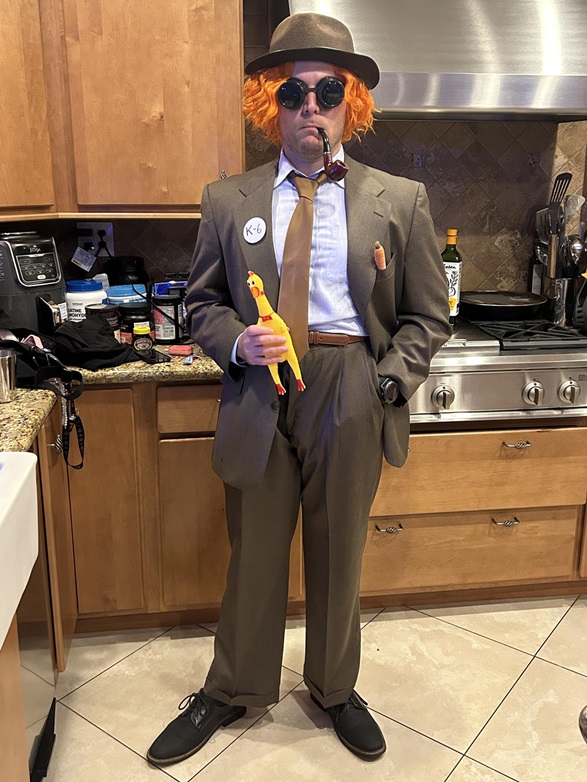
One of the best things about Halloween is guessing what people’s costumes are. Clever costumes can be great fun, and I’m a huge fan of costumes that combine humor and design because they really let your creativity shine through.

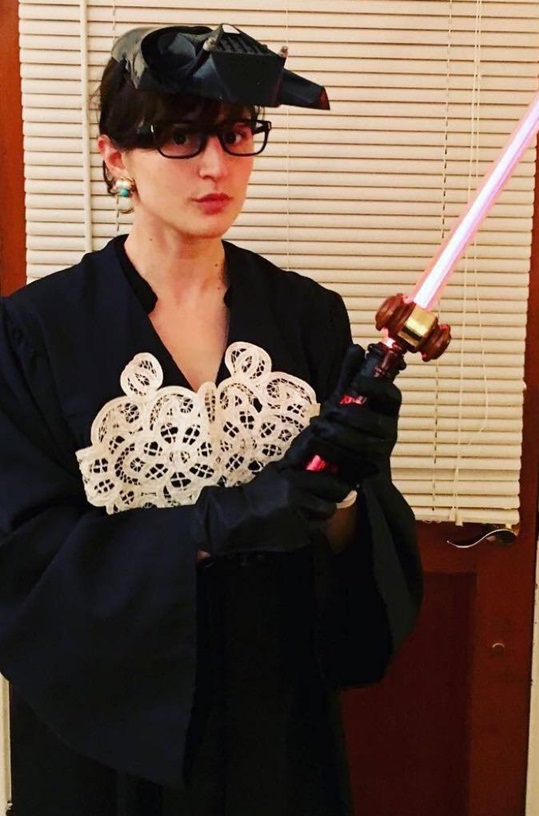
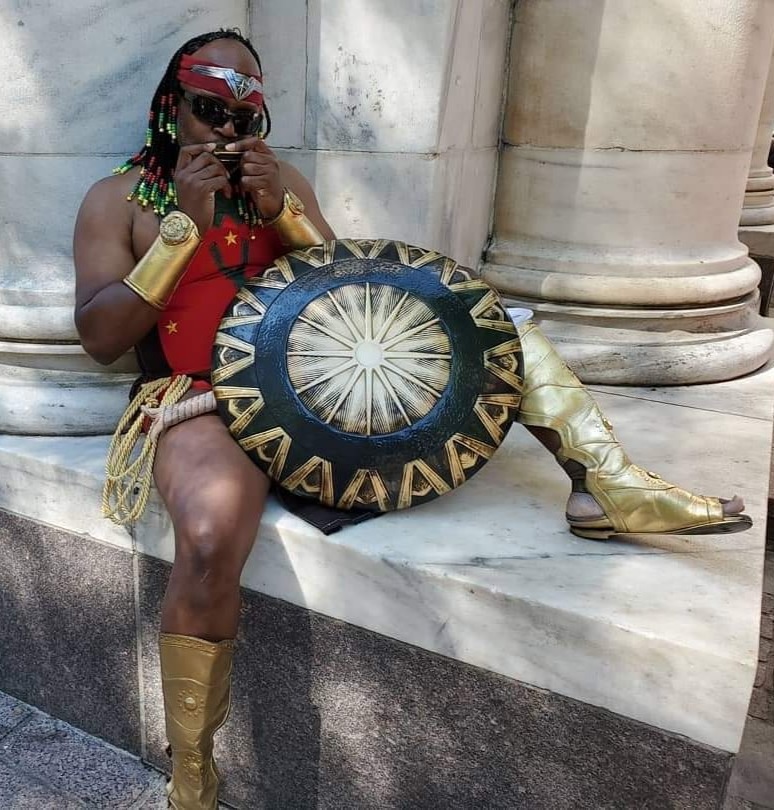
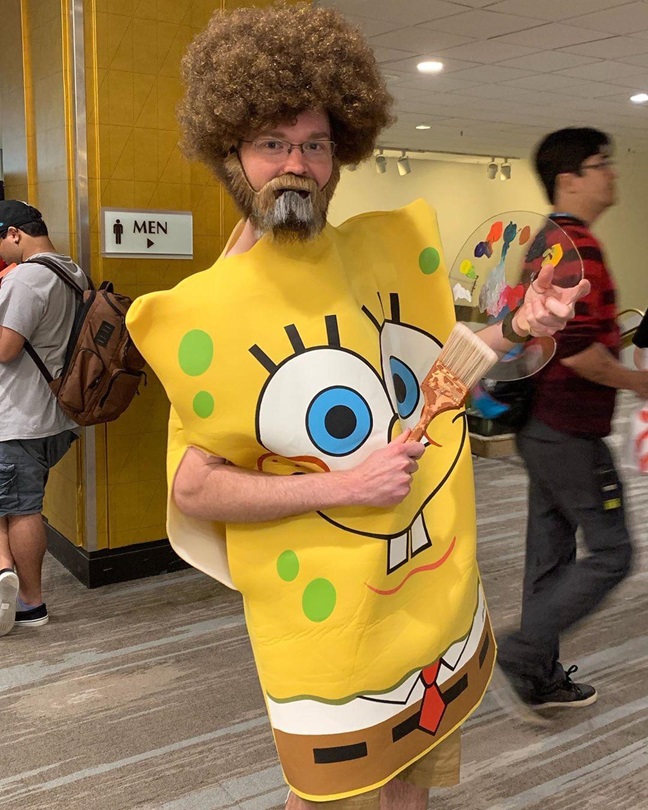
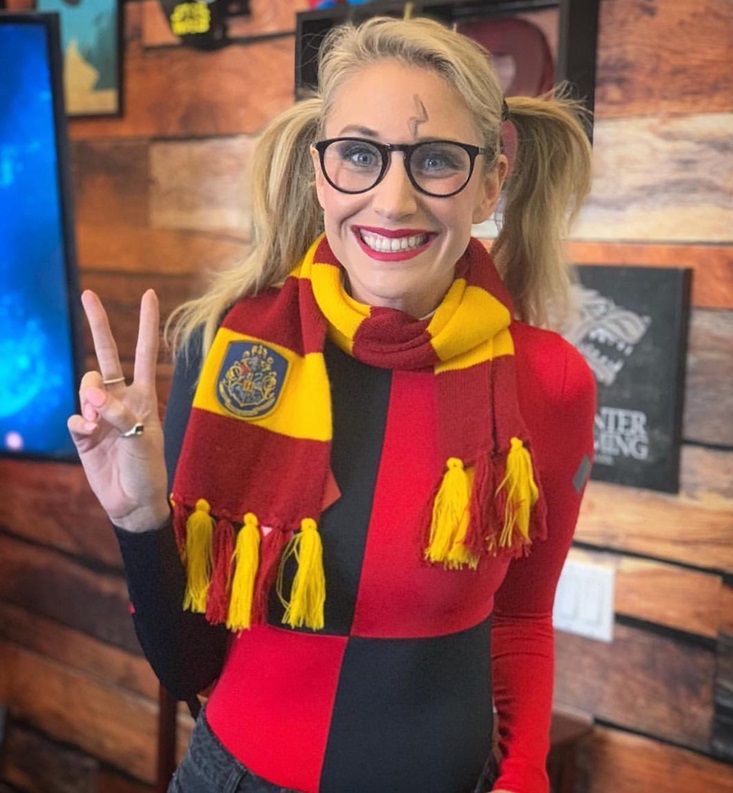
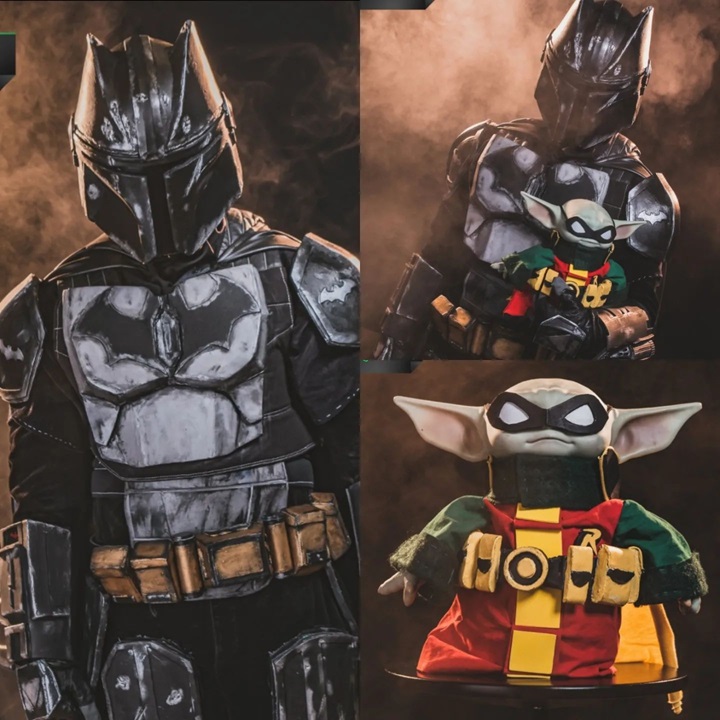
Mashup costumes offer ample opportunity to show off (and often require some fun wordplay to figure out), so it’s only appropriate that we celebrate Halloween in the puzzliest way possible — by looking at some punny mashup costumes!

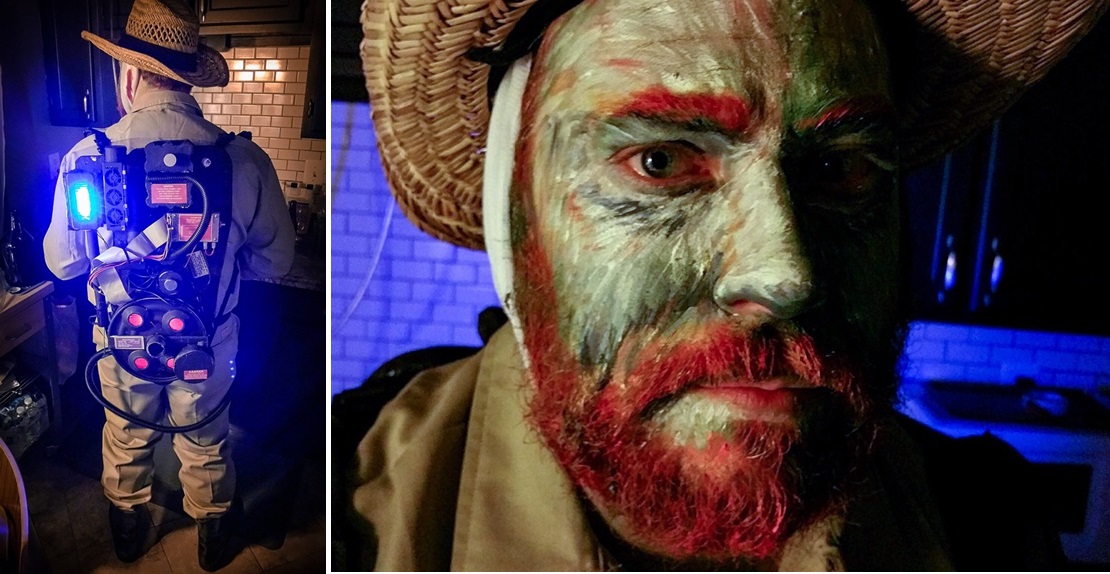
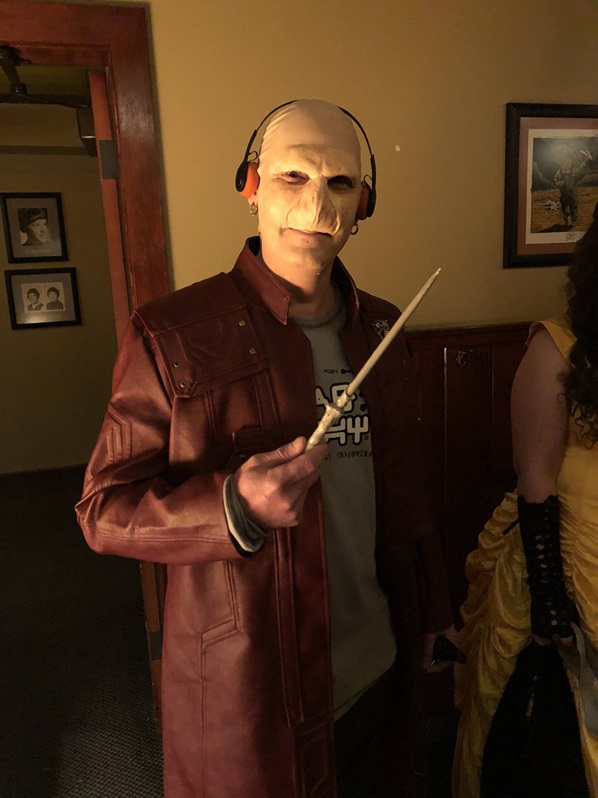
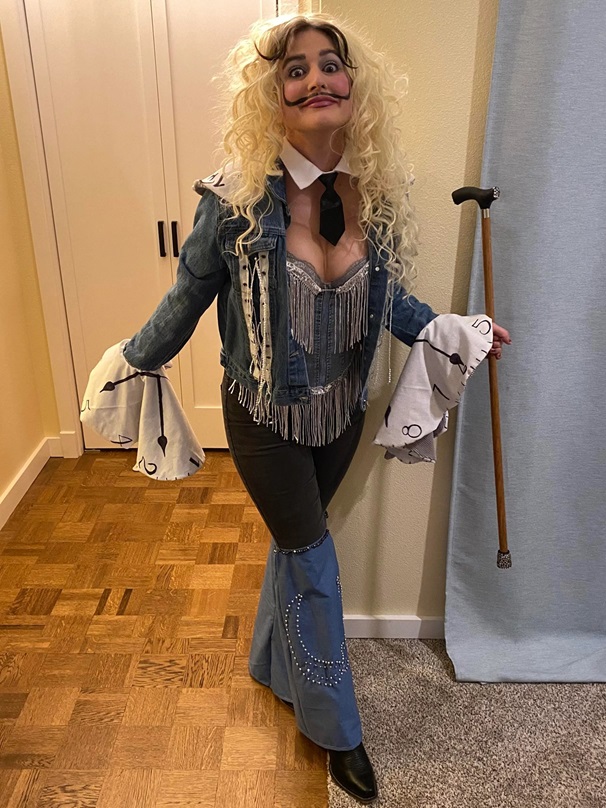
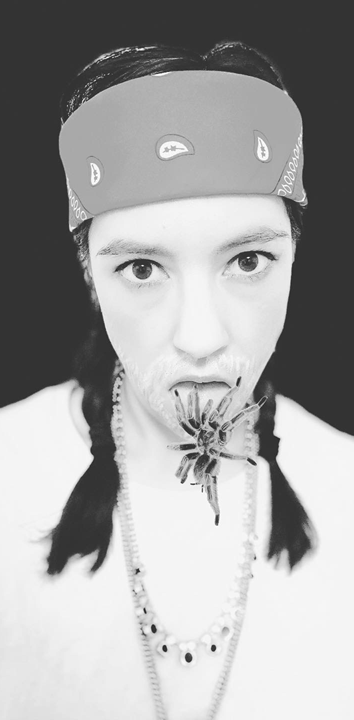
I’ve compiled ten costumes for you to figure out. Let’s see how many you can get!


#1

Image courtesy of TDR1411 on reddit.

#2

Image courtesy of EvolvedLurkermon on reddit.

#3

Image courtesy of Epbot.

#4

Image courtesy of pnuttbuttafly on reddit.

#5

Image courtesy of Maude Garrett.

#6

Images courtesy of lithiumflame on reddit.

#7

Image courtesy of reddit.

#8

Image courtesy of EvolvedLurkermon on reddit.

#9

Image courtesy of amandabomb on reddit.

#10

Image courtesy of Zacch on reddit.

How many did you get? Have you seen any great mashup costumes I missed? Let me know in the comments section below. I’d love to hear from you. And Happy Halloween!

The Crosswordese Champion?

Crosswordese is an omnipresent part of crossword discussion online.

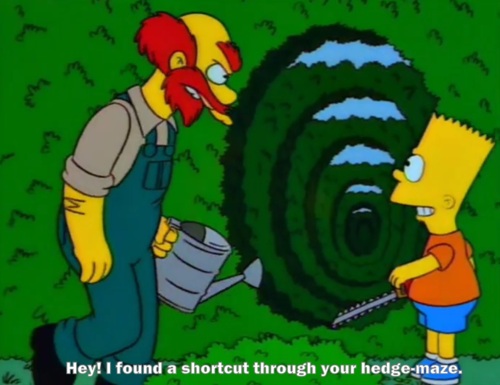
It’s a scourge! It’s annoying! It ruins the solving experience! Can’t constructors just somehow avoid these particular three- and four-letter combinations, no matter how convenient or crucial they are to the grid?!

Rarely a week goes by without a Reddit post dedicated to the subject or a prominent complaint about some aspect of grid fill in one of the blogs/outlets dedicated to covering the daily crosswords.

And it’s understandable. Whether it’s yet another directional clue or a team’s abbreviation on a scoreboard, some entries just irk people. It raises their ire.

Oh no! The crosswordese is slipping into my everyday vernacular!

Quick, summon some longer vocabulary that’s not conducive to crosswording. Gumption. Hurly-burly. Syzygy. Defenestration.

Phew! That’s better. Now where was I?

Right, crosswordese.

I was pondering the plague of crosswordese, and it occurred to me that there’s probably one particular source that has contributed more crosswordese than any other.

But what could it be?

There’s the music industry, of course. There are loads of musicians common to crosswords: ARIE, ENO, SIA, ARLO, ENYA, DRE, ETTA, ELLA.

The same thing goes for celebs. UMA, ANA, ESAI, INA.

The sports world has its own infamous crosswordese as well: ORR, OTT, PELE, ELS, ITO, ALOU, AROD, ASHE, ILIE, SOSA, YAO, ISAO AOKI.

But those are huge swathes of pop culture. Is there a single pop culture property that has helped (or hindered, according to critics) crosswords the most?

There are a few that come to mind.

Peter Pan offers not just PAN, but SMEE, HOOK, TINK, and NANA.

The Beatles gave us ONO, STARR, and SGT (for Pepper).

Lord of the Rings is certainly worth mentioning, adding ORC, ENT, and LOTR.

Game of Thrones was ubiquitous at one point, helpfully resurrecting OONA and adding ARYA (and to a lesser extent BRON, SANSA, HODOR, and CERSEI).

Then there are some serious heavy-hitters.

The Simpsons has NED, MOE, APU, OTTO, EDNA, and STU (of the Disco variety).

On the sci-fi side, Star Trek offers WORF, TROI, LEVAR, LUC (as in Jean-__), and options for USS. Star Wars is handy as well, with ARTOO, REY, EWOK, POE, HAN, and LEIA.

Not to be outdone, M*A*S*H has plenty to offer: SWIT, ALAN ALDA, FARR, RADAR, and of course NEHI.

I considered awarding the Crosswordese Crown to one of the franchises above, but it occurred to me that I might have to look back a little farther to find the Crosswordese Champion.

Okay, a lot farther.

Some might take issue with me calling the Bible part of pop culture, but there’s no denying its influence in crosswords: LEAH, CAIN, ABLE, ADAM, EVE, ESAU, NOAH, ENOS, EDEN…

That’s a pretty impressive list of crossword regulars.

And yet…

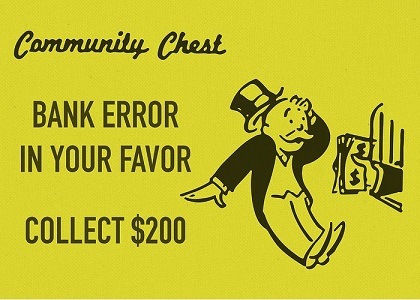
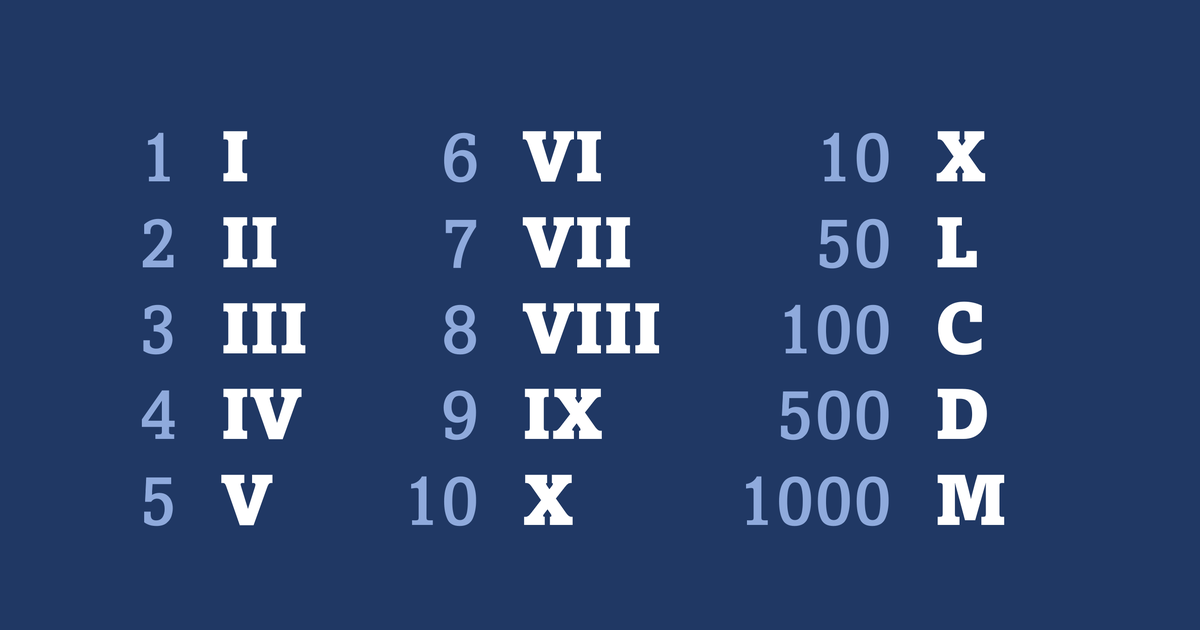
My gut says I might have to give credit to Roman Numerals as a whole. I mean, has any single cultural/pop cultural entity saved more cruciverbalists who’ve constructed themselves into a corner?

And has ANY solver cheered or celebrated when seeing a clue featuring a math equation AND Roman Numerals?

The balance of crosswordese gibberish and solver disinterest just might tip the scales here.

What do you think, fellow puzzlers? Is it the Bible, Roman Numerals, or another source that I missed? Let me know in the comments section below!

Piecing the Language Together

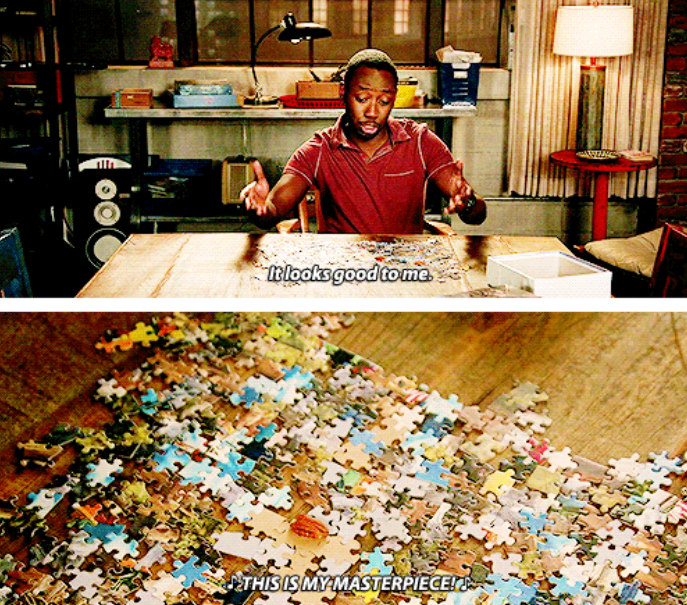
New Girl’s Winston Bishop doesn’t let his colorblindness get in the way of his passion for jigsaw puzzles. Should you take a page out of his book?

In January, I came across a tweet from poet NM Esc, also known as Neon Mashurov, reading, “I think translating activates the same part of my brain as doing jigsaw puzzles, which, for anyone who has never seen the absolutely obsessive way I tackle jigsaw puzzles, means I might have a new favorite project genre.” As a monolingual writer, I lack the tools necessary to fully immerse myself in the jigsaw experience of transforming, from scratch, one language into another. As someone who has assisted a former classmate with the process of editing poetry translations, however, I see exactly why a jigsaw puzzle would be an obvious point of non-linguistic comparison.

Each word in a translated poem should accurately evoke the meaning of the original; that much is obvious. Less obviously, depending on the poem and its style and artistic or ideological goals, a translated word might also need to evoke the original’s shape, its sound, its rhythm, its rhyme. It might need to carry a whole world of connotations on its back. There is rarely just one option for the right word in a translation, so the translating poet must shift through a mess of word-pieces, seeking whichever will lock into place exactly with the others, fitting comfortably and bringing the desired larger image to life.

There are limitations to this metaphor. Mainly, because as Willis Barnstone explained in the 2001 piece, “An ABC of Translating Poetry,” “A translation is an x-ray, not a xerox.” The poetry translator’s goal is not to perfectly recreate the image on a box. Rather, it is as though the translator is looking at the image on a box and then imagining what lies just beneath. The skin is stripped away and a skeleton is constructed for the image, from deduction and imagination, in a kind of cryptozoological (cryptopaleontological?) act of artistry. We see not what readers of the original language see, but we see what made the original language work. What made it stand up and move. This might not be the work of a jigsaw-solver, but it certainly presents a puzzle.

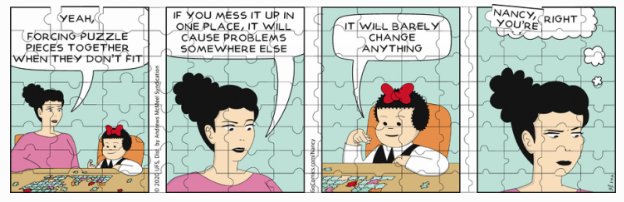
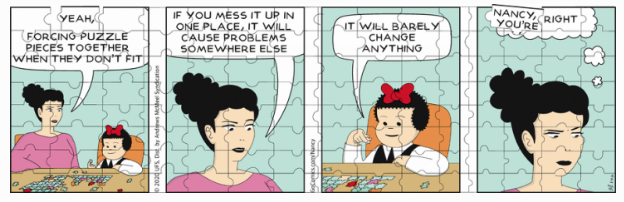
Barnstone’s work also tells us, “A good translation is a good joke. Reader, you are fooled.” A successful pun considers, transforms, and makes art from a word’s multiple meanings and dimensions, and a successful translation does the same. Translating poetry is fundamentally an act of wordplay. One must play with the words as if with Lincoln Logs or Play-Doh—or jigsaw pieces! In an earlier post on poetry, I featured the above comic strip, in which Nancy takes a creative, boundary-breaking approach to solving the jigsaw puzzle of her surroundings, and perhaps that is the most accurate metaphor for translation.

In a 2018 conversation with NPR, translator and poet Aaron Coleman posits, “The language lapses that inhibit an ideal interpretation can ultimately be ‘a creative, productive failure.’” Coleman goes on to say, “Maybe it can open up a new way for us to see what can happen in English and what can happen in Spanish, for me, or whatever the original language is.” Nancy, in switching around the puzzle pieces, has engaged in creative, productive failure, opening up a new way for us to see what can happen in the language of the puzzle. I love this perspective on translation, as someone who would not typically be considered to have the language skills necessary to translate from one language to another.

If you too are hesitant to try poetry translation because of the limits of your language, I’d like to invite you to go ahead and try anyway, even if you have to lean on Google Translate every step of the way. Even if you resort to marking some sections entirely untranslatable. In the words of The Magic School Bus’ Ms. Frizzle, “Take chances, make mistakes, get messy,” this National Poetry Month! Find some creative, productive failures that open up new ways for you to look at language. Maybe your finished product will be the verbal equivalent of Winston’s jumble of a jigsaw puzzle at the top of this post; that doesn’t mean you can’t call it a masterpiece.


You can find delightful deals on puzzles on the Home Screen for Daily POP Crosswords and Daily POP Word Search! Check them out!

Thanks for visiting PuzzleNation Blog today! Be sure to sign up for our newsletter to stay up-to-date on everything PuzzleNation!

Puzzles, Poems, Problem-Solving, & Productivity

How is a poem like a puzzle? That question’s easier to answer than the Mad Hatter’s classic “How is a raven like a writing desk?” From crosswords to cryptograms, many beloved puzzles do, if nothing else, resemble poems in their mutual wordiness. However, some forms of poetry are more puzzly than others—compare a sprawling collection of free and blank verse like T.S. Eliot’s “The Waste Land” to the concise machinery of a syllabically limited haiku, the boundaries of which are as strict as the edges of a crossword puzzle.

Like Nancy, though, you can always break the boundaries of form to create new meaning.

When you start to write a haiku, your possibilities are wide-open; with each word you set down, though, the potential choices for what might follow narrow. In effect, your “word bank” shrinks, and if three syllables already occupy the first line, then any words longer than two syllables are ineligible for that line’s continuation. The poet’s puzzling brain must kick into action, considering words for their dimensions and how they might lock into place with the words directly alongside them.

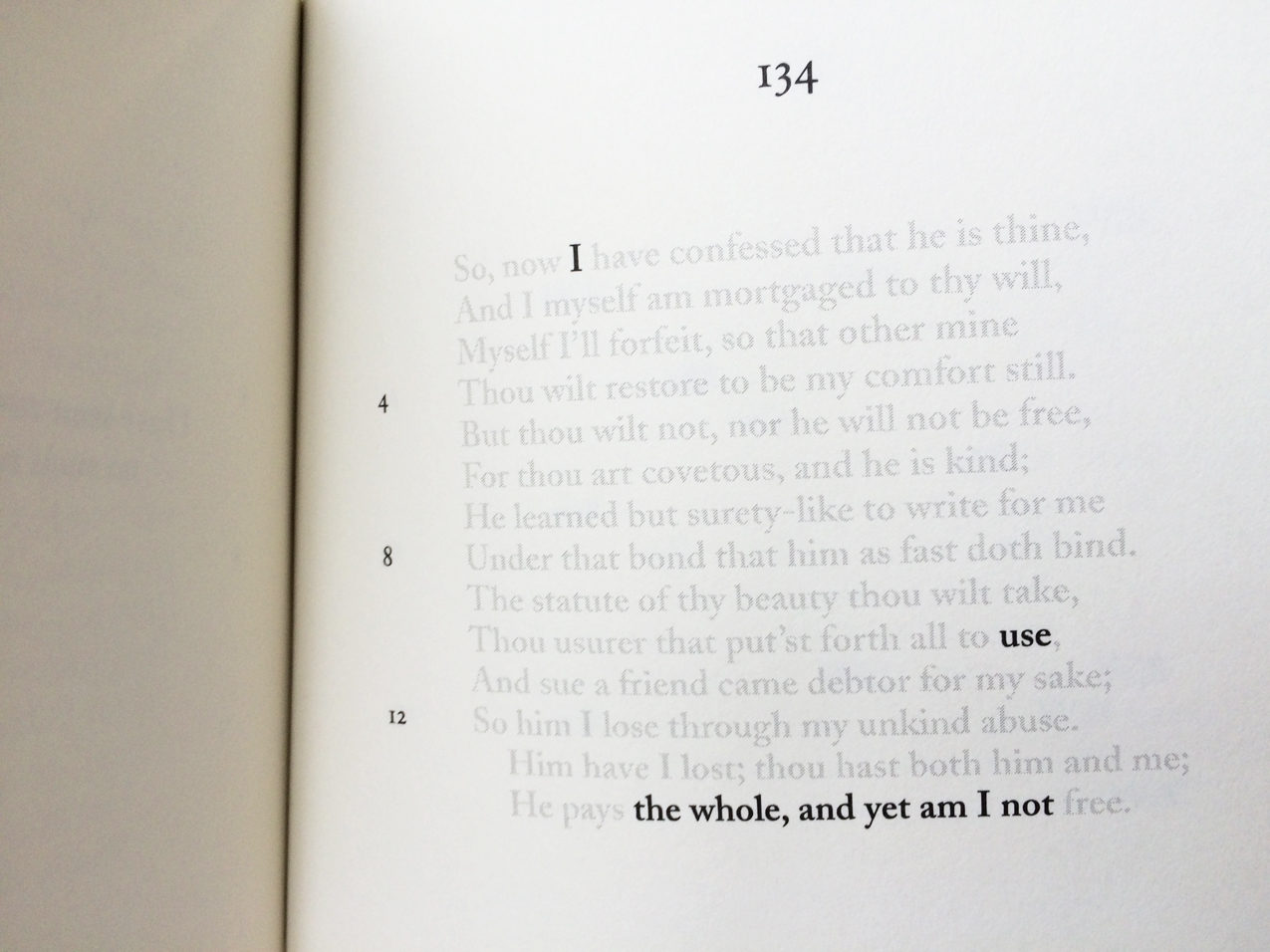
Haikus aren’t the only poetic forms that require this type of geometric thinking. Similarly brainteasery in their construction are sonnets, villanelles, and sestinas. Concrete poems take the shape of objects relevant to their contents, and erasure poetry—much like a word seek—highlights hidden messages by winnowing the chaos of a pre-existing text.

An erasure poem by Jen Bervin, made from one of Shakespeare’s sonnets.

What about a more sprawling, less tightly organized work like “The Waste Land,” then? Beyond the wordiness it has in common with cryptograms et al, is it left out of our riddle’s answer? Roddy Howland Jackson, in the recent essay, “Beastly Clues: T. S. Eliot, Torquemada, and the Modernist Crossword,” appears to argue that no, such works are very much like puzzles.

Jackson takes us back to the 1920s, when “The Waste Land” first appeared in print, and modernist poetry and puzzles alike were derided by critics. He locates “a question asked about labour and idleness in this period: are crosswords and difficult poems worth the efforts required to elicit literary pleasure and linguistic revitalisation? Or merely a waste of time?”

As a poet and puzzler, this question resonates with me a century later. Swimming in the high-pressure waters of hustle culture makes us highly sensitive to the terror of “wasting time,” as in doing anything that doesn’t build our personal brands. Writing and reading poetry that isn’t tidily instagrammable? Solving puzzles that aren’t social media fads? By hustle culture’s standards, both of these things are wastes of time.

So how is a poem like a puzzle? Both present us with opportunities to take back our time, to carve out pockets of our days where we exert mental energy purely for the joy of thinking. Instead of being just a bullet point on your resume, your problem-solving skills can be part of how you resist the pressure to always have your nose to the grindstone.

Next week, we’ll encourage you to find joy in poetry by more closely examining one particular puzzly form. In the meantime . . .


You can find delightful deals on puzzles on the Home Screen for Daily POP Crosswords and Daily POP Word Search! Check them out!

Thanks for visiting PuzzleNation Blog today! Be sure to sign up for our newsletter to stay up-to-date on everything PuzzleNation!