The Puzzmo mini crossword is always accompanied by notes from the constructor and the editor. The comments from yesterday’s puzzle centered around anagrams, since the mini had not only an anagram in the theme entries — MAORI and MARIO — but actually had the word ANAGRAMMED crossing those entries.
In those comments, both Will Eisenberg and Brooke Husic discussed a really playful subset of cluing involving misdirection.
You give the solver an anagram, but present it is as a statement, rather than just saying “ABLE, to BALE.” When done properly, it takes a second for your brain to actually register the anagram, even though it’s right in front of you!
Will used the example “Ancients, for instance,” which cleverly employs the standard crossword trope of “for example / for instance / for one / e.g.” to conceal the anagram. Brooke had another banger example, offering “Anemone, to name one.”
I delved into the archives on Xwordinfo to look for other examples of this misdirection cluing style, and I found some fun ones. (Obviously, ANAGRAM isn’t an incredibly common entry, but I was genuinely surprised by the variety of options that awaited me in the archives.)
Back in 2011, Oliver Hill and Eliza Bagg gave us “Neo, for one,” which is such an effective misdirect than I can imagine writing the wrong answer more than once in the grid before realizing the trick, since this sort of clue is used so often for things like HERO or ROLE.
Other constructors phrased their anagrams as if they were slang or specialized jargon, leading solvers down the garden path while showing off their own impressive anagramming talents.
Ryan McCarty and Nelson Hardy gave us “Schoolmaster for the classroom, e.g.”
Margaret Saine offered “Illustration for an ill tourist?”
Sam Trabucco crafted “Nerd’s epithet for the president?”
Bryant White presented “Coasters for Socrates, e.g.”
Naturally, cryptic crossword or British-style crossword solvers probably suss out these clues faster, since this sort of stealthy wordplay is standard in cryptic cluing, where clues are written out like sentences, rather than the more direct cluing typically used in American crosswords. (Cryptic crossword icons Emily Cox and Henry Rathvon had one ANAGRAM clue in the Xwordinfo archives, the elegant “Broadcast of bad actors, e.g.”
Some constructors take it even further, employing the age-old trick of apropos anagrams for celebrities.
The Simpsons helped popularize knowledge of this game when Lisa learned that ALEC GUINNESS anagrams into GENUINE CLASS. Another famous one is CLINT EASTWOOD anagramming to OLD WEST ACTION. FLORENCE NIGHTINGALE aptly anagrams to FLIT ON, CHEERING ANGEL.
Patrick Merrell employed this nicely with his clue for ANAGRAM, “Horrid glances from Charles Grodin?”
I could go on and on listing examples, but Patrick’s clue is hard to top.
I’m obviously a huge fan of misdirectionclues, so it was a joy to deep-dive into a different genre of cluing and watch clever people work their magic. Hopefully you enjoyed taking this puzzly stroll with me.
Crosswordese is an omnipresent part of crossword discussion online.
It’s a scourge! It’s annoying! It ruins the solving experience! Can’t constructors just somehow avoid these particular three- and four-letter combinations, no matter how convenient or crucial they are to the grid?!
Rarely a week goes by without a Reddit post dedicated to the subject or a prominent complaint about some aspect of grid fill in one of the blogs/outlets dedicated to covering the daily crosswords.
And it’s understandable. Whether it’s yet another directional clue or a team’s abbreviation on a scoreboard, some entries just irk people. It raises their ire.
Oh no! The crosswordese is slipping into my everyday vernacular!
Quick, summon some longer vocabulary that’s not conducive to crosswording. Gumption. Hurly-burly. Syzygy. Defenestration.
Phew! That’s better. Now where was I?
Right, crosswordese.
I was pondering the plague of crosswordese, and it occurred to me that there’s probably one particular source that has contributed more crosswordese than any other.
But what could it be?
There’s the music industry, of course. There are loads of musicians common to crosswords: ARIE, ENO, SIA, ARLO, ENYA, DRE, ETTA, ELLA.
The same thing goes for celebs. UMA, ANA, ESAI, INA.
The sports world has its own infamous crosswordese as well: ORR, OTT, PELE, ELS, ITO, ALOU, AROD, ASHE, ILIE, SOSA, YAO, ISAO AOKI.
But those are huge swathes of pop culture. Is there a single pop culture property that has helped (or hindered, according to critics) crosswords the most?
There are a few that come to mind.
Peter Pan offers not just PAN, but SMEE, HOOK, TINK, and NANA.
The Beatles gave us ONO, STARR, and SGT (for Pepper).
Lord of the Rings is certainly worth mentioning, adding ORC, ENT, and LOTR.
Game of Thrones was ubiquitous at one point, helpfully resurrecting OONA and adding ARYA (and to a lesser extent BRON, SANSA, HODOR, and CERSEI).
Then there are some serious heavy-hitters.
The Simpsons has NED, MOE, APU, OTTO, EDNA, and STU (of the Disco variety).
On the sci-fi side, Star Trek offers WORF, TROI, LEVAR, LUC (as in Jean-__), and options for USS. Star Wars is handy as well, with ARTOO, REY, EWOK, POE, HAN, and LEIA.
Not to be outdone, M*A*S*H has plenty to offer: SWIT, ALAN ALDA, FARR, RADAR, and of course NEHI.
I considered awarding the Crosswordese Crown to one of the franchises above, but it occurred to me that I might have to look back a little farther to find the Crosswordese Champion.
Okay, a lot farther.
Some might take issue with me calling the Bible part of pop culture, but there’s no denying its influence in crosswords: LEAH, CAIN, ABLE, ADAM, EVE, ESAU, NOAH, ENOS, EDEN…
That’s a pretty impressive list of crossword regulars.
And yet…
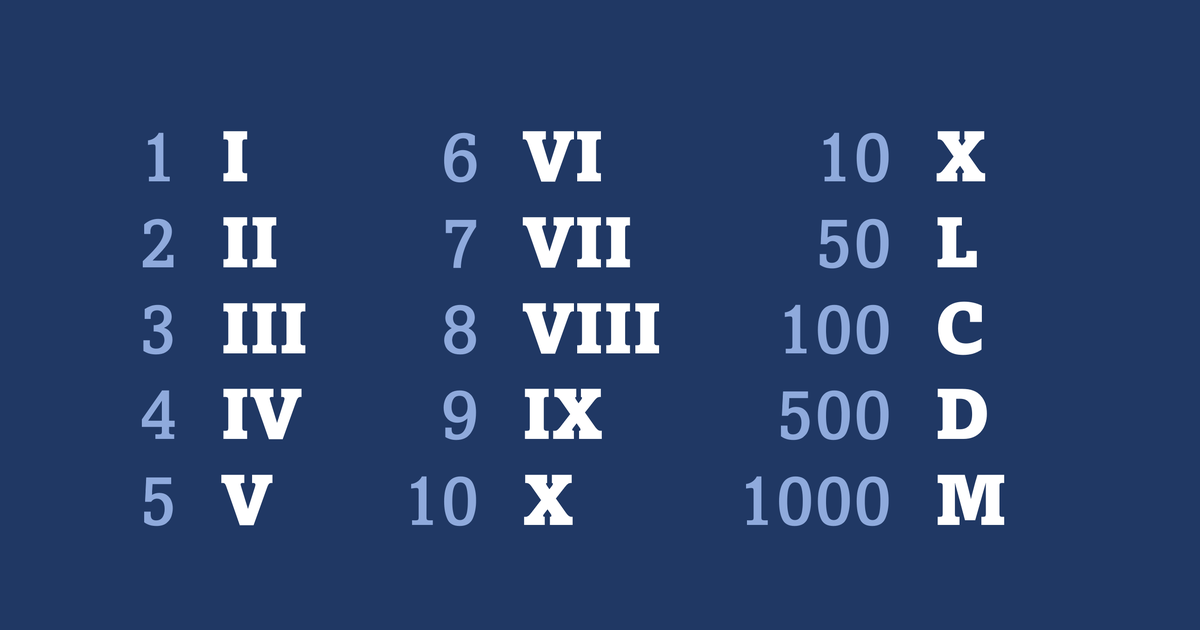
My gut says I might have to give credit to Roman Numerals as a whole. I mean, has any single cultural/pop cultural entity saved more cruciverbalists who’ve constructed themselves into a corner?
And has ANY solver cheered or celebrated when seeing a clue featuring a math equation AND Roman Numerals?
The balance of crosswordese gibberish and solver disinterest just might tip the scales here.
What do you think, fellow puzzlers? Is it the Bible, Roman Numerals, or another source that I missed? Let me know in the comments section below!
Part of the challenge for many crossword solvers is that you can’t adjust the difficulty of the cluing on a given day. The clues you get are the clues you get.
New York Times crossword solvers are intimately familiar with this, talking about Tuesday puzzles and Saturday puzzles and understanding what each means in terms of expected puzzle difficulty.
Our own Penny Dell Crosswords App offers free puzzles across three difficulty levels each day, but those are three distinct puzzles, not three different clue sets for one particular puzzle.
Having options for more than one set of clues is fairly rare. Lollapuzzoola has two difficulty-levels for their final tournament puzzle, Local and Express. GAMES Magazine previously offered two sets of clues for their themeless crossword, entitled The World’s Most Ornery Crossword.
The tournament final of the American Crossword Puzzle Tournament offers different clue difficulties for three separate divisions. The Boswords Spring and Fall Themeless Leagues work in a similar manner, offering three levels of clue difficulty — Smooth, Choppy, and Stormy — for competitors to choose from.
The concept of Easy and Hard clues is not unheard of… it’s just rare.
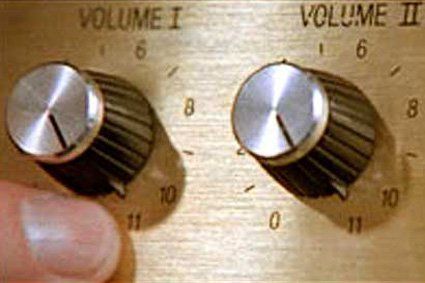
And it’s only natural that someone, eventually, was going to take this concept and dial it up to a Spinal Tap 11.
The pair of someones in question are Megan Amram and Paolo Pasco.
Paolo is fairly well-known around crossword circles, having contributed puzzles to the American Values Club crossword, The New York Times, The Los Angeles Times, The Wall Street Journal, and other outlets, while also serving as associate crossword editor for TheAtlantic.
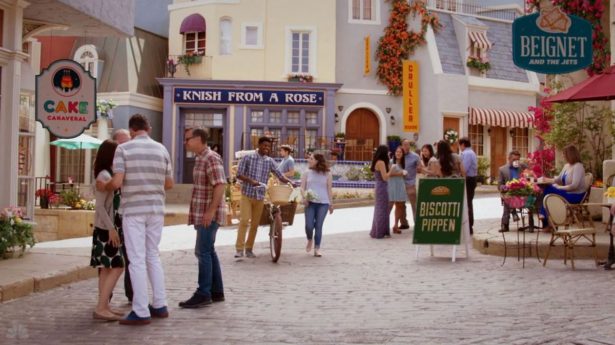
And Megan is an incredibly talented television and film writer who has written for Parks and Rec, The Simpsons, and The Good Place. Anytime you saw a hilariously shameless punny name for a store in The Good Place, it was undoubtedly one of Megan’s.
The instructions are simple: This crossword contains two sets of clues to the same answers. Toggle to the set labelled “Hard” to impress people looking over your shoulder. (And toggle to “Easy” when they look away.)
This 9×9 crossword’s Easy clues were fair and accessible, but the Hard clues were the real stars. They ricocheted between immensely clever, wildly obscure, and hilarious parodies of themselves.
For instance, the word JEST was clued on the Easy side as “Infinite ____” but received the brilliantly condescending add-on “Infinite ____” (novel that’s very easy to read and understand) in the Hard clues as a reference to the famously dense and impenetrable nature of the novel.
For the word APPS, the Easy clue was “Programs designed to run on mobile devices,” while the Hard clue was “Amuse-gueules, colloquially.”
(I had to look that one up. An amuse-gueule is “a small savory item of food served as an appetizer before a meal.”)
And those are just two examples.
When you finally finish the puzzle, this is your reward:
“You’re a genius! You can tell your mom to get off your case about going to law school.”
All at once, The Impossible Crossword manages to be a fun puzzle to solve on its own, a riotously fun gimmick that lampoons clue difficulty in general, and the most meta puzzle I’ve solved all year.
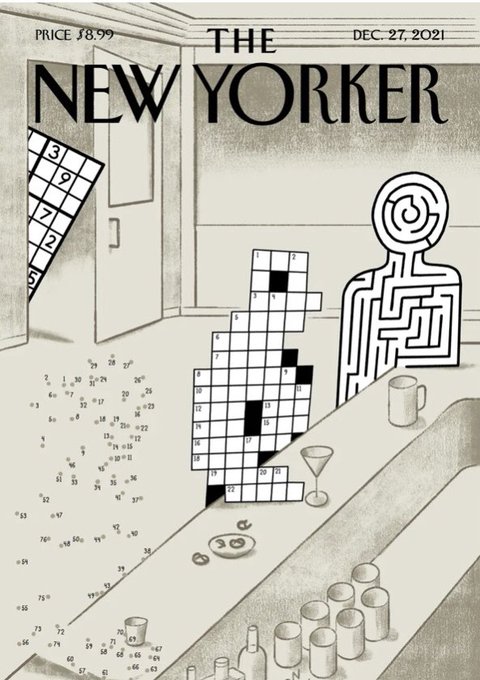
Kudos to Megan and Paolo for pulling it off. What a way to welcome the Cartoons & Puzzles era of The New Yorker while the rest of us close out another year of puzzling.
We’ve seen a lot of curious words in crosswords over the years. Some of them are blips on the radar, appearing for a bit then vanishing without a trace. Others become part of the fabric of crosswords, forever synonymous with those enigmatic black-and-white grids under the banner of “crosswordese.”
It does make me wonder, though. What words haven’t we seen yet? What curious combinations of vowels and consonants await solvers in the future? Will they be blips or will they be the stuff of legends?
So I decided to try out different words that were either heavy on vowels or had strange letter patterns to see which ones had appeared in The New York Times crossword and when, according to the database on XWordInfo. And I turned up some curious results.
COOEE hasn’t appeared since April 1996. FLYBY hasn’t been in since 2007. QWERTY has only appeared twice, and not in almost a decade.
And yet, equally strange words like VORPAL and CRWTH haven’t appeared at all.
It’s hard to predict what odd vocabulary will strike a chord with constructors.
I mean, sure, there’s a whiff of disdain surrounding crosswordese, but surely as former obscurities become more familiar, crosswordese must evolve and move forward as well. What will be the new crosswordese?
It’s not like we’re going to have new rivers, mountains, bays, or other geographical areas, for the most part. (True, the Aral Sea is pretty much the Aralkum Desert now, but that hasn’t stopped constructors from continuing to reference it.)
But I’m getting off-topic. Where would we find this new potential grid fill?
There are some delightful nuggets of linguistic oddness lurking in old dictionaries that have promise as part of a new generation of crosswordese. I mean, ECHO and OCHO are all well and good, but what about OCHE?
That’s the line behind which a darts player must stand, by the way. Zero hits in XWordInfo.
You need peculiar letter combinations to help fill your grid? How about BADAUD, UGHTEN, YERK, CAGG, and BORT? I could easily see these weird words getting constructors out of some jams when it comes to grid construction.
Sure, we’d have to educate solvers on these words, but if we can make ETUI a well-known form of crosswordese, why not these?
(Yes, I know, you want definitions. Don’t worry, I’ve got you covered. A badaud is a dimwitted gossip-spreader who believes just about anything. Ughten is morning twilight, the light that appears in the sky before the sun rises. To yerk is to beat someone vigorously and with rapid efficiency. A bort is a poor-quality diamond or a fragment of such a diamond (as well as a license plate that commonly runs out at Itchy and Scratchy Land). A cagg is a solemn vow not to drink for a certain amount of time.)
None of those words have appeared in the Times according to XWordInfo. Except BORT, but even that hasn’t appeared since 1993. Which is amazing, because the BORT joke on The Simpsons I referenced above happened in October of 1994. Come on, constructors, don’t leave us hanging. BORT did not have to lapse into irrelevance.
Speaking of words that have fallen by the wayside, I decided to try lost positives next.
Lost positives are words that were previously commonplace, but have been lost to time, while words with negative connotations based on them have survived. You know inept, inert, disheveled, uncouth, unkempt, and inane, but how often do you see ept, ert, sheveled, couth, kempt, pecunious, or ane?
Thus, lost positives.
So what happened when I checked them against the XWordInfo database?
EPT has appeared in the Times — as slang or a joking reference — but ERT hasn’t (except as a Scottish word). Nor has SHEVELED. KEMPT isn’t exactly common, but it has appeared in the last five years. COUTH hasn’t since 2003.
ANE, meanwhile, has hundreds of appearances, but as a hydrocarbon suffix, a Wheel of Fortune reference (“an e”), or as part of Sue Ane Langdon’s name.
Hey, ERT gives me an idea. If we’re really going to discover some exciting, strange, and unexpected new grid fill, I think we have to look toward other languages.
All sorts of words that originate in other languages end up as part of the expansive English vocabulary. As James Nicoll once said, “We don’t just borrow words; on occasion, English has pursued other languages down alleyways to beat them unconscious and rifle their pockets for new vocabulary.”
Why not continue on in that fine tradition and add to the potential puzzle word lexicon?
In the last few years, the concept of hygge has grown in popularity. Hygge is a Danish and Norwegian word for a mood of coziness and comfortable conviviality with feelings of wellness and contentment. You can see how people would latch onto the concept for themselves.
So I was surprised to discover that hygge hadn’t appeared in the NYT. That’s a letter pattern begging for crossings.
Personally, I think we should start with words like hygge. A word that exists in another language to describe a concept that there simply isn’t a word for in English.
Saudade, while a bit long for casual grid use, is another word that has started making the transition into English vernacular. Saudade is a deep emotional state of nostalgic or profound melancholic longing for an absent something or someone that one cares for and/or loves.
There is a world of vocabulary out there waiting to be harnessed for crossword obscurity, and there’s even a website dedicated to it.
If you check out Eunoia, you’ll find hundreds of foreign words to encapsulate moods and ideas, feelings and expressions that can plug holes both in your vocabulary and your grids.
Here’s a small sampling of words I found on the site that might help cruciverbalists who have constructed themselves into a corner:
Resfeber is a Swedish word for “the feeling of excitement and nervousness experienced by a traveler before undertaking a journey.”
Ubuntu is a Zulu word for “a quality that includes the essential human virtues, a combination of compassion and humility.”
Mångata is a Swedish word for “the road-like reflection of moonlight on water.”
Wegbier is a German word for “a beer you’re having on your way somewhere (i.e. a party).”
Karelu is a Tulu word for “the mark left on the skin by wearing something tight.”
Rauxa is a Catalan word for “sudden determination or action.”
Umay is a Tagalog word for “getting tired of a certain food.”
To Fernweh is to have a yearning to see distant places (in German).
Either half of wabi-sabi, a Japanese word meaning “finding beauty within the imperfections of life and peacefully accepting the natural cycle of growth and decay” could prove handy in a grid.
So I put the question to you, fellow puzzlers and PuzzleNationers. What words would you like to see appear in crosswords more? Where do you think we should look for fresh, new, peculiar crosswordese? Let us know in the comments section below. We’d love to hear from you!
Thanks for visiting PuzzleNation Blog today! Be sure to sign up for our newsletter to stay up-to-date on everything PuzzleNation!
A few weeks ago, we celebrated Halloween by compiling a list of the best puzzlers in horror movies. The goal was to highlight characters who stood out, the ones you’d want on your side, because they’re clever, decisive, and immensely capable.
But it’s not just horror movies that feature characters with these rare qualities. Television dramas and comedies both have their fair share of top-notch puzzlers, and today, we turn the spotlight on them.
True, I certainly could have listed more detectives/investigators/crime scene techs, but honestly, they’re often part of a big team of solvers. (The casts of CSI and Bones, for instance, are effective teams, but rarely does one particular puzzler shine brighter than the rest.)
These individuals (and the occasional duo), however, most definitely perform puzzly feats under pressure.
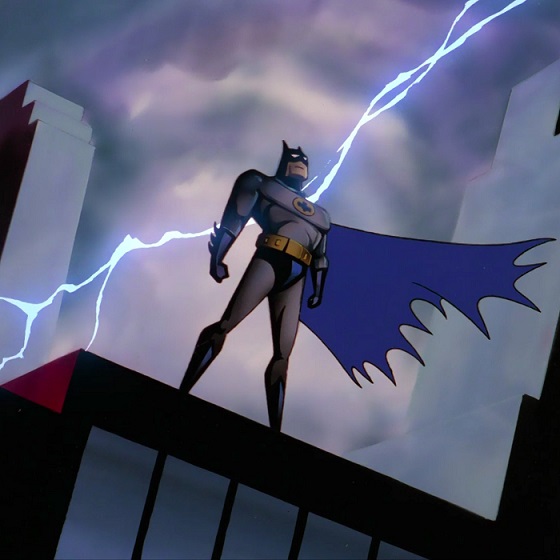
Yeah, we’re getting an obvious one out of the way first. He’s not called the World’s Greatest Detective for nothing, after all. Although the ’60s Batman leapt wildly to conclusions that turned out to be right, we’d rather lean on the cunning cartoon version of the character from the ’90s FOX show.
This Batman outwitted the Riddler, foiled the Joker, and defeated Ra’s al Ghul, all while remaining age-appropriate for the kiddies. His comic-book counterpart might get to show off his puzzly detective skills more frequently, but when it comes to TV, it’s hard to ignore the Caped Crusader.
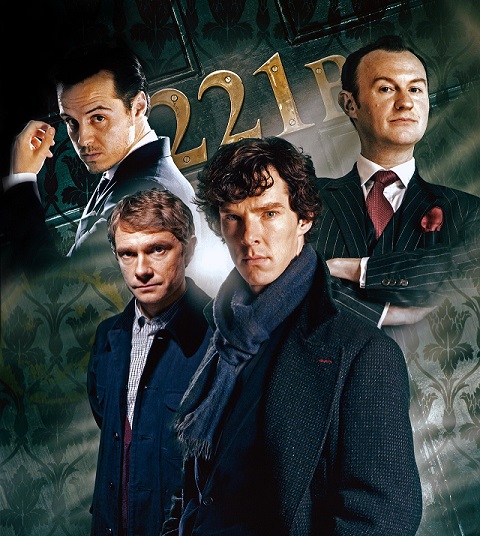
Sherlock Holmes / Mycroft Holmes / Jim Moriarty, Sherlock
Again, this trio is too obvious to ignore. It’s hard to pick the sharpest knife out of this particular drawer. Moriarty proves himself to be Holmes’s equal throughout the show, though Sherlock does defeat him in the end. Similarly, Mycroft is often regarded as Sherlock’s equal (or perhaps superior) when it comes to sussing out evidence.
But we always return to the often imitated but never duplicated Great Detective when we think of someone who can put together tiny details and suddenly realize the stunning whole of the case. Call it deduction or just great jigsaw skills, Sherlock has it in spades.
(Oh, and an honorable mention here goes out to Dr. Gregory House, who was based on Holmes.)
When you think of this iconic character, it’s likely that one of two things comes to mind: either his trusty Swiss army knife or his incredible knack for getting out of jams with jury-rigged, home-built, improvised equipment.
The man cobbled together a cannon from cigarette butts and built a functioning glider out of bamboo and trash bags. Any brain teaser, no matter how specious or obtuse, would fall before the mighty outside-the-box thinking of Mr. MacGyver.
Leslie Knope / Ron Swanson, Parks and Recreation
My first instinct was to mention Ron Swanson here, given his love of riddles and his impressive efforts to solve the Valentine’s Day scavenger hunt created for Ben in a famous episode. But one cannot honor a master puzzle solver and not give a fair shake to the woman who designed the devious scavenger hunt being solved.
Leslie Knope’s 25-clue puzzle hunt involved riddles, anagrams, a cryptex, and more, and not only did she amaze viewers, but she got Ron to admit his love of riddles to the world. They both merit mentioning in today’s list.
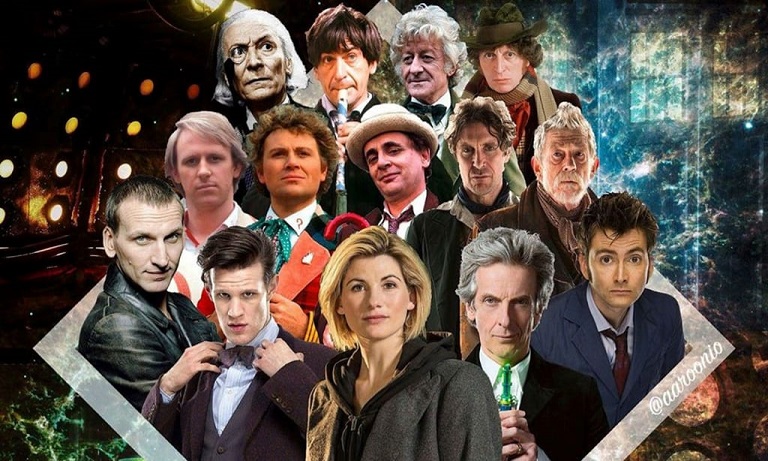
When your life is spent traveling through time and space, experiencing events out of order, you’d have to be a pretty decent puzzler just to keep cause and effect straight, let alone to battle threats that endanger the whole of creation. And this alien with two hearts and a police box that travels through time is one heck of a puzzle solver.
He has outwitted Daleks, demigods, and the devil himself. He has defeated aliens that move every time you blink or look away, or that you forget about as soon as you lose sight of them. I assure you, no riddle or brain teaser stands a chance against someone who thinks in four dimensions.
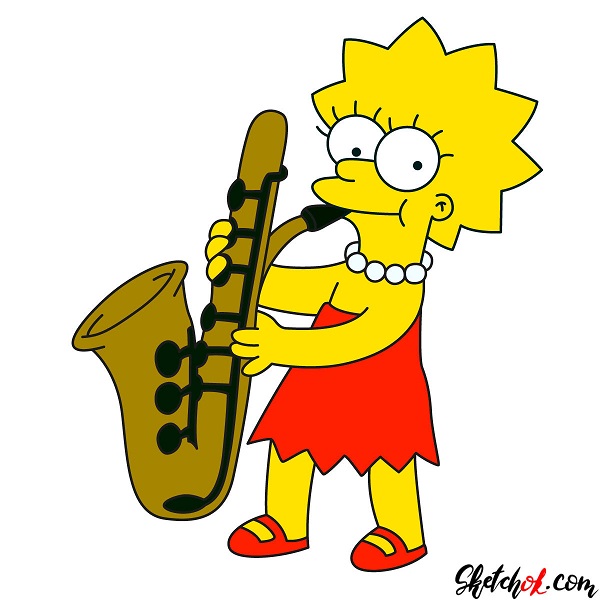
No, I haven’t mentioned too many actual puzzle solvers in this list — but just because people like puzzles, that doesn’t mean they’re the best solvers. Lisa, however, fits both sides of the equation.
We’ve seen her skills as a crossword whiz and her ability to crack a Da Vinci Code-esque mystery, all while navigating the perils of elementary school and a father whose choices often defy belief. Lisa is thoughtful, diligent, observant, and clever. She not only loves puzzles, but applies her puzzly mind to making the world around her a better place.
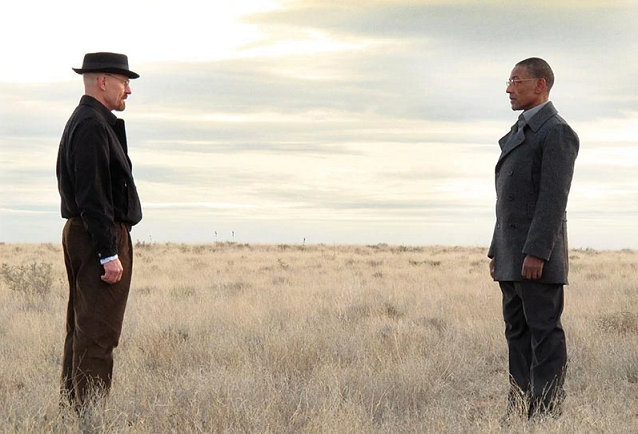
From schoolgirls to drug kingpins we go. It’s hard to pick who is the better strategist between the devious Walter White and the tactical Gustavo Fring. Granted, White does defeat Fring in the end, but not before Gus outmaneuvers old rivals and new, drives a wedge between Walt and Jesse, and builds an entire empire under the noses of the local authorities.
Walt, like a sinister MacGyver, often rigs up surprising solutions to problems, but Gus is probably the superior puzzler, someone who can plan his game three moves ahead and make the best use of his resources.
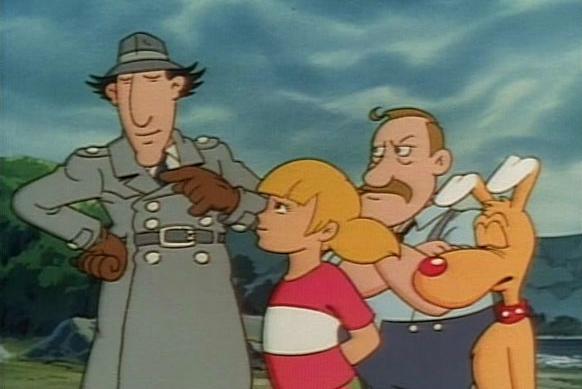
With the bumbling, insufferable bionic detective by your side, you almost have to be twice as good a puzzler to get anything done. And yet, the insightful Penny and her loyal canine companion Brain usually manage to foil the plans of Dr. Klaw despite the doltish antics of the show’s title character.
Penny is an able researcher, able to assess a situation and find the missing pieces with ease. Brain, on the other hand, is the one who puts Penny’s plans into action and adapting on the fly when things (inevitably) go awry. As puzzling duos go, they’re among the best around.
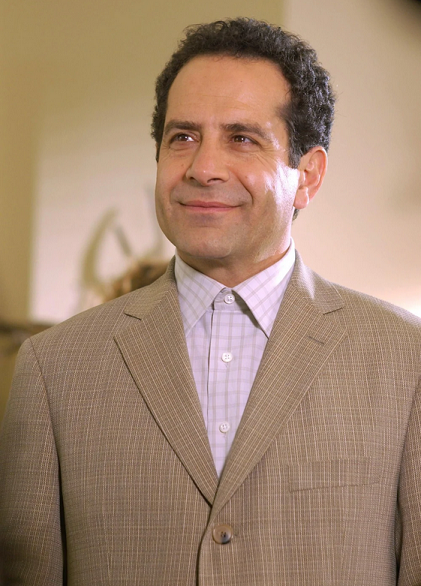
A knack for observation will always serve a puzzler well. Maybe you notice a pattern, or something missing from a room that everyone else missed. Maybe you can draw connections faster than others. All of these qualities apply to Adrian Monk, the fearful obsessive investigator from USA’s Monk.
Monk is the ultimate logic problem solver, drawing out the tables in his head and neatly placing information in each box, then finally drawing his conclusion once he has enough detail. And he’s never wrong. A master of observation and deduction, Monk is a world-class puzzler (even if he probably doesn’t solve the daily crossword often for fear that the newspaper will smear ink on his hands).
Did I miss any world-class puzzlers from television? Let me know in the comments section below! I’d love to hear from you!
Thanks for visiting PuzzleNation Blog today! Be sure to sign up for our newsletter to stay up-to-date on everything PuzzleNation!
Crossword constructors can be fiendishly clever, so there’s often something extra lurking inside a crossword grid, if you know where to look.
Sometimes it’s easy to spot. There are shaded areas or circled letters to reveal the hidden bonus answers that add a touch of pizzazz to a grid.
For instance, our friends at Penny/Dell Puzzles have a recurring crossword variant, Revelation, which conceals a quotation in a standard crossword grid.
The New York Times crossword has also featured this gimmick in puzzles plenty of times, perhaps most notably in a May 2015 puzzle where both poet WILLIAM CARLOS WILLIAMS and the title of his poem THE LOCUST TREE IN FLOWER read down the sides of the grid, and the circled letters within the grid concealed the poem in full!
For his puzzle featured in an episode of The Simpsons, constructor Merl Reagle famously snuck a message into another New York Times crossword puzzle, allowing Homer to apologize to Lisa for his transgressions in the most public puzzly forum possible.
If you went diagonally from the upper left to the lower right of the grid, the statement “Dumb dad sorry for his bet” could be found.
Whether it’s a hidden quotation or a secret message hiding amidst the black squares and crisscrossing entries, these bonus answers offer a final little twist that wow solvers, leaving them shaking their heads at the cleverness and skill of constructors.
A puzzle in The Wall Street Journal recently reminded me of another surprise that a crafty constructor can spring on an unsuspecting solver.
This particular puzzle from September 28th of this year had instructions instead of the usual themed answers. If you read 22 Across, 61 Across, and 105 Across, you received the following message: Find the names of ten gems / hidden within the puzzle / grid in word search style.
Yes, the appropriately titled “Treasure Hunt” by Mike Shenk had jewels hidden among the answers in the grid, reading horizontally, vertically, and diagonally, just as they would in a word seek or word search.
Although this led to a few awkward entries — GOT ENRAGED is a bit clunky for an answer, even if the goal is to hide GARNET backwards within it — the grid is mostly great, and the spread of gems — from DIAMOND and EMERALD to ONYX and TOPAZ — is impressive. (I particularly liked RUBY reading out backwards in HURLYBURLY.)
I haven’t encountered many of these word search-style crossword surprises over the years, but there is one other prominent example that came to mind.
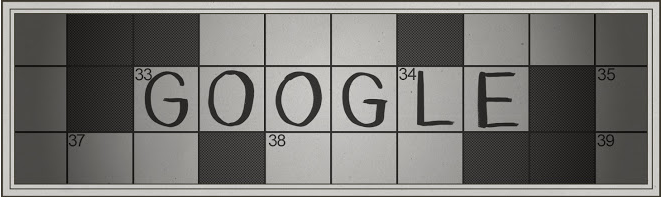
In his second appearance in today’s post, Merl Reagle constructed a special puzzle to celebrate the 100th anniversary of the crossword in 2013.
His puzzle was converted into a solvable Google Doodle — you can still solve it here! — and Merl added a crafty word search element by hiding the word FUN multiple times in the grid.
Why “fun,” you ask? Because that was the set word in Arthur Wynne’s original “word-cross” puzzle over one hundred years ago.
Believe me, constructing a great crossword grid is taxing enough. Adding touches and tricks like these just ratchet up both the difficulty involved and the skill level required to make the whole endeavor a harmonious success.
Kudos to those, past and present, who have pulled it off with such style.
Thanks for visiting PuzzleNation Blog today! Be sure to sign up for our newsletter to stay up-to-date on everything PuzzleNation!









 PuzzCulture