My PuzzCulture Resume!

After our one-year anniversary post, some of the readers have been asking about my puzzle credentials. How did I become a puzzler? What strange, meandering road led me to the hallowed halls of puzzlesmithery? Could aspiring puzzlers follow the same path to puzzlewonderful adventures?
There’s no single path to puzzlerhood. Sure, there are some fairly universal commonalities. Do you have a great vocabulary? Mad trivia skills? Are you a whiz with palindromes, anagrams, or other forms of wordplay? These can all help. Also, a background or degree in English doesn’t hurt.

But every puzzler I know took a different route. It’s not as if we all awoke one day to a knock at the door, only to discover a small basket left on the doorstep, and tiny elfin footprints leading back toward the enchanted forest down the street.

Though, admittedly, that would have been awesome.

Here, let me take you through some of the highlights in my puzzle resume, and we’ll see if my experiences offer some guidance or inspiration for those with puzzletastic aspirations.

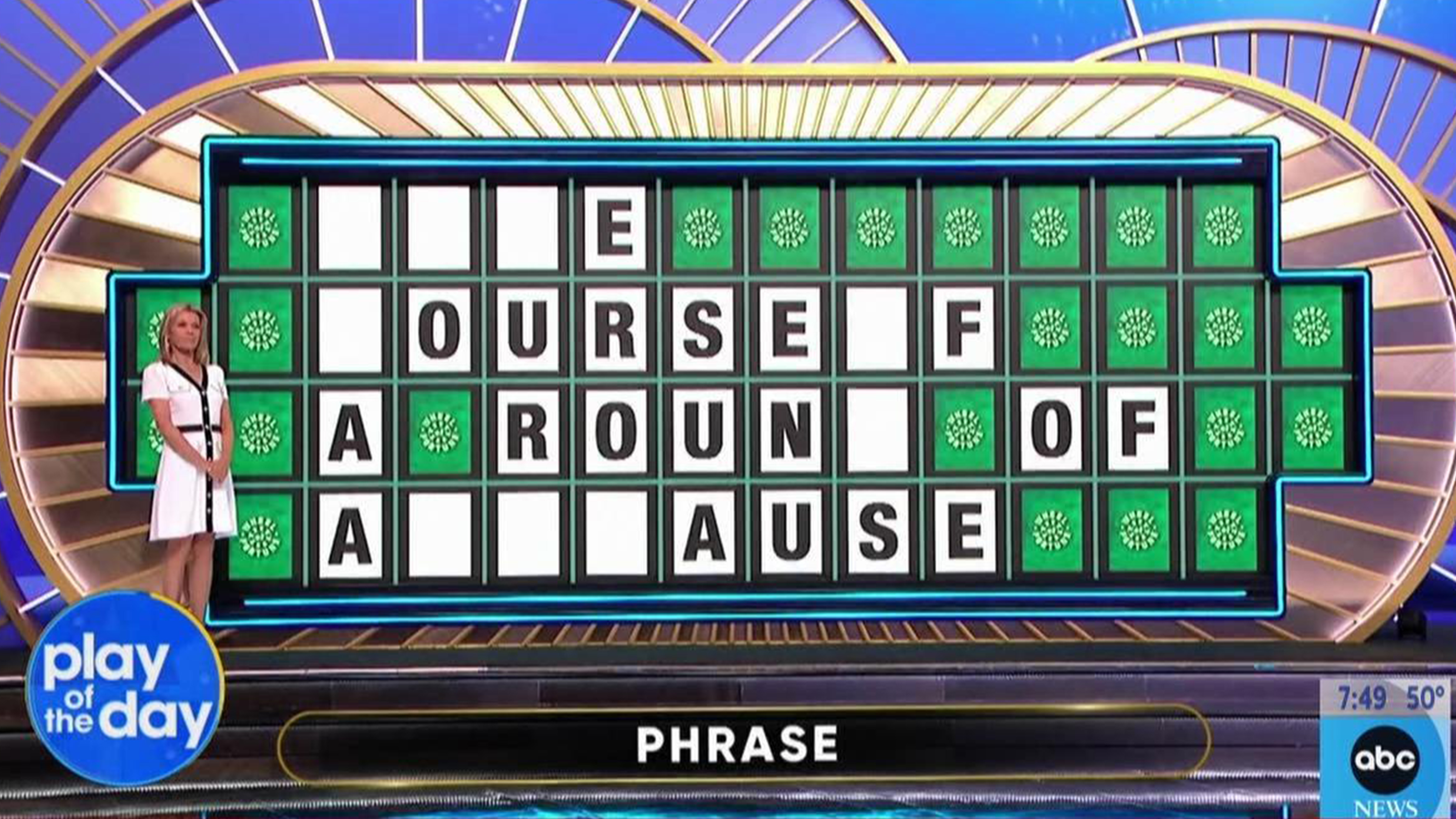
Unrecognized Wheel of Fortune Grand Champion, USA, 1988-present

Since I was about seven years old, family members have called me into the family room to see who can puzzle out the quotes, phrases, and punny answers behind the lovely Vanna White, and I regularly school both contestants and kin with ease.

While Mr. Sajak refused to recognize my decades-long reign as Wheel of Fortune Grand Champion (Stay-at-Home Division), and Mr. Seacrest has yet to return my calls, that doesn’t make it any less noteworthy.

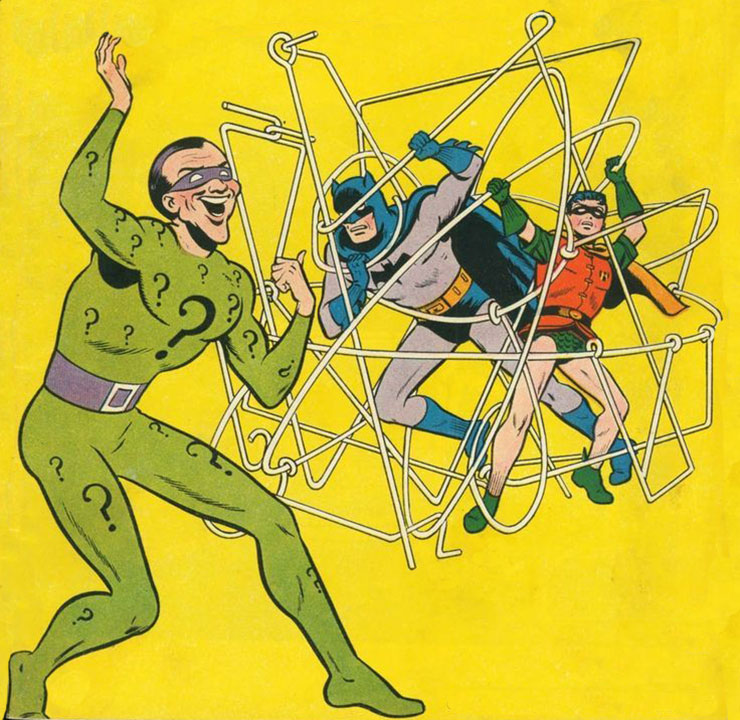
Internship with the Riddler, Gotham City, 2000-2001

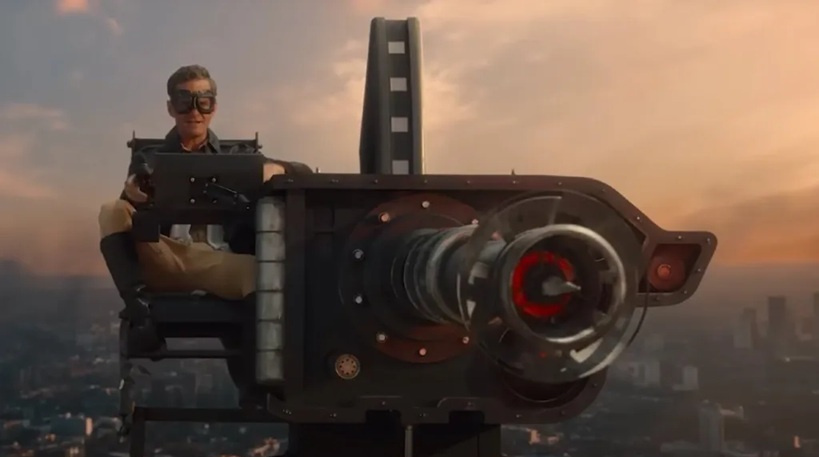
There are few puzzle personalities in the world with the flair, cachet, and renown of Edward Nygma, otherwise known as freelance detective and occasional criminal mastermind The Riddler. So when I had the opportunity to sit in with him and learn from his decades of riddle-centric shenaniganry, I leapt at the chance.

I studied the intricacies of mechanical puzzles, wordplay, and punsmithery while under Nygma’s wing. Although I frequently found myself in legal and moral gray areas — and on the receiving end of more than a few POW!s and BIFF!s — the experience was well worth it.

Tetris Foreign Exchange Program, St. Petersberg, 2002

There’s no better spatial awareness training than Tetris. I can feng shui the packages in the back of a UPS truck like nobody’s business, and don’t get me started on my legendary vacation-packing skills. And with the added pressure of that horrendous tension-inducing “you’re near the top!” music, I’m cool as Siberia under pressure.

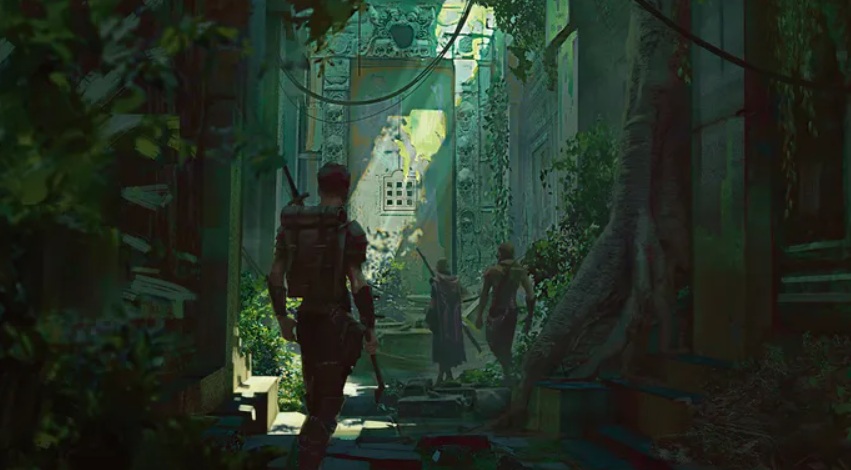
Dungeon Tester, various, 2003-present

Is your Tomb of Horrors not horrorful enough? Is your Tomb of Elemental Evil lacking in some evil elements? Is your Ghost Tower of Inverness feeling a little inver-less?

I’ve ventured through some of the deadliest, trickiest, player-decimating-est dungeons in all of roleplaying, and my quality control and suggestions have made them even deadlier-ier!

That trick with the secret escape door in the third pitfall trap? Yeah, that was me.

You’re welcome, dungeon masters!

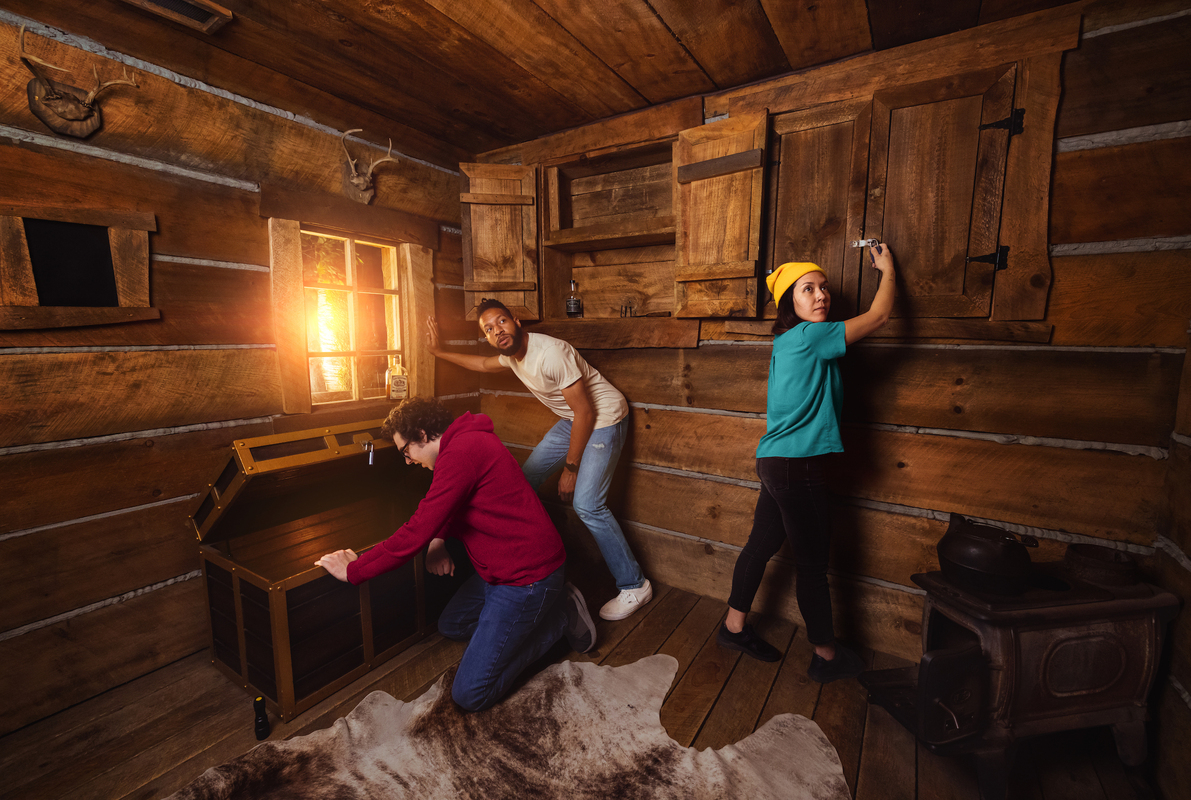
Escape Room Entrepreneur, Scranton, PA, 2006

Yes, the first official escape room opened in Japan in 2007, but I actually pioneered the genre when I accidentally tripped into a display at the Houdini Museum in Scranton just before closing time. Somehow the staff missed the clanking of chains and my totally-manly-and-not-at-all-shrill cries for help, and I found myself plunged into darkness, trapped haphazardly in several of Houdini’s most famous devices.

Thankfully my previous training with the Riddler had prepared me for this sort of dilemma. After several hours of maneuvering (and some unpleasant chafing marks from all the chains and manacles), I managed to extricate myself from all the Houdiniana around me and slip out the front door… and into the waiting arms of the police responding to all the motion sensor alarms I’d tripped with my heroic flailings.

Puzzle Summit with Will Shortz, New York City, 2007

Okay, it wasn’t so much a historic meeting of the minds as it was me yelling puzzle ideas at him with a megaphone as I chased him down the street.

But that totally counts.

Freelance Puzzle Historian, Self-Appointed, USA, 2009-present

Oh yes, puzzle history is a rich and varied field of study, one to which I have devoted a great deal of time and effort, unearthing some fascinating and surprising discoveries. For instance, did you know that Nero did not, in fact, fiddle while Rome burned? He was far too busy being frustrated by the extreme Sudoku puzzle he’d picked up in the agora.


Well, there you have it. A brief glimpse in my particular puzzle experiences and how they’ve shaped me. Here’s hoping you can blaze your own puzzlerific trail, be it through decoding Linear B with Cryptogram-ingrained proficiency or anagramming your friends’ names to your heart’s content.

Happy puzzling, everyone!

Product Review: Reflectron and Egyptian Triglyph

[Note: I received a free copy of these puzzles in exchange for a fair, unbiased review.]

Forgive these somewhat shorter reviews, but it’s really hard to talk about brainteasers and puzzle boxes without accidentally spoiling them for users. So you get a two-for-one review today!

The Rubik’s Cube is one of the cornerstones of brain-teaser puzzling, but the twisty puzzles inspired by that classic puzzle continue to amaze with their innovation and cleverness. We’ve seen speed cubes, ghost cubes, 3D-printed monstrosities like the Yottaminx, and even a self-solving cube!

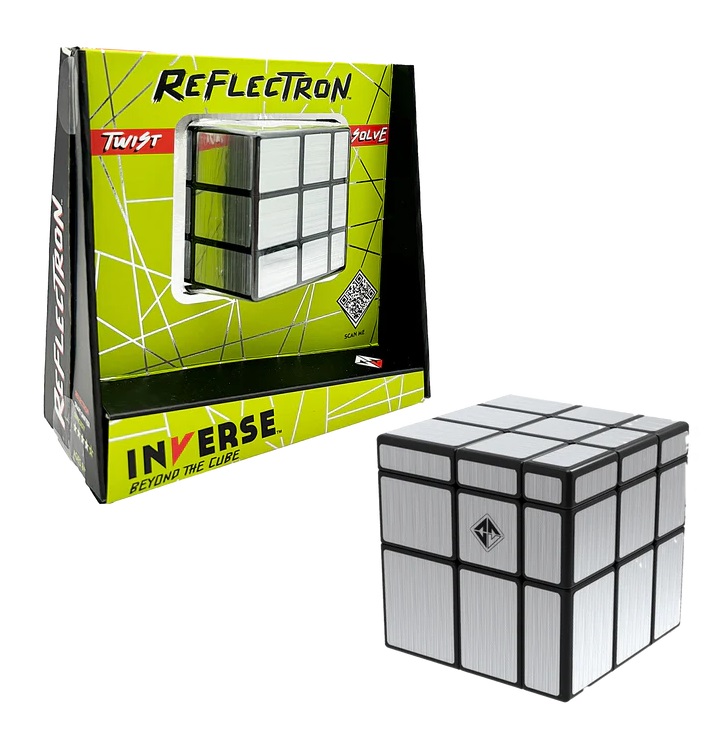
But I don’t know that I’ve seen a twisty puzzle that so neatly and cleanly reinvents the wheel quite like Project Genius’s Reflectron.

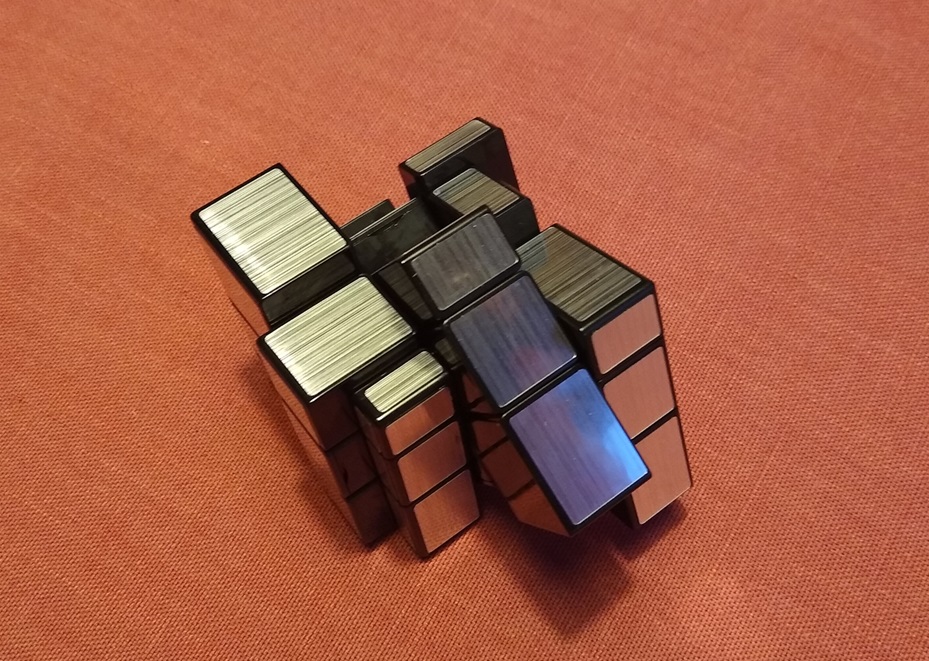
Unlike the same-sized cubes of traditional twisty puzzles, Reflectron’s squares are different sizes, meaning that it takes on wildly different and more mind-bending shapes with just a few twists!

As you can see, every twist makes Reflectron blockier, stranger, and more alien. The shiny reflective patterning also makes it feel more like an alien artifact you’re handling than the familiar, colorful twisty cube we’ve all seen before.

Reflectron takes this simple change and brings a whole new feel to this tactile solving experience, and I find myself idly returning to this twisty puzzle again and again. It’s a genuine treat to play with!

[Reflectron is for ages 8 and up, and it’s available from Project Genius and participating websites, starting at $14.99. It can also be found in this year’s Holiday Puzzly Gift Guide!]

While Reflectron offers many paths to a solution, our second brain teaser offers only one… and it’s a doozie.

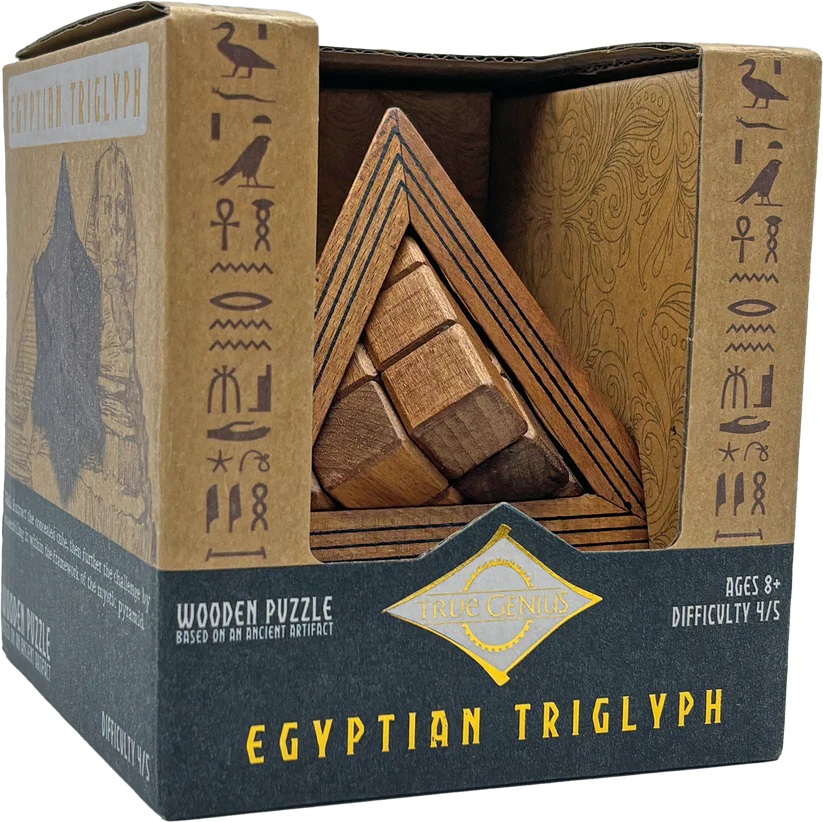
Say hello to the Egyptian Triglyph, a puzzle that combines tactile puzzle-solving with Tetris-style block pieces, absolutely warping your brain into a pretzel with its deviousness.

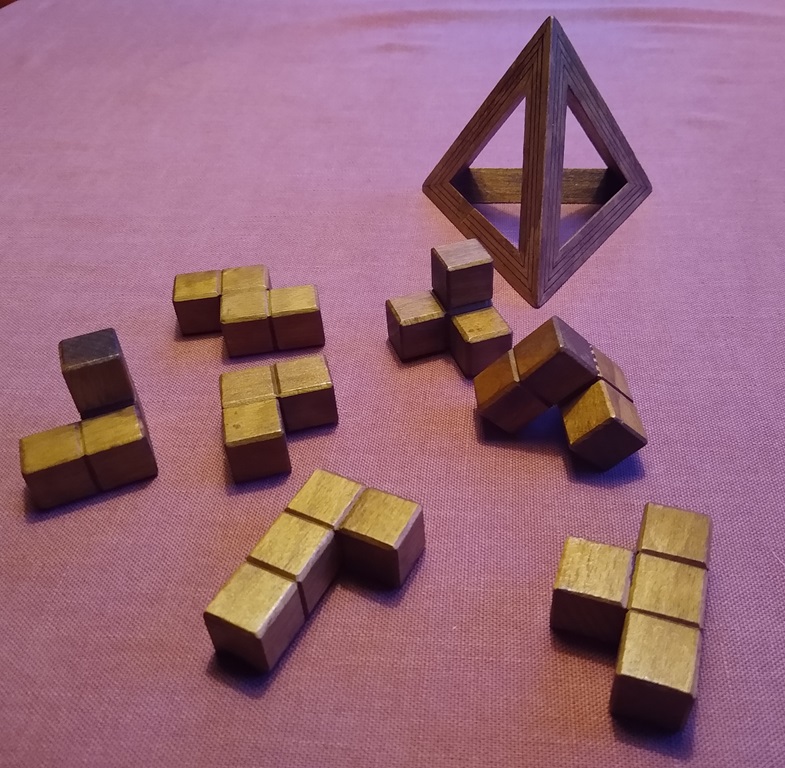
A cube inside a 3D triangular frame, Egyptian Triglyph challenges the solver to disassemble the cube into its component pieces and then reassemble the cube inside the frame.

And it’s difficult to describe the vast gulf in difficulty between unraveling this puzzle and putting it back together again.

I found disassembling the puzzle relatively easy, and I enjoyed maneuvering the pieces out of the surprisingly small gaps in the triangular frame.

But even if you pay close attention to the order in which you removed the pieces, you’ll find putting them back to be quite a daunting task. I would rank it as one of the most difficult puzzly experiences I’ve ever had.

You’ll need a steady hand, a keen eye, and loads of patience and skill to put the pieces all together again. But at least it’s less messy than old Humpty Dumpty.

Egyptian Triglyph proves that putting things back the way you found them is harder than it looks.

[Egyptian Triglyph is for ages 8 and up, and it’s available from Project Genius and participating websites, starting at $17.99. It can also be found in this year’s Holiday Puzzly Gift Guide!]

Sweep Your Eyes Across These Ugly Puzzly Sweaters!

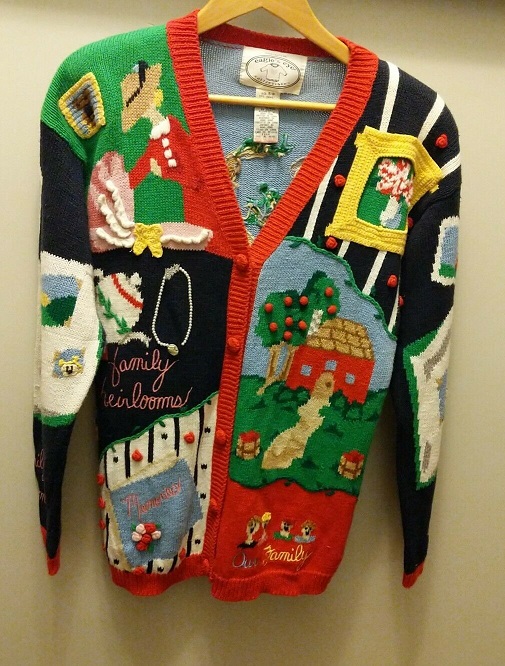
proper ugly sweater

It’s December, and you’ve probably already received an invitation to some sort of holiday event. Maybe it’s a housewarming, or a holiday luncheon, or a game night. But, maybe, it’s an ugly sweater party.

Ugly sweater parties used to be events that ironically appreciated sweaters that were made with genuine affection, but simply didn’t please the eye. But once ugly sweaters became a part of pop culture, they became, as all things do, a cottage industry, and now companies release “ugly” Christmas sweaters for every pop culture property imaginable.

Most of them are simply underwhelming — and a few are often actually quite lovely — but none of them really capture the spirit of the original ugly sweater party ideal.

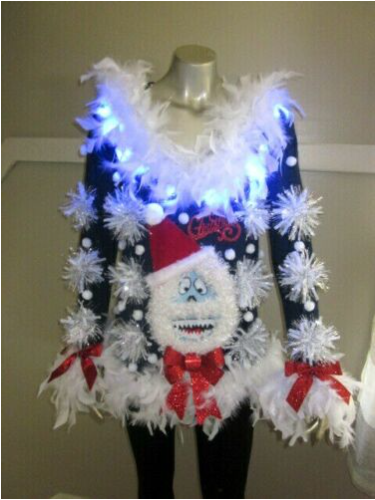
abominable sweater

Of course, there are exceptions.

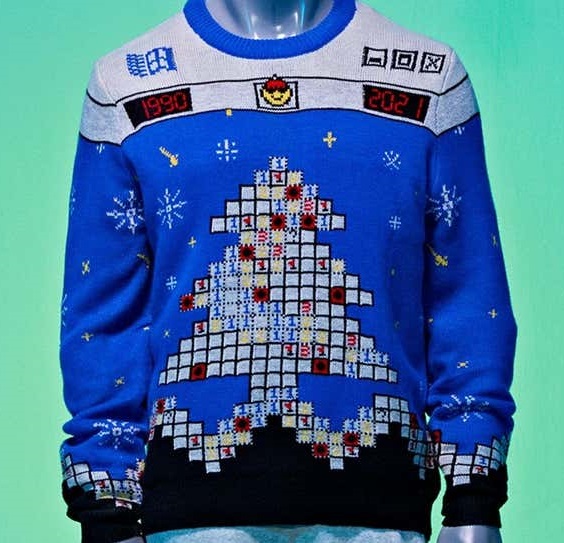
And then, there are the ones I’m on the fence about. Check out this Minesweeper-inspired ugly sweater from Microsoft:

minesweeper sweater

It’s not garish by any means. It’s cleverly designed and weirdly festive. But I also can’t imagine anyone buying it.

It’s certainly unique.

But it raised the question…

What other puzzly ugly sweaters are out there? Would they all feel too corporate like the modern ugly sweater patternings, or could I find some genuine diamonds in the rough?

Let’s find out, shall we?


Of course, when you type “puzzle ugly sweater” into Google, you find an amazing array of jigsaw puzzles featuring ugly sweater designs. And honestly, what a great idea for an image for a jigsaw. The riot of colors alone would make for a pretty fun jigsaw solving experience.

So I started pairing different puzzle brands with “ugly sweater” in my searches, and I began to yield some results, however mixed.

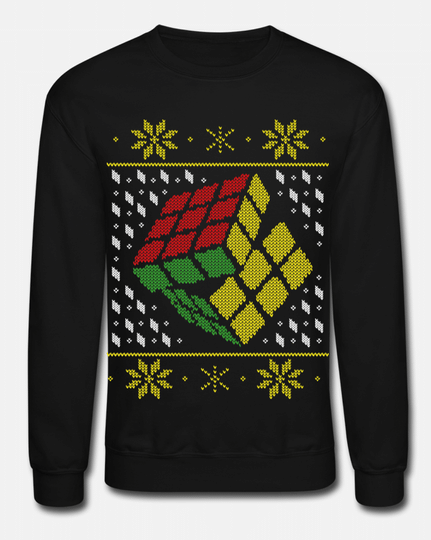
rubiks color sweater

There’s this Rubik’s sweater design, which I find a bit meh. It’s nice, it’s unoffensive. But it’s not the colorful visual assault I was hoping for.

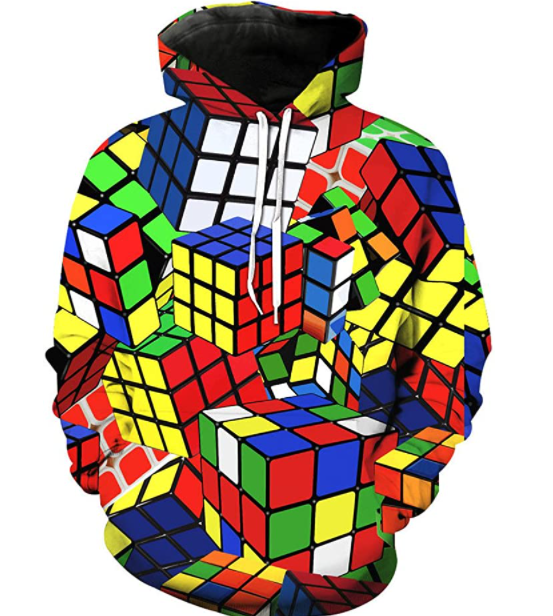
I mean, look at this Rubik’s hoodie on Amazon. At least that seems to be trying to overwhelm your senses.

ugly rubik hoodie

So what about Tetris? Tetris is part of the fabric of modern puzzling. Surely there must be some Tetris-fueled designs for ugly sweaters.

tetris moscow sweater orig

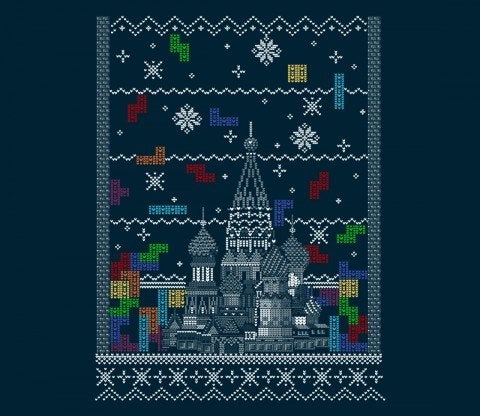
The first result I found was this pattern, which is actually quite lovely. It’s discontinued in its original sweater form, but lives on as a print for t-shirts.

tetris stack shirt

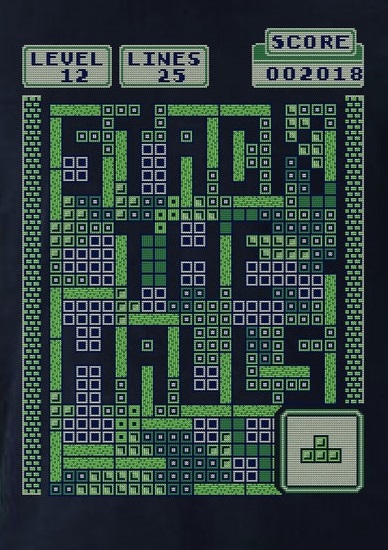
There’s also this festive message delivered in the style of the monumentally successful Game Boy Tetris version of the puzzle classic. (I’ll probably end up ordering this shirt.)

These are festive, but hardly fit the ugly sweater criteria.

falling tetris sweater

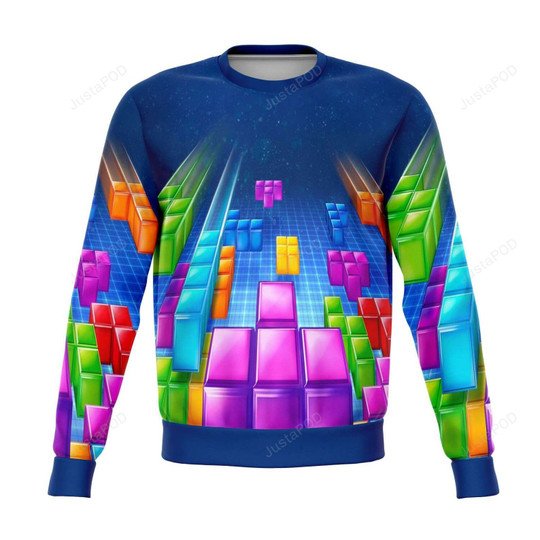
Okay, now we’re getting somewhere. It’s not particularly Christmas-y, but it does manage to barrage the eyes with color.

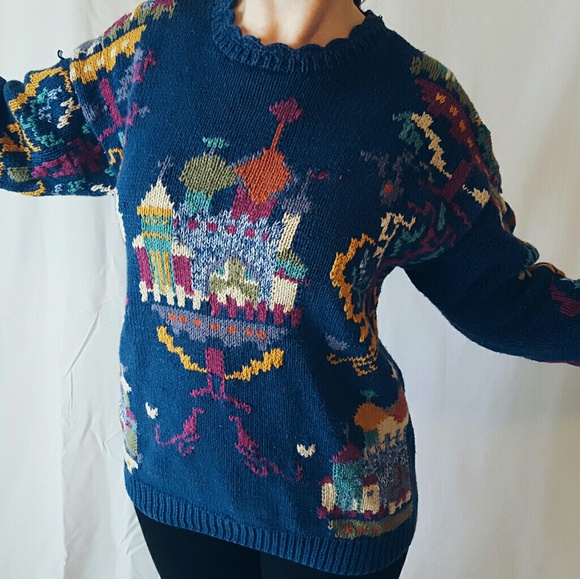
ugly tetris sweater

I found this one on Poshmark, and supposedly it won some sort of ugly sweater contest. Not sure who judged that one. This isn’t great, but it’s hardly ugly.

Alas, where else can we look?

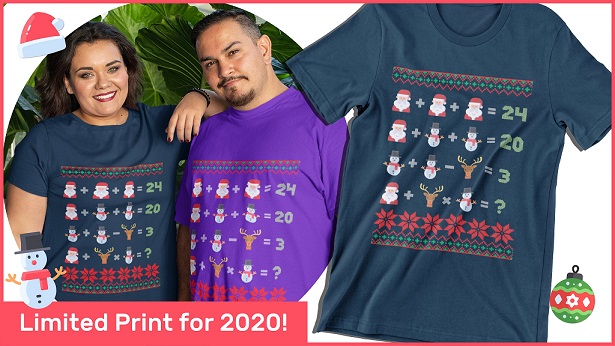
math sweater

Well, there’s this ugly sweater-patterned take on the math puzzles that periodically circulate on social media. I couldn’t find it in actual sweater form, but it’s a start.

(It also exemplifies the unsatisfying corporate nature of the modern ugly sweater pattern. Festive borders on the top and bottom, and the hook in between. Nothing on the sleeves or back, no real effort involved.)

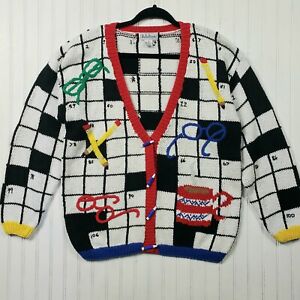
Finally, I turned my attention to crossword-specific sweaters, and I struck gold. None of these are particularly festive, but you could slap a bow on them and get past any discerning bouncer at the ugly sweater party of your choice in these.

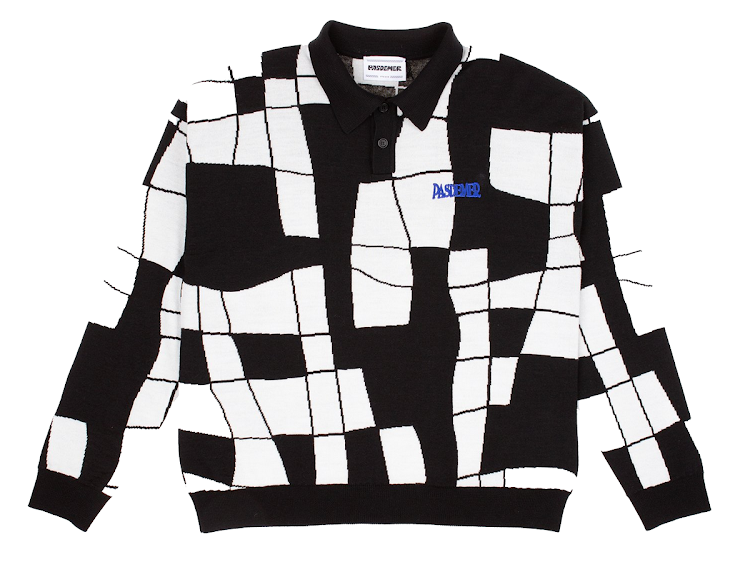
pas de mer crossword sweater

This pas de mer sweater feels like you’re looking at a cryptic crossword grid through a funhouse mirror.

poshmark diffusion crossword sweater

I also found this sweater on Poshmark. You’ll be heartbroken to discover it’s already been sold. But man, you could easily wear this one at the crossword tournament or ugly sweater party of your choice and turn a few heads.

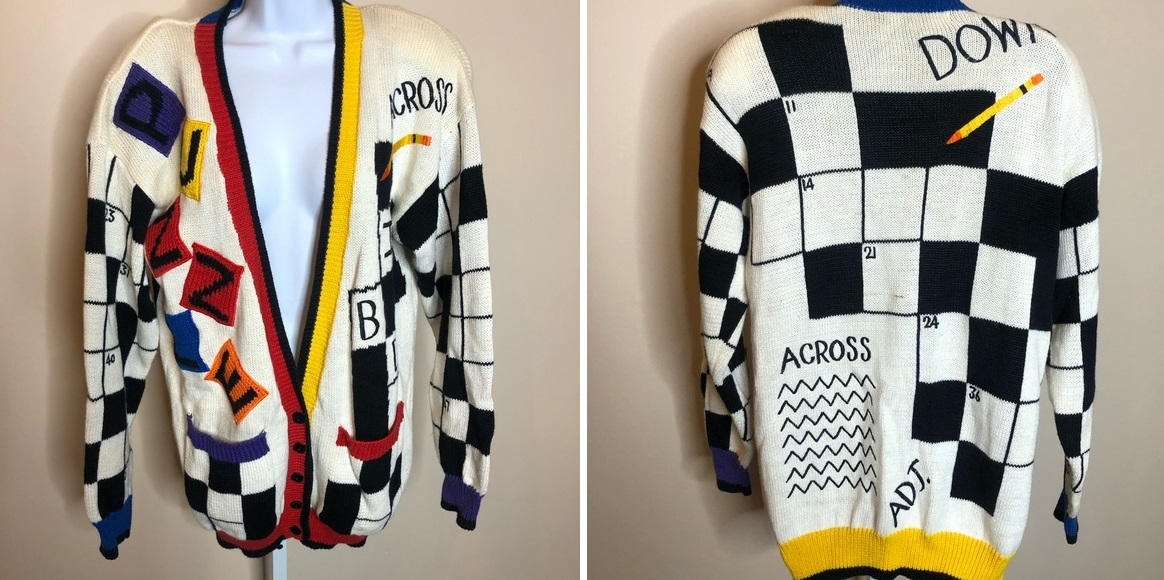
ebay ugly sweater

I wish I could find a bigger picture of this one somewhere. It was clearly made with love, and it’s one of the few that actually feels like a proper crossword grid.

crossword sweater vest

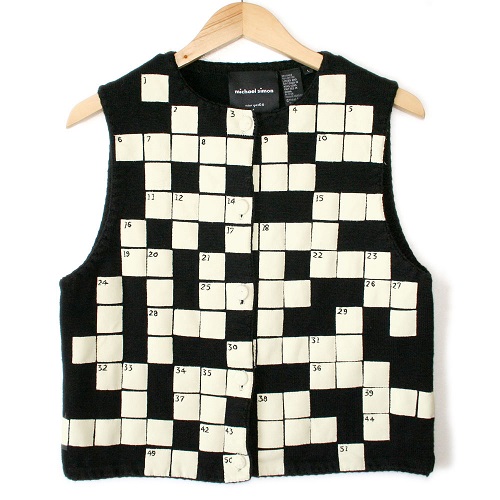
What is it about a sweater vest that somehow makes this worse than a normal sweater? Maybe it’s how the boxes don’t quite line up, or the two-letter words trailing off near the armpits. Man, this is pretty bad.

boating crossword sweater

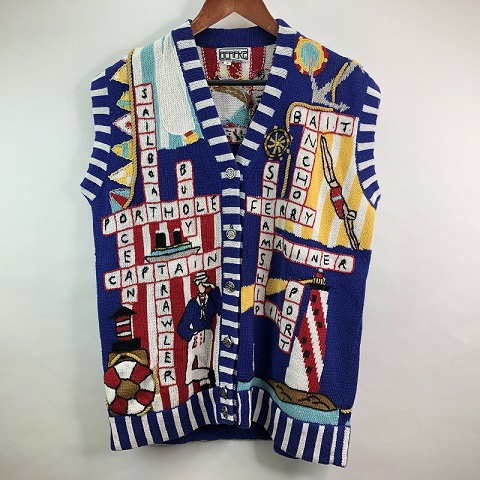
And this one, fellow puzzlers, was the pièce de résistance. The random crisscross placement. The color palette. The way the lighthouse beam doesn’t make it past the center buttons, condemning the proud cross-legged sailor nearby to a disastrous collision with the rocks near the shore.

This might not be a Christmas sweater, but man, does it fit the bill in every other way.

Do you have any favorite ugly sweater designs? Are any of them puzzle-fueled? Let us know in the comments section below! We’d love to hear from you.


   dailypopwsicon

Treat yourself to some delightful deals on puzzles. You can find them on the Home Screen for Daily POP Crosswords and Daily POP Word Search! Check them out!

Thanks for visiting PuzzleNation Blog today! Be sure to sign up for our newsletter to stay up-to-date on everything PuzzleNation!

Puzzling and Brain Health Update: Crosswords and Jigsaw Puzzles

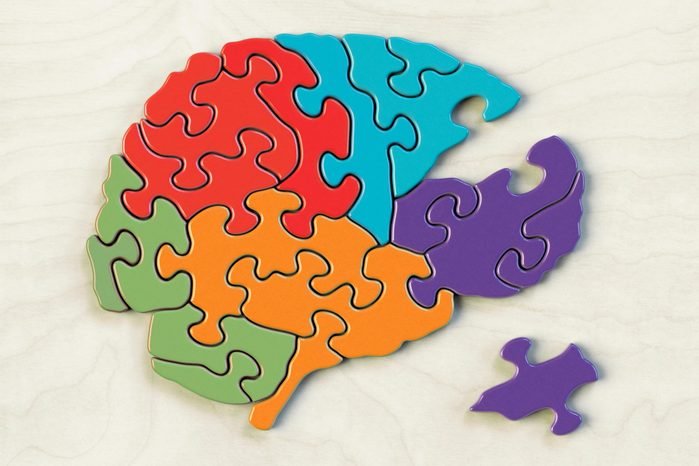
brain health

[Loads of images come up when you google “brain health” or “brain fitness,”
but I liked this one much more than all of the ones with brains lifting barbells.]

“Brain health.” “Brain fitness.” “Brain-training.” Ever since I started writing for PuzzleNation Blog, I’ve been chronicling the debate over whether solving puzzles makes a verifiable, detectable impact on brain function, development, and overall health.

There are plenty of puzzle magazines, apps, websites, and services that claim to help with brain fitness. Some make vague assertions related to memory, mental flexibility, and other cognitive functions. Others are insanely specific, promising to reverse the aging process or to help prevent the onset of dementia and other cognitive difficulties later in life.

(Examples of the latter style of advertisement are rarer these days after Lumosity’s two-million-dollar payout for falsely advertising that their puzzle games could “reduce or delay cognitive impairment associated with age and other serious health conditions,” as well as “stave off memory loss, dementia, and even Alzheimer’s disease.”)

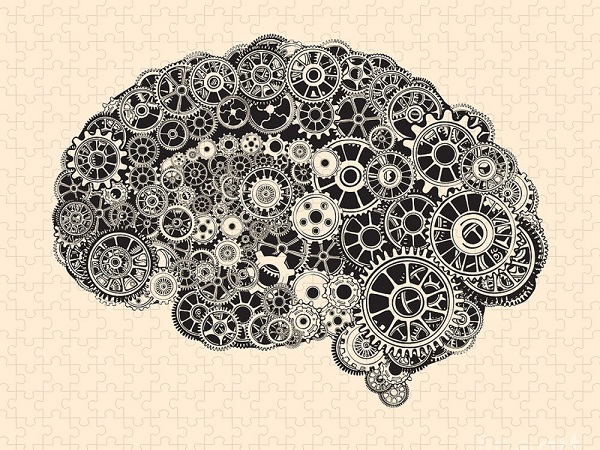
cogs-in-the-shape-of-a-human-brain-ryger

[This puzzle by Ryger can be found here!]

Whether we’re talking short-term or long-term benefits to brain health from puzzling, you’ll find dozens of articles online arguing both sides. Unfortunately, so much of the data out there is inconclusive, or is hindered by test groups too small to be applicable to the general population.

However, the positive, verifiable data we can find is encouraging.

Tetris has been used by researchers to help people suffering from traumatic flashbacks, a type of post-traumatic stress. The University of Exeter conducted a study involving more than 19,000 participants that concluded that adults age 50 and older who regularly solve puzzles like crosswords and Sudoku have better brain function than those who do not.

(While 19,000 is still relatively small when compared to millions upon millions of adults over 50, it’s still one of the largest test groups yet assembled for brain health studies related to puzzles.)

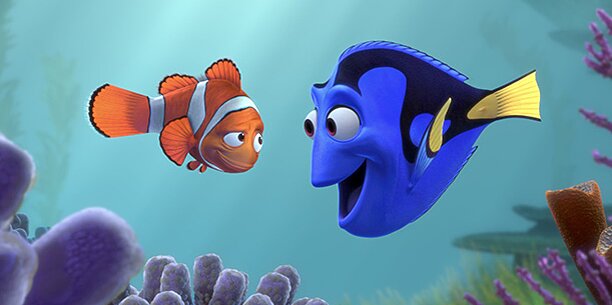
dory

And while people are always discussing short-term memory or long-term memory and how they relate to puzzle solving, it turns out there’s a middle ground between the two that crosswords may have a positive effect on. An article from Scientific American last year discussed how crossword solving engages the episodic buffer, one of the mechanisms related to our working memory, our ability to temporarily hold information while performing cognitive tasks.

Most cognitive activities engage the working memory through either verbal components or visuospatial components. (Visuospatial means how we perceive the relationships between different objects in multiple dimensions). But as it turns out, while playing Scrabble or solving crosswords, both visuospatial and verbal components are utilized by the short-term memory.

Of course, this is preliminary work, and there’s so much more to learn about short-term and long-term memory, but apparently, wordplay like Scrabble and crosswords could have a unique effect on how our working memory functions. That’s pretty cool!

But they’re not the only puzzles that we’ve discovered some fascinating new details about. Jigsaw puzzles can have a positive effect on the brain during the solving process.

BrainGames-scaled

Now, like crosswords and Sudoku puzzles, jigsaw puzzles have been the subject of several articles claiming they can help with brain health (or even decrease the presence of Beta-amyloid protein in the brain, a major component of the plaque that indicates Alzheimer’s disease). But I cannot verify those facts in scientific journals to my satisfaction, so I’m tabling that part of the argument.

What I do want to talk about it is how jigsaw puzzle solving can induce a mental state similar to dreaming, one that helps with stress, relaxation, and mood.

The company Sanesco Health is heralded as an industry leader in neurotransmitter testing, and according to an article on their site, placing those tricky little pieces in the right places can do you a world of good:

The connections made while working on jigsaw puzzles aren’t limited to our brain cells. Exercising both sides of the brain simultaneously also allows the brain to move from a Beta state, the wakeful mind, into an “Alpha” state, the same mental state experienced while dreaming. The Alpha state is where we tap into our subconscious mind.

Jigsaw puzzles naturally induce this state of creative, focused meditation, where connections can be made on deeper levels. And that release of dopamine with every puzzle piece you successfully place is an added bonus! Dopamine causes improved motor skills, an increase in concentration, optimism, confidence, and an enhanced recollection.

[Imagine how restful she felt after this!]

Considering that jigsaw puzzle sales spiked during the pandemic — with some outlets reporting sales increases of up to 500% — it sounds like people were either consciously or subconsciously making the perfect choice to cope with the stresses of lockdown.

As always, we’ll keep our eye out for any additional data on these findings.

But in the meantime, happy puzzling! It might be good for you!


dailypopwsicon

Well, summer’s over, but we still have deals galore for you to check out. You can find them on the Home Screen for Daily POP Crosswords and Daily POP Word Search! Check them out!

Thanks for visiting PuzzleNation Blog today! Be sure to sign up for our newsletter to stay up-to-date on everything PuzzleNation!

The Mind-blowing Variety of Puzzles

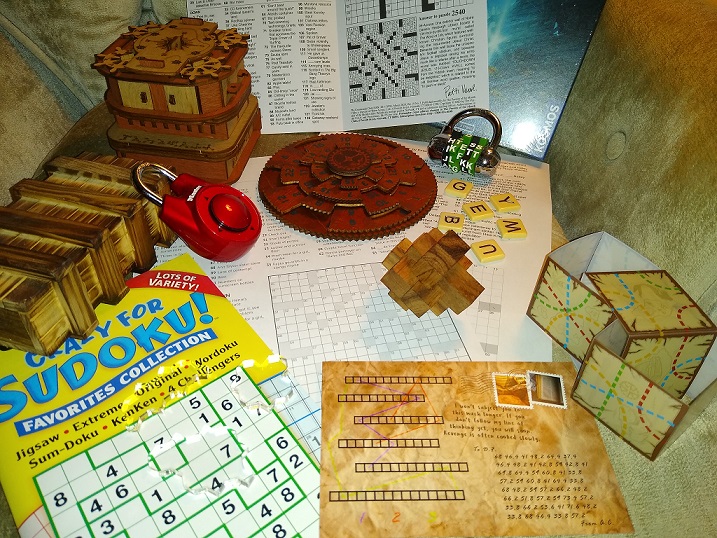
[A sampling of puzzles of many sorts: crosswords, puzzle boxes,
mechanical brain teasers, tile puzzles, riddles, and more!]

It really is incredible how many forms puzzles can take.

Think about it. Whether you’re talking Rubik’s Cubes, cryptograms, jigsaws, Sudoku, brain teasers, riddles, crosswords, escape rooms, tangrams, word seeks, sliding tiles, deduction problems, coded messages, or anagrams, they all fall under the umbrella of puzzles.

A puzzle can be as simple as pencil and paper or as complex as a multi-stage puzzle hunt or escape room, replete with codes, keys, hidden buttons, mechanical devices to assemble or utilize, and more. The folks at ThinkFun, for instance, have employed everything from ropes and magnets to lasers and mirrors in their puzzles.

That’s some extreme variety.

And the field of possibilities only widens when we add video game puzzles to the mix. We’ve previously talked about games like Tetris and Portal, where you must think in 2D and 3D respectively. We’ve seen games where you change the rules of the world to proceed or even interfere with the coding of the game itself to solve problems.

In the last few years, indie game designers and big studios alike have produced puzzle games that continue to push the boundaries of puzzly minds.

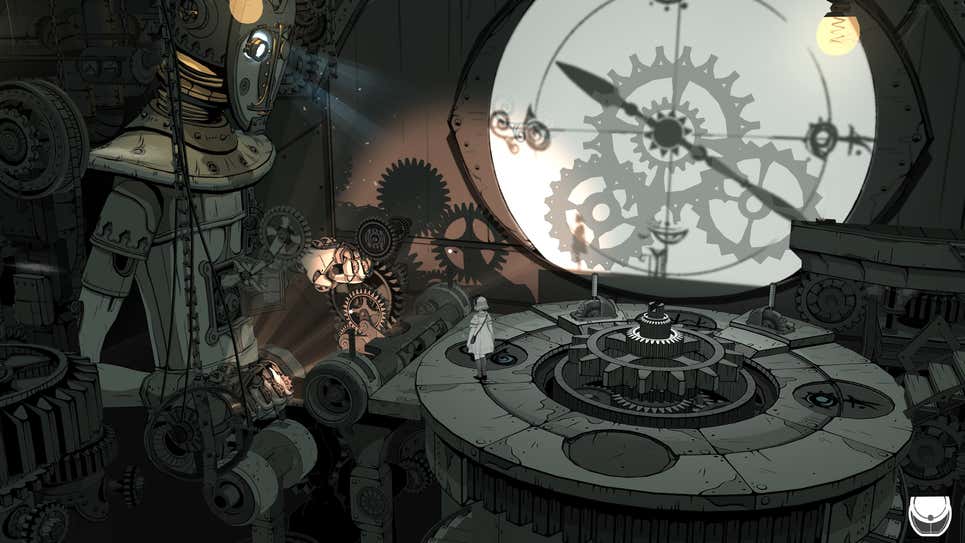
For instance, in Iris Fall you solve puzzles and maneuver around obstacles by playing with light and shadow. By moving light sources and interacting with the environment, both the light and the shadows it creates allow your character to play with perspective and illusion in order to accomplish tasks. It’s very cool!

In a similar vein, the game Superliminal challenges you to solve puzzles and move from room to room by shifting perspective. For instance, if you pick up a small item and then pull it close to you so that it looks bigger, it BECOMES bigger.

Check out this playthrough to see this mindbending puzzler in action:

The game Maquette works off of a similar concept, but requires you to think in both big and small terms. In Maquette, you have a city to explore, and in order to do so, you also need to manipulate a miniature version of the city that affects the world outside.

For instance, there’s a bridge with the center path missing. How can you reach the other side with only a key in your hands?

Easy. You take the key, place it over the same bridge gap in the miniature, and then walk back to the real bridge, where a giant version of that key is now spanning the gap.

And now there’s Viewfinder, a game where you use a Polaroid-style camera to take pictures that you can then place into a three-dimensional world and turn them into structures you can interact with and solve problems!

These sorts of puzzle games help reinforce one of the fundamental rules of puzzle-solving: always be willing to change your perspective and come at the puzzle from another angle. It works with wordplay, it works with brain teasers, and it works in three-dimensional perspective puzzles in video games.

What’s your favorite flavor of puzzles, fellow PuzzleNationers? Have you learned something from one kind of puzzle that you’ve been able to apply in another style of puzzling? Let us know in the comments section below! We’d love to hear from you.


dailypopwsicon

Have you checked out our special summer deals yet? You can find them on the Home Screen for Daily POP Crosswords and Daily POP Word Search! Check them out!

Thanks for visiting PuzzleNation Blog today! Be sure to sign up for our newsletter to stay up-to-date on everything PuzzleNation!

A Kinder, Gentler Tetris? How!?

[Image courtesy of Eurogamer.]

If there was a Mount Rushmore of puzzle games, Tetris would have to be up there. It made the Game Boy one of the most successful mobile platforms in gaming history. It has been played on every continent AND aboard the International Space Station.

Everyone has played Tetris at one time or another. In fact, it’s so ubiquitous that you’ve probably not only played the original, but some variation on the classic version as well.

And there is no shortage of options on that list. Heck, Tetris creator Alexey Pajitnov himself created several famous variations on Tetris, like Hatris (stacking similar hats to clear them from the board), Faces…tris III (where you create famous faces Tetris-style), and Welltris (where pieces fall down all four sides of a cube, and the bottom part is the communal playspace).

[A game of Welltris in progress.]

So what else is out there in the world of Tetris?

There is four-player Tetris (Familiss), Tetris with bombs (Super Tetris), Tetris in a cylinder (V-Tetris), color-specific Tetris (Tetris 2), 3-D Tetris, 3-D Tetris in a sphere (Tetrisphere), speed Tetris (20G or Tetris: The Grand Master), Tetris with earthquakes and meteors (Tetris Elements) and many many more.

As you can see, many of these variations are designed around making the classic game harder. One that we’ve discussed in the past, a 4-directional Tetris variation called Schwerkraftprojektionsgerät, was a personal favorite for a long time.

But easily the most diabolical version was created eleven years ago, and it was aptly named.

Hatetris.

Hatetris is designed to give you the worst possible piece on every turn.

hatetris 1

After figuring out what to do with multiple S pieces, Hatetris throws me a curveball with an I piece.

hatetris 2

Then once I’ve placed the I piece, they flip the script on me with a Z piece. Diabolical.

For the record, after about 30 minutes of play, my record was 3 lines.

hatetris 3

That is brutal.

And after the year or so that many of us have had, who needs brutal?

lovetris 2

Thankfully, the spiritual opposition to Hatetris has appeared for everyone to enjoy. It is, of course, called Lovetris, and it is designed to drop the exact piece you need to clear a line.

lovetris 3

Now, I know what you’re thinking. After a few easy ones, doesn’t it lose its flavor?

On the contrary! It actually offers some new challenges if you approach it from a different direction.

The designer warns that setting up a tetris — eliminating four lines with a single piece — can be difficult when the game is geared toward clearing single lines. That’s one possible challenge for you to solve.

Another that I quite enjoyed was trying to arrange the pieces so I cleared the board entirely. Can you arrange the pieces so that, once you’re done, you’re left with a clean slate to try over with?

A third option is to purposely drop five or six pieces in a row randomly — or even in a tower in the center of the screen — and then work with the program to dig your way out of your predicament.

lovetris

[Even with the AI’s help, this is a doozy to clear.]

Amazing that it took 37 years for someone to come up with this.

So what do you think, fellow puzzlers and PuzzleNationers? Will you be trying out Lovetris, or enduring Hatetris for a spell, or trying out one of these many variants? Let us know in the comments section below! We’d love to hear from you.


Thanks for visiting PuzzleNation Blog today! Be sure to sign up for our newsletter to stay up-to-date on everything PuzzleNation!

You can also share your pictures with us on Instagram, friend us on Facebook, check us out on TwitterPinterest, and Tumblr, and explore the always-expanding library of PuzzleNation apps and games on our website!