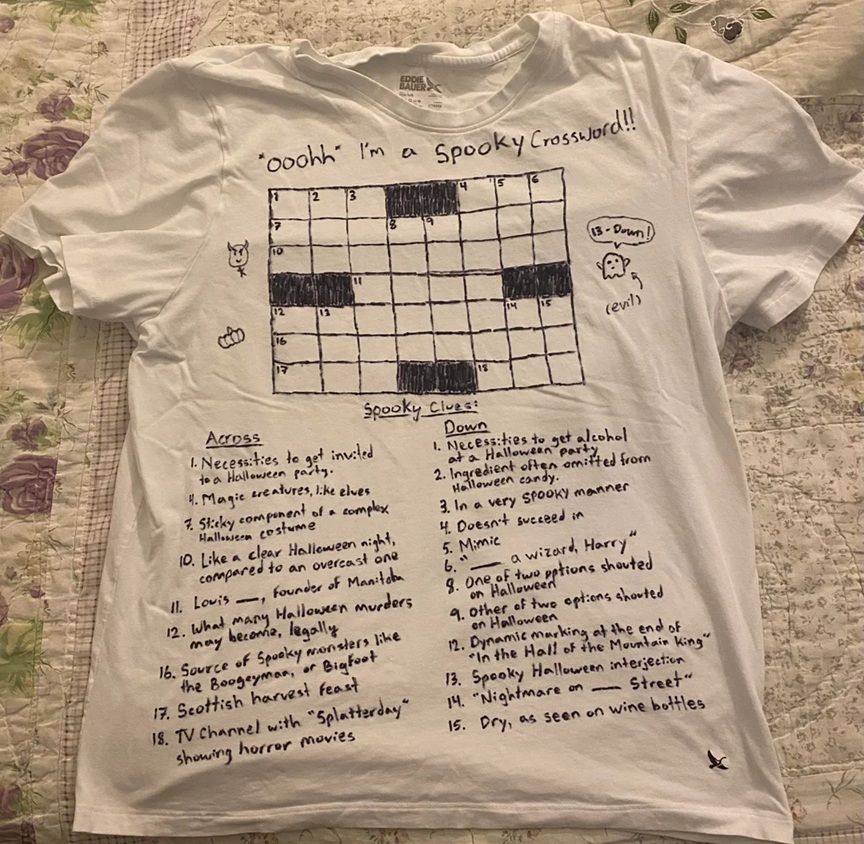
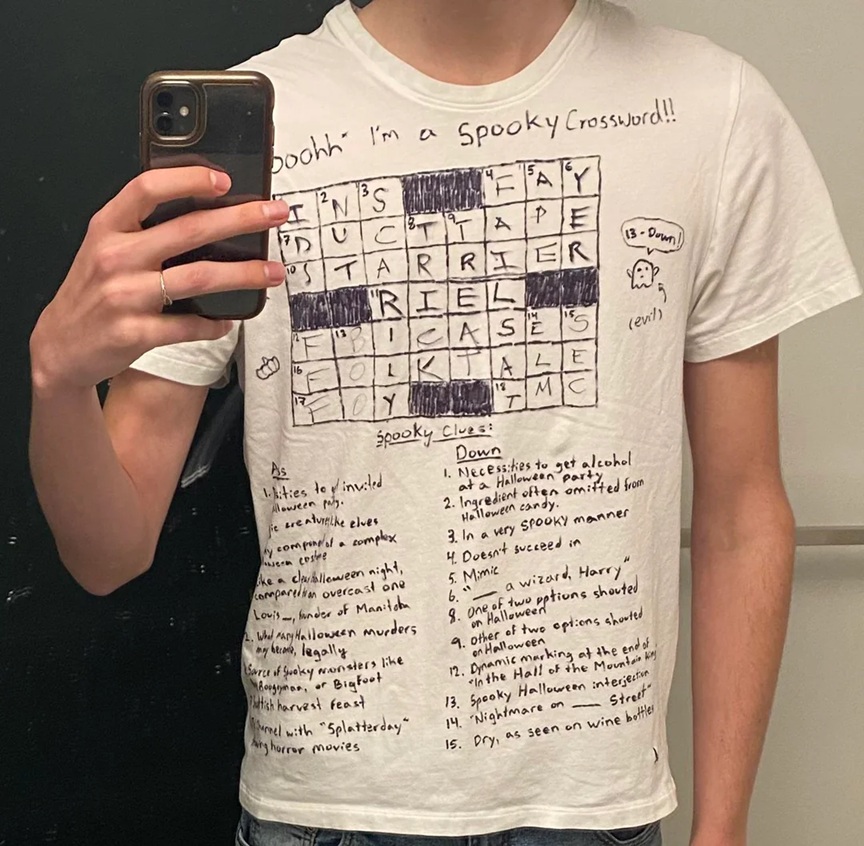
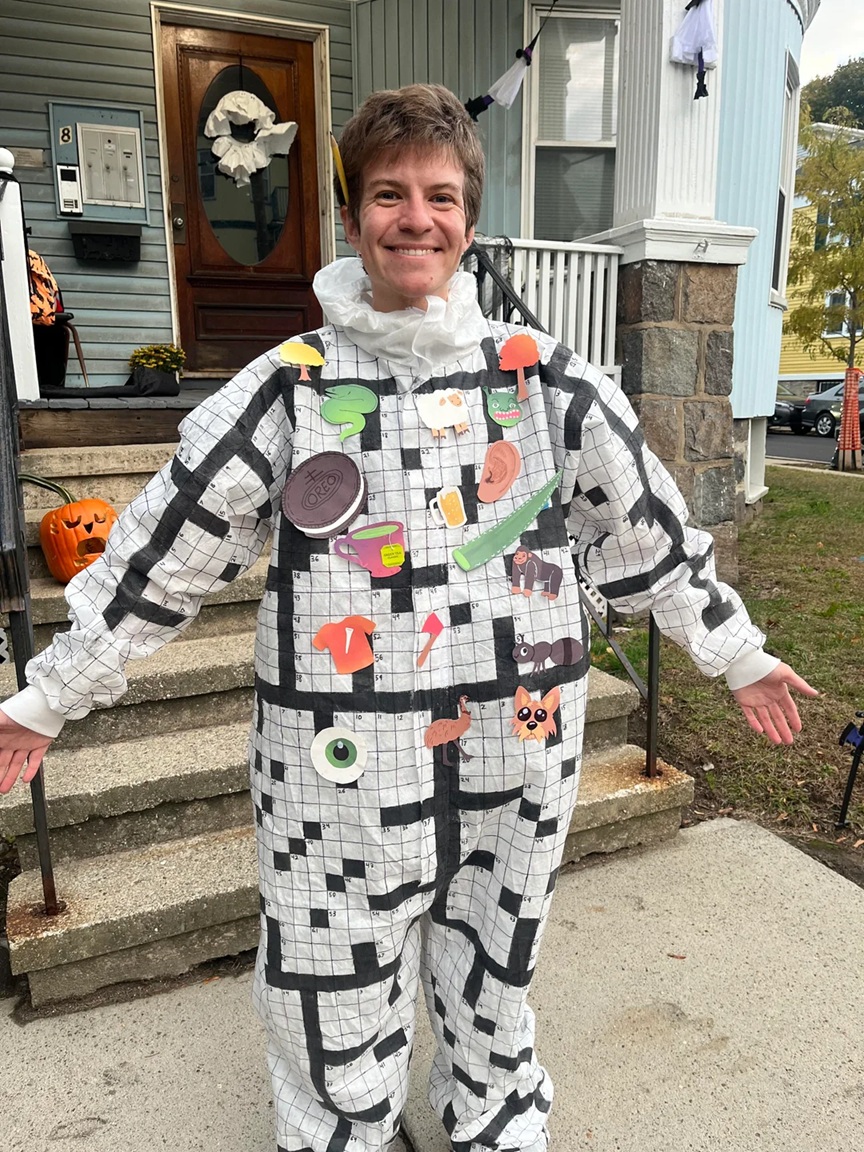
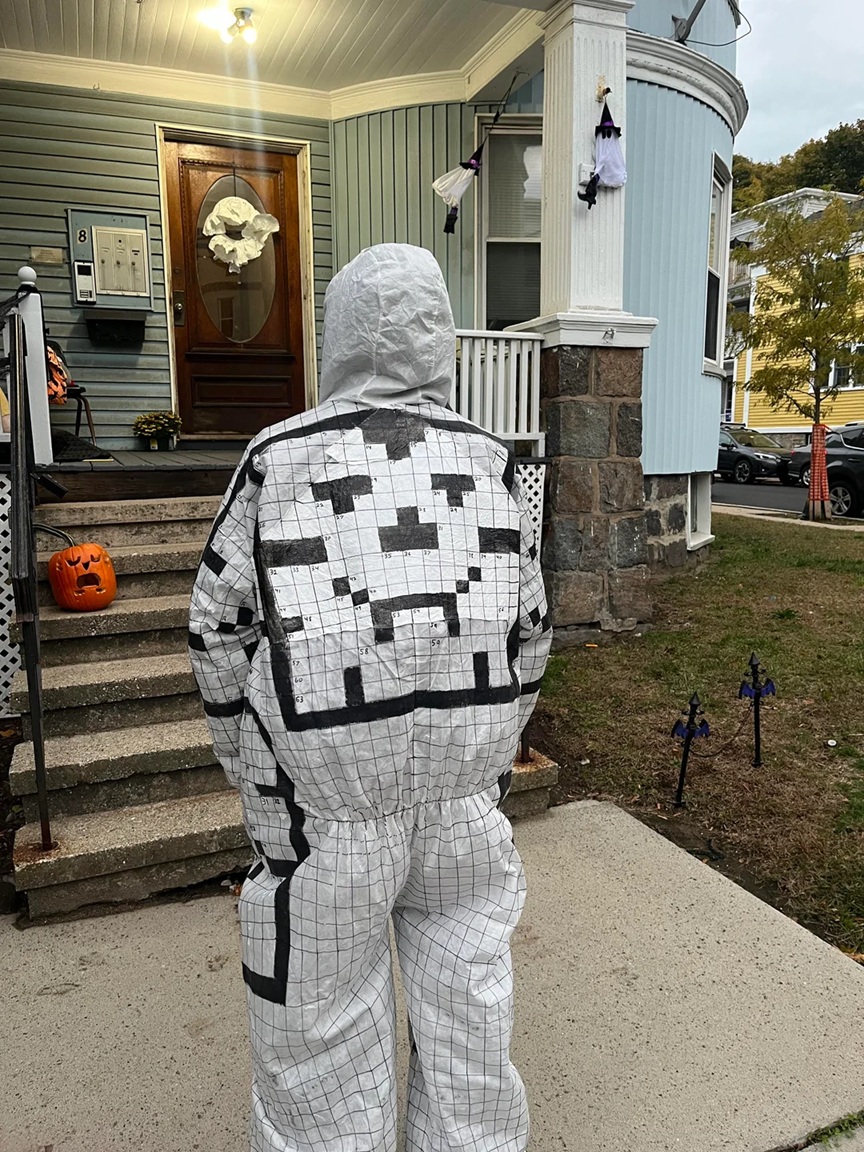
They went as common crossword answers! This jumpsuit made of Halloween grids is loaded with crosswordese and familiar vocabulary in picture form. Can you name them all?
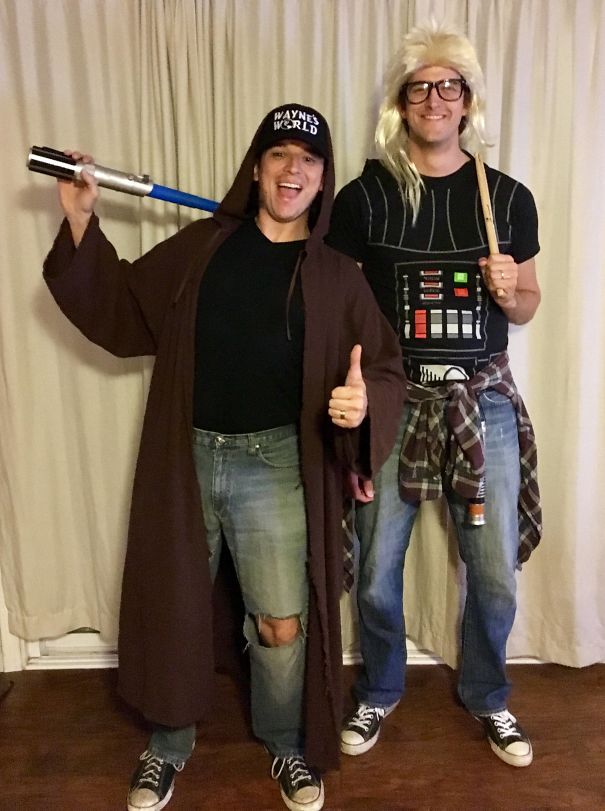
So fun to see people getting into the Halloween spirit in a puzzly way. Nicely done, both of you!
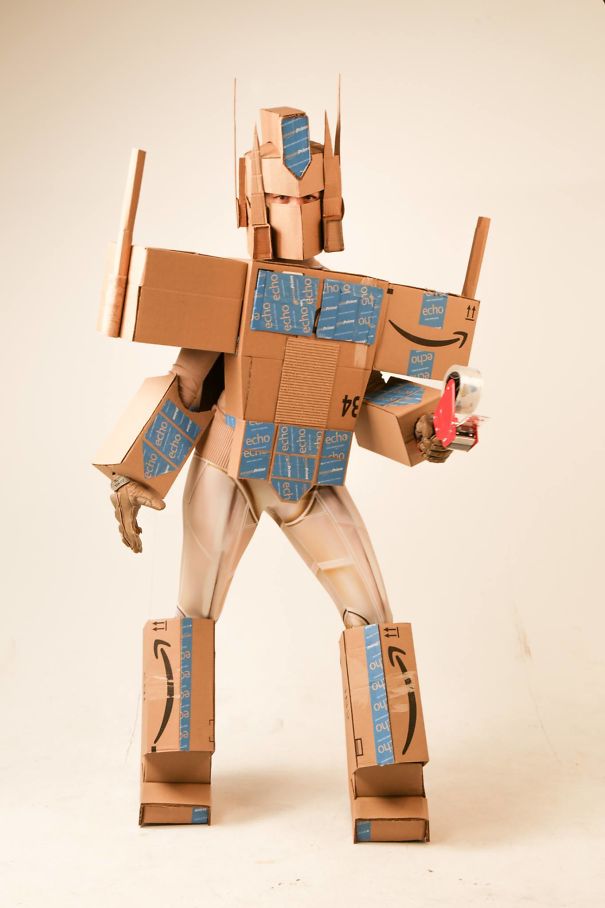
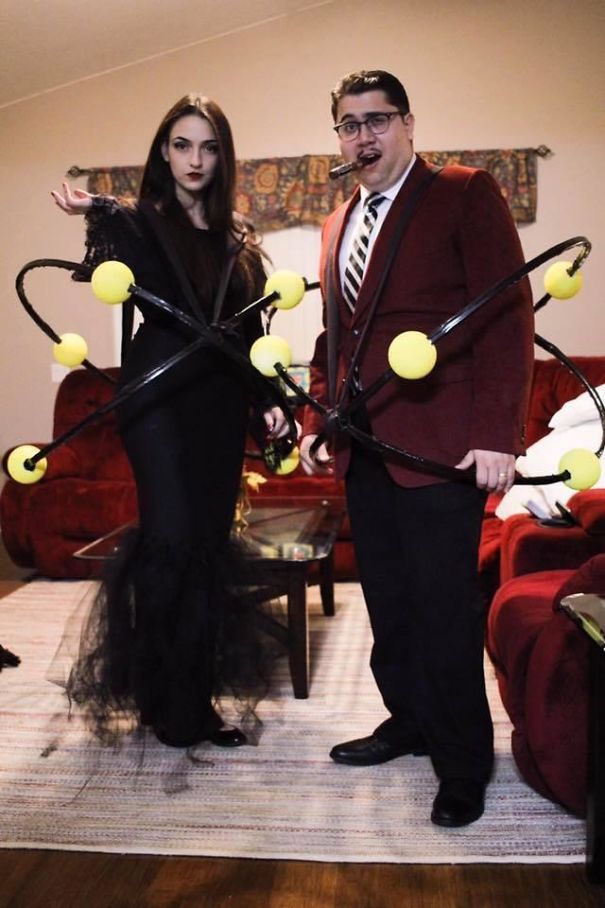
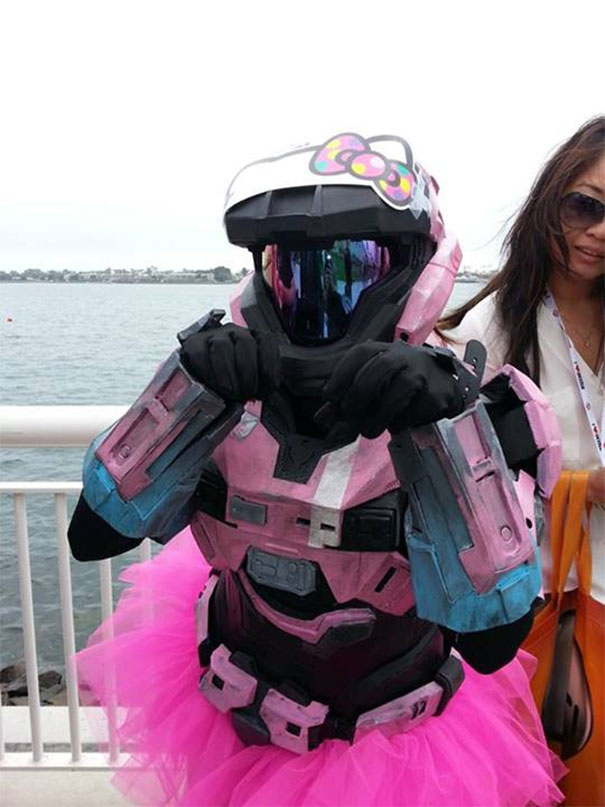
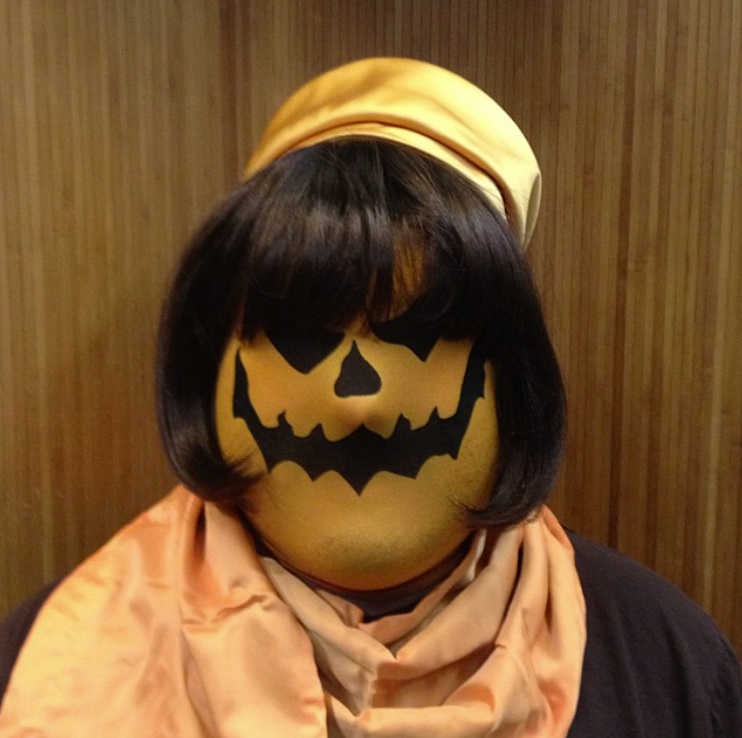
Now let’s check out some other creative costumers as we reveal the punny answers to last week’s game!
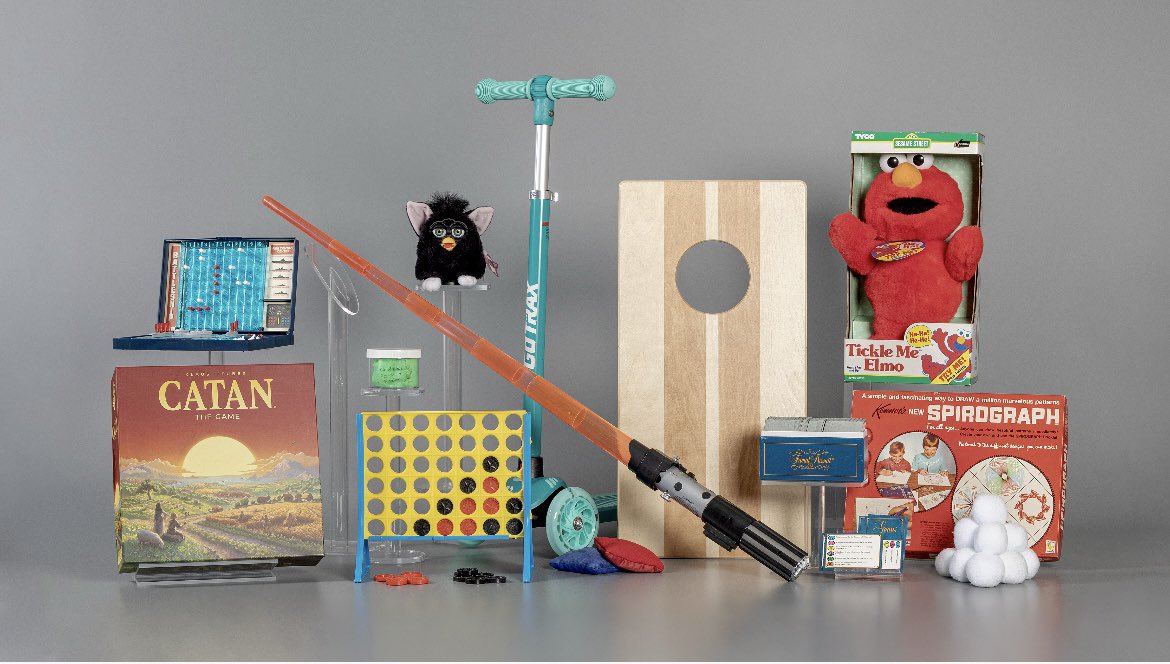
This year’s contenders for the National Toy Hall of Fame Class of 2025 have been whittled down to 12 finalists, and the competition is fierce.
You’ve got classic toys from across the decades (Furby, spirograph, Star Wars lightsaber, Tickle Me Elmo), representatives from more physical activities (scooter, cornhole), board games (Battleship, Catan, Connect Four, and Trivial Pursuit), and even materials kids play with (slime, snow).
The idea of “play” is represented in so many different ways across these 12 finalists, and it really encompasses just how vast and varied play is, how much imagination and expression and creativity are reflected in all sorts of different childhood experiences.
Personally, I’m rooting for the lightsaber, Trivial Pursuit, and snow to make the cut. I’ve been a Star Wars fan since I was 2. Trivial Pursuit was the first trivia game I can remember playing (even if it was an edition intended for players way older than I was at the time). And snow is so fundamental to winter play — sledding, snowmen, snowball fights, DAYS OFF FROM SCHOOL TO PLAY — that it’s surprising it hasn’t already been inducted.
(Though I suspect Catan, Connect Four, and Tickle Me Elmo will make the cut instead of some of my faves.)
Yes, while the final determinations are made by the National Toy Hall of Fame’s National Selection Advisory Committee — ooh, so formal! — the three toys that receive the most public votes will be submitted for consideration alongside the top three submissions from the Selection Committee.
Which of these twelve contenders would you like to see join such playtime luminaries as Lite-Brite, My Little Pony, the stick, the Atari 2600, and the Rubik’s Cube? Let me know in the comments section below! I’d love to hear from you.
And while you’re at it, tell me what toys you think should be in the National Toy Hall of Fame!
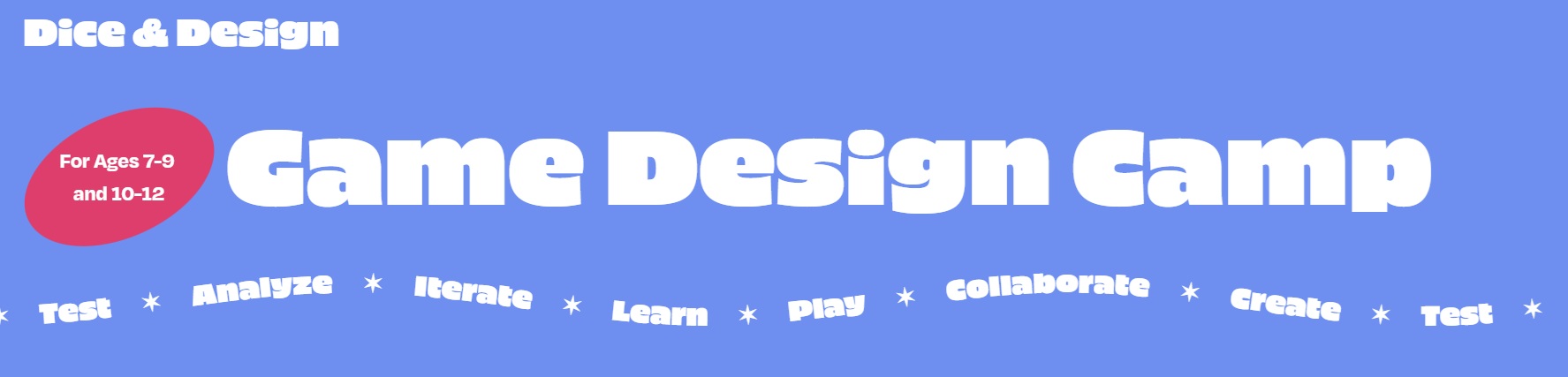
This summertime gaming festival of fun is the creation of Caro Murphy, an award-winning game designer who not only founded the Boston Festival of Indie Games, but has lectured on game design at the university level and contributed heavily to Disney’s Star Wars: Galactic Starcruiser interactive experience and Club Drosselmeyer events like this year’s Cthulhu Luau!
They’ve put together a five-day program to teach kids about game design and help them create their own card games, board games, roleplaying games, or LARPs, whatever interests them!
With morning and afternoon sessions to choose from, this seems like an awesome way to get the youngsters in your life started on a lifelong journey of game creating, appreciating, and collaborating.
Do you know of any other kid-friendly puzzly or game-fueled events happening this summer, fellow puzzlers? Let us know in the comments section below! We’d love to hear from you.
Many TV shows, films, and novels help add character to their narrative universes by mentioning the games played by the characters.
Shows and franchises as wildly disparate as Battlestar Galactica, New Girl, It’s Always Sunny in Philadelphia, The Witcher, and Pretty Little Liars have fictional games that enrich their worlds.
But sometimes, either through clever marketing or the affection of fans, these games go from fictional recreational activities to real ones, crawling fully formed from the imagination to be enjoyed across tabletops worldwide.
Today, I’d like to introduce you to a few of them. Let’s play, shall we?
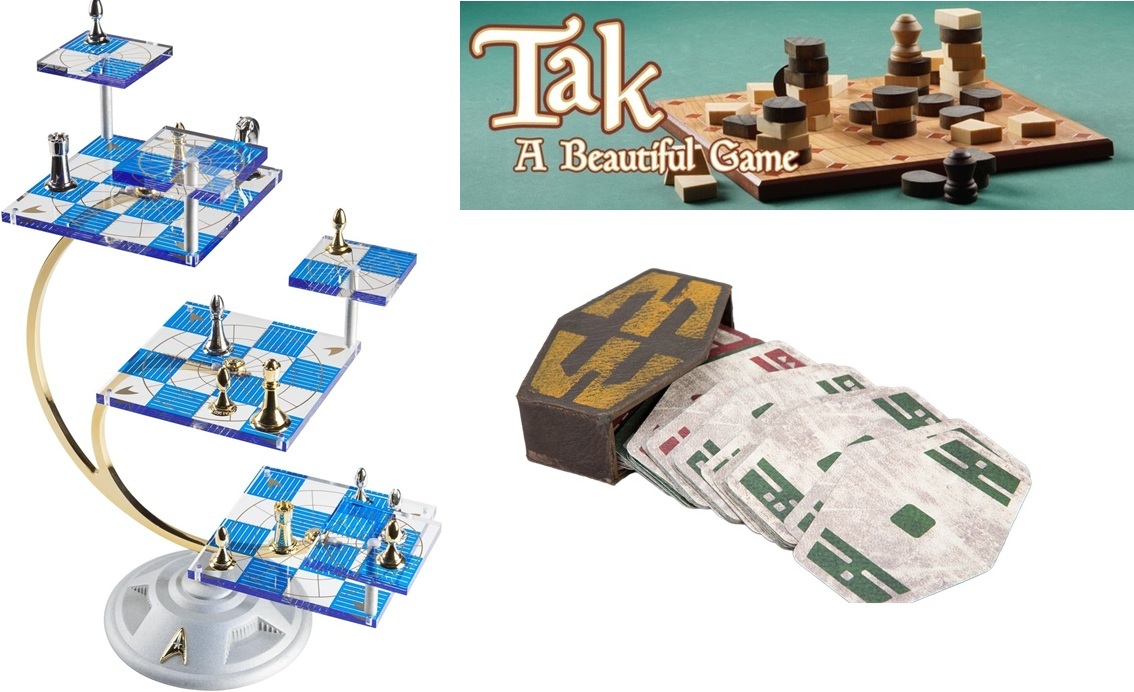
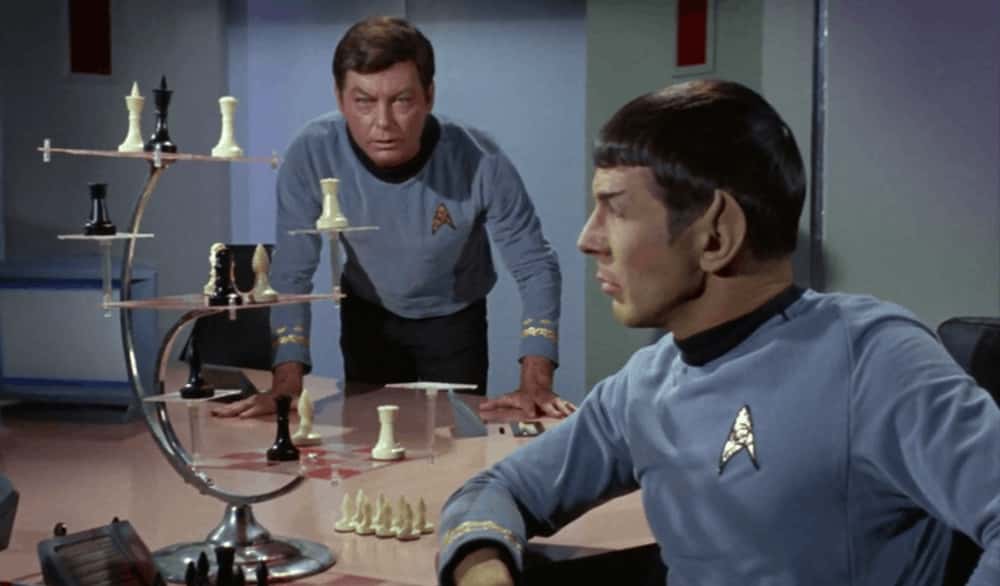
Tri-Dimensional Chess
Star Trek has been a source of many fictional games and sports over the years. Dom-jot, Chula, Dabo, Parrises Squares, and Stratagema are some of the more famous ones, but the granddaddy of Star Trek games is Tri-Dimensional Chess.
First appearing in the original series back in 1966, Tri-Dimensional Chess follows the normal rules of chess, but spread across different vertical levels. So a knight could move in its usual L-shaped format, but on its own board OR the boards above and below.
Over the years — and across different Star Trek series — we’ve heard stories about key maneuvers like the Aldabren Exchange and the Kriskov Gambit in games of Tri-Dimensional Chess, helping flesh out how influential the game is for several characters. (Heck, in one episode, Spock beats the Enterprise computer at the game, saving Kirk from a court martial!)
The Franklin Mint has released limited edition versions of the game on two occasions, and I’ve seen homemade games of Tri-Dimensional Chess at gaming and pop culture conventions over the years.
Chess remains incredibly popular — as do many variants of Chess — so it’s no surprise this fictional game made the leap to the real world. (I suspect the complicated three-person Chess game developed by Sheldon in The Big Bang Theory is less likely to make a similar leap. Especially since there are already three-person Chess games on the market today.)
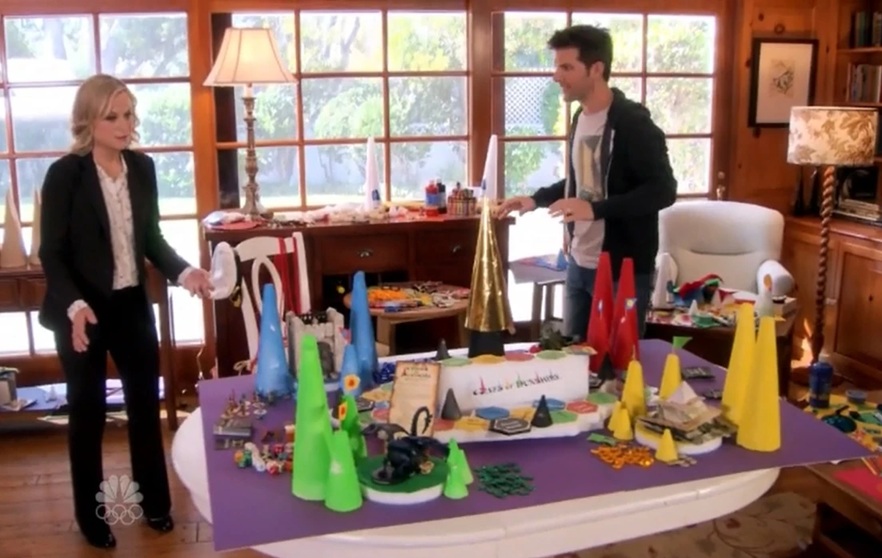
Cones of Dunshire
Ben Wyatt of Parks and Recreation enjoyed many nerdy pastimes, but Cones of Dunshire was his masterpiece.
Initially treated as a mistake, a nonsensical result of his boredom and frustrations, the game becomes a running gag in the show after Ben leaves a copy as a gift for the accounting firm that he has been hired by (and walked away from) several times during the show’s run.
Later, we find out the game has been commercially produced, and Ben stumbles across it when dealing with a dotcom company. He mentions that he invented it, but his claims are dismissed. He then proves not only his gaming skill but his authorship of the game when he beats the dotcom bosses in a tense playthrough.
It’s mentioned once that a gaming magazine called Cones of Dunshire “punishingly intricate,” a point that makes Ben proud.
Part of the fun of Cones of Dunshire (other than the parody of Settlers of Catan) is that the viewer never really understands what’s going on, so supposedly dramatic moments can be played for laughs. (I also appreciate that the name of the game is basically a fancy way of saying “dunce hat.”)
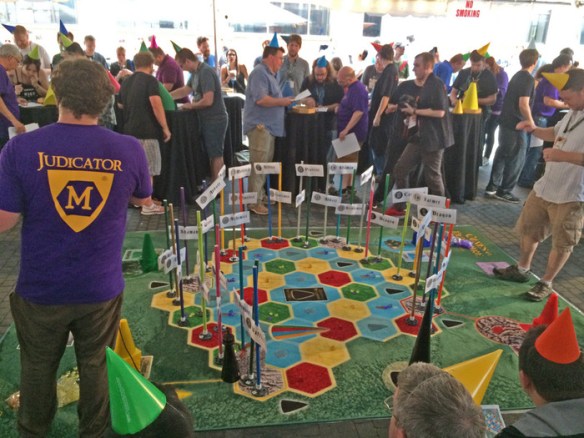
And, in the sort of cyclical storytelling that could only happen in a nerdly pursuit like board games, the company that made Settlers of Catan — Mayfair Games — produced a giant version of the game as part of a charity event at GenCon.
Both the silliest and most ambitious game to cross from fictional to real, Cones of Dunshire is a nerdy highlight of a now classic sitcom.
Tak: A Beautiful Game
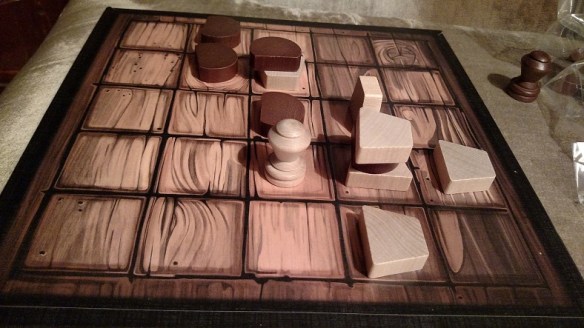
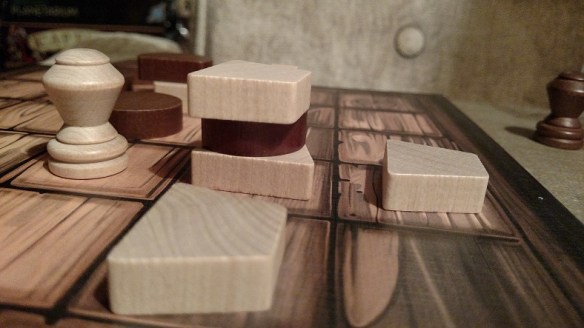
Originally introduced in Patrick Rothfuss’s Kingkiller Chronicles novels as a tavern game, Tak made the leap to the real world as a stretch goal in a Kickstarter campaign for another game.
Game designer James Ernest accepted the challenge of bringing the game to life, and his collaboration with Rothfuss created one of my all-time favorite board games.
Tak has a very simple concept: two players each attempt to build a road connecting opposite sides of the game board. The first player to successfully complete their road wins.
To do so, you place game pieces called stones, one at a time, on various spaces on the board. The stones can either be played flat (meaning they’re part of your road) or standing on edge (meaning they’re a wall, blocking any road’s passage through that space).
It’s a rare thing when a new game feels like something that could’ve been played in taverns centuries ago. For me, this is the gold standard when it comes to adapting fictional games to the real world.
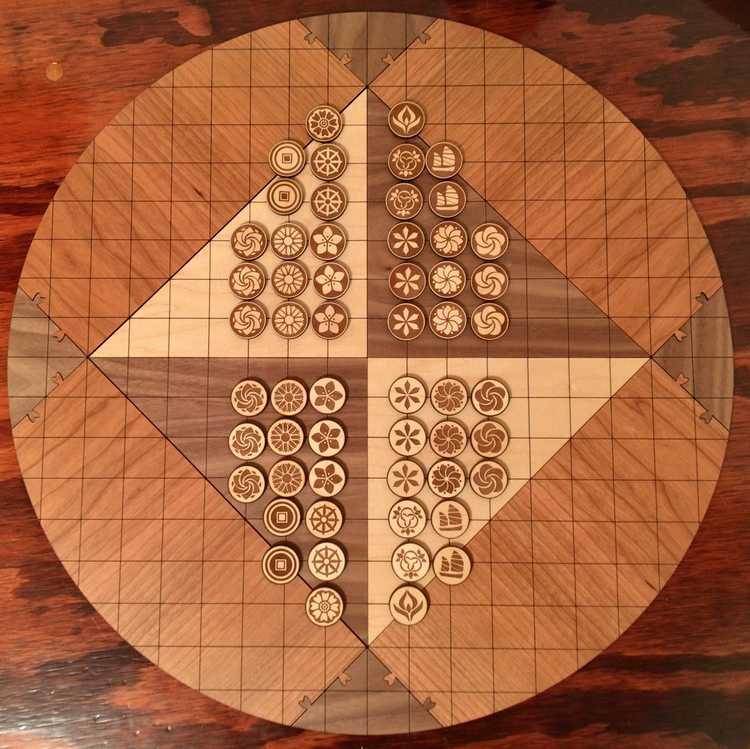
A key storytelling device in the much-beloved show Avatar: The Last Airbender, Pai Sho was a tactical tile-based game that reinforced important themes in the show.
The game had many variants (often played differently depending on the faction or nation featured) but each had the feeling of an ancient game passed down across generations.
In the most popular variant, Skud Pai Sho, the goal is to form a harmony ring around the center point of the board. Players create harmonies by placing two harmonious tiles on the same line without other tiles or obstacles. There are gates, gardens, and lines that help dictate play, as well as multiple flower tiles for players to place that accomplish different things when placed properly.
There are entire forums and websites dedicated to the rules of Pai Sho and its many variants, and the thriving fan community that continues to nurture these games well after the show’s conclusion make this one of the most heartfelt and successful transitions from fictional to real life that I can think of.
Image courtesy of starwars.com.
Sabacc
In The Empire Strikes Back, we learn about the friendly rivalry between Lando Calrissian and Han Solo, and how a wager led to the Millennium Falcon changing hands.
But exactly how it happened was only revealed later in supplementary material like the Star Wars Visual Encyclopedia and the novel Lando Calrissian and the Mindharp of Sharu.
The second draft of the script for The Empire Strikes Back mentioned that Lando won Cloud City in a “sabacca” game, but by the time additional stories fleshed out the relationship between Lando and Han, the game had been shortened to Sabacc.
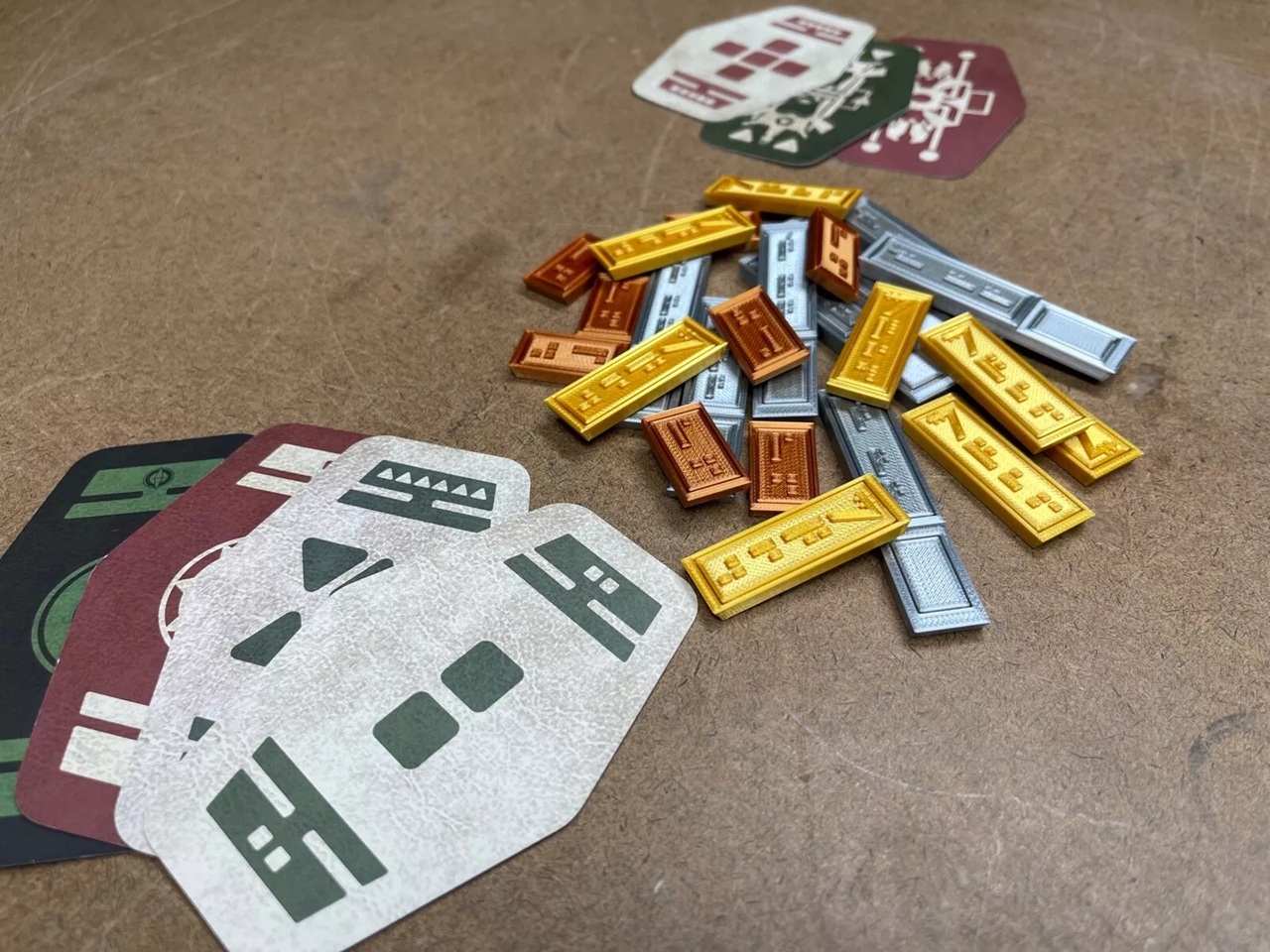
It’s sort of a combination of poker and Blackjack. You want the value of the cards in your hand to be as close to 23 or -23 as possible. Sounds simple, right?
Well, imagine a game of poker where the cards in your hand changed periodically unless you publicly locked them in by placing them on the table, where they stayed until the hand was over. That’s the basic idea behind Sabacc.
There were numerous fan versions of the game over the years, but now you can get Sabacc decks at Disney theme parks (alongside many, many, MANY other items).
Do you have a favorite fictional game that made the leap to the real world? Did we miss any major ones? Let us know in the comments below!
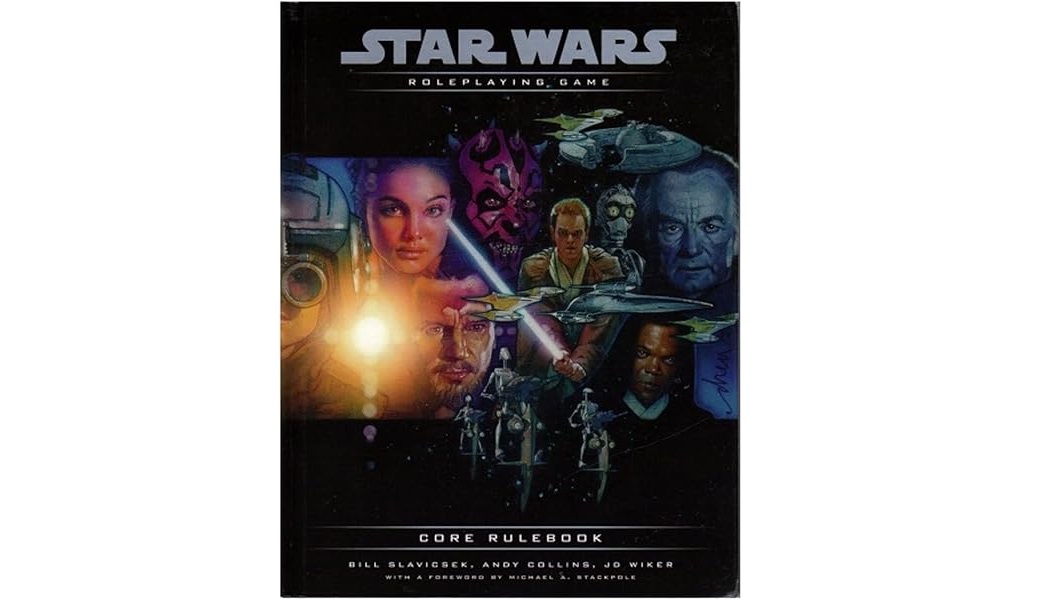
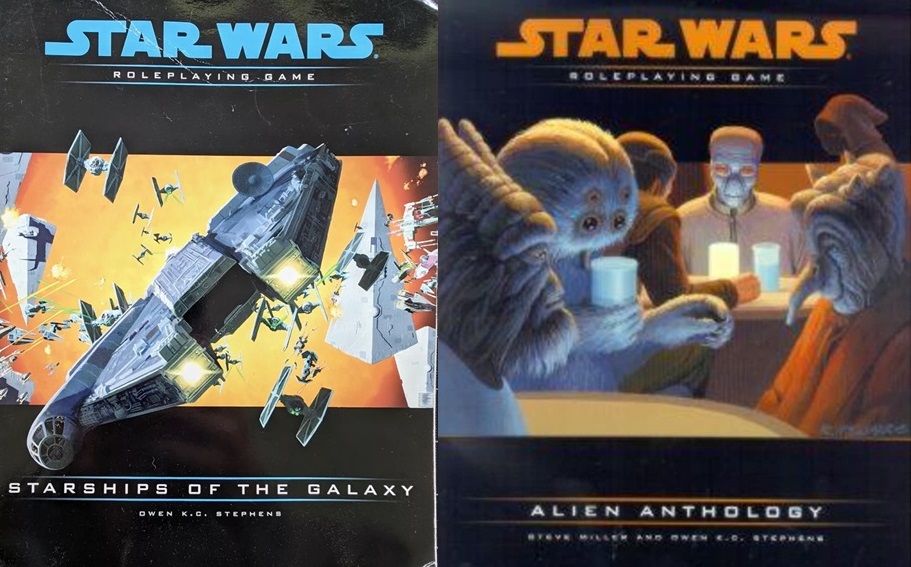
If you’ve been a roleplaying game fan over the last two decades, you’ve probably played a game that Owen has shaped in some way.
He has been an influential game writer and designer for years, contributing to the Star Wars Roleplaying Game (both the d20 and Saga editions), Dungeons & Dragons, Pathfinder, Starfinder, Everyday Heroes, The Wheel of Time RPG, and so many other games. Wizards of the Coast, Super Genius Games, Rogue Genius Games, Evil Genius Games (sensing a theme?), Paizo, and Green Ronin have all been homes for him over the years.
After an 18-month battle with colon cancer, he is still feeling the effects of his treatment and continuing the long, hard road to better health. And sadly, he is still buried under medical bills for his treatment and convalescence.
You can contribute to the GoFundMe campaign for him here.
And if you’re interested in learning more about Owen and his wonderful work in games, you can check out his website and his Patreon.
Normally, that’s how I would close out a post like this, but in this case, I hope you will indulge me with a personal anecdote.
Back in the year 2000, I discovered tabletop roleplaying.
A friend had just bought the new Star Wars Roleplaying Game (the d20 edition released around the same time as Dungeons & Dragons 3rd edition), and knowing I was a huge Star Wars fan, he invited me to play.
After a short adventure he ran for us as Game Master, he asked if I’d be interested in learning to be a Game Master myself. (I later realized he did this not only because he thought I would be good at it, but because HE wanted to play and needed someone to run for him. My friend was and is a diabolical genius.)
I ran that game on and off for nearly seven years. It gave me the confidence to explore other roleplaying games, like the Buffy the Vampire Slayer RPG, Dungeons & Dragons, Ninja Burger, and many many more, kickstarting a hobby that now spans more than two decades.
It also gave me confidence as a storyteller, pushing me to take writing more seriously (both fiction and nonfiction).
And all of that started with the d20 Star Wars Roleplaying Game.
Owen contributed to some of my favorite sourcebooks for that game (and several brilliant mini-adventures), helping make the galaxy a bigger and more interesting place for my players to explore. He is part of the fabric that helped shape me as a Game Master / Dungeon Master / Storyteller.
And I hope you’ll take a second to read about his story and help him out.
Best of luck to you, Owen, and happy puzzling, friends.
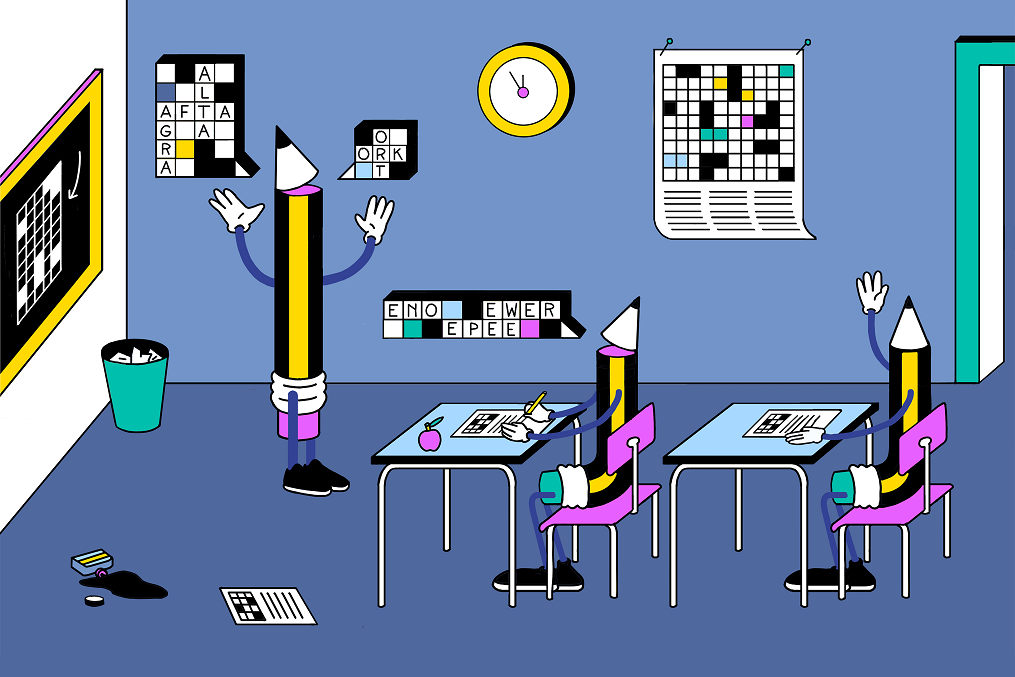
Crosswordese is an omnipresent part of crossword discussion online.
It’s a scourge! It’s annoying! It ruins the solving experience! Can’t constructors just somehow avoid these particular three- and four-letter combinations, no matter how convenient or crucial they are to the grid?!
Rarely a week goes by without a Reddit post dedicated to the subject or a prominent complaint about some aspect of grid fill in one of the blogs/outlets dedicated to covering the daily crosswords.
And it’s understandable. Whether it’s yet another directional clue or a team’s abbreviation on a scoreboard, some entries just irk people. It raises their ire.
Oh no! The crosswordese is slipping into my everyday vernacular!
Quick, summon some longer vocabulary that’s not conducive to crosswording. Gumption. Hurly-burly. Syzygy. Defenestration.
Phew! That’s better. Now where was I?
Right, crosswordese.
I was pondering the plague of crosswordese, and it occurred to me that there’s probably one particular source that has contributed more crosswordese than any other.
But what could it be?
There’s the music industry, of course. There are loads of musicians common to crosswords: ARIE, ENO, SIA, ARLO, ENYA, DRE, ETTA, ELLA.
The same thing goes for celebs. UMA, ANA, ESAI, INA.
The sports world has its own infamous crosswordese as well: ORR, OTT, PELE, ELS, ITO, ALOU, AROD, ASHE, ILIE, SOSA, YAO, ISAO AOKI.
But those are huge swathes of pop culture. Is there a single pop culture property that has helped (or hindered, according to critics) crosswords the most?
There are a few that come to mind.
Peter Pan offers not just PAN, but SMEE, HOOK, TINK, and NANA.
The Beatles gave us ONO, STARR, and SGT (for Pepper).
Lord of the Rings is certainly worth mentioning, adding ORC, ENT, and LOTR.
Game of Thrones was ubiquitous at one point, helpfully resurrecting OONA and adding ARYA (and to a lesser extent BRON, SANSA, HODOR, and CERSEI).
Then there are some serious heavy-hitters.
The Simpsons has NED, MOE, APU, OTTO, EDNA, and STU (of the Disco variety).
On the sci-fi side, Star Trek offers WORF, TROI, LEVAR, LUC (as in Jean-__), and options for USS. Star Wars is handy as well, with ARTOO, REY, EWOK, POE, HAN, and LEIA.
Not to be outdone, M*A*S*H has plenty to offer: SWIT, ALAN ALDA, FARR, RADAR, and of course NEHI.
I considered awarding the Crosswordese Crown to one of the franchises above, but it occurred to me that I might have to look back a little farther to find the Crosswordese Champion.
Okay, a lot farther.
Some might take issue with me calling the Bible part of pop culture, but there’s no denying its influence in crosswords: LEAH, CAIN, ABLE, ADAM, EVE, ESAU, NOAH, ENOS, EDEN…
That’s a pretty impressive list of crossword regulars.
And yet…
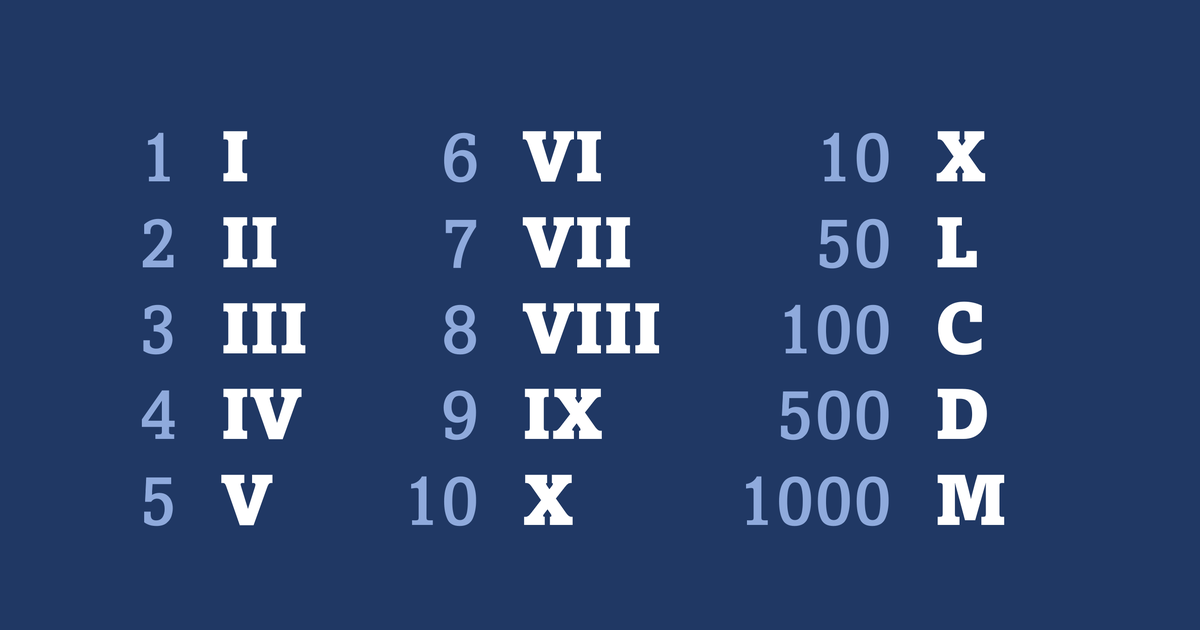
My gut says I might have to give credit to Roman Numerals as a whole. I mean, has any single cultural/pop cultural entity saved more cruciverbalists who’ve constructed themselves into a corner?
And has ANY solver cheered or celebrated when seeing a clue featuring a math equation AND Roman Numerals?
The balance of crosswordese gibberish and solver disinterest just might tip the scales here.
What do you think, fellow puzzlers? Is it the Bible, Roman Numerals, or another source that I missed? Let me know in the comments section below!






 PuzzCulture