The Kryptos Solution is Auctioned Off… But the Mystery is Far From Over!

Kryptos is one of the great remaining unsolved puzzles.

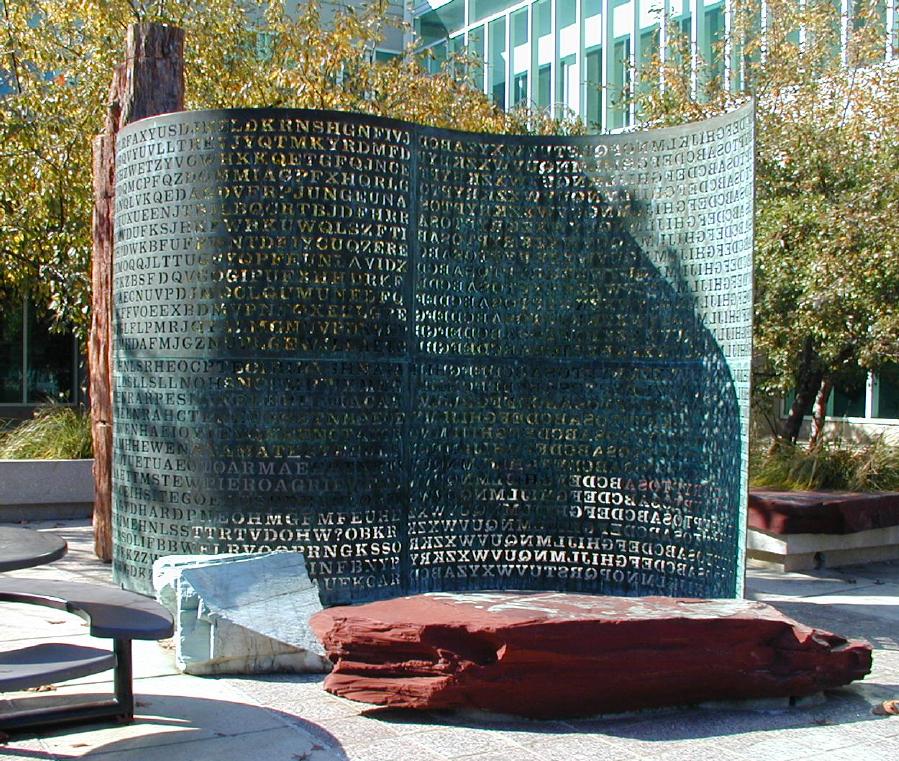
A flowing sculpture made of petrified wood and copper plating, sitting over a small pool of water. That’s what you see when you look at Kryptos.

It was revealed to the world in 1990, coded by former chairman of the CIA’s Cryptographic Center Edward Scheidt, and designed by artist Jim Sanborn. Designed to both challenge and honor the Central Intelligence Agency, for decades Kryptos has proven to be a top-flight brain teaser for codebreakers both professional and amateur.

Of the four distinct sections of the Kryptos puzzle, only three have been solved.

After a decade of silence, a computer scientist named Jim Gillogly announced in 1999 that he had cracked passages 1, 2, and 3 with computer assistance. The CIA then announced that one of their analysts, David Stein, had solved them the year before with pencil and paper. Then in 2013, a Freedom of Information Act request revealed an NSA team had cracked them back in 1993!

A curious game of one-upsmanship, to be sure. Something that foreshadowed what would follow years later…

Unfortunately for puzzle fans, K4 remained unsolved.
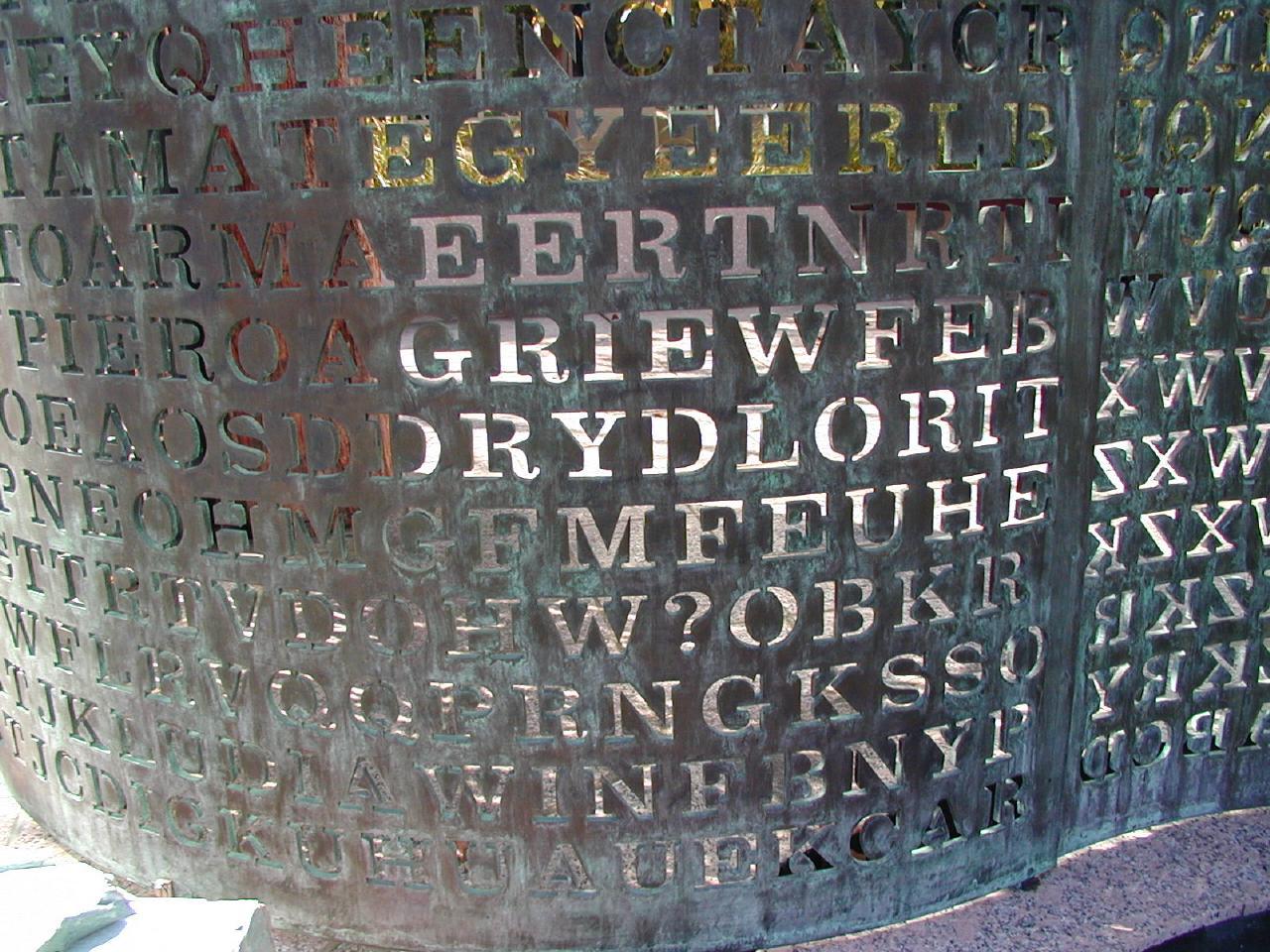
Eventually, Sanborn began offering hints. In 2006, he revealed that letters 64 through 69 in the passage, NYPVTT, decrypt to “Berlin.” In 2014, he revealed that letters 70 through 74, MZFPK, decrypt to “clock.” In 2020, he revealed that letters 26 through 34, QQPRNGKSS, decrypt to “northeast.”

Still, K4 remained unsolved.

Back in August, I wrote about Sanborn’s impending auction for the solution to the Kryptos puzzle, as Sanborn felt he no longer had “the physical, mental or financial resources” to maintain his role as the keeper of K4’s secret, and wished to hand that responsibility to another.

On November 20th, 2025, the solution to Kryptos sold to an anonymous bidder for $962,500, far above the predicted $300,000 – $500,000 estimate from the auction house.

At the moment, we don’t know if this anonymous bidder will reveal the solution or become the new keeper of the mystery.


You might think that the story of Kryptos would conclude there, for the moment.

But that’s not the case. The auction and its near-million-dollar bid were put into jeopardy by two intrepid investigators and a simple oversight by Sanborn himself.

On September 3rd, not long after I wrote about the upcoming auction, Sanborn received an email with the solved text of K4 from Jarett Kobek and Richard Byrne. They had discovered the solution among Sanborn’s papers at the Smithsonian’s Archives of American Art, after the auction house had mentioned the Smithsonian in their auction announcement.

Kobek and Byrne had discovered Sanborn’s accidental inclusion of the solution in the papers donated to the Smithsonian ten years ago during his treatment for metastatic cancer. “I was not sure how long I would be around and I hastily gathered all of my papers together” for the archives, he said.

Suddenly, the auction was in doubt.
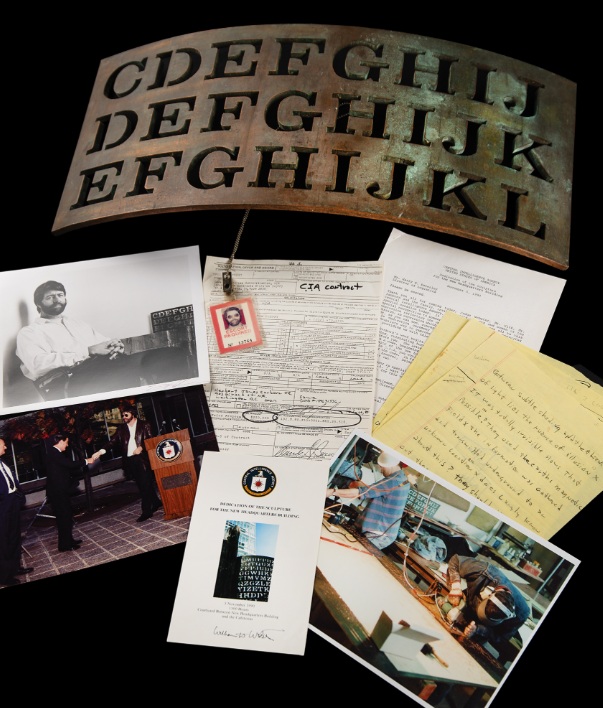
Sanborn confirmed to Kobek and Byrne that they indeed had the correct solution. Later that day, he proposed they both sign non-disclosure agreements in exchange for a portion of the auction’s proceeds. They rejected the offer on the basis that it could make them party to fraud in the auction.

Sanborn reached out to the Smithsonian and got them to block access to his donated materials until the year 2075, to prevent others from following in Kobek and Byrne’s footsteps and further endangering the auction. Meanwhile, lawyers for RR Auction threatened Kobek and Byrne with legal action if they published the text.

Sadly, Kobek and Byrne had been put in an impossible position. They have the solution that diehard Kryptos fans have desired for decades, and the possibility of coercing them into revealing the solution is hardly low. Sanborn’s computer has been hacked repeatedly over the years, and he has been threatened by obsessive fans, even claiming he sleeps with a shotgun just in case.
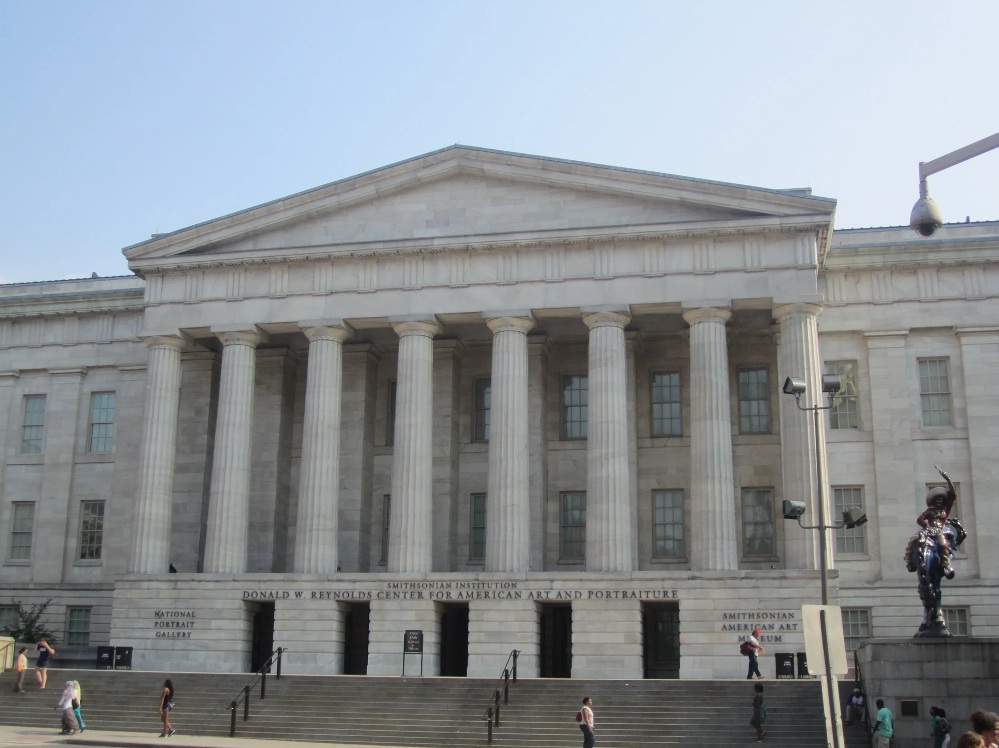
The auction house did disclose the discovery of K4’s solution to the bidding public, as well as the lockdown of the Sanborn archive at the Smithsonian’s Archives of American Art.

All parties waited to see what would transpire.

Still, with all this uncertainty looming, the auction closed with its $900,000+ bid, and thus far, neither the anonymous bidder nor the team of Kobek and Byrne have released the solution.

Byrne and Kobek say they do not plan to release the solution. But they are also not inclined to sign a legally binding document promising not to do so.

I waited to write about this story in the hopes that something would have been resolved in the weeks following the auction’s conclusion. But sadly, K4’s solution — and Kobek and Byrne’s potential roles in revealing it — remain unknown at the time of publishing this post.

Despite all this, the fact remains: Kryptos fans haven’t cracked K4.

But they know of four possible sources to find the solution: the Smithsonian (which is locked down), the anonymous bidder (similarly inaccessible), Sanborn (who has been fending them off for decades) and sadly, Kobek and Byrne, who remain in the crosshairs of the media, lawyers, and Kryptos enthusiasts. The pressure is mounting.

Jim Sanborn, until recently the steward and keeper of the Kryptos solution…

I suppose the best case scenario would be for someone to legitimately crack K4 and release their solution AND method for solving it.

That would free Kobek and Byrne from their burden and potential legal repercussions. That would be the triumph hoped for when Kryptos was conceived. The auction’s validity would remain intact.

Because even if the plaintext solution is revealed and someone reverse-engineers how it was encrypted, it’s a damp squib of an ending. Kryptos wasn’t solved. It wasn’t figured out. It would be a disappointing way for a rollercoaster of story to wrap up.

Sanborn deserves better. Kobek and Byrne deserve better. Kryptos deserves better.

So get cracking, solvers!
The Decade in 10 Words?

botd

[Image courtesy of TV Guide.]

For the last few weeks, we’ve all been awash in lists. Whether it’s covering the year or the decade, there are Best Of, Worst Of, Most Influential, Most Scandalous, Most Underrated, Most Overrated, and many many more.

Heck, we’ve had a bit of fun with year-end lists ourselves in the last week, though we tried not to overdo it.

Smithsonian Magazine even got in on the trend with a recent article. They summarized the 2010s through ten words that made their debut in The New York Times crossword this decade.

It’s an intriguing hook for a list, offering context and brief histories for words like MEME, SEXT, TWEET, BARISTA, and LGBT while discussing their greater social and cultural impact.

Sadly, there were a few times that I felt like the article came up short when representing both crosswords and the puzzle audience in general.

lolmeme

[Image courtesy of YouTube.]

I mean, come on. LOL? Yes, the entry appeared a staggering 48 times during the decade, but it’s been around since the ’90s! This was like IPOD finally making it into crossword grids just in time for iPods to not be a thing anymore. (Thankfully, IPADS salvaged some of those grids.)

They would have been better off including BAE, which is not only more modern (making the first of 10 NYT appearances in 2017), but feels significantly less eyeroll-worthy in this day and age.

I was also less-than-impressed by this statement, which accompanied the entry N.L. EAST:

“Jeopardy!” contestants are notorious for their aversion to sports, a weakness shared by many members of the cruciverbal clique. As it turns out, sports are a big part of American cultural life and have been for quite some while…

This is an embarrassing, reductive cliche that feels straight out of Revenge of the Nerds. There are plenty of sports-savvy constructors and solvers (which explains how N.L. EAST and A.L. EAST ended up in the Times crossword twenty times in total).

The idea that crosswords and sports are mutually exclusive domains isn’t just ridiculous, it’s insulting.

crossword1

I don’t mean for this post to feel like a takedown of the Smithsonian Magazine piece, because for the most part, it was a breezy examination of the decade through the lens of crosswords.

I appreciated the spotlight put on clues for the entries LGBT/LGBTQ, though perhaps a more illuminating glimpse into growing representation of the LGBTQIA+ community would have been mentioning Ben Tausig’s quantum puzzle from September of 2016, which introduced the entry GENDERFLUID to the Times crossword.

Although the entry itself has only appeared twice in the Times thus far, its inclusion in Tausig’s puzzle was noteworthy because it not only introduced the word to new eyes, but deftly explained the idea itself through its theme.

The letter variability — allowing for M or F to appear in a grid square and still fit the definition, a la FIRE/MIRE — is a wonderful metaphor for the fluidity of gender, especially in the limiting, but generally accepted, binary concept of male or female.

To have a puzzle not only debut an important new word, but to provide such valuable context for it in a clever, kind, fun mechanic represents not just where crosswords as a whole are going, but how they can help push us in a better direction in a unique way.

That feels like a more worthwhile note to conclude the decade on than 48 LOLs.


Thanks for visiting PuzzleNation Blog today! Be sure to sign up for our newsletter to stay up-to-date on everything PuzzleNation!

You can also share your pictures with us on Instagram, friend us on Facebook, check us out on TwitterPinterest, and Tumblr, and explore the always-expanding library of PuzzleNation apps and games on our website!

How Far Away Are Computer-Generated Crosswords?

[Image courtesy of ESLTower.]

There’s no denying that computers play a large role in the world of crosswords today.

Some companies use computer programs to generate their unthemed crosswords, no human intervention necessary. Computer programs like Crossword Compiler aid constructors in puzzle design and grid fill, allowing them to build and cultivate databases of words with which to complete their grids.

And, of course, with those little computers in your pocket, you can solve all kinds of crosswords (like those in our Daily POP Crosswords and Penny Dell Crosswords apps).

Heck, computers are even getting pretty good at solving crosswords — just look at Matt Ginsberg’s evolving crossword program, “Dr. Fill.

An article in Smithsonian Magazine posed the question, “why haven’t computers replaced humans in crossword creation?”

The answer, as you’d expect, is simple: computers are just fine at plugging words into established grids and generating basic, unthemed crosswords.

But unthemed is the key word there.

When people think of The Los Angeles Times, The New York Times, The Chronicle of Higher Education, The American Values Club, The Crosswords Club, or any of the other well-respected crossword outlets in the market today, I doubt unthemed puzzles are what comes to mind.

And when it comes to creating themes, innovating, and playing with the conventions of crosswords in order to create puzzles that surprise and challenge solvers, computers simply don’t have the chops.

They might be able to solve puzzles, but as far as I can tell from my research, there’s no program out there capable of generating and executing a theme with any sort of wordplay element involved.

[Image courtesy of Crossword Compiler.]

There is an art to creating an exciting grid, an intriguing theme, or a new puzzle mechanic that solvers have never seen before. The creativity of constructors is truly boundless.

And, it seems, the potential for crossword grids is just as boundless.

Recently, Oliver Roeder of FiveThirtyEight challenged the puzzle fans in his readership to calculate how many different crossword puzzle grids were possible.

He offered the following conditions:

  • They are 15-by-15.
  • They are rotationally symmetric — that is, if you turn the grid upside down it appears exactly the same.
  • All the words — that is, all the horizontal and vertical sequences of white squares — must be at least three letters long. All the letters must appear in an “across” word and a “down” word.
  • The grid must be entirely connected — that is, there can be no “islands” of white squares separated from the rest by black squares.

Now, obviously, all of those rules can be violated for the sake of an interesting theme. We’ve seen grids with vertical symmetry, islands of white squares, and more. Heck, plenty of grids allow words to go beyond the grid itself, or allow multiple words to share puzzle squares.

[“Cutting Edge” by Evan Birnholz. A puzzle where answers extend
beyond the grid. Image courtesy of The Washington Post.]

But assuming these rules are standard, what total did solvers come up with?

None. They couldn’t find a total.

One solver managed to calculate that there were 40,575,832,476 valid 13-by-13 grids following the above conditions, but could not apply the same technique to 15-by-15 grids.

40 billion valid grids. For a comparison, there are 5,472,730,538 unique solutions for a 9×9 Sudoku grid, and I previously calculated it would take 800 years to use every possible 9×9 Sudoku grid.

Of course, that’s 40 billion 13-by-13 grids. The number of possible 15-by-15 grids must be orders of magnitude larger.

Consider this: There were 16,225 puzzles published in The New York Times before Will Shortz took over the NYT crossword. The current number of NYT crosswords in the XWordInfo database is somewhere in the neighborhood of 25,000 puzzles.

And they’re one of the oldest crossword outlets in the world. Even when you factor in the number of newspapers, magazines, subscription services, and independent outlets for crosswords there are these days, or have been in the past, we barely scratch the surface of a number like 40 billion.

Maybe by the time we’ve run through that many, AI constructors will have caught up.


Thanks for visiting PuzzleNation Blog today! Be sure to sign up for our newsletter to stay up-to-date on everything PuzzleNation!

You can also share your pictures with us on Instagram, friend us on Facebook, check us out on TwitterPinterest, and Tumblr, and explore the always-expanding library of PuzzleNation apps and games on our website!

A Relatively Modern Idea: Fairness in Dice Rolling

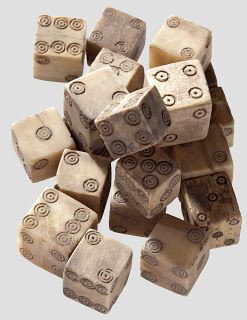
[Image courtesy of Larsdatter.com.]

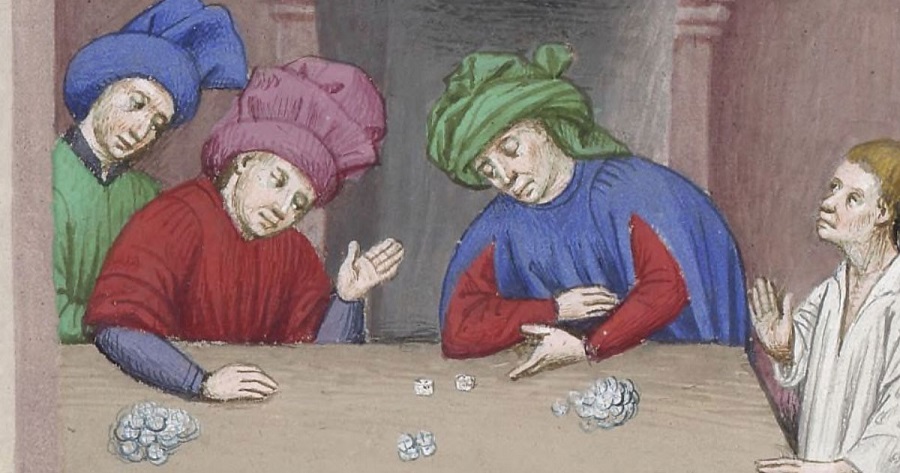
This may come as a surprise to you, fellow puzzlers, but fairness was not always a priority when it came to rolling dice.

Nowadays, whether you’re going after that elusive Yahtzee, hoping for doubles to earn another roll in Monopoly, or trying to roll sevens in a game of craps, the basic concept behind throwing dice is that every outcome of a six-sided die has an equal chance to appear. Unless you’re dealing with loaded or gimmicked dice, your odds should be 1 in 6.

But a recent study by researchers from the American Museum of Natural History and the University of California, Davis, has revealed that fairness in dice rolling didn’t really become a concern for dice users until the Renaissance. Researchers gathered dice spanning 2000 years of human history to explore why this was the case.

[Image courtesy of Wikipedia.]

From an article on Science Alert:

Roman-era dice, the researchers found, were a mess when it came to shape. They were made from a variety of materials, such as metal, bone and clay, and no two were shaped entirely alike. Many were visibly lumpy and lopsided, with the 1 and 6 on opposite sides that were more likely to roll up.

In fact, it seems like variety was the name of the game in Roman times, since the number configurations, shape, and size were inconsistent across the board, although dice were fairly common in the time period.

[Image courtesy of Pinterest.]

The Dark Ages led to a downturn in dice frequency, as they become very rare between the years 400CE and 1100CE.

The use of dice rebounds after 1100, and are most commonly found in ancient Mesopotamia and Egypt in what is known as the primes configuration, meaning that opposite numbers add up to prime numbers. 1 pairs with 2, 3 pairs with 4, and 5 pairs with 6.

There was a reinvigorated focus on the mechanics of chance and calculating probability, thanks to names like Galileo and Pascal, as well as a spirit of greater scientific understanding overall. Those Renaissance influences led to both a standardized shape for dice and a change in the numbering system. At this point, most dice convert to the sevens configuration, where opposite sides add up to seven (1 pairs with 6, 2 pairs with 5, and 3 pairs with 4).

[Image courtesy of Smithsonian.com.]

And according to lead researcher Jelmer Eerkens, cheating may have been on the mind of manufacturers going forward. “Standardizing the attributes of a die, like symmetry and the arrangement of numbers, may have been one method to decrease the likelihood that an unscrupulous player had manipulated the dice to change the odds of a particular roll.”

That change from variable shapes, sizes, and designs reflects a sea change in thinking towards dice and chance. Before, the shape didn’t matter because the results were attributed to Fate or some greater outside force, but later on, an understanding of chance and probability pushed standardization of dice forward.

In the end, it’s amazing how much of our culture and worldview, both past and present, can be revealed by exploring how we solve puzzles and play games.


Thanks for visiting PuzzleNation Blog today! Be sure to sign up for our newsletter to stay up-to-date on everything PuzzleNation!

You can also share your pictures with us on Instagram, friend us on Facebook, check us out on TwitterPinterest, and Tumblr, and explore the always-expanding library of PuzzleNation apps and games on our website!

These anagrams are out of this world!

Planets are in the news, as Pluto’s dubious planetary status is under the microscope once again.

Recently, a debate over the defining qualities of a planet was held at the Harvard-Smithsonian Center for Astrophysics, and three of the top names in planetary science presented their cases to the attending audience.

Now, although the audience overwhelmingly voted in favor of Pluto’s planethood, that’s not binding. This wasn’t an International Astronomical Union vote or anything like that.

But it did put the solar system back in the news cycle, and that reminded me of a puzzly planetary story.

In the 1600s, Galileo Galilei was doing amazing work with his telescope, redefining our understanding of the solar system and our place in it. He was doing controversial work, but he still wanted to be able to prove he was the primary person behind a given discovery, so he mailed a letter to his colleague, Johannes Kepler.

Galileo sent Kepler this anagram: s m a i s m r m i l m e p o e t a l e u m i b u n e n u g t t a u i r a s

When properly solved, the anagram reads “Altissimum planetam tergeminum observavi,” meaning “I have observed the most distant planet to have a triple form.” You see, Galileo had glimpsed Saturn and its famous rings, but due to the poor magnification of his telescope, he’d mistaken the rings themselves for two moons orbiting the planet.

This was a tremendous discovery, adding to our knowledge of what was (at the time) the furthest reaches of our solar system.

But Kepler, while trying to untangle the anagram, came to a different solution. Believing that Galileo’s latest discovery involved Mars, not Saturn, Kepler’s solution read “Salue umbistineum geminatum Martia proles,” meaning Mars has two moons. (The ambiguity of Latin V’s and U’s didn’t help matters.)

So, while Kepler was wrong in his solution, he was unintentionally correct about Mars! (Phobos and Deimos, the two moons of Mars, wouldn’t be confirmed until 1877.)

Amazingly enough, this wouldn’t be the only time Galileo relied on Kepler and anagrams to prove provenance when it came to his discoveries.

In 1611, Galileo sent another anagram to Kepler: Haec immatura a me iam frustra leguntur o.y.

Properly unscrambled, the message reads “Cynthiae figuras aemulatur mater amorum,” or “The mother of love imitates the shape of Cynthia.” This one requires a little more explanation. The mother of love was Venus, and Cynthia was the Moon, meaning that Venus, when observed from Earth, has phases just like the moon.

[Click here for a larger version of this image.]

This probably sounds less important than Galileo’s studies of Saturn, but it’s not. This was an earthshaking discovery, because it was observable evidence that Venus had to pass on both sides of the sun, meaning that Venus orbited the sun. This violated the geocentric model of the solar system so strongly espoused by the church!

It was evidence like this that led to Galileo’s battle with the Inquisition.

And, weirdly enough, there might be one more twist to this story.

Some historians believe that Kepler also solved this Galilean anagram incorrectly, and that his solution once again revealed an unintentional discovery about the solar system.

According to the as-yet-unverified story, Kepler’s solution read “Macula rufa in Jove est gyratur mathem…,” which translates as “There is a red spot in Jupiter, which rotates mathem[atically].” (Again, yes, there’s the Great Red Spot on Jupiter, but there was no way for Kepler to have known that at the time.)

It’s hard to believe that Kepler could twice unravel a Galileo anagram and twice make accidental predictions about the solar system. While the first story is widely accepted, the second is viewed with far more skepticism.

But either way, it just goes to show that anagrams, while delightful, might not be the best method for announcing your great discoveries.

Thanks for visiting PuzzleNation Blog today! You can share your pictures with us on Instagram, friend us on Facebook, check us out on TwitterPinterest, and Tumblr, and be sure to check out the growing library of PuzzleNation apps and games!