PuzzleNation Product Review: Bananagrams Duel

bananagramsduelsmall

[Note: I received a free copy of these games in exchange for a fair, unbiased review. Due diligence, full disclosure, and all that. /end disclaimer]

When it comes to word-forming tile games, the folks at Bananagrams are the masters. Their fruit-inspired packaging is synonymous with that particular brand of puzzling, giving Scrabble a run for its money in terms of letter-tile games. And they have an uncanny knack for putting new spins on classic puzzle-game tropes, breathing new life into the genre.

For instance, Bananagrams Duel replaces the iconic Bananagrams tiles with letter dice. Does this really make a difference in the game play? Let’s find out together.
bananaduel1

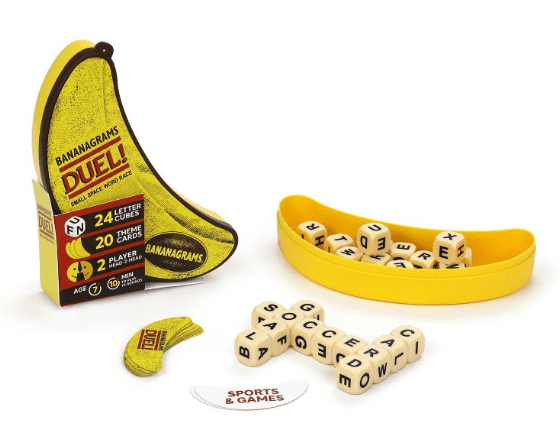
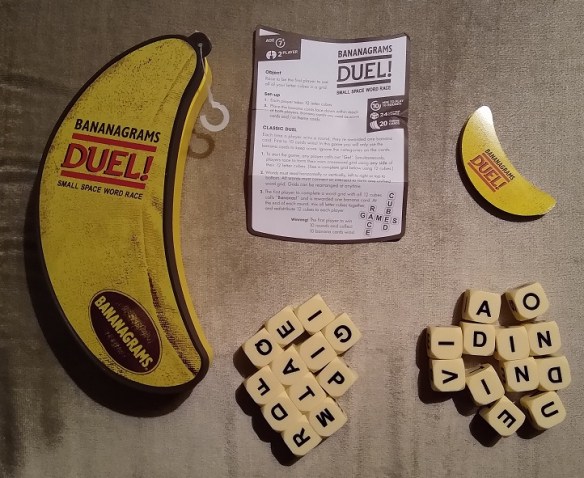
Bananagrams Duel is a two-player word/grid-forming game, consisting of 24 six-sided letter dice, a handful of banana cards, and a handy carrying case. When it comes to travel-friendly puzzle games, it doesn’t get much simpler than this.

Instead of pulling from a shared pool of letter tiles, each player gets 12 of the 24 letter cubes. The goal is the same as a traditional Bananagrams game: to create a criss-crossing grid of recognizable words. You’re allowed to shift and flip any of your dice to other letters as needed, and the grid can change at any time. (Unlike, say, Scrabble, you’re not locked into a word if you’ve already spelled it. Anagramming is always an option.)

The first player to use all 12 letter dice and call out “Bananas!” wins the round and is awarded one banana card for the victory. First player to 10 banana cards wins.
bananaduel2

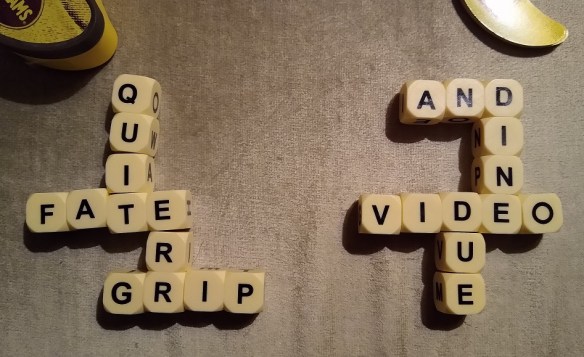
But those little banana cards do more than help you keep score. On the other side of each card is a theme. In one of the variant rule sets detailed in the little instructional guide, your completed grid must now contain at least one word that fits the given theme.

That little tweak can make a traditional Bananagrams game much more challenging. After all, if you’ve ever played the regular version of the game, you know how words can just evaporate from your vocabulary during play, only to suddenly return once your opponent has completed a grid. Now imagine that same feeling, but with a theme of sports or six-letter words attached to it.

In one of our test games, we actually made this harder on ourselves by trying to make EVERY word in the grid fit the theme.

bananaduel3

As you can see here, we were allowed to choose our own theme, and we chose “Space/Astronomy.” I was devilishly close to completing my grid, but lacked the “L” I needed to spell Pluto. Meanwhile, my opponent went with a two-word grid that gelled nicely.

I don’t recommend trying it this way — unless you’re looking for a serious challenge — because the usual themed rules are tough enough.

Although an occasional bad pool of letter cubes can leave you without a letter — like, for instance, an L you really need — for the most part, it didn’t feel like the letter cubes were more restrictive or limiting than a traditional pool of Bananagrams letter tiles. All the dice shifting made for a different, yet familiar solving experience.

Plus it’s super-easy to come up with your own variant rules to enrich repeated games. The instructions list 5 alternate rule sets, and I would gladly recommend one that went well with us: having your opponent roll one of your dice for you and making you use it as the starting letter for a grid word.

Bananagrams Duel manages to boil down the Bananagrams formula to its most essential and playable form yet. And with a much faster clean-up (or pack-up and stash-away, if you’re on the road/in the airport), it’s more travel-friendly than ever before. They’re not lying when they call it a small space word race.


Bananagrams Duel is available from Bananagrams and participating local and online retailers, and it’s featured in this year’s Holiday Puzzly Gift Guide!

Thank you for visiting PuzzleNation Blog today! Be sure to sign up for our newsletter to stay up-to-date on everything PuzzleNation!

You can also share your pictures with us on Instagram, friend us on Facebook, check us out on TwitterPinterest, and Tumblr, and explore the always-expanding library of PuzzleNation apps and games on our website!
Saving Puzzle Games for Posterity

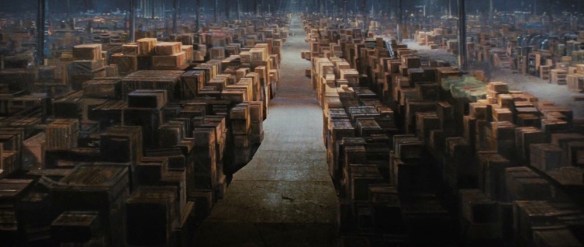
warehouse

[Image courtesy of Medium.]

One of the coolest things about the Internet is how it facilitates the gathering of information. Not only does it connect you to valuable sources around the world — experts, researchers, scholars, and collectors — but it grants you access to libraries and repositories of knowledge unlike anything the world has seen before.

I mean, think about it. Looking for a famous text? Google Books or Project Gutenberg probably has you covered. A movie? The Internet Movie Database is practically comprehensive. Different fandoms and franchises have their own individual Wikis that cover episodes, characters, and more.

Although there’s no single repository for all things puzzly — though we here at PuzzleNation Blog certainly try — there are some online repositories of puzzle knowledge available, like XwordInfo, the Pre-Shortzian Puzzle Project, and Cube Index.

And other place online that’s helping to preserve puzzle history is The Internet Archive.

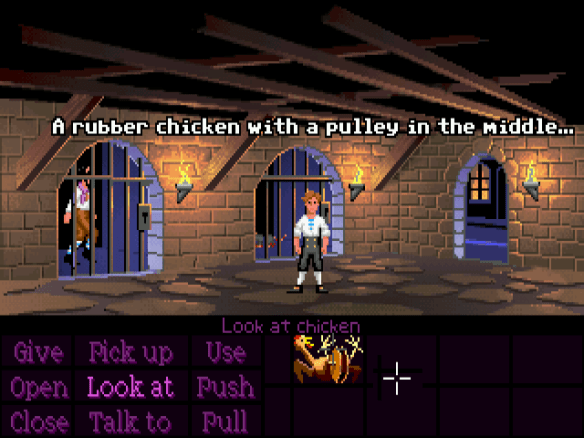
archivepulley

[Puzzling out a jailbreak in The Secret of Monkey Island with a curious piece of equipment. Image courtesy of Final Boss Blues.]

The Internet Archive is a nonprofit digital library that archives computer games, books, audio recordings and videos. In terms of computer games, that means everything from text adventures to more well-known ’80s and ’90s games, and even early experiments with 3D modeling.

Recently, more than 2,500 MS-DOS games were added to the Archive. Adventure and strategy games were among the numerous entries included in the latest update, as well as a fair amount of puzzle games, both famous and obscure.

“This will be our biggest update yet, ranging from tiny recent independent productions to long-forgotten big-name releases from decades ago,” Internet Archive software curator Jason Scott wrote on the site’s blog.

In addition to Sudoku, Chess, and Scrabble games, there were loads of Tetris variants (like Pentix), a crossword-inspired game called Crosscheck, and even TrianGO, a version of the classic game Go played on a hexagonal field.

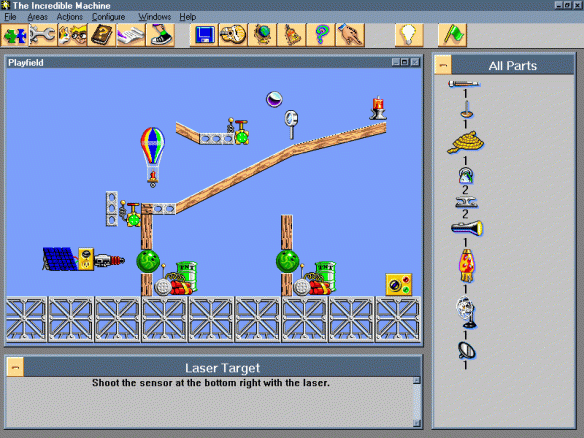
archivetim

[Image courtesy of Google.]

In this update alone, you can find virtually every kind of puzzle to enjoy. If you like building Rube Goldberg devices, there’s The Incredible Machine 2. If you’re looking for a puzzly version of the beloved Nintendo game Bubble Bobble, then try Puzzle Bobble.

You can building dungeon romps with The Bard’s Tale Construction Set or crack challenging cases in Sherlock Holmes: The Case of the Serrated Scalpel. You can find your way out of maze-like platforming traps in Lode Runner or enjoy the tongue-in-cheek humor and devious point-and-click puzzles of one of my personal favorites, The Secret of Monkey Island.

There are even iconic horror puzzlers like Alone in the Dark and I Have No Mouth and I Must Scream if you’re looking for something a bit spookier and more sinister.

This is a treasure trove of old puzzle-game content, and it’s all available with the click of a button. These games will be joining such previously archived classics as Where in the World is Carmen Sandiego? and The Oregon Trail in the Internet Archive’s vast and ever-growing library.

And thanks to their efforts, more than a few puzzle games will be saved from obscurity or oblivion.


Thanks for visiting PuzzleNation Blog today! Be sure to sign up for our newsletter to stay up-to-date on everything PuzzleNation!

You can also share your pictures with us on Instagram, friend us on Facebook, check us out on TwitterPinterest, and Tumblr, and explore the always-expanding library of PuzzleNation apps and games on our website!
Inclusiveness in Puzzles: New LGBTQ+ Scrabble Words!

wordwithfriendsjedi

From time to time, someone will ask me whether a certain word is appropriate for a crossword. It could be a new constructor, or an aspiring constructor, or a fan of crosswords. It could be about a relatively new slang term, or an obscure word, or a foreign word, or a celebrity. Sometimes, they’re wondering if it’s too hard, or too new, or too niche, or whether it’s appropriate for crosswords at all.

That’s the thing. There is no one source you can go to for all your crossword questions. There’s no definitive list of appropriate words or phrases, because the language is constantly changing and evolving. Pop culture is dynamic, and new ideas, concepts, and personalities are always cropping up. In that way, crosswords are essentially eternal, because the source material constantly shifts in popularity and familiarity. There are always new words to fill those iconic black-and-white grids.

But, if you were looking for that mythical definitive list of appropriate words, it’s not unreasonable to assume you’d go to the International Scrabble Dictionary, the official source for what is allowed as a valid answer word in a game of Scrabble.

Recently, for the first time since 2015, new words were added to the approved list. Over 2800 fresh entries are now officially eligible for tournament and at-house use, and they’ll all appear in the latest edition of Collins Official SCRABBLE Words. (Collins, which also publishes the Collins English Dictionary, added the words after they were approved for use in the Merriam-Webster Dictionary last year. These 2800 words join over 276,000 already approved for Scrabble play.)

It’s quite appropriate that we’re covering this story in June. As many of you are aware, June is Pride Month, and awareness of LGBTQ+ issues and culture affects all aspects of life, even puzzle games!

Among those 2800 newly-approved entries are non-binary and gender-neutral words like “genderqueer” and “agender,” as well as related terminology like “misgender” and “cisgender.”

But the LGBTQ+-friendly term that’s getting the most attention in Scrabble circles is “ze”. This two-letter word is a gender-neutral pronoun, allowing individuals who don’t identify as strictly male (he/him) or female (she/her) to better differentiate themselves and their gender identity.

letterz

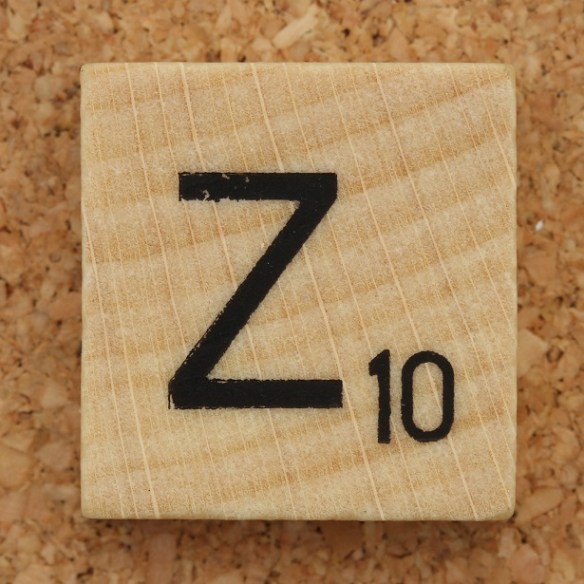
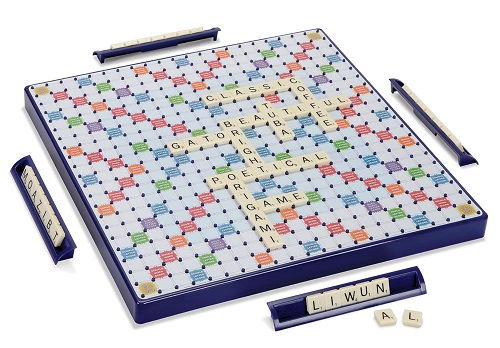
For Scrabble players, the word opens up a whole host of new possibilities. After all, “ze” allows far greater opportunity to score big points by playing that valuable Z tile. (“Ze” is only the third two-letter z-word to be authorized for the game, joining “za” and “zo.”)

Now, obviously, in the grand scheme of things, this is a very small step for LGBTQ+ representation, but it is a step. After all, every opportunity to include LGBTQ+ culture and embrace it is part of making it a more familiar part of life for all of us.

In this small way, Scrabble includes previously marginalized individuals by not only accepting these new words, but by changing and adapting in order to do so. It’s an act of welcoming.

Here’s hoping there are far more acts like this, big and small, to come.

[Sources: Pride.com, New York Times, Collins Dictionary.]


Thanks for visiting PuzzleNation Blog today! Be sure to sign up for our newsletter to stay up-to-date on everything PuzzleNation!

You can also share your pictures with us on Instagram, friend us on Facebook, check us out on TwitterPinterest, and Tumblr, and explore the always-expanding library of PuzzleNation apps and games on our website!
The PN Blog 2018 Countdown!

It’s one of the final blog posts of the year, so what do you say we revisit all of 2018 with a countdown of my ten favorite blog posts from the past year!


But before we get to the countdown, I want to briefly mention two interesting landmarks for the blog in 2018.

In January, we were cited as a source in a college term paper, which is pretty gratifying.

And in April, we were name-dropped in a CNET article about friend of the blog Hevesh5.

Okay, enough bragging. Let’s get to the countdown!


#10 Robot Invasion

With the rise of puzzle-solving programs like Dr. Fill and game-playing AIs like AlphaGo, we’ve been joking for years about machines trying to topple humanity from the top spot as Earth’s resident puzzle-solving masters.

But this year, it kinda stopped feeling like a joke. With Scrabble-playing robots, self-solving Rubik’s Cubes, and a computer program that might’ve cracked one of the most celebrated unsolved mysteries in puzzles, the machines might just be taking over.

#9 Crossword Fun

Crosswords are still the #1 paper puzzle in the world. With more than a hundred years of creativity, cluing challenge, and cunning construction behind them, they continue to fascinate and frustrate us. And we had a lot of fun with crossword topics this year in the blog. Two of my personal favorite entries were asking questions about common crossword clues and the post where we explored the brief-lived moral panic sparked by crosswords.

#8 Holiday Puzzly Gift Guide

Every year, one of my favorite activities is putting together our Holiday Puzzly Gift Guide. I get to include the best products sent to me for review by top puzzle and game companies, mix in some of my own favorites, and draw attention to terrific constructors, game designers, and friends of the blog, all in the hopes of introducing solvers (and families of solvers) to quality puzzles and games.

#7 Unsung Heroes

They say history is written by the victors, and that’s true in the short term. But in the long term, history belongs to truth, and more and more, unsung heroes are coming to the fore and getting the well-deserved recognition denied to them earlier.

This is true in the world of puzzles as well, and this year, we had the privilege of putting the spotlight on two iconic women from puzzle history that had previously been lost to time and revisionism: codebreaking visionary Elizebeth Smith Friedman and spymaster Alexandrine, the Countess of Taxis.

#6 Citizen Shoutout

Interacting with the puzzle community is one of the highlights of doing social media for PuzzleNation. And some of the most enjoyable blog posts from this year involved focusing on members of the community and giving them kudos for their contributions to PuzzleNation and the world of puzzles in general.

As such, we created our Citizen Shoutout series to honor those folks, and along the way, we’ve thanked game shops, local escape rooms, and dedicated solvers who make the puzzle community a better place.

#5 PNVR

April Fools Day pranks are an Internet tradition at this point. Some websites go all out in celebrating the holiday. (Heck, ThinkGeek has started using the holiday to tease the public’s interest level in “fake” products, going on to actually release some of those April Fools pranks as real items later in the year!)

So after last year’s Puzzles for Pets gag was a big hit, we couldn’t resist getting in on the pranking fun again this year. The result — PNVR, a fake virtual reality puzzling experience — was as layered as it was silly, complete with fake quotes, splash pages, photos of people riding bikes while playing, and more. The visuals were amazing and hilarious.

#4 Puzzle Events

There are few things better than spending time with fellow puzzlers and gamers, and we got to do a lot of that this year. Whether it was cheering on our fellow puzzlers at the American Crossword Puzzle Tournament or putting our hands dirty with some knock-down, drag-out, game-playing ferocity during our Tabletop Tournament, these interactions were both invigorating and encouraging. Events like these really help solidify the spirit of community that comes with being puzzly.

#3 International Puzzle Day Puzzle Hunt

And speaking of interacting with fellow puzzlers, for International Puzzle Day this year, we masterminded a little online puzzle hunt for PuzzleNation solvers. Involving clues hidden in both that day’s Daily POP Crosswords puzzle and Penny Dell Crosswords App free daily puzzle, solvers had to anagram and solve their way around the website in order to earn a prize. It was a serious challenge to design, and great fun to unleash on the world.

#2 Women in Crosswords and Roleplaying Games

Using the blog as an amplifier to get the word out about important causes and worthwhile projects is one of the best things about writing here. And this year in particular, we can be proud of doing our damnedest to vocalize the incredibly valuable role that women have played (and continue to play) in the puzzle/game community.

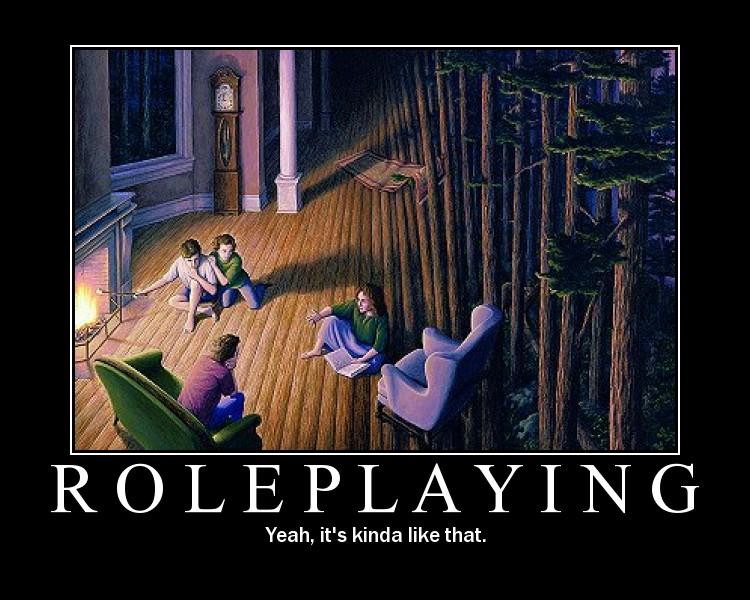
Whether it was discussing the gender disparity in published constructors in the major crossword venues or pulling back the curtain on misogynist gatekeeping in roleplaying games, we were privileged to ally ourselves with a brilliant, underappreciated contingent of the puzzle community.

#1 Wordventures

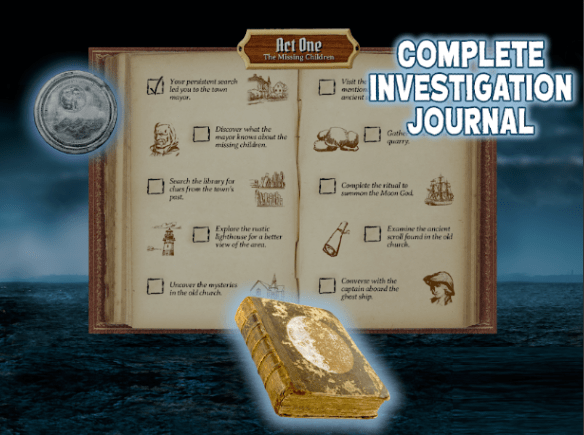
There’s nothing more exciting than getting to announce the launch of a product that has been months or years in the making, so picking #1 was a no-brainer for me. It had to be the announcement of Wordventures.

But it’s not just the app, it’s everything behind the app. I’ve watched it grow and evolve in development, and it’s truly unlike anything we’ve released before. The mix of music, imagery, storytelling, and puzzle-solving is so atmospheric and engaging.

It may sound self-serving or schlocky to talk about our flagship products as #1 in the countdown, but it’s something that we’re all extremely proud of, something that we’re constantly working to improve, because we want to make our apps the absolute best they can be for the PuzzleNation audience. That’s what you deserve.

And it’s part of the evolution of PuzzleNation and PN Blog. Even as we work to ensure our current products are the best they can be, we’re always looking ahead to what’s next, what’s on the horizon, what’s to come.

Thanks for spending 2018 with us, through robots and Rubik’s Cubes, through discoveries and daily delights, through puzzle launches and landmark moments. We’ll see you in 2019.


Thanks for visiting PuzzleNation Blog today! Be sure to sign up for our newsletter to stay up-to-date on everything PuzzleNation!

You can also share your pictures with us on Instagram, friend us on Facebook, check us out on TwitterPinterest, and Tumblr, and explore the always-expanding library of PuzzleNation apps and games on our website!

A World of Puzzle Luxury

As recreational pastimes go, puzzles are pretty affordable.

A New York Times crossword subscription runs you $40 for the year. Many top constructors — like those featured in our Holiday Puzzly Gift Guide — offer outstanding puzzles on a weekly basis for less than that.

Puzzle magazines like those from our friends at Penny Dell Puzzles run $5 to $10 (even for the big ones!) and puzzle collections by constructors and puzzle outlets rarely crack double digits.

(Heck, our apps are free downloads!)

So you can imagine my surprise when I saw some constructors on Twitter discussing a subscription service called Puzzlelux that costs nine hundred dollars a year!

[In this actual photo from the website, a woman from a 1990s Calvin Klein TV ad appears to be mildly inconvenienced by an elegant puzzlenado that has swept her into the air, risking all sorts of luxurious papercuts.]

Yes, Puzzlelux offers seasonal bundles of puzzles — Sudoku, crosswords, Cryptograms, and word scrambles — for $75 a month.

Now, not having solved any of their puzzles, I cannot fairly judge whether they’re worth that kind of cash splashing. But I am skeptical, given that I can get awesome puzzles elsewhere for 1/30th that price.

I mean, $899 dollars is pretty steep. A trip on Cunard’s crossword cruise last year was cheaper than that!

Of course, I shouldn’t be surprised that someone came along to corner the market on high-end puzzlesmithing, since in the past, I have encountered a few examples of puzzle luxury items in my travels.

Every year in the Holiday Puzzly Gift Guide, I jokingly mention that the folks at Hammacher Schlemmer offer a $12,000 Scrabble game in their catalog.

Yes, The World’s Largest Scrabble Game takes up an entire wall of your home, but the odds are slimmer that you’ll ever misplace one of the game tiles in your couch cushions.

Then again, $12,000 looks reasonable next to $100,000, which was the price tag for a specialty version of Monopoly produced for FAO Schwarz.

With a solid gold board, emeralds and sapphires embedded in the board (as well as in hotels and houses), and real U.S. currency in place of the play money, this might be the peak of puzzle-game excess.

Unless, of course, you commission your own labyrinth, or want to solve Sudoku in space, or something like that. But who knows what the future holds for super-wealthy puzzlers out there?


Thanks for visiting PuzzleNation Blog today! Be sure to sign up for our newsletter to stay up-to-date on everything PuzzleNation!

You can also share your pictures with us on Instagram, friend us on Facebook, check us out on TwitterPinterest, and Tumblr, and explore the always-expanding library of PuzzleNation apps and games on our website!
Scrabble and Gender Politics?

Gender equality is a hot-button issue these days, as it should be. In the US, one political party is hellbent on regulating reproductive rights (and women’s bodies in general), even as the opposing party saw more women elected into public office than ever before.

Women of color and LGBTQIA+ women continue to seek equal and fair representation in all areas, from political and economic to social, and these discussions are important. They should be part of the national — and global — conversation.

You might think this has nothing to do with the world of puzzles and games, but you’d be wrong. The stigma of Gamergate still hangs over the heads of many in the video game industry, after a small, yet vocal and toxic, group of video game fans targeted and harassed female coders and game designers. There have been smaller stories in the board game industry as well, where companies have agreed not to associate with certain individuals with troublingly sexist backgrounds.

Even the puzzle world isn’t immune to this. Earlier this year, I wrote about how few women are published in major crossword outlets, despite the wealth of talent out there.

So when I stumbled across an opinion piece in the Wall Street Journal about gender inequality in the world of competitive Scrabble, I was intrigued.

The author argues that “Females aren’t as obsessively driven as males to nail down facts, correct errors, and dominate a field,” and uses the Scrabble tournament as a microcosm, implying that the same argument applies to STEM fields and other intellectual competitions like the National Geographic Geography Bee.

From the article:

Competitive Scrabble constitutes a natural experiment for testing the feminist worldview. According to feminist dogma, males and females are identical in their aptitudes and interests. If men dominate certain data-based, abstract fields like engineering, physics and math, that imbalance must, by definition, be the result of sexism—whether a patriarchal culture that discourages girls from math or implicit bias in the hiring process.

But there are no cultural expectations that discourage females from memorizing dictionaries—a typical strategy of competitive Scrabble players, often in a foreign language that the player doesn’t speak. Girls are as free as boys to lap up vocabulary. Nor are there misogynist gatekeepers to keep females out of Scrabble play; the game, usually first learned at home, is open to all. According to Hasbro, 83% of recreational Scrabble players 25 to 54 are female.

Now, firstly, there is misogynist gatekeeping in most every social activity. You can go back and read the interviews I did for my Women in Roleplaying Games post earlier this year for some telling firsthand accounts.

I can’t argue with the stats on recreational Scrabble players. Most of the Scrabble players (and Words With Friends players, and other offshoots) are women. Heck, in my group of friends, one Scrabble rivalry escalated so much that the loser of a particularly high-stakes match had to compose and perform a song dedicated to the winner’s Scrabble mastery!

But the author is missing a major point about discouragement vs. encouragement. Sure, many of those recreational Scrabble players are female, but being introduced to a game in your youth and being encouraged to excel at it are two very different things. Girls are not necessarily as free as boys to lap up vocabulary, unless they’re raised in a household where such learning is equally encouraged.

Girls and young women still struggle under weighty cultural expectations, both in terms of what their interests should be and what fields they should focus their competitiveness on. To act like every household treats boys and girls the same is a ridiculous act of simplification on the author’s part.

There is a huge difference between not being discouraged and actively being encouraged. I’ve had the privilege of interviewing many of the top crossword constructors in the field today, and one thing that many of them, male and female, have in common is being encouraged at a young age to pursue their interest in puzzles.

There’s no gender disparity in competitors at the Scripps National Spelling Bee, either in terms of competitors or winners, and the parental and familial encouragement for those children is obvious in any interview package.

Plus, there’s the issue of whether competitiveness is encouraged. All too often, you hear stories about girls’ and women’s interest in a topic being quashed by discussions of “what’s appropriate” or “what’s ladylike” or some other nonsensical idea of how to BE a woman.

You hear it all the time in the language employed by misogynists; A man is competitive, a woman is aggressive. A man is outspoken, a woman is pushy. The double standard is very much a thing, and whether we’re talking about households, board rooms, or game rooms, these inequities should be challenged.

We still have huge strides to make in terms of ameliorating gender inequality in our society, and the little fights matter as much as the big ones. The author states that “the National Science Foundation pours millions of taxpayer dollars into intersectionality and microaggression studies to smoke out invisible STEM sexism and to promote diversity in research labs.”

Invisible? Hardly. I was a physics student as a freshman in college, and I saw the one female student in my classes run off by this supposedly invisible STEM sexism. I wish I had spoken up more then.

I hope that continuing to speak up now in some small way makes up for it.


Thanks for visiting PuzzleNation Blog today! Be sure to sign up for our newsletter to stay up-to-date on everything PuzzleNation!

You can also share your pictures with us on Instagram, friend us on Facebook, check us out on TwitterPinterest, and Tumblr, and explore the always-expanding library of PuzzleNation apps and games on our website!