Board Games and Puzzle Games For Solo Gaming!

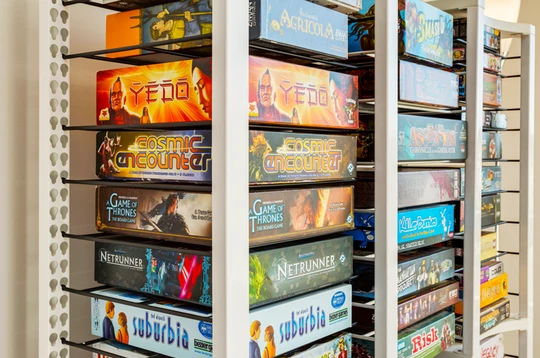
stack of games

[Image courtesy of StoreMyBoardGames.com.]

Friend of the blog Lori reached out to me last week and asked about the best puzzle games and board games for solo play. A pal of hers was in need of game-centric distraction, and given the current global circumstances, she had no one with whom to play.

Never fear, friend-of-friend! We’ve got you covered.

There are all sorts of puzzles and games out there to keep you busy, and we’ll do our best to collect a few examples from different play style to provide a host of options.

So, without further ado, let’s look at some single-play fun!


Puzzle Games
thinkfun many

ThinkFun

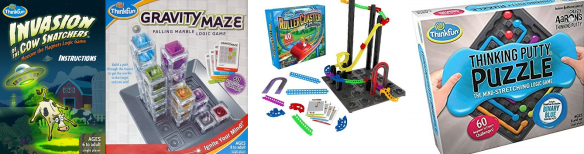
When it comes to one-player puzzle games, ThinkFun should be your first stop. They’ve got puzzles with magnets, electrical circuits, marbles, dominoes, putty, rollercoasters, robots, computer programming, and LASERS. Whether you like disentanglement puzzles, logic puzzles, or mechanical puzzles, any one of these games is a terrific place to start.

[Link for more details.]

Knot Dice

Inspired by Celtic knot designs, Knot Dice is a puzzle game where you must turn, twist, and spin these beautiful dice to complete elaborate patterns. A handbook full of single-player (and multi-player) puzzles is included to get you started, but honestly, sometimes you can just roll the dice out, arrange them, and then challenge yourself to complete the pattern!
[Link for more details.]

enigmasmall

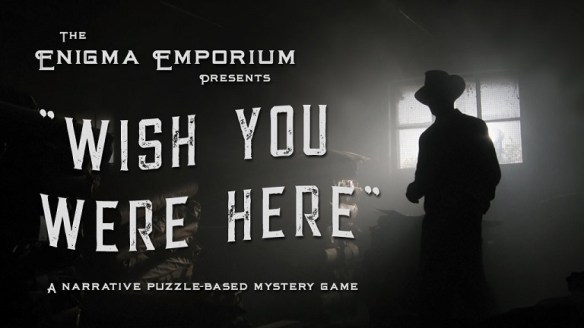
Wish You Were Here

Imagine an entire mystery hidden across a handful of postcards. That’s the multilayered puzzle experience offered by Wish You Were Here, where a series of coded messages awaits you. An entire narrative unfolds based on the clues you uncover and the puzzles you solve. It’s code-breaking, puzzling, and spycraft all in one.
[Link for more details.]

photo-1024x7682

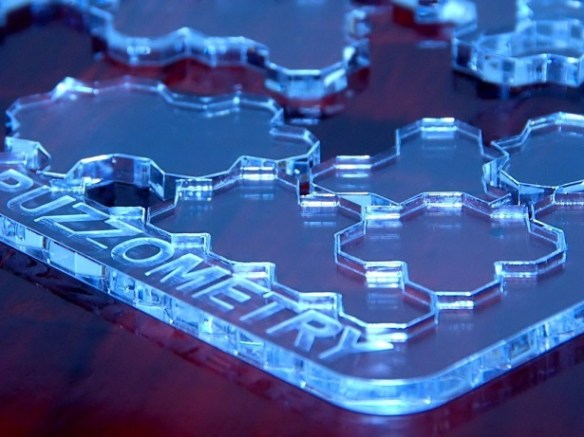
Puzzometry

If you’re looking for a jigsaw-style challenge, Puzzometry might be your puzzle of choice. These beautiful pieces can be combined in seemingly endless combinations, and yet, there’s only one solution. Available in seven different formats — including Puzzometry, Puzzometry Jr., Puzzometry Squares, and Puzzometry Hex — there are different levels of difficulty and different challenges posed by each.

[Link for more details.]


Board Games Designed for Solo Play

There is a small but thriving market for solo board games, which cleverly alter established game mechanics to pit you against the game itself.
black sonata

[Image courtesy of Board Game Geek.]

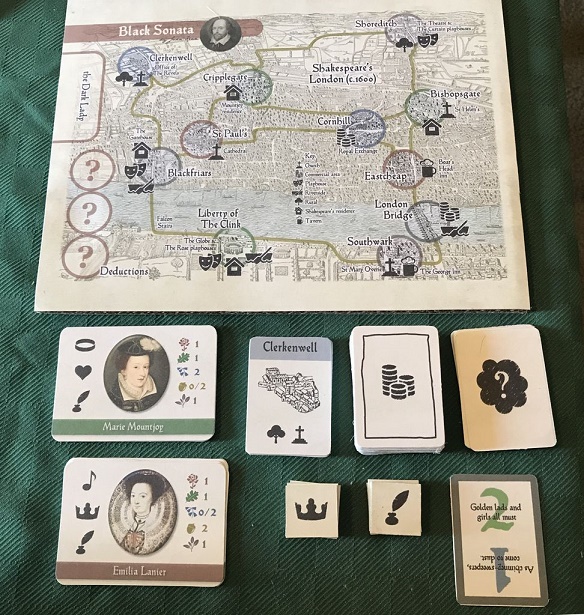
Black Sonata

In this movement and deduction game, you are a 17th-century detective, exploring London while trying to hunt down the identity of the Dark Lady who inspired Shakespeare’s sonnets. As you pick up clues to her identity and search for her in different locales, a stealth deck determines the Dark Lady’s movements. It’s a very cool mechanic that holds up after multiple replays.
[Link for more details.]

coffee roaster

[Image courtesy of Board Game Geek.]

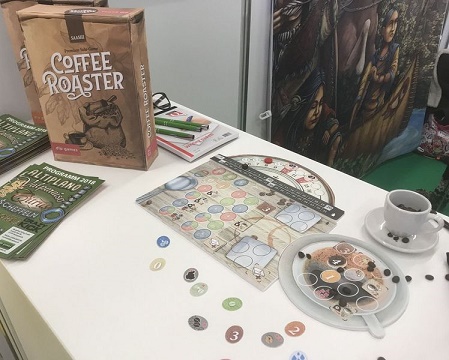
Coffee Roaster

Have you ever tried to brew the perfect blend of coffee? Then Coffee Roaster might be up your alley. In this game, you randomly draw tokens representing coffee beans in order to roast them and improve your score based on their taste value. The game quickly becomes a balancing act of roasting the bean to its target level while handling other tasks. This mix of skill and random draw adds spice to a game all about flavor.
[Link for more details.]

sherlock holmes

[Image courtesy of Board Game Geek.]

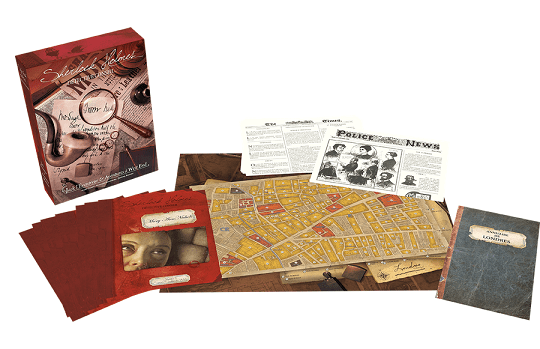
Sherlock Holmes Consulting Detective

Have you ever wanted to be the Great Detective, deciphering strange clues, finding evidence, and unraveling peculiar crimes? The closest thing I’ve found to being Holmes is playing Sherlock Holmes Consulting Detective, where a number of mysteries await the player. (You can play this game with up to 8 people, but the solo game proves to be a challenge worthy of master gamers and puzzlers.
[Link for more details.]

palm island

[Image courtesy of Board Game Geek.]

Palm Island

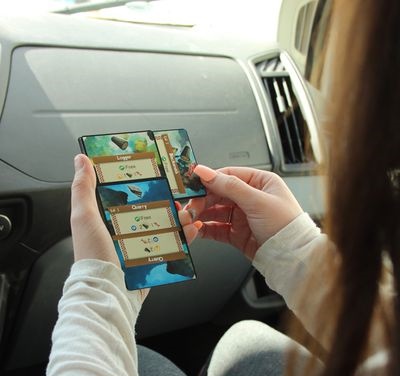
Many games are designed for ease of travel, but this is the only one I know that fits in the palm of your hand. Build your island, gather resources, and conquer challenges as you hold the fate of your island in your hand. With only 17 cards involved in the entire game, there’s a staggering amount of replay value included.

[Link for more details.]


Solo Mazes/Dungeons/Labyrinths

One subset of the single-player game genre is labyrinth-style gameplay, games where the player must explore and/or escape a labyrinth, dungeon, or other maze that unfolds in front of them and is different every time you play.
one deck

[Image courtesy of Board Game Geek.]

One Deck Dungeon

Essentially an entire roleplaying campaign distilled into a single-player experience, One Deck Dungeon allows you to defeat enemies, outwit other dangers, and explore a dungeon as your character develops new skills and gains valuable insights into their quest. You can play standalone games or an ongoing campaign as your character grows into a full-fledged master dungeon raider.

[Link for more details.]

(There’s another game, 5-Minute Dungeon, that scratches a similar itch.)

onirim

[Image courtesy of Board Game Geek.]

Onirim

Instead of a dungeon or a labyrinth, here you explore a realm of dreams, trying to find the keys necessary to unlock the doors and escape before the deck of cards runs out. With a 15-minute play time, a fun setup, and multiple expansions which add new wrinkles to future games, you’ll want to journey into the dreamworld again and again.

[Link for more details.]

The Abandons

Probably the toughest of the dungeon romp games, The Abandons pits you against a merciless labyrinth with limited resources and the deck literally stacked against you. You’ll need luck, quick decision making, and puzzly skill on your side to see daylight again with this one.

[Link for more details.]


Solo/Multi-Player Games

Finally, here are some great games that are best known as multi-player games, but with solo modes that still capture the playing experience.
jetpack6

Jetpack Joyride

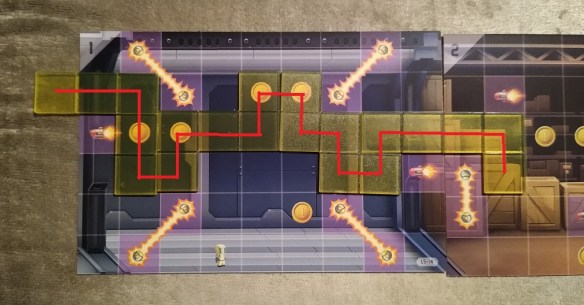
Plenty of games are about getting from Point A to Point B, but Jetpack Joyride makes the journey a puzzly delight. You must pilot yourself through a random collection of grids, using only a handful of Tetris-like game pieces to represent your path. You must complete your goals and escape, all without reusing a single Tetris piece. Jetpack Joyride combines puzzles and board games for a unique and fun gaming experience.

[Link for more details.]

Sagrada

One of the most beautiful strategy games on the market today, Sagrada is a singularly peaceful gaming experience. In this game, you’re trying to build a beautiful stained glass window out of dice while dealing with the requirements of your particular window AND the random dice rolled for your particular game. It’s challenging, soothing, and infinitely replayable.
[Link for more details.]

on the dot

[Image courtesy of eBay.]

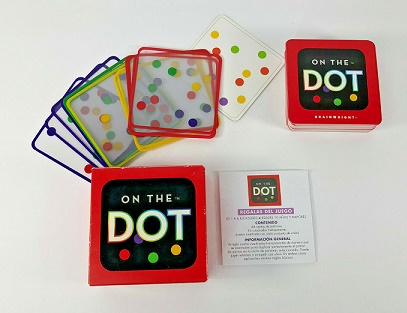
On the Dot

On the Dot is a pattern-matching game. You have four clear cards with randomly-placed colored dots on them, and you must arrange all four cards so that the colored dots showing match a given pattern. Although this game is usually played in groups with the first person to complete the pattern winning that card, you can easily challenge yourself to see how fast you can conquer the various patterned cards awaiting you.
[Link for more details.]

bananagrams

[Image courtesy of Board Game Geek.]

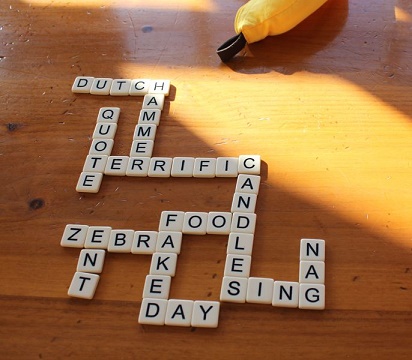
Bananagrams

Bananagrams is a tile game where, much like Scrabble, players pull letter tiles and try to form small crossword-like grids. But in Bananagrams, you can anagram and rearrange the grid as needed, instead of being locked into using the words you’ve already played. This game will test your vocabulary and your anagramming skills, but it’s always satisfying to hear the tiles click as they’re placed beside each other.
[Link for more details.]

castle panic

[Image courtesy of Board Game Geek.]

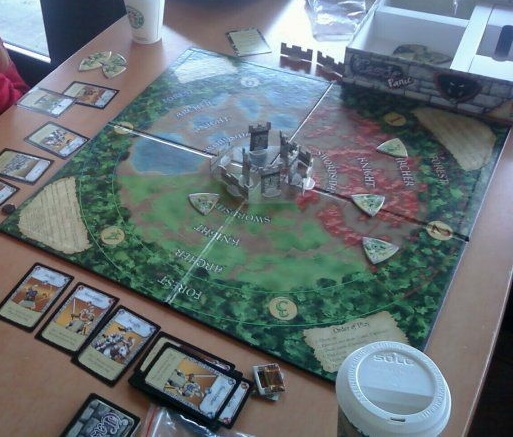
Castle Panic!

You have to defend your castle in the center of the board from monsters on all sides in this deviously enjoyable game. Careful strategy and planning is critical in stopping them from taking down your defenses, collapsing your towers, and leaving your castle in ruins. Randomness can play a big role in this game, but even when you lose, you still enjoy the adventure.

[Link for more details.]

Honestly, most cooperative games like Castle Panic! can be played solo, since it’s you vs. the game. (You just might have to play more than one character to do so.)

In Forbidden Island, you must collect treasures and escape a sinking island. In Flash Point, you’re a fireman trying to fight a building fire and rescue the trapped occupants. In Burgle Bros., you run a team of robbers trying to pull off a heist in a multi-story building you have to climb in order to escape with the loot.

These are just a few of the cooperative games that really adapt nicely to a one-player game experience. (Some folks would recommend Pandemic as well, but I’ve found that the expansion set Pandemic: In the Lab is a more satisfying solo experience.)

I also went with simpler games here, but for more intensive play sessions, you could tackle solo versions of Terraforming Mars, Scythe, Viticulture, Eldritch Horror, Elder Sign, and Ghost Stories. These games have more set-up and deeper, more complex gameplay, but also provide satisfying gameplay experiences for a single player.


Do you have any other suggestions for puzzle games and board games that are terrific for solo players, fellow PuzzleNationers? Let us know in the comments section below! We’d love to hear from you.

Thanks for visiting PuzzleNation Blog today! Be sure to sign up for our newsletter to stay up-to-date on everything PuzzleNation!

You can also share your pictures with us on Instagram, friend us on Facebook, check us out on TwitterPinterest, and Tumblr, and explore the always-expanding library of PuzzleNation apps and games on our website!

PuzzleNation Product Review: //CODE: On the Brink

[Note: I received a free copy of this game in exchange for a fair, unbiased review. Due diligence, full disclosure, and all that. /end disclaimer]

There has been a tidal shift over the last few decades from the analog realm to digital. So much happens in cyberspace, by email, and in the liminal spaces between smartphones and computers, that it feels like we’re leaving behind physical media entirely. In the next decade, knowledge of programming will become an essential skill.

And it’s never too early to begin laying the foundation for that future. The folks at ThinkFun have been ahead of the curve there for a long time — their game Robot Turtles is a prime example — and they continue to push forward with their new //CODE Programming Game Series, a line of puzzly products designed to teach the basics of programming to young solvers.

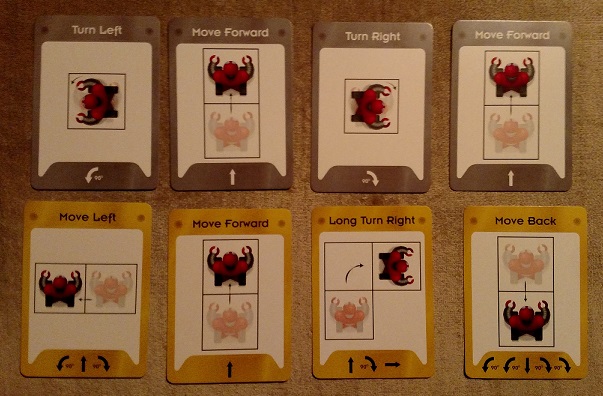
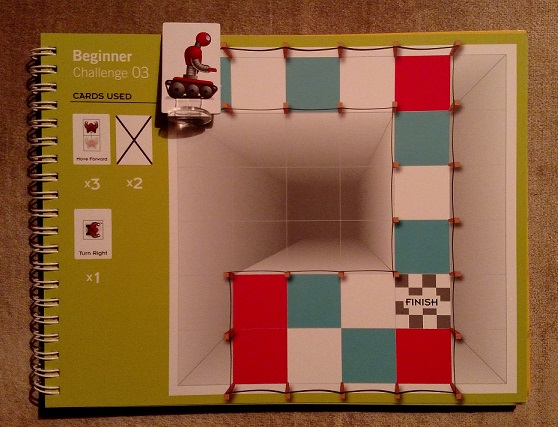
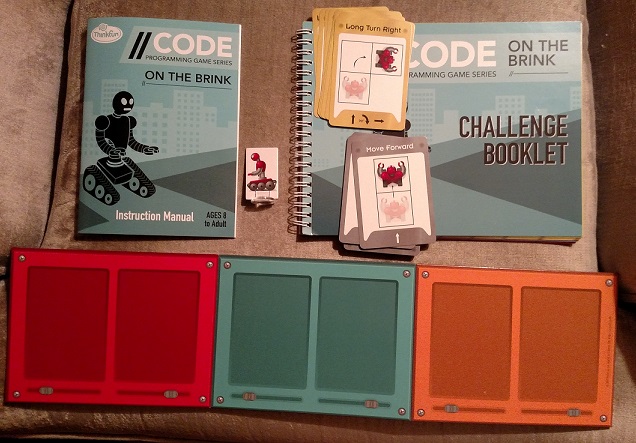
The first game in the series, On the Brink, serves as an excellent primer. The game is based around a simple concept: navigating a robot along a particular path. This path can twist, turn, and even cross itself. But it’s up to the solver to figure out how to use the available programming cards to control and determine the robot’s path.

There are two sets of programming cards, one simpler deck designed for the first 20 challenges and one larger deck designed for the more difficult challenges that follow. Just as you learn simpler commands before you learn finer, more detail-oriented, and more complex ones, you must master the basic commands in On the Brink before moving forward.

Whereas Robot Turtles required players to be supervised by a Turtle Master who governed the setup, difficulty, and execution of commands, On the Brink can be played alone, as the solver tackles each puzzle in the challenge booklet, complete with starting cards, a given path to replicate, and colored boxes on the board that align with the three sections of the control panel.

I was impressed by the amount of variety to be found in a relatively small deck of commands. A cagey programmer can navigate the robot through some unexpectedly thorny paths, reminding me a bit of the step-by-step deductive reasoning that made Lunar Landing such a delightful challenge.

One way that On the Brink improves upon Robot Turtles is with the concept of commands that continue to run once activated. In On the Brink, your robot will follow a command for as long as the programming cards and colored spaces on the challenge booklet page dictate. Just as a command in programming requires parameters in order to know when to stop, your robot needs similar commands. Otherwise, it’s liable to pass right over the finish square instead of landing there perfectly.

On the Brink invites players as young as 8 to tackle the various challenges in the booklet, either alone or in groups, and the steady ratcheting-up of difficulty teaches the young programmer as they advance, putting new wrinkles and obstacles in the player’s path.

It’s the sort of patient, clever gameplay we’ve come to expect from ThinkFun, and they do not disappoint here. Figuring out how to utilize the available commands and complete the path given makes for an excellent puzzly challenge — especially the later scenarios! — but it never feels inaccessible or overwhelming.

You’re always in good hands with ThinkFun, and they’ve proven it again here with On the Brink.

On the Brink is available from ThinkFun and participating brick-and-mortar and online retailers for $14.99.


Thanks for visiting PuzzleNation Blog today! Be sure to sign up for our newsletter to stay up-to-date on everything PuzzleNation!

You can also share your pictures with us on Instagram, friend us on Facebook, check us out on TwitterPinterest, and Tumblr, and explore the always-expanding library of PuzzleNation apps and games on our website!

PuzzleNation Product Review: Roller Coaster Challenge

ThinkFun’s products are all about learning through experimentation. Whether you’re making music note-by-note with Compose Yourself, mastering the basics of programming in Robot Turtles, or tackling complete-the-path puzzles with marbles, lasers, robots, or electronic circuits, kids and adults alike get the chance to put their puzzly chops to the test.

Roller Coaster Challenge is the largest, most ambitious ThinkFun puzzle game to date, featuring several dozen pieces and challenge cards galore to test your ability to bend momentum and gravity to your will as you complete unfinished roller coaster tracks!

[With multiple track lengths, posts for building support pylons, 90-degree turns to navigate, and even a loop you can construct, you’ve got all the ingredients you need for a roller coaster worthy of the name.]

The concept is fairly simple. You have challenge cards that offer a starting layout. You’re given the beginning and ending points of the track, and some pieces in between. You are also told which pieces you’ll need to use to bridge the gaps and finish the track. Now it’s up to you to place them correctly and then test your creation with the little red roller coaster car.

Not only is the building plate bigger than those in any previous ThinkFun puzzle game, but the sky is the limit as you build onwards and upwards in order to solve your challenge card and give your little roller coaster car the ride of its life!

The challenge cards serve as the perfect introduction to solving the game’s puzzles, teaching the solver how to identify pieces by length, how to avoid missteps, and even how to get the most out of the available pieces.

But the challenge cards are just the beginning. Roller Coaster Challenge encourages you to develop your own roller coaster layouts, and even share them with the company!

After battling my way through numerous challenge cards of all difficulties — ranked from easy to super hard — I began indulging my creative side by constructing my own layout.

Naturally I had to go above and beyond, trying to weave two tracks together so one would use the loop, and the other would rocket the roller coaster car through the loop and over a gap before reuniting with the track itself.

[OSHA would shut down my roller coaster so fast…]

In terms of scale, creativity, and sheer visual panache, Roller Coaster Challenge is the most ambitious and impressive ThinkFun puzzle game to date. The DIY encouragement built into the solving experience really adds something extra to the enjoyable (and sometimes challenging) layouts provided by the game’s designers.

Roller Coaster Challenge was the result of ThinkFun’s first venture into crowdfunding, and when it came time to go big or go home, they went big, and solvers reap the benefits with this dynamic, fun product.

Roller Coaster Challenge is available through ThinkFun and other vendors for the very affordable price of $29.99.


Thanks for visiting PuzzleNation Blog today! Be sure to sign up for our newsletter to stay up-to-date on everything PuzzleNation!

You can also share your pictures with us on Instagram, friend us on Facebook, check us out on TwitterPinterest, and Tumblr, and explore the always-expanding library of PuzzleNation apps and games on our website!

PuzzleNation Product Review: ThinkFun’s Laser Maze Jr.

Whether you’re unraveling locks and ropes in Houdini, bending gravity to your will in Gravity Maze, making music note-by-note with Compose Yourself, or mastering the basics of programming in Robot Turtles, playing with the puzzle games by ThinkFun always encourages you to learn while you solve.

Today, we see if Laser Maze Jr. matches the high standard set by those other puzzly products.

Now, for those of you familiar with the original Laser Maze, you might be expecting a simplified version, akin to the Jr. versions of Rush Hour or other puzzle games where the difficulty lessens but the game remains the same. Worry not. Laser Maze Jr. is actually a heavy redesign that keeps the best aspects of the original and tailors itself to players as young as 6, both in gameplay and in safety.

Perhaps the biggest change from the original is the board itself.

Not only is the laser fixed in place, but the board is surrounded by red plastic barriers that both protect young eyes and highlight where the beam is projecting at any given time. You would have to seriously tamper with the game to endanger your eyes with this layout; with the original, there was a greater (though still quite slim) chance that unmonitored gameplay could lead to an accident.

The laser also has a switch instead of a button to press, so if you choose, you can leave the laser on and see the beam’s path change as you add elements to the game board. As a learning tool, this is a super-helpful feature for younger minds. (The original encouraged more of a wait-and-see approach to placing the elements.)

The final change to the board’s layout involves the cards that provide the specifics of each puzzle. Instead of small cards that tell you which elements are fixed and which you add in order to solve the puzzle and light up the targets, the new cards actually slide into place beneath the board, showing you where to place the set pieces. Again, ease of setup and play is a main consideration.

The game pieces also got retooled. Instead of the gateway piece that players had to direct the laser beam through en route to the targets, Laser Maze Jr. has large rocks that block the laser’s path. This is a simple, effective way of providing obstacles for younger solvers to overcome.

The three light-up targets have been replaced with two light-up rockets. While this does eliminate some of the most complex puzzles from the original game, that’s forgivable, given that this is intended for younger solvers.

I was slightly disappointed with the laser, though. It’s less powerful than the previous one (either that or the rockets don’t light up as brightly as the original targets), and to be honest, part of the appeal of the puzzle is seeing your targets light up when you’re done!

[Taken at night with most of the lights off. Unless you’re willing to play in near-darkness — and use the night feature on your camera — the end result won’t be as bright.]

The 40 puzzles (2 on each challenge card) range from easy to super-hard, and solving them in order is a great way to slowly introduce new players to the game. Although “super-hard” is clearly a ranking for kids, not adults, the challenge of placing the beam splitter properly and avoiding the rocks is still a lot of fun for an older solver.

(Be careful when getting started, though; one of the explanatory graphics in the instructions is wrong. ThinkFun is aware of the error, and they’ll be correcting it on their next printing.)

In the end, I was pretty impressed with Laser Maze Jr. and the many changes made to tailor it to younger solvers, both in terms of safety and gameplay. While the laser is a little underwhelming, it doesn’t impact the gameplay too much, and the same solid foundation of logic and experimentation that drove the fun of the original is alive and well here.


Thanks for visiting PuzzleNation Blog today! Be sure to sign up for our newsletter to stay up-to-date on everything PuzzleNation!

You can also share your pictures with us on Instagram, friend us on Facebook, check us out on Twitter, Pinterest, and Tumblr, and explore the always-expanding library of PuzzleNation apps and games on our website!

PuzzleNation Product Review: Compose Yourself

Compose Yourself, ThinkFun’s latest offering, is unlike any product I’ve ever reviewed before, and that’s part of what makes it special. It is a single unending puzzle and a million different smaller puzzles all at once. It is literally as simple or as complex as you choose to make it.

You’re given sixty transparent cards (two copies each of thirty distinct note patterns). Each card features four different codes: one for the notes as they appear, one for the notes rotated 90 degrees, one for the notes backward, and one for the notes backward AND rotated 90 degrees. This allows for a staggering number of choices for a budding composer.

As you play around with placing the transparent cards in various order, you can log into the ThinkFun website and use the code provided to access a digital composing program.

[A picture of my first composition in progress…]

Input the codes from your layout of transparent cards in groups of four — as many as you wish! — and then click play. You can hear your new composition played on marimba, performed by an orchestra, or in both modes simultaneously!

Now, I confess, I am not a musically inclined person, but after fifteen minutes or so playing around with random cards — placing, flipping, reversing, and rotating them — I finally clicked play, and I was surprised by the results. (I’d unintentionally created a tune that felt perfect for the background of a Legend of Zelda game. *laughs*)

It feels like your work comes to life at your fingertips. And all you can think about is how to improve it, how to make the most of it, and how new cards will change it.

Each card represents part of a puzzle, and you may have no idea what the finished product will be, but that doesn’t make the process any less satisfying. This is old-school free-form creativity, like dipping your hands into a bucket of LEGOs, pulling out some pieces, and seeing what you can create.

ThinkFun has challenged us in the past with puzzlers like Houdini and Gravity Maze, and they’ve offered younger solvers the chance to learn coding in Robot Turtles and optics in Laser Maze, all while enjoying an experience that feels like play because it IS play.

But they’ve truly outdone themselves with Compose Yourself; it’s a learning experience, a creative experience, and a puzzly experience all at once. What a treat.

Thanks for visiting PuzzleNation Blog today! You can share your pictures with us on Instagram, friend us on Facebook, check us out on TwitterPinterest, and Tumblr, and be sure to check out the growing library of PuzzleNation apps and games!

PuzzleNation Product Review: Rush Hour Shift and All Queens Chess

ThinkFun has always specialized in games that educate as you play, from the optics and angles of Laser Maze and the chain problem-solving of Gravity Maze to the coding-for-kids gameplay of Robot Turtles and the mental agility challenges of their Brain Fitness line of puzzles-for-one.

Two of their newest products bring the best of those puzzles-for-one brain fitness games into the realm of head-to-head competitive solving for two players aged 8 to adult. And while All Queens Chess and Rush Hour Shift focus on two different styles of puzzle-solving, they both highlight the pluses of two-player puzzle games in their own unique ways.

Rush Hour Shift

There have been numerous variations on Rush Hour in the past, all of which center around the same tile-shifting mechanic: moving a series of cars around the board in the proper order to allow your car to escape the traffic jam.

Rush Hour Shift adds a new wrinkle to the puzzle by pitting two players head-to-head in a race to escape the traffic jam. But not only can players shift a personal car (known as the hero car) and the many cars in the way, they can also shift entire sections of the board in order to maximize their efforts to escape or thwart those of their opponent.

[Sometimes, you end up literally head-to-head.]

Your moves are dictated by the cards you draw from a small deck of options. You can either move a certain number of spaces, slide a vehicle as far as it will go before hitting an obstacle, or shift one side of the board or the other in order to create openings for yourself and further obstacles for your opponent. So not only are you solving an ever-evolving maze for your own car, but you’re trying to make your opponent’s maze more challenging.

My one caveat when it comes to Rush Hour Shift is that the game is incredibly dependent on which cards you draw. Between shifting the grid and moving both your hero car and all of the other cars, you have lots of options.

But if your opponent is drawing high-number cards and you’re not, there’s only so much you can do to slow them down or maneuver yourself in the hopes of staying in the game. A few good cards in a row can form a nearly insurmountable advantage.

That being said, Rush Hour Shift is a clever spin on a familiar formula, and a terrific way of introducing kids to the tile-shifting style of puzzle solving.

All Queens Chess

Many of the best games have extremely simple rule sets that still allow for major replayability and inherently complex gameplay, and All Queens Chess absolutely fits that bill.

You’ve got a 5×5 playing field, six queens each, and you’re trying to place four of your queens in a row Connect Four-style while preventing your opponent from doing the same. Each queen moves according to standard chess rules, except there’s no capturing of your opponent’s pieces. This puzzle game is all about placement and strategy.

And when you consider that the game pieces occupy nearly half of the playing area, it’s remarkable that there’s so much maneuverability and tactical potential in such a confined space.

Moreover, my expectation that, after a few games, the inability to capture and remove pieces from the board would prove tedious or frustrating was completely misproven. Six pieces is enough to strike a strong balance of offense (trying to place four in a row) and defense (preventing my opponent from doing so). I never felt locked into a few token moves.

This is a rare open-the-box-and-go puzzle game, and it’s an absolute treat.

Thanks for visiting PuzzleNation Blog today! You can share your pictures with us on Instagram, friend us on Facebook, check us out on TwitterPinterest, and Tumblr, and be sure to check out the growing library of PuzzleNation apps and games!