Riddles of the Heart!

puzzlelove

I’ve always been a sucker for a story where puzzlers help make someone’s life better, their world a little bit more magical. I’ve had the privilege of constructing and facilitating several puzzly marriage proposals, for instance.

But there’s something even more heartwarming when it’s anonymous puzzlers helping a stranger with a puzzly dilemma. Like the time online puzzlers saved Christmas by decoding a kid’s encrypted wish list to Santa for his baffled mother.

This time around, it’s not Christmas magic, it’s a potential romance.

In a recent Reddit post, a request for help went out the puzzliest of D&D players:

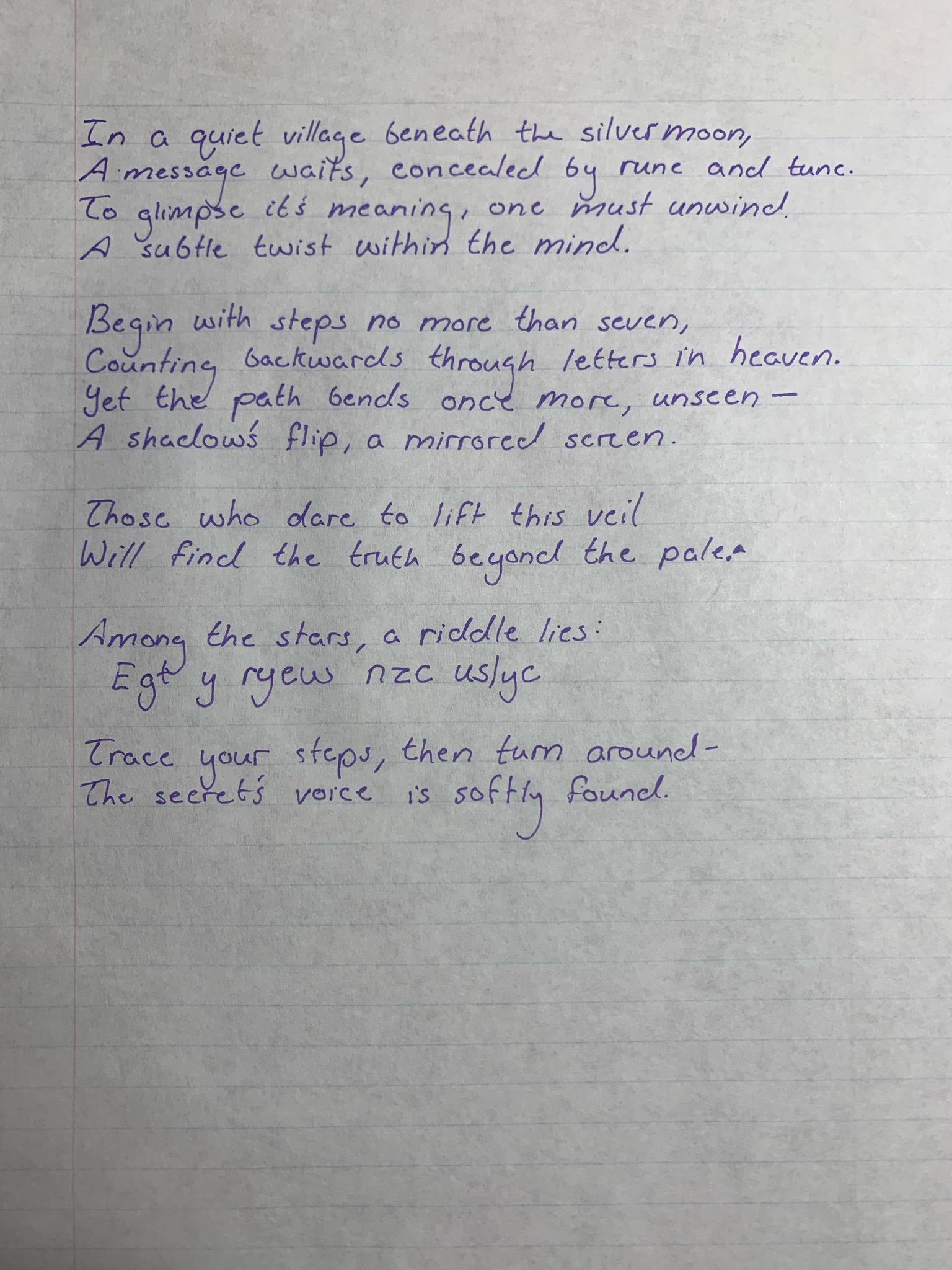
I asked someone out using a riddle, and they responded with another one, but now I can’t solve it. We both dm at our local game store, and we’re running games tomorrow, I need a quick solution. I don’t need someone to give me the answer, but can someone please help walk me through how to solve this?

First off, that’s very cute.

Secondly, my dude, they responded to a riddle with your riddle. That’s a yes, my friend! Congrats.

As you might expect, his fellow riddle fans and puzzle fiends quickly explained how to find the solution, hoping that this marvelous exchange of riddles leads to more! Everyone loves a meet-cute, especially a puzzly one!

But what about you, fellow solver? Could you crack it?

I’ll give you a bit of space before I reveal how to solve it.

.

..

….

…..

……

…….

……

…..

….

..

.

Ready? Okay, let’s get to the riddle itself.

Egt y ryew nzc uslyc

This is clearly a single substitution cipher, also known as a simple substitution cipher, where each letter represented by another.

You could tackle this in a brute force way, treating it like a cryptogram. We know that “y” is going to be A or I. The most common three-letter word is “the”, which is a good place to start. At the very least, we can probably assume that “c” is the letter E, since it’s at the end of several words.

But the poem tells us how to solve it.

Start with the “letters in heaven,” your alphabet.

ABCDEFGHIJKLMNOPQRSTUVWXYZ

We get references to a mirrored screen or a shadow’s flip, so let’s try the alphabet backwards and placed underneath.

ABCDEFGHIJKLMNOPQRSTUVWXYZ
ZYXWVUTSRQPONMLKJIHGFEDCBA

We’re told to count backwards with steps no more than seven.

So let’s take the first letter in our secret message, E. Counting backwards (and wrapping around the alphabet again), that brings us to X. And in the mirror of X, we have C.

Continuing, seven letters back from G is Z, and in the mirror, A. Seven letters back from T is M, and in the mirror, N.

Egt Y ryew nzc uslyc
CAN

Continue for all the letters, and you get your answer written in the stars (presumably replying to his riddle):

Can I pick the movie?

Here’s hoping we get some updates in the future (or more riddles) from this pair of dice-rolling riddle-crafting delights.

And let’s offer one more huzzah for the anonymous puzzlers who helped crack the code!

Puzzlers… is there anything they can’t do?

Ornamental Puzzling!

Let’s do one last festive post before the new year begins!

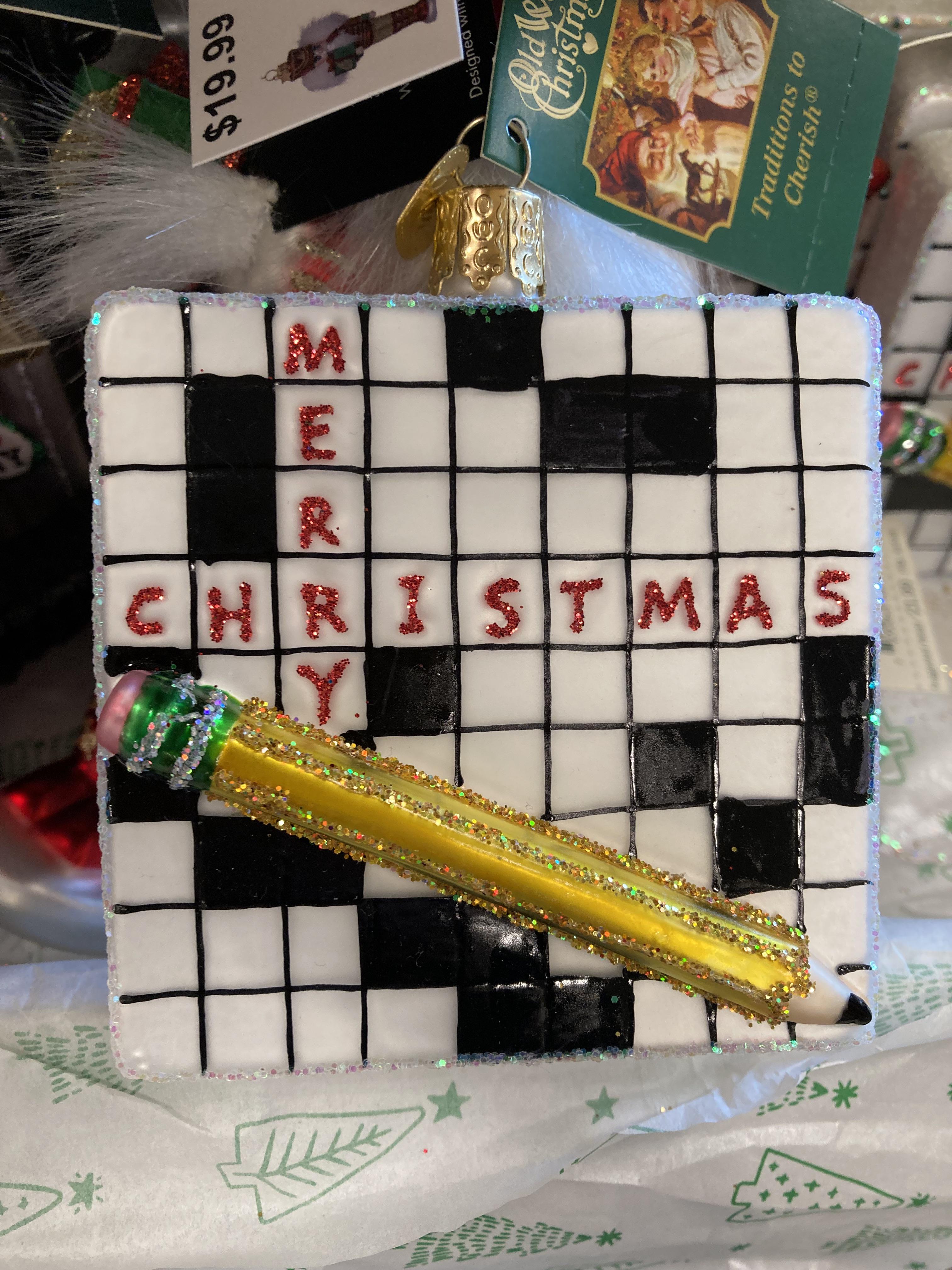
Last week, a reddit user posted a picture of this Christmas ornament, and asked if the grid could actually be filled.

I happily accepted that challenge.

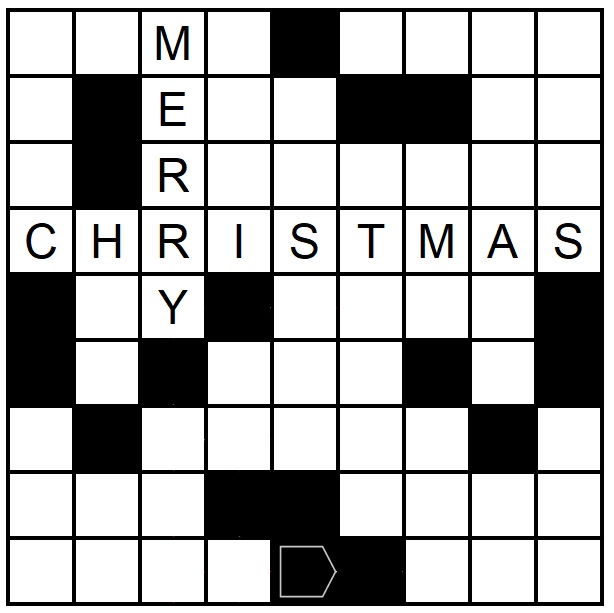
Now, there are a few caveats here. Obviously this is not a traditional crossword grid. It has no symmetry (either radial or axial), and it is littered with one- and two-letter entries, which are not allowed. There is also the small matter of the bottom left corner being completely disconnected from the rest of the grid.

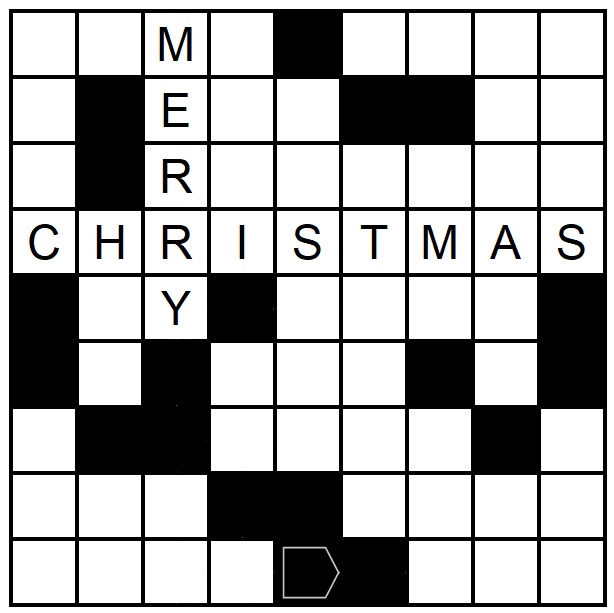
Here is the empty grid with MERRY and CHRISTMAS preset (without the pencil blocking several squares):

Now, to stick to the reddit request, I left the grid mostly as is.

However, I could not in good conscience have part of the grid disconnected from the rest, so I removed a single black square in order to connect the grid fully.

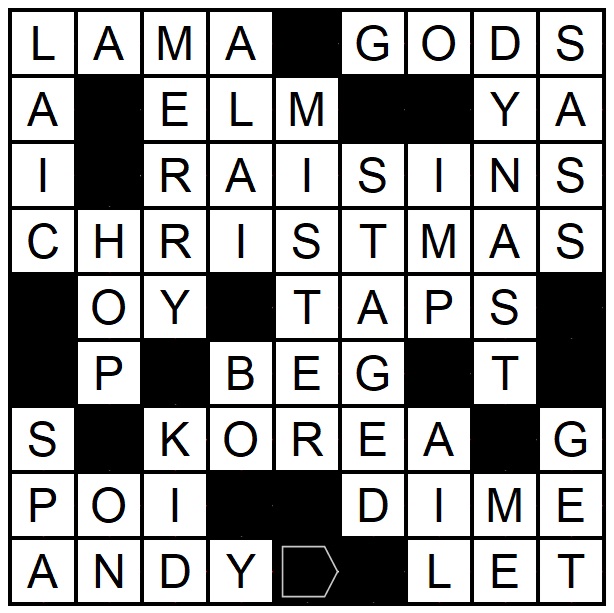
There we go.

Oh. And one additional challenge: I only allotted myself ten minutes to fill the grid.

As usual in crossword construction, I tried to avoid abbreviations and variant spellings as much as possible (even with the two-letter entries), and keep the vocabulary as accessible as possible.

The only real challenge in this grid was finding a seven-letter word starting with R that aligned nicely with CHRISTMAS as the neighboring word.

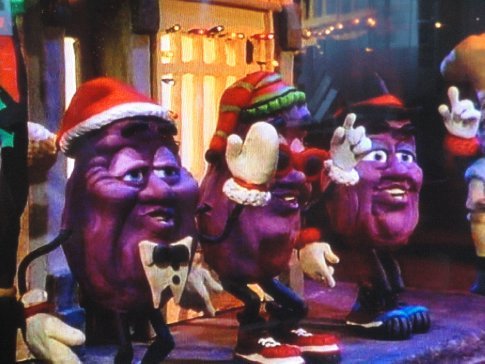
In keeping with the holiday theme, I chose RAISINS, as the California Raisins and their long-lost classic Christmas special came to mind.

From that point, it was a pretty quick job filling in the rest of the grid.

There are more plurals than I’d prefer, and DYNAST is by far the most difficult entry in terms of vocabulary, but otherwise, I’m pleased with my nine minutes and thirteen seconds’ worth of work.

What do you think?

I might come back to this one and see if I could clean it up more. Eliminate all the plurals, or maybe put themed words for all the border words along the edge. Something to really challenge me.

But for now, I think this will do.

Please check out the reddit post to see other puzzlers’ attempts at filling this ornament’s unusual layout. Or maybe even accept the challenge yourself! If you do, I’d love to see your fill.

Happy puzzling, everyone! And Happy New Year!

Who Is The “Average Solver”?

In crossword forums, the comment sections of crossword blogs, and virtually any other online space where people share their thoughts on puzzles, you’re bound to see the same criticism over and over.

“The average solver wouldn’t know ____.”

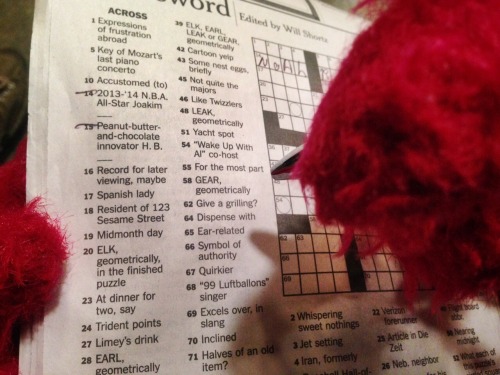
I saw a comment on a r/crossword reddit forum recently, regarding the November 11 USA Today puzzle. 10-Down was clued “Spoons,” and the answer word was ENERGY. The poster was baffled.

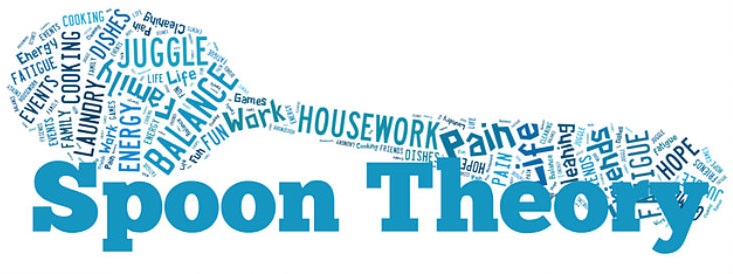
(If you’re among those who didn’t get the reference, this clue references Spoon Theory, a concept common to those who suffer from chronic pain, fatigue or other debilitating conditions, regarding how many “spoons” a certain activity costs. It’s a way of quantifying how their condition affects their daily life.)

After it was explained, the poster asserted that “nobody” would make the connection between spoons and energy.

Now, no matter what you think of that clue — I personally would have gone with something like “Spoons, to some” or “Spoons, metaphorically” — it’s plainly false that NOBODY would make that connection.

Is it commonplace? Depends on how old you are and in what circles you travel, it seems. (Based on an informal poll I conducted, people 35 and younger are far more likely to know it.)

But one must never mistake their own unfamiliarity with a term for genuine obscurity. And I don’t say this out of judgment. It’s a mistake I’ve made myself on more than occasion. Heck, earlier this year, I did so when reviewing a tournament puzzle. I felt an entry (a hybrid fruit) was too obscure, only to discover others found it fairly common. Live and learn!

Another example where someone questioned the “average solver” was recently shared on Twitter. Constructor Malaika Handa shared part of a Crossword Fiend review:

She pointed out that this assumes that the “average solver” isn’t of Latino descent.

(It’s also worth noting that AREPAS is a more interesting entry than ARENAS, but I digress.)

What do you picture when you imagine the “average solver,” I wonder?

Because I think about those two nebulous measuring sticks a lot: “nobody” and “the average solver.” While they can be valuable to consider, they’re also very misleading.

I mean, what does the “average solver” know? European rivers? Football players? Greek letters? Classical composers or K-Pop bands? How many people would know ETUI if not for crosswords? It’s hardly commonplace.

Do they know those things AND solve crosswords, or do they know those things BECAUSE they solve crosswords? If constructors start regularly cluing or referring to spoons or arepas, then they become part of crossword vernacular, and then the “average solver” might be expected to know them.

Quite a slippery slope when you really start digging, isn’t it?

Plus, there’s more than one average solver, depending on how you look at it. Every outlet has a different “average” solver, and they’ll change over time.

Take PuzzleNation for example. Our Facebook audience is different from our Twitter audience, which is different from our blog audience. But there is overlap. We know there are Daily POP Crosswords and Daily POP Word Search solvers among all of those groups. But that’s five different “average solvers” to consider at the minimum.

tumblr_nnl5c43Ov61qd4fqho1_500

That’s the challenge, isn’t it? Every crossword constructor walks a tightrope, trying to keep their puzzles fresh while still appealing to solvers.

And, as recently pointed out in a New York Times piece, the Internet has accelerated the proliferation of new slang and terminology. Words become part of the modern vernacular much faster now. (And every time The Oxford English Dictionary adds new words, we get a sense of how deeply some of these new terms have embedded themselves.)

Personally, I think crosswords are better when we’re learning from them. I’d rather have to look up a word or assemble it from familiar crossings — and broaden my own vocabulary and knowledge — than see the same old fill. Those European rivers. Those composers. Those Greek letters.

More spoons and arepas, please. If there is an ideal average solver out there, let’s teach them something new.


   dailypopwsicon

Treat yourself to some delightful deals on puzzles. You can find them on the Home Screen for Daily POP Crosswords and Daily POP Word Search! Check them out!

Thanks for visiting PuzzleNation Blog today! Be sure to sign up for our newsletter to stay up-to-date on everything PuzzleNation!

Younger Solvers and Constructors Building Online Crossword Communities!

It’s a dynamic, fluid time for crosswords. It feels like we’re on the cusp of a sea change.

Women, people of color, and members of the LGBTQIA+ community are featured more often, although we still have a LONG way to go on all of those fronts where representation is concerned, both for constructors and editorial staff.

Younger voices are rising up the ranks, and helping to influence the direction of crossword language through projects like the Expanded Crossword Name Database. Online resources like more inclusive word lists, free or discounted editing software (often constructed by younger solvers!), and words of guidance from online crossword collaboration groups are more available than ever.

Recently, these topics were tackled in The New York Times itself in an article about younger crossword enthusiasts penned by freelance writer and reporter Mansee Khurana.

mansee

Her article is a terrific snapshot of the modern crossword world.

It discusses the divide between older solvers and younger, and how the content of crosswords doesn’t always serve both sides. It tackles the concept of “evergreen puzzles” — crosswords edited for timeless reprint value, eschewing up-to-date and provocative references that would appeal to younger solvers and underrepresented groups for the sake of republication later.

The article mentions the many virtual and online spaces that are now comfortable haunts for younger crossword fans. Facebook forums, Discord chats, Zoom solving parties, Crossword Twitter, r/crossword on Reddit, and even Tiktok accounts dedicated to crosswords got some time in the sun, and it’s really cool to see how these new spaces have emerged and grown more influential.

[A solve-along video from YouTube, Twitch, and Crossword Tiktok user
Coffee and Crosswords. Actual solving starts around 10 minutes in.]

Several names familiar to crossword solvers were cited as well. Constructors like Sid Sivakumar (mentioned just yesterday in our Lollapuzzoola wrap-up), Nate Cardin, and Malaika Handa were all quoted in the piece, reflecting many of the same concerns we’ve heard from new and upcoming solvers in some of our recent 5 Questions interviews.

I actually remember the author’s post reaching out to the contributors and readers of r/crossword a few months ago, and I was glad to see the subreddit getting some mainstream attention. Yes, like any internet forum, it can be combative and argumentative at times, but that’s a rarity.

Most of the time, it’s a supportive community for crossword fans and aspiring constructors, a place where they share questions, bravely offer up their first attempts for input and criticism, and discuss all things puzzly. It’s genuinely inspiring to see new solvers on a near-weekly basis reaching out and being embraced by fellow solvers and cruciverbalists-in-progress.

I highly recommend you take the time out to read Mansee’s piece. She captures a true sense of not just where crosswords are now, but where they’re headed. And if these young people have anything to say about it, it’s headed somewhere very bright indeed.


dailypopwsicon

Have you checked out our special summer deals yet? You can find them on the Home Screen for Daily POP Crosswords and Daily POP Word Search! Check them out!

Thanks for visiting PuzzleNation Blog today! Be sure to sign up for our newsletter to stay up-to-date on everything PuzzleNation!

Where to Look for Crossword Reviews/Commentary?

tumblr_nnl5c43Ov61qd4fqho1_500

Occasionally, we’ll get a message from a PuzzleNationer who wonders why we don’t review the daily New York Times crossword or some of the other prominent daily newspaper crosswords.

It makes sense to ask. After all, we try to cover all things puzzles and games here — great clues, trivia, brain teasers, puzzles in pop culture, interviews, game reviews, how to’s, puzzle history, the Crossword Mysteries — so why not the top crossword outlets?

Well, to be honest, there are already several crossword blogs doing a dynamite job of covering those. So today, I want to discuss some top-notch blogs that discuss and review the daily crosswords!

nyt xwd

For the New York Times crossword alone, there’s Wordplay, XWord Info, and Rex Parker.

Wordplay is the official New York Times crossword blog, and not only do you get great analysis from knowledgeable minds, but you get live solve-alongs, insight from constructors, and more.

XWord Info is my go-to for details on construction and a fair, informative review. People occasionally accuse XWord Info of being too favorable to the puzzles/constructors, but I think they call it right down the middle, and there have been times where reviewers and constructors leveled stern criticism at a puzzle’s editorial process OR how it was discussed on XWord Info itself.

Rex Parker’s blog can be more critical of Times puzzles — as we’ve said before, he borders on the curmudgeonly — but he has terrific advice about grid construction, theme entries, and more that several constructors have told me proved to be invaluable in their early days learning to construct.

His blog is probably not for everybody, but he remains one of the most influential voices in crossword reviewing today.

Oh, and if you’re looking for some terrific reviews of the NYT Mini Crossword, check out this great Instagram account!

Of course, the NYT crossword isn’t the only game in town.

la times

If you’re a fan of the Los Angeles Times Crossword, there’s the terrific L.A. Times Crossword Corner blog to keep you up to date on that puzzle, breaking every puzzle down clue by clue. (There’s also LAX Crossword, which offers answers and clue explanations.)

If you enjoy the USA Today crossword, Sally Hoelscher offers Sally’s Take on the USA Today Crossword daily, offering up theme explanations, things she learned from the puzzle, and sharing terrific opinions and thoughts that would absolutely be beneficial to newer solvers.

And although it’s not a blog per se, the XWord Muggles Forum offers an interactive space to discuss and break down the Wall Street Journal weekly crossword contest, as well as other meta crossword puzzles.

crossword pen

But, if you’re looking for more of a one-stop-shop experience, then you should check out Diary of a Crossword Fiend.

Crossword Fiend covers NYT, LA Times, WSJ, Universal, USA Today, The New Yorker, The Washington Post, Newsday, The Inkubator, AVCX, and more! Not only that, but you’ll get reviews of puzzles from independent constructors like Elizabeth Gorski’s Crossword Nation, Brendan Emmett Quigley, Peter Gordon’s Fireball Crosswords, and others.

They post their solving times, analyze the puzzles, and spread the word about other puzzly projects and crossword news. It’s a fantastic site.

And before I wrap up this recommendation post, I do want to shout out the community on Reddit’s r/crossword subreddit. It’s a forum for discussing puzzle opinions, sharing works from aspiring and developing constructors, and yes, reviewing and sharing thoughts on the major outlets (mostly the NYT).

Most of the posters and commenters are genuinely good folks who love crosswords and enjoy discussing them, and it’s a pretty pleasant place to visit if you’re a crossword fan.

Do you have any favorite Crossword Review Blogs that we missed? Let us know in the comments section below. We’d love to hear from you!


dailypopwsicon

Hey, have you checked out our special summer deals yet? You can find them on the Home Screen for Daily POP Crosswords and Daily POP Word Search! Check them out!

Thanks for visiting PuzzleNation Blog today! Be sure to sign up for our newsletter to stay up-to-date on everything PuzzleNation!

The Great Crossword Debate: Overused Vs. Obscure

exercise-brain-crossword-670x335

Making a great crossword puzzle is not easy. Heck, making a GOOD crossword puzzle is not easy.

You want the theme to be creative, innovative even, but still something that can be intuited from a clever title and crafty clues.

You want the clues to be engaging, challenging, funny, tricky, and loaded with wordplay and personality.

And you want the grid fill to be fresh and interesting, yet accessible. You want to avoid obscurities, abbreviations, nonsensical partial-phrases, and the dreaded Naticks where two difficult entries cross.

But you also want to add to the lexicon of grid fill, leaving behind the tired vowel-heavy words that have become cliche or crosswordese.

Even if you accomplish all that, you also want your puzzle to have an overall consistent level of difficulty. Having a bunch of easy words in the grid only highlights the hard words necessitated when you construct yourself into a corner. A sudden spike in vocabulary and eccentricity is always noticeable.

So completing every grid becomes a balancing act between new and old, pop culture-loaded and traditional, obscure and overused.

This raises the question posed in a Reddit thread recently:

Which bothers you more, words that you probably wouldn’t know without a dictionary OR filling out OLEO and ARIA for the millionth time?

Both options had their proponents, so I’d like to give you my thoughts on each side of this cruciverbalist coin.


obscure_language

Obscure Over Overused

A well-constructed grid can overcome the occasional obscure entry. After all, since you have Across and Down entries, several accessible Across answers can hand you a difficult Down answer that you didn’t know.

You can assist with an informative clue. It might get a little lengthy, but like a well-written trivia question, you can often provide enough context to get somebody in the ballpark, even if they don’t know the exact word or phrase they need. If it FEELS fair, I think solvers will forgive some peculiar entries, as long as you don’t go overboard.

Also, if you’re a crossword fan, you’re probably a word nerd, and who doesn’t like learning new words?

As one contributor to the thread said, “I’d rather eke out a solution than fill in EKE OUT or EKE BY again.”


News-Keep-Calm-and-Carry-This-Overused-Phrase-to-the-Grave-for-College-Students

Overused Over Obscure

The very nature of crosswords demands letter arrangements that are conducive to building tight grids. Your vowel-heavy entries, your alternating consonant-vowel ABAB patterns, the occasional all-consonants abbreviation or all-vowels exhalation or size measurement… these are necessary evils.

But that doesn’t mean the cluing has to be boring. I absolutely love it when a constructor finds a new twist on an entry you’ve seen a billion times. I laughed out loud when Patti Varol clued EWE as “Baa nana?” because it was a take I’d never seen before.

Here are a few more examples of really smart ways I’ve seen overused entries clued:

  • “It’s never been the capital of England (and it surely won’t be now)” for EURO (Steve Faiella)
  • “Name-dropper’s abbr.” for ETAL (Patrick Berry)
  • “It’s three before November” for KILO (Andy Kravis)
  • “Fix plot holes, maybe” for HOE (Peter Gordon)
  • “50/50, e.g.” for ONE (Michael Shteyman). This one really plays with your expectations.
  • “Hawaiian beach ball?” for LUAU (George Barany)

Still, this is no excuse for going incredibly obtuse with your cluing just to be different. Making an esoteric reference just to avoid saying “Sandwich cookie” for OREO might be more annoying to a solver than just the overused answer itself.

On the flip side, you can treat them as gimmes, cluing them with familiar phrasing and letting them serve as the jumping-off points for longer, more difficult entries or the themed entries the puzzle is constructed around. Some familiar words are always welcome, particularly if a solver is feeling daunted with a particular puzzle’s or day’s standard difficulty.

(One poster even suggested pre-populating the grid with common crosswordese like OLEO, kinda like the set numbers in a Sudoku. I don’t think I’ve ever seen that approach before.)


conman1112

So, have we come to any conclusions today? Probably not.

As I said before, it’s a tightrope every constructor must walk on the way to finishing a crossword. Every constructor has a different method for getting across, a different formula for success. Some even manage to make it look effortless.

What do you think, fellow puzzlers and PuzzleNationers? Do you favor overused entries or obscure ones? Let us know in the comments section below. We’d love to hear from you!


Thanks for visiting PuzzleNation Blog today! Be sure to sign up for our newsletter to stay up-to-date on everything PuzzleNation!

You can also share your pictures with us on Instagram, friend us on Facebook, check us out on TwitterPinterest, and Tumblr, and explore the always-expanding library of PuzzleNation apps and games on our website!