Create Puzzly Art Line by Line!

You’ve heard of Logic Art, but let me ask you, fellow puzzler… have you heard of Word Seek Art?

Please allow me to introduce you to the world of LexaPics.

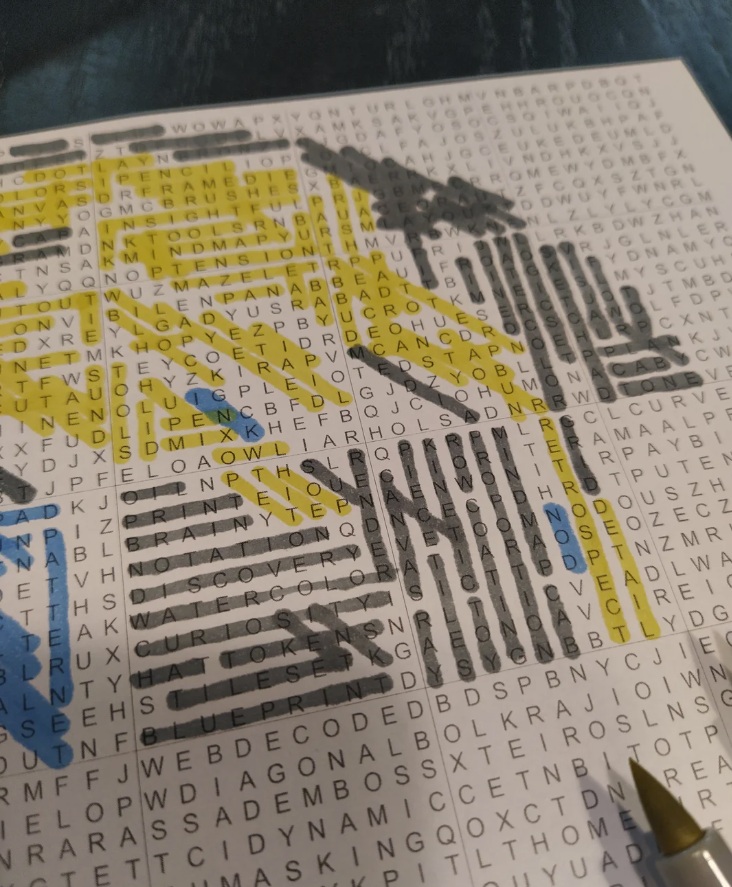
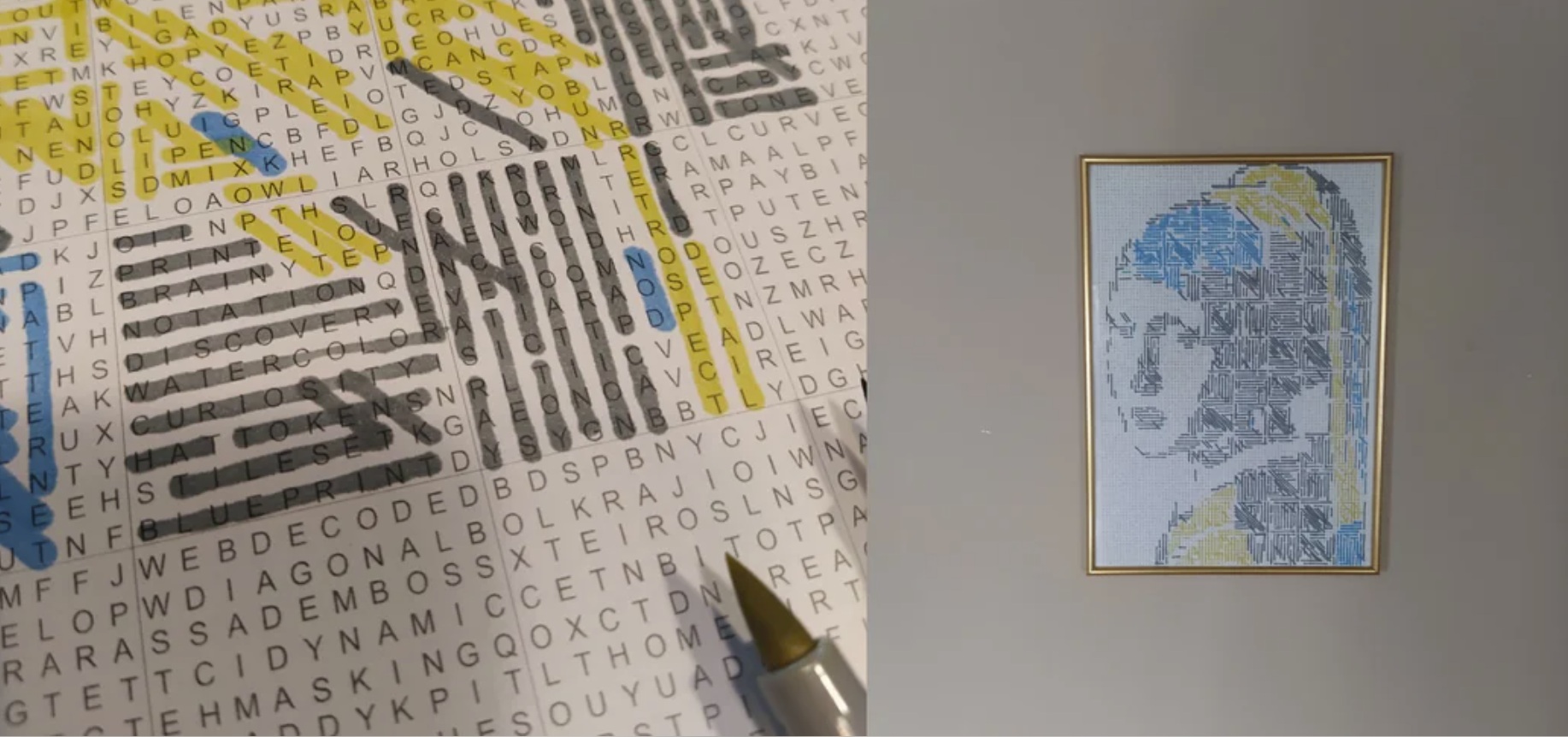
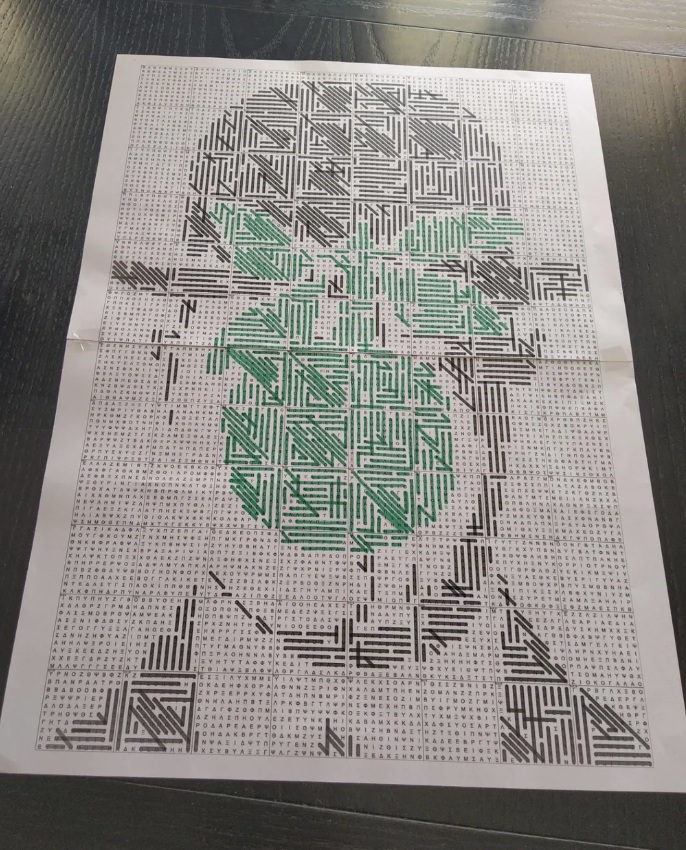
LexaPics are the creation of Vasiliki Papadopoulou, who designs specially curated word seek grids and sorted word lists to create works of art when solved!

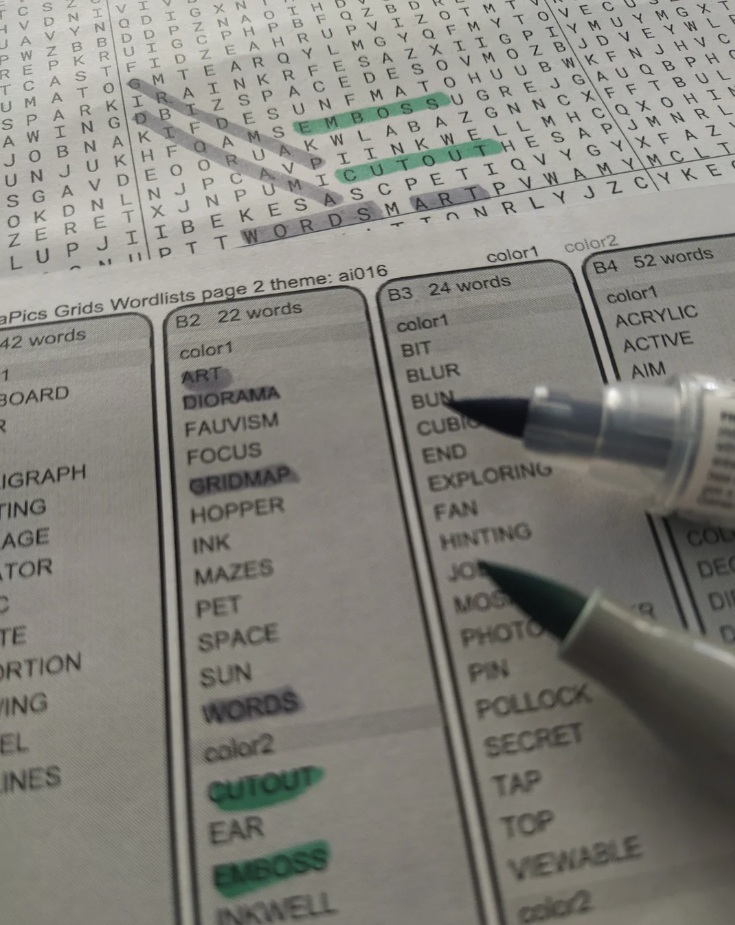
The grid is divided into different cells, and you get a word list for each cell, with different parts of the word list organized by color.

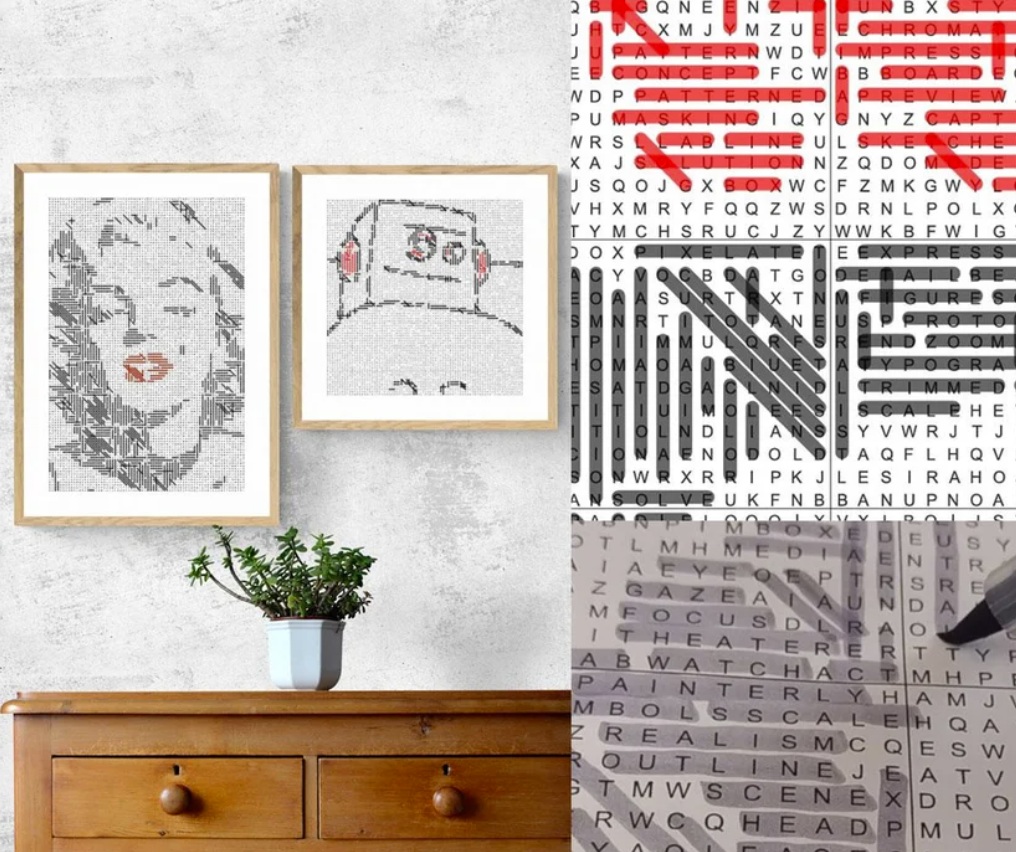
And as you find your words, the work of art slowly emerges line by line.

As you can see, Vasiliki has created grids inspired by Vermeer and Magritte, as well as grids inspired by iconic celebrities like Marilyn Monroe.

From Vasiliki’s post on Reddit:

Lexa comes from Greek word Lexis λέξη (since i am from Greece) that means word and Pics as pictures, but also a playful nod to “pixels” — the building blocks of modern digital art.

Not only does he have a Kickstarter campaign for LexaPics launching soon, but he’s actually created an Instructables page for anyone who would like to make their own LexaPic!

I love seeing the creative ways people put new spins on classic puzzles, and this is both beautiful and so cleverly accessible.

You can click this link to check out his Kickstarter, as well as the homepage for LexaPics here.

I look forward to seeing what sort of wonderful imagery emerges from his word seeks next!

A Boggle Grid Big Enough For Every Word?

Puzzly minds are often analytical minds, so I’m no stranger to wild attempts at puzzle-inspired calculation.

Puzzle people have previously calculated the human limit for solving a Rubik’s Cube, as well as the fastest known mechanical solve of a Rubik’s Cube. Years ago, I myself tried to figure out how many years it would take to use every unique Sudoku grid possible.

But optimization is something altogether different, and it’s a intriguing way to look at the potential of puzzles.

A Redditor by the name of AntiqueRevolution5 posed the following question a few days ago, and it absolutely fits the bill of both puzzly calculation and optimization:

What would a Boggle grid look like that contained every word in the English language?

Well, there are somewhere between 1 million and 1.5 million words in the English language, so I imagine it would be pretty big.

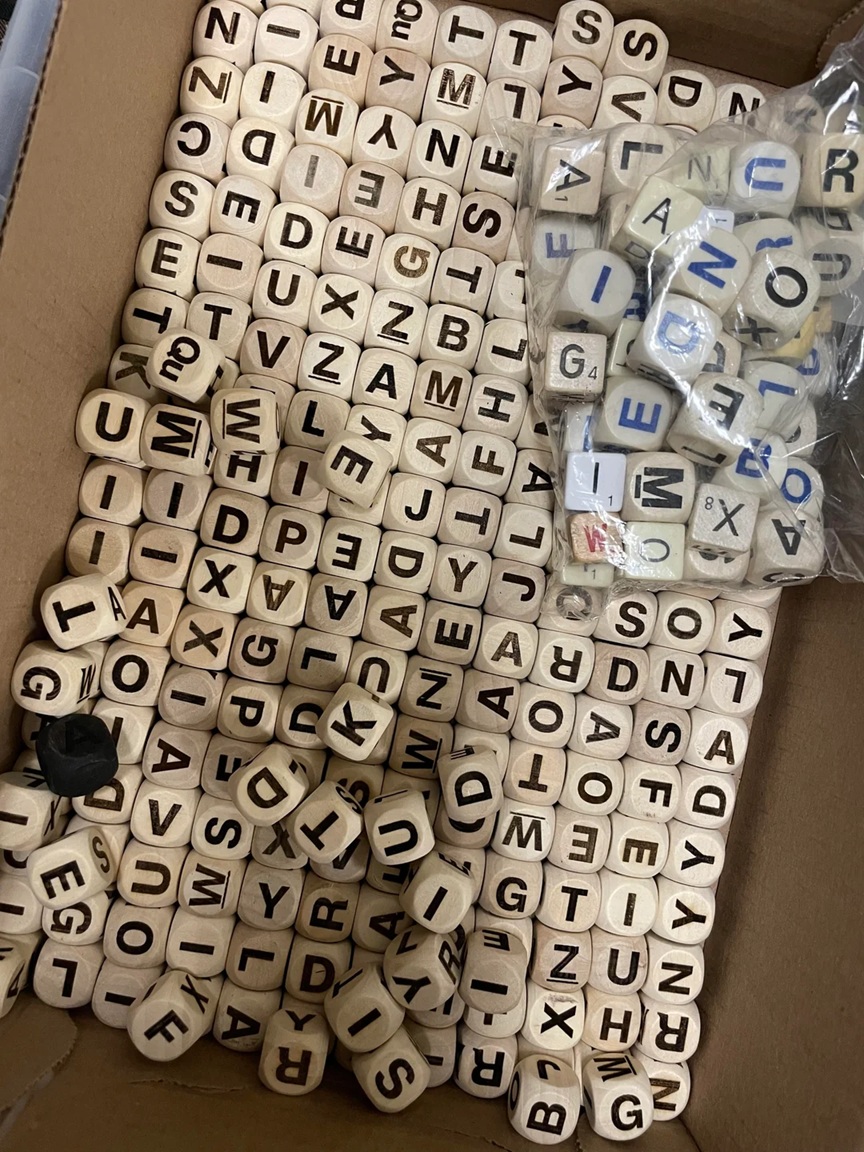
The redditor is an artist, and their goal is to make a sculpture composed of Boggle dice. And their concept is fascinating:

The idea for the piece is that it’s a linguistic Rorschach that conveys someone could find whatever they want in it. But it would be even cooler if it literally contained any word someone might reasonable want to say or write.

So, where do you start with something like this? Our artist has a suggestion:

To simplify, we could scope it to the 3000 most important words according to Oxford. True to the nature of Boggle, a cluster of letters could contain multiple words. For instance, a 2 x 2 grid of letter dice T-R-A-E could spell the words EAT, ATE, TEA, RATE, TEAR, ART, EAR, ARE, RAT, TAR, ERA. Depending on the location, adding an H would expand this to HEART, EARTH, HATE, HEAT, and THE...

What would be the process for figuring out the smallest configuration of Boggle dice that would let you spell those 3k words linked above? What if the grid doesn’t have to be a square but could be a rectangle of any size?


Naturally, creative minds accepted the challenge.

One user claimed that an online Boggle website called Squaredle has two 10×10 boards with just under 900 words of 4 or more letters.

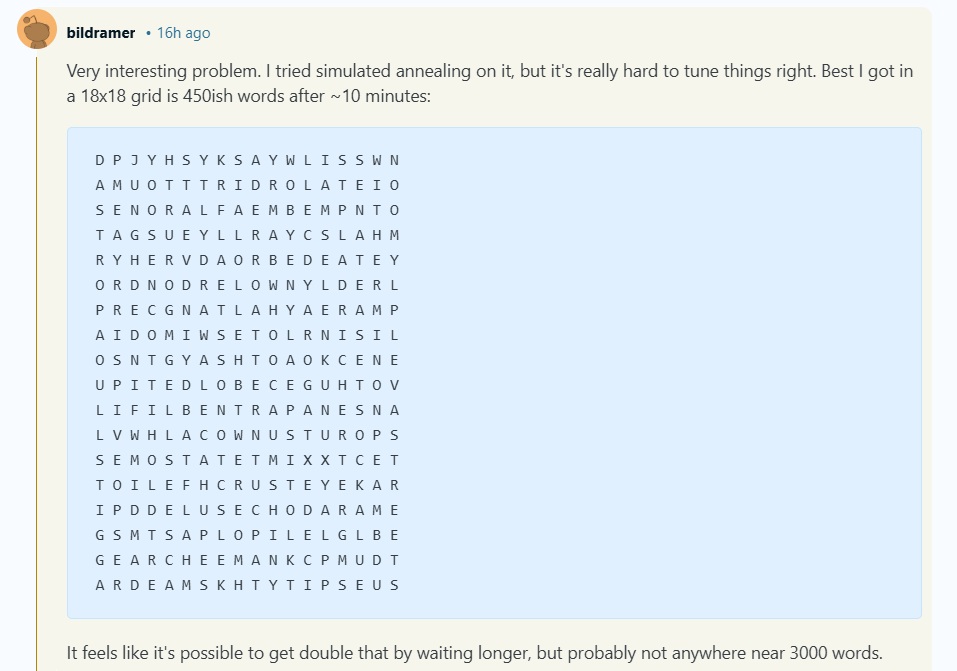
Another user, a programmer, was able to create an 18×18 grid with approximately 450 words in under 10 minutes.

As you might expect, I was unable to resist diving into this one. But I’m not a programmer, so let’s do some meatball mathematics to get a sense of the scope of the puzzly conundrum before us.


We can extrapolate that if we get 450 words in an 18×18 grid, we’d need seven 18×18 grids connected to approach 3,000 words, assuming there’s some consistency in letter efficiency.

If we stick to the rectangular suggestion of the original post, a 63×36 rectangle (six 18×18 grids in a 2×3 arrangement, plus a 9×36 grid attached at the bottom) should allow for those 3,000 words.

Now, I can’t verify that. But 63×36 means 2,268 letters in the grid. Which, with a 3,000 word goal (including two- and three-letter words) kinda feels possible.

Of course, this is just to cover that 3,000 word list. Remember that the English language is estimated to contain between 1 million and 1.5 million words total.

That’s 333-and-a-third times more, if we use a million words. It’s 500 times more words if we assume 1.5 million words.

So, that’s 2,268 letters in our 3,000 word grid. Multiply that by 500 and you get 1,134,000 letters in the grid.

That means we’d need a grid that’s 1,065 x 1,065 to cover the entire English language.

So what does that mean in Boggle terms?

A standard six-sided die is 16 millimeters. That’s 17,040 millimeters, or 17.04 meters. That’s 67.09 inches. We’re talking about a Boggle game that’s FIVE AND A HALF FEET ACROSS.

That’s one heck of a Boggle grid.

Now, of course, these numbers are all estimates, and dubious ones at that. But I couldn’t resist TRYING to find an answer, even if it’s just a ballpark number.


You see, fellow puzzlers, this brand of puzzle efficiency tickles something in my brain, as there are several Penny Press puzzles I quite enjoy that employ a similar idea.

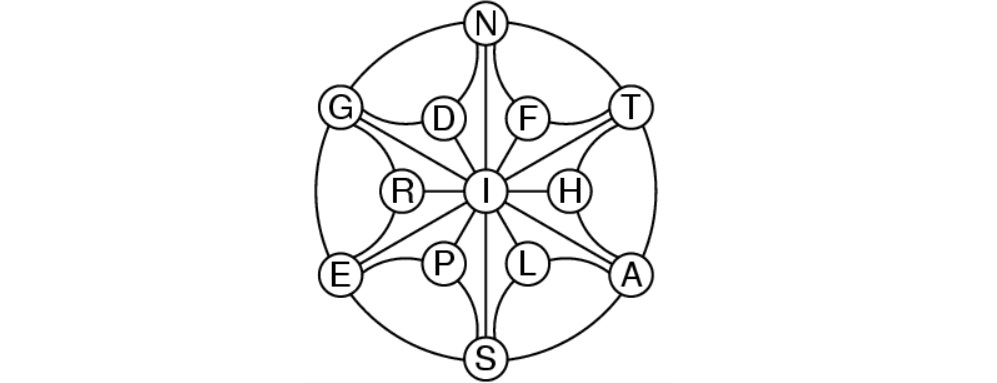
Starspell (pictured above) involves finding words in a star-shaped grid, except unlike Boggle, you can reuse letters. So you could bounce back and forth from A to N and spell BANANA, for instance.

Word Maze involves a small grid with many words hidden inside Boggle-style (though it’s actually a themed word list, meaning it’s not optimized to just cram as many words inside as possible).

Letter Perfect is a reversal of the idea, seeing if the solver can arrange letters in a mostly-empty 4×4 grid to fit every word in a given wordlist. It’s excellent training for a challenge like this, since you learn about efficiency of letter placement and how many words can spell out with neighboring letters if you’re clever.


I don’t know if any programmers will figure out how to build a language-spanning Boggle grid, but I look forward to seeing them try!

Happy puzzling, everyone.

Puzzles and Games With a Sacred Touch?

In recent times, religion and the world of puzzles and games have crossed paths with sometimes surprising results.

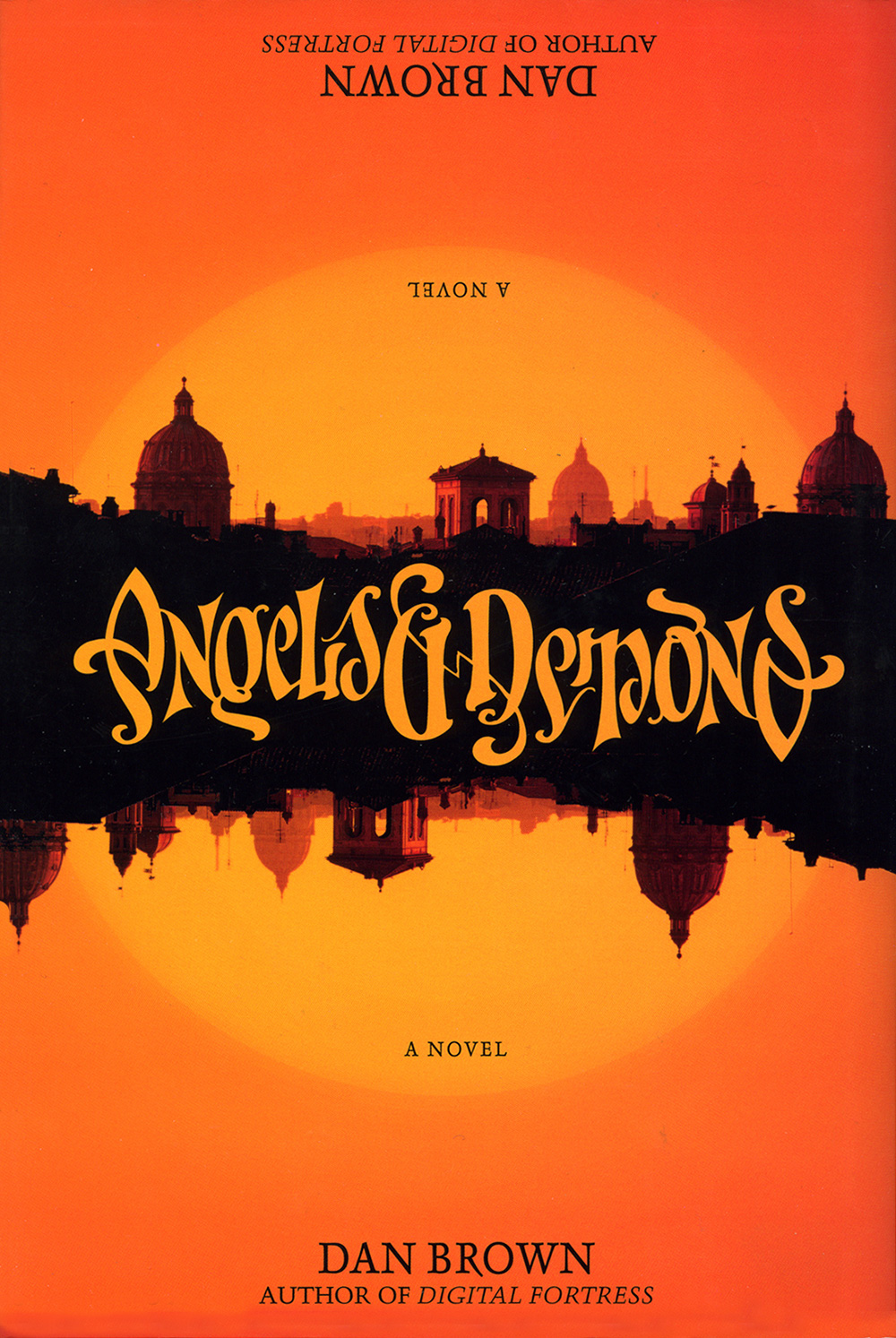
The film adaptation of The Da Vinci Code, a fairly puzzle-centric thriller, was widely denounced by members of the Catholic Church, and there was similar resistance, though less vocal, against the sequel film, Angels & Demons.

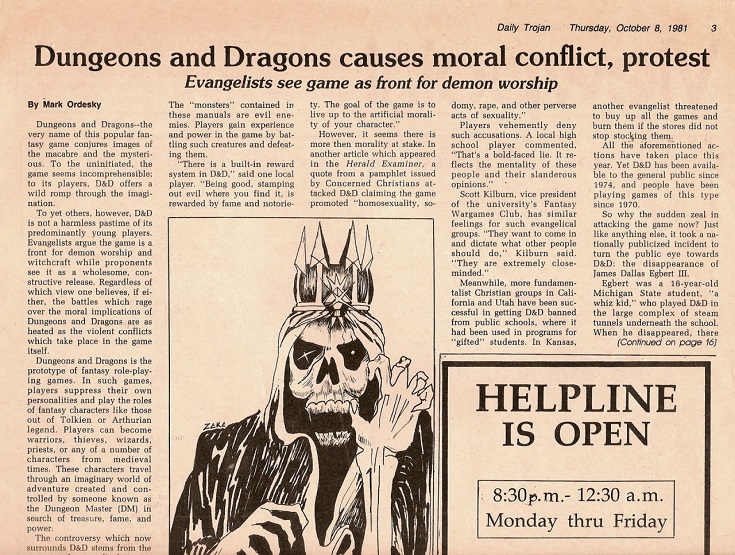
And, of course, in the 1980s, the roleplaying game Dungeons & Dragons was condemned as Satanic and dangerous to young minds.

I say that the above is strange because, for the most part, these seem to be anomalies or isolated incidents. There are numerous instances throughout history where puzzles and games were embraced by religion, even used as tools to teach aspects of religious beliefs.

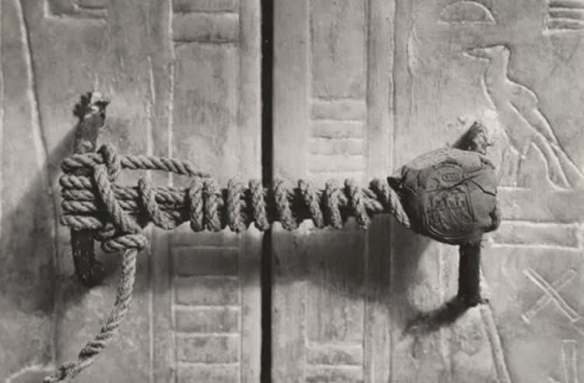
For instance, in ancient Egypt, we’ve seen evidence of puzzly techniques used not just to secure the tomb of Tutankhamun, but also to disguise the language and rituals employed by elite members of their society. Puzzles were entrusted to keep their secrets well beyond the grave.

the seal on king tut's tomb

Plus one of the most ancient games in the historical record, Senet, seems to have evolved from being an enjoyable pastime into a spiritual tool.

You see, some Senet boards have religious iconography on them, believed to symbolize the journey into the afterlife. So gameplay — or the inclusion of the gameboard itself among the belongings of the deceased — represented that journey and the quest to learn more about it.

Some online articles have taken to referring to Senet as “the Rosicrucian board game of death,” which is a harsh misinterpretation.

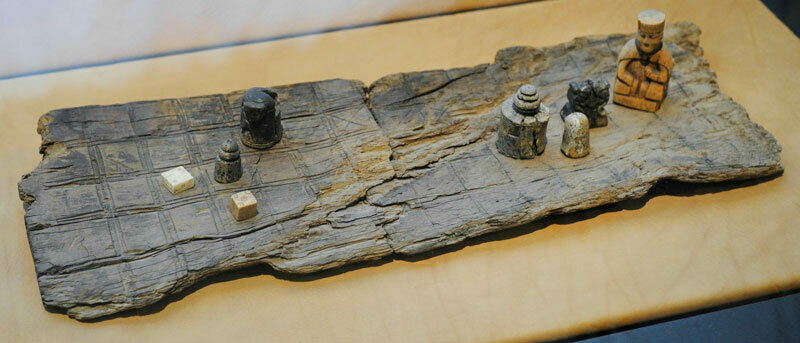
There was also an afterlife connection with games for the Vikings.

According to Mark Hall, a curator at Perth Museum and Art Gallery, there have been 36 burials where board games of some description have been found in the graves around Northern Europe.

These grave sites grant intriguing insight into how the Vikings viewed board games as a learning tool. It’s believed that including a board game among the effects of the deceased signaled not only their skill and status as a warrior, but their preparedness for the afterlife itself. Heck, their win-loss records were even recorded for posterity!

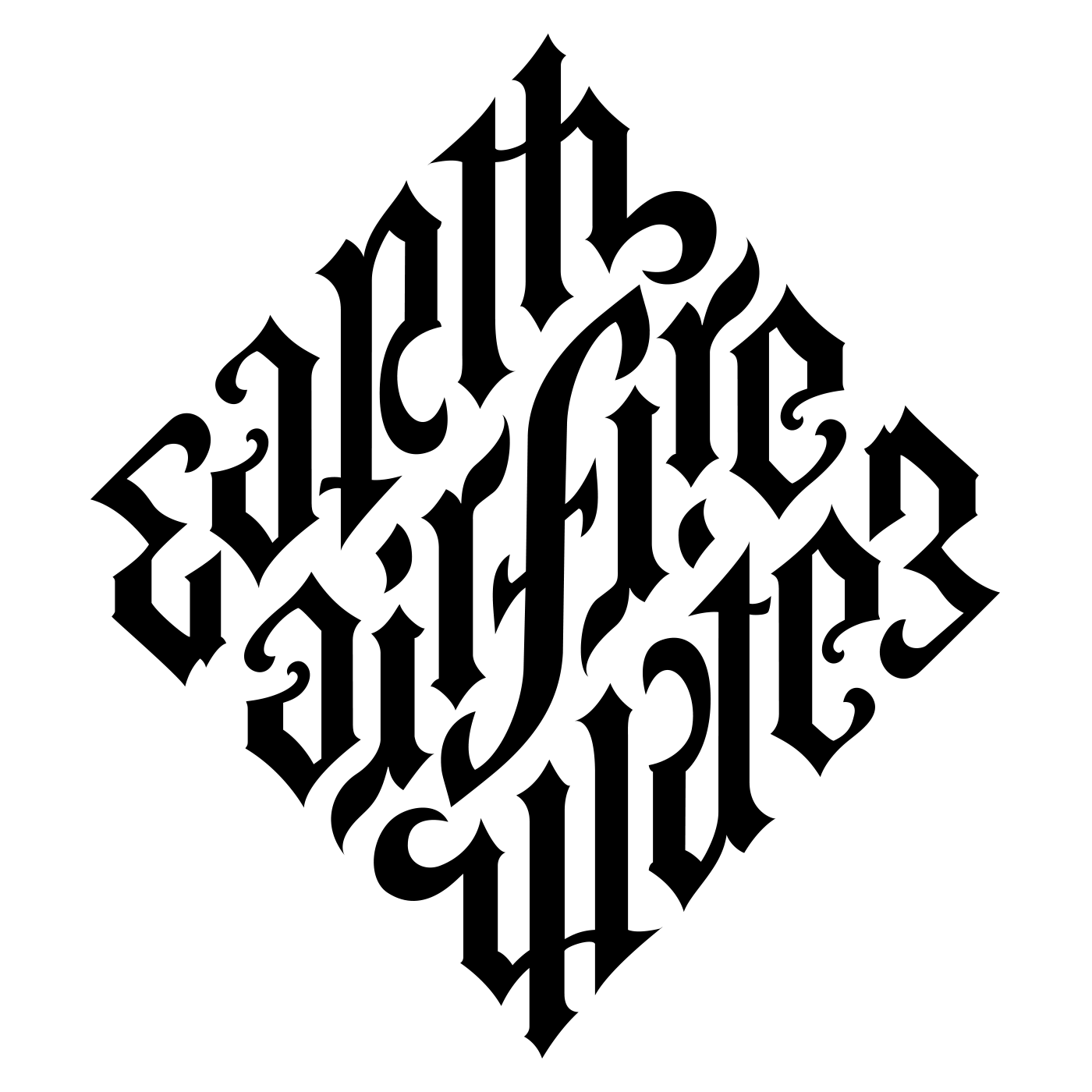
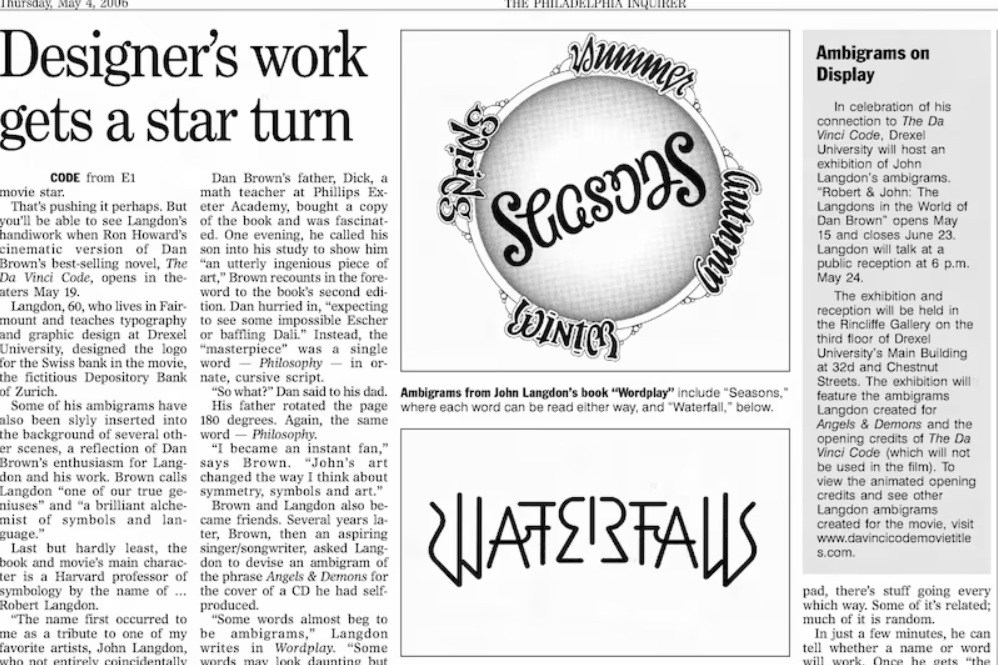
Palindromes were believed to work as magical shields that protected those wearing the talismans bearing such clever wordplay.

Heck, even the shape of dice were influenced by changing religious views. Early dice games gave very little consideration to the shape or evenness of dice, because rolls were believed to be guided by Fate or some greater outside force, so the shape didn’t matter.

As religious beliefs evolved away from gods and greater forces intervening in such things, the general spirit of fairness in dice began to prevail, and the shape, balance, and pip distribution of dice became much more standardized.

And as for the Catholic Church, I certainly didn’t mean to make it look like I was picking on them in the introduction, because there are positive associations between the church and the world of puzzles and games as well.

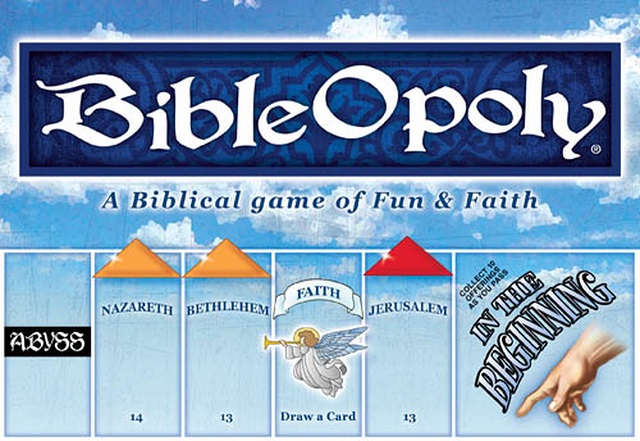
And no, I’m not just talking about lighthearted products like BibleOpoly or the cottage industry of family-friendly games like Bible editions of Outburst, Scattergories, Apples to Apples, Scrabble, and Taboo.

Chess boards and other game boards have been found in houses formerly used by the Knights Templar, for instance.

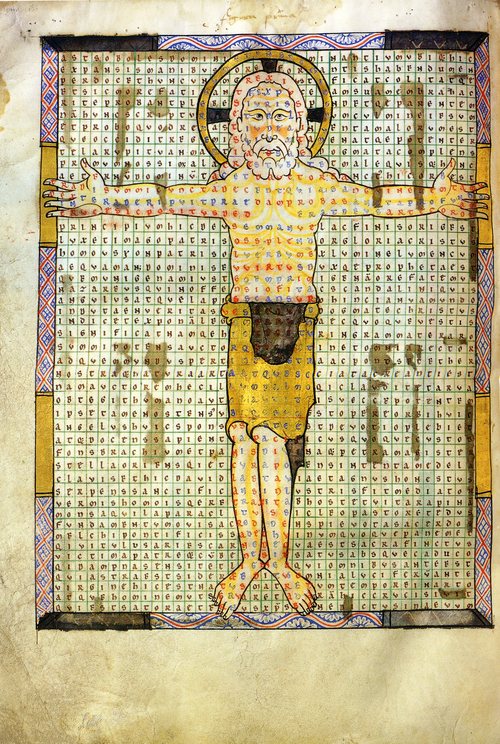
There’s also the puzzly art of carmina figurata, poems wherein either the entire body of the poem or select parts form a shape or pattern. These works originated as religious tributes, poems where letters were colored red to stand out from the regular black lettering in order to draw attention to or highlight a certain religious figure.

tumblr_m6a31vnnxo1qggdq1

[“De laudibus sanctae Crucis” by Oliverus.
Image courtesy of WTF Art History.]

There would be hidden words or messages concealed in the text, some speaking of the religious icons at the center of the piece in glowing terms.

Do you have any favorite puzzles and games that have an element of religion to them, fellow puzzlers and PuzzleNationers? Let us know in the comments section below. We’d love to hear from you!


dailypopwsicon

Halloween is almost here, and we have some spookily good deals for you to check out. You can find them on the Home Screen for Daily POP Crosswords and Daily POP Word Search! Check them out!

Thanks for visiting PuzzleNation Blog today! Be sure to sign up for our newsletter to stay up-to-date on everything PuzzleNation!

Paint By Number Sleuth: A Puzzly Hashtag Game!

You may be familiar with the board game Schmovie or hashtag games on Twitter.

For years now, we’ve been collaborating on puzzle-themed hashtag games with our pals at Penny Dell Puzzles, and this month’s hook was #PennyDellPuzzleArt. Today’s entries all mash up Penny Dell puzzles with artists, famous pieces, techniques, styles, and more from the world of art!

Examples include: The First and Last Supper, O’Keeffeword, and Rows Avant-Garden.

So, without further ado, check out what the puzzlers at PuzzleNation and Penny Dell Puzzles came up with!


Puzzly Artists!

Vincent On-The-Van Gogh Word Seek

Christo Crosswords

Three-Toulouse-One

Paul Cezanneagrams

Picassudoku

Michel(Try-Angle)o

Eugene DelaCrostic

Henri Word-a-Matisse

Camille PissarRows Garden

Paul Klee-from-nine

Anagram Magritte Squares

Eileen Gray That Again

Paul GaugIn the Middle

Marc ChagAll Fours

Grand Tour Moses

Elizabeth Catlettgories

Thomas EakInsert-a-Word

Piet Mondriagain

Liubov Sergeievna Popoverlay

Alfred StieglIts Your Move

Frank Lloyd Right Angles

Man SunRays

Man Raylroad Ties

CrackerJackson Pollock

Joan Miro Image

Johannes Vermeer-or Image

Wassily KenKendinsky

Louise Burgeois Tiles


“Here I sit so broken hearted…”

You can Fill-In the rest!

#Fitting Description


Famous Puzzly Art Pieces, Styles, and Terminology!

“Still Life with Apples and Pairs in Rhyme” (Paul Cezanne)

“The Two (for One) Fridas” (Frida Kahlo)

Pen and In(k) the Middle

Crisscrosshatch

DADArtboard

RocoCodebreaker

Around the Baroque

Letter DrOP Art


Have you come up with any Penny Dell Puzzle Art entries of your own? Let us know! We’d love to see them!

Thanks for visiting PuzzleNation Blog today! Be sure to sign up for our newsletter to stay up-to-date on everything PuzzleNation!

You can also share your pictures with us on Instagram, friend us on Facebook, check us out on TwitterPinterest, and Tumblr, and explore the always-expanding library of PuzzleNation apps and games on our website!

Weird Versions of Monopoly, Part 2!

Last week, we ventured on a deep dive into the expansive world of Monopoly. Yes, that most ubiquitous of games that everybody knows. That quintessential board game that comes in many different flavors, but only one texture.

In last week’s post, we strolled up and down the game’s historical timeline, covering curious updates, odd revamps, and truly baffling licensing deals that made for a cavalcade of dice-rolling piece-moving strangeness.

But we restricted ourselves to official releases authorized by either Hasbro or Winning Moves UK. That still leaves a world of unofficial, unauthorized, and third-party variations on Monopoly out there to be covered.

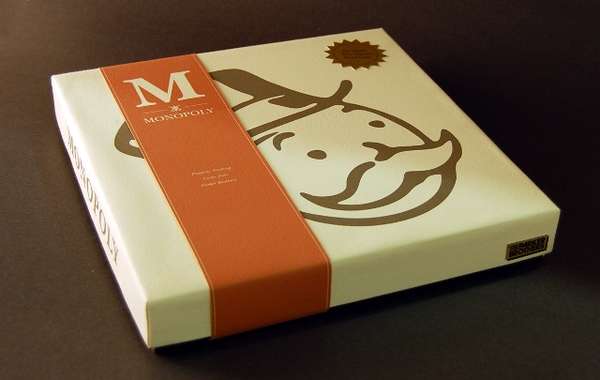
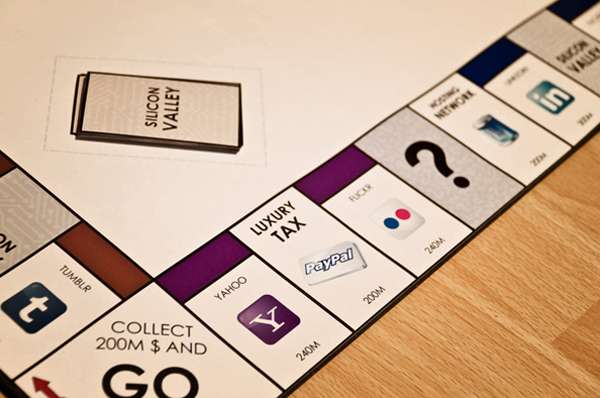
andy mangold monopoly

[Check out this incredibly classy repackaging of Monopoly
by designer and artist Andy Mangold.]

So in part two of this trip down a Marvin Gardens path of peculiarity, we’re casting a wider net and seeing what we catch.

These are the weirdest, least likely, and most envelope-pushing versions of Monopoly I could find. (Oh, and I’m excluding purposely offensive versions, so versions that mention ethnicity or sexuality have been left out of this post.)

Without further ado, let’s enjoy!


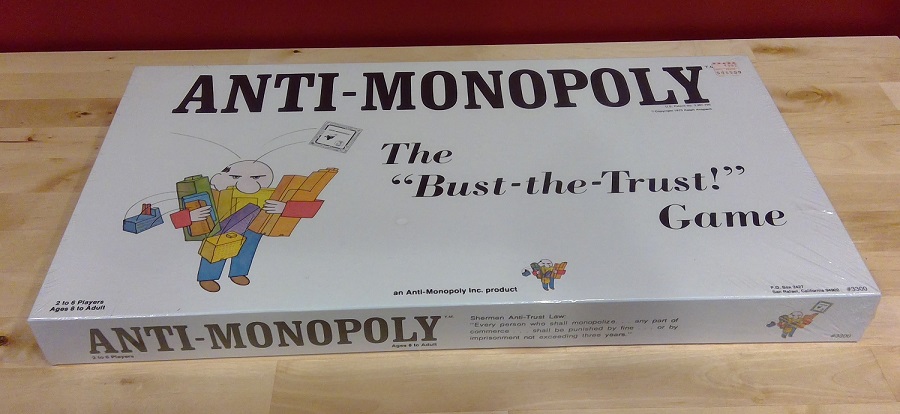
anti-monopoly

Anti-Monopoly

Let’s start with perhaps the most famous unofficial version of Monopoly to ever hit shelves. Anti-Monopoly starts where a traditional game ends — with many properties held by a few wealthy entities — and challenges the players to break up the monopolies. Both a smart inversion of the original and an interesting gameplay experience in itself, Anti-Monopoly kicked off an infamous legal battle.

In fact, after two appeals, the inventor was forced to let Parker Brothers buy him out, rather than go bankrupt himself defending his creation. That is the saddest sort of irony.

web-lovers-monopoly

Web Lovers Monopoly

A game that plays like Monopoly but bends some of its classic elements to fit the gimmick, Web Lovers Monopoly replaces properties with websites, including swapping Boardwalk for Yahoo and placing Facebook, Google, and YouTube fairly early on in the board, which makes me wonder when this game was produced.

Also, free parking is now free wireless and jail has been replaced with the real world. Other than mentioning websites and lightly ribbing internet users, I’m not really sure what the point of this game is. If it’s a satire, Monopoly for Millennials had more bite than this.

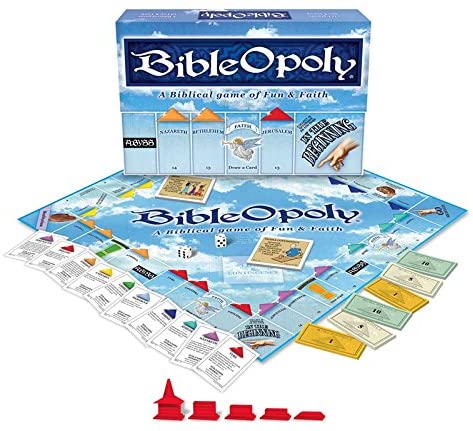
bibleopoly

BibleOpoly

Using a game representing one of the classic seven deadly sins to teach younger players about the Bible is certainly a curious choice, but hey, we’re not here to judge. (Okay, maybe we are, a little bit.)

In BibleOpoly (a name that does NOT flow off the tongue), players travel through Biblical cities in order to earn the bricks and steeple necessary to build a church. Instead of selfish or greed-fueled acts, you succeed by helping fellow players, making offerings, and doing Community Service (their version of Community Chest), which is nice.

But the less said about The Abyss being listed as a place alongside spots like Nazareth and Bethlehem, the better. Yikes.

photo-opoly

Photo-opoly

Yup, it’s a DIY Monopoly board where you select 22 photos to incorporate into the game. This is actually a cool idea — once you get past the whole “Here, I bought you this, now YOU make it” aspect of the game.

Of course, it makes one wonder about the consequences of making a family version of this game, then having another child, and then that child discovering they’re not included in the family Monopoly game. Or who gets the game in the divorce.

Let’s move on, shall we?

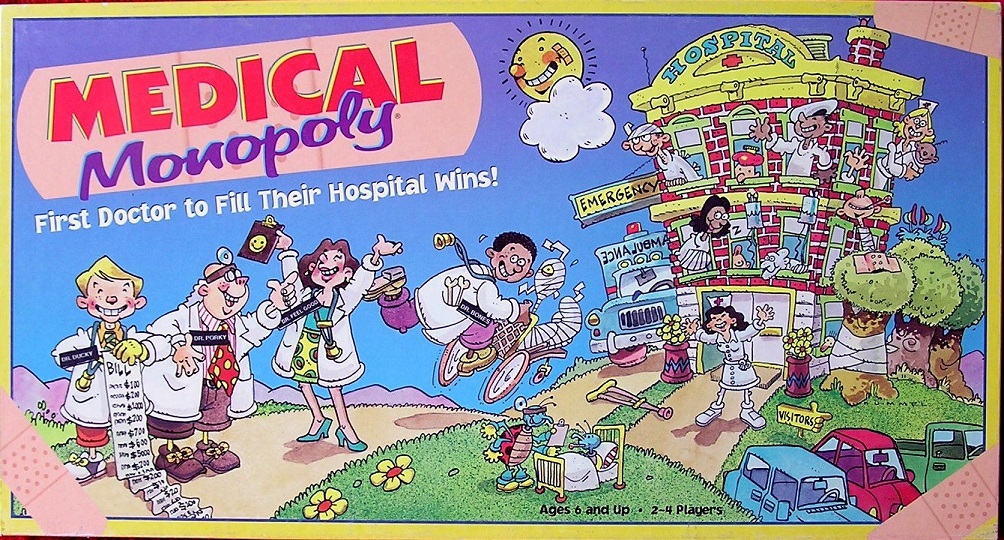
medical monopoly

Medical Monopoly

Yup. The for-profit medical industry in Monopoly form. The first player (er, doctor) to fill their hospital with patients wins.

I feel gross just writing about this game. And that was before I read the instructions:

The object of the game is to introduce and inform young people to the cause and treatment of common physical problems that have a solution known as First Aid. Office Visits to a doctor are also explained for both common and serious problems, giving a better understanding to the patient.

Yeah, they try to pass off this soulless cash-grabbery as a learning experience. ICK.

communist-monopoly

Queue

Now let’s look at a strange version of Monopoly that actually is educational. Queue, the creation of Karol Madj, is set in communist Poland and designed to educate folks on daily life at the time.

Yes, it’s Communist Monopoly. Which is interesting, since Fidel Castro ordered the nationwide destruction of Monopoly games upon taking power in Cuba.

Anyway, the goal of Queue is to line up in an orderly fashion to buy goods and services, including bread. It’s a sobering take on the traditionally cash-flashy game, and one that really immerses you in a different cultural experience.

And like many educational games, it is boring as all get out.

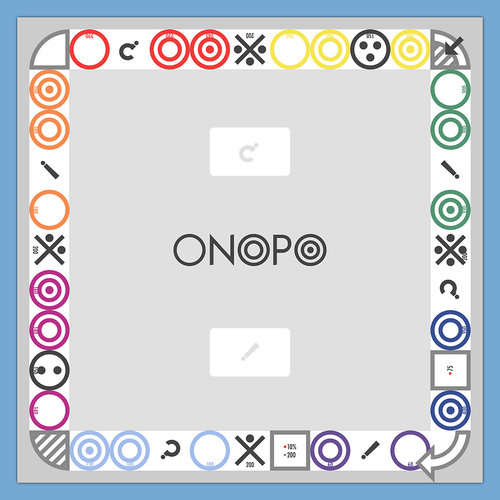
onopo

Onopo

Let’s close out today’s post with a visually fascinating variation of the famous game.

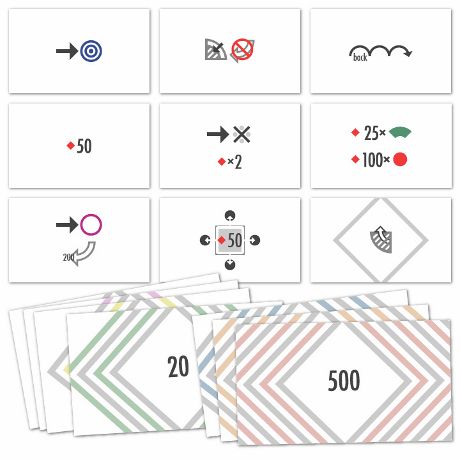
This is Onopo, the minimalist’s approach to Monopoly. An art project by creator Matthew Hollet, Onopo was designed to boil Monopoly down to basics in a visual sense, stripping away the traditional design elements but leaving behind a playable result.

onopo-4-460x460

There’s no geography and virtually no text in the game, but even a cursory glance at the gameboard and the cards reveal just how effective the minimalist approach can be. After a few seconds of confusion, you figure it all out.

onopo-3-460x460

Although Onopo was never commercially released, it’s worth including both for its ambitious design and the statement it makes about branding. In a game that increasingly remains relevant by draping itself in other popular trappings and logos, it becomes less interesting than this bare-bones version of itself.


We hope you enjoyed this two-week trip down the many avenues (and occasional places) that Monopoly has traveled.

Is there a strange or noteworthy version of the game that we missed? Let us know in the comments section below! We’d love to hear from you.

Thanks for visiting PuzzleNation Blog today! Be sure to sign up for our newsletter to stay up-to-date on everything PuzzleNation!

You can also share your pictures with us on Instagram, friend us on Facebook, check us out on TwitterPinterest, and Tumblr, and explore the always-expanding library of PuzzleNation apps and games on our website!

Overwhelmed by Optical Illusions Underfoot

A good optical illusion is a puzzle for the eyes, a visual treat that tricks you into seeing things that aren’t there. The most convincing optical illusions can even affect your sense of balance and make you question every footstep you take.

For instance, imagine walking into a room and seeing this:

opticalillusionrug

This is a rug called “Black Hole,” designed by Daniel Malik, and it’ll make you doubt the ground beneath your feet.

Don’t believe me? Check this out:

opticalillusionrug2

And that’s just the tip of the iceberg when it comes to optical illusions that can leave you dizzy and spinning.

Austrian artist Peter Kogler specializes in making empty spaces look larger, more twisted, and vertigo-inducingly unsettled.

kogler-6

Employing the walls, the floor, and the ceiling (along with any structural beams or other objects in the area), Kogler challenges your spacial awareness with lines and imagery that offset your natural depth perception.

kogler-2

Astonishingly, the few recognizable items in this works — like a hanging lightbulb or even a fellow spectator — enhance the effect, making everything around those steady, relatable objects into an eye in the storm of chaotic imagery.

You no longer trust your ability to gauge height, distance, or even the angle of the room itself, even though you know in your heart that you’re walking on a flat surface.

kogler-1

We’ve featured some clever floor designs in the past — including one in a school that was designed to keep kids from running in the halls — but nothing on the scale of Kogler’s work.

kogler-0

It almost makes you nostalgic for the simple trickery of a circular area rug that looks like a tunnel to the center of the Earth, doesn’t it?


Thanks for visiting PuzzleNation Blog today! Be sure to sign up for our newsletter to stay up-to-date on everything PuzzleNation!

You can also share your pictures with us on Instagram, friend us on Facebook, check us out on TwitterPinterest, and Tumblr, and explore the always-expanding library of PuzzleNation apps and games on our website!