100th Anniversary Roundup!

It’s been nearly a week since the 100th Anniversary of the Crossword, and so many newspapers, websites, and bloggers wrote about it that I’m just now sitting down to compile some of them for your viewing pleasure.

Now, I’d be remiss if I didn’t start with the interactive Google Doodle that had everyone wishing me a happy hundredth anniversary a day early. *laughs*

But, as it turns out, that wasn’t the first puzzle created for Google’s signature doodle! Check out this story from the Washington Post about Merl Reagle’s eleventh-hour constructing wizardry that saved the day! (And based on Google’s ubiquitous nature, what will probably end up as the most-solved crossword of all-time.)

[Here’s a picture from constructor and magician David Kwong’s Instagram, showing the whole family getting in on solving Google’s anniversary doodle.]

Our friends at Penny/Dell Puzzles posted a terrific video of Will Shortz discussing the future of puzzles, and added their own tribute by creating a marvelous book commemorating the 100th anniversary. (They’ve also got a pretty nifty crossword app you can check out here.)

Letters of Note had perhaps my favorite post in honor of the anniversary: a letter from Frank Sinatra to then-New York Times Crossword editor Eugene T. Maleska.

The Wall Street Journal offered an interesting look into how Arthur Wynne’s “word-cross” became known as the crossword.

There were numerous puzzles created to honor the anniversary. The Orange County Register published David Steinberg’s contribution, and NPR’s Ask Me Another posted a curious puzzle of their own!

These are just a few of the links that caught my eye, but if you’re still hungry for more 100th Anniversary goodness, check out this impressive collection of links compiled by the folks at Puzzazz.

And, of course, you can always click the previous button and check out PuzzleNation’s 100th Anniversary post, where I talk about not only Arthur Wynne’s puzzle, but my own anniversary as a puzzler.

As we step into a second century of Crossword history, I’m sure we have plenty of marvelous wordplay surprises coming our way.

Thanks for visiting the PuzzleNation blog today! You can like us on Facebookfollow us on Twitter, cruise our boards on Pinterest, check out our Tumblr, download our Classic Word Search iBook (recently featured by Apple in the Made for iBooks category!), play our games at PuzzleNation.com, or contact us here at the blog!

The greatest gift exchange there never was…

It’s Christmas Eve, so hopefully you’ve perused our Holiday Puzzly Gift Guide and completed all your shopping in a timely and not-at-stress-inducing, hair-tearing-out manner.

But if not, fear not! Some of the puzzliest and cleverest people in the artistic, board game, and puzzle communities may have just come up with the perfect last-minute solution for you.

You’re probably familiar with the concept of the White Elephant gift exchange, wherein everyone supplies a gift, and then a game of keeping or swapping takes over, allowing people to take turns, develop friendly little rivalries, and generally enjoy a bit of holiday frivolity.

But have you ever heard of a White Heffalump exchange?

This year, numerous game designers, artists, and puzzlers were recruited to participate in a White Elephant gift exchange. But this exchange had a marvelous twist: every gift was imaginary.

So everyone involved — including such names as James Ernest (head of Cheapass Games, publishers of Veritas), John Kovalic (artist for Munchkin and creator of ROFL!) and puzzler constructions Eric Berlin and Brendan Emmett Quigley — created an imaginary gift for the exchange.

And then they all played the game on Twitter, so fans and friends could enjoy the madcap holiday cheer.

Here are a few of the “gifts” created for the White Heffalump gift exchange:

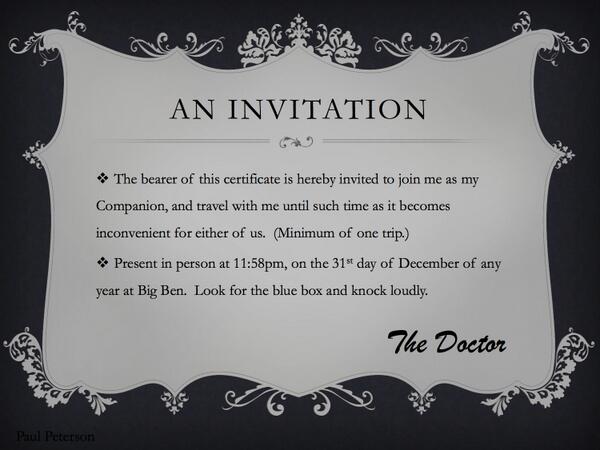
It’s easy to imagine a trip with The Doctor would be a highly sought-after prize.

What’s more heartwarming than retroactively sharing a friendship since first grade? (And possibly an iron-clad alibi, should you need one…)

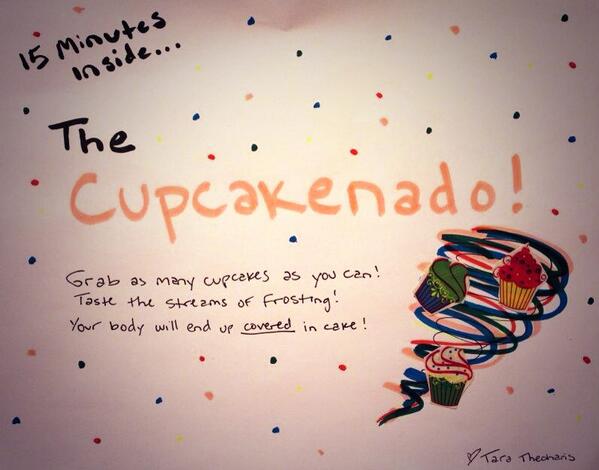
It’s like one of those grab-the-money booths from an old game show, but with SWEETS!

A formidable steed and a delicious meal all in one. You can’t lose!

And the wily Matt Forbeck offered up the ideal machine for generating presents for next year’s White Heffalump exchange.

From “time to play with toys” and a dapper platypus to a 29-word crossword and a wish-granting pocket pet, the gifts were hilarious, innovative, and absolutely ridiculous, and the gameplay back and forth as people traded and stole gifts was just as entertaining.

[For more details on the exchange, check out Matt Forbeck’s write-up here.]

So, if you’re still struggling with gift ideas, you can always go the White Heffalump route. It’s creative, low-budget, and loads of fun. Enjoy!

Thanks for visiting the PuzzleNation blog today! You can like us on Facebookfollow us on Twitter, cruise our boards on Pinterest, check out our Tumblr, download our Classic Word Search iBook (recently featured by Apple in the Made for iBooks category!), play our games at PuzzleNation.com, or contact us here at the blog!

Happy Anniversary, Crosswords!

Today is the 100th anniversary of the crossword. (Not yesterday, as Google’s marvelous Merl Reagle-penned crossword doodle might’ve had you believe.) One hundred years ago today, Arthur Wynne’s “word-cross” puzzle debuted in The New York World, kickstarting a phenomenon that has gone well past pencil-and-paper, more relevant and influential today than ever before.

Let’s take a look at that very first puzzle, shall we?

[For the solution and a slightly larger grid image, click here.]

In modern crossword terms, this diamond shape is known as an open puzzle or a cut puzzle, since it’s not the standard crossword square. I’m a fan of cut puzzles, because their shapes draw the eye. H-shaped, Z-shaped, and diamond-shaped puzzles aren’t uncommon among cut puzzles, and it’s always a treat to see one when flipping through a book of crosswords.

And it’s sort of fascinating to see all the differences between this puzzle and the modern crossword, despite its utter familiarity.

There’s the set word, the singlet letters at the puzzle’s four corners that don’t get crossed, and those enormous numbers that leave no writing space for the actual letter. There’s also that very curious cluing order, which took me a second to decode: the acrosses along the left side of the diamond grid, then the acrosses along the right side of the diamond grid, then the downs from furthest left to furthest right. Figuring that out was something of a puzzle in itself!

It’s not hard to see the appeal of the crossword from the very beginning. The grid is open, not daunting at all, and that casual spirit no doubt attracted plenty of intrigued first-time solvers. The mechanics of the puzzle are solid, and the synonym-heavy cluing style is an easy introduction to cluing.

Some of those clues, like 23-30’s [A river in Russia] for NEVA wouldn’t be out of place in a grid today. Though hopefully you wouldn’t come across a clue like 10-18’s [The fibre of the gomuti palm] for DOH too often. Wow, that is a seriously tough one. (Plus, I suspect modern solvers would get it much faster if clued as [Homer’s exclamation].)

Still, there’s a sense of humor to the construction. Look at clue 18-19 [What this puzzle is]. HARD. Well, no kidding, Mr. Wynne, when you expect us to know the fibre of the gomuti palm. *laughs*

What about clue 6-22? [What we all should be] MORAL. Wynne’s puzzle has a message. =)

Solving the puzzle was a curious experience, both as a solver and constructor. On the construction side, the word DOVE appears twice, a serious no-no in the modern puzzle community.

It would need editing to make the cut these days, but Wynne’s word-cross remains a worthwhile and laudable start for a long, proud legacy of wordplay and puzzling.

That legacy is quite personal for me, since this year also marks my ten-year anniversary working in the puzzle business. (That anniversary came less than a week before today’s centennial celebrations.)

I make a living thanks to Arthur Wynne’s wildly-successful creation, and I am grateful every day that I get to work on puzzles, or come here and write about them, all the while contributing to a community with a century-long tradition of humor, playfulness, intelligence, and style.

Thank you, Arthur.

Thanks for visiting the PuzzleNation blog today! You can like us on Facebookfollow us on Twitter, cruise our boards on Pinterest, check out our Tumblr, download our Classic Word Search iBook (recently featured by Apple in the Made for iBooks category!), play our games at PuzzleNation.com, or contact us here at the blog!

5 Questions with Puzzle Master Will Shortz

Welcome to another edition of PuzzleNation Blog’s interview feature, 5 Questions!

We’re reaching out to puzzle constructors, video game writers and designers, writers, filmmakers, and puzzle enthusiasts from all walks of life, talking to people who make puzzles and people who enjoy them in the hopes of exploring the puzzle community as a whole.

And I’m overjoyed to have Will Shortz as our latest 5 Questions interviewee!

Without a doubt the most famous name in crosswords today, Will Shortz is the crossword editor for the New York Times, a position he’s held since 1993 (after putting in time with both GAMES Magazine and our friends at Penny/Dell Puzzles). In his time as editor, he’s been credited with spearheading a sharp decrease in crosswordese in Times puzzles, as well as offering a greater level of visibility and acknowledgment for individual constructors.

He continues to serve as the amiable face of crosswords across all forms of media — on the radio with NPR, on television in The Simpsons and How I Met Your Mother, and in theaters with the documentary Wordplay. (He even provided the Riddler’s puzzle clues that so bamboozled the Dark Knight in the film Batman Forever.)

But solvers interested in puzzles beyond crosswords will also have a treat in store for them in 2014! The folks at Penny Press have teamed up with Will to create Will Shortz’s WordPlay, a magazine featuring crafty variety puzzles and crossword variants created by some of today’s top constructors.

Will was gracious enough to take some time out to talk to us, so without further ado, let’s get to the interview!

5 Questions for Will Shortz

1.) As the world’s first (and only) degree-holding enigmatologist, was becoming the editor of the New York Times crossword always a goal you had in mind, or did you foresee yourself doing something else with your singular degree?

Since childhood I’d always planned a career in puzzles, just not as crossword editor for The Times. In fact, I didn’t envision a career with crosswords at all. I imagined myself in an attic or a tiny house somewhere making novelty puzzles and sending them out for publication — probably living in poverty, but doing what I wanted. I fell into puzzle editing without a lot of planning.

But I do have a law degree from the University of Virginia (J.D., 1977), so if puzzles ever end up not working out for me, I always have that to fall back on!

2.) The hundredth anniversary of the crossword is fast approaching. Given your familiarity with puzzles both past and present, what does the hundredth anniversary mean to you? And where do you think puzzles will be a hundred years from now?

I’m not good at predicting the future. But I will say that crosswords are the best and most flexible form of puzzle ever devised, because they involve language (which we all use) and connect with virtually everything in life. They can be made easy or hard, small or large, tricky or straightforward, topical or of general interest. There’s a crossword for everyone and every mood.

Also, there’s something very appealing about filling empty squares. As humans, I think we like to fill empty spaces, and doing that in a crossword seems to satisfy some elemental human need. Even if print media die someday, I think crosswords will probably exist forever in one form or another.

[Here, Will and constructor Merl Reagle appear with the Simpsons in a
promotional pic for the episode “Homer and Lisa Exchange Cross Words.”]

3.) I could ask you how far in advance you choose puzzles for publication (considering the Times’ famous incremental rise in difficulty throughout the week), or inquire about your work as NPR’s resident puzzle master, but to be honest, I’m more curious about what you do when you’re NOT doing puzzles. What other activities or hobbies do you enjoy?

As friends know, I’m almost as fanatical about table tennis as I am about puzzles (emphasis on *almost*). I own my own club — the Westchester Table Tennis Center, just north of New York City. It’s one of the largest table tennis facilities in North America, and I believe it’s the nicest (which I say having played in almost 200 clubs in 43 states and two Canadian provinces).

At the moment I’m close to finishing a personal goal — to play table tennis every day this year. As I write this (on Dec. 17), I’ve played every single day since Jan. 1 — 351 days in all. And I’m filming myself every day as proof. At the end of the year, if I succeed, some friends of mine in Hollywood have promised to edit a 3- or 4-minute video of me playing every day, which I’ll throw up on YouTube.

My ultimate goal is to become national table tennis champion for my age.

4.) What’s next for Will Shortz?

No plans for anything else. I love what I’m doing. I’ve been the crossword editor of The Times now for 20 years, overseer of the U.S. team for the World Puzzle Championship for 22 years, puzzlemaster for NPR’s “Weekend Edition” for almost 27 years, director of the American Crossword Puzzle Tournament for 36 years, and program director for the annual convention of the National Puzzlers’ League for 38 years. That’s plenty to keep me occupied.

5.) If you could give the readers, writers, and puzzle fans in the audience one piece of advice, what would it be?

I have two goals in life: One, to make the world a little better for being here. And Two, to enjoy myself. I think that’s a good philosophy for anyone.

Many thanks to Will for his time. You can follow him on Twitter (@Will_Shortz) and listen to his NPR appearances on Weekend Edition here! And keep your eyes peeled for the first issue of Will Shortz’s WordPlay, which will be hitting newsstands in February!

Oh, and I suppose you could always check out the New York Times Crossword, if you’re so inclined. =)

Thanks for visiting the PuzzleNation blog today! You can like us on Facebookfollow us on Twitter, cruise our boards on Pinterest, check out our Tumblr, download our Classic Word Search iBook (recently featured by Apple in the Made for iBooks category!), play our games at PuzzleNation.com, or contact us here at the blog!

Let’s Make Our Own Crosswords, Part Two: Advice!

On Tuesday, I posted an introductory how-to for creating your own crossword puzzles. All of the advice and guidance was based on my own constructing instincts and work I’ve done over the years.

But I’m just one puzzler, and I figured why not reach out to other constructors and editors in the puzzling community and see what helpful suggestions they had for aspiring puzzle constructors.

So today, I put you into the good hands of professionals and topnotch puzzlers, as they walk you through the do’s and do-not-do’s of crossword construction. As constructor Ian Livengood said, “it’s more art than science,” but with the advice of established constructors in your pocket, you’ll be off to a great start.

And as it turns out, they’ve got plenty of worthwhile nuggets of advice to offer! In fact, they had so much to say (and I wanted to include so much more!) that I’ve broken up the advice by topic and put each one on its own page. Just click on the links below to take you to a treasure trove of puzzly wisdom!

Good luck, my fellow puzzlers!

And thank you to David Steinberg, Robin Stears, Ian Livengood, Rich Norris, Patti Varol, Doug Peterson, and Eileen Saunders for their masterful advice!

Thanks for visiting the PuzzleNation blog today! You can like us on Facebook, follow us on Twitter, cruise our boards on Pinterest, check out our Classic Word Search iBook (recently featured by Apple in the Made for iBooks category!), play our games at PuzzleNation.com, or contact us here at the blog!

How to Make a Crossword: Choosing a Theme

“Themes are the hardest part of the construction process. Filling the grid and writing the clues takes perseverance, but coming up with a theme requires that elusive spark of inspiration.” — constructor Doug Peterson

This sentiment was echoed by other constructors I spoke with. Crossword guru Eileen Saunders said, “The hardest part of constructing a puzzle (for me) is coming with the theme. After that, everything else seems to fall into place.”

Los Angeles Times Crossword Editor Rich Norris and assistant Patti Varol: “Originality is an important element of a good theme, but sometimes originality means lively themers in a chestnut gimmick or a clever spin on familiar wordplay.

“Originality, themewise, is not always ground-breaking, or innovative, or even original. A good theme always has sparkle, with lively, idiomatic phrases that will resonate with a majority of solvers.”

New York Times Crossword constructor Ian Livengood discusses how to choose theme entries: “Once you think of a potentially good theme, it’s vital to see if something similar has been done before. What’s the point of having databases, right? If the theme looks interesting and relatively new, you must make sure the theme is consistent.

“For example, if you are doing two-word phrases that start with the letter P and you’ve got PLEDGE PIN, PARK PLACE, PLUM PUDDING, PINK PANTHER and … PARAKEET, that’s a problem. The single word breaks the pattern and confuses solvers. So consistancy and freshness is very important.”

Rich and Patti also mentioned consistency and balance as critical elements of a good theme. “One odd entry can ruin an otherwise great idea: a themer that ends with the theme’s key word when all the others begin with it, a stray plural in a set of singular phrases, a noun phrase in a group of verbs, a song title in a set of movie titles, a rhyming pun in the mix with spelling-change puns.”

I think I’ll give Doug the final word on coming up with a theme for your puzzle. “If you think a theme entry is humdrum or doesn’t quite fit with the others, it’s time to put your brainstorming cap back on. Remember, your first job is to entertain the solver, so make that theme sparkle.”