PuzzleNation Product Review: ThinkFun’s Laser Maze Jr.

Whether you’re unraveling locks and ropes in Houdini, bending gravity to your will in Gravity Maze, making music note-by-note with Compose Yourself, or mastering the basics of programming in Robot Turtles, playing with the puzzle games by ThinkFun always encourages you to learn while you solve.

Today, we see if Laser Maze Jr. matches the high standard set by those other puzzly products.

Now, for those of you familiar with the original Laser Maze, you might be expecting a simplified version, akin to the Jr. versions of Rush Hour or other puzzle games where the difficulty lessens but the game remains the same. Worry not. Laser Maze Jr. is actually a heavy redesign that keeps the best aspects of the original and tailors itself to players as young as 6, both in gameplay and in safety.

Perhaps the biggest change from the original is the board itself.

Not only is the laser fixed in place, but the board is surrounded by red plastic barriers that both protect young eyes and highlight where the beam is projecting at any given time. You would have to seriously tamper with the game to endanger your eyes with this layout; with the original, there was a greater (though still quite slim) chance that unmonitored gameplay could lead to an accident.

The laser also has a switch instead of a button to press, so if you choose, you can leave the laser on and see the beam’s path change as you add elements to the game board. As a learning tool, this is a super-helpful feature for younger minds. (The original encouraged more of a wait-and-see approach to placing the elements.)

The final change to the board’s layout involves the cards that provide the specifics of each puzzle. Instead of small cards that tell you which elements are fixed and which you add in order to solve the puzzle and light up the targets, the new cards actually slide into place beneath the board, showing you where to place the set pieces. Again, ease of setup and play is a main consideration.

The game pieces also got retooled. Instead of the gateway piece that players had to direct the laser beam through en route to the targets, Laser Maze Jr. has large rocks that block the laser’s path. This is a simple, effective way of providing obstacles for younger solvers to overcome.

The three light-up targets have been replaced with two light-up rockets. While this does eliminate some of the most complex puzzles from the original game, that’s forgivable, given that this is intended for younger solvers.

I was slightly disappointed with the laser, though. It’s less powerful than the previous one (either that or the rockets don’t light up as brightly as the original targets), and to be honest, part of the appeal of the puzzle is seeing your targets light up when you’re done!

[Taken at night with most of the lights off. Unless you’re willing to play in near-darkness — and use the night feature on your camera — the end result won’t be as bright.]

The 40 puzzles (2 on each challenge card) range from easy to super-hard, and solving them in order is a great way to slowly introduce new players to the game. Although “super-hard” is clearly a ranking for kids, not adults, the challenge of placing the beam splitter properly and avoiding the rocks is still a lot of fun for an older solver.

(Be careful when getting started, though; one of the explanatory graphics in the instructions is wrong. ThinkFun is aware of the error, and they’ll be correcting it on their next printing.)

In the end, I was pretty impressed with Laser Maze Jr. and the many changes made to tailor it to younger solvers, both in terms of safety and gameplay. While the laser is a little underwhelming, it doesn’t impact the gameplay too much, and the same solid foundation of logic and experimentation that drove the fun of the original is alive and well here.


Thanks for visiting PuzzleNation Blog today! Be sure to sign up for our newsletter to stay up-to-date on everything PuzzleNation!

You can also share your pictures with us on Instagram, friend us on Facebook, check us out on Twitter, Pinterest, and Tumblr, and explore the always-expanding library of PuzzleNation apps and games on our website!

Touching a Piece of Puzzle History

Friend of the blog Peter Kanter came by the other day and showed me this curious piece of puzzle history that his brother had stumbled upon in a garage sale or a flea market.

Little did I realize I would soon be holding a puzzle that predates the crossword puzzle by over twenty years.

According to the instruction manual — which features rules for ten different spelling and anagramming games, one or two of which bear no small resemblance to Bananagrams in play style and spirit — this game was copyrighted in 1890 by McLoughlin Bros.

According to one of their catalogs, this game “consists of a box full of letters, so selected as to be most useful in a number of exceedingly interesting spelling games. The letters, printed on cardboard, are easily distinguished and handled. The box label is unusually bright and attractive.”

Yes, thanks to the wonders of the Internet, I’ve been able to do a little research on this marvelous find.

McLoughlin Bros. was a publishing firm based in New York that operated from the mid-1800s until the early 1900s. They specialized in children’s books and picture books, but also published linen books, games, paper dolls, puzzles, and toys.

They were among the first publishing houses to employ color printing techniques in products marketed specifically for children. (They also helped popularize the works of Thomas Nast, curiously enough.)

[A sampling of McLoughlin Bros.-style art, a style definitely reflected in the box art of the anagram game above.]

As it turns out, after the death of one of the founders, the company was sold to none other than Milton Bradley — makers of Battleship, Axis & Allies, Candyland, Connect Four, Operation, and Jenga, among many many others — who had continued success with some of the McLoughlin Bros. products, including mechanical paper toys called “Jolly Jump-Ups.” (You might know “mechanical paper toys” better as pop-up books.) Production of those toys was halted, however, during World War II, presumably to save materials for the war effort.

There is now a collector’s market for McLoughlin products — check out this listing for a game board produced by the firm — and if this anagram game is any indication, the color and striking artistic designs from a century ago still hold up today.

And although I can’t definitively say that this exact game predates the crossword, there’s no doubt that this sort of wordplay was delighting kids and adults alike well before Arthur Wynne’s “Word-Cross” puzzle saw the light of day.

How cool is that?


Thanks for visiting PuzzleNation Blog today! Be sure to sign up for our newsletter to stay up-to-date on everything PuzzleNation!

You can also share your pictures with us on Instagram, friend us on Facebook, check us out on TwitterPinterest, and Tumblr, and explore the always-expanding library of PuzzleNation apps and games on our website!

Collection 9 now available for the Penny Dell Crosswords App!

Hello puzzlers and PuzzleNationers! Happy Monday!

That’s right, you get a special bonus blog post today because we’ve got some exciting news!

Our latest puzzle set for the Penny Dell Crosswords App just launched in the Apple Store, and it’s one of our best yet!

Say hello to Collection 9!

Collection 9 offers 150 puzzles for your solving pleasure!

Get the Value bundle, including all 150 puzzles at a special low price, or choose from 5 30-puzzle packs — Penny Press Easy, Penny Press Medium, Penny Press Hard, Dell Easy, and Dell Medium!

Five flavors of crosswords in one package! How can you go wrong?


Thanks for visiting PuzzleNation Blog today! Be sure to sign up for our newsletter to stay up-to-date on everything PuzzleNation!

You can also share your pictures with us on Instagram, friend us on Facebook, check us out on TwitterPinterest, and Tumblr, and explore the always-expanding library of PuzzleNation apps and games on our website!

It’s Follow-Up Friday: Movie Quote Puzzle edition!

Welcome to Follow-Up Friday!

By this time, you know the drill. Follow-Up Friday is a chance for us to revisit the subjects of previous posts and bring the PuzzleNation audience up to speed on all things puzzly.

And today, I’m posting the results of our #PennyDellMovieQuotes hashtag game!

You may be familiar with the board game Schmovie, hashtag games on Twitter, or @midnight’s Hashtag Wars segment on Comedy Central.

For the last few months, we’re been collaborating on puzzle-themed hashtag games with our pals at Penny/Dell Puzzles, and this month’s hook was Penny/Dell Movie Quotes, mashing up Penny/Dell puzzles and favorite quotes from the world of film!

Examples might be “Go ahead, make my Daisy,” or “You’re a wizard words, Harry!” or “You know how to whistle, don’t you, Steve? You just put your Blips together and blow.”

So, without further ado, check out what the puzzlers at PuzzleNation and Penny/Dell Puzzles came up with!


“Su-percalifragilisticexpiali-doku!” — Mary Poppins

“Frankly my dear, I don’t give an Anagram.” / “Frameworks, my dear, I don’t give a Cryptogram!” / “Frankly, my dear, I don’t give a diagramless.” / “Frankly, my dear, I don’t Give (and Take) a damn!” — Gone With the Wind

“May the Four Squares be with you.” / “May the Cryptograms be with you.” — Star Wars

“Luke, I am your Matchmaker.” — Star Wars

“I find your lack of Face to Face disturbing.” — Star Wars

“These are not the Drop-Outs you are looking for.” — Star Wars

“Are you a good Which Way Words or a bad Which Way Words?” — The Wizard of Oz

“I’ll get you my pretty. And your Little Puzzler, too!” — The Wizard of Oz

“Toto, I’ve a feeling we’re not in Cancellations anymore.” — The Wizard of Oz

“Linkwords, and Tie-Ins, and Blips! Oh my!” — The Wizard of Oz

“There’s no Places, Please like home.” — The Wizard of Oz

“Soylent Green is Places, Please!” — Soylent Green

“Release the Kakuro.” — Pirates of the Caribbean 2

“What’s Left ain’t no country I ever heard of. They speak English in What’s Left?” — Pulp Fiction

“Word Play it, Sam.” — Casablanca

“We’ll always have Pair Off.” — Casablanca

“Take your Pair Off me, you damned dirty ape!” — Planet of the Apes

“They’re Here and There!” — Poltergeist

“Wilkommen! Bienvenue! Welcome! Come on In the Middle!” — Blazing Saddles

“Mongo only pawn in Dart Game of life.” — Blazing Saddles

“You’re gonna need a bigger Framequote.” — Jaws

“I’ll find him for Three from Nine. I’ll catch him, and kill him, for ten.” — Jaws

“Bubbles! Bubbles, bubbles, bubbles. My bubbles.” — Finding Nemo

“InconceivaBubbles!” — The Princess Bride

“My name is Inigo Montoya. You killed my father. Prepare to Dice Game.” — The Princess Bride

“Just when I thought I was Takeouts, they pull me back Fill-In!” — The Godfather, Part III

“My father made him an All Fours he couldn’t refuse.” — The Godfather

“I am big! It’s the Picture Pairs that got small!” — Sunset Blvd.

“There’s no crying in Quotefalls.” — A League of Their Own

“Love means never having to Say That Again.” — Love Story

“Every time a Diamond Rings an angel gets his wings.” — It’s a Wonderful Life

“Shall we play a Bowl Game?” — WarGames

“If you Build-A-Pyramid, he will come.” — Field of Dreams

“Hang onto your turban kid, we’re gonna make you a Stars and Arrows!” — Aladdin

“E.T. phone Home Runs.” — E.T.: The Extraterrestrial

“I’m the king of the Word Games!” — Titanic

“You can’t handle the Try-Angles!” — A Few Good Men

“What… is your By Any Other Name? What… is your Word Quest? What… is your favorite Color By Numbers?” — Monty Python and the Holy Grail

“I coulda had Crostics…. I coulda been a contender…. I coulda been somebody.” — On the Waterfront

“You’ve got to ask yourself one question…. Do you feel Logic Problem? Well do ya punk?” — Sudden Impact

“Houston, we have a Logic Problem!” — Apollo 13

“Win just One and Only for the Gipper!” — Knute Rockne, All American

“Who’s on First and Last?” — The Naughty Nineties

“Life was like a Windowbox of chocolates.” — Forrest Gump

“Cinderella story. Outta nowhere. A former greenskeeper, now, about to become the Masterwords champion.” — Caddyshack


One of our fellow puzzlers even submitted an anecdote:

Little known fact…during the filming of the steamy car scene in Titanic, Leo DiCaprio snuck in a Penny Press puzzle magazine, and was heard passionately shouting to co-star Kate Winslet, “I’m the king of the Word Seek!,” which James Cameron subsequently misquoted for their famous romantic scene on the ship’s deck.

Have you come up with any Penny/Dell Movie Quotes of your own? Let us know! We’d love to see them!

Thanks for visiting PuzzleNation Blog today! You can share your pictures with us on Instagram, friend us on Facebook, check us out on TwitterPinterest, and Tumblr, and be sure to check out the growing library of PuzzleNation apps and games!

Max reviews the Boston Festival of Indie Games!

Hello Puzzlers and PuzzleNationers! Today we’ve got a special treat for you! The intrepid Max Galpern, 12-year-old game enthusiast and son of our Director of Digital Games Fred Galpern, will be taking over PuzzleNation Blog for the day!

[Max, trying out a new virtual reality game at Boston FIG.]

You may remember Max from his cameo appearance in our Laser Maze product review or his work in our first video review for Star Realms (alongside his dad).

I’m happy to hand over the reins to Max as he gives us the lowdown on the Boston Festival of Indie Games.

[Glenn’s note: the photo comments are my only contributions.]

Take it away, Max!


I went to the Boston Festival of Indie Games (FIG) on September 12 in 2015. This festival has been going on for many years now. It used to only show digital games and this year is the first year they’re introducing tabletop games.

[A brief glimpse of Boston FIG.]

First, I went into the tabletop showcase, and when I walked in I saw a big poster for EPIC, the card game. I’ve played EPIC before. Earlier this year, my dad backed the Kickstarter campaign, so we already have the game and really like it. I walked right over to the EPIC booth and played a game with my dad right away. I crushed him in the game we played!

[A sample of some of the stunning art featured in EPIC.]

EPIC is a card game that consists of 120 cards that are all different, and among them are 4 colors/factions: Red (evil), Green (wild), Yellow (good), and Blue (sage). If you know how to play Magic:The Gathering (MTG) you may pick this game up as easily as I did. It has many of the same abilities as MTG but worded differently. EPIC is a really fun game, and I totally recommend it.

After EPIC, I walked around and saw this game called PBL Robots.

[Here’s an illustration of a sample attack in PBL Robots.]

My dad and I walked past it and it looked pretty cool, so I wanted to check it out when we circled back. We walked around for awhile and then sat down to learn about PBL Robots. When the creators were explaining the rules, I realized I had thought of a game like this one many years ago.

You start with a base robot and a pilot. Then you play cards that may be an arm, a pair of legs, shoulders, an action, a hangar, crew members, or a better pilot. When you’re ready to attack, you roll dice according to the part you are attacking with and/or the part you are attacking. It was amazingly fun to play, and I hope to play it again.

After that I went to the video game section, where I tried a game called Space Jammers. It was pretty fun, and if you have a Windows computer you can play it at igs.io/spacejammers.

Next, I played a video game called Sylvio.

[Max, matching wits with Sylvio on a PC. Now THAT is focus…]

It’s a survival horror game where you take the role of a girl who records ghosts with a microphone. The sound in the game makes it even more creepy. It is a very fun game. If you like games like Slender you may like this too.

Last but not least, I played a game called Loose Nozzles by my Dad’s friend Chris Foster and his son Ian. It’s a fun game for iPad where you fly a rocket ship to save the stranded people below. I recommend this game for children of all ages to play.

[Ian welcomes you to give Loose Nozzles a try!]

This year’s Boston FIG was a blast, and I can’t wait for next year to revisit things I saw this year AND see new stuff.

P.S. My Dad bought a card game called Poop (it’s like Uno, but more gross). I accidentally left it at the festival but two awesome people who work there found it and are sending it to us. Thanks, Caroline & Shari!


Thanks for the terrific rundown, Max! We’ll have to have you back again soon.

For more info on the Boston Festival of Indie Games, click here! And if you’d like Max to take over more often, let us know in the comments below!

Thanks for visiting PuzzleNation Blog today! You can share your pictures with us on Instagram, friend us on Facebook, check us out on TwitterPinterest, and Tumblr, and be sure to check out the growing library of PuzzleNation apps and games!

DIY Pencil and Paper Puzzles!

pencil-paper

Picture this. You’re stuck somewhere with friends. The airport, a traffic jam, wherever. Nowhere to charge your phone, so you can’t play Trivia Crack or solve any of the great puzzles offered by the Penny/Dell Crosswords app.

All you’ve got is paper and pencils, and you’re in a puzzly mood. What do you do?

Well, you whip up some DIY puzzle fun, of course.

Now, the classic go-to pencil and paper game is Hangman. The goal is simple: guess the complete word or phrase by guessing one letter at a time. Each correct letter is filled in every time it appears (like on Wheel of Fortune), and each incorrect letter results in one piece of the Hangman being drawn. If you let too many incorrect guesses stack up before solving the puzzle, the Hangman is completed and you lose.

hangman

People have differing rules when it comes to the Hangman’s complexity. Some draw the gallows and noose as well as the Hangman, while others pre-draw the gallows and noose, only drawing the Hangman when wrong guesses occur. (I, for one, always liked drawing him a jaunty top hat before sending him to his demise.)

I can remember a time we played Hangman in high school because the professor for our physics class didn’t show up. One of the other students I didn’t know very well suggested it, and his first two puzzles were cracked pretty quickly. But then the third one had most of the class stumped.

It read: C A P T A I N ___ O ___

People kept guessing “Captain Ron,” even though there was clearly no N in that second blank. When I realized it was “Captain Lou,” I blurted out the answer, and suddenly, we were fast friends.

Because of Hangman.

mark-wahlberg-plays-guessing-game-with-a-teddy-bear

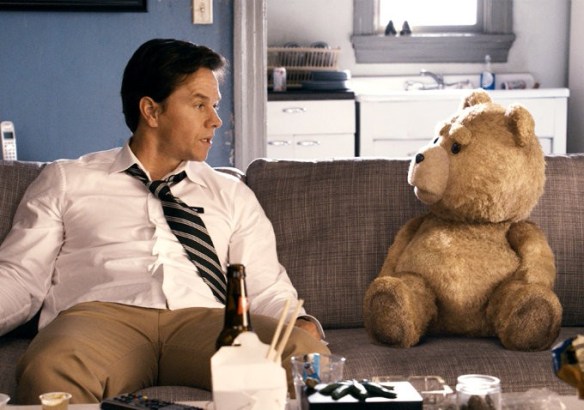
Another simple game is Guess My Word. One person chooses a word, and the other narrows it down by guessing words and being told if those guesses precede or follow the secret word in the alphabet.

For instance, if the word was QUINTET and your first guess was HALLOWEEN, I would say after. So, in one guess, you’ve eliminated every word that comes before HALLOWEEN alphabetically.

And if you’d like to give it a shot, puzzle constructor Joon Pahk created a Guess My Word feature on his website that is great fun (and sometimes pretty challenging).

tic-tac-toe

I was going to mention Tic-Tac-Toe here — another staple of the pencil-and-paper puzzle game genre — until my mother mentioned a variation she read about in Parade magazine.

In the article, Marilyn vos Savant is credited with creating Toe-Tac-Tic, a reverse Tic-Tac-Toe game wherein getting three in a row means you lose.

It’s a completely different style of game play, adding a nice twist to a classic game. (Though, quite honestly, I’m not sure we can credit vos Savant with its creation, since I can remember seeing this played in the mid-2000s. I’m not sure anyone called it “Toe-Tac-Tic,” but the rules were the same.)

31b20lfvkhl

And finally, for fans of card games, you can always whip up a round of 1000 Blank White Cards.

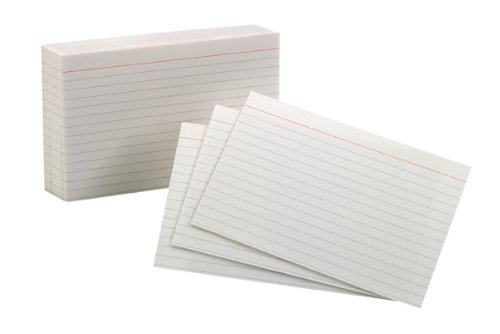
Named for the only thing you need to play — a bunch of identical blank pieces of paper, index cards, or something similar — 1000 Blank White Cards is a game you design and play both before and during the game! You can also further refine the game in subsequent sessions.

As Wikipedia so aptly puts it:

A deck of cards consists of any number of cards, generally of a uniform size and of rigid enough paper stock that they may be reused. Some may bear artwork, writing or other game-relevant content created during past games, with a reasonable stock of cards that are blank at the start of gameplay.

Some time may be taken to create cards before gameplay commences, although card creation may be more dynamic if no advance preparation is made, and it is suggested that the game be simply sprung upon a group of players, who may or may not have any idea what they are being caught up in. If the game has been played before, all past cards can be used in gameplay unless the game specifies otherwise, but perhaps not until the game has allowed them into play.

Once your initial deck of cards is created, players draw a card from the deck and either play them, keep them, or add them to the active rules of the table so they affect everyone. In this way, gameplay is quite similar to another classic puzzle card game, Fluxx, especially with the ever-changing rules and malleable gameplay.

Not only has 1000 Blank White Cards appeared in GAMES Magazine, but it was also included in the 2001 revision of Hoyle’s Rules of Games.

11404929

I am a huge fan of customizable games, so I have played 1000 Blank White Cards many times. From cards that can cause immediate victory to cards that can negate those cards, from point cards and rule cards to cards that requiring singing or truth-or-dare challenges, the possibilities are endless.

Some of my favorite cards are just drawings of turtles, where another card grants you special powers or bonuses depending on how many turtle cards you have. Another allows you to create a new card on your turn, either to keep for yourself or to give to another player.

And the rules can depend entirely on who you’re playing with. Sometimes, you can make a new card every round, while other times, you can only introduce a new card when you’ve drawn a card that allows it. Heck, there might even be blank cards in the deck that you can draw and customize immediately! It is literally up to you and your fellow players how to play.

Fans of Calvin and Hobbes will no doubt draw comparisons between 1000 Blank White Cards and Calvinball, and rightfully so. (Savvy card-game players may also recognize similarities to the figure-out-the-rules-while-you-play game Mao.)

But whether you’re playing Hangman or guessing a word, getting three in a row or avoiding it at all costs, or even creating your own signature game, as long as you’ve got a partner in crime and an imagination, you’re never without a puzzle.


Thanks for visiting PuzzleNation Blog today! You can share your pictures with us on Instagram, friend us on Facebook, check us out on TwitterPinterest, and Tumblr, and be sure to check out the growing library of PuzzleNation apps and games!