It’s Hashtag Game-Mania! Let’s Get Ready to Raaaamble!

Oh yes, it’s that time again! It’s time to unleash our puzzly and punny imaginations and engage in a bit of sparkling wordplay!

You may be familiar with the board game Schmovie, hashtag games on Twitter, or @midnight’s Hashtag Wars segment on Comedy Central.

For years now, we’ve been collaborating on puzzle-themed hashtag games with our pals at Penny Dell Puzzles, and this month’s hook was #PennyDellPuzzleSlogans, mashing up Penny Dell puzzles with advertising slogans, jingles, catchphrases, and more!

Examples include: Here and There’s the Beef, The Quicker Picker Upper, and A Diamond Rings is Forever.

So, without further ado, check out what the puzzlers at PuzzleNation and Penny Dell Puzzles came up with!


Snap! CRACKERS! Pop! (Rice Krispies)

Every Little Puzzler Helps (Tesco)

Betcha can’t eat just One and Only / Betcha Can’t Eat Add One (Lays)

Can you Here and There me now? (Verizon)

One for all and all four one. (Three Musketeers)

There’s no Right of Way to eat a Reese’s. (Reese’s Peanut Butter Cups)

Double Up your pleasure, Double Trouble your fun / Double Trouble Your Pleasure, Double Trouble Your Fun / Double your Delight. Double your fun. (Wrigley’s Doublemint gum)

Good to the Last Drop-Ins (Folgers)

Reach Out and Touch Sum Triangles (AT&T)

Say It With Flower Power (FTD)

The Happiest Places, Please On Earth (Disneyland)

What’s In and Around Your Wallet? / What’s Left in your wallet? (Capital One)

Don’t Leave Home Runs Without It / Easy Crossword Express: don’t leave home without it! (American Express)

Tastes Great, Less Fill-In (Miller Lite)

Calgon, Give and Take Me Away! (Calgon)

Time to Make the Connection (Dunkin Donuts)

You sank my Battleships! (Battleship)

Silly Dillies! (Bud Light)

License Plates to grill (Chili’s)

Get the Door. It’s Domino Theory / Get the Door. It’s Missing Dominoes (Dominos Pizza)

All the News That’s Four-Fit to Print (New York Times)

Because you’re wordsworth it. (L’Oreal)

Have it your Which Way Words. (Burger King)

He’s the most interesting puzzler in the world. (Dos Equis)

Once you daily pop crosswords, you can’t stoplines. (Pringles)

Take-a-break me off a piece by piece of that KitKat bar. (KitKat)

Give me a Brick by Brick. Give me a Brick by Brick. Break me off a Piece by Piece of that Kit Kat Bar. (KitKat)

Two at a Time for me. None for you. (Twix)

Good to the last Drop-Ins. (Maxwell House)

Me Want Honeycomb! (Honeycomb)

The toughest four Letter Perfect word on wheels. (Jeep)

Head for the Borderline. / Make a run for the Borderline. (Taco Bell)

Bubbles wobble but they don’t Spelldown. (Weebles)

Only you can prevent Fancy Fives. (Smokey the Bear/US Forest Service)

What happens in V-Words, stays in V-Words. (Las Vegas Tourism Board)

Like a good neighbor, Mystery State is there. (State Farm)

It takes a licking, but keeps on Tick-Tock Word Seeking. (Timex)

Quotefall into the Gap (The Gap)

We sell no End of the Line before it’s Two at a Time. (Paul Masson Wine)

You can’t win if you don’t Word Play. (Powerball)

I’ve Quotefallen and I can’t get up! (MedicAlert)

ABCs is for apple, J is for jacks, cinnamon toasty Crackerjacks (Apple Jacks cereal)

I can’t believe I AtoZ the whole thing! / I can’t believe I ate the Bowlgame thing! (Alka-seltzer)

You’ve got Ringers around the collar! (Whisk)

Who’s Calling? I just called to say I love you (Ma Bell)

Syllability rabbit, Trix are for kids (Trix)

Clap on! Clap off! Clap on clap off…the clapboard! (The Clapper)

I’m a Puzzler, you’re a Puzzler, he’s a Puzzler, she’s a Puzzler, wouldn’t you like to be a Puzzler too? (Dr. Pepper)


There were also a few submissions that deserve its their section, as several of our intrepid puzzlers went above and beyond.

When I bite into a Penny Press Patchwords, I get the PuzzleNation . . . (York Peppermint Patties)

If you have Fill-Ins Fill-Ins Fill-Ins, in the bipad bipad bipad, then you will like it like it like it on your iPad iPad iPad. (Libby’s)

My crossword has a first name, it’s P-E-N-N-Y. My crossword has a second name it’s P-R-E-S-S. I love to solve them every day. And if you ask me why say, Cuz Penny Press has a way with W-O-R-D-S! (Oscar Mayer)

Hold the Pick-ture This, hold the Lett-er Boxes, special orders don’t upset us, all we ask is that you let us have it your Word Ways (Burger King)


Have you come up with any Penny Dell Puzzle Slogan entries of your own? Let us know! We’d love to see them!

Thanks for visiting PuzzleNation Blog today! Be sure to sign up for our newsletter to stay up-to-date on everything PuzzleNation!

You can also share your pictures with us on Instagram, friend us on Facebook, check us out on TwitterPinterest, and Tumblr, and explore the always-expanding library of PuzzleNation apps and games on our website!

Elizebeth Smith Friedman, Codebreaker and Scourge of Nazi Spymasters

[William and Elizebeth Smith Friedman, hard at work.
Image courtesy of National Geographic.]

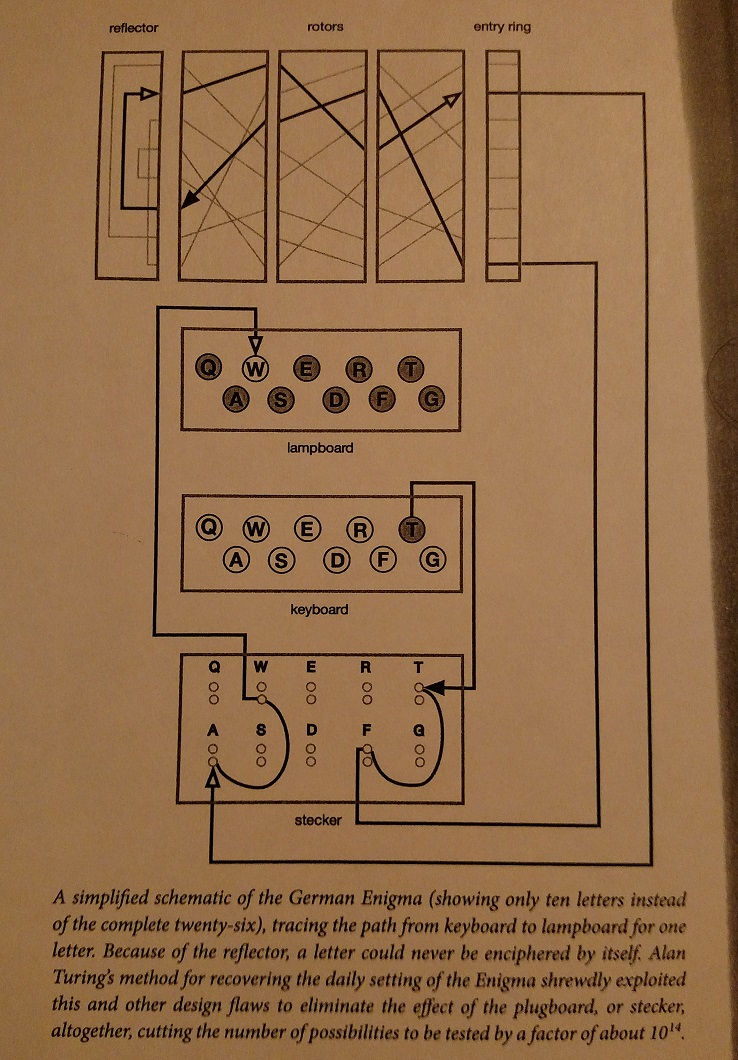
Last year, I rather ambitiously attempted to summarize the early history of American codebreaking and the NSA in a series of blog posts spanning World War II through the modern day. One of the names I cited in that series, William Friedman, is synonymous with American cryptography, thanks to his contributions to the cracking of the German ENIGMA code and his efforts to establish the National Security Agency.

Unfortunately, there is a gaping hole in the narrative I constructed. Because none of my sources made any reference to another crucial Friedman: Elizebeth Smith Friedman, William’s wife and partner in code-cracking.

Yes, she was name-dropped in my post about the book Code Girls: The Untold Story of the American Women Code Breakers of World War II, but she had to share those pages with a host of underappreciated women who were codebreaking geniuses.

[Image courtesy of HarperCollins Publishers.]

As The Woman Who Smashed Codes explains, she wasn’t just a talented codebreaker. She literally wrote the book on it. Eight of them, in fact. The Riverbank Publications — although often credited to her husband — covered new codebreaking techniques in rich detail, and they are still referred to today as part of the foundation of modern cryptography.

She also started the first and only American codebreaking unit ever run by a woman, serving as Cryptanalyst-in-Charge while jointly working for both the Treasury and the Coast Guard during and after World War II.

A history of American codebreaking without Elizebeth Smith Friedman is woefully incomplete, and in today’s post, I hope to rectify that oversight.

[Image courtesy of the Marshall Foundation.]

Elizebeth’s work with codes started in a most peculiar way. While seeking a job as a librarian after college, she was recruited by eccentric millionaire George Fabyan to live and work at Riverbank, his palatial estate that doubled as a self-funded research center for all sorts of scientific endeavors.

Elizebeth’s deep knowledge of Shakespeare was put to work attempting to prove Fabyan’s theory that there were secret messages encoded in the writings of Shakespeare. Although her work failed to uncover any hidden pattern in Shakespeare’s words or font choices, it did lead to two unexpected developments: a career in codebreaking and a budding romance with fellow Riverbank recruit William Friedman, whose own interest in codebreaking was sparked by the works of Edgar Allan Poe.

Thanks to the proliferation of radio, there was a seismic shift in how information was being passed between military units, governments, and other organizations, so the ability to listen in on one’s enemies (and allies) was not only a new strategic opportunity, but it was a relatively new science.

In short, America needed codebreakers who could crack the secret messages being transmitted (and intercepted). The military didn’t have them. The government didn’t have them.

But Riverbank did. And for the first eight months of World War I, the small group of William, Elizebeth, and those they trained handled ALL of the codebreaking for every part of the US government, from the State Department to the Army to the DOJ. William and Elizebeth began running a codebreaking school out of Riverbank, even embedding a secret message in a photo of the class taken on the last day of the course.

[Images courtesy of Elonka.com.]

In the aftermath of the First World War, codebreaking had become so important that countries were turning to machines to help develop uncrackable codes. And yet, at this point, American cryptography as a whole consisted of about 50 people. William went to work for the government, establishing the American version of Bletchley Park — Arlington Hall — and setting the stage for the creation of the NSA.

Elizebeth, on the other hand, cracked codes from home. And she did so for both the Treasury Department and the Coast Guard, who would send her sealed packages of intercepted encrypted intel and communications. In her first three months hunting down rum-runners during Prohibition, she solved two years’ worth of backlogged messages.

During World War II, Elizebeth’s Coast Guard Cryptography Unit turned their attention from smuggling (which waned during wartime) to cracking German codes. Under her tutelage, they would crack three different variations on the Enigma codes, each more complex than the last. (The British also cracked ENIGMA, independently of American efforts.)

Sadly, in the aftermath of the Pearl Harbor attack, the US military didn’t want civilians in charge of sensitive operations, so Elizebeth was demoted. Yes, she was no longer in charge of the group she started, trained, and cultivated, instead answering to a new boss of dubious cryptographic talents.

(Of course, the sexist dimwits making decisions like this had to grin and bear it when numerous other organizations and agencies continued to asked for Elizebeth’s assistance by name.)

And stealing Elizebeth’s credit was practically a cottage industry over at the FBI. We have them to thank for erasing Elizebeth’s role in particular — and the Coast Guard’s role in general — in hunting down, exposing, and compromising Nazi spy networks in South America, even though the FBI’s hamfisted blundering actually served to expose codebreaking operations in the past, forcing Elizebeth to crack new codes in order to regain the advantage the FBI had squandered.

Oh, yeah, did I mention that both during AND after World War II, Elizebeth continued to hound the Nazi forces in South America who sought to destabilize the region?

As one historian put it, referring to the thousands of pages of decryptions Elizebeth produced:

These pieces of paper saved lives. They almost certainly stopped coups. They put fascist spies in prison. They drove wedges between Germany and other nations that were trying to sustain and prolong Nazi terror. By any measure, Elizebeth was a great heroine of the Second World War.

The British knew it. The navy knew it. The FBI knew it. But the American public never did, because Elizebeth wasn’t allowed to speak.

[Image courtesy of Find a Grave.]

Even in their retirement, the Friedmans continued to contribute to the world of cryptography. They returned to the subject of Shakespeare with The Shakespeare Ciphers Examined, thoroughly debunking the whole idea of hidden codes in the Bard’s works.

When William died, Elizebeth even hid a secret message on his tombstone, for those who knew how to look. (It was Bacon’s cipher, something they both studied extensively during their time at Riverbank.) What a touching tribute to how she met her partner and husband.

And although the accolades and appreciation for Elizebeth’s incredible contributions have been slow in coming, they are trickling in. In the 1990s, the NSA renamed its auditorium from the William F. Friedman Memorial Auditorium to the William F. Friedman and Elizebeth S. Friedman Memorial Auditorium. A Justice Department building also has an auditorium bearing her name.

More information about the massive expansion of codebreaking worldwide is coming to light with every passing year. Hopefully that will mean greater attention for minds like Elizebeth, who used her puzzly mind to protect the world. That’s someone worth celebrating.

[Much of the information in this post comes from a wonderful book on Elizebeth, The Woman Who Smashed Codes by Jason Fagone, and it’s well-worth your time to check out her story in full.]


Thanks for visiting PuzzleNation Blog today! Be sure to sign up for our newsletter to stay up-to-date on everything PuzzleNation!

You can also share your pictures with us on Instagram, friend us on Facebook, check us out on TwitterPinterest, and Tumblr, and explore the always-expanding library of PuzzleNation apps and games on our website!

Wine Is Better For Your Brain Than Puzzles?

[Image courtesy of Bevlaw.]

“It’s time to trade in your Sudoku and crossword puzzles for a glass of wine.”

That was the opening quote in an article sent to me by a friend (and wine enthusiast) who thought I’d be interested to hear just why we should be tossing aside our puzzles for a bit of vino.

That article discusses the book Neuroenology: How the Brain Creates the Taste of Wine, by Yale neuroscientist Gordon Shepherd, and Shepherd posits that the flavor of wine “engages more of our brain than any other human behavior.”

More than listening to music, solving math problems, or hitting a baseball? Apparently so. Even more than solving one of our beloved crossword grids? Shepherd certainly believes that to be the case, and he’s packing some serious science to back it up.

[Image courtesy of Amazon.]

From an NPR piece about the book:

The apparently simple act of sipping Merlot involves a complex interplay of air and liquid controlled by coordinated movements of the the tongue, jaw, diaphragm and throat. Inside the mouth, molecules in wine stimulate thousands of taste and odor receptors, sending a flavor signal to the brain that triggers massive cognitive computation involving pattern recognition, memory, value judgment, emotion and of course, pleasure.

Now, of course, we’re all about engaging the brain in a positive way in this blog. We’ve spent plenty of time debunking faulty promises about “brain-training” puzzle sites and the like that make grand, unfounded promises about what puzzles can do to stave off Alzheimer’s, memory issues, dementia, and more. The science is still out on exactly how long-term puzzle-solving affects the brain, and whether there are benefits, so we’ll table that idea for now.

But savoring a sip of wine and exercising the brain? Now that’s something we can get behind.

[Image courtesy of Amazon.]

Or you could be evil, slap one of these brain teasers on the bottle, and annoy your friends.

Then again, this just makes me think you should enjoy a glass of wine WHILE solving a crossword. The best of both worlds!


Thanks for visiting PuzzleNation Blog today! Be sure to sign up for our newsletter to stay up-to-date on everything PuzzleNation!

You can also share your pictures with us on Instagram, friend us on Facebook, check us out on TwitterPinterest, and Tumblr, and explore the always-expanding library of PuzzleNation apps and games on our website!

What Can YOU Solve In Under a Second?

Oh yes, it’s Rubik’s Cube time once again.

Every time I think I’ve seen everything someone can do with a Rubik’s Cube, a month or two later, another amazing video appears on the Internet, proving me wrong.

We’ve covered Rubik’s Cubes a lot on this blog. We’ve seen them solved underwater, while being juggled, during a skydive, and yes, we’ve seen them solved in increasing faster times.

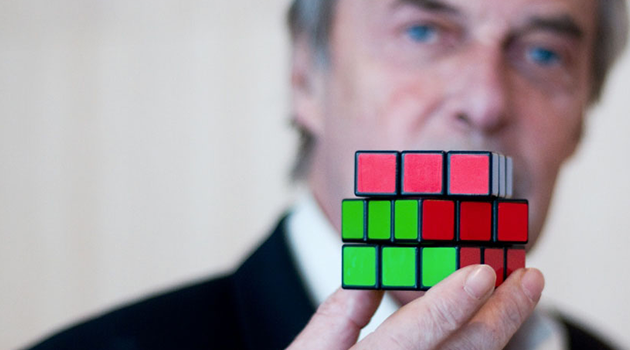
As of last year, the record for a robot solving a Rubik’s Cube was .637 seconds. That robot, Sub1, has been the Guinness World Record holder ever since.

Until now, it seems.

That’s a right, a pair of engineers — Ben Katz and Jared Di Carlo — have nearly halved that world record with what they call their “Rubik’s Contraption.” This cube-solving bot posts a solving speed of .38 seconds.

Their machine is so fast that they had to program it to only allow one motor to move at a time. You see, in previous runs, more than one motor would try to move, and the cube would be RIPPED APART.

This lightning-fast robot is still waiting review by the team from Guinness, so, for now, Sub1’s record stands.

But for how long?


Thanks for visiting PuzzleNation Blog today! Be sure to sign up for our newsletter to stay up-to-date on everything PuzzleNation!

You can also share your pictures with us on Instagram, friend us on Facebook, check us out on TwitterPinterest, and Tumblr, and explore the always-expanding library of PuzzleNation apps and games on our website!

Crossword Clue Common Questions!

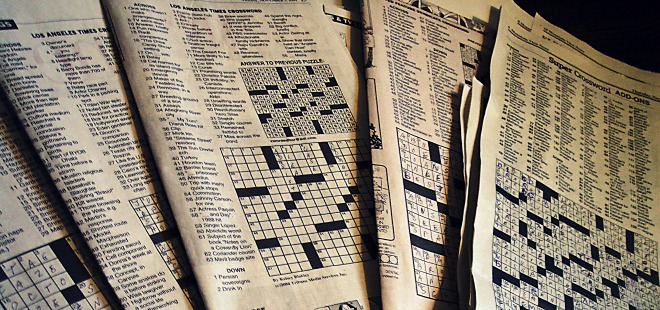
If you solve enough crossword puzzles, you’re bound to encounter some repeated clues. After all, there are words that lend themselves easily to crossword construction, and if a word appears often, then certain clues for that word are practically guaranteed to recur.

For instance, let’s talk dogs. “Popular dog’s name” as a clue for FIDO? Is FIDO a popular dog name anymore? Was it ever?

What about that other crossword-friendly pup’s name, ASTA? I’ve seen “Asta’s bite” as a clue for NIP, but can we verify that? Did Asta ever bite someone on Nick and Nora’s watch?

[Image courtesy of I Love Asta.com.]

And speaking of animals, what about the clue “Playful mammal” for SEAL? Isn’t that a bit presumptuous? I mean, sure, a given seal might appear playful to some, but all seals as a general rule? Seems a bit much.

Did the house from Home Again have an ELL? Or the one from This Old House? Because if not, “Home Again add-on” and “This Old House addition” are technically incorrect.

What about that famed “Bakery employee” you see from time to time in grids? Bakery personnel, I implore you. Please answer… is there really such a thing as an ICER?

[Image courtesy of Getty Images.]

Why are ARKS clued as “Clumsy vessels”? How clumsy could a boat be? Did it keep tipping over? IS THAT WHAT HAPPENED TO THE UNICORNS?!

Is the NILE really a “Cleopatra backdrop”? Can someone verify that the Nile was a setpiece or location for the film?

And for you fans of poetic contractions in crosswords, here’s a question: Did Byron ever really use “E’ER” in one of his pieces? Did Yeats? Did other odists?


What do you think, fellow puzzlers and PuzzleNationers? Are there any common crossword clues that raise questions for you? Let us know in the comments section below! We’d love to hear from you!

Thanks for visiting PuzzleNation Blog today! Be sure to sign up for our newsletter to stay up-to-date on everything PuzzleNation!

You can also share your pictures with us on Instagram, friend us on Facebook, check us out on TwitterPinterest, and Tumblr, and explore the always-expanding library of PuzzleNation apps and games on our website!

A Relatively Modern Idea: Fairness in Dice Rolling

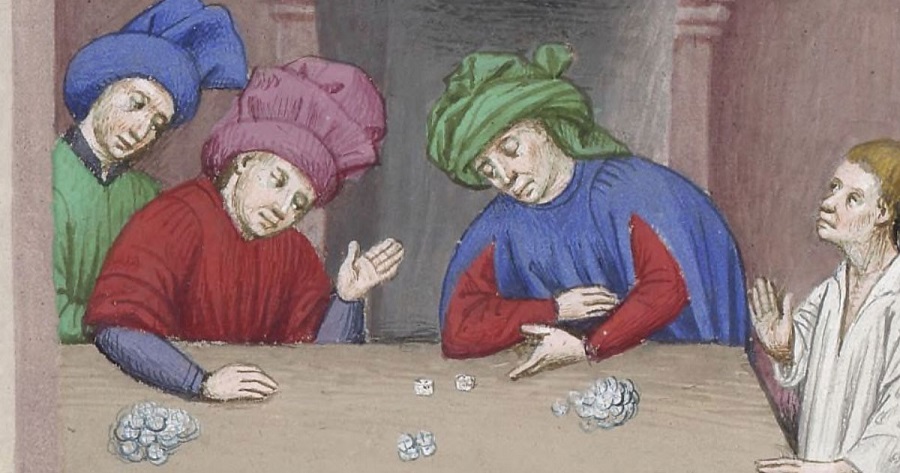
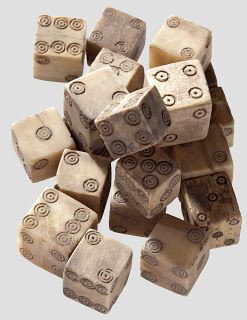
[Image courtesy of Larsdatter.com.]

This may come as a surprise to you, fellow puzzlers, but fairness was not always a priority when it came to rolling dice.

Nowadays, whether you’re going after that elusive Yahtzee, hoping for doubles to earn another roll in Monopoly, or trying to roll sevens in a game of craps, the basic concept behind throwing dice is that every outcome of a six-sided die has an equal chance to appear. Unless you’re dealing with loaded or gimmicked dice, your odds should be 1 in 6.

But a recent study by researchers from the American Museum of Natural History and the University of California, Davis, has revealed that fairness in dice rolling didn’t really become a concern for dice users until the Renaissance. Researchers gathered dice spanning 2000 years of human history to explore why this was the case.

[Image courtesy of Wikipedia.]

From an article on Science Alert:

Roman-era dice, the researchers found, were a mess when it came to shape. They were made from a variety of materials, such as metal, bone and clay, and no two were shaped entirely alike. Many were visibly lumpy and lopsided, with the 1 and 6 on opposite sides that were more likely to roll up.

In fact, it seems like variety was the name of the game in Roman times, since the number configurations, shape, and size were inconsistent across the board, although dice were fairly common in the time period.

[Image courtesy of Pinterest.]

The Dark Ages led to a downturn in dice frequency, as they become very rare between the years 400CE and 1100CE.

The use of dice rebounds after 1100, and are most commonly found in ancient Mesopotamia and Egypt in what is known as the primes configuration, meaning that opposite numbers add up to prime numbers. 1 pairs with 2, 3 pairs with 4, and 5 pairs with 6.

There was a reinvigorated focus on the mechanics of chance and calculating probability, thanks to names like Galileo and Pascal, as well as a spirit of greater scientific understanding overall. Those Renaissance influences led to both a standardized shape for dice and a change in the numbering system. At this point, most dice convert to the sevens configuration, where opposite sides add up to seven (1 pairs with 6, 2 pairs with 5, and 3 pairs with 4).

[Image courtesy of Smithsonian.com.]

And according to lead researcher Jelmer Eerkens, cheating may have been on the mind of manufacturers going forward. “Standardizing the attributes of a die, like symmetry and the arrangement of numbers, may have been one method to decrease the likelihood that an unscrupulous player had manipulated the dice to change the odds of a particular roll.”

That change from variable shapes, sizes, and designs reflects a sea change in thinking towards dice and chance. Before, the shape didn’t matter because the results were attributed to Fate or some greater outside force, but later on, an understanding of chance and probability pushed standardization of dice forward.

In the end, it’s amazing how much of our culture and worldview, both past and present, can be revealed by exploring how we solve puzzles and play games.


Thanks for visiting PuzzleNation Blog today! Be sure to sign up for our newsletter to stay up-to-date on everything PuzzleNation!

You can also share your pictures with us on Instagram, friend us on Facebook, check us out on TwitterPinterest, and Tumblr, and explore the always-expanding library of PuzzleNation apps and games on our website!