Merry Christmas, Happy Holidays, and Puzzly Delights!

Merry Christmas, fellow puzzlers and PuzzleNationers! (And if you don’t celebrate Christmas, then Happy December 25th, fellow puzzlers and PuzzleNationers!)

I’m a sucker for a festive event, so I’ve got a puzzly double feature lined up for you today.

First, allow me to present a delightful video concocted by friend of the blog Hevesh5. Lily is a domino master who has created numerous domino chains and Rube Goldberg-style machines with elements that fit a given theme. So naturally, given the season, she’s devised a marvelous domino chain with all sorts of holiday elements. Enjoy!

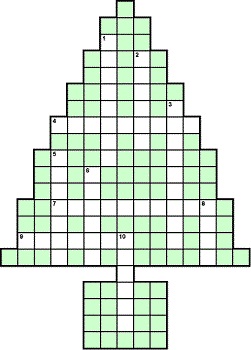
And since we’re on a holiday kick, there’s an anagram challenge for you too!

What are the longest common words you can make from the letters in the following phrase?

M-E-R-R-Y C-H-R-I-S-T-M-A-S

No plurals or proper nouns are allowed, and you can only use the letters in the phrase. (Meaning, for instance, you can use 3 Rs, but not 4, since there are only 3 in the phrase.)

We came up with one 10-letter word, four 9-letter words, twelve 8-letter words, and thirty 7-letter words.

Let’s see how you do!

Have a marvelous holiday (or day), and happy puzzling to you!


Thanks for visiting PuzzleNation Blog today! Be sure to sign up for our newsletter to stay up-to-date on everything PuzzleNation!

You can also share your pictures with us on Instagram, friend us on Facebook, check us out on TwitterPinterest, and Tumblr, and explore the always-expanding library of PuzzleNation apps and games on our website!

An Ancient Andean Jigsaw Puzzle?

[Image courtesy of Gizmodo.]

One of the best things about writing this blog is getting to talk about all of the amazing ways that people with puzzly skills have contributed to society. We’ve talked about codebreakers who saved Christmas and hunted Nazis, puzzlers who decoded ancient messages, and solvers who unraveled some of the mysteries of lost civilizations, all with the clever and insightful application of puzzle skills.

I’m surprised we haven’t talked about archaeologists more frequently, because they’re basically detectives of history who try to reassemble the past jigsaw-style.

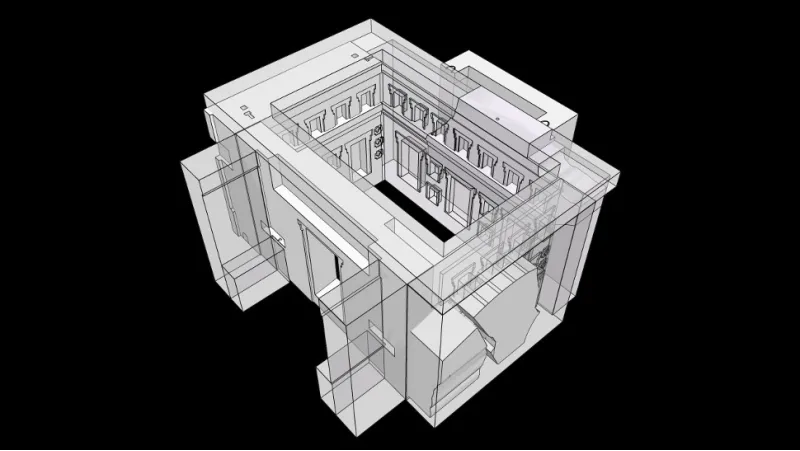
Recently, researchers from UC Berkeley put their puzzly skills to the test to solve a 1,500-year-old mystery: what the pre-Incan Tiwanaku temple known as Pumapunku actually looked like.

[Image courtesy of Gizmodo.]

You see, the temple has been raided, pillaged, and ransacked over the centuries, leaving archaeologists with very little information on what the temple actually looked like, or how the many giant blocks that originally composed the temple were assembled.

But, with a combination of computer modeling, 3-D printed pieces, and their own puzzly knowhow and dedication, they have cobbled together a rudimentary idea of what the Pumapunku temple looked like.

From an article on the project:

The team created miniature 3D-printed models, at 4 percent actual size, of the temple’s 140 known pieces, which were based on measurements compiled by archaeologists over the past 150 years and Vranich’s own on-site observations of the ruins. The researchers used comparative analyses and interpolation to reconstruct broken pieces… Yes, the researchers could have performed this work exclusively in the virtual realm, but they had better luck with tangible, physical pieces they could freely move around.

Yes, not only were they using the pieces they knew about, but they were reassembling decayed or broken pieces as well in order to assemble the temple.

[Image courtesy of Gizmodo.]

And the project continues!

Vranich’s team gave a copy of the 3D-printed blocks to the Pumapunku ruins site director and taught the staff how to record the stones and model them. Vranich hopes that more blocks will be uncovered at the site, and further reconstructions of the temple complex will continue.

“The blocks will also be made available online,” said Vranich. “My hope is that other people will print them out and through the wisdom of crowds, we can find additional matches and continue to reconstruct the form of [another Tiwanaku] building known as ‘the temple of the Andes.’”

With these techniques and the lessons learned by the Pumapunku build, the team is hoping to not only recreate this ancient Andean temple, but other destroyed historical sites as well, including those in the Middle East destroyed by ISIS.

[Image courtesy of Gizmodo.]

It’s an amazing investigative and deductive feat, made possible with puzzly skills.


Thanks for visiting PuzzleNation Blog today! Be sure to sign up for our newsletter to stay up-to-date on everything PuzzleNation!

You can also share your pictures with us on Instagram, friend us on Facebook, check us out on TwitterPinterest, and Tumblr, and explore the always-expanding library of PuzzleNation apps and games on our website!

Jigsaw Puzzle Art Leads to Curious Creations!

If there’s one thing that puzzle fans of all shapes and sizes excel at, it’s pattern recognition. Whether it’s patterns of letters, patterns of numbers, patterns of logical facts, or patterns of puzzle pieces, puzzlers are outstanding at drawing order from chaos.

So it should come as no surprise that avid jigsaw puzzle solvers have noticed that some jigsaw puzzle companies use the same cutting molds over and over to create their jigsaw puzzles.

I myself realized this fact when I was younger. I was given three small Star Wars jigsaw puzzles, and all three of them were cut from the same mold. So once I’d solved one, solving the other two went much much faster. (I actually stacked them to make it even easier to complete the second and third puzzles.)

Naturally, this has led certain attentive and intrepid puzzlers to track down different puzzles with the same cutting mold to see how the two puzzles interact.

Artist Tim Klein is one of those observant individuals, and he’s had a lot of fun over the years crafting peculiar images by combining jigsaws with compatible molds:

Jigsaw puzzle companies tend to use the same cut patterns for multiple puzzles. This makes the pieces interchangeable. As a result, I sometimes find that I can combine portions from two or more puzzles to make a surreal picture that the publisher never imagined.

I take great pleasure in “discovering” such bizarre images lying latent, sometimes for decades, within the pieces of ordinary mass-produced puzzles. As I shift the pieces back and forth, trying different combinations, I feel like an archaeologist unearthing a hidden artifact.

And today, we’ve collected some of his puzzly creations for your enjoyment.


This mixture of summer and winter is marvelously balanced, particularly with the summer and winter bridges matching up so perfectly.

This fusion of a church and fairground adds a fun touch to an otherwise quiet and dignified image.

I like to call this one the Earth Mooover.

The Iron Horse comes to life in this surreal mashup.

In a natural evolution, this dinosaur train is no doubt the apex predator of the animal-train hybrid food pyramid.

This dinosaur/bunny monstrosity is a cuddly little ball of viciousness. No train parts needed.

Mixing up elements of three different puzzles brings us this Victorian ladypuppy in front of a scenic waterfall. This is dream or nightmare fuel, depending on your perspective.

This mixture of crosswords and fishing is wonderfully executed, offering the pleasantly appropriate metaphorical representation of “fishing for answers.”

And to close out this compilation of Klein’s jigsaw art, it seemed only appropriate to end on a holiday-themed note, with this kitty-in-kitty-in-present melange.


Klein’s jigsaw creations are as eye-catching as they are puzzling, and it makes you wonder what other hybrid constructions are awaiting the eagle eye of a devoted jigsaw puzzler.

[Images and quotation courtesy of Awkward.com and Twisted Sifter.]


Thanks for visiting PuzzleNation Blog today! Be sure to sign up for our newsletter to stay up-to-date on everything PuzzleNation!

You can also share your pictures with us on Instagram, friend us on Facebook, check us out on TwitterPinterest, and Tumblr, and explore the always-expanding library of PuzzleNation apps and games on our website!

Storytelling and Puzzles Unite in Wordventures! Available now!

There’s nothing more exciting than announcing a brand-new puzzle app we’ve been working on, and today, we’ve got something truly special for you to enjoy.

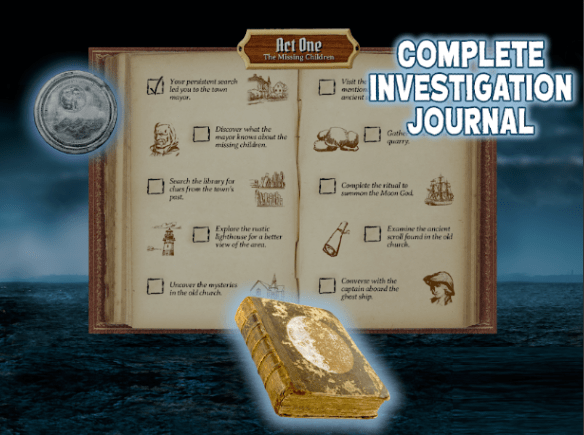
Our newest app, Wordventures: The Vampire Pirate is now available for download!

A town’s children have gone missing. A mysterious undead pirate and his ragtag crew lurk nearby. And the only person who can unravel the mystery and find the children is you!

In Wordventures, you can immerse yourself in a investigation while solving word search puzzles to uncover clues, reveal secrets, and move the story forward!

Combining the world-class puzzle solving you expect from PuzzleNation with a multilayered storytelling experience offers the best of both worlds. You’ll explore the town, meet fascinating characters, and even keep notes in a journal as you play through the story!

You control the pace, you control the difficulty, and you push the narrative forward with every puzzle you solve!

Solve a mystery like never before with Wordventures: The Vampire Pirate! Click here to learn more about the app and download it now!


Thanks for visiting PuzzleNation Blog today! Be sure to sign up for our newsletter to stay up-to-date on everything PuzzleNation!

You can also share your pictures with us on Instagram, friend us on Facebook, check us out on TwitterPinterest, and Tumblr, and explore the always-expanding library of PuzzleNation apps and games on our website!

PuzzleNation Product Review: Zendo Expansion

[Note: I received a free copy of this game in exchange for a fair, unbiased review. Due diligence, full disclosure, and all that. And this concludes the disclaimer.]

Expansion sets have become an integral part of the gaming experience. Whether they offer new wrinkles to an established game, allow you to add additional players, or create new ways to use the same game pieces, they revitalize games that might’ve become less fun or interesting after lots of play.

It’s difficult to strike a balance with expansion sets, since they must respect the game that came before and add to it in a meaningful way, but without introducing any game-breaking mechanics or otherwise compromising what made the original game fun in the first place.

The designers at Looney Labs are absolute pros when it comes to balancing their expansion packs. Each one enhances the gameplay without sacrificing any of the original game’s clarity or cohesiveness.

In the past, we’ve looked at Looney Labs expansions like Fluxx Dice (which add further mayhem to an already chaotic game of Fluxx), the Just Coffee and Better with Bacon expansions for Just Desserts (which add new dishes and characters to deepen gameplay options), and the Bridge Expansion for Star Trek Fluxx and Star Trek: The Next Generation Fluxx (which allow you to combine both games into one).

Today, we’re looking at an expansion pack for one of the company’s most immersive and challenging puzzle games: Zendo.
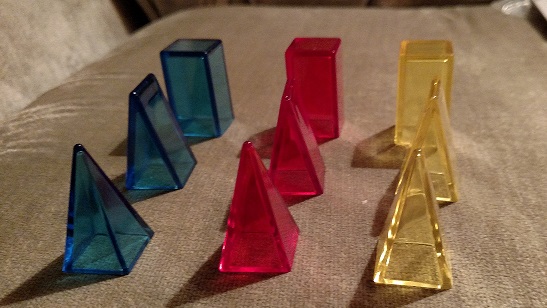
In Zendo, the players pull pieces from a communal pile in order to build different structures, using pyramids, wedges, and blocks. One player, the moderator, chooses a secret rule for the players to uncover, and builds two structures. One of these structures follows the secret rule, and one does not, and both are marked as such.

Secret rules can be as simple as “must contain all three shapes” or “must contain exactly four pieces.” They can be as complex as “must contain more blue pieces than blocks” or “must contain at least one yellow piece pointing at a blue piece.” Some rules involve how pieces touch, or how they’re stacked, while others demand no touching or stacking whatsoever. The field is wide open at the start of the game.

Players then try to deduce the secret rule by building structures themselves, arranging pieces from the communal pile into various patterns and asking the moderator for more information.

So, how does the Zendo Expansion affect the original?
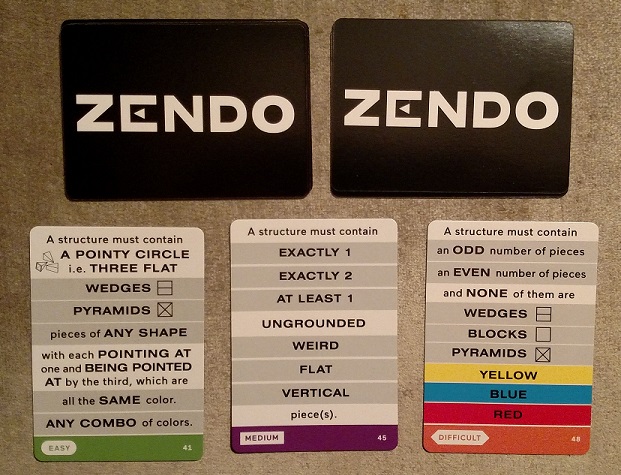
[The gray areas of the card are variable options to choose from, meaning each card offers several different possible rules depending on the moderator’s choices.]

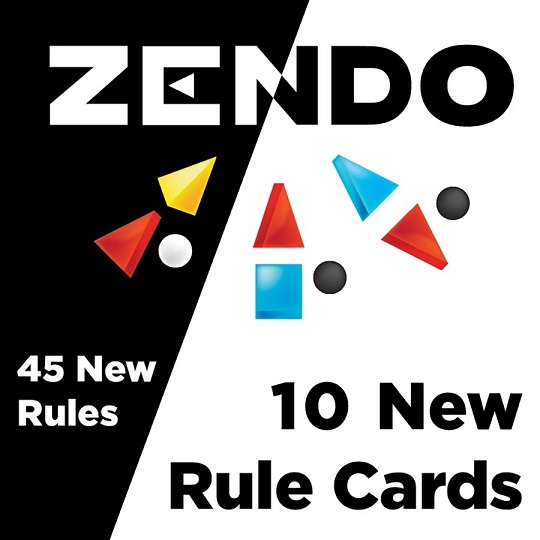
The Zendo Expansion is a ten-card deck of new secret rule cards that allow the moderator to create more complex and challenging structures for the other players to unravel.

But these ten cards offer much more than just the rules themselves. They encourage both the moderator and the players to be more creative, considering not just the shapes and how they interact, but the overall look of the structure.

One of the cards requires players to shape the structure’s shadow into a given shape. Moving beyond the pieces themselves and incorporating the light and shadow of the play area is a clever and unexpected way to use the Zendo pieces.
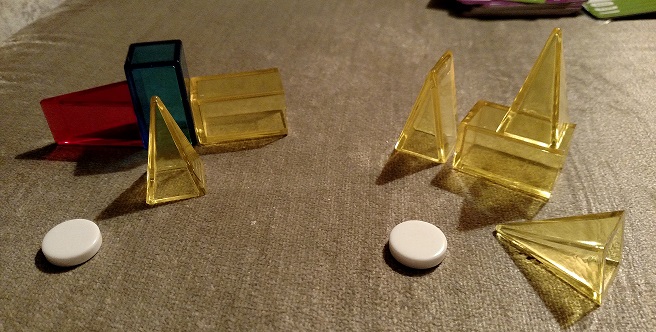
It immediately sends your brain in new directions, both as a player trying to deduce other secret rules in later game sessions and as a moderator looking for new ways to prove or disprove players’ theories with your own builds.

Not only does the Expansion deck add all sorts of new twists on the original game, but it makes you want to be more ambitious and clever in your guesses and structures the more you play.

With new rule cards ranging from easy to difficult, players of all skill levels will benefit from adding this set of cards to their puzzle game arsenal.

Zendo and the Zendo Expansion are available from Looney Labs, and both are featured in this year’s Holiday Puzzly Gift Guide!


Thanks for visiting PuzzleNation Blog today! Be sure to sign up for our newsletter to stay up-to-date on everything PuzzleNation!

You can also share your pictures with us on Instagram, friend us on Facebook, check us out on TwitterPinterest, and Tumblr, and explore the always-expanding library of PuzzleNation apps and games on our website!

A Rubik’s Cube is Brought to Life in this Short Film!

In the world of puzzles, there are certain images that are unmistakable, no matter what language you speak. A few concepts that are universally familiar and instantly recognizable.

A Scrabble tile. The black and white pattern of a crossword grid.

A small, multicolored cube.

The Rubik’s Cube is iconic, and it feels like part of the fabric of puzzles at this point. We’ve seen people set new records in speed-solving them, computers designed to solve them, and foods crafted to look like them. There have been Rubik’s Cube Halloween costumes, marriage proposals, and art installations. People are even designing and 3-D printing their own Rubik’s-inspired creations.

But no one has ever brought the Rubik’s Cube to life quite like Bastiaan Schravendeel and the team at Polder Animation.

In the short animated film Scrambled, we’re introduced to two unforgettable characters on a train platform: a girl named Esra and a nameless Rubik’s cube.

When Esra misses her train and busies herself with her phone while waiting for the next one, the perceptive little Rubik’s Cube makes its presence known.

This short is reminiscent of a Miyazaki film — a world with hidden surprises — as well as the charming interactions of Pixar films like Wall-E, and it will no doubt be the best six minutes of your day:

I could talk about all the messages and subtext underpinning this wonderful little story: analog play vs. digital, the value of feeling a well-earned sense of accomplishment, the magic of puzzles. You no doubt detected the same themes while you watched the short.

But instead, I’d rather give a shout-out to the wonderful animators who brought this world to life. Esra is instantly relatable, shutting out the world for a bit while waiting for her train, and the hilarious, puppy-like antics of the Rubik’s Cube are immensely engaging. You can’t help but root for the little guy, even if solving him seems to bring an end to his interactions with Esra.

It’s amazing how quickly you forge a bond with the Rubik’s Cube, and the animators deserve high praise for making a puzzle that inspires wonder and frustration in equal measure into one so endearing.

In an interview with Short of the Week, Schravendeel said:

The biggest challenge was to create a genuinely believable, likable and relatable character from a Rubik’s cube without making it about anything other than it being a Rubik’s cube. I’ve always liked films that manage to evoke emotion and personality from objects that usually don’t have any, especially if it can be done without dialogue.

Dialogue would have ruined the simplicity and wonder of Esra and the Cube’s interactions, and the mix of wordless communication and physical comedy made for a wonderful viewing experience.

Scrambled is a delight. I hope you enjoy.


Thanks for visiting PuzzleNation Blog today! Be sure to sign up for our newsletter to stay up-to-date on everything PuzzleNation!

You can also share your pictures with us on Instagram, friend us on Facebook, check us out on TwitterPinterest, and Tumblr, and explore the always-expanding library of PuzzleNation apps and games on our website!