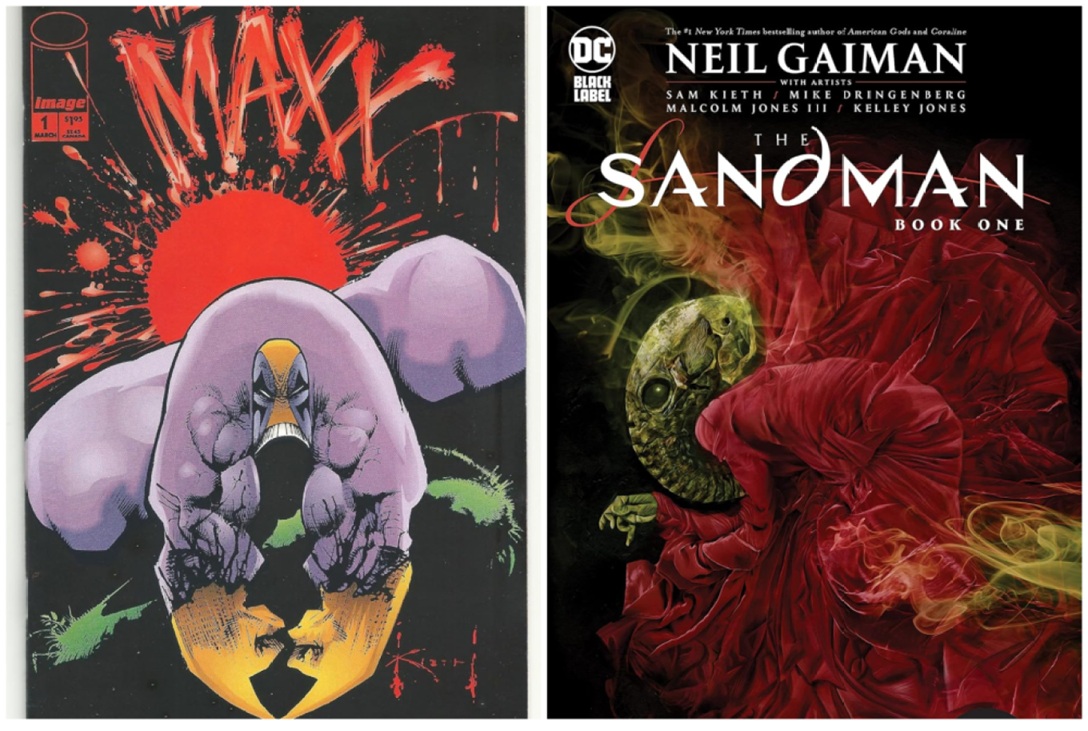
Sam Kieth is a comic book artist, writer, and storyteller who isn’t as well-known as he should be. He wrote and drew for the Hulk, Wolverine, Batman, and many other notable characters, and also co-created The Sandman with the intolerable Neil Gaiman.
When I was younger, his comic The Maxx (and the MTV Oddities cartoon adapted from the comic) were brain-meltingly creative influences on me.
He opened my mind to the possibilities of storytelling, and I still count his works alongside those of Dave Barry, Terry Pratchett, Connie Willis, and Douglas Adams, when it comes to how impactful they were.
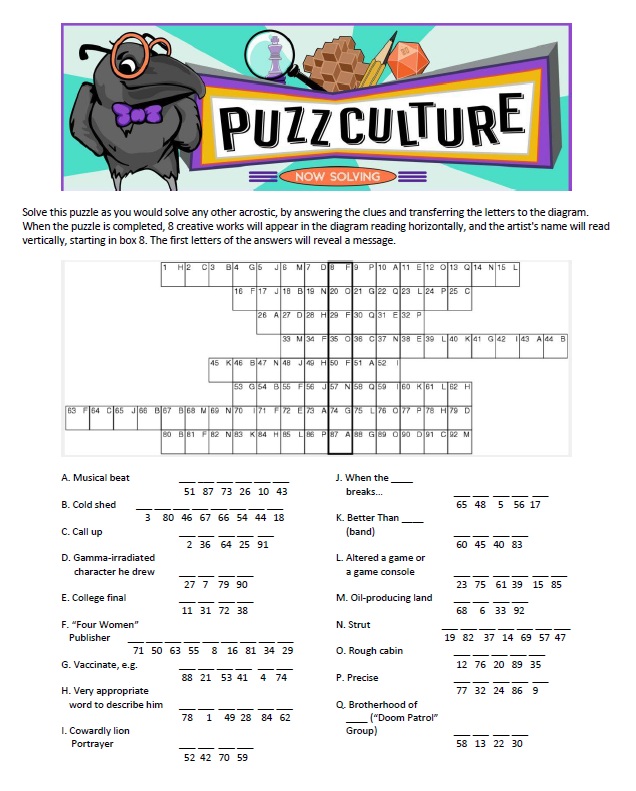
And I want to pay tribute to him the best way I know how, so I created a little acrostic puzzle in his honor.
I hope you enjoy solving it, and take a little time to explore the works of Sam Kieth. He leaves a long and varied creative legacy behind him, and much of it holds up to this very day.
Today’s a good day. A day when people remember to be wary of sidewalk cracks, walking under ladders, or troubling that black cat on your path. A day for visiting the nearby summer camp and reminding those horny rapscallion teens of their duties and responsibilities.
Yes, it’s Friday the 13th, and I simply cannot let today a Friday the 13th pass without some sort of horror-fueled celebration.
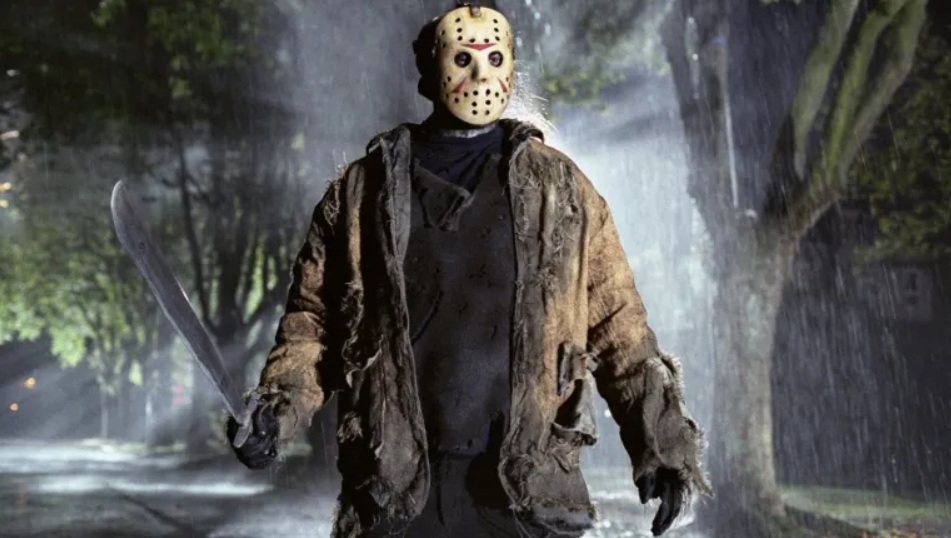
I usually watch at least one of the Jason Voorhees films on this day. (Do yourself a favor and watch Jason X, it’s so hilariously great.)
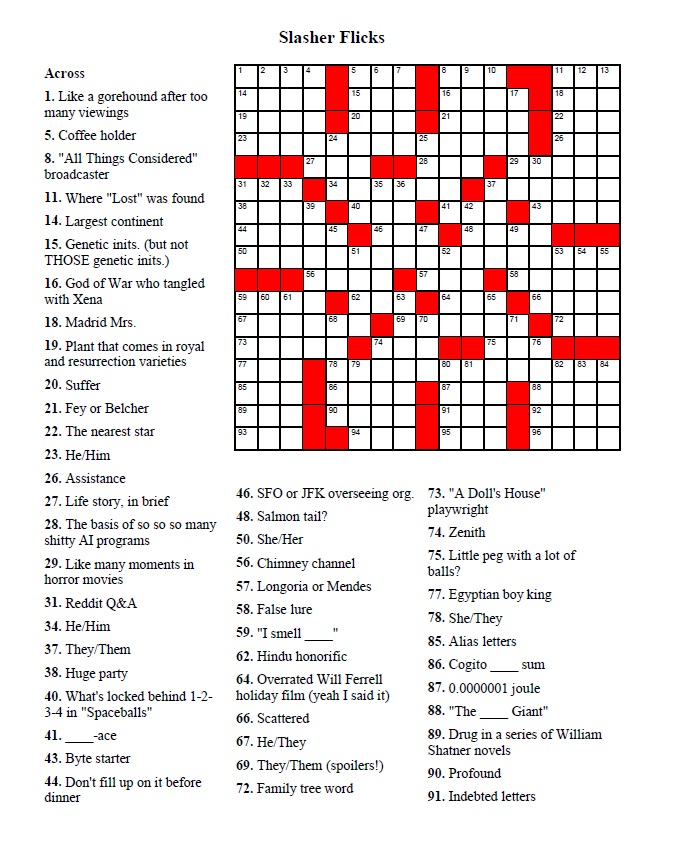
So when inspiration struck last week, I sought out my horror movie friend Julien, who helped me brainstorm entries for this theme.
Oh, and I couldn’t resist turning the black squares red to fit the aesthetic.
I hope you enjoy, especially in a lakeside cabin, or a cruise ship, or for about 15 minutes, in the streets of Manhattan.
Every tabletop game starts somewhere. Once the box is opened, the pieces distributed, and the board set up, all that’s left is figuring out who goes first.
After twodays buried in board game rule books, you might think you’ve seen everything the industry has to offer, especially when it comes to starting prompts.
But I assure you, friend, I’ve saved the best for last. Please enjoy the most elaborate, the most cartoonish, and the flat-out craziest suggestions for Who Goes First, as well as a countdown of my personal favorites.
Without further ado, let’s get into it!
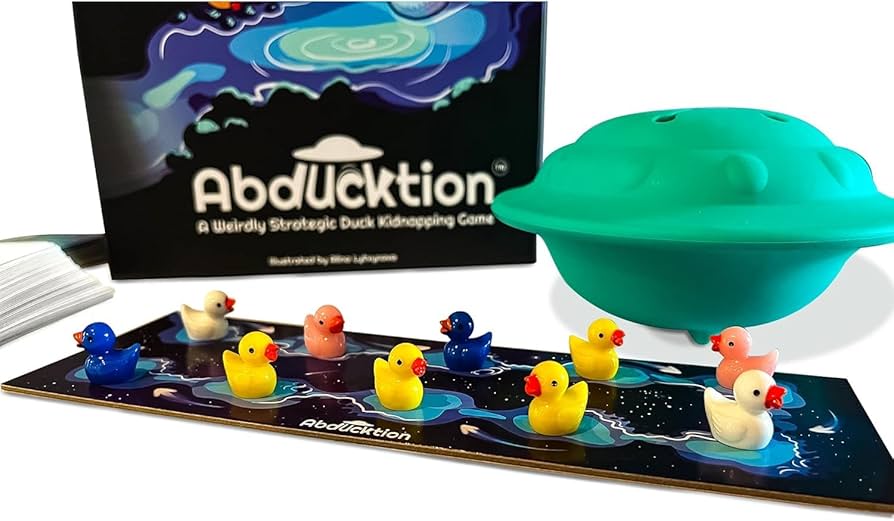
Board games often have an off-the-wall premise, whether you’re dealing with aliens abducting ducks (Abducktion), using mad cows to detonate leftover war-time munitions (Unexploded Cow), or slowly going insane whilst spelling words (Unspeakable Words).
But even games with more down-to-earth concepts can still have mind-bendingly silly or crazy prompts to decide Who Goes First.
Time Masters asks for the player who last spoke with a wizard, while Star Wars Villainous: Power of the Dark Side suggests the last player to use The Force. Time Bomb Evolution lets the player who most recently evolved start the game.
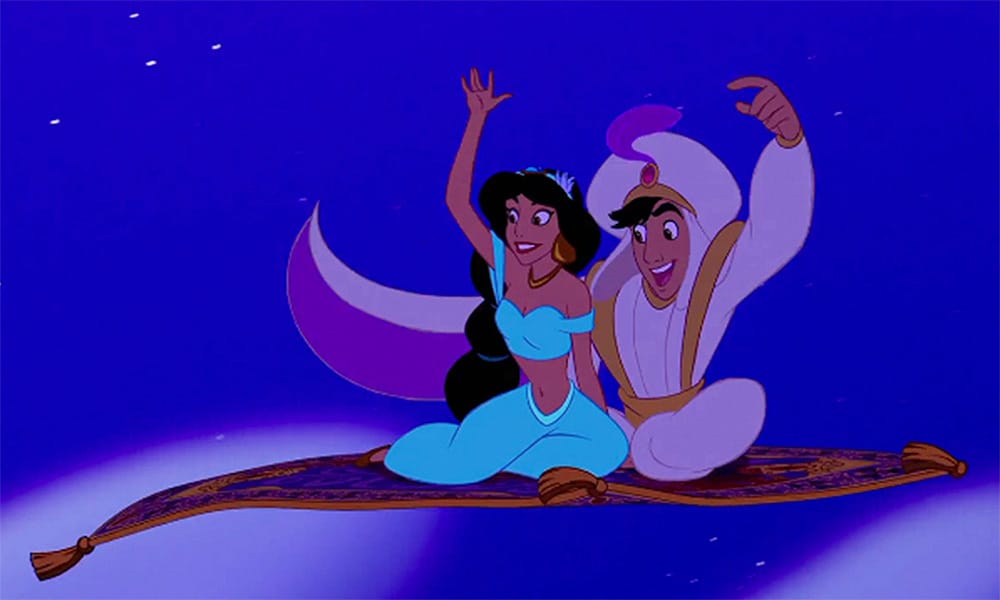
Image courtesy of Disney.
1001 Karawane prefers the player who has ridden on a flying carpet most recently. In Big Monster, it’s the last player to have been to the moon who begins.
Were you the player most recently abducted by the CIA or the KGB (Secrets)? Or the player who most recently killed a monarch (Regicide)? Or the person who last destroyed an entire civilization (Gentes)?
Viking-themed games go pretty hard right out of the gate. Walhalla wants to know who most recently drank mead from a cow’s horn. Vikings, meanwhile, opts for the player who has pillaged and razed the most defenseless villages.
If you can perform miracles, I have a few recommendations for you. In Dead Man’s Cabal, the player who last raised the dead goes first. In Kazaam, the player who has most recently turned lead into gold begins. (This is also the case in Trismegistus: The Ultimate Formula, though that game accepts any alchemical transmutation.)
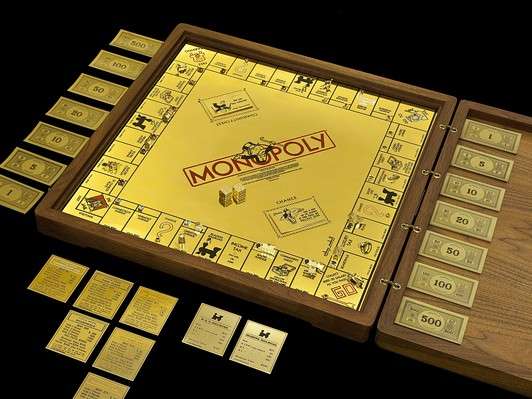
A successful alchemist’s copy of Monopoly…
Some games raise the bar even higher, asking for insanity AND specificity.
How specific? Well, a game of Colorado starts with the player who last visited an abandoned mine in a rusty wagon oozing coal residue.
Fantastiqa: The Rucksack Edition asks just one thing of the starting player. They want the person who most recently conducted a successful short symphony for the Mountain Moles of Mu. Simple, right?
At least Smash Up! gets specific by offering lots of options. The player who most recently experienced ANY of these scenarios can go first…
abducted by an alien
shanghaied by a pirate
bitten by a vampire
burned by a dragon
kissed by a princess
driven insane by Cthulhu
attacked by a teddy bear
eaten by an orc
Along the same lines, Cleopatra and the Society of Architects prefers the player with the best Egyptian credentials. This could be a nose as famous as Cleopatra’s, a mummified Crocodile pet, or an extensive hieroglyphic library, for instance.
Some of those starting rules listed above are pretty unusual. Thankfully, some games have a ridiculous starting request, but a more reasonable back-up suggestion all lined up. And these “In case of” scenarios can be just as entertaining as the totally bonkers starting prompts.
In Simurgh, the player who last rode a dragon goes first. But if no one has ridden a dragon, they’ll take a horse, a pony, or an extremely large dog instead. Reasonable!
Which player has most recently been to space? You get to go first in Space Explorers. And if no one has, then it’s the player who most recently watched or read something about space.
In the same vein, the player most recently abducted by aliens goes first in Pasture 51: They Came for our Angus. (Whomever has most recently been to a farm is the back-up in this case.)
Dinosaur Island suggests that the player who most recently extracted DNA from a mosquito trapped in amber begins. I mean, sure, we’ve all been there. But, if for some reason, no one at the table has successfully completed that task, you can go with the player who most recently visited a theme park.
And if that feels unlikely, consider this one.
Are you the player who last reached the peak of Mount Everest using nothing but blue-and-white-checkered stilts carved from the wood of a Mammoth tree? Then you start this particular game of The Bridges of Shangri-La. (In case of a tie, choose the wisest player of the group. I imagine that might be the person who didn’t try to climb Everest on stilts in the first place.)
The Great Heartland Hauling Co. is almost contractual in their starting prompt. The player with either (A) the best mustache or (B) the longest hair goes first. If one player has a very nice mustache and another other player has the longest hair, settle the issue with an arm-wrestling match.
This combination of physical qualities, debate, and physical challenge manages to encompass so many different Who Starts ideas that it’s genuinely impressive.
Before I conclude this three-day journey through the world of board game starting gimmicks with my personal favorites, I would like to highlight one delightful subset of starting rules: the “player to the left” option.
Dominion is perhaps the most famous game to use this mechanic, suggesting that the player sitting to the left of whomever won the previous game should start. Since play passes to the left, this means the person who won the previous game goes last. It’s an elegant equalizer for all involved.
Flock Together has a nice variation on this, opting for the player to the left of the player who most recently ate chicken to begin the game.
And Galaktico is absolutely ruthless in this regard, suggesting that play starts with the player to the left of the most impatient player (meaning the most impatient person must go last). That’s brutal!
I’ll conclude today’s post with my favorite Who Goes First prompts. After reading through hundreds and hundreds of board game rule sets, these are the ten I liked the most. They’re an eclectic mix of creative, sincere, silly, and thematic hooks.
#10: Tzolk’in: The Mayan Calendar
Give the Starting Player Marker to the player who most recently sacrificed something. This can be as silly or as serious as you choose, offering a whole range of potential debate opponents.
#9: T-Rex’s Holiday
The player with the most scars from animal scratches begins. This is clearly someone who deserves a little reward.
#8: Terror Below
The player who most recently defeated a worm in combat begins. The door is wide open on this one, and the debate never fails to make everyone at the table laugh.
#7: Tempus
The player who most recently had a great idea begins. As you can tell, I love a passionate debate, and this one has led to some genuinely fascinating pre-game discussions.
#6: A Thief’s Fortune
The player who most recently borrowed something and never returned it begins. Confession time, you light-fingered fiends!
#5: Fog of Love
The player who last blew a kiss begins. I just think this suggestion is so lovely.
#4: Surfosaurus MAX
The most experienced paleontologist/surfer begins. While you could interpret this as the most experienced paleontologist OR surfer, I prefer to debate who best embodies the qualities of both a paleontologist AND a surfer.
#3: Potemkin Empire
The player who most recently had to deal with government bureaucracy. Again, this is someone who absolutely deserves a little kindness.
#2: Trogdor!!: The Board Game
The player with the coolest consonant cluster in their name begins. This one is so unique that I had to put it high on my list. Reward those people whose names are constantly getting mispronounced!
#1: Fairy Tails
The player who most recently took a walk in the forest while contemplating the existence of hidden peoples begins. Plenty of games ask who went hiking or walking in the forest last, but the contemplation aspect makes this one so cute and considerate.
Thank you for taking this deep dive with me into the world of board games. It’s been an absolute blast to dig through not only my own extensive board game collection, but the brilliant archive of Who Goes First rules compiled at First Player Fun. Please check them out!
Did I (somehow) manage to miss your favorite starting prompt across these three days, fellow tabletopper? Let me know in the comments section below! I’d love to hear from you.
Every tabletop game starts somewhere. Once the box is opened, the pieces distributed, and the board set up, all that’s left is figuring out who goes first.
As you could tell from yesterday’s post, there are literally hundreds of ways to choose Who Starts. But yesterday’s options were centered mostly around the players on that given day of play. Their age, physical characteristics, recent travels, personal experiences, and so on.
In today’s exploration of board game rules, we’re looking at starting prompts where you have a fighting chance to earn the right to go first.
Sometimes, a game poses a small competition to decide who goes first.
It can be a physical challenge, like who can jump the highest (Dancing Eggs), or who can balance on one foot like a flamingo for the longest (Animal Upon Animal), or who can dance the Flamenco the best (Citrus).
In Bardwood Grove, it’s the player who can hold a note the longest. In Mega Mouth, it’s whoever can say “mmmmmmm” the longest without taking a breath. In Gheos, it’s the player who can refrain the longest from laughing.
It can also be based on the quickest person to respond to a prompt:
The first player who chants “ego sum primus ludio” 3 times (Don’t Go In There)
The first player to compliment another (I’m Right You’re Wrong)
The first player to make a trumpet sound and announce themselves as the starting player (For Crown and Kingdom)
Sometimes, it’s not being first, but being loudest, like in Stratelite, where the player who shouts “I will crush you all!” the loudest gets to start, or in Dungeonology: Rigor Mortis, where the player who yells “Yes, Dark Lord!” loudest in goblin language begins.
Naturally, some games have a performance aspect to their starting prompt.
These can run the gamut from making the weirdest shape with your tongue (Foramina!) or saying “I am a super secret super spy” in Sean Connery’s voice the best (Covert) to the most impressive imitation of Godzilla’s scream (Godzilla Total War) or making the best Chupacabra noise (Chupacabra: Survive the Night).
In Genji, the player who can tell the most romantic or moving love story begins. In Lift Off! Get me off this Planet!, it’s the player with the best story about being stranded by their own accord. (Obviously, a few of these may require some debate among the players.)
Some board games prefer a mental challenge to a physical one, testing your wittiness, trivia knowledge, or other examples of cerebral acuity.
Can you be…
The first player to come up with a punny dinosaur joke (Dinosaur Island: Rawr ‘n Write)
The player who can name the most of Jupiter’s moons (Exoplanets)
The player who comes closest when guessing the current time (Chrononauts)
The player who can recall the earliest positive memory begins (Vivid Memories)
Speaking of debate, it’s one of my favorite options when it comes to determining Who Goes First. And there is no shortage of weird, wacky, and wonderful suggestions in board games for this one.
In Oath of the Brotherhood, you must debate which player looks the most like a pirate. In Hellapagos, it’s the one who most resembles a castaway. In Tudor, the one who looks the most like Henry VIII, or one of his wives.
In Obama Llama, it’s the person who most resembles either Obama or a llama. And continuing the thread of silly game names, Bunny Bunny Moose Moose asks for the player who looks the most like a moose. (Don’t worry. If there’s a tie, you can choose the player who looks most like a rabbit instead.)
Which player struck the most chivalrous pose? (Medieval Academy)
Which player most recently did something Scottish? (Glascow)
Which player has held the strangest job? (Funny Business)
Which player has the most hipster cred? (Streets)
Which player has the best taste in music? (On Tour)
Which player has had the worst day? (Gloom)
Who has befriended the most unusual animal? (Wondrous Creatures)
Which player can best make the claim of being a rocket scientist? (Launchpad 23)
Who has the shadiest laugh (Swindler)? The most diabolical laugh (Spare Parts: TheGame of Undead Army Building)? Who cackles the most like a vile and greedy medieval pardoner (The Road to Canterbury)?
And some of these are sure to spark a spirited debate.
I mean, how do you decide which player is the most alien (Space Beans)? What about the one who has most recently gone insane (Cthulhu Realms)? The player with the most authentic name (Burgen Land)? Or the one most likely to be from a parallel universe (Trouble: Across the Spider-Verse Part One)?
The weirdest? (Play Me: Alice in Wonderdice) The most angelic? (The Deadlies) The most daring? (Carnegie) The smartest? (That’s Pretty Clever aka Ganz schön clever) The most evolved? (On the Origin of Species)
Image courtesy of Ctrl+Alt+Del.
I mentioned in yesterday’s post that Hot Tin Roof‘s starting prompt could ruffle some feathers. But it’s hardly alone amongst board games whose starting rules could cause fireworks.
Do you want be considered the most evil (Dark Minions) or the most sinister (Complots)? Would you be cool with being named the most malicious (Doodle Dungeon) or the blood-thirstiest (Dungeonville)?
The most suspicious-looking (Spyfall)? The one with the sneakiest eyes (Shifty EyedSpies)? The sneakiest in general (Clank!)? The most cunning (Volto)?
I mean, it’s not exactly a compliment to be told you look the most stressed, which would let you go first in Chakra. Or that you’re the player who most desperately needs a vacation, which makes you first to act in Kahuna.
Bears vs. Babies asks who had the most recent tantrum. Aristocracy asks who most recently made an unreasonable demand. In Awkward Guests: The Walton Case, it’s the player who the host considers to be the most awkward guest. Oof. That’s a rough one.
But not as rough as debating which player LOOKS the oldest. I can’t remember which game I saw this prompt in, but man, that’s guaranteed to start a fight.
I’ll conclude today’s deep drive into board game Who Goes First options with a short list of games that ask you to confess to crimes in order to earn that coveted starting spot.
Yup. How bad do you want that first move or die roll?
It’s the player who last committed a crime who starts in La Cosa Nostra. The player who most recently robbed a bank gets to go first in Escape Plan.
In Trial by Trolley, the player who last thought about murdering someone begins. In The Brigade, it’s the player who most recently set something on fire.
Do the crimes do get more specific? You bet they do.
In Prohibitionists, it’s the player who most recently smashed open a cask of bootleg whiskey with an axe. (Naturally, this wasn’t a crime at the time, but it sure would be now! That’s MY cask of bootleg whiskey!)
And finally, in 10′ to Kill, the last player to have killed someone begins. They do add the caveat that it could be a noisy neighbor, an annoying mother-in-law, or a really hard boss in a video game, but still.
You know, in some of these cases, I think I’d be fine going second.
How apropos, since this is the second entry in a three-part series. I simply could not narrow down the list of bonkers, clever, hilarious, and sinister possibilities.
I’ll be concluding the series tomorrow with the most elaborate prompts, the most insane ones, and my list of all-time favorites. So be sure to come back tomorrow for even more board game-specific fun!
Do you have any favorite Who Starts rules for board games? Let us know in the comments section below! We’d love to hear from you.
Every tabletop game starts somewhere. Once the box is opened, the pieces distributed, and the board set up, all that’s left is figuring out who goes first.
There are a few traditional ways to sort this out. Sometimes, the oldest person at the table goes first, showing the younger players how to proceed. Sometimes, the youngest player goes first, getting a chance to dive right in. Sometimes, a simple roll of the dice or a few rounds of rock-paper-scissors determines who goes first.
But there are plenty of board games that have their own idea of how to start.
So please join me on a deep dive into the many, many, MANY ways you can choose who goes first in a board game!
Birthdays are a frequent topic when it comes to choosing the first player.
It can be whose birthday is closest to a given date, like in Duck Dealer, where the player born closest to November 24, 1967 begins, or in Agatha Christie: Death on the Cards, where the player whose birthday is closest to Agatha Christie’s begins.
Closest to The Year of the Rat (Fruits Basket: Friends of the Zodiac), February 12th (Killer Bunnies and the Quest for the Magic Carrot), or the next equinox (Equinox) all come to mind. In The Stars Are Right, it’s the player whose birthday is next, while in the card game Quixx, it’s the player whose birthday is furthest from the day you play.
Many games determine who goes first by physical characteristics.
In Takenoko, it’s the tallest player. In Guillotine, the player with the longest neck. In Titus Tentacle, the longest arms. In Small World, the person whose ears are most pointed. In Pyramix, the person with the most triangular nose.
The longest hair, the largest shoes, the hairiest, the smallest, the huskiest voice… these are all on the table.
In the cat-themed Hot Tin Roof, it’s the player with the longest whiskers. And if there’s a tie, it’s the person whose breath smells the most like fish. (That one might cause a fight, honestly.)
Other games rely on something more conditional, something that could change from game session to game session.
Who is the hungriest or thirstiest, when the game’s gimmick centers around food. In Roll to the South Pole, it’s whomever has the coldest nose. In Snowblind: Race for the Pole, it’s the player with the coldest hands begins. In the Rick and Morty: The Ricks Must Be Crazy Multiverse Game, the player with the lowest cellphone battery begins.
Or it’s based on the last time you did something related to the game.
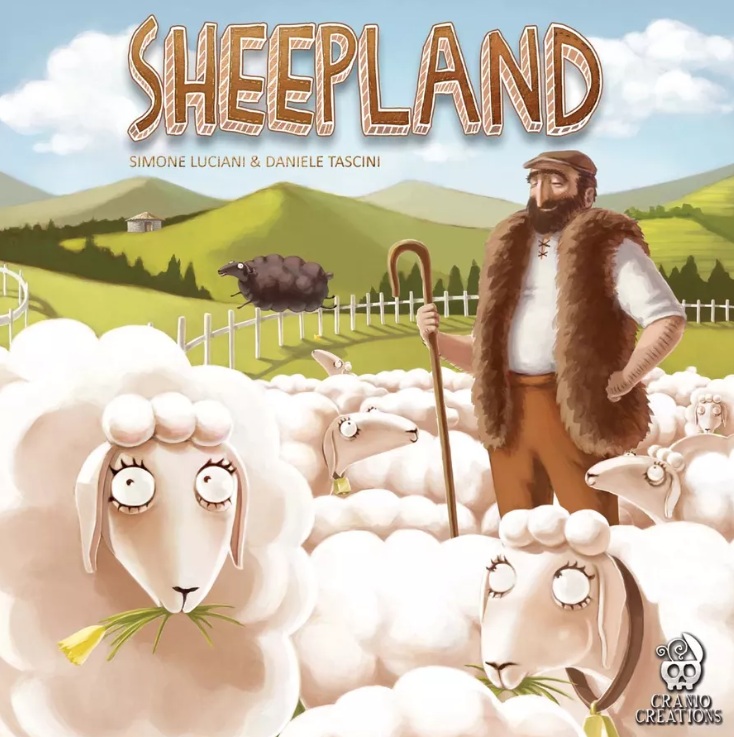
Please make sure your sheep consent to caressing before you proceed…
In Sheepland, it’s the player who most recently caressed a sheep. Yes, they use the word “caress” specifically. In Steam Works, it’s the player who most recently built something.
In The Lady and the Tiger, it’s the person who last opened a door. In Golems, it’s the last player who built a snowman. In Flip City, it’s the last player to have flipped a table. (So the person who most recently played Monopoly, I’d bet.)
Who last went hiking, or helped someone, or last petted an animal. Who last visited a museum, watered a plant, read a book, fed a duck, dug a hole, made tea, drank tea, rode a train. Who most recently experienced deja vu, who woke up earliest, who woke up latest. (Each one of these examples showed up multiple times in my research!)
A lot of them involve choices or actions, but some games use a starting criteria that’s out of your control.
In ALIEN: Fate of the Nostromo, it’s the player who most recently had a cat hiss at them. In Let’s Make a Bus Route, it’s the player who recently spent the longest time as a bus passenger.
Were you the person who most recently saw a firefly (Smile), or a full moon (Catch the Moon), or a shooting star (Astra)? Maybe you were the person most recently burnt by the Sun (Solar Storm).
In Copper Country, the player with the oldest penny begins. In Good Cop Bad Cop, the player who was most recently shot (!) begins. (Apparently, it can be in a game or real life.)
A lot of board games have location-specific starting hooks. Often it’s which player has been to the game’s setting most recently.
(At least in Merkator, if you haven’t been to Hamburg, it can instead be the player who most recently ate a hamburger.)
This is especially common with water-based settings. Who lives closest to water (Le Havre), who was most recently on an island (Forbidden Island), or has been deepest in the sea (Nautilus). Builders of R’lyeh gets very specific about this, asking for the player who has been the closest to 47°9′S 126°43′W / 47.15°S 126.717°W in the southern Pacific Ocean.
In Iceberg, it’s the player who most recently was at the South Pole is the start player. (If none was there, the player who got closest starts.) Contrary to Iceberg, in Nanuk, the starting player in this game is whoever has been the furthest north!
Were you the last person to stand on a balcony (Council of Verona) or the last person to travel to a place with less than 100 inhabitants (Boonlake)? That one sounds exotic, until you remember traveling to your home, which hopefully has fewer than 100 inhabitants.
In a nice reversal of this trope, the game Coney Island states that the player who has NOT been to an amusement park for the longest period of time begins.
As you can plainly see, fellow tabletopper, these starting criteria can get very specific. How specific? Well, check out some of these Who Starts prompts:
The Voting Game: The player who most recently called their mother begins.
Tawantinsuyu: The Inca Empire: The last player to harvest a vegetable begins.
Valentine’s Day: The last player to have been pricked by a thorn begins.
Mech A Dream: The player who has most recently dreamt of robots begins.
Wakanda: The player who last uttered a war cry begins.
These last two deserve their own spotlight for different reasons.
In Tales & Games: The Pied Piper, the player who last saw rats in a bathtub begins. We’ve all been there, amirite?
In Cascadia, the player who most recently saw a bear, elk, salmon, hawk or fox begins. (I love how many options Cascadia allows for!)
Of course, hardcore board game fans know the rules of their favorite games. With some games and their Who Starts rules, this means a devious host might be able to rig who goes first in their favor.
In Railroad Dice, the player who owns the most railroad games begins. Unless you’re in a model train club, odds are the same person will start every time here.
Sucking Vacuum is among the games where the player who owns the game begins. I can see this being a groanworthy moment when trying to decide what game to play, and someone keeps pushing for the game where THEY get to start, heh.
A little bit of foreknowledge comes in handy with these games as well:
Antics!: The player who has carried the heaviest item today (stomachs do not count) begins.
Dragon Farkle: The player who brought the most snacks begins.
Legacy: Gears of Time: The player whose watch is currently set the furthest back in time begins.
Step to it: The player with the most colorful socks begins.
TacTile: The player with the most colors on their shirt begins.
Welcome to Sysifus Corp: The player with the lowest amount of unread emails begins.
Plague Inc.: The player who washed their hands most recently begins.
The Nacho Incident: The player who has the most interesting thing in their pocket begins.
At least with Dragon Farkle‘s rules, you’re guaranteed snacks!
I’d originally intended for this to be a one-post topic, but the field was so overloaded with noteworthy examples that I’ll be continuing this topic both tomorrow AND Thursday, so be sure to come back for more board game-specific fun later this week!
Do you have any favorite Who Starts rules for board games? Let us know in the comments section below! We’d love to hear from you.
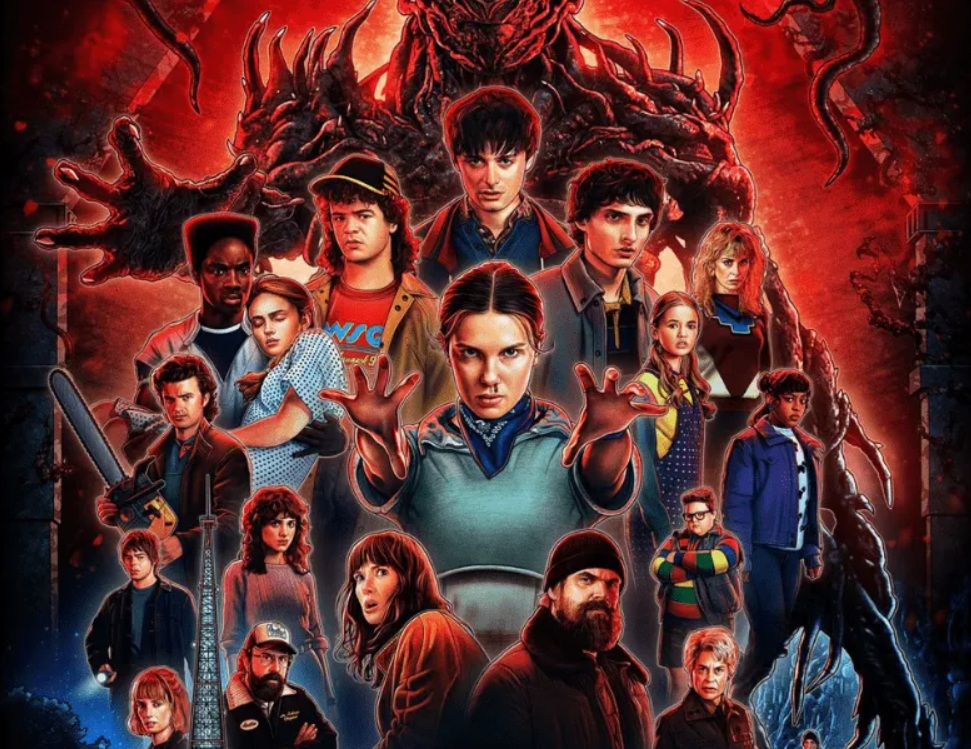
Stranger Things has come to its epic conclusion (planned follow-up shows aside), and it has absolutely made an impact on pop culture.
Part of the show’s lasting legacy is introducing people to roleplaying games, specifically Dungeons & Dragons. Yes, shows like Freaks and Geeks and Community got there first, not to mention the sitcom juggernaut The Big Bang Theory, but I don’t know that any of them made the experience as accessible to new viewers as Stranger Things did.
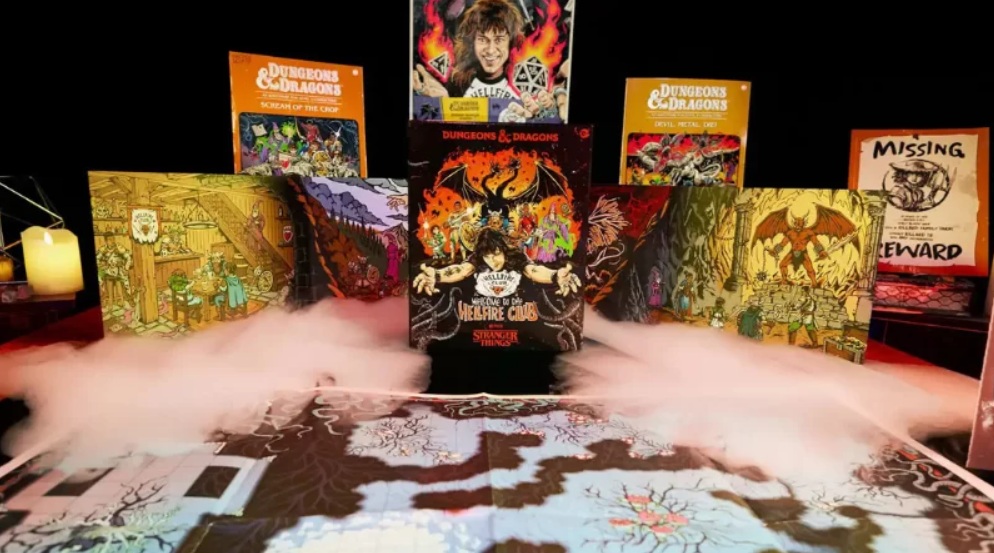
Heck, there’s been two different Stranger Things/D&D starter packs to bring those new players into the fold!
And it got me thinking about D&D moments in movies and television shows.
Not moments that mention D&D or its lore or show gameplay or anything like that. I mean moments that FEEL like someone playing D&D.
There are certain moments in pop culture that feel like a D&D solution to a problem, as if this exact scenario appeared in a D&D game and this was the solution devised by the players.
It’s hard to define exactly what makes a scene in TV or cinema FEEL like a D&D moment. Sure, you can pick any buckwild action movie like Crank or Shoot ‘Em Up or Hardcore Henry or Mad Max: Fury Road, but for all the big setpieces and chaotic energy in those films, they don’t necessarily FEEL like a D&D game.
But these scenes definitely do.
It’s only natural to start with a scene from Stranger Things. In season 4, the heroes infiltrate the Upside Down to stop Vecna and try to rescue Max, but they need a distraction.
So, naturally, Eddie performs a wicked guitar solo and blasts metal music to distract the bat creatures and help Steve, Robin, and Nancy get closer.
This feels like such a D&D move for a bard to do, performing a badass yet ridiculously out-of-place musical number in order to help the party.
In the dead zone between the films Pitch Black and 2013’s Riddick, there was the film Chronicles of Riddick, detailing Vin Diesel’s antihero adventures after the events of Pitch Black.
In the film, we’re told this prison planet is so scorchingly hot that it’s uninhabitable, and you’re surely die within moments.
So naturally Vin Diesel’s character dumps a bottle of water over his back and swings into a canyon through the direct sunlight, and the water saves him. It feels like such a D&D player solution to the problem.
Viewer warning: language.
A ridiculous big-swing attack is also a D&D hallmark, so there’s a scene from The Boondock Saints that comes to mind.
In this film, two brothers become vigilantes and begin hunting down criminals. When several mobsters show up after the brothers got the better of them in a bar fight, Connor is handcuffed to a toilet while the thugs drag off Murphy.
So, as you might expect, Connor rips the toilet out of the floor, then carries it to the rooftop, dropping the toilet and then leaping, still handcuffed, onto the thugs, saving his brother.
There has never ever been a game of D&D without at least one player throwing themselves off a high thing and leaping onto the bad guys, gravity be damned. It’s a classic trope.
I reached out to several of my fellow roleplayers for suggestions of other scenes that feel like D&D, and they had two excellent recommendations.
The first is this hilarious sequence from Three Amigos!, where our heroes (?) meet the Singing Bush and encounter the Invisible Swordsman.
It goes so perfectly wrong, and every player has seen a quest go pear-shaped in similar fashion.
There are a lot of scenes from Galaxy Quest that could fit the bill, given that you have a bunch of actors pretending they’re characters from a Star Trek-like sci-fi show.
My friend Troy recommended the scene where Commander Taggart and Dr. Lazarus pretend they’re fighting (like their characters did in an episode) in order to distract the guards and ambush them. They do an awful job, but the ruse still succeeds.
But I think my favorite is the rock monster scene shown above. The panic, the fumbling around for a solution… it’s all so D&D.
So, fellow players, do you have any favorite scenes from film and TV that FEEL like D&D play, either in execution or silliness? Let us know in the comments section below. We’d love to hear from you!









 PuzzCulture