A Look at Ambigrams in Honor of John Langdon

Symmetry is nothing new to puzzle enthusiasts.

After all, diagonal symmetry is one of the fundamental rules of crossword grid design. (Along with the occasional example of vertical symmetry.)

Puzzlers are used to linguistic symmetry as well. A well-constructed palindrome, the same message reading forward and backward, has delighted and challenged many a puzzly mind. Go hang a salami, I’m a lasagna hog.

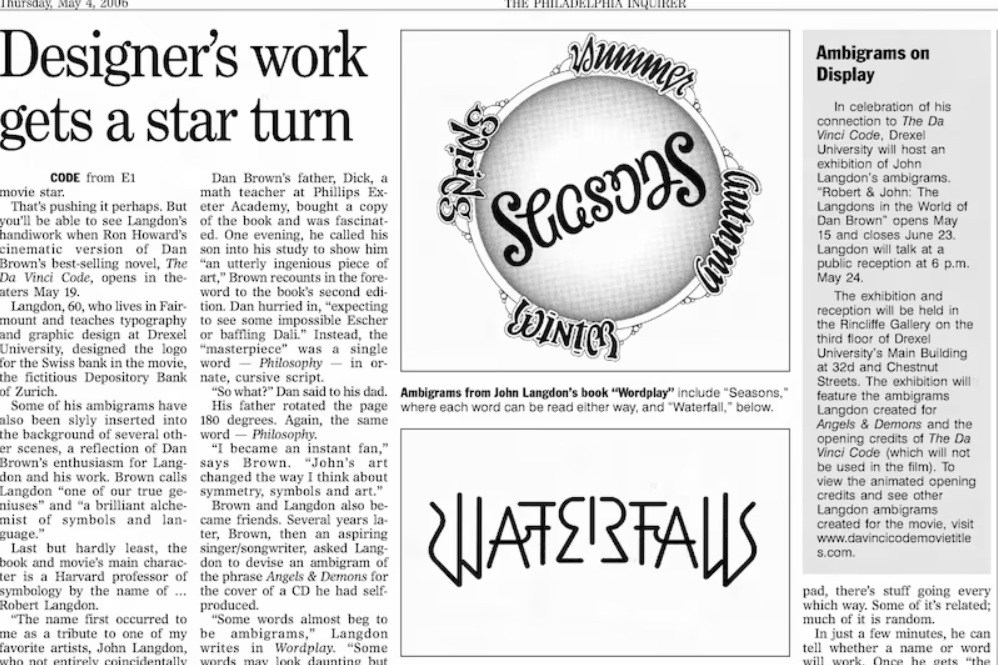
Ambigrams scratch the same itch, combining artistic flourish with clever letter placement to create a message with rotational symmetry, allowing you to rotate the image 180 degrees and see the same message.

The curious thing about ambigrams that they feel ancient, like an artistic work steeped in history from centuries past, but in reality, they’ve only been around since the 1970s! (The term itself was coined by Douglas Hofstadter in 1984.)
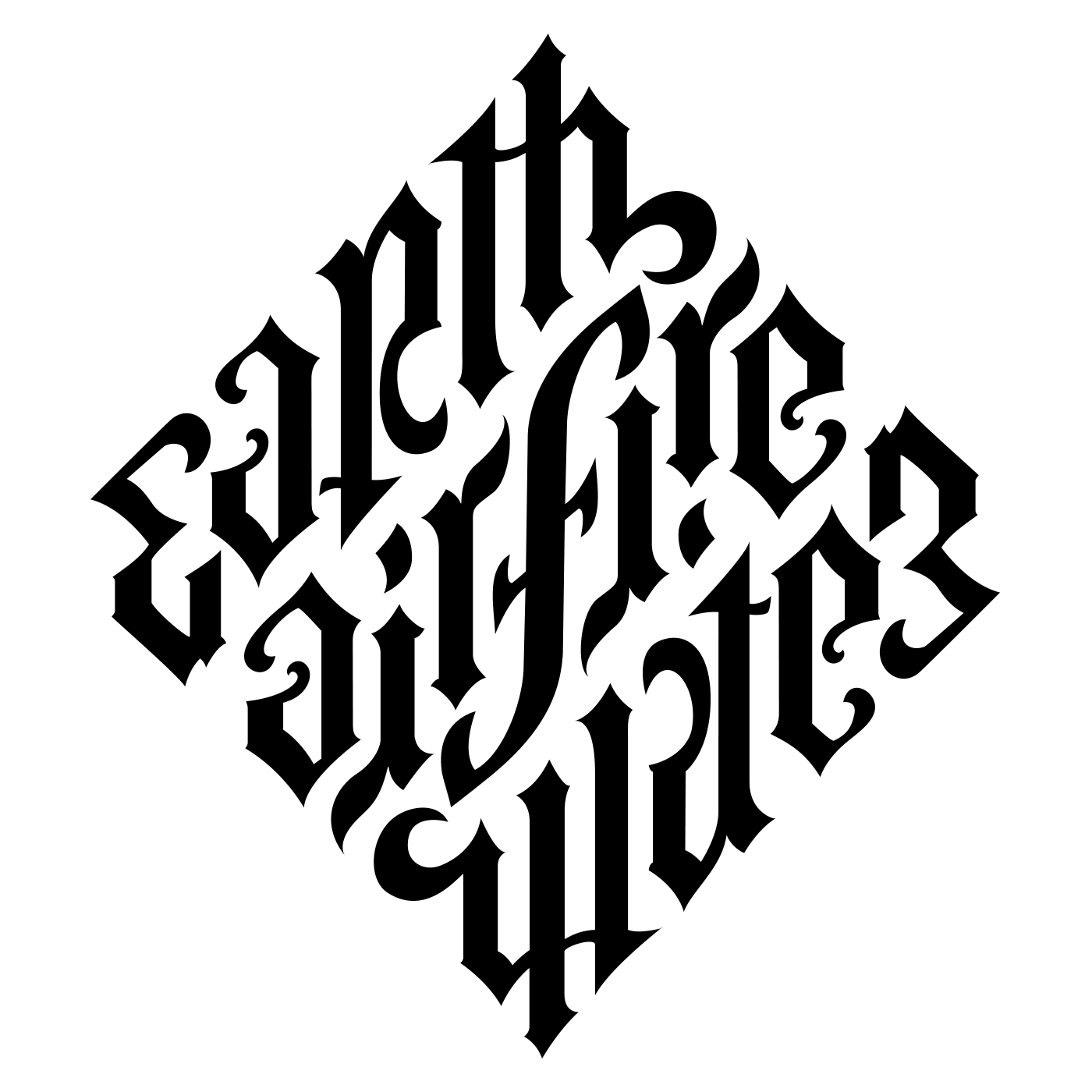
The four elements as a single ambigram.

The creation of Philadelphia painter, writer, professor, and graphic designer John Langdon, he always envisioned his ambigrams as a visual presentation of words intended to present a familiar concept in an unfamiliar way.

In an interview in 2006 with Newswise.com, he said, “In the early ’70s, I tried to do with words what Dali and Escher did with images.”

Most famously, he created several ambigrams for Dan Brown’s book Angels & Demons, adding a mystical aura to Robert Langdon’s adventures involving the church and the Illuminati.
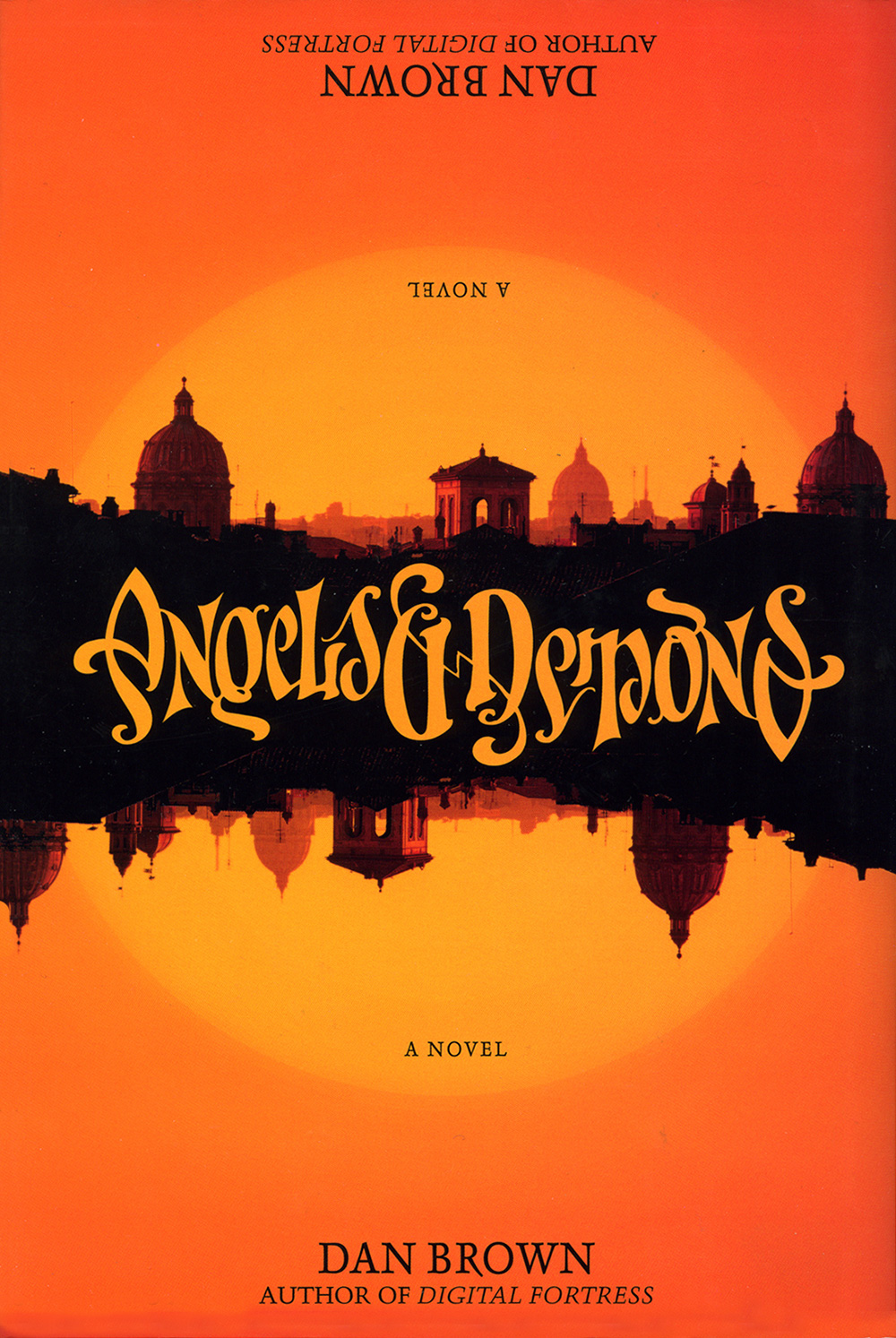
Oh, yeah, you noticed that, did you? Yes, the protagonist of The Da Vinci Code and several other bestselling works is named after John Langdon.

In an interview, Brown shared the story of his father, a math teacher, showing him Langdon’s book Wordplay, and he was instantly hooked. “John’s art changed the way I think about symmetry, symbols, and art.”

We sadly lost John earlier this year at the age of 79, but his lasting influence in the world of wordplay is alive and well, not only with his literary legacy and namesake, but in the work of other ambigram artists.

The YouTube channel Write Words – Make Magic has gone viral over the last few years by creating ambigrams for viewers’ names, as well as other cultural touchstones, and it’s absolutely worth a watch. They happily show off their techniques for creating ambigrams, and it’s a true delight.

Ambigrams, and Langdon’s art in general, are all about revisiting one’s perspective. “Ambiguity makes people uncomfortable. But the lesson of Taoism is that if you have only one vantage point, you’re not seeing the truth.”

Puzzles are often about viewing things from another angle. Wordplay, punnery, manipulating language to surprise and playfully mislead… these are hallmarks of crosswords and crossword cluing.

A “very strong sense of legibility but also a marvelous sense of esthetics, flow, and elegance.” This could easily describe a great crossword puzzle, but it’s actually Douglas Hofstadter’s description of John Langdon and his work.

I guess it’s all a matter of perspective. Insight and wordplay, lurking within the symmetry.

If you just know how to look for it.


Do you have any favorite palindromes, ambigrams, or examples of symmetrical puzzling, fellow reader? Let us know in the comments section below! We’d love to hear from you.

Happy puzzling!

A Happy Ending and A New Beginning for the Universal Crossword!

Some stories have happy endings, eventually.

In one particular case, it took nearly three years for the satisfying resolution to arrive.

Allow me to explain.

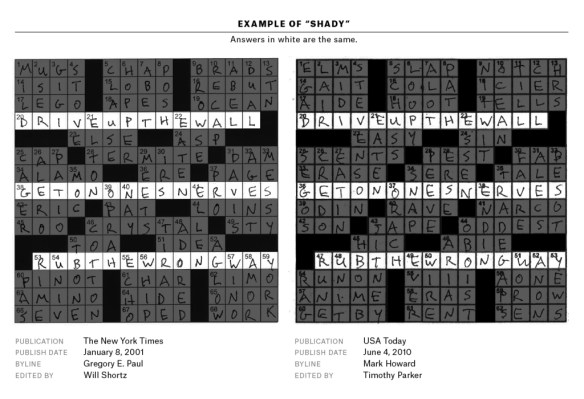
In March of 2016, programmer Saul Pwanson and constructor Ben Tausig uncovered a pattern of unlikely repeated entries in the USA Today and Universal crosswords, both of which were edited by Timothy Parker.

Eventually, more than 65 puzzles were determined to feature “suspicious instances of repetition” with previously published puzzles in The New York Times and other outlets, with hundreds more showing some level of repetition.

The troubling pattern uncovered by Tausig and Pwanson sparked an investigation, and a day after the story first broke, Universal Uclick (which owns both the USA Today crossword and the Universal syndicated crossword) stated that Parker had agreed to temporarily step back from any editorial role for both USA Today and Universal Crosswords.

We were among the first to report that constructor Fred Piscop would serve as editor in the interim, but after that, the story went quiet for two months.

Then, in early May, Oliver Roeder of FiveThirtyEight reported that Universal Uclick had completed its investigation, and despite the fact that they’d confirmed some of the allegations of puzzle repetition, they were only giving Parker a three-month leave of absence.

The puzzle community was unhappy with the reaction, and USA Today and Universal Uclick soon felt the pressure from constructors and content creators alike.

Many other game companies and constructors joined in the boycott, and less than a week later, Gannett (who publishes USA Today) declared that “No puzzles that appear in Gannett/USA TODAY NETWORK publications are being edited by Timothy Parker nor will they be edited by Timothy Parker in the future.”

Parker was out as far as USA Today went, but his relationship with Universal Uclick was still unclear. (Even now, despite inquiries, I’m unable to determine if he’s still associated with Universal Uclick.)

We’d never seen anything like this. Not only did it galvanize the puzzle community like nothing before, but it raised the very important issue of creator’s rights when it comes to puzzles.

And, as I said, the story has a happy ending. Constructor David Steinberg has been named the new editor of the Universal Crossword and Universal Sunday Crossword!

Although this means the end of The Puzzle Society Crossword that Steinberg was previously editing (as it is being folded into the Universal Crossword), there is a bright side, as it guarantees fresh, well-vetted puzzles for many more solvers from a young, respected voice in the field.

David’s resume is impressive, as the youngest constructor to be published in The LA Times crossword, and the second-youngest to be published in The NY Times. He was also named the crossword editor for the 24 newspapers associated with The Orange County Register.

Between those accomplishments, his work with the archival Pre-Shortzian Puzzle Project, and his prolific and creative crossword output, it’s obvious why Universal Uclick (now Andrew McMeels Universal) would want him for the job.

Several puzzles under his stewardship have already appeared, featuring constructors like Jim Peredo, Doug Peterson, and Samuel A. Donaldson!

David offered some details in an announcement email:

Each week I’m publishing eight themed Universal crosswords—seven 15x15s and one 21×21. Puzzles appear in all venues that formerly ran the Universal Crossword, as well as in those that ran the Puzzle Society Crossword.

Among the many new venues that run the 15x15s are The Boston Globe, The Philadelphia Inquirer, and The Seattle Times; new venues that run both the 15x15s and the 21x21s include The Chicago Sun-Times, The New York Daily News, and The Miami Herald. The Universal Crossword is also truly universal, appearing in countries as far-flung as China, India, and Saudi Arabia!

We wish David the best of luck in his latest puzzly endeavor. We know the Universal Crossword is in great hands!


Thanks for visiting PuzzleNation Blog today! Be sure to sign up for our newsletter to stay up-to-date on everything PuzzleNation!

You can also share your pictures with us on Instagram, friend us on Facebook, check us out on TwitterPinterest, and Tumblr, and explore the always-expanding library of PuzzleNation apps and games on our website!