The Kryptos Solution is Auctioned Off… But the Mystery is Far From Over!

Kryptos is one of the great remaining unsolved puzzles.

A flowing sculpture made of petrified wood and copper plating, sitting over a small pool of water. That’s what you see when you look at Kryptos.

It was revealed to the world in 1990, coded by former chairman of the CIA’s Cryptographic Center Edward Scheidt, and designed by artist Jim Sanborn. Designed to both challenge and honor the Central Intelligence Agency, for decades Kryptos has proven to be a top-flight brain teaser for codebreakers both professional and amateur.

Of the four distinct sections of the Kryptos puzzle, only three have been solved.

After a decade of silence, a computer scientist named Jim Gillogly announced in 1999 that he had cracked passages 1, 2, and 3 with computer assistance. The CIA then announced that one of their analysts, David Stein, had solved them the year before with pencil and paper. Then in 2013, a Freedom of Information Act request revealed an NSA team had cracked them back in 1993!

A curious game of one-upsmanship, to be sure. Something that foreshadowed what would follow years later…

Unfortunately for puzzle fans, K4 remained unsolved.
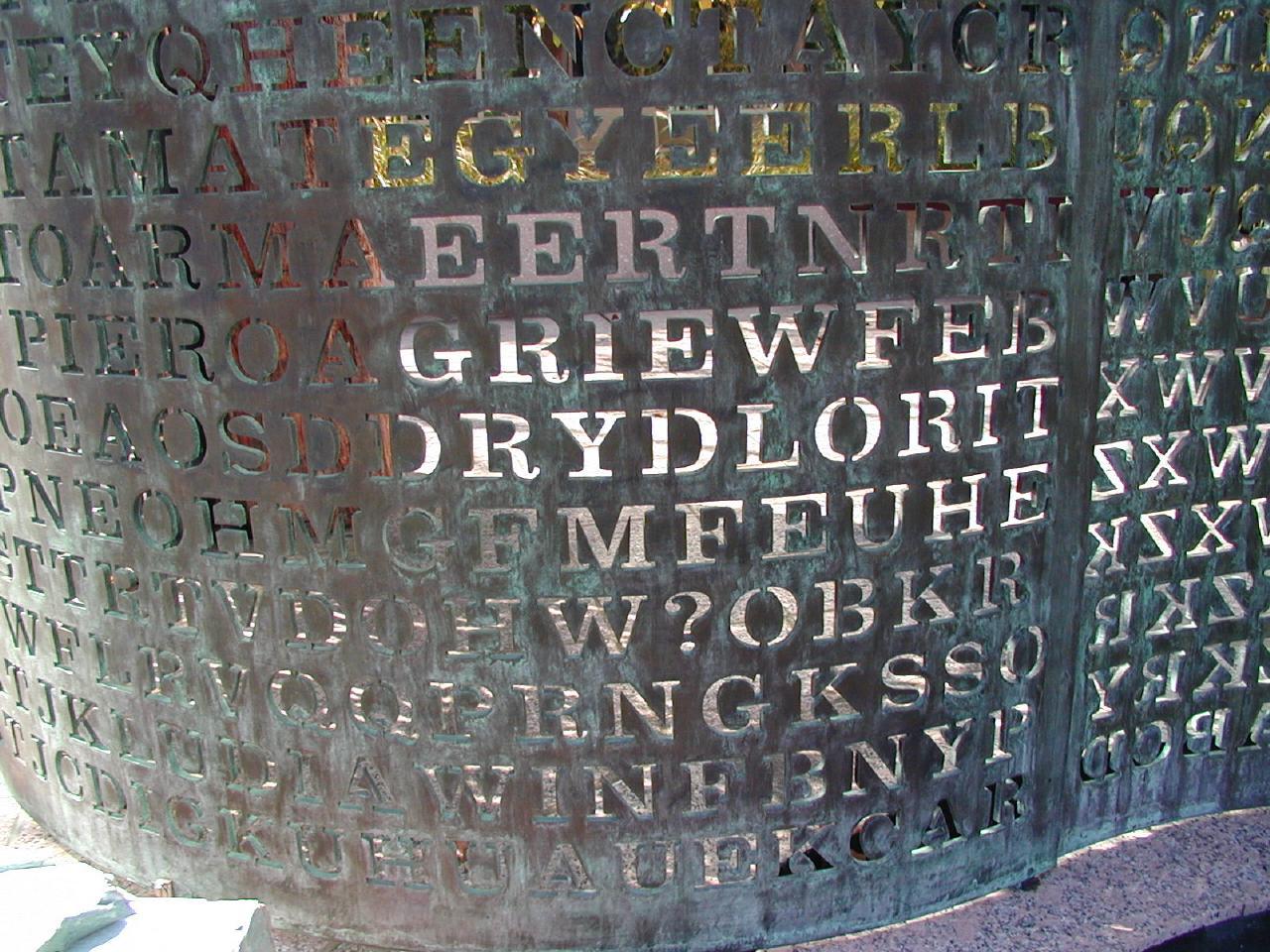
Eventually, Sanborn began offering hints. In 2006, he revealed that letters 64 through 69 in the passage, NYPVTT, decrypt to “Berlin.” In 2014, he revealed that letters 70 through 74, MZFPK, decrypt to “clock.” In 2020, he revealed that letters 26 through 34, QQPRNGKSS, decrypt to “northeast.”

Still, K4 remained unsolved.

Back in August, I wrote about Sanborn’s impending auction for the solution to the Kryptos puzzle, as Sanborn felt he no longer had “the physical, mental or financial resources” to maintain his role as the keeper of K4’s secret, and wished to hand that responsibility to another.

On November 20th, 2025, the solution to Kryptos sold to an anonymous bidder for $962,500, far above the predicted $300,000 – $500,000 estimate from the auction house.

At the moment, we don’t know if this anonymous bidder will reveal the solution or become the new keeper of the mystery.


You might think that the story of Kryptos would conclude there, for the moment.

But that’s not the case. The auction and its near-million-dollar bid were put into jeopardy by two intrepid investigators and a simple oversight by Sanborn himself.

On September 3rd, not long after I wrote about the upcoming auction, Sanborn received an email with the solved text of K4 from Jarett Kobek and Richard Byrne. They had discovered the solution among Sanborn’s papers at the Smithsonian’s Archives of American Art, after the auction house had mentioned the Smithsonian in their auction announcement.

Kobek and Byrne had discovered Sanborn’s accidental inclusion of the solution in the papers donated to the Smithsonian ten years ago during his treatment for metastatic cancer. “I was not sure how long I would be around and I hastily gathered all of my papers together” for the archives, he said.

Suddenly, the auction was in doubt.
Sanborn confirmed to Kobek and Byrne that they indeed had the correct solution. Later that day, he proposed they both sign non-disclosure agreements in exchange for a portion of the auction’s proceeds. They rejected the offer on the basis that it could make them party to fraud in the auction.

Sanborn reached out to the Smithsonian and got them to block access to his donated materials until the year 2075, to prevent others from following in Kobek and Byrne’s footsteps and further endangering the auction. Meanwhile, lawyers for RR Auction threatened Kobek and Byrne with legal action if they published the text.

Sadly, Kobek and Byrne had been put in an impossible position. They have the solution that diehard Kryptos fans have desired for decades, and the possibility of coercing them into revealing the solution is hardly low. Sanborn’s computer has been hacked repeatedly over the years, and he has been threatened by obsessive fans, even claiming he sleeps with a shotgun just in case.
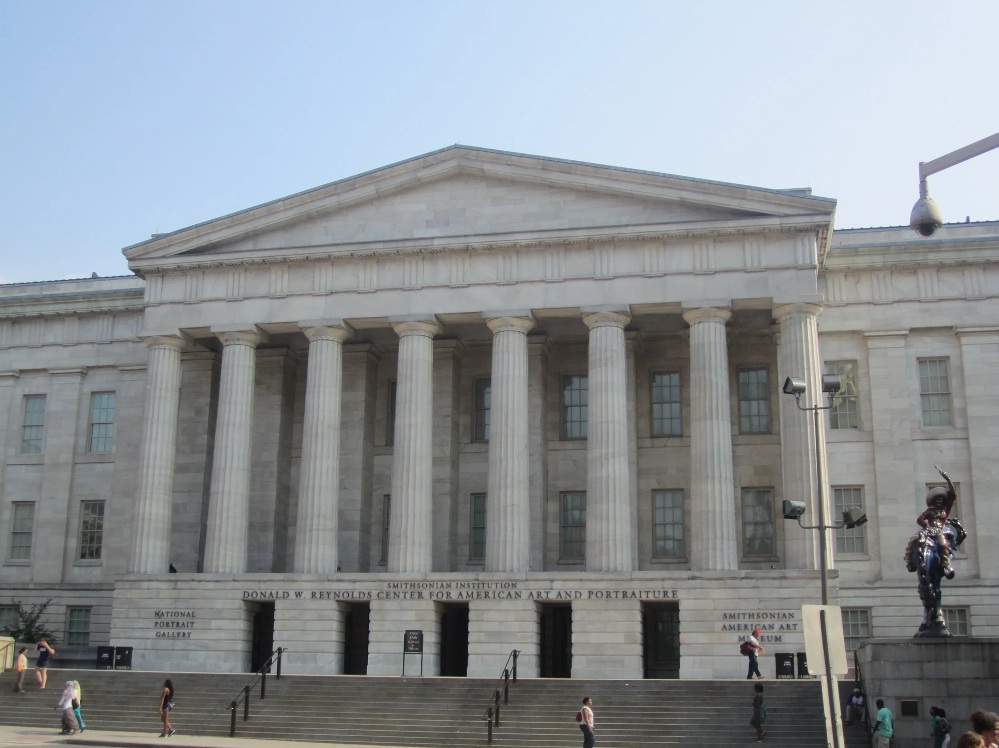
The auction house did disclose the discovery of K4’s solution to the bidding public, as well as the lockdown of the Sanborn archive at the Smithsonian’s Archives of American Art.

All parties waited to see what would transpire.

Still, with all this uncertainty looming, the auction closed with its $900,000+ bid, and thus far, neither the anonymous bidder nor the team of Kobek and Byrne have released the solution.

Byrne and Kobek say they do not plan to release the solution. But they are also not inclined to sign a legally binding document promising not to do so.

I waited to write about this story in the hopes that something would have been resolved in the weeks following the auction’s conclusion. But sadly, K4’s solution — and Kobek and Byrne’s potential roles in revealing it — remain unknown at the time of publishing this post.

Despite all this, the fact remains: Kryptos fans haven’t cracked K4.

But they know of four possible sources to find the solution: the Smithsonian (which is locked down), the anonymous bidder (similarly inaccessible), Sanborn (who has been fending them off for decades) and sadly, Kobek and Byrne, who remain in the crosshairs of the media, lawyers, and Kryptos enthusiasts. The pressure is mounting.
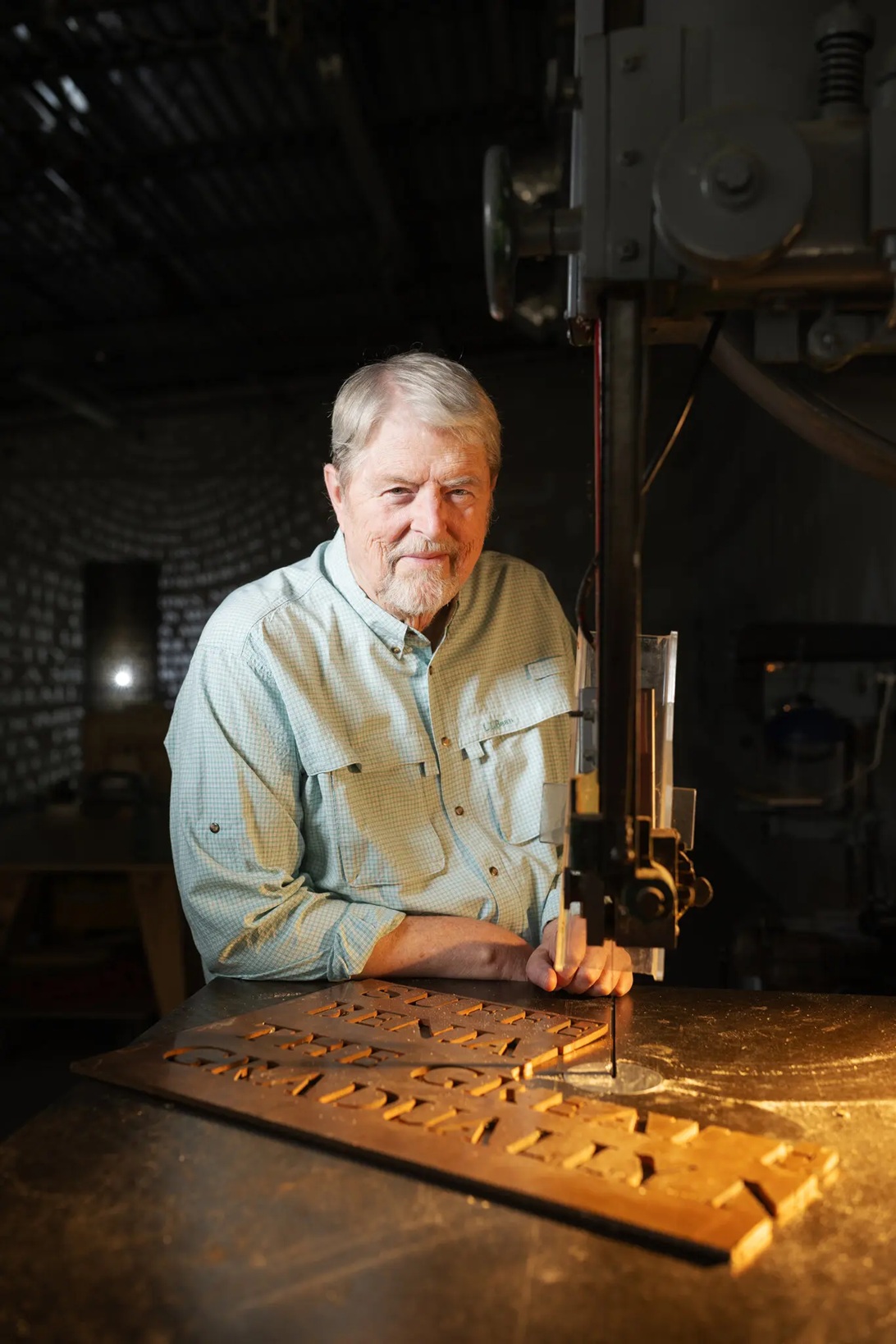
Jim Sanborn, until recently the steward and keeper of the Kryptos solution…

I suppose the best case scenario would be for someone to legitimately crack K4 and release their solution AND method for solving it.

That would free Kobek and Byrne from their burden and potential legal repercussions. That would be the triumph hoped for when Kryptos was conceived. The auction’s validity would remain intact.

Because even if the plaintext solution is revealed and someone reverse-engineers how it was encrypted, it’s a damp squib of an ending. Kryptos wasn’t solved. It wasn’t figured out. It would be a disappointing way for a rollercoaster of story to wrap up.

Sanborn deserves better. Kobek and Byrne deserve better. Kryptos deserves better.

So get cracking, solvers!

The Solution to the Kryptos Puzzle: Up for Auction Soon!

Kryptos.

No, sorry, we’re not doing a post about Superman’s dog.

Instead, today we’re discussing how the solution to one of the great unsolved cryptographic mysteries of our time is going up for auction in October.

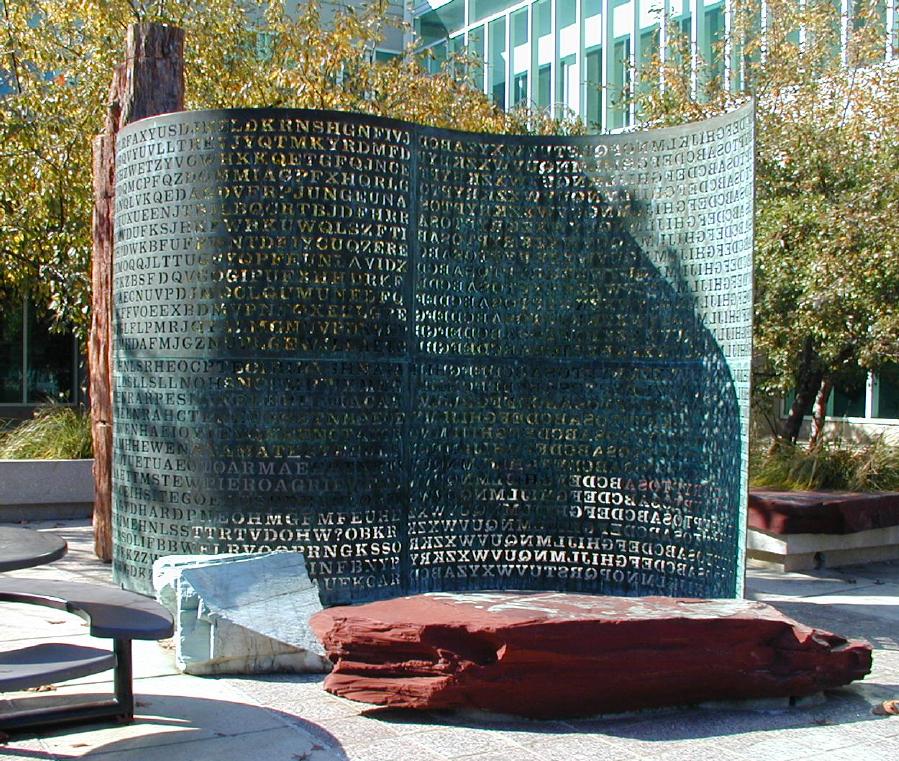
For the uninitiated, Kryptos is a flowing sculpture made of petrified wood and copper plating, sitting over a small pool of water. It was revealed to the world in 1990, coded by former chairman of the CIA’s Cryptographic Center Edward Scheidt, and designed by artist Jim Sanborn. Designed to both challenge and honor the Central Intelligence Agency, for decades Kryptos has proven to be a top-flight brain teaser for codebreakers both professional and amateur.

There are four distinct sections, utilizing different forms of encryption. And amazingly, the fourth section continues to elude codecrackers to this very day.

It took nearly a decade before anyone announced a solution to the first three encryptions. A computer scientist named Jim Gillogly announced in 1999 that he had cracked passages 1, 2, and 3 with computer assistance.

The CIA, not to be one-upped, then revealed that one of their own employees, an analyst named David Stein, had solved those same three passages the year before, using only pencil, paper, and lunchtime man-hours.

But a 2013 Freedom of Information Act request into records of the National Security Agency revealed that an NSA team actually cracked those same three passages back in 1993 as part of a friendly rivalry between the NSA and CIA, provoked by former NSA director and then-deputy CIA director William O. Studeman.

Image courtesy of G.A. Matiasz

Passage 1 employs a Vigenère cipher, a letter-shifting cipher that has been used for centuries, also known as a periodic polyalphabetic substitution cipher, if you want to get fancy with it.

The message, penned by Sanborn himself, reads Between subtle shading and the absence of light lies the nuance of iqlusion. [Iqlusion is an intentional misspelling of “illusion.”]

Passage 2 also employs a Vigenère cipher, but utilizes a different keyword than Passage 1. The message, also composed by Sanborn, points toward something hidden nearby:

It was totally invisible. How’s that possible? They used the earth’s magnetic field. x The information was gathered and transmitted undergruund to an unknown location. x Does Langley know about this? They should: it’s buried out there somewhere. x Who knows the exact location? Only WW. This was his last message. x Thirty eight degrees fifty seven minutes six point five seconds north, seventy seven degrees eight minutes forty four seconds west. x Layer two. [Again, there’s an intentional misspelling here with “undergruund.”]

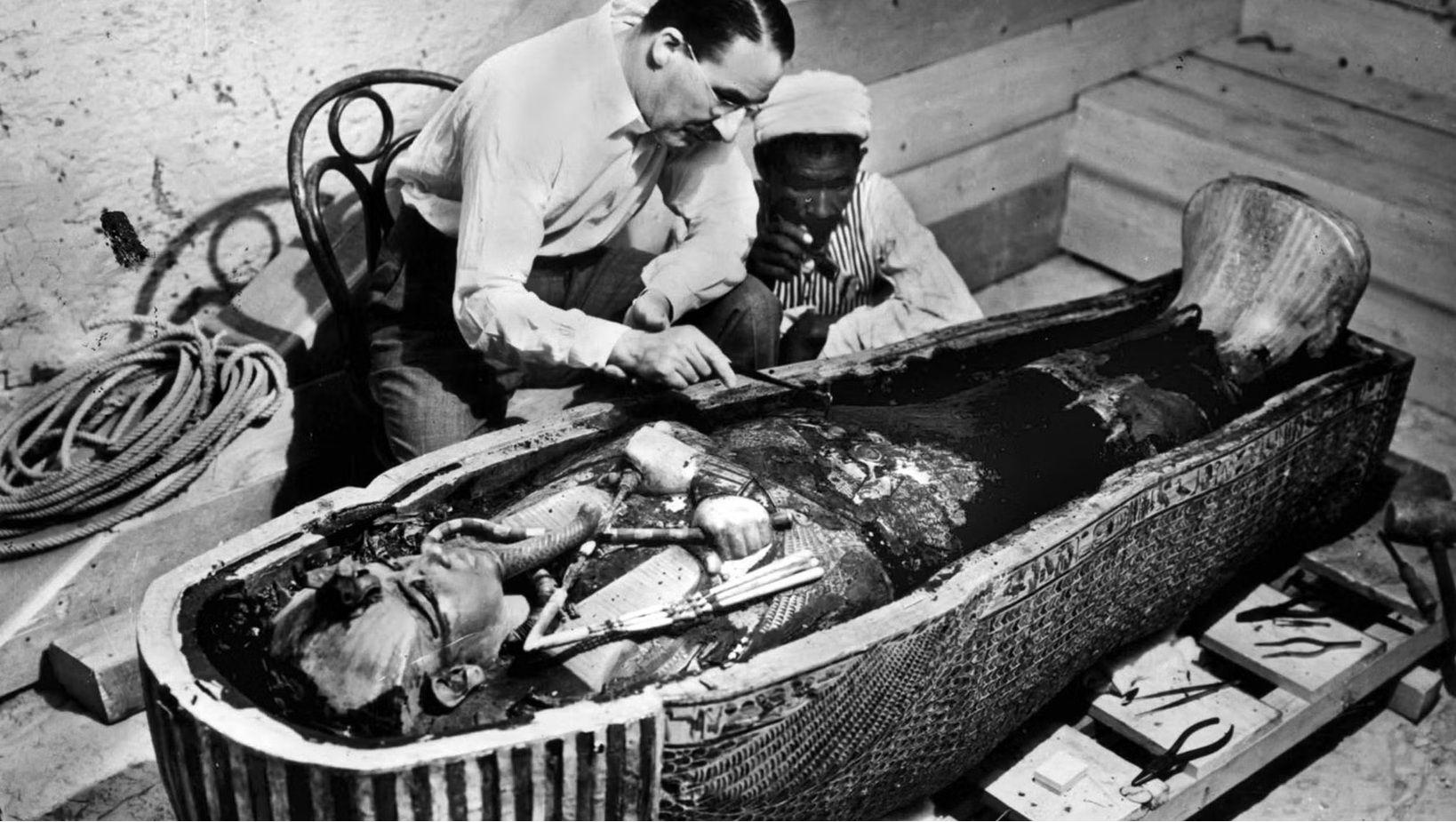
Passage 3 uses a transposition cipher, which relies on the positioning of given letters in order to properly spell out a message. The message is inspired by the words of Howard Carter, the archaeologist who opened King Tut’s tomb:

Slowly, desparatly slowly, the remains of passage debris that encumbered the lower part of the doorway was removed. With trembling hands I made a tiny breach in the upper left-hand corner. And then, widening the hole a little, I inserted the candle and peered in. The hot air escaping from the chamber caused the flame to flicker, but presently details of the room within emerged from the mist. x Can you see anything? q [Again, there’s an intentional misspelling with “desparatly.”]

Although some codebreakers believe the misspellings of “iqlusion,” “undergruund,” and “desparatly” are simply Sanborn’s crafty attempts at misdirection, others believe they are clues hinting at how to crack Passage 4, which is only 97 characters long.

Sanborn has even offered hints to help frustrated solvers in their efforts to unravel the mystery of Passage 4. In 2006, he revealed that letters 64 through 69 in the passage, NYPVTT, decrypt to “Berlin.”

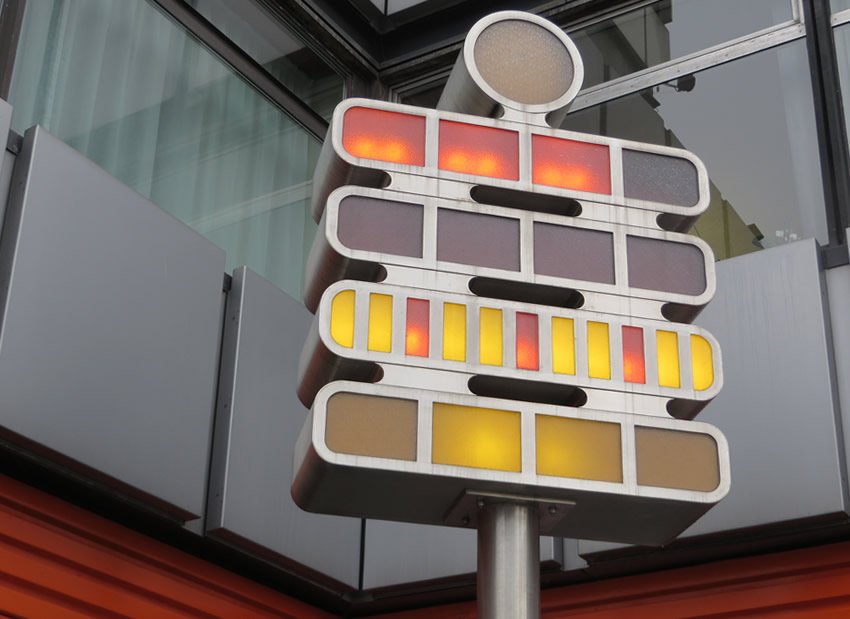
And in 2014, Sanborn revealed that letters 70 through 74, MZFPK, decrypt to “clock.” So the message has something to do with the Berlin Clock, although Sanborn has stated “there are several really interesting clocks in Berlin.”

Image of the Berlin Clock courtesy of Secret City Travel.com

Finally, in 2020, Sanborn revealed that letters 26 through 34, QQPRNGKSS, decrypt to “northeast.”

And yet, despite all these hints and several decades, K4 remains unsolved. (And to those hoping that AI will prove smarter than humans in this instance, that hasn’t been the case. Sanborn revealed to The New York Times that he has received solutions devised by ChatGPT and described them as “nothing short of fairly silly.”


So, if you win the auction, what do you get?

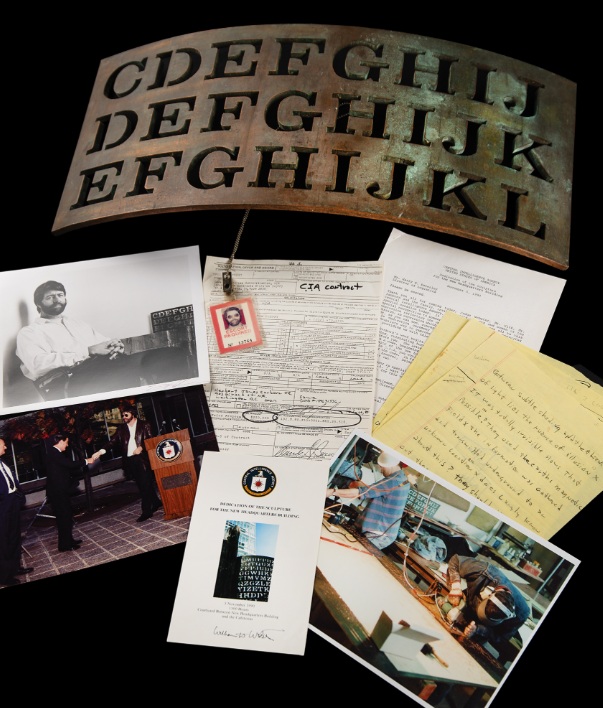
  • the handwritten K4 code, complete with a signed typed letter by Ed Scheidt, the CIA employee and cryptographer behind all four Kryptos codes
  • the copper model submitted to the CIA as a sample of the final piece
  • photographs relating to the creation of Kryptos
  • the original dedication pamphlet signed by late CIA director William Webster
  • copies of the coding charts used to encode Kryptos

And apparently, being the secretkeeper for Kryptos can be profitable. Sanborn grew weary of fielding dairy requests and queries for solutions, clues, and other data, and actually started charging a $50 fee for replies. He claims this fee has earned him $40,000 a year!

Sadly, Sanborn feels that he no longer has “the physical, mental or financial resources” to maintain his role as the keeper of K4’s secret, and wishes to hand that responsibility to another, which would allow him time to focus on other artistic endeavors.

And given that he’ll be turning 80 around the same time that the auction should be wrapping up, it’s fair to say he has more than earned this retirement from Kryptos.

The online auction of Kryptos by RR Auction begins on October 17 and closes on November 20 at 7 p.m. ET.

Will you be bidding, fellow puzzler? I fear my budget of — *checks wallet* — $29 is not going to get it done.

The D’Agapeyeff Cipher, Unsolved for 80 Years!

[Image courtesy of Derek Bruff.org.]

One of my all-time favorite cryptography stories comes from the book The Spy That Couldn’t Spell, a true-life espionage story about a dyslexic man who hid, then encrypted the locations of, thousands of pages of sensitive documents he had stolen from the U.S government.

Why is it one of my favorite stories? Well, because the man in question FORGOT one of the cipher words he used to encrypt the location of his caches.

And it sort of unravels your master plan when you can’t remember a key element of it.

Amazingly enough, this isn’t the only example of a self-trained cryptographer who forgot how to solve his own creation. In fact, one example of this very dilemma remains one of the most famous unsolved codes and ciphers in the world:

The D’Agapeyeff Cipher.

daga

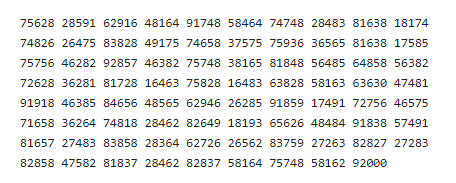
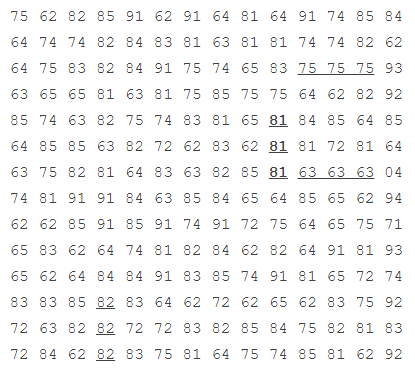
This is the D’Agapeyeff Cipher. This seemingly simple list of numbers contains a secret message. The only problem is… the creator, Alexander D’Agapeyeff, can’t remember how to decrypt it.

When he published a starter book on cryptography — Codes and Ciphers, first edition — D’Agapeyeff included this chain of 5-digit number bundles as a final challenge for the readers to unravel.

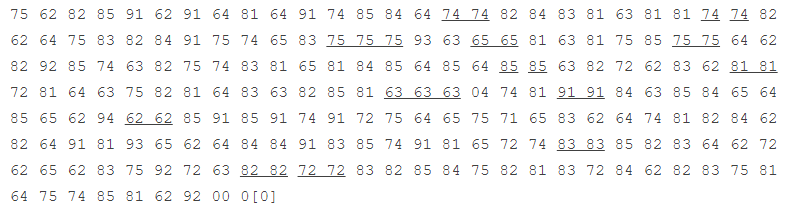
One of the first steps many aspiring cryptographers take is to break the numbers down into pairs instead of groups of five:

daga 2

One result of this is the pattern that every pair has 6, 7, 8, 9, or 0 in the tens column and 1, 2, 3, 4, or 5 in the ones column, which doesn’t seem like a coincidence.

And see those sequences where the same number appears three times in a row? Some cryptographers believe that is also not a coincidence.

Then, they cut off the two double-zero pairings at the end — because they believe they were nulls, empty space-filling characters simply designed to fit the 5-letter groupings pattern of the original code as a way to throw off codecrackers. (And, to be fair, D’Agapeyeff himself wrote about null entries in the book Codes and Ciphers.)

If you remove those double-zero pairings, you can arrange the numbers into a 14×14 pairing grid, like so:

daga 3

See those sequences where the same number appears three times in a row? More of them now.

Many cryptographers consider this to be the true starting point of cracking the D’Agapeyeff Cipher.

But then what?

Some believe that the key to solving the grid lies in the Polybius Square, another encryption device mentioned by D’Agapeyeff.

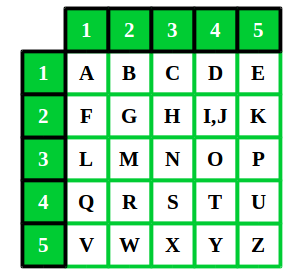
Essentially, you place the alphabet into a 5×5 grid, and use those numbers to encrypt the letters. Here’s a straightforward example:

daga 4

In this case, the word PUZZLE would be 35 45 55 55 31 15.

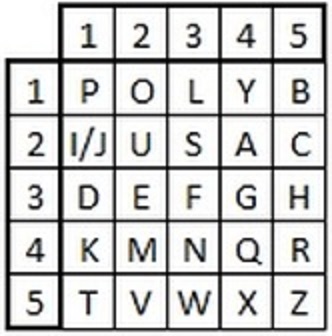
Another way to use the cipher is to pick a keyword to start it. For instance, if you chose POLYBIUS as the key word, then you go across, then down, writing POLYBIUS and then the rest of the unused letters of the alphabet in order, like so:

daga 5

Instead of 1-5 both across and down, you could do 1-5 across the top and 6-0 across the side, reflecting the pairings in the D’Agapeyeff Cipher.

Or, as someone pointed out, perhaps we’re thinking in the wrong language. Triple-letters are uncommon in English words, but more common in Russian words, and D’Agapeyeff was Russian born.

Overlooking simple things like that can make you miss crucial ways into an encrypted message.

So, do you have any thoughts on how to solve this 80-year-old encrypted challenge, fellow puzzlers? Let us know in the comments section below! We’d love to hear from you.


dailypopwsicon

Have you checked out our special summer deals yet? You can find them on the Home Screen for Daily POP Crosswords and Daily POP Word Search! Check them out!

Thanks for visiting PuzzleNation Blog today! Be sure to sign up for our newsletter to stay up-to-date on everything PuzzleNation!

Puzzle History: Codebreaking and the NSA, part 2

[Image courtesy of NSA’s official Twitter account.]

At the end of part 1 of our look at the history of the NSA and American codebreaking, we left off with the pivotal Black Friday event.

On November 1, 1948, all intel coming from monitored Soviet signals went quiet. All traffic on military, naval, and police radio links was replaced with dummy messages. It was such an unprecedented and alarming event that London and Washington briefly considered that it might’ve been the first indication of preparations for war.

According to Code Warriors author Stephen Budiansky:

The full extent of the disaster only became apparent the following spring when real traffic started reappearing on the radio nets, now employing greatly improved — and completely unbreakable — technical and security procedures. The keying errors or other mistakes that had allowed most of the Soviets’ machine-enciphered military traffic to be routinely read by US and British codebreakers for the last several years had been corrected, and the much more disciplined systems that now replaced them slammed the cryptanalytic door shut.

Even the one-time pads that had offered some hope to attentive American codebreakers were updated, eliminating the ability to sort messages by which organization they originated from.

Codemakers had suddenly outpaced codebreakers.

[The Kryptos sculpture outside CIA Headquarters. The NSA cracked
several of its codes before the CIA did. Image courtesy of Slate.com.]

The Office of Naval Intelligence wanted to take over from Signals Intelligence (SIGINT), demanding to see “everything” so they could do the job. They claimed SIGINT should limit their work to message translation, leaving interpretation to “the real experts.” This sort of territorial gamesmanship would continue to hamper government organizations for decades to come.

And that demand to see everything? That probably sounds familiar, in light of the revelations about government data collection and the PRISM program that were revealed in Edward Snowden’s leaks.

Black Friday was the start of all that, a shift from codecracking to the massive data collection and sifting operation that characterized the NSA for decades to come.

More amazingly, there was SO MUCH information collected during World War II that SIGINT was still poring over it all in 1949, decrypting what they could to reveal Soviet agents in the U.S. and England.

The fact that a high-ranking member of British Intelligence at the time, Kim Philby, was actually a Soviet double agent complicated things. After a decade under suspicion, Philby would flee to the Soviet Union in 1963, stunning many friends and colleagues who had believed in his innocence.

[The spy and defector, honored with a Soviet stamp.
Image courtesy of Britannica.com.]

Although the Russians had flummoxed SIGINT, other countries weren’t so lucky. The East German police continued to use ENIGMA codes as late as 1956. Many of the early successes in the Korean War were tied to important decryption and analysis work by SIGINT. Those successes slowed in July of 1951, when North Korea began mimicking Russia’s radio procedures, making it much harder to gain access to North Korean intel.

Finally, the chaotic scramble for control over signal-based data gathering and codebreaking between the government and the military resulted in the birth of the National Security Agency on November 4, 1952, by order of President Truman.

One of the first things the NSA did? Reclassify all sorts of material involving historical codebreaking, including books and papers dating back to the Civil War and even the American Revolution.

[The actual report that recommended the creation of the NSA.
Image courtesy of NSA’s official Twitter account.]

The creation of the NSA had finally, for a time at least, settled the issue of who was running the codebreaking and signals intelligence operation for the United States. And they were doing fine work refining the art of encryption, thanks to the work of minds like mathematician and cryptographer Claude Shannon.

One of Shannon’s insights was the inherent redundancy that is built into written language. Think of the rules of spelling, of syntax, of logical sentence progression. Those rules define the ways that letters are combined to form words (and those words form sentences, and those sentences form paragraphs, and so on).

The result? Well, if you know the end goal of the encoded string of characters is a functioning sentence in a given language, that helps narrow down the amount of possible information contained in that string. For instance, a pair of characters can’t be ANYTHING, because letter combinations like TD, ED, LY, OU, and ING are common, while combos like XR, QA, and BG are rare or impossible.

By programming codecracking computers to recognize some of these rules, analysts were developing the next generation of codebreakers.

Unfortunately, the Russian line was holding. The NSA’s failure to read much, if any, Soviet encrypted traffic since Black Friday was obviously becoming more than just a temporary setback.

Something fundamental had changed in the nature of the Russian cryptographic systems, and in the eyes of some scientific experts called in to assess the situation, the NSA had failed to keep up with the times.


I hope you’re enjoying this look at the early days of America’s 20th-century codebreaking efforts. Part 3 will continue next week, with the sea change from active codebreaking to data mining, plus Vietnam, the space race, and more!


Thanks for visiting PuzzleNation Blog today! Be sure to sign up for our newsletter to stay up-to-date on everything PuzzleNation!

You can also share your pictures with us on Instagram, friend us on Facebook, check us out on TwitterPinterest, and Tumblr, and explore the always-expanding library of PuzzleNation apps and games on our website!

PuzzleNation Looks Back at 2016!

The year is quickly coming to a close, and as I look back on an eventful year in the world of puzzles and games, I’m unbelievably proud of the contributions both PuzzleNation Blog and PuzzleNation made to the puzzle community as a whole.

Over the last year, we explored board games and card games, strategy games and trivia games, dice games and tile games, do-it-yourself puzzlers and pen-and-paper classics. We met designers, constructors, authors, artists who work in LEGOs and dominos, and creative types of all kinds.

We unraveled math puzzles and used statistics to play Hangman and Guess Who smarter. We accepted the challenge of diabolical puzzles, optical illusions, Internet memes, and more.

We delved into puzzle history with posts about Bletchley Park, puzzle graffiti from ancient Greece, Viking board games, and modern mysteries like the Kryptos Sculpture and the Voynich Manuscript. We separated fact from fiction when it comes to puzzles and brain health, avoiding highfalutin promises and sticking to solid science.

We spread the word about numerous worthwhile Kickstarters and Indiegogo campaigns, watching as the puzzle/game renaissance continued to amaze and surprise us with innovative new ways to play and solve. We shared amazing projects and worthy causes like Humble Bundles and puzzle/game donation programs for schools that allowed puzzle lovers to help others.

We celebrated International TableTop Day, built a puzzle fort in honor of International Puzzle Day, attended the American Crossword Puzzle Tournament and the Connecticut Festival of Indie Games, and dove deep into puzzle events like the Indie 500, the UK Sudoku Championship, the 2016 UK Puzzle Championship, and Lollapuzzoola. We even celebrated a puzzly wedding proposal, and we were happy to share so many remarkable puzzly landmark moments with you.

It’s been both a pleasure and a privilege to explore the world of puzzles and games with you, my fellow puzzle lovers and PuzzleNationers. We marked four years of PuzzleNation Blog this year, I’m approaching my 650th blog post, and I’m more excited to write for you now than I was when I started.

And honestly, that’s just the blog. PuzzleNation’s good fortune, hard work, and accomplishments in 2016 went well beyond that.

In April, we launched Penny Dell Crosswords Jumbo 3 for iOS users, and in May, we followed that with Penny Dell Crosswords Jumbo for Android. In November, we launched our new Penny Dell Sudoku app on both Android and iOS.

But the standout showpiece of our puzzle app library remains the Penny Dell Crossword App. Every month, we release puzzle sets like our Dell Collection sets or the themed Deluxe sets for both Android and iOS users, and I’m proud to say that every single puzzle represents our high standards of quality puzzle content for solvers and PuzzleNationers.

We even revamped our ongoing Crossword Clue Challenge to feature a clue from each day’s Free Daily Puzzle in the Crossword app, all to ensure that more puzzle lovers than ever have access to the best mobile crossword app on the market today.

And your response has been fantastic! The blog is closing in on 2000 followers, and with our audience on Facebook, Twitter, Instagram, and other platforms continuing to grow, the enthusiasm of the PuzzleNation readership is both humbling and very encouraging.

2016 was our most ambitious, most exciting, and most creatively fulfilling year to date, and the coming year promises to be even brighter.

Thank you for your support, your interest, and your feedback, PuzzleNationers. Have a marvelous New Year. We’ll see you in 2017!


Thanks for visiting PuzzleNation Blog today! Be sure to sign up for our newsletter to stay up-to-date on everything PuzzleNation!

You can also share your pictures with us on Instagram, friend us on Facebook, check us out on TwitterPinterest, and Tumblr, and explore the always-expanding library of PuzzleNation apps and games on our website!

The Mystery of the Kryptos Sculpture

[Image courtesy of Kryptos.arcticus.com.]

If I told you that one of the most famous unsolved encrypted messages in the world isn’t lurking in the works of Da Vinci or in some vast government warehouse like the Ark of the Covenant, but rather as part of a sculpture only twenty-five years old, you might be surprised.

You’d probably be less surprised to discover that said sculpture is located in front of the headquarters of the CIA, though.

Kryptos, a flowing sculpture made of petrified wood and copper plating over a small pool of water, was revealed to the world in 1990. Masterminded by artist Jim Sanborn, it was apparently designed to both challenge and honor the Central Intelligence Agency. And for decades now, it has proven to be a top-flight brain teaser for codebreakers both professional and amateur.

From an article on Wired.com:

It all began in 1988 when the CIA Fine Arts Commission commissioned local artist James Sanborn to create a cryptographic sculpture for a courtyard on the CIA campus. Sanborn completed the two-part sculpture in 1990, which included stones laid out in International Morse code near the front entrance of the CIA campus, and a 12-foot-high, verdigrised copper, granite and petrified wood sculpture. The latter, which is the more famous part of Kryptos, was inscribed with four encrypted messages composed from some 1,800 letters carved out of the copper plate.

[Image courtesy of The Magazine.org.]

There are four distinct sections, utilizing different forms of encryption. And amazingly, the fourth section continues to elude codecrackers to this very day.

It took nearly a decade before anyone announced a solution to the first three encryptions. A computer scientist named Jim Gillogly announced in 1999 that he had cracked passages 1, 2, and 3 with computer assistance.

The CIA, not to be one-upped, then revealed that one of their own employees, an analyst named David Stein, had solved those same three passages the year before, using only pencil, paper, and lunchtime man-hours.

But a 2013 Freedom of Information Act request into records of the National Security Agency revealed that an NSA team actually cracked those same three passages back in 1993 as part of a friendly rivalry between the NSA and CIA, provoked by former NSA director and then-deputy CIA director William O. Studeman.

[Image courtesy of G.A. Matiasz.]

Passage 1 employs a Vigenère cipher, a letter-shifting cipher that has been used for centuries, also known as a periodic polyalphabetic substitution cipher, if you want to get fancy with it.

The message, penned by Sanborn himself, reads Between subtle shading and the absence of light lies the nuance of iqlusion. [Iqlusion is an intentional misspelling of “illusion.”]

Passage 2 also employs a Vigenère cipher, but utilizes a different keyword than Passage 1. The message, also composed by Sanborn, points toward something hidden nearby:

It was totally invisible. How’s that possible? They used the earth’s magnetic field. x The information was gathered and transmitted undergruund to an unknown location. x Does Langley know about this? They should: it’s buried out there somewhere. x Who knows the exact location? Only WW. This was his last message. x Thirty eight degrees fifty seven minutes six point five seconds north, seventy seven degrees eight minutes forty four seconds west. x Layer two. [Again, there’s an intentional misspelling here with “undergruund.”]

Passage 3 uses a transposition cipher, which relies on the positioning of given letters in order to properly spell out a message. The message is inspired by the words of Howard Carter, the archaeologist who opened King Tut’s tomb:

Slowly, desparatly slowly, the remains of passage debris that encumbered the lower part of the doorway was removed. With trembling hands I made a tiny breach in the upper left-hand corner. And then, widening the hole a little, I inserted the candle and peered in. The hot air escaping from the chamber caused the flame to flicker, but presently details of the room within emerged from the mist. x Can you see anything? q [Again, there’s an intentional misspelling with “desparatly.”]

[Image courtesy of Unmuseum.org.]

Although some codebreakers believe the misspellings of “iqlusion,” “undergruund,” and “desparatly” are simply Sanborn’s crafty attempts at misdirection, others believe they are clues hinting at how to crack Passage 4, which is only 97 characters long.

Sanborn has even offered hints to help frustrated solvers in their efforts to unravel the mystery of Passage 4. In 2006, he revealed that letters 64 through 69 in the passage, NYPVTT, decrypt to “Berlin.”

And in 2014, Sanborn revealed that letters 70 through 74, MZFPK, decrypt to “clock.” So the message has something to do with the Berlin Clock, although Sanborn has stated “there are several really interesting clocks in Berlin.”

[Image of the Berlin Clock courtesy of Secret City Travel.com.]

Amazingly, even if someone does crack Passage 4 someday, that’s not the end of the journey. All four passages are part of a riddle to unravel to truly solve the Kryptos puzzle, and apparently, doing so requires you to be on CIA property. That’s no small feat.

Jim Sanborn has truly created a beautiful, diabolical puzzle for the ages here. I wonder who will step up to finally solve this masterpiece.


Thanks for visiting PuzzleNation Blog today! Be sure to sign up for our newsletter to stay up-to-date on everything PuzzleNation!

You can also share your pictures with us on Instagram, friend us on Facebook, check us out on TwitterPinterest, and Tumblr, and explore the always-expanding library of PuzzleNation apps and games on our website!