PuzzleNation Book Review: Tetris: The Games People Play

Welcome to another installment of PuzzleNation Book Reviews!

All of the books discussed and/or reviewed in PNBR articles are either directly or indirectly related to the world of puzzling, and hopefully you’ll find something to tickle your literary fancy in this entry or the entries to come.

Let’s get started!

The subject of today’s book review is Box Brown’s graphic novel Tetris: The Games People Play.

[Image courtesy of Macmillan.]

Tetris was a masterpiece right out of the gate. Simple, elegant, and infinitely replayable, it would go on to become one of the most beloved video games in history. And that popularity, that universal charm, sparked a bidding war unlike anything the video game world has ever seen. With secret meetings, dubious contracts, language barriers, and the involvement of the suffocating Soviet regime, it was a recipe for sitcom-style misunderstandings on a global scale.

Tetris: The Games People Play brings the whole ridiculous story to life with immense charm and style. From the creation of Alexey Pajitnov’s delightfully addictive brainchild to the globe-spanning race that ensued as production rights went international, this is a story as convoluted and madcap as it is epic.

Although the drawings accompanying the story are relatively simple, the large cast of characters — from executives and game designers to members of the Soviet government — never feels overwhelming or confusing.

[Image courtesy of DownTheTubes.net.]

Illustrator and author Box Brown brings the story to life with the same panache and colorful style that made his visual biography of Andre the Giant such a warm, enjoyable read. The rounded edges and busy frames help sell both the silliness and chaos of the story, and the mix of yellow, black, and white shading in each illustration harkens back to the earliest days of video games.

(The yellow feels especially inspired, given how easily the story could’ve bogged down in the omnipresent gray tones of Soviet society or the bureaucratic doubletalk that typifies business negotiations.)

Most importantly, Brown never allows readers to lose sight of Alexey’s role as creator and keeper of the faith, a man who, under one of the most oppressive regimes in history, brought to life a game that continues to delight generations of fans.

As entertaining as it is insightful, Tetris: The Games People Play is a fun, fascinating read.

[Tetris: The Games People Play is available in paperback wherever books are sold.]


Thanks for visiting PuzzleNation Blog today! Be sure to sign up for our newsletter to stay up-to-date on everything PuzzleNation!

You can also share your pictures with us on Instagram, friend us on Facebook, check us out on TwitterPinterest, and Tumblr, and explore the always-expanding library of PuzzleNation apps and games on our website!

We Found Some Ancient Puzzly Graffiti!

[Image courtesy of Patheos.com.]

The other day, I was perusing Crossword Kathy’s daily news post, and I stumbled across an article with this provocative title: “Ancient crossword puzzle found in Smyrna

Naturally, I clicked, being something of a puzzle historian. (I also looked up “Smyrna” because I wasn’t sure precisely where that is. Turns out it was an ancient Greek city, now known as Izmir, a city in Turkey.)

This puzzle was found on the wall of an old basilica in the marketplace (or agora, for the crossword fans in the audience), and dates back to somewhere between 2,000 and 2,500 years old.

[Image courtesy of Patheos.com.]

According to the person in charge of the excavations, Akin Ersoy:

It looks like an acrostic. The same words are defined both top to bottom and left to right in five columns. The word ‘logos’ in the center is said to have been used by a Christian group to communicate with each other during times of oppression. We want to consider this as a puzzle because there are benches in front of these wall paintings. The lives of those who were working here are depicted in these paintings.

Unfortunately, calling this a crossword is a bit of a misnomer. The puzzle is a 5×5 grid where the entries read both across and down. This isn’t a crossword, it’s a word square.

[Pictured above is perhaps the most famous word square in history,
known as the Sator Square. Image courtesy of Wikipedia.]

The Smyrna word square consists of five words, and some researchers believe there’s a Christian message or some religious intent behind the square.

[The full text of the Smyrna square.
Image courtesy of Cryptotheology.wordpress.com.]

The middle word, Logos, for instance, is shaped in a cross, and is believed to represent the incarnation and work of Christ.

But whether this is a religious message or simply some impressive puzzling that has stood the test of time, it’s fascinating to turn up more examples that puzzles in some shape or form have been with us not only for centuries, but for millennia.


Thanks for visiting PuzzleNation Blog today! Be sure to sign up for our newsletter to stay up-to-date on everything PuzzleNation!

You can also share your pictures with us on Instagram, friend us on Facebook, check us out on TwitterPinterest, and Tumblr, and explore the always-expanding library of PuzzleNation apps and games on our website!

It’s Follow-Up Friday: Bogus Brain Health edition!

Welcome to Follow-Up Friday!

By this time, you know the drill. Follow-Up Friday is a chance for us to revisit the subjects of previous posts and bring the PuzzleNation audience up to speed on all things puzzly.

And today, I’d like to return to the subject of brain health and puzzles.

The physicist Emerson Pugh once said that “if the human brain were so simple that we could understand it, we would be so simple that we couldn’t.”

We’re still working hard to unravel the mysteries of how we learn, how we store information, and how puzzle-solving affects the brain in the short term and in the long term. There have been many MANY studies published touting all sorts of results, both positive and negative. And there have been numerous products of a puzzly nature that claim everything from improved memory to staving off Alzheimer’s, dementia, and other debilitating conditions.

As a puzzle guy, I wholeheartedly believe that puzzle-solving has its benefits, and I’m always on the lookout for any new data on the subject to share with you, my fellow puzzlers and PuzzleNationers.

As far back as 2013, I was digging through every brain health article I could find, trying to find something substantial about the role of puzzles in brain health. I was hoping for a solid yea or nay, but the scientific community inevitably served up a resounding “maybe?”

Heck, as recently as this past September, I mentioned the conflicting data out there regarding brain health and puzzle-based programs like those on the Lumosity website.

And a recent article on Gizmodo may have put the final nail in the coffin when it comes to all of these lofty brain-health promises.

Citing a paper from Psychological Science in the Public Interest, the article discusses a recent attempt to comb through the numerous previous studies and test them under more rigorous scientific conditions.

The end result? From the Gizmodo article:

“Based on our extensive review of the literature cited by brain-training companies in support of their claims, coupled with our review of related brain-training literatures that are not currently associated with a company or product, there does not yet appear to be sufficient evidence to justify the claim that brain training is an effective tool for enhancing real-world cognition,” conclude the authors in the study.

Not surprisingly, brain-training can improve performance on the particular task or puzzle that’s being trained for. But there was very little evidence to show that these brain-games extend beyond that. These programs simply don’t improve everyday cognitive performance.

While I doubt this will be the last we’ve heard of puzzles as the be-all end-all cure for brain health, it’s good to know that dedicated minds are hard at work exposing the snake oil amidst the real science.


Thanks for visiting PuzzleNation Blog today! Be sure to sign up for our newsletter to stay up-to-date on everything PuzzleNation!

You can also share your pictures with us on Instagram, friend us on Facebook, check us out on TwitterPinterest, and Tumblr, and explore the always-expanding library of PuzzleNation apps and games on our website!

PuzzleNation Product Review: Hoard

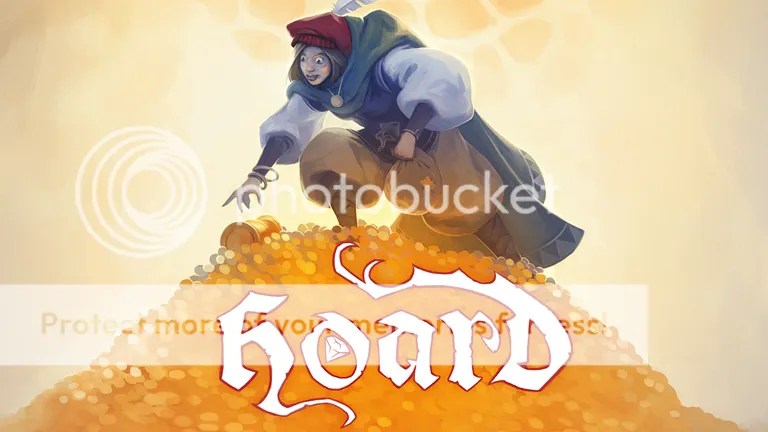
Stealing a dragon’s treasure is an iconic adventure trope, a classic test of a hero’s mettle or a thief’s craftiness. But do you have the skills and luck necessary to pilfer from a sleeping dragon and get away clean?

In the card game Hoard, you’ll get your chance to do exactly that as you and your fellow players maneuver around a sleeping dragon, trying to collect matching sets of treasure while defending yourself from or attacking your fellow plunderers, all with the ever-present threat of a slumbering fire-breathing beastie looming over you.

In fact, waking the dragon (or lulling it back to sleep) is a key part of the game play, since it could be to your advantage to wake the dragon after securing some treasure for yourself.

Hoard combines the resource management aspect of numerous other card games with the luck and wherewithal of Memory. As you move around the board, you have the choice to look at one of the dragon’s treasure cards. You can either take that card, or you can leave it (and hope you remember what you found there, in case you need it later). If you leave the card, you’ll instead draw a random card from the deck.

You might find helpful treasure, a sword to attack with, a shield to defend with, a way to wake the dragon, or a way to soothe the dragon. The variety of cards makes the relatively small playing area a rich field, rife with possibilities.

Wait a minute, why would you WANT to wake a dragon?

Simple. You play for several rounds, and each round can only end in one of three ways:
A.) The last card from the deck is pulled
B.) A player begins a turn with no cards in their hand
C.) The dragon wakes up

So, if you’ve secured a good bit of treasure and you think you’ll win that round, it’s to your advantage to wake the dragon and end the round before the other players can catch up.

Only the players with the top two point totals (amassed from making treasure sets and other related card patterns, similar to Go Fish) receive victory points at the end of the round.

The first player to five victory points wins the game.

The strategy involved is what makes this a terrific game for puzzle fans. You need to make sure that you keep finding matching sets of treasure (both by remembering what cards are around the dragon and seeing which cards you get from the deck), defend your treasure from the other players, and avoid getting outfoxed in manipulating the dragon.

The mechanics of the game are simple, but the sheer number of options available to the player — as well as the element of chance involved — make for a very replayable game experience. One round, the dragon could be your greatest ally, while another time, the dragon wakes at the worst possible moment for you and your meager treasure hoard.

A great game for families, casual players, and hardcore board gamers alike, Hoard is gorgeous, well-executed, and great fun.

Hoard is a Cheeky Parrot Games product, available online now!


Thanks for visiting PuzzleNation Blog today! Be sure to sign up for our newsletter to stay up-to-date on everything PuzzleNation!

You can also share your pictures with us on Instagram, friend us on Facebook, check us out on TwitterPinterest, and Tumblr, and explore the always-expanding library of PuzzleNation apps and games on our website!

Piece of Cake Crosswords!

Crosswords are great. Here at PuzzleNation, we know that better than most.

But they can be daunting. All those interlocking words, crissing and crossing in a tight grid, and it always seems like there’s some obscure vocabulary, some archaic terms, some words that appear in crosswords and nowhere else.

What is a newcomer, or a casual solver, to do? How can they get into crosswords?

Well, guess what? Constructor Patrick Blindauer has got you covered.

He’s running a Kickstarter campaign called Piece of Cake Crosswords, and he’s turning his puzzle-making expertise toward making crosswords that will be accessible to new solvers! No tricky cluing, no out-of-date pop culture references, just great puzzles designed to be both easy and fair.

We’re talking one 15×15 crossword per week for an entire year! 52 crosswords, all designed and clued by a top-flight puzzler. And the pledge tiers for a one-year subscription start at only $29! That’s almost 50 cents a puzzle! What a deal.

Higher pledges include extras like puzzlefests (themed puzzle sets created by Blindauer), video lectures on crossword creation, and even custom puzzles made especially for you!

You can check out all the details on Kickstarter here!

(Sorry, though — there’s no actual cake.)


Thanks for visiting PuzzleNation Blog today! Be sure to sign up for our newsletter to stay up-to-date on everything PuzzleNation!

You can also share your pictures with us on Instagram, friend us on Facebook, check us out on TwitterPinterest, and Tumblr, and explore the always-expanding library of PuzzleNation apps and games on our website!

5 Questions for Acrostics Constructor Cynthia Morris

Welcome to 5 Questions, our recurring interview series where we reach out to puzzle constructors, game designers, writers, filmmakers, musicians, artists, and puzzle enthusiasts from all walks of life!

It’s all about exploring the vast and intriguing puzzle community by talking to those who make puzzles and those who enjoy them! (Click here to check out previous editions of 5 Questions!)

And I’m excited to welcome Cynthia Morris as our latest 5 Questions interviewee!

wfdyxqwf

An author, editor, and puzzler, Cynthia is the mastermind behind Acrostics by Cyn, her online acrostic puzzle empire. Her brand is soon expanding to eight puzzle-book titles that mix crossword-esque cluing with intriguing themes and quotation-style content.

Cynthia was gracious enough to take some time out to talk to us, so without further ado, let’s get to the interview!


5 Questions for Cynthia Morris

1. How did you get started with puzzles? What drew you to acrostic puzzles more than other styles, like crosswords, word seeks, or encrypted puzzles?

I got started at a really early age, thanks to my mom. She was a former schoolteacher who knew how important it is to exercise our brains every day, so one year during summer break from school — I think I was 8 years old — she offered to pay me $10 for every book of puzzles I completed, cover-to-cover, without peeking at the answers in the back.

I chose variety puzzle books — I’m pretty sure they were the Dell puzzle magazines that were sold at the grocery stores. I thought they looked like the most fun. I had never even heard of acrostic puzzles at the time, but as soon as I discovered them, I was hooked. 

I had always loved books and also loved to write, so the combination of quotations from books and crossword-style clues was completely irresistible to me. Plus I loved that acrostic puzzles are a bit like solving a mystery, because the clues lead you to a fun or funny quote at the end, instead of just a grid filled with words.

I remember that I would solve the acrostic puzzles in the variety books first, and then race through the rest of the puzzles as quickly as possible so my mom would buy me another volume and I’d have more acrostic puzzles to solve.

We ended the $10-per-book deal when summer was over, but I was totally addicted to acrostics by then, and kept solving. It turned out to be a lifelong addiction.
cyn-acrostics

2. What, in your estimation, makes for a great puzzle? What do you most enjoy — or try hardest to avoid — when constructing your own?

I love themed puzzles — and I especially love when a puzzle is “slyly themed,” so that when you finish the puzzle, you realize that far more clues/answers pertain to the quotation solution than you knew when you were solving it. I love learning something new, whether it’s from the clues and answers, or from the quotation solution.

I love clever or funny clues, as well as those that have a bit of misdirection thrown in.  I love a good quotation solution. And I love punny, groan-worthy puzzle titles — which is something I’ve picked up from my husband, Bryan. I write all of my puzzle titles with him in mind, and if I get a chuckle out of him I know I’m on the right track.

My favorite part of constructing? I don’t think I can answer that one, because I enjoy every aspect of it. I love selecting the quotations, although this often takes way longer than it should because I’ll open a book with the intention of skimming it for a good quote, and end up reading the whole thing! I love deconstructing the quotation solution into a word list, which is just as much fun as solving a puzzle. And I love writing the clues, especially trying to come up with clever clues that will make my solvers laugh.

I avoid dictionary definition clues as much as possible. I include a few in each puzzle as “gimmes,” because otherwise it can be difficult to get a toehold on a puzzle, but they’re not my favorites — I like to be more creative than that when it comes to clues. And I make a conscious effort not to copy any other constructor’s style — I’ve worked hard to develop my own signature style.

3. You have acrostic books for younger solvers and older solvers. What’s more challenging: creating an engaging puzzle for a younger solver or creating a truly difficult but fair puzzle for an established solver?

You’d think my AnimaCrostics series, which are easy, animal-themed puzzles for kids and new acrostic solvers, would be the easiest to construct, but this isn’t the case. They’re just as difficult to create as my challenging puzzles for adults.

Technically, I’m much more limited when it comes to which words I can use as answers, because I have to be sure they’re words that are in children’s vocabularies. Then again, one of my goals is to help kids expand their vocabularies, so I like to include a few words in each puzzle that may be a bit of a stretch for them at first. It’s a difficult balancing act, so I put a great deal of effort into every one of those short, easy puzzles.

Creatively speaking, AnimaCrostics are also a bit of a challenge, but a fun one. When I was first constructing them I had about 75 kids at a local elementary school for testers, and one thing was clear: Kids like gross stuff. They love learning about things like vulture vomit and hippo poop and fish farts. The puzzles with these types of quotation solutions were the biggest hits, and the puzzles that kept the kids coming back for more. So I try to include as many of them as I can in each book, along with other fun animal facts.

I originally called this series Kids’ Krostics, but it turned out that many adults who were new to acrostic puzzles were enjoying them as well, and even snagging the books from their kids when they weren’t in use. So I renamed this series AnimaCrostics to make it clear that these puzzles are fun for everyone, not just kids.

My two other series, American Acrostics and CynAcrostics, are equally difficult to construct, but for different reasons. 

am-acrostics

Each volume of American Acrostics tells a story — the history of the United States (Volume 1), the story of American inventors (Volume 2), tales about our presidents and first ladies (Volume 3), and fun facts about each state (Volume 4, forthcoming). Finding the specific quotations I need for these volumes can be challenging. But I love that sort of challenge, which involves bringing about 80 library books home at a time, because I get to read so many wonderful books while searching for quotations. 

Choosing quotations for CynAcrostics is a bit easier, because I keep a running file of quotes I come across in books I’m reading. For example, I already have all my quotations for CynAcrostics Volume 3: You Don’t Say? selected, and I haven’t even started constructing those puzzles yet! I’m a rabid reader, and I have very eclectic tastes, so the CynAcrostics are a fun way to share quotations from the wide range of books I read. 

Both my American Acrostics and CynAcrostics series include themed puzzles — some volumes more than others. Themed puzzles are more challenging to construct than your average acrostic puzzle, because the goal is to include as many clues/answers related to the theme of the quotation solution as possible, but to clue them in such a way that the theme isn’t too obvious, which would make the puzzle too easy.

Overall, I think finding the right difficulty level — whether the puzzles are geared for adults or kids — is one of the hardest parts of the construction process. I try to include a mix of easy, medium, and difficult puzzles in each volume, but of course a puzzle that’s easy for one person may be difficult for another. Over the years, I’ve come to realize that it’s impossible to please all of the solvers all of the time, so I just focus on constructing the best puzzles I can, and hope my solvers enjoy them.

4. What’s next for Cynthia Morris?

On the puzzle front, I’m finishing up my eighth volume of puzzles, American Acrostics Volume 4: The Puzzling States of the Union. This may be my favorite volume yet.  I’ve managed to find really great, quirky quotation solutions, and because the puzzles are themed, I’ve learned a lot of fun trivia about each state. I’m really looking forward to sharing this volume, and hope to have it available in time for the holidays.

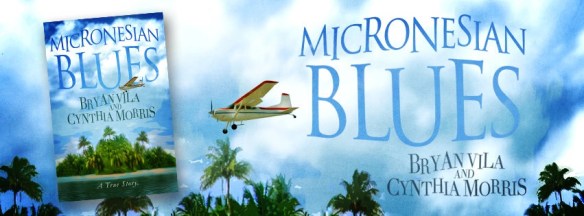
As an author/editor of nonfiction books, I also have exciting news. My book, Micronesian Blues (co-authored with my husband, Bryan Vila) is in development with actor Patrick Dempsey’s production company (Shifting Gears) and Cinemax. A Cinemax original TV series based on the book is in the works, and I hope to have more information about this project to share soon.
micronesian-blues

We’re working with an absolutely fabulous team of folks — in addition to Patrick Dempsey, Emmy-winning director Greg Yaitanes and New York Times bestselling author Jonathan Tropper are on board — so we couldn’t be happier with this project. (Of course, as soon as we signed on with Patrick’s production company, I couldn’t resist constructing a celebratory puzzle based on a quote from his Grey’s Anatomy character, Derek Shepherd. I ended up using it in CynAcrostics Volume 2: Reel-y?)

I also continue to work as an editor, and I have several other books in progress, so I certainly can’t say I’m ever bored.

5. If you could give the readers, writers, aspiring constructors, and puzzle fans in the audience one piece of advice, what would it be?

Just one? Yikes!  I’m not known for my brevity. OK, here goes:

I view acrostic puzzle construction as an art, and my goal with each puzzle I construct is to hone my craft. For readers, this may provide some insight into how much of ourselves we constructors put into each acrostic puzzle. For my fellow puzzle writers, I’m sure you can relate to this. For puzzle fans, this means that your feedback is invaluable to me. And for aspiring constructors, this means that no matter how many acrostic puzzles you’ve solved, it takes more time than you might imagine to become good at constructing, so be prepared for that. I’ve been constructing for 11 years now and I’m still learning to be a better constructor all the time, as both my skills and my understanding of what constitutes a good puzzle evolve.


A huge thank you to Cynthia for her time. You can check out all the acrostic offerings from her on her website here, and be sure to follow her on Twitter for the latest updates and puzzles!

Thanks for visiting PuzzleNation Blog today! Be sure to sign up for our newsletter to stay up-to-date on everything PuzzleNation!

You can also share your pictures with us on Instagram, friend us on Facebook, check us out on TwitterPinterest, and Tumblr, and explore the always-expanding library of PuzzleNation apps and games on our website!