One year ago today, my first post under the PuzzCulture name went live.
It’s been both overwhelming and gratifying to return to writing about the world of puzzles and games after a few years away, and I’m so so grateful to all of you who have joined me on this journey.
And although it’s only been a year, it sure feels like a LOT has happened over the last twelve months.
More deep dives into the history of puzzles and games. More puzzles to solve. More interviews. More reviews. And other things without the word “views” in them. (But hopefully ones that still inspire your views!)
Again, I’m so chuffed with the response PuzzCulture has garnered so far, and I’m excited to continue creating content for you to enjoy.
But what are you looking for, fellow puzzler? Is there something you would like to see that we haven’t done before? Or something you’d like to see more of?
Let us know in the comments section below! We’d love to hear from you.
I’ve written a lot this year about how political decisions have impacted the games industry.
With Trump’s wildly inconsistent implementation of tariffs, we’ve already seen game companies close, cancel projects, and try to right the ship amidst uncertain costs, supply opportunities, and factory dealings.
But the United States isn’t the only place where politically motivated choices are hurting businesses focused on gaming.
It’s happening in Quebec as well:
The very livelihood of these hobby shops and game stores are threatened by Bill 96 (aka Law 14). How so?
Well, one of the rules implemented by Bill 96 involves product labeling:
Starting June 1, 2025, if a registered trademark within the meaning of the Trademarks Act appears on one of your products that includes a generic term or a description of the product in a language other than French, that information must also appear in French on the product.
This means that ALL of their game materials, models, paints, and accessories must include a French translation. They cannot stock them without fulfilling these conditions.
Unfortunately, most of these products simply aren’t available in French. They’re too niche or too focused on the English speaking market (and understandably so), so there’s no incentive for special print runs to accommodate Quebec law.
But it’s not going to punish the consumer, just the store owners. Consumers will be pushed to purchase the same products online (where Bill 96 doesn’t apply), and the hamstrung store owners will lose out on those sales entirely.
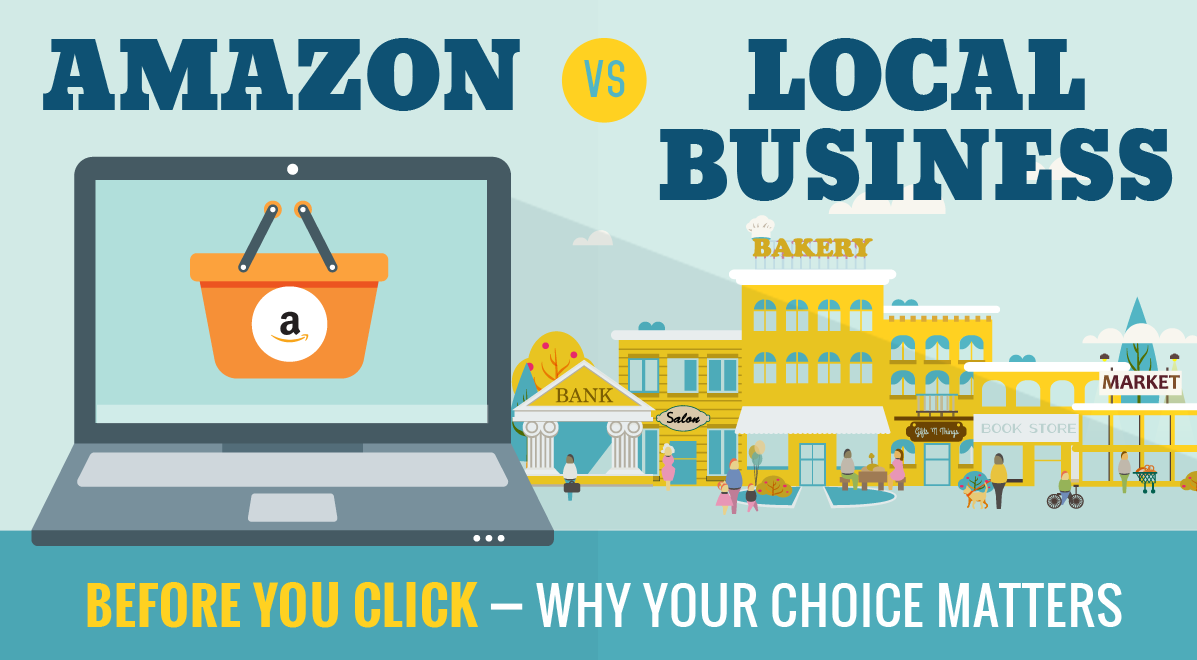
This hurts small businesses directly while pushing customers toward juggernauts like Amazon. And all for a law that’s more about political theater than actually serving the public.
It’s hard enough to run a game company or a game store these days. It would be nice if shortsighted, poorly thought-out government mandates avoided making it borderline impossible to build a brand, serve an audience, or entertain folks for a few hours with a fun distraction.
Here’s hoping all the nonsense stops soon and game companies, hobby shops, and gaming enthusiasts can enjoy their efforts in peace.
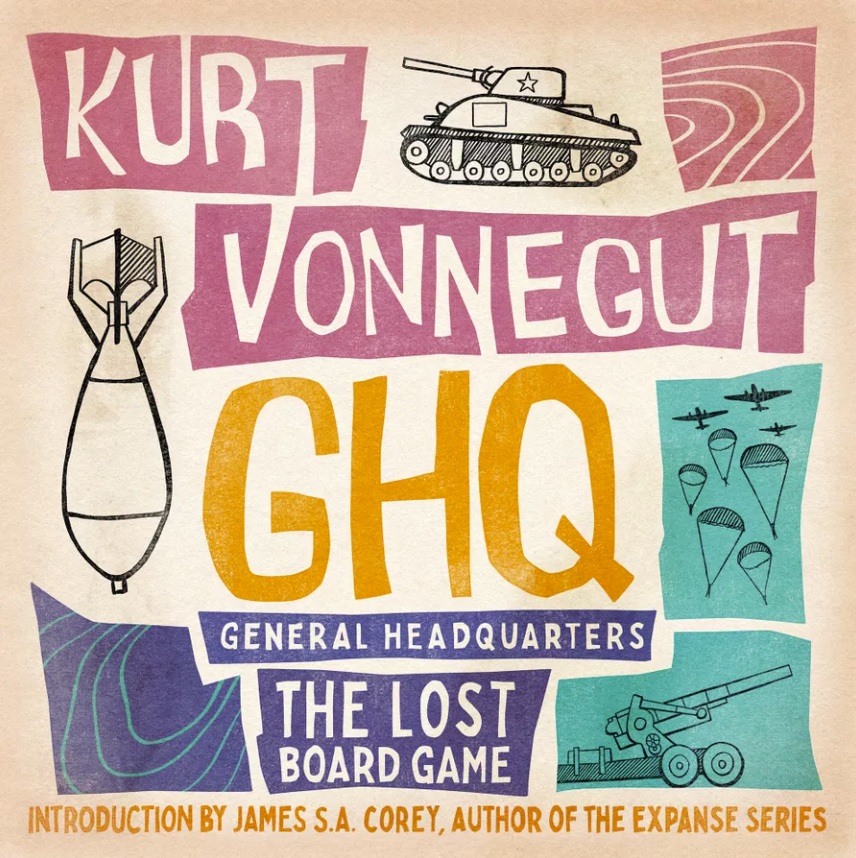
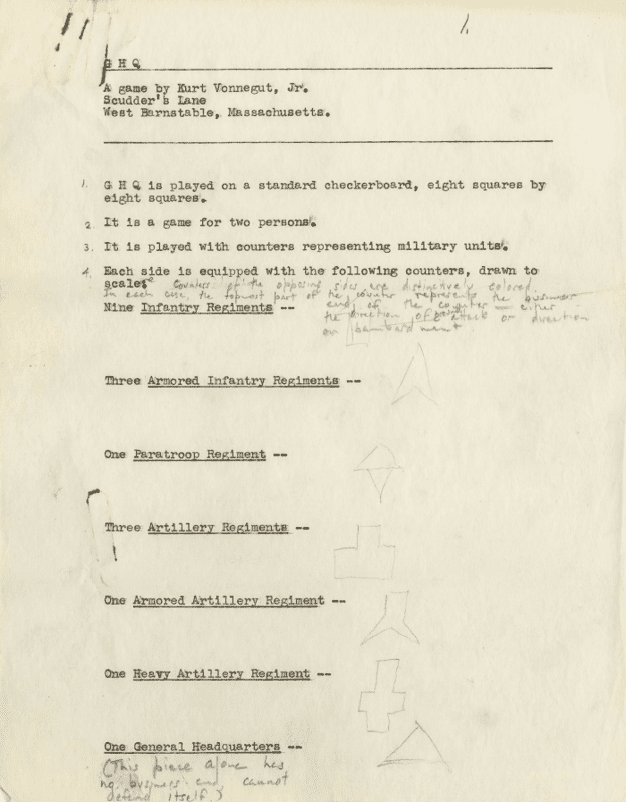
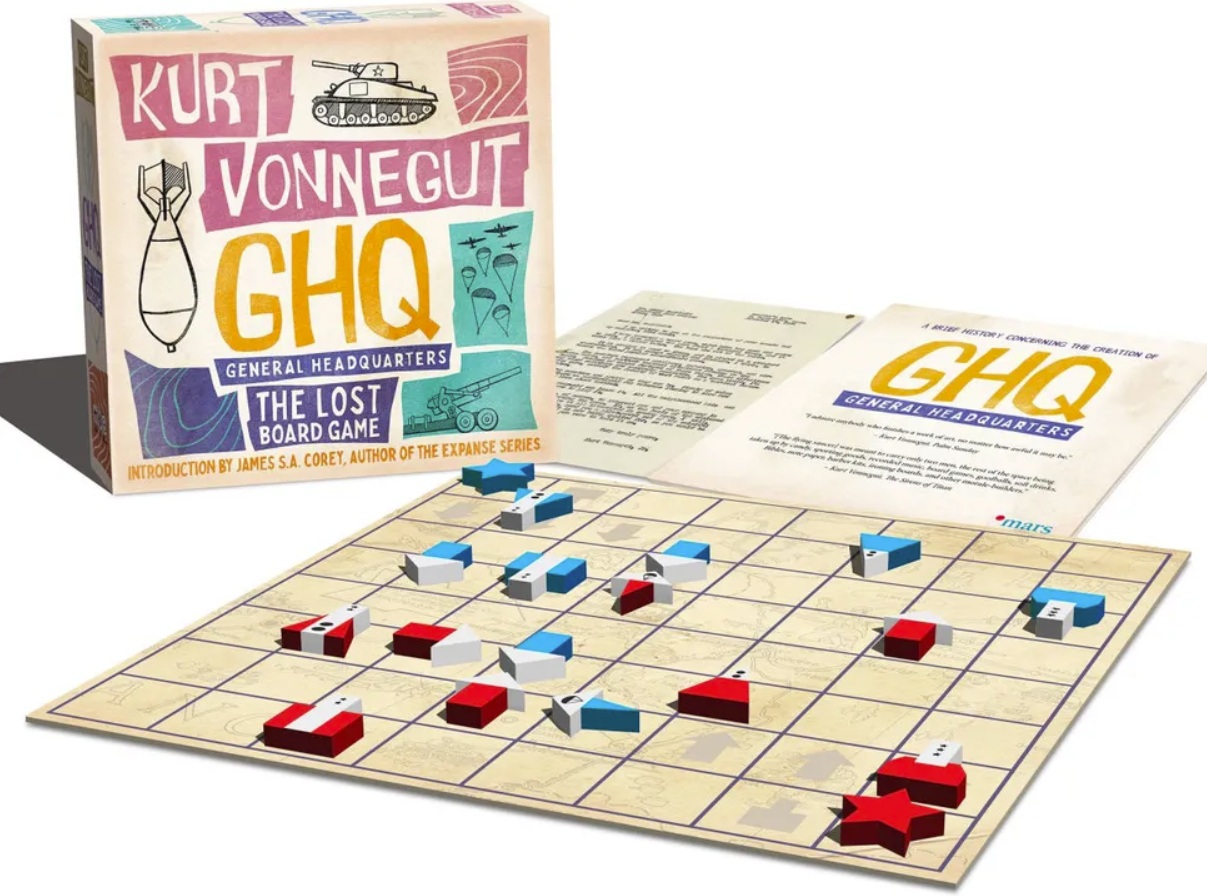
Yes, nearly seventy years ago, after the less than stellar commercial performance of his novel Player Piano, Vonnegut attempted to create a third game to utilize the 8×8 checkerboard as effectively as chess and checkers did.
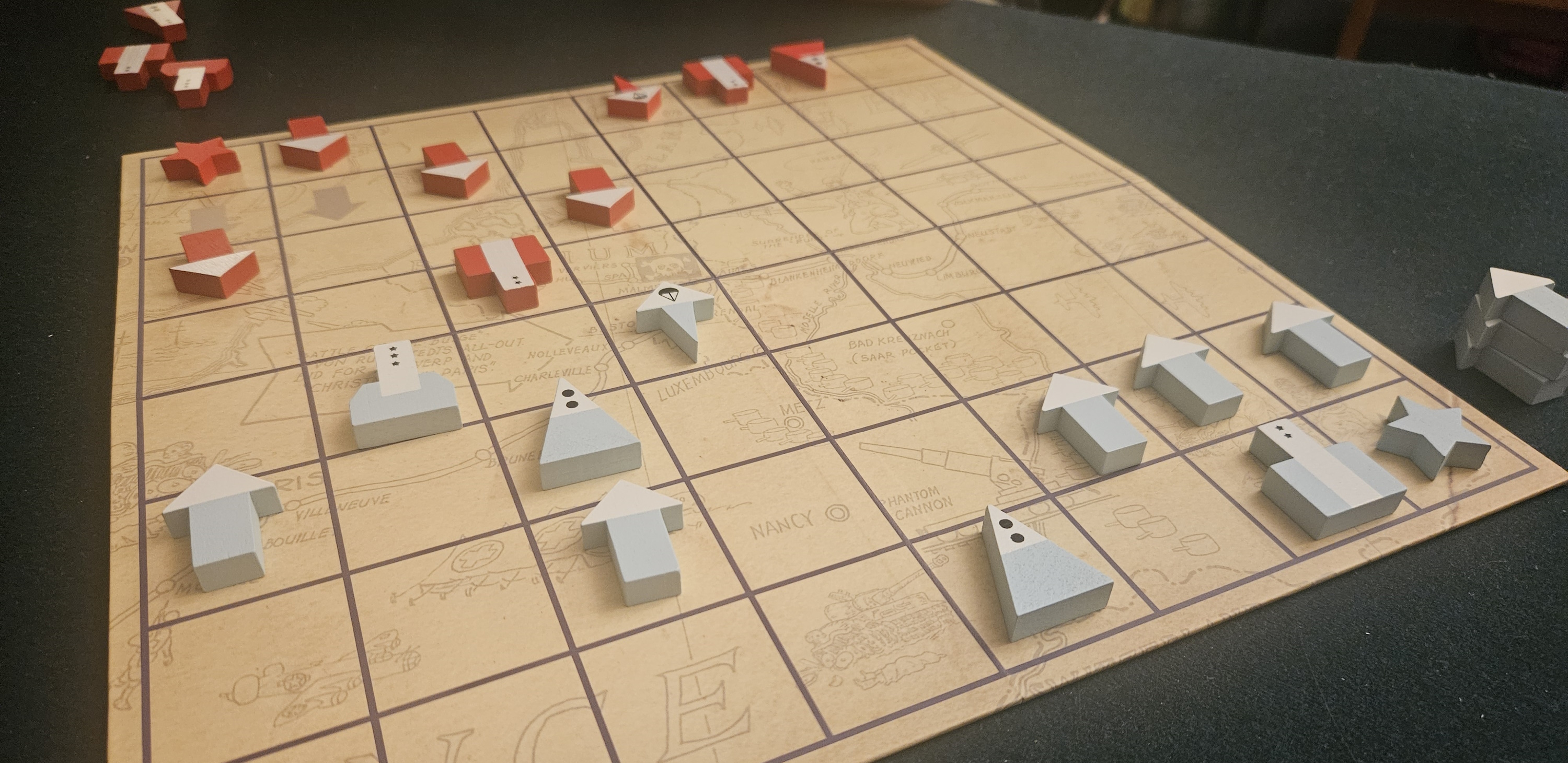
It was called GHQ, short for General Headquarters, and it was a tactical strategy game involving balancing your ground infantry and artillery forces with your airborne forces to capture your enemy’s headquarters.
In 1956, it was downright innovative, mixing wargame mechanics and multiple actions in a single turn. (This is commonplace today, but was quite revolutionary in games for the 1950s.) In today’s board game market, the initial run sold out, and now the game is carried by Barnes & Noble, and I have no doubt it’s performing well.
This would come as a shock to Vonnegut, as the game was rejected by publisher Henry Saalfield of the Saalfield Game Company. Vonnegut put the game away, and as far as his family knows, he never went back to it at all.
That historical context makes the game (and its companion booklet) a wonderful glimpse into Vonnegut as a creative mind.
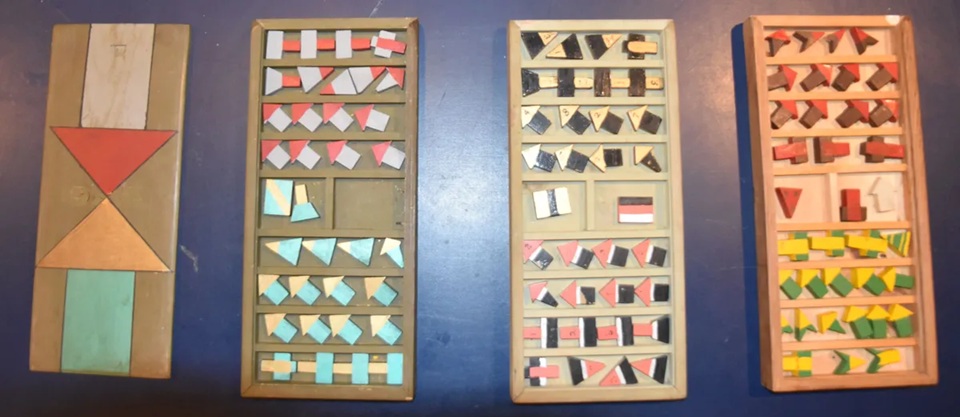
We get his original notes — including rules for the game — as well as photos of the original game pieces from his prototype.
GHQ exists as a fascinating conundrum. How do you reconcile encountering a combat-focused game designed by someone famous for his antiwar sentiments?
It’s also so very Vonnegut. Years before Billy Pilgrim manifested as his coping mechanism for the horrors he witnessed in the Ardennes and during the firebombing of Dresden, here he was designing a game that drew on his experience as a spotter for the 106th Infantry Division. It’s a game rooted in a particular military doctrine, one where most casualties were not inflicted by tanks or planes, but by distant cannons. While the game’s airborne units are flashy and threatening, it’s the roving fields of fire that shape this battlefield.
That, too, strikes me as the proper way to consider GHQ. Vonnegut’s antiwar stance crystallized as U.S. involvement deepened in Vietnam, and it’s natural to wonder if the older Vonnegut set aside GHQ not only out of disappointment with Saalfield’s lack of interest but also because its maneuvers and bombardments cut too close to the bone.
It’s impossible to separate the man from the art in this case. I can’t help but view this game as not only part of Vonnegut’s journey toward his rejection of warfare and wartime thinking, but also as a way for him to turn his knowledge and experience from wartime into something productive (and profitable) for his family.
It’s pragmatic, transformative, and a little bit sad in a way that feels so keenly Vonnegut.
I haven’t had a chance to play it yet, but I do have a Barnes & Noble gift card burning a hole in my pocket, so perhaps you’ll see a more thorough writeup on GHQ in the future.
In the meantime, what do you think of this curious discovery, fellow puzzlers? Does GHQ intrigue either the reader or the tactical gamer in you? Let us know in the comments section below. We’d love to hear from you!
The insane stupid rodeo of tariff threats, retractions, delays, and new threats continues, and the board game industry is reeling.
Some companies are pausing Kickstarter pledge managers and rollouts until they consult with lawyers and printers. Others are cancelling projects outright.
And these companies are being incredibly honest and forthright with their audiences. I’ve seen at least a half-dozen posts from across the industry, and there are probably many others I’ve missed.
Feel free to click the link to check it out, but I’m going to post much of the text here as well, because it’s straightforward and informative. It avoids hyperbole and confronts the unpleasantness awaiting board game companies going forward. Plus it gives us real numbers to crunch.
(Meredith’s comments are in quotation marks, my comments in italics.)
“On April 5th, a 54% tariff goes into effect on a wide range of goods imported from China. For those of us who create boardgames, this is not just a policy change. It’s a seismic shift.
At Steve Jackson Games, we are actively assessing what this means for our products, our pricing, and our future plans. We do know that we can’t absorb this kind of cost increase without raising prices. We’ve done our best over the past few years to shield players and retailers from the full brunt of rising freight costs and other increases, but this new tax changes the equation entirely.”
Covering the board games industry has been a rollercoaster since COVID 19 reports in China emerged and factories began shutting down. Board game companies adapted quickly, but many suffered, and more than a few closed their doors.
I was hoping that would be the worst of it for the industry, but sadly, that’s obviously no longer the case.I can only imagine what the last five years have been like for board game creators.
“Here are the numbers: A product we might have manufactured in China for $3.00 last year could now cost $4.62 before we even ship it across the ocean. Add freight, warehousing, fulfillment, and distribution margins, and that once-$25 game quickly becomes a $40 product. That’s not a luxury upcharge; it’s survival math.”
Getting real numbers has been a revelation, and I’ve been sharing this post all over in the hopes of people realizing the genuine effect these tariffs will have on businesses.
“Some people ask, “Why not manufacture in the U.S.?” I wish we could. But the infrastructure to support full-scale boardgame production – specialty dice making, die-cutting, custom plastic and wood components – doesn’t meaningfully exist here yet. I’ve gotten quotes. I’ve talked to factories. Even when the willingness is there, the equipment, labor, and timelines simply aren’t.
We aren’t the only company facing this challenge. The entire board game industry is having very difficult conversations right now. For some, this might mean simplifying products or delaying launches. For others, it might mean walking away from titles that are no longer economically viable. And, for what I fear will be too many, it means closing down entirely.
Tariffs, when part of a long-term strategy to bolster domestic manufacturing, can be an effective tool. But that only works when there’s a plan to build up the industries needed to take over production. There is no national plan in place to support manufacturing for the types of products we make. This isn’t about steel and semiconductors. This is about paper goods, chipboard, wood tokens, plastic trays, and color-matched ink. These new tariffs are imposing huge costs without providing alternatives, and it’s going to cost American consumers more at every level of the supply chain.”
This is the real lesson here for anyone supporting these tariffs. You can’t just say you’re bringing manufacturing back to America. You have to DO it. You have to have the facilities, the manpower, the training, the materials, and the wherewithal. These tariffs aren’t just putting the cart before the horse, it’s pushing the cart down the hill and blaming gravity when it crashes.
“We want to be transparent with our community. This is real: Prices are going up. We’re still determining how much and where.
If you’re frustrated, you’re not alone. We are too. And if you want to help, write to your elected officials. Ask them how these new policies help American creators and small businesses. Because right now, it feels like they don’t.
We’ll keep making games. But we’ll be honest when the road gets harder, because we know you care about where your games come from – and about the people who make them.”
Hey folks, it’s your friendly neighborhood puzzle guy back again. (Just wanted to make it clear that everything you read going forward is me, not Meredith.)
It’s a rocky road ahead for board game companies.
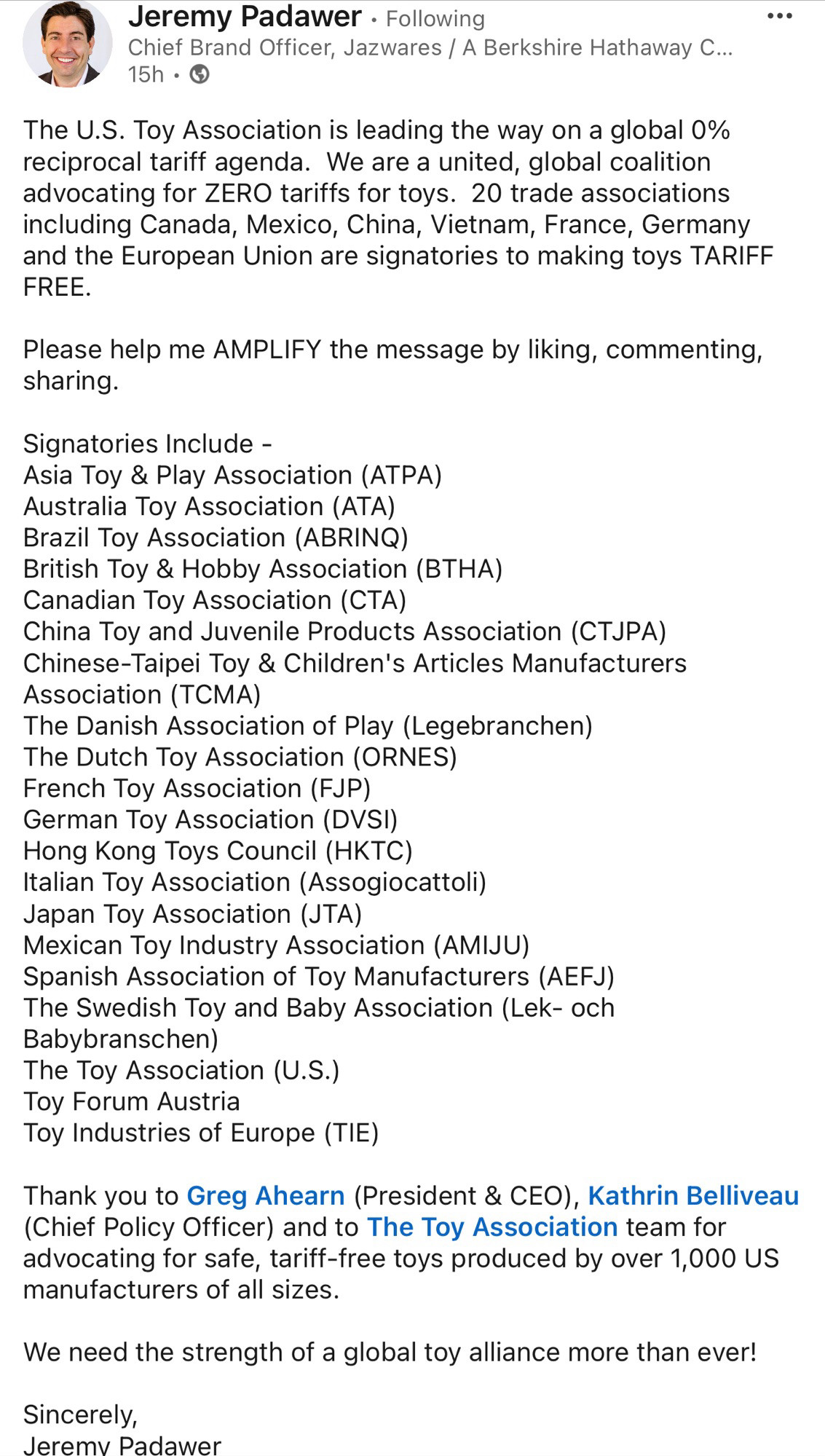
Thankfully, we are already seeing industry leaders making moves to handle Trump’s tariffs.
The list of organizations agreeing to work on this is impressive… and inspiring. Sure, it’s a business decision. My cynical little heart sees that.
But imagine if they succeeded and made toys tariff-free across the globe. What a gift to parents and children around the world that would be! What a boon that could be to game designers.
(I reached out to the U.S. Toy Association to confirm if board games and RPGs fall under the toy umbrella, but have not heard back yet.)
So, what can you do in the meantime?
Well, if you have the means to do so, reach out to your officials. Support local game companies. Speak up, loudly and often.
When you think of the board game industry, you probably think of the big companies, the big brands… but there’s only a few of them.
The VAST majority are small businesses led by passionate designers, creative minds, and hardworking people of all ethnicities, ages, backgrounds, and gender identities. They are a chorus of voices that make gaming better, that tell us stories about ourselves through gameplay, that bring history alive and challenge our minds, our reflexes, our collaboration, and our cunning.
THAT is the board game industry I want to see succeed.
Meme culture is constantly evolving. As new memes emerge, others are updated. They mutate, they cross over with other meme styles. It’s virtually a language at this point, a hyper-dynamic vernacular where the rules change as fast as the imagery.
And yet, old memes can resurface for new audiences and make an unexpected impact, like the one I stumbled across this week.
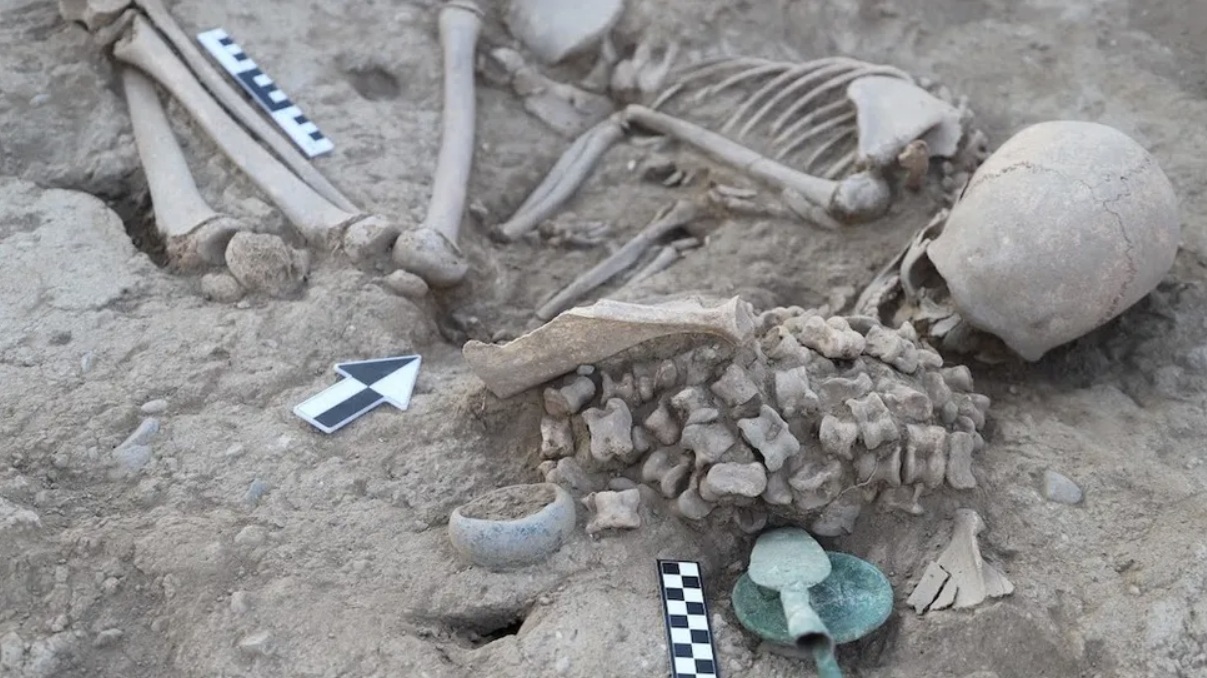
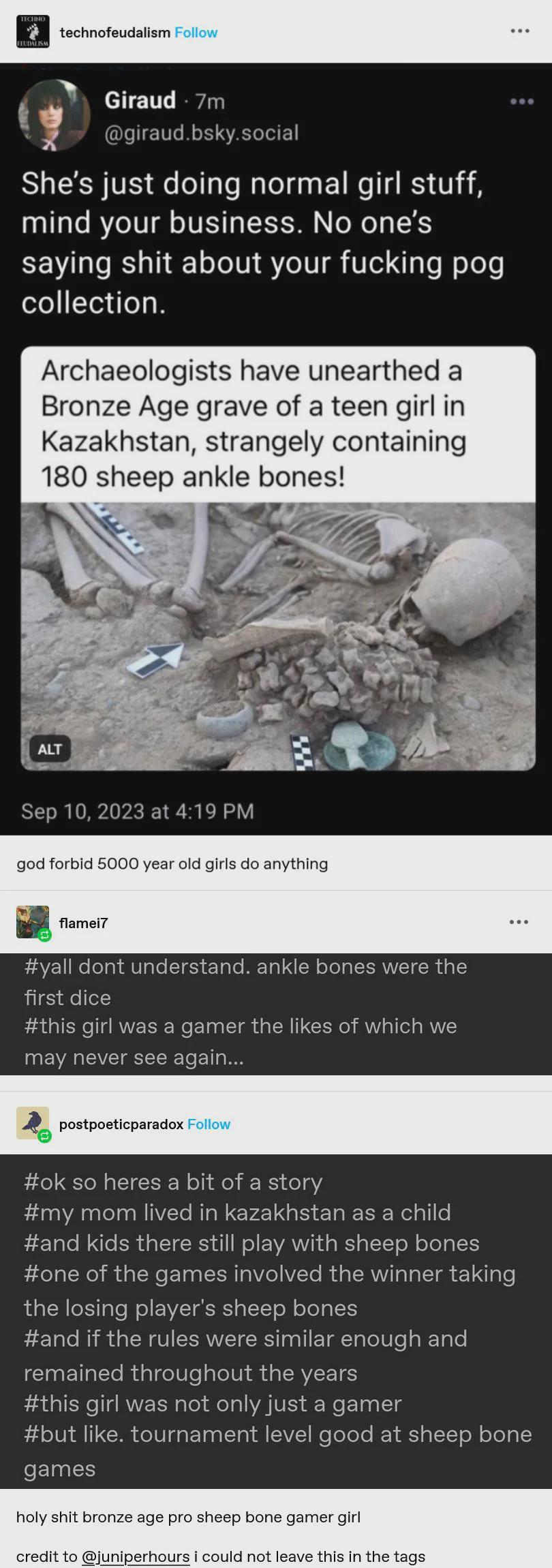
Two years ago, an archaeology report hit internet news feeds. Archaeologists in Kazakhstan uncovered the burial mound of a young girl, somewhere between the ages of 12 and 15. The grave dated back to the Bronze Age, about 5000 years or so.
But that wasn’t what caught the Internet’s attention.
It was the sheep bones that captured everyone’s imagination.
You see, she was buried with 180 ankle bones, also known as astragalus bones, from dozens and dozens of sheep.
Researchers were unsure of the significance of these bones, attributing them to cult practices, totems for meditation, or symbols of good luck to wish the deceased well in their transition to a new world.
Internet readers came to a different conclusion. They believed this young girl was a world-class gamer and these were her trophies, the spoils of victory.
Knuckle bones, ankle bones, and other small, easily-rolled bones have been associated with gaming for centuries. For many cultures, they were the first readily-available dice. This is true in Kazakhstan as well.
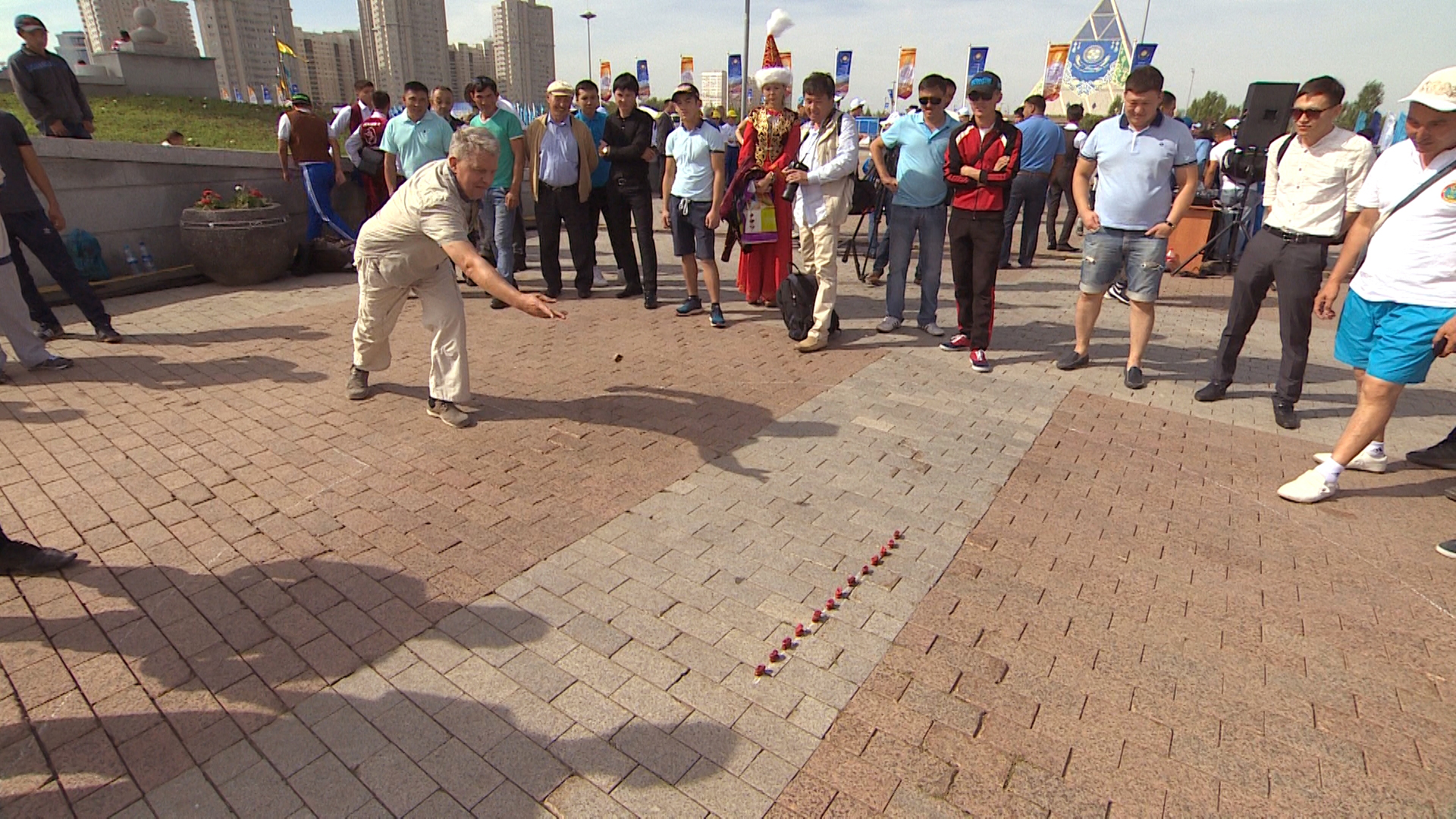
In fact, there is a Kazakh game called Assyk, and it’s similar to marbles. Players take an ankle bone and try to knock other ankle bones from the game space. It requires considerable skill, since you’re tossing the assyk from a distance.
Rules vary depending on your sources, but according to some articles about this traditional Kazakh game, winners would keep the ankle bones they knock out of the circle, just like in marbles, pogs, and other games of this nature.
So, if our Bronze Age assyk master followed this rule — and based on the number of bones in her grave, it’s a distinct possibility — that means she didn’t just dabble in this game… she dominated at it, collecting dozens of victories.
Appropriately, the Internet celebrated her as a pro gamer, a tournament-level champion with the hand-eye coordination to dominate modern games as easily as she did games of assyk around her village.
And honestly, how can you not love something like that? Everybody needs a hero, gamers included. A 5000-year-old Bronze Age astragalus-hoarding game sniper is not a bad place to start.
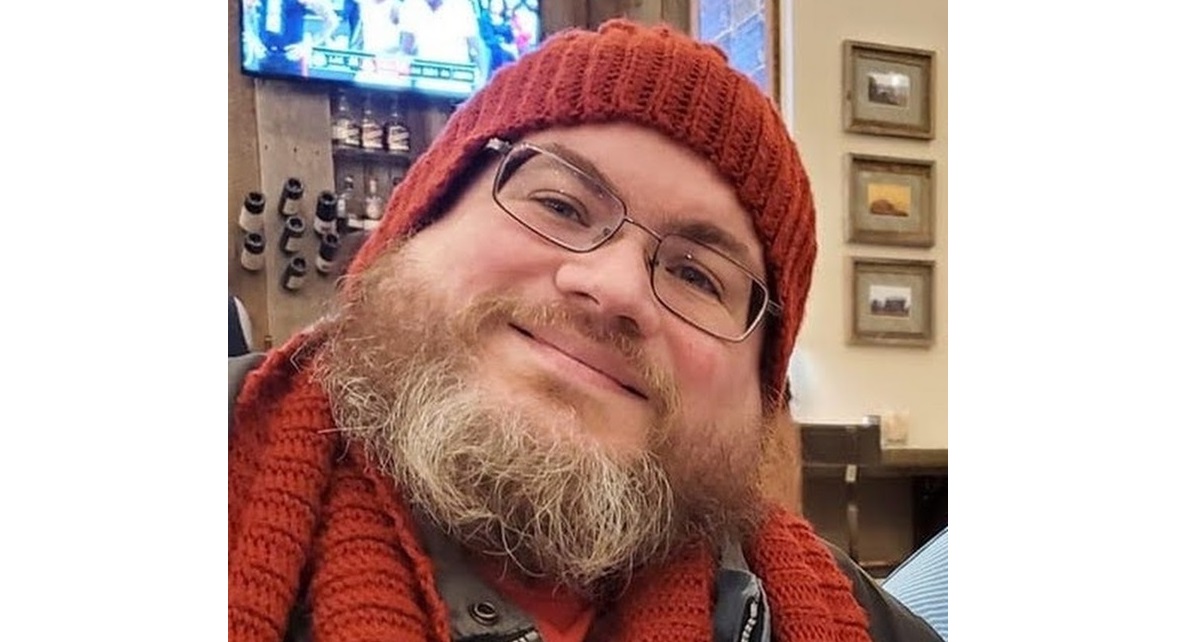
If you’ve been a roleplaying game fan over the last two decades, you’ve probably played a game that Owen has shaped in some way.
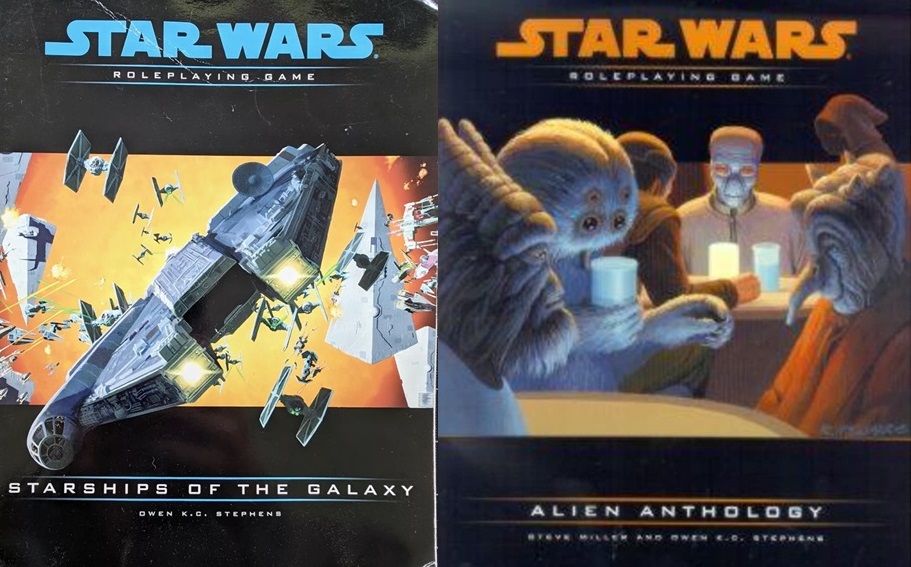
He has been an influential game writer and designer for years, contributing to the Star Wars Roleplaying Game (both the d20 and Saga editions), Dungeons & Dragons, Pathfinder, Starfinder, Everyday Heroes, The Wheel of Time RPG, and so many other games. Wizards of the Coast, Super Genius Games, Rogue Genius Games, Evil Genius Games (sensing a theme?), Paizo, and Green Ronin have all been homes for him over the years.
After an 18-month battle with colon cancer, he is still feeling the effects of his treatment and continuing the long, hard road to better health. And sadly, he is still buried under medical bills for his treatment and convalescence.
You can contribute to the GoFundMe campaign for him here.
And if you’re interested in learning more about Owen and his wonderful work in games, you can check out his website and his Patreon.
Normally, that’s how I would close out a post like this, but in this case, I hope you will indulge me with a personal anecdote.
Back in the year 2000, I discovered tabletop roleplaying.
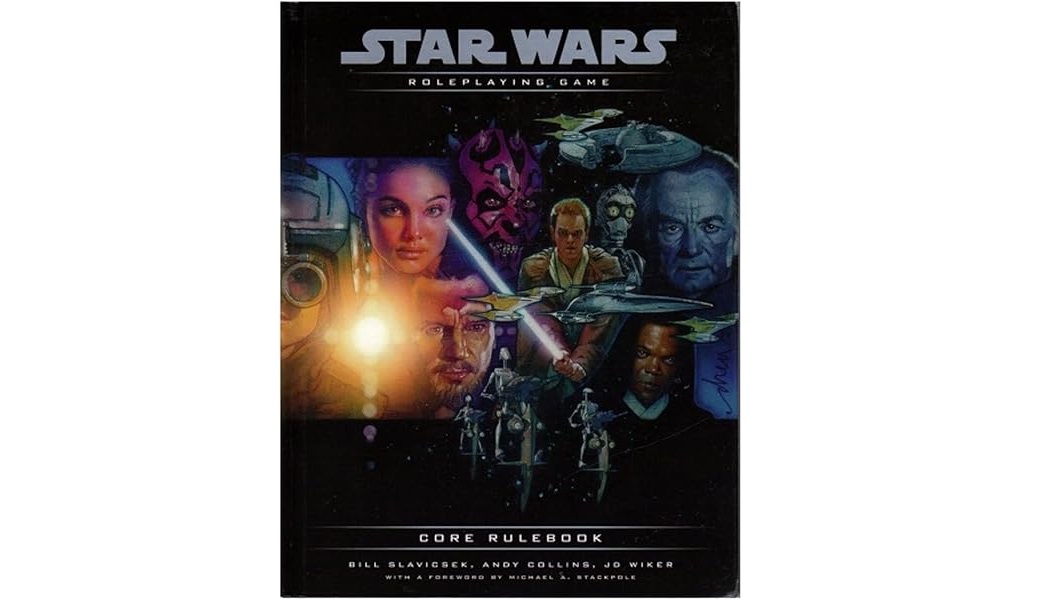
A friend had just bought the new Star Wars Roleplaying Game (the d20 edition released around the same time as Dungeons & Dragons 3rd edition), and knowing I was a huge Star Wars fan, he invited me to play.
After a short adventure he ran for us as Game Master, he asked if I’d be interested in learning to be a Game Master myself. (I later realized he did this not only because he thought I would be good at it, but because HE wanted to play and needed someone to run for him. My friend was and is a diabolical genius.)
I ran that game on and off for nearly seven years. It gave me the confidence to explore other roleplaying games, like the Buffy the Vampire Slayer RPG, Dungeons & Dragons, Ninja Burger, and many many more, kickstarting a hobby that now spans more than two decades.
It also gave me confidence as a storyteller, pushing me to take writing more seriously (both fiction and nonfiction).
And all of that started with the d20 Star Wars Roleplaying Game.
Owen contributed to some of my favorite sourcebooks for that game (and several brilliant mini-adventures), helping make the galaxy a bigger and more interesting place for my players to explore. He is part of the fabric that helped shape me as a Game Master / Dungeon Master / Storyteller.
And I hope you’ll take a second to read about his story and help him out.
Best of luck to you, Owen, and happy puzzling, friends.



 PuzzCulture