International Puzzle Day is almost here!


photo-743384

This Sunday, January 29th, is International Puzzle Day (aka National Puzzle Day), a day dedicated to all things puzzly — be it crosswords, jigsaw puzzles, riddles, or other brain teasers — and there are plenty of fun ways you could celebrate.

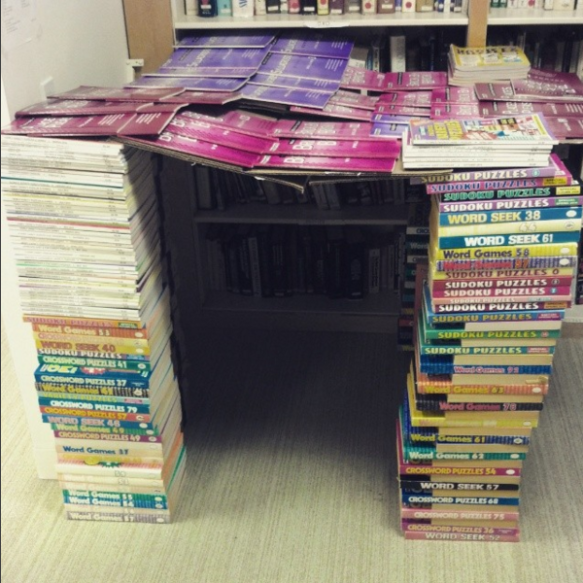
For instance, last year, we commemorated the day by building a puzzle fort!

puzzlefort

Now, if you don’t have dozens of puzzle books handy, don’t despair! You could bust out an old jigsaw puzzle (or a new one!), try your hand at a Rubik’s cube, or tackle a puzzle you’ve never tried before!

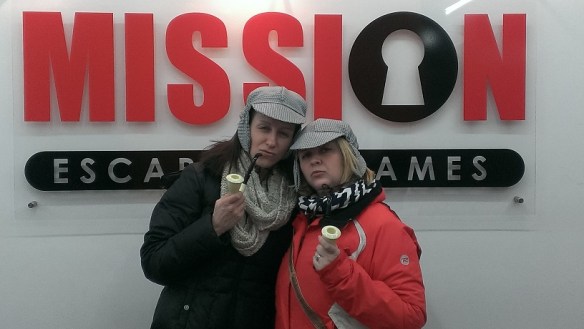
If you’re looking for more of a group activity, you’ve got the Internet at your fingertips. You could find your nearest hobby shop and try out a new puzzle, or track down an Escape Room or Puzzle Hunt event near you!

For instance, I stumbled upon this link for a National Puzzle Day Jigsaw Competition in Mobile, Alabama this Sunday! Race to see who can solve a 1,000 piece jigsaw the fastest!

And that’s just one of dozens of events happening around the country this Sunday.

3127

Need a place to start? Check the event calendar for your local library! Many libraries host events open to public on days like International Puzzle Day, and you might meet fellow puzzlers in your area!

And if there’s not an event in your area, why not host one? You could host a team puzzle-solving challenge, a scavenger hunt, a crossword contest, or a night of trivia!

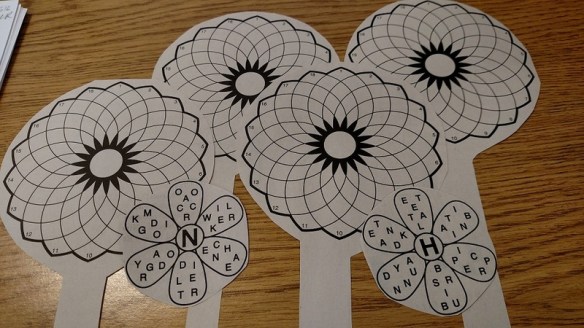
This year, we opted to do something a little different, whipping up some puzzly bouquets of Daisy, Flower Power, and other floral puzzles, and handing them out to friends! Just a little way to brighten someone’s day! (This excellent suggestion came from puzzler and friend of the blog Jen Cunningham.)

puzzleflowers

And, hey, if you need something a bit more extreme, you could celebrate like this guy and solve a Rubik’s cube while skydiving!

Now, I won’t be doing that, but that doesn’t mean you can’t.

So, how are you celebrating International Puzzle Day? Let me know! I’d love to hear from you!


Thanks for visiting PuzzleNation Blog today! Be sure to sign up for our newsletter to stay up-to-date on everything PuzzleNation!

You can also share your pictures with us on Instagram, friend us on Facebook, check us out on TwitterPinterest, and Tumblr, and explore the always-expanding library of PuzzleNation apps and games on our website!

An Excluded Solver Strikes Back!

sculpture

Many people find crossword puzzles daunting.

For some, it’s the crosswordese, those obscure or curious words that you only encounter in crossword grids. Whether it’s European rivers or needlecases, these entries never make casual conversational appearances.

For others, it’s the pop culture that often feels dusty and out-of-touch. It’s not like many silent movie stars are household names these days.

Thankfully, many current outlets and constructors have moved away from this stodgy approach to grid construction and cluing, working hard to keep cultural references fresh and up-to-date, and striving for fluid grid-filling entries that remain both accessible and interesting.

Unfortunately, the reputation of crosswords as behind-the-times is still prevalent in many circles, including among younger solvers.

But I was amused to find one younger solver who sought to balance the scales a bit by taking matters into her own hands.

Tumblr user Greater-than-the-Sword created and shared her own crossword. (Well, technically a criss-cross to puzzle aficionados like ourselves, but the average person would call this a crossword.)

In her own words:

Tired of your parents always doing better than you at crossword puzzles just because they’re old and get the ancient pop culture references? I made this Millennial’s Crossword Puzzle™. Guaranteed to make your parents feel old and less smug.

Sample clues included “is either white and gold or blue and black” for DRESS (referencing the optical illusion that took over the Internet for a day or two) and “Popular Youtuber” for PEWDIEPIE.

Although the puzzle didn’t make me feel old or less smug, it did make me laugh, since I found several of the entries completely baffling and impenetrable. It also reminded me of how amazingly fast cultural references emerge and vanish in the age of the Internet. I got about half of the reference in the puzzle, many of which applied to memes and pop culture from the last few years.

(Though I must confess that it took me an embarrassingly long time to realize the clue “bendy cabbage patch” meant BENEDICT CUMBERBATCH.)

I was unable to reach Greater-than-the-Sword to ask her what sort of feedback she received on the puzzle — either from millennials or from older solvers who accepted the challenge — but I found it to be a delightful response to lazy crossword construction.

You’re welcome to try your luck against the puzzle here.


Thanks for visiting PuzzleNation Blog today! Be sure to sign up for our newsletter to stay up-to-date on everything PuzzleNation!

You can also share your pictures with us on Instagram, friend us on Facebook, check us out on TwitterPinterest, and Tumblr, and explore the always-expanding library of PuzzleNation apps and games on our website!
Do you accept the Cryptiq challenge?

Normally, this would be a Follow-Up Friday post. But since Follow-Up Friday is all about continuing or expanding upon previous topics we’ve covered, and I suspect today’s post will be something we’ll return to in the future, it gets the nod this week.

I’ve written about puzzle contests plenty of times in the past, whether they’re single crosswords to solve or elaborate multi-step puzzle suites to unravel. Constructors are constantly innovating, and we’ve reached a point where you can tackle amazing puzzly challenges without even leaving your favorite chair.

So if you’re looking for a diabolical new puzzle series you can sink your teeth into from the comfort of your own home, Cryptiq fits the bill nicely.

Cryptiq is a collection of puzzles — available both on their website and in book form — designed to test your puzzly mettle. There are dozens of logic, deduction, and visual puzzles involved, and the designers have clearly set a very high bar for solvers.

From the Cryptiq website:

To win the game you must solve all the puzzles on the given pages on http://www.cryptiq.com or in the book Cryptiq. Once you solve the puzzles you will be left with a code that has 6 values. Be the first to enter these 6 values, in the correct order, on the code input page and you will be moved forward to the verification step. The game can only be won through skill.

After you have entered the correct code, you will be prompted to supply a written solution showing that your solve of the puzzles was not by chance. Once your solve is verified as skill, you will be declared the winner and receive the prize.

I don’t think I’ve ever seen a puzzle contest that requires written explanation of the solve in order to prove your skills, but when you consider that the winning purse is $5,000 — and there’s a chance that prize could increase — the team at Cryptiq wants to be sure that someone EARNS that prize, rather than getting lucky.

[Kind of Cunning, one of Cryptiq’s many mind-bending obstacles.]

Best of all? There is no purchase necessary to enter or to win the game. Everything you need to play is right there online. (The book version costs $20, but has all the same information as the website.)

So, fellow friends and PuzzleNationers, will you accept the Cryptiq challenge? Let me know if you do! I’d love to hear about it!


Thanks for visiting PuzzleNation Blog today! Be sure to sign up for our newsletter to stay up-to-date on everything PuzzleNation!

You can also share your pictures with us on Instagram, friend us on Facebook, check us out on TwitterPinterest, and Tumblr, and explore the always-expanding library of PuzzleNation apps and games on our website!
The Puzzle of the Bard

shakespeare_2699766k

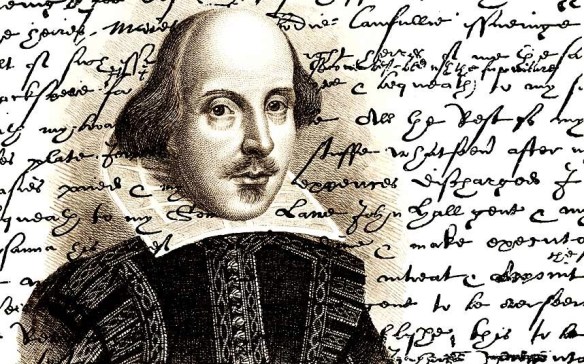
William Shakespeare is a name we all know well. We’ve studied his works in school, used words and phrases he coined or popularized, and we’ve seen numerous films, TV shows, and other adaptations inspired by his writing.

But for more than two centuries, there has been a great deal of debate over whether the man known as William Shakespeare actually wrote all of the brilliant works for which he is acclaimed.

There are whole societies dedicated to either rooting out the truth or proffering their candidate for who really wrote the works of Shakespeare. Many names are bandied about, including a who’s who of luminaries at the time, like Sir Francis Bacon, Christopher Marlowe, John Donne, Queen Elizabeth I, Ben Jonson, Edmund Spenser, Anne Hathaway, Sir Walter Raleigh, and perhaps most ardently, Edward de Vere, the 17th earl of Oxford.

[Image courtesy of The Truth About Shakespeare.]

Now, granted, there’s plenty to suggest Shakespeare collaborated with other writers on some of his works, but we’re not talking about collaboration here. We’re talking about ghostwriting some of the most famous works in human history.

But, you may be asking, other than a shared love of wordplay, what does the Shakespearean authorship question have to do with puzzles?

I’m glad you asked.

Over the years, several theorists have reported finding secret codes or ciphers in the text of Shakespeare’s works which hinted toward the true author.

Samuel Morse, a man who knows one or two things about codes, discussed how Sir Francis Bacon had created such codes, probably as part of his spy work, perhaps even going so far as to create an encrypted signature of sorts that appears in multiple Shakespeare works.

According to a BBC America article on the subject:

One scholar at the time went so far as to produce an enormous “cipher wheel” composed of a 1000-foot piece of cloth that contained the texts of Shakespeare and others for easy comparison and decryption. He claimed that by deciphering codes, he’d discovered the location of a box, buried under the Wye River, that contained documents that would prove Sir Francis’s authorship. But a dredging of the area came up with nothing.

[Orville Ward Owen’s cipher wheel. Image courtesy of Wikipedia.]

Now, there’s little doubt that Bacon was a code master, but there’s equally little evidence that he wrote the works of Shakespeare.

Of course, if there are codes in those works, perhaps Shakespeare placed them there himself.

According to a theory by scholar Clare Asquith, Countess of Oxford and Asquith, Shakespeare’s careful and curious word choices were intended to foment subversive political messages and advance his own agenda of strong Catholic beliefs.

Constancy in love was Shakespeare’s way of alluding to the importance of a true faith in the ‘old religion’, she says. More specifically, his puns and metaphors often circled around certain key phrases. For instance, to be ‘sunburned’ or ‘tanned’, as are his heroines Viola, Imogen and Portia, was to be close to God and so understood as a true Catholic.

[Image courtesy of Amazon.com.]

It’s amazing that we know so little about someone so influential. And it’s only natural that we try to fill in the blanks with our own theorists, be they explanations of Shakespeare’s impressive knowledge or possibilities of alternative authorship.

The man himself is a puzzle, and that is irresistible to some, myself included. Are Shakespeare the man and Shakespeare the bard one and the same?

As it turns out, that question might finally have an answer, thanks to the sleuthing of Dr. Heather Wolfe of the Folger Shakespeare Library in Washington, D.C.

The story begins with Shakespeare’s father:

John Shakespeare, from Stratford-upon-Avon, was ambitious to rise in the world. He was certainly not the first Englishman keen to put his origins as a provincial tradesman behind him. Among his contemporaries in Stratford, he was a figure of fun for his social climbing. English class snobbery has a long pedigree.

His son, who would continue the quest for official recognition after his father’s death, also attracted metropolitan disdain as “an upstart crow beautified with our feathers”. In 1601, after his father’s death, Shakespeare the upstart returned to the college of arms to renew the family application for a coat of arms.

He had made a small fortune in the theatre, and was buying property in and around Stratford. Now he set out to consolidate his reputation as a “Gentleman”. Under the rules that governed life at the court of Elizabeth I, only the Queen’s heralds could grant this wish.

[Image courtesy of The Shakespeare Blog.]

And it’s this application for a family coat of arms that provides the connective tissue between the man and the bard. “They point to someone actively involved in defining and defending his legacy in 1602, shortly after his father’s death,” according to Wolfe.

But whether there are codes lurking in the Bard’s works or not, the mystery of the man himself might be the greatest puzzle of all.


Thanks for visiting PuzzleNation Blog today! Be sure to sign up for our newsletter to stay up-to-date on everything PuzzleNation!

You can also share your pictures with us on Instagram, friend us on Facebook, check us out on TwitterPinterest, and Tumblr, and explore the always-expanding library of PuzzleNation apps and games on our website!
It’s Follow-Up Friday: 2016 Countdown edition!

It’s the final Follow-Up Friday of the year, so what do you say we revisit all of 2016 with a countdown of my ten favorite blog posts from the past year!


#10 Doomsday Prep

One of the big surprises for me this year was discovering that crosswords and puzzle books were hot-ticket items for doomsday preppers. The idea that crosswords belong next to necessities like food, water, shelter, and knowledge was a revealing one, something that gave me great hope for the future, whether we need those caches or not.

#9 Holiday Puzzly Gift Guide

Every year, one of my favorite activities is putting together our Holiday Puzzly Gift Guide. I get to include the best products sent to me for review by top puzzle and game companies, mix in some of my own favorites, and draw attention to terrific constructors, game designers, and friends of the blog, all in the hopes of introducing solvers (and families of solvers) to quality puzzles and games.

#8 A Puzzly Proposal

Our friends at Penny Dell Puzzles once again pulled off a heck of a puzzly coup when an intrepid fellow puzzler asked them for help proposing to his girlfriend with a special Simon Says puzzle.

I reached out to the lucky fiancé and got his permission to share the story with the PuzzleNation readership, and as I learned more about who was involved and how they’d managed to make it happen, I enjoyed the story more and more. Here’s hoping for many happy puzzly years ahead for the young couple!

#7 Puzzle Fort

For International Puzzle Day, I built a fort out of puzzle books.

It was awesome. Definitely one of my favorite puzzly moments of the year.

#6 The End of Sudoku?

The Sudoku boom may be over, but Sudoku remains one of the most popular puzzles in the world, and I got to thinking… when would we run out? I mean, eventually, statistically speaking, every single Sudoku puzzle permutation would get used at some point, so when would that happen?

So, I crunched the numbers, and it turns out, we’ve got centuries before that happens. Still, it was a fun mental puzzle to unravel.

#5 Murder Mystery

At some point this year, I let slip to my fellow puzzlers that I’d written and staged murder mystery dinners in the past, but it had been a while since I’d done anything like that. Naturally, they volunteered to be participants, urging me to stage something in the office.

Eventually, I accepted their challenge, pitting myself against a half-dozen or so of my fellow puzzlers, allowing some of them to investigate while others played a part in the mystery. It was an enormous undertaking and an absolute blast that lasted three days, and it was definitely a highlight of the year for me.

#4 Puzzle Plagiarism

There was probably no bigger story in crosswords all year than the accusations of plagiarism leveled against Timothy Parker. The editor of puzzles for USA Today and Universal UClick. After numerous examples of very suspicious repetitions between grids were discovered in a crossword database compiled by programmer Saul Pwanson and constructor Ben Tausig, Parker “temporarily stepped back from any editorial role” with their puzzles.

Eventually, Parker was removed from any editorial influence on USA Today’s puzzles, but it remains unknown if he’s still serving in a puzzle-related capacity for Universal Uclick. But the real story here was about integrity in puzzles, as many puzzle and game companies rallied to defend their rights as creators. That’s a cause we can all get behind.

#3 Interviewing the PuzzleNation Team

Our recurring interview feature 5 Questions returned this year, but what made it truly special to me was being able to turn the spotlight on some of my fellow puzzlers here at PuzzleNation as part of celebrating 4 years of PuzzleNation Blog. Introducing readers to our programmer Mike, our Director of Digital Games Fred, and yes, even myself, was a really fun way to celebrate this milestone.

#2 ACPT, CT FIG, and Other Puzzly Events

There are few things better than spending time with fellow puzzlers and gamers, and we got to do a lot of that this year. Whether it was supporting local creators at the Connecticut Festival of Indie Games or cheering on my fellow puzzlers at the American Crossword Puzzle Tournament, getting out and talking shop with other creators is invigorating and encouraging. It really helps solidify the spirit of community that comes with being puzzly.

#1 Penny Dell Sudoku and Android Expansion

Those were our two biggest app releases this year, and I just couldn’t choose one over the other. This has been a terrific year for us as puzzle creators, because not only did we beef up our library of Android-available puzzle sets to match our terrific iOS library, but we launched our new Penny Dell Sudoku app across both platforms, broadening the scope of what sort of puzzle apps you can expect from PuzzleNation.

It may sound self-serving or schlocky to talk about our flagship products as #1 in the countdown, but it’s something that we’re all extremely proud of, something that we’re constantly working to improve, because we want to make our apps the absolute best they can be for the PuzzleNation audience. That’s what you deserve.

Thanks for spending 2016 with us, through puzzle scandals and proposals, through forts and festivities, through doomsday prepping and daily delights. We’ll see you in 2017.


Thanks for visiting PuzzleNation Blog today! Be sure to sign up for our newsletter to stay up-to-date on everything PuzzleNation!

You can also share your pictures with us on Instagram, friend us on Facebook, check us out on TwitterPinterest, and Tumblr, and explore the always-expanding library of PuzzleNation apps and games on our website!
How to Get Started in Games

vaSBal7l

[Image courtesy of The Board Game Family.]

So, it’s after Christmas, and you’ve been gifted with a new game, or a roleplaying book, or someone showed you a new card game and you want to know more. Or your New Year’s Resolution is to learn more games, play more games, solve more puzzles, or even make some puzzles yourself.

Basically… how do you get started?

Here. You get started right here. I’m going to run down my favorite guide books for gaming, puzzles, tabletop play, roleplaying, and more, creating the perfect first step to a new world of play for you.

Let’s get cracking!


My first recommendation is also the most recently published book on my list.

vcVRmRHl

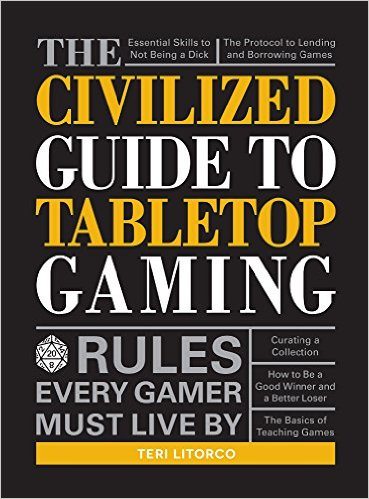
The Civilized Guide to Tabletop Gaming by Teri Litorco is a perfect introduction to all things gaming. This delightfully nerdy tome is loaded with thoughtful advice covering everything from choosing new games to teaching them to others, as well as building a game group for regular sessions or roleplaying games, and more.

From how to deal with cranky gamers to how to host your own major gaming events, Teri has dealt with every obstacle imaginable, and she offers her hard-won first-hand knowledge in easily digestible tidbits. Even as an experienced tabletop gamer, roleplayer, and puzzler, I found this to be a very worthwhile read, and I think you will too.

W3RSBUWl

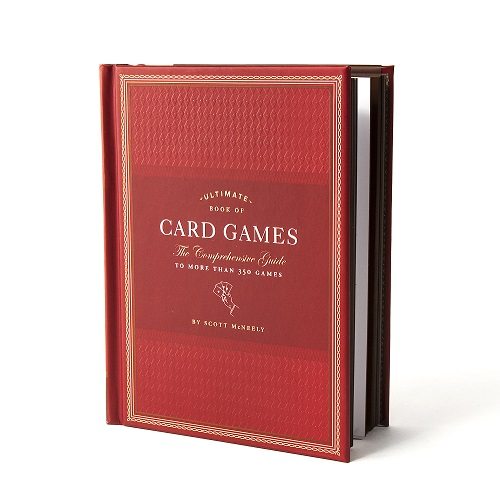
If card games are your poison, then what you need is a copy of The Ultimate Book of Card Games by Scott McNeely.

What separates this book from many other card game books — namely the ones attributed to Hoyle (the vast majority of which had nothing to do with him) — is that it doesn’t claim to be the definitive source. It provides the key rules for how to play, and then offers numerous variations and house rules that expand and refine gameplay.

There are more than 80 pages of variations of Solitaire alone! Kids games, betting games, games for two, three, four or more, this is my go-to guide for everything that can be played with a standard deck of cards.

a4VHXBpl

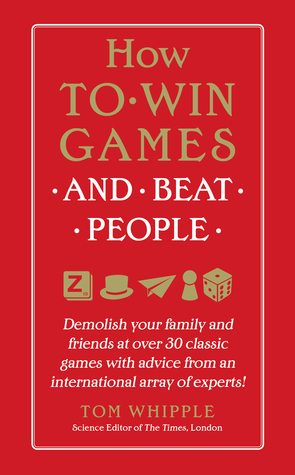
What if you’re already a fan of games, but you want to play them better? If that’s your goal, check out How to Win Games and Beat People by Tom Whipple.

Monopoly, Jenga, Hangman, Operation, Trivial Pursuit, Twenty Questions, Checkers, Battleship… heck, even Rock, Paper, Scissors is covered here. With advice from top players, world record holders, game creators and more, you’ll find advice, tactics, and fun facts you won’t see anywhere else.

For instance, did you know that letter frequencies in Hangman are different from letter frequencies in the dictionary? ESIARN is the way to go with Hangman, not ETAOIN.

That’s just one of the valuable nuggets of info awaiting you in this book.


Do you have any favorite books about puzzles and games that I missed? Let me know, I’d love to hear about them!

Thanks for visiting PuzzleNation Blog today! Be sure to sign up for our newsletter to stay up-to-date on everything PuzzleNation!

You can also share your pictures with us on Instagram, friend us on Facebook, check us out on TwitterPinterest, and Tumblr, and explore the always-expanding library of PuzzleNation apps and games on our website!